
Intravenous Fluid Acidbase Balance for Surgical Patients Dr
Intravenous Fluid & Acidbase Balance for Surgical Patients Dr. Abdullah F Alshehri, MBBS, FRCSC, MSc Assistant professor, consultant pediatric surgeon
Objectives • To explain basics of fluid & electrolytes physiology in surgical patient • To compare/ contrast different types of commonly used IVF • To calculate fluid & electrolytes requirement for a patient & choose the appropriate type of fluid • To discuss different types of electrolytes & fluid disturbance and its management (self reading) • To differentiate between common acid-base disorders (self reading)
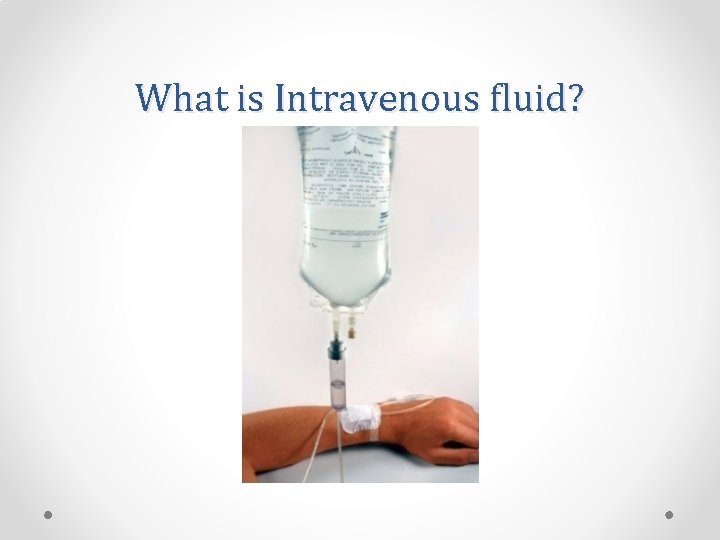
What is Intravenous fluid?
Why is understanding IV fluid important for you? o The commonest order prescribed in every hospital o Needed for almost every patient o Always done by the junior doctors o Considered basic medical knowledge o Everyone expect you to know it o Incorrect prescription can be very dangerous o Usually the fluid is available in the floor, so no pharmacist to double check your orders
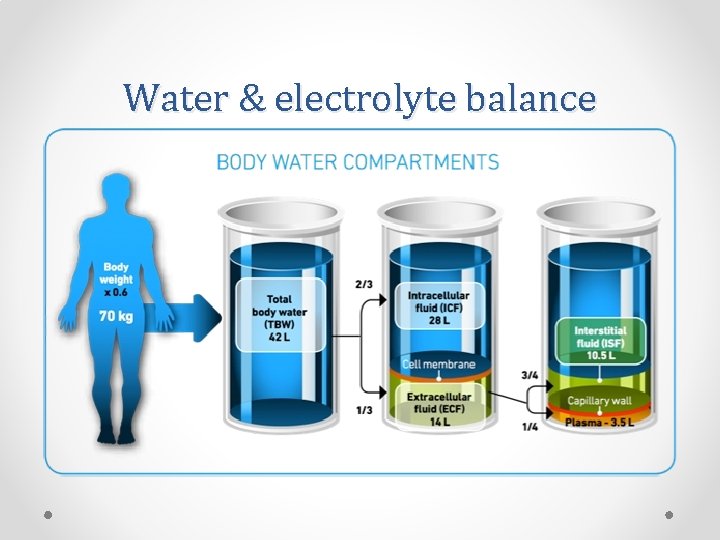
Water & electrolyte balance
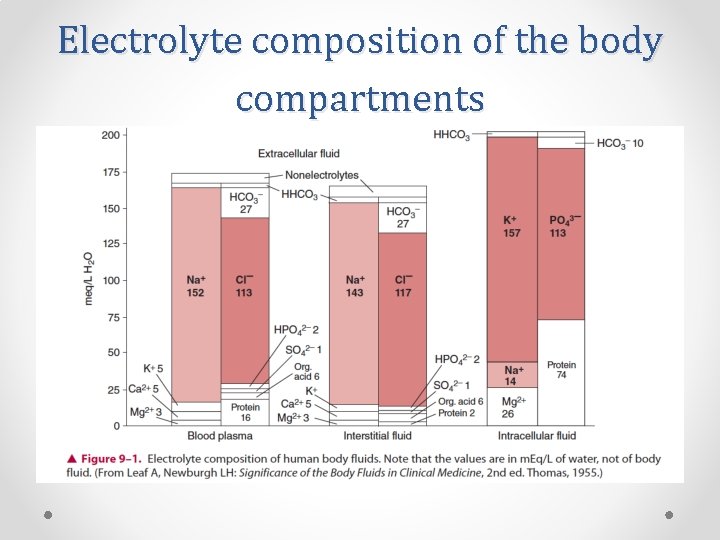
Electrolyte composition of the body compartments
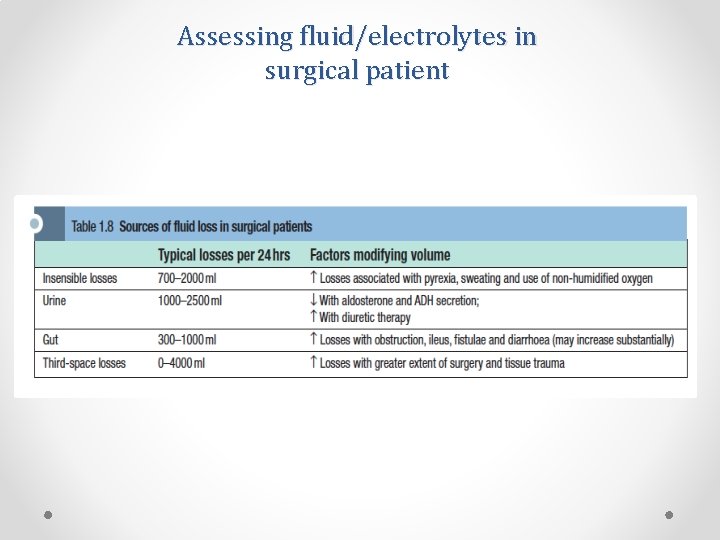
Assessing fluid/electrolytes in surgical patient
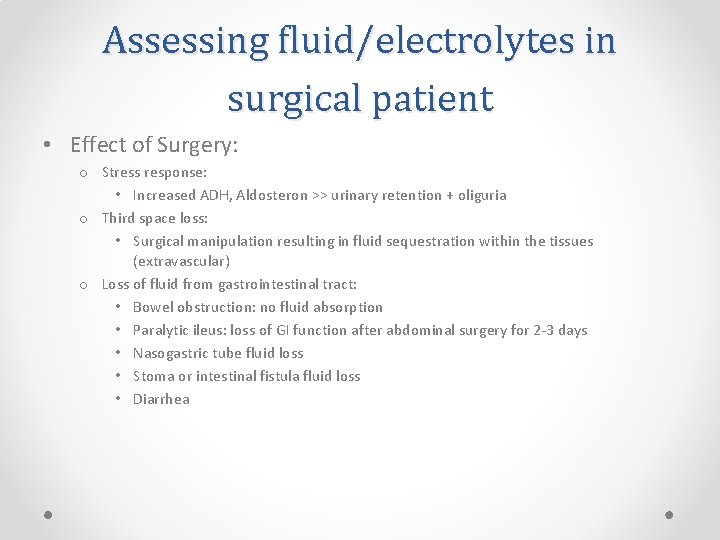
Assessing fluid/electrolytes in surgical patient • Effect of Surgery: o Stress response: • Increased ADH, Aldosteron >> urinary retention + oliguria o Third space loss: • Surgical manipulation resulting in fluid sequestration within the tissues (extravascular) o Loss of fluid from gastrointestinal tract: • Bowel obstruction: no fluid absorption • Paralytic ileus: loss of GI function after abdominal surgery for 2 -3 days • Nasogastric tube fluid loss • Stoma or intestinal fistula fluid loss • Diarrhea
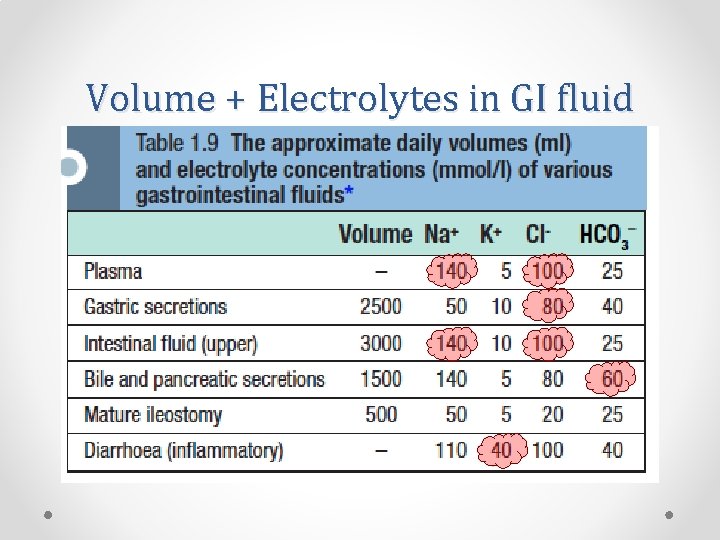
Volume + Electrolytes in GI fluid
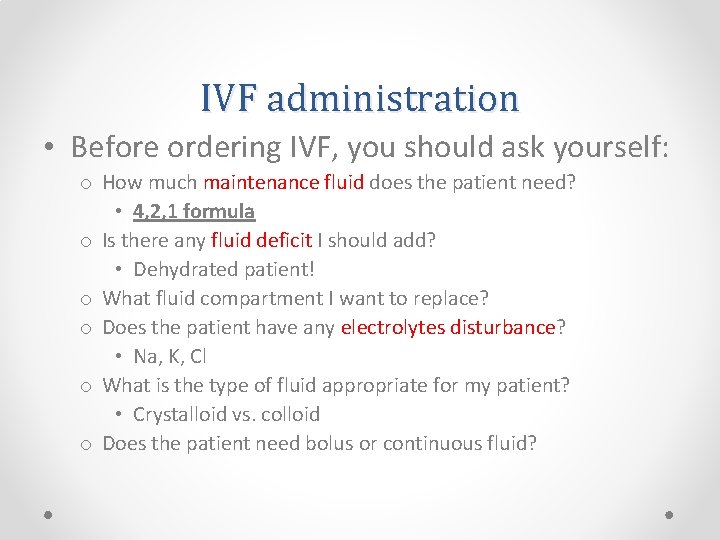
IVF administration • Before ordering IVF, you should ask yourself: o How much maintenance fluid does the patient need? • 4, 2, 1 formula o Is there any fluid deficit I should add? • Dehydrated patient! o What fluid compartment I want to replace? o Does the patient have any electrolytes disturbance? • Na, K, Cl o What is the type of fluid appropriate for my patient? • Crystalloid vs. colloid o Does the patient need bolus or continuous fluid?
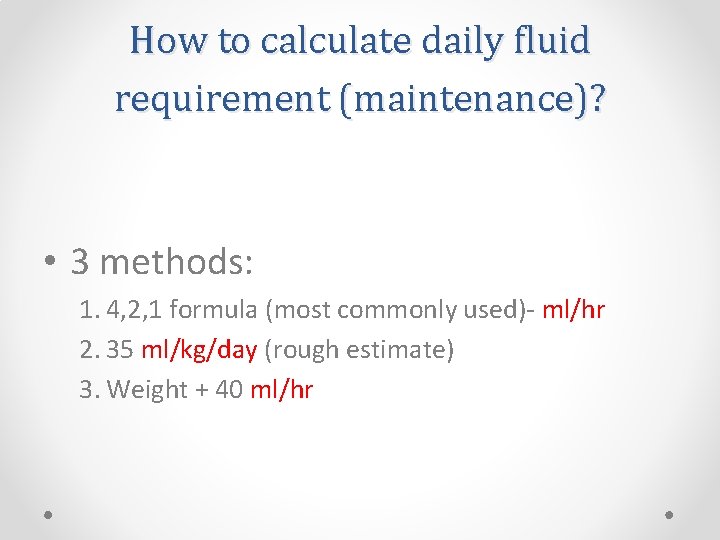
How to calculate daily fluid requirement (maintenance)? • 3 methods: 1. 4, 2, 1 formula (most commonly used)- ml/hr 2. 35 ml/kg/day (rough estimate) 3. Weight + 40 ml/hr
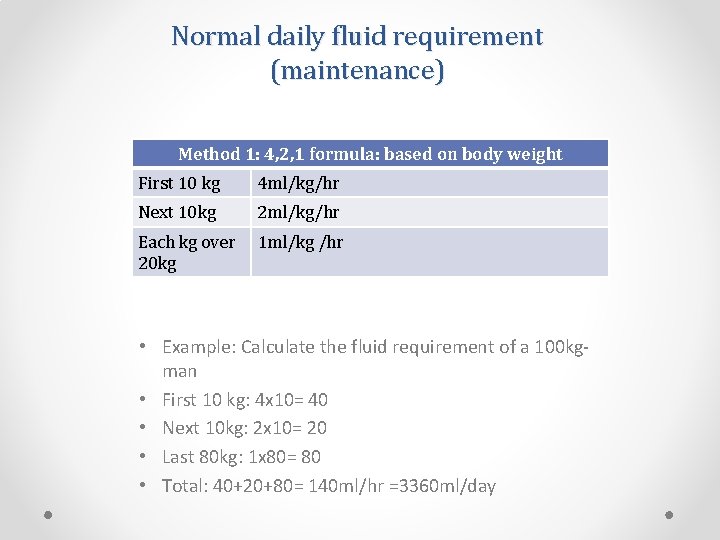
Normal daily fluid requirement (maintenance) Method 1: 4, 2, 1 formula: based on body weight First 10 kg 4 ml/kg/hr Next 10 kg 2 ml/kg/hr Each kg over 20 kg 1 ml/kg /hr • Example: Calculate the fluid requirement of a 100 kgman • First 10 kg: 4 x 10= 40 • Next 10 kg: 2 x 10= 20 • Last 80 kg: 1 x 80= 80 • Total: 40+20+80= 140 ml/hr =3360 ml/day

Normal daily fluid requirement (maintenance) • Method 2: 35 ml/kg/day o 35 x 100= 3500 ml/kg/day = 145 ml/hr • Method 3: Weight + 40 ml/hr o 100 + 40= 140 ml/hr
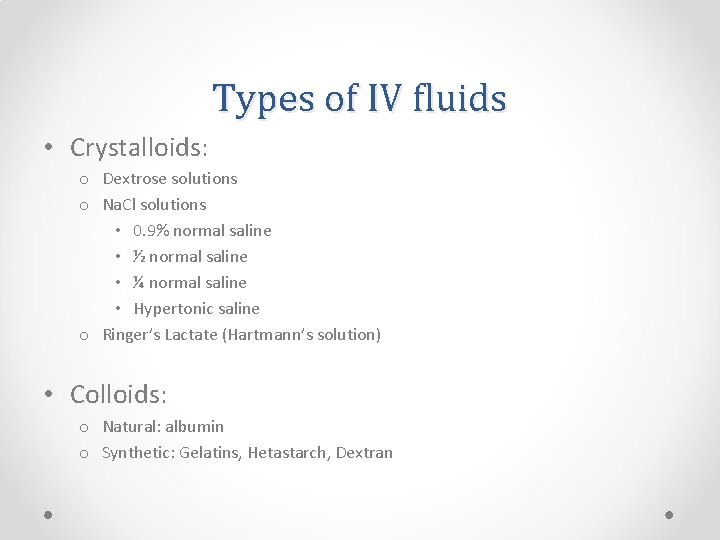
Types of IV fluids • Crystalloids: o Dextrose solutions o Na. Cl solutions • 0. 9% normal saline • ½ normal saline • ¼ normal saline • Hypertonic saline o Ringer’s Lactate (Hartmann’s solution) • Colloids: o Natural: albumin o Synthetic: Gelatins, Hetastarch, Dextran
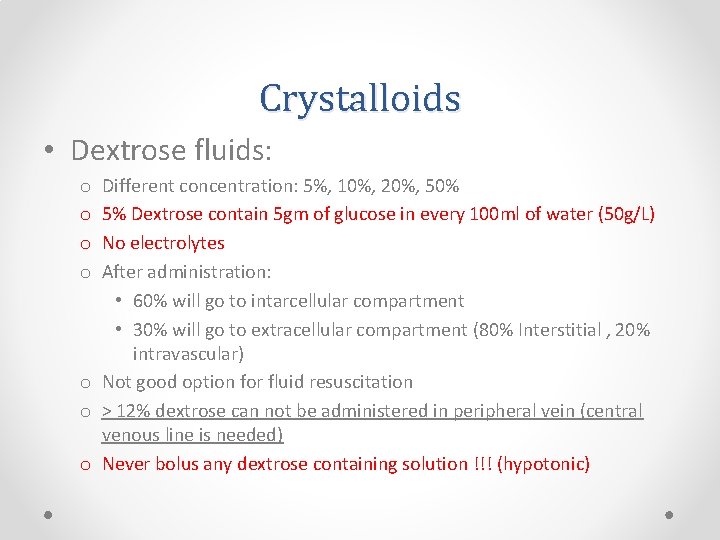
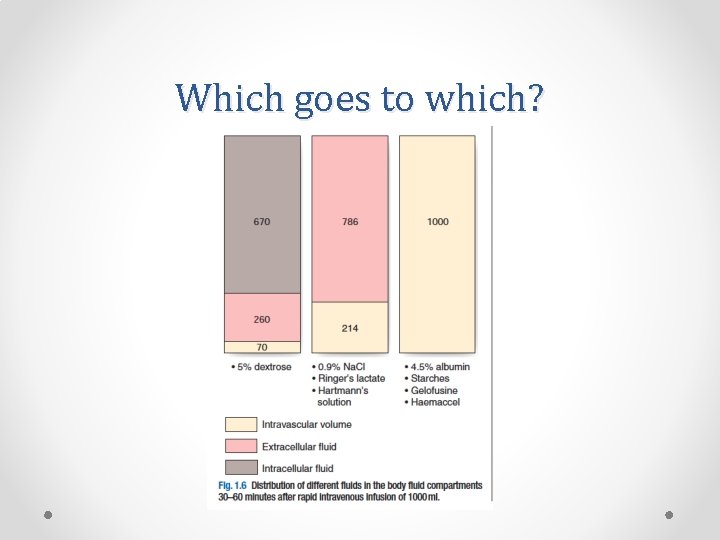
Crystalloids • Dextrose fluids: Different concentration: 5%, 10%, 20%, 50% 5% Dextrose contain 5 gm of glucose in every 100 ml of water (50 g/L) No electrolytes After administration: • 60% will go to intarcellular compartment • 30% will go to extracellular compartment (80% Interstitial , 20% intravascular) o Not good option for fluid resuscitation o > 12% dextrose can not be administered in peripheral vein (central venous line is needed) o Never bolus any dextrose containing solution !!! (hypotonic) o o
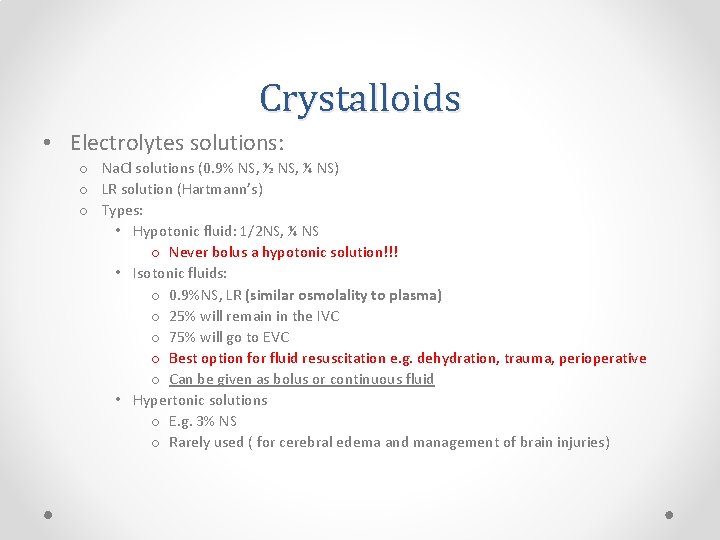
Crystalloids • Electrolytes solutions: o Na. Cl solutions (0. 9% NS, ½ NS, ¼ NS) o LR solution (Hartmann’s) o Types: • Hypotonic fluid: 1/2 NS, ¼ NS o Never bolus a hypotonic solution!!! • Isotonic fluids: o 0. 9%NS, LR (similar osmolality to plasma) o 25% will remain in the IVC o 75% will go to EVC o Best option for fluid resuscitation e. g. dehydration, trauma, perioperative o Can be given as bolus or continuous fluid • Hypertonic solutions o E. g. 3% NS o Rarely used ( for cerebral edema and management of brain injuries)

Composition of IV fluid
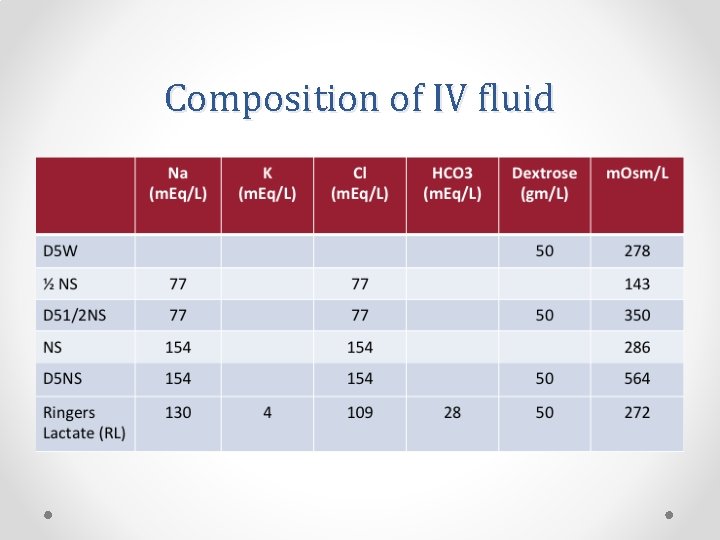
Composition of IV fluid
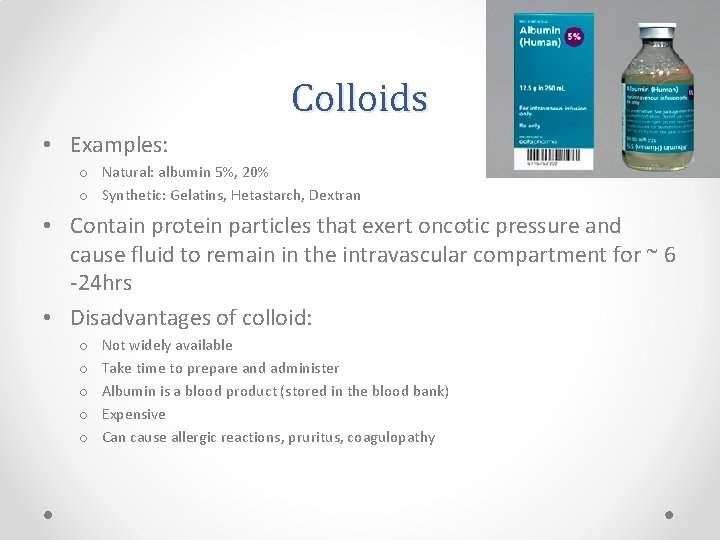
Colloids • Examples: o Natural: albumin 5%, 20% o Synthetic: Gelatins, Hetastarch, Dextran • Contain protein particles that exert oncotic pressure and cause fluid to remain in the intravascular compartment for ~ 6 -24 hrs • Disadvantages of colloid: o o o Not widely available Take time to prepare and administer Albumin is a blood product (stored in the blood bank) Expensive Can cause allergic reactions, pruritus, coagulopathy
Which goes to which?
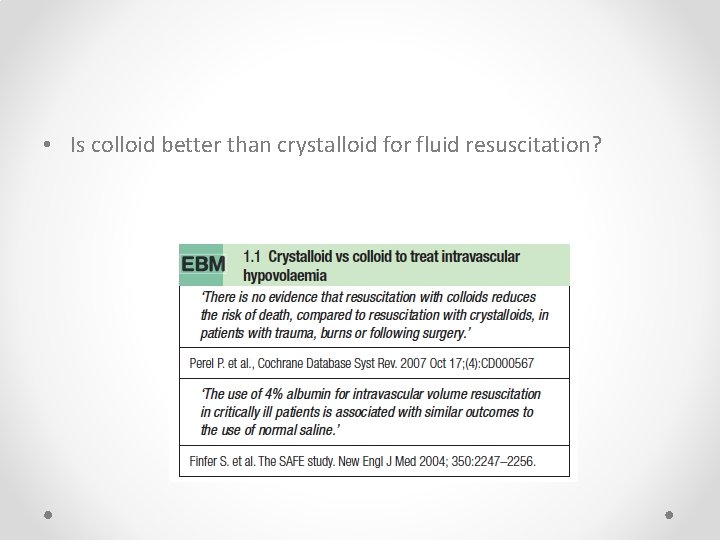
• Is colloid better than crystalloid for fluid resuscitation?
Electrolyte requirement • Adult: o Na: 1 -2 m. Eq/kg/day o K: 1 m. Eq/kg/day o Cl 1 -2 m. Eq/kg/day • Children: o Na: 2 -3 m. Eq/kg/day o K: 2 -3 m. Eq/kg/day o Cl: 2 -3 m. Eq/kg/day
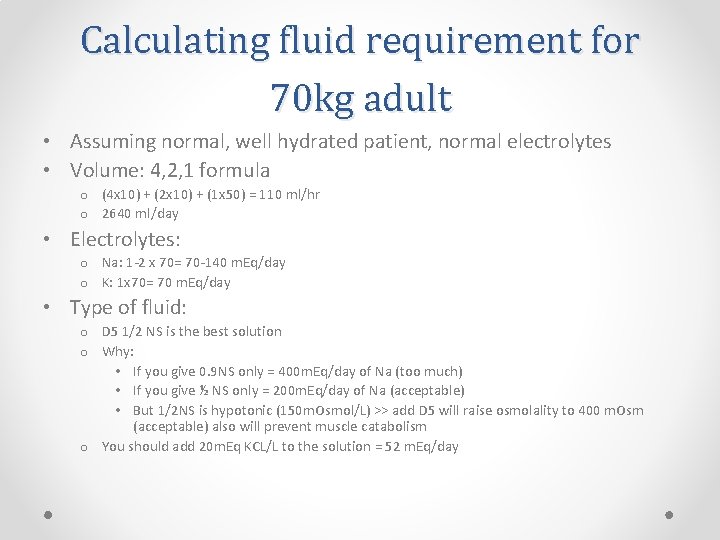
Calculating fluid requirement for 70 kg adult • Assuming normal, well hydrated patient, normal electrolytes • Volume: 4, 2, 1 formula o (4 x 10) + (2 x 10) + (1 x 50) = 110 ml/hr o 2640 ml/day • Electrolytes: o Na: 1 -2 x 70= 70 -140 m. Eq/day o K: 1 x 70= 70 m. Eq/day • Type of fluid: o D 5 1/2 NS is the best solution o Why: • If you give 0. 9 NS only = 400 m. Eq/day of Na (too much) • If you give ½ NS only = 200 m. Eq/day of Na (acceptable) • But 1/2 NS is hypotonic (150 m. Osmol/L) >> add D 5 will raise osmolality to 400 m. Osm (acceptable) also will prevent muscle catabolism o You should add 20 m. Eq KCL/L to the solution = 52 m. Eq/day
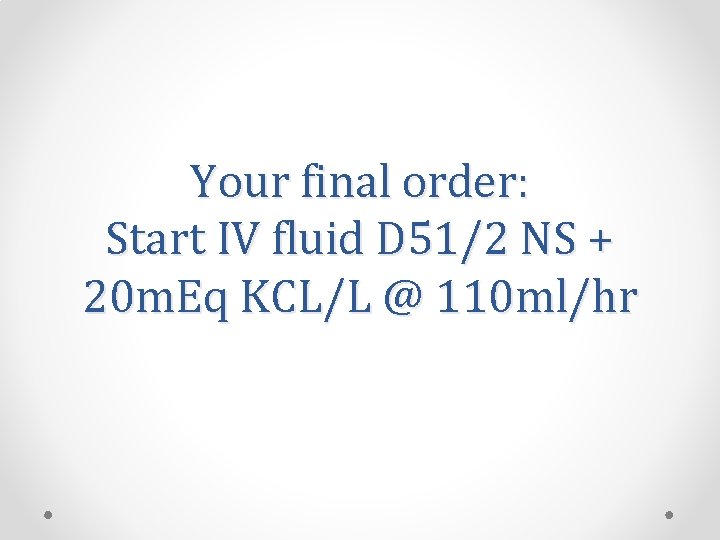
Your final order: Start IV fluid D 51/2 NS + 20 m. Eq KCL/L @ 110 ml/hr
Water & electrolytes disturbance
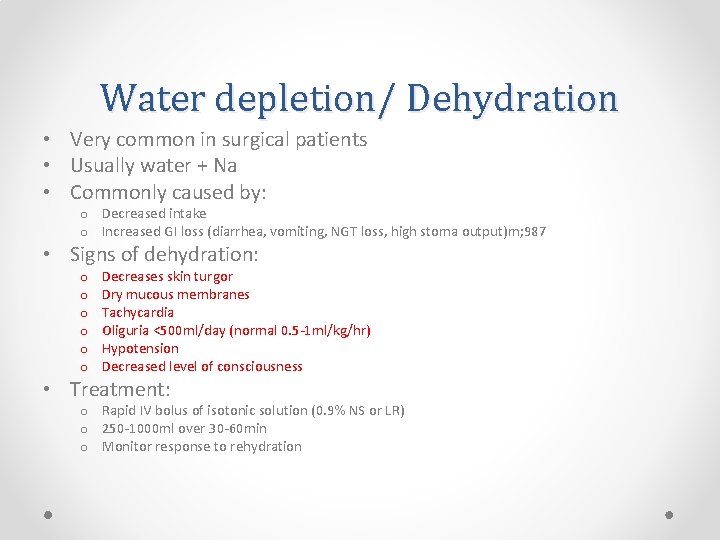
Water depletion/ Dehydration • Very common in surgical patients • Usually water + Na • Commonly caused by: o Decreased intake o Increased GI loss (diarrhea, vomiting, NGT loss, high stoma output)m; 987 • Signs of dehydration: o o o Decreases skin turgor Dry mucous membranes Tachycardia Oliguria <500 ml/day (normal 0. 5 -1 ml/kg/hr) Hypotension Decreased level of consciousness • Treatment: o Rapid IV bolus of isotonic solution (0. 9% NS or LR) o 250 -1000 ml over 30 -60 min o Monitor response to rehydration
Water excess • Due to excessive fluid administration (especially hypotonic fluid e. g. Dextrose solutions • Can cause hyponatremia (dilutional) • Water accumulate in ECC • Difficult to detect clinically (edema, basal chest crackles, elevated JVP) • Later stages >> tissue edema • High risk patients: o Cardiac failure o Renal failure
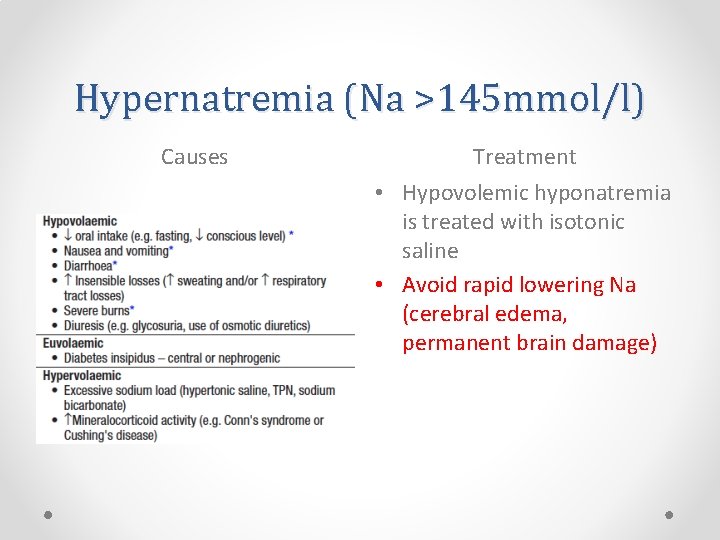
Hypernatremia (Na >145 mmol/l) Causes Treatment • Hypovolemic hyponatremia is treated with isotonic saline • Avoid rapid lowering Na (cerebral edema, permanent brain damage)
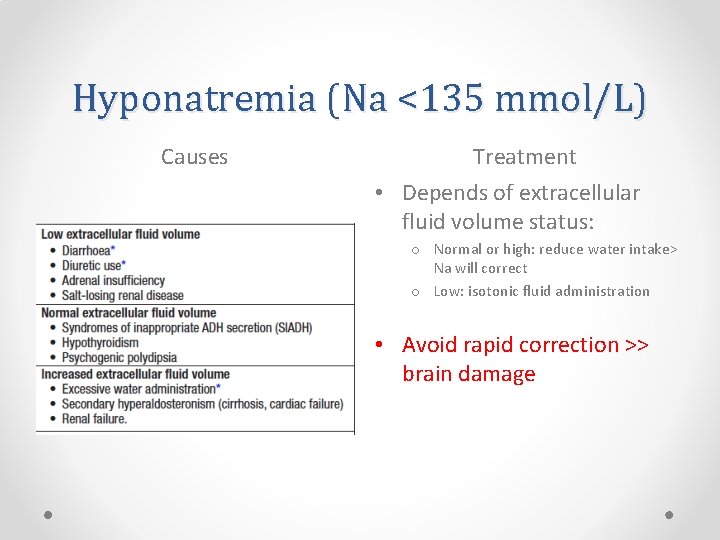
Hyponatremia (Na <135 mmol/L) Causes Treatment • Depends of extracellular fluid volume status: o Normal or high: reduce water intake> Na will correct o Low: isotonic fluid administration • Avoid rapid correction >> brain damage
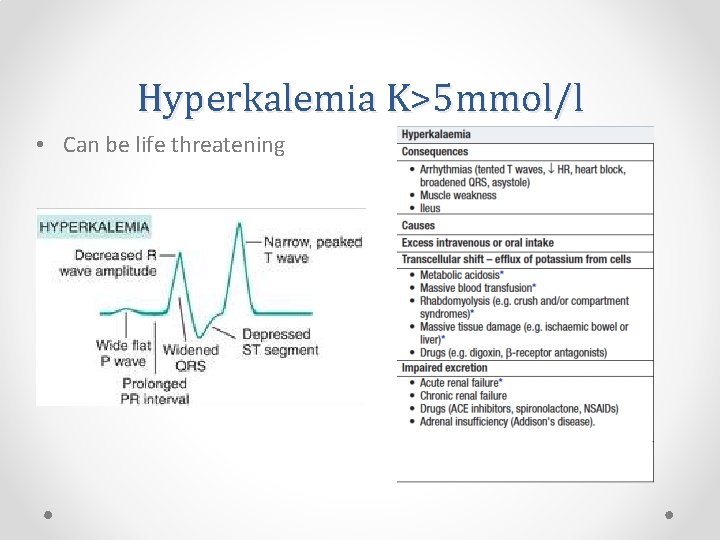
Hyperkalemia K>5 mmol/l • Can be life threatening
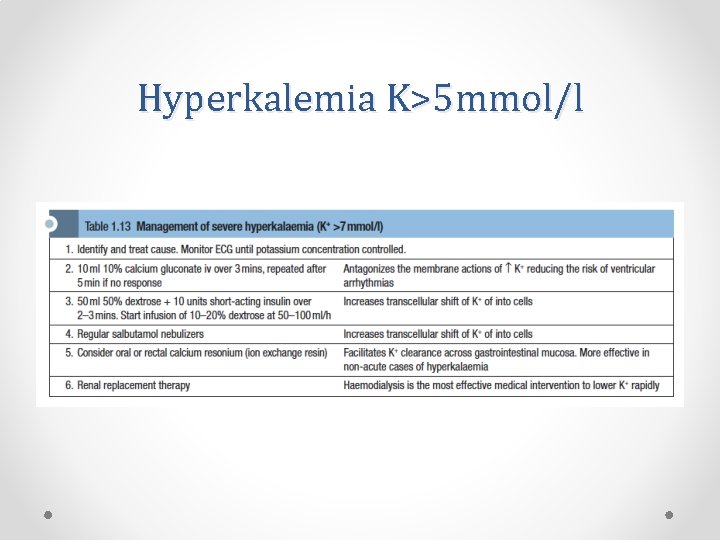
Hyperkalemia K>5 mmol/l
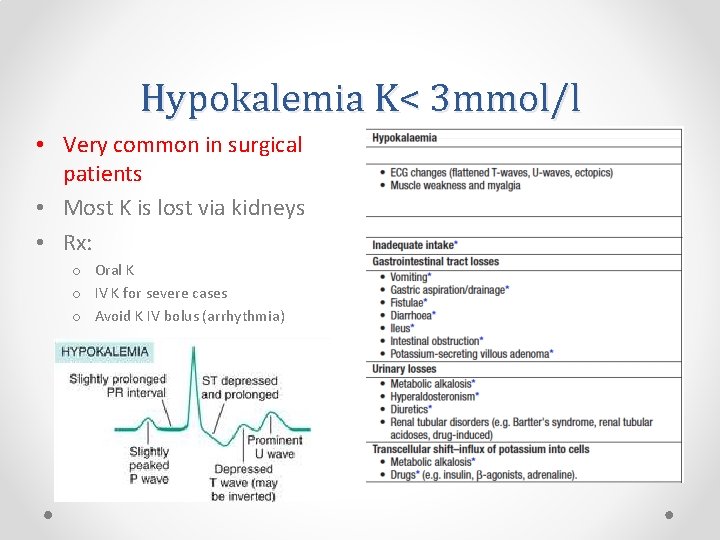
Hypokalemia K< 3 mmol/l • Very common in surgical patients • Most K is lost via kidneys • Rx: o Oral K o IV K for severe cases o Avoid K IV bolus (arrhythmia)
Acid-base balance & common disorders
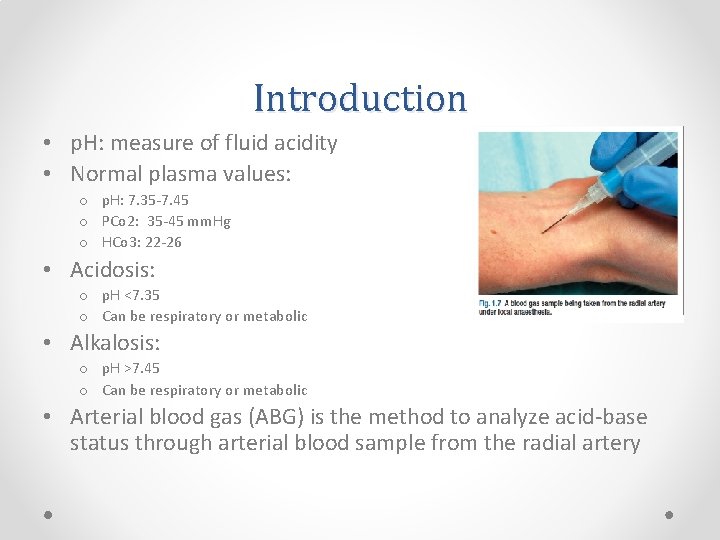
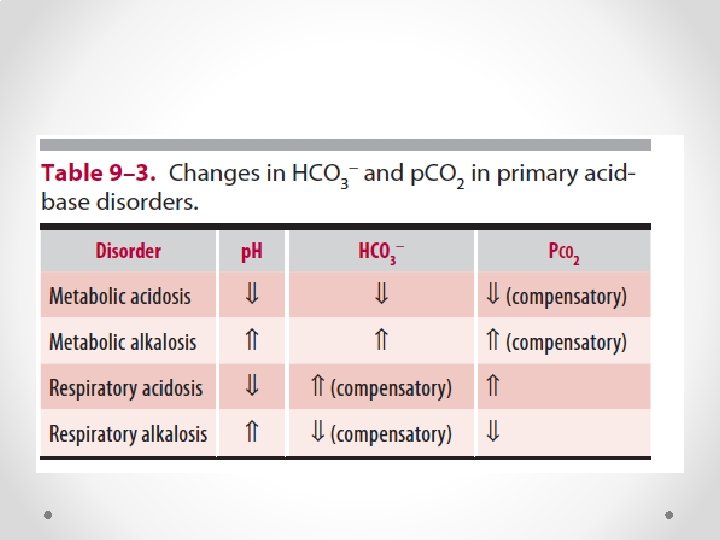
Introduction • p. H: measure of fluid acidity • Normal plasma values: o p. H: 7. 35 -7. 45 o PCo 2: 35 -45 mm. Hg o HCo 3: 22 -26 • Acidosis: o p. H <7. 35 o Can be respiratory or metabolic • Alkalosis: o p. H >7. 45 o Can be respiratory or metabolic • Arterial blood gas (ABG) is the method to analyze acid-base status through arterial blood sample from the radial artery
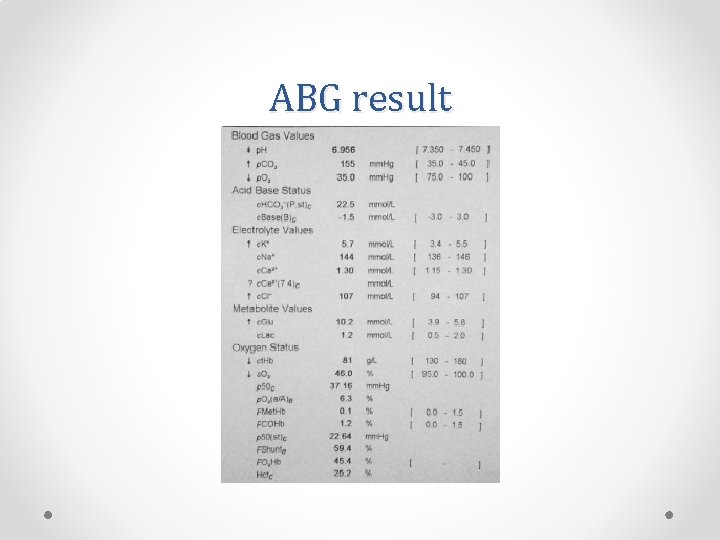
ABG result
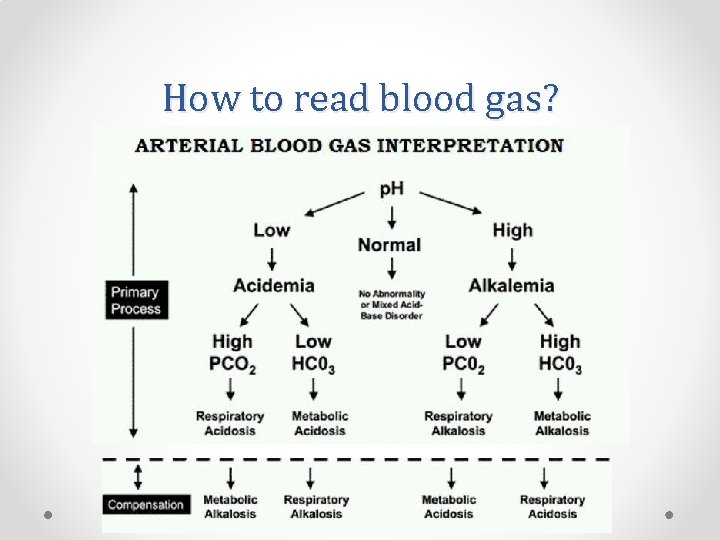
How to read blood gas?
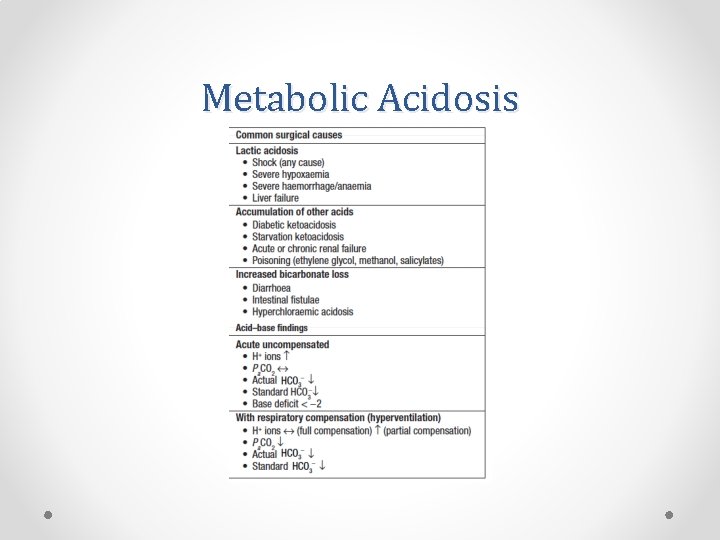
Metabolic Acidosis
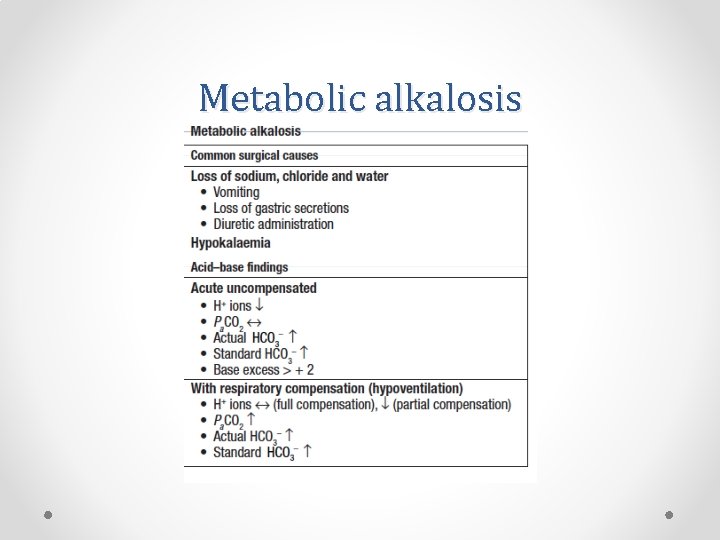
Metabolic alkalosis
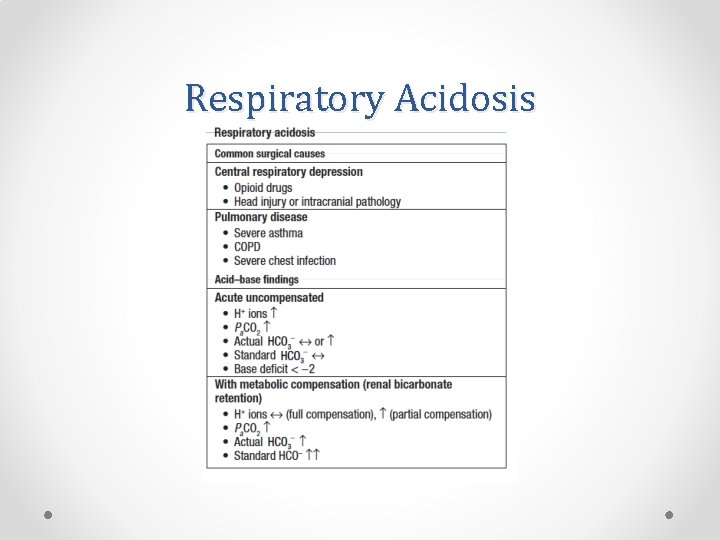
Respiratory Acidosis
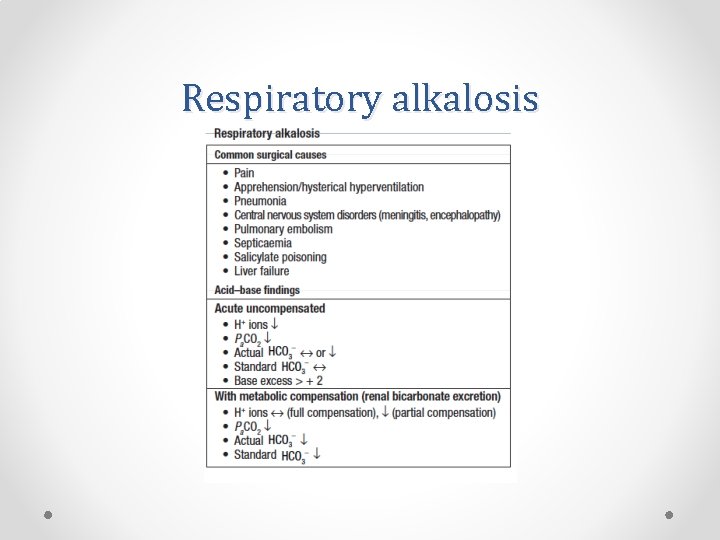
Respiratory alkalosis
THANK YOU • REMEMBER: o o Formula to calculate fluid requirement Comparing different types of fluid Identifying and managing dehydrated patient Composition of different intravenous solutions • For Questions:
- Slides: 42