
Intravenous Drug Use and Bloodborne Diseases 9 ATOD
Intravenous Drug Use and Bloodborne Diseases 9. ATOD. 1. 4
Objectives �Explain intravenous drug use and the possible risks �Review common bloodborne diseases and possible complications �List ways to reduce risks associated with intravenous drug use

What is Intravenous (IV) Drug Use? �Injection of a substance into a vein using a needle and syringe The problem: �Potential exposure to bloodborne pathogens from shared needles, syringes, and other drug injection paraphernalia �Includes drugs like cocaine, heroin, methamphetamine, and steroids
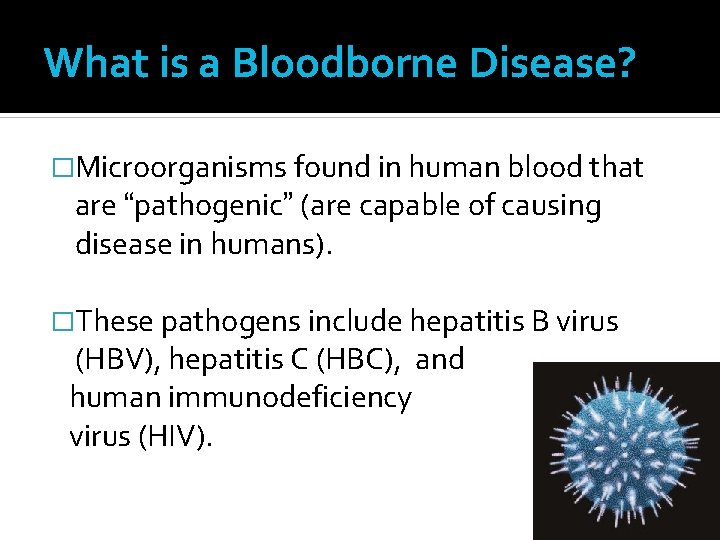
What is a Bloodborne Disease? �Microorganisms found in human blood that are “pathogenic” (are capable of causing disease in humans). �These pathogens include hepatitis B virus (HBV), hepatitis C (HBC), and human immunodeficiency virus (HIV).
What do these diseases do? �HIV, HBV, and HBC are viruses which can be transmitted through different modes, including IV drug use. �Following are some effects of these bloodborne pathogens…
Hepatitis B Virus Short-term Loss of appetite Malaise (feeling of illhealth) Fatigue (feeling tired all the time) Nausea and vomiting Abdominal pain Dark urine Jaundice (yellowing of the skin and eyes) Long-term Infection Cirrhosis (scarring) of the liver Liver cancer Liver failure Death There is a vaccine for Hepatitis B!
Hepatitis C Virus Short-term Loss of appetite Malaise (feeling of illhealth) Fatigue (feeling tired all the time) Nausea and vomiting Abdominal pain Dark urine Jaundice (yellowing of the skin and eyes) Long-term Infection Cirrhosis (scarring) of the liver Liver cancer Liver failure Death Same short-term and long-term effects as HBV
Human Immunodeficiency Virus (HIV) Rapid weight loss Dry cough Recurring fever or profuse night sweats Profound and unexplained fatigue Swollen lymph glands in the armpits, groin, or neck Diarrhea that lasts for more than a week White spots or unusual blemishes on the tongue, in the mouth, or in the throat Pneumonia Red, brown, pink, or purplish blotches on or under the skin or inside the mouth, nose, or eyelids Memory loss, depression, and other neurological disorders Death
What can I do? �Don’t use injection drugs (except for prescribed medication). �Don’t share needles, syringes or “works. ” �Educate others about the risks associated with intravenous drugs. �Become an advocate for others in your community.
- Slides: 9