
Intravascular ultrasound IVUS in percutaneous coronary interventions summary

- Slides: 48
Intravascular ultrasound (IVUS) in percutaneous coronary interventions – summary of key articles Prepared by Radcliffe Cardiology 29 June 2016
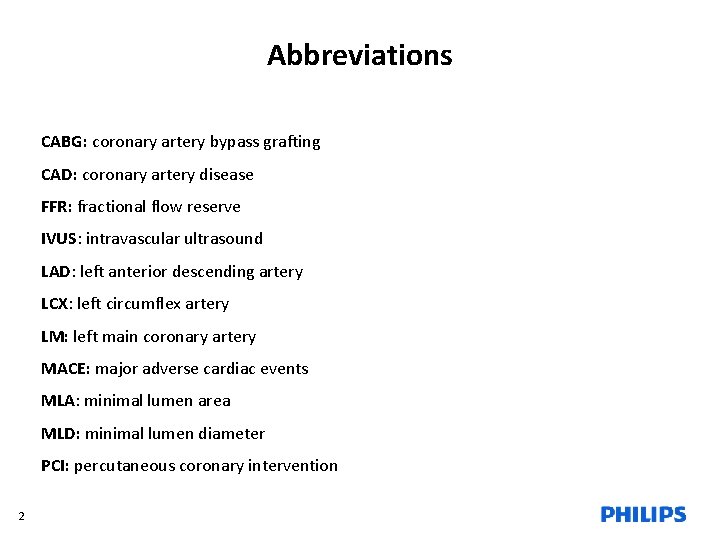
Abbreviations CABG: coronary artery bypass grafting CAD: coronary artery disease FFR: fractional flow reserve IVUS: intravascular ultrasound LAD: left anterior descending artery LCX: left circumflex artery LM: left main coronary artery MACE: major adverse cardiac events MLA: minimal lumen area MLD: minimal lumen diameter PCI: percutaneous coronary intervention 2
Intravascular Ultrasound-Derived Minimal Lumen Area Criteria for Functionally Significant Left Main Coronary Artery Stenosis Park SJ, Ahn JM, Kang SJ, et al JACC Cardiovasc Interv, 2014; 7: 868 -74. 3
IVUS-Derived MLA Criteria for Functionally Significant LM Stenosis, Park et al, 2014 Background: Follow-up to previous study with larger patient population Methods: • 112 patients with isolated ostial and shaft LM stenosis • IVUS imaging and FFR measurement before intervention 4
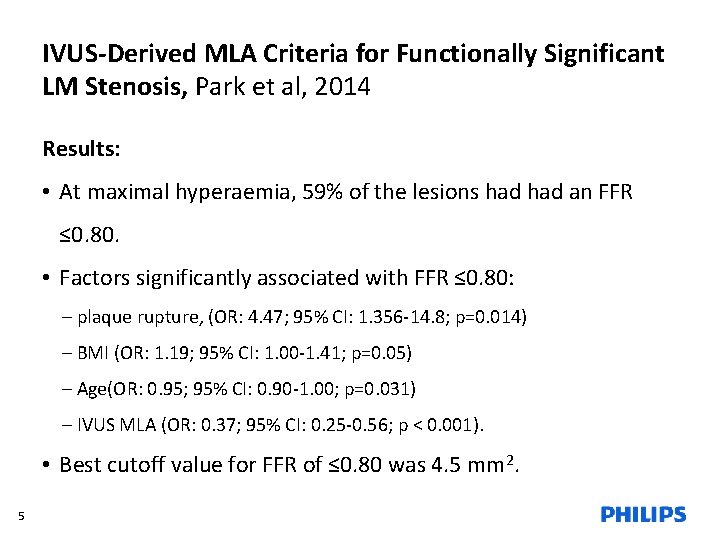
IVUS-Derived MLA Criteria for Functionally Significant LM Stenosis, Park et al, 2014 Results: • At maximal hyperaemia, 59% of the lesions had an FFR ≤ 0. 80. • Factors significantly associated with FFR ≤ 0. 80: – plaque rupture, (OR: 4. 47; 95% CI: 1. 356 -14. 8; p=0. 014) – BMI (OR: 1. 19; 95% CI: 1. 00 -1. 41; p=0. 05) – Age(OR: 0. 95; 95% CI: 0. 90 -1. 00; p=0. 031) – IVUS MLA (OR: 0. 37; 95% CI: 0. 25 -0. 56; p < 0. 001). • Best cutoff value for FFR of ≤ 0. 80 was 4. 5 mm 2. 5
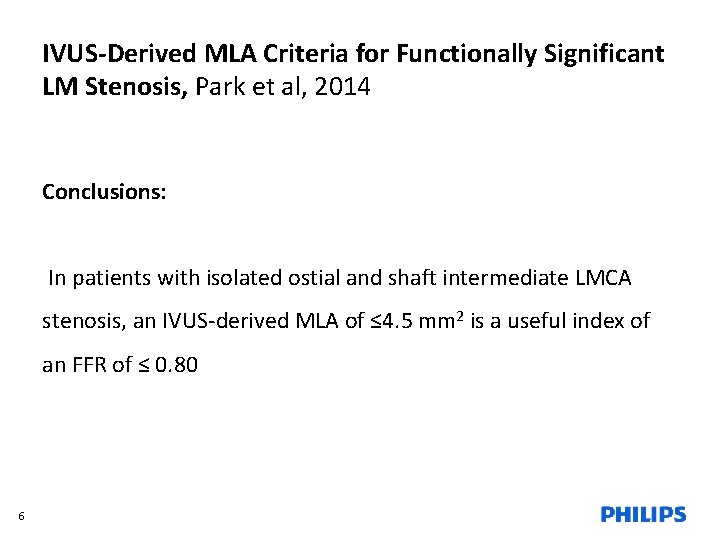
IVUS-Derived MLA Criteria for Functionally Significant LM Stenosis, Park et al, 2014 Conclusions: In patients with isolated ostial and shaft intermediate LMCA stenosis, an IVUS-derived MLA of ≤ 4. 5 mm 2 is a useful index of an FFR of ≤ 0. 80 6
Clinical impact of intravascular ultrasound guidance in drug-eluting stent implantation for unprotected left main coronary disease: pooled analysis at the patient-level of 4 registries de la Torre Hernandez JM, Baz Alonso JA, Gomez Hospital JA, et al. , JACC Cardiovasc Interv, 2014; 7: 244 -54 7
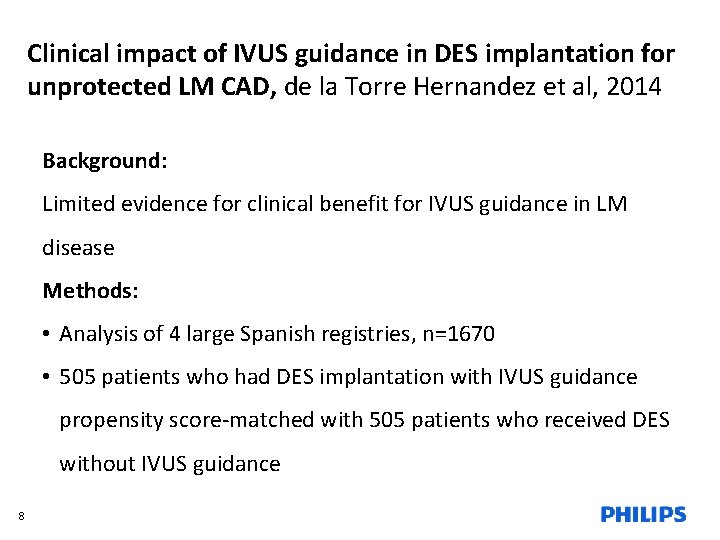
Clinical impact of IVUS guidance in DES implantation for unprotected LM CAD, de la Torre Hernandez et al, 2014 Background: Limited evidence for clinical benefit for IVUS guidance in LM disease Methods: • Analysis of 4 large Spanish registries, n=1670 • 505 patients who had DES implantation with IVUS guidance propensity score-matched with 505 patients who received DES without IVUS guidance 8
Clinical impact of IVUS guidance in DES implantation for unprotected LM CAD, de la Torre Hernandez et al, 2014 Results: At 3 year follow-up survival free of cardiac death, MI, and TLR: 88. 7% vs 83. 6%; p = 0. 04 for IVUS vs overall population In subgroups with distal LM lesions, endpoint achieved in 90% vs 80. 7%, p=0. 03 Definite and probable stent thrombosis 0. 6% vs 2. 2%, p=0. 4 9
Clinical impact of IVUS guidance in DES implantation for unprotected LM CAD, de la Torre Hernandez et al, 2014 Conclusions: IVUS guidance during PCI is associated with better outcomes in patients with LM disease undergoing revascularization with DES 10
Intravascular Ultrasound Guidance to Minimize the use of Iodine Contrast in Percutaneous Coronary Intervention: The MOZART Randomized Controlled Trial Mariani J, Jr. , Guedes C, Soares P, et al. JACC Cardiovasc Interv, 2014; 7: 1287 -93. 11
The MOZART trial, Mariani et al, 2014 Background: Angiography requires the use of large amounts of iodine contract agent Risk of contrast-induced acute kidney injury and volume overload Methods: • n=83, randomized to IVUS or angiography-guided PCI • Most patients had diabetes and many had long, calcified, bifurcated, and complex lesions 12
The MOZART trial, Mariani et al, 2014 Results • IVUS group had threefold reduced usage of contrast dose compared with angiography group (64. 5 ml vs 20. 0 ml respectively, p<0. 001) • In-hospital and 4 -month outcomes were not different between patients who received angiography-guided and IVUS-guided PCI 13
The MOZART trial, Mariani et al, 2014 Conclusions • IVUS imaging should be considered for patients at high risk for contrast-induced acute kidney injury or volume overload undergoing coronary angioplasty 14
A prospective, randomized trial of intravascular -ultrasound guided compared to angiography guided stent implantation in complex coronary lesions: The AVIO trial Chieffo A, Latib A, Caussin C, et al Am Heart J, 2013; 165: 65 -72 15
The AVIO trial, Chieffo et al, 2013 Background • DES use is associated with risk of late stent thrombosis • Post-procedural MLD predicts risk of stent thrombosis Methods • n=284, all with complex lesions • Randomized 1: 1 to IVUS or angiography-guided procedures 16
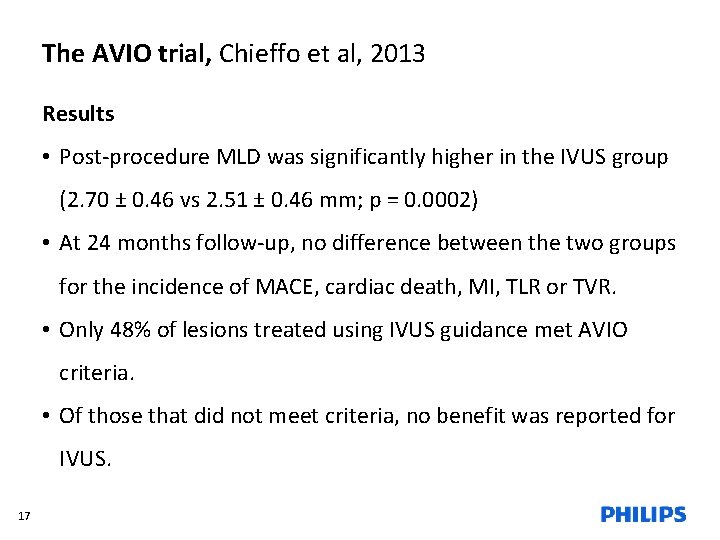
The AVIO trial, Chieffo et al, 2013 Results • Post-procedure MLD was significantly higher in the IVUS group (2. 70 ± 0. 46 vs 2. 51 ± 0. 46 mm; p = 0. 0002) • At 24 months follow-up, no difference between the two groups for the incidence of MACE, cardiac death, MI, TLR or TVR. • Only 48% of lesions treated using IVUS guidance met AVIO criteria. • Of those that did not meet criteria, no benefit was reported for IVUS. 17
The AVIO trial, Chieffo et al, 2013 Conclusions • IVUS-guided DES implantation resulted in a larger postprocedural MLD than angiography-guided procedures, with no difference in the incidence of MACE at 24 months. 18
Use of IVUS guided coronary stenting with drug eluting stent. A systematic review and metaanalysis of randomized controlled clinical trials and high quality observational studies Klersy C, Ferlini M, Raisaro A, et al Int J Cardiol, 2013; 170: 54 -63 19
Systematic review and meta-analysis, Klersy et al, 2013 Background • Lack of data on outcomes in IVUS-guided PCI in the era of DES Methods • 268 abstracts considered • 12 studies selected: – 3 randomized controlled trials – 9 high quality observational studies – 18, 707 patients. 20
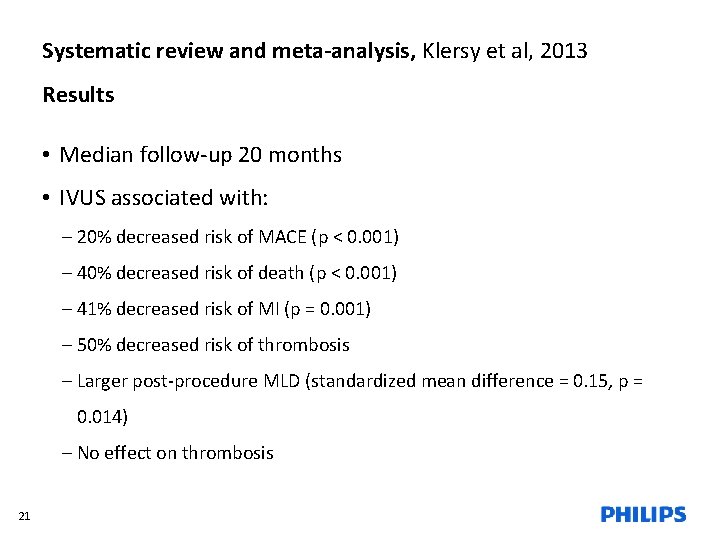
Systematic review and meta-analysis, Klersy et al, 2013 Results • Median follow-up 20 months • IVUS associated with: – 20% decreased risk of MACE (p < 0. 001) – 40% decreased risk of death (p < 0. 001) – 41% decreased risk of MI (p = 0. 001) – 50% decreased risk of thrombosis – Larger post-procedure MLD (standardized mean difference = 0. 15, p = 0. 014) – No effect on thrombosis 21
Systematic review and meta-analysis, Klersy et al, 2013 Conclusions IVUS guidance in DES implantation, performed in large volume centres, reduces MACE by reducing mortality and MI, possibly by reducing thrombosis rather than restenosis rate. 22
Effect of Intravascular Ultrasound-Guided vs Angiography-Guided Everolimus-Eluting Stent Implantation: The IVUS-XPL Randomized Clinical Trial Hong SJ, Kim BK, Shin DH, et al. JAMA, 2015; 314: 2155 -63 23
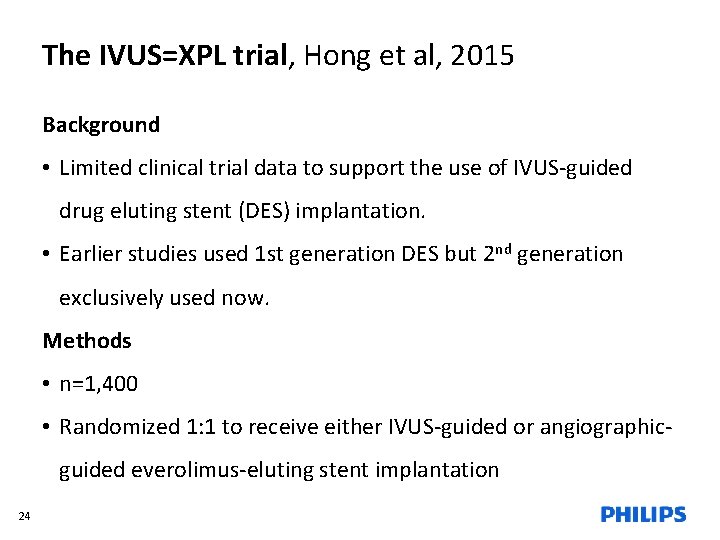
The IVUS=XPL trial, Hong et al, 2015 Background • Limited clinical trial data to support the use of IVUS-guided drug eluting stent (DES) implantation. • Earlier studies used 1 st generation DES but 2 nd generation exclusively used now. Methods • n=1, 400 • Randomized 1: 1 to receive either IVUS-guided or angiographicguided everolimus-eluting stent implantation 24
The IVUS=XPL trial, Hong et al, 2015 Results • At 1 year, IVUS group had a 48% reduced risk of MACE compared with the angiography group (2. 9% vs 5. 8%, p = 0. 007) • Patients who did not meet IVUS criteria for optimum stent deployment had a significantly higher incidence of MACE compared with those who met IVUS criteria (4. 6% vs 1. 5%, p = 0. 020) • No statistically significant differences in cardiac death, target 25 lesion–related MI, or stent thrombosis
The IVUS=XPL trial, Hong et al, 2015 Conclusions • The use of IVUS-guided everolimus-eluting stent implantation, compared with angiography-guided stent implantation, resulted in a significantly lower rate of MACE at 1 year 26
Comparison of intravascular ultrasound guided versus angiography guided drug eluting stent implantation: a systematic review and metaanalysis Zhang YJ, Pang S, Chen XY, et al BMC Cardiovasc Disord, 2015; 15: 153. 27
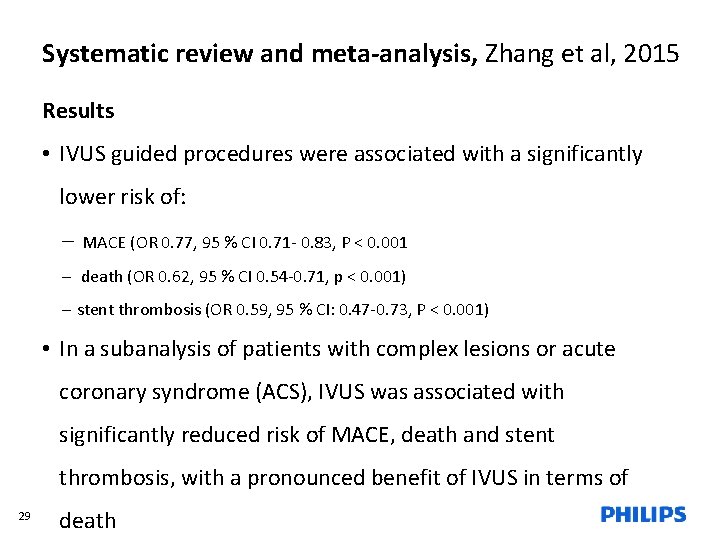
Systematic review and meta-analysis, Zhang et al, 2015 Background • Lack of clinical trial evidence is limiting the use of IVUS to guide DES implantations Methods • Meta-analysis of 20 clinical studies that compared clinical outcomes between IVUS-guided angiography-guided DES implantation • 3 randomized clinical studies and 17 observational registry studies 28
Systematic review and meta-analysis, Zhang et al, 2015 Results • IVUS guided procedures were associated with a significantly lower risk of: – MACE (OR 0. 77, 95 % CI 0. 71 - 0. 83, P < 0. 001 – death (OR 0. 62, 95 % CI 0. 54 -0. 71, p < 0. 001) – stent thrombosis (OR 0. 59, 95 % CI: 0. 47 -0. 73, P < 0. 001) • In a subanalysis of patients with complex lesions or acute coronary syndrome (ACS), IVUS was associated with significantly reduced risk of MACE, death and stent thrombosis, with a pronounced benefit of IVUS in terms of 29 death
Systematic review and meta-analysis, Zhang et al, 2015 Conclusions • IVUS guidance is associated with improved clinical outcomes, especially in patients with complex lesions admitted with ACS. 30
IVUS in bifurcation stenting: what have we learned? Legutko J, Yamawaki M, Costa RA, et al. Euro. Intervention, 2015; 11 Suppl V: V 55 -8. 31
IVUS in bifurcation stenting: what have we learned? • Bifurcation lesions are difficult to assess by angiography because the lesion is often obscured by overlapping side branches • IVUS allows assessment of all lesion segments. 32
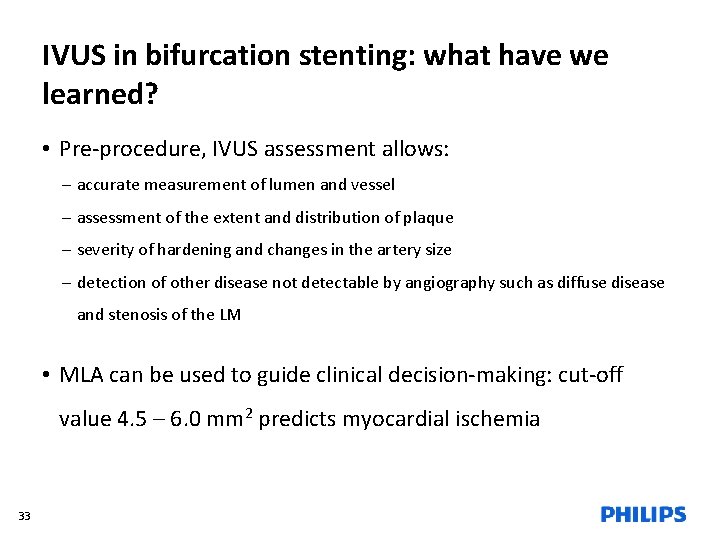
IVUS in bifurcation stenting: what have we learned? • Pre-procedure, IVUS assessment allows: – accurate measurement of lumen and vessel – assessment of the extent and distribution of plaque – severity of hardening and changes in the artery size – detection of other disease not detectable by angiography such as diffuse disease and stenosis of the LM • MLA can be used to guide clinical decision-making: cut-off value 4. 5 – 6. 0 mm 2 predicts myocardial ischemia 33
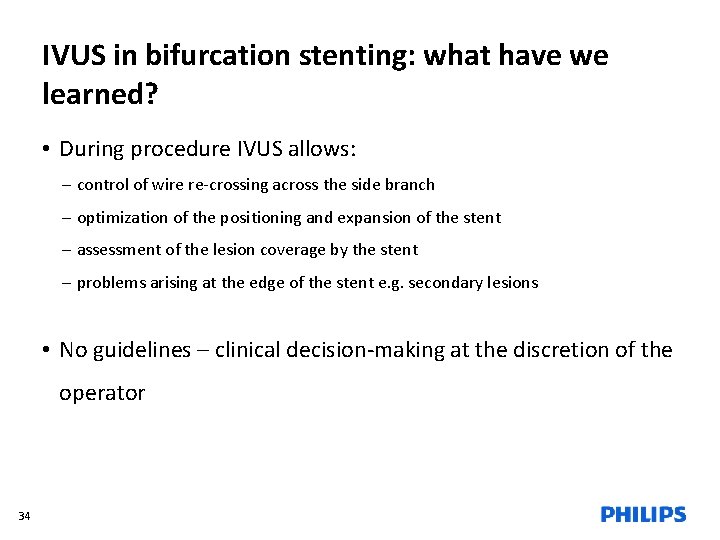
IVUS in bifurcation stenting: what have we learned? • During procedure IVUS allows: – control of wire re-crossing across the side branch – optimization of the positioning and expansion of the stent – assessment of the lesion coverage by the stent – problems arising at the edge of the stent e. g. secondary lesions • No guidelines – clinical decision-making at the discretion of the operator 34
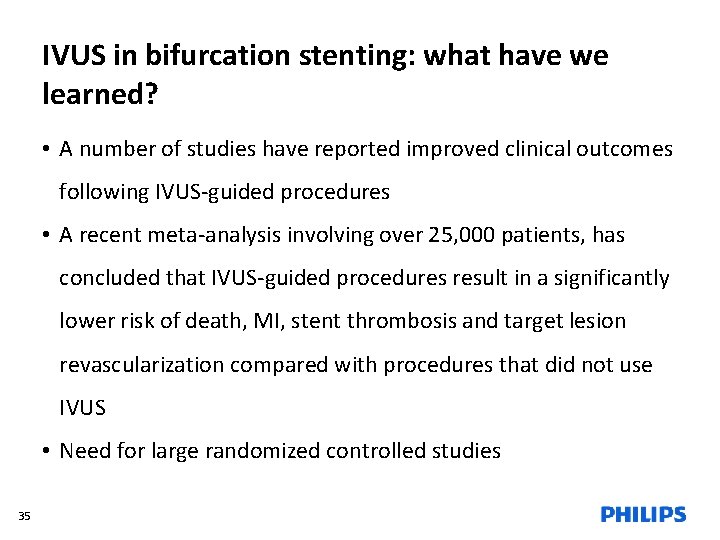
IVUS in bifurcation stenting: what have we learned? • A number of studies have reported improved clinical outcomes following IVUS-guided procedures • A recent meta-analysis involving over 25, 000 patients, has concluded that IVUS-guided procedures result in a significantly lower risk of death, MI, stent thrombosis and target lesion revascularization compared with procedures that did not use IVUS • Need for large randomized controlled studies 35
Outcomes With Intravascular Ultrasound. Guided Stent Implantation. A Meta-Analysis of Randomized Trials in the Era of Drug-Eluting Stents Elgendy IY, Mahmoud AN, Elgendy AY, et al Circ Cardiovasc Interv, 2016; 9: e 003700. 36
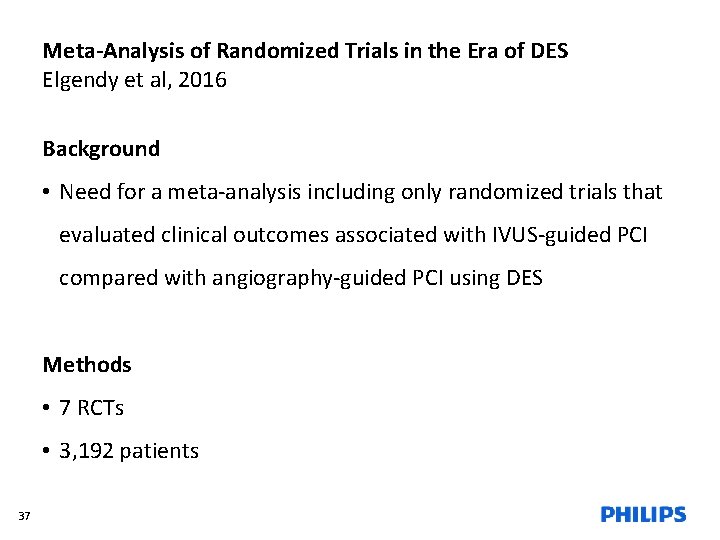
Meta-Analysis of Randomized Trials in the Era of DES Elgendy et al, 2016 Background • Need for a meta-analysis including only randomized trials that evaluated clinical outcomes associated with IVUS-guided PCI compared with angiography-guided PCI using DES Methods • 7 RCTs • 3, 192 patients 37
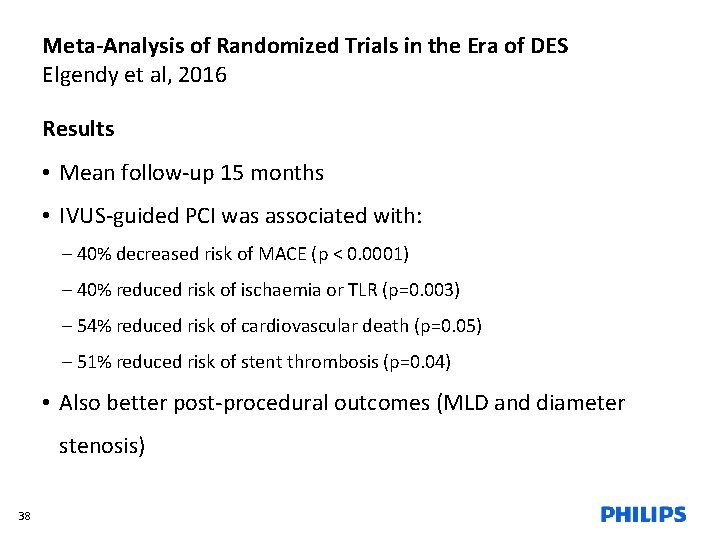
Meta-Analysis of Randomized Trials in the Era of DES Elgendy et al, 2016 Results • Mean follow-up 15 months • IVUS-guided PCI was associated with: – 40% decreased risk of MACE (p < 0. 0001) – 40% reduced risk of ischaemia or TLR (p=0. 003) – 54% reduced risk of cardiovascular death (p=0. 05) – 51% reduced risk of stent thrombosis (p=0. 04) • Also better post-procedural outcomes (MLD and diameter stenosis) 38
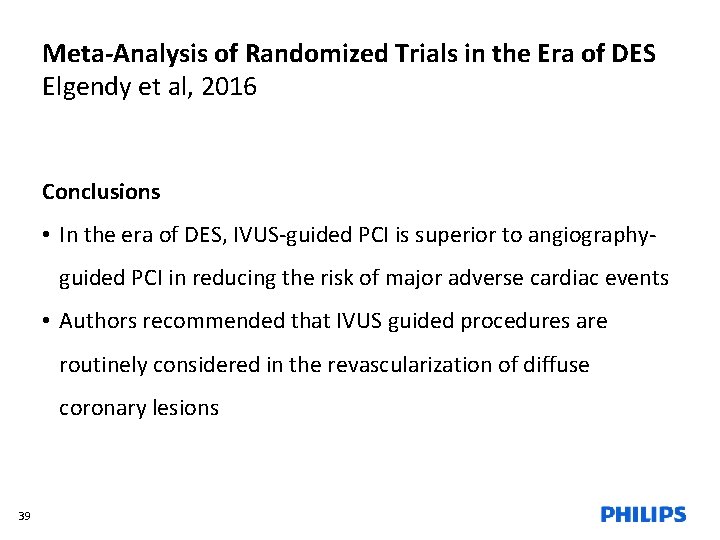
Meta-Analysis of Randomized Trials in the Era of DES Elgendy et al, 2016 Conclusions • In the era of DES, IVUS-guided PCI is superior to angiographyguided PCI in reducing the risk of major adverse cardiac events • Authors recommended that IVUS guided procedures are routinely considered in the revascularization of diffuse coronary lesions 39
The Role of Virtual Histology Intravascular Ultrasound in the Identification of Coronary Artery Plaque Vulnerability in Acute Coronary Syndromes Sinclair H, Veerasamy M, Bourantas C, et al Cardiol Rev, 2016 40
Virtual Histology IVUS in ACS Sinclair et al, 2016 • Grayscale IVUS constructs images based on amplitude of reflected ultrasound waves • VH-IVUS spectral pattern recognition to analyse the frequency and amplitude of the waves, obtaining a more accurate image of tissue subtypes 41
Virtual Histology IVUS in ACS Sinclair et al, 2016 Use • Assessment of coronary artery plaques • Classification of plaques However studies small and largely based on animal models 42
Virtual Histology IVUS in ACS Sinclair et al, 2016 Use of VH-IVUS to predict clinical outcomes PROSPECT study: • 697 patients with ACS • The following predicted MACE: – plaque burden ≥ 70% – presence of VH-TCFAs – median dense calcium area ≥ 0. 2 mm 2 43
Virtual Histology IVUS in ACS Sinclair et al, 2016 Use of VH-IVUS to predict clinical outcomes VIVA study: • 100 patients with angina • The following predicted MACE: – plaque burden >70% – presence of VH-TCFAs – Remodelling index 44
Virtual Histology IVUS in ACS Sinclair et al, 2016 Use of VH-IVUS to predict clinical outcomes ATHEROMA-IVUS study: • 581 patients with stable angina or ACS • The following predicted MACE: – plaque burden >70% – presence of VH-TCFAs – MLA ≤ 4 mm 2 45
Virtual Histology IVUS in ACS Sinclair et al, 2016 Other imaging modalities • Integrated backscatter-IVUS generates colour images • i. Map - produces images based on pattern recognition of the radio frequency (RF) signals A comparison of these to techniques found discrepancies between them 46
Virtual Histology IVUS in ACS Sinclair et al, 2016 Conclusions • VH IVUS is useful for identifying high-risk plaque features and vulnerable lesions in patients with ACS in research settings • Its use has also has added to the body of evidence that VHTCFAs adversely affect patient outcomes 47