
Intracellular Regulation of Cell Cycle Apoptosis Negative regulation
- Slides: 10
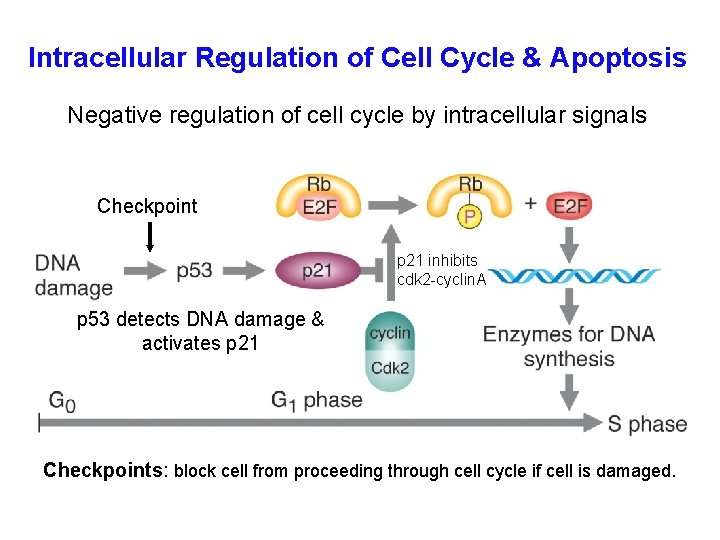
Intracellular Regulation of Cell Cycle & Apoptosis Negative regulation of cell cycle by intracellular signals Checkpoint p 21 inhibits cdk 2 -cyclin. A p 53 detects DNA damage & activates p 21 Checkpoints: block cell from proceeding through cell cycle if cell is damaged.
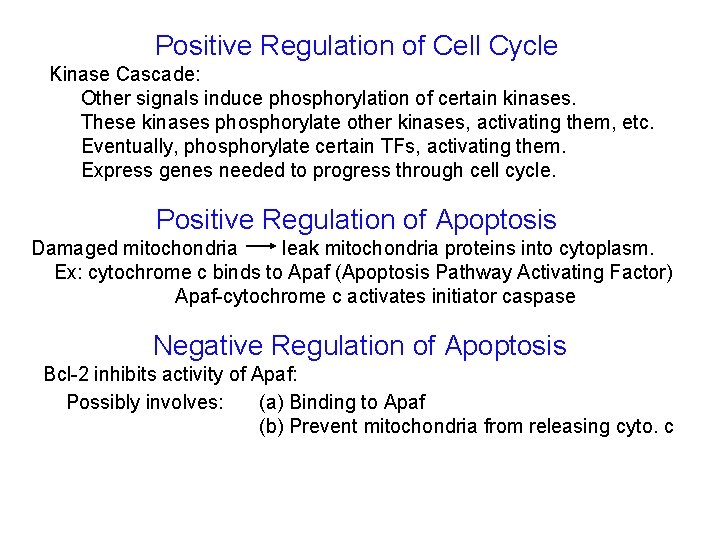
Positive Regulation of Cell Cycle Kinase Cascade: Other signals induce phosphorylation of certain kinases. These kinases phosphorylate other kinases, activating them, etc. Eventually, phosphorylate certain TFs, activating them. Express genes needed to progress through cell cycle. Positive Regulation of Apoptosis Damaged mitochondria leak mitochondria proteins into cytoplasm. Ex: cytochrome c binds to Apaf (Apoptosis Pathway Activating Factor) Apaf-cytochrome c activates initiator caspase Negative Regulation of Apoptosis Bcl-2 inhibits activity of Apaf: Possibly involves: (a) Binding to Apaf (b) Prevent mitochondria from releasing cyto. c
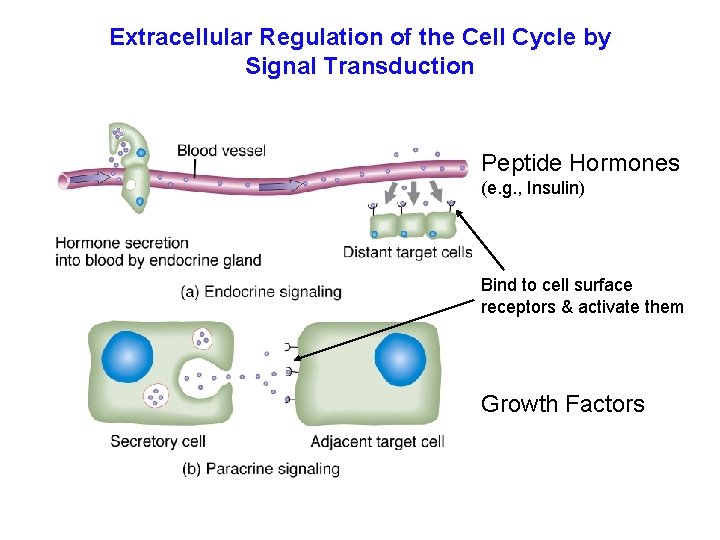
Extracellular Regulation of the Cell Cycle by Signal Transduction Peptide Hormones (e. g. , Insulin) Bind to cell surface receptors & activate them Growth Factors
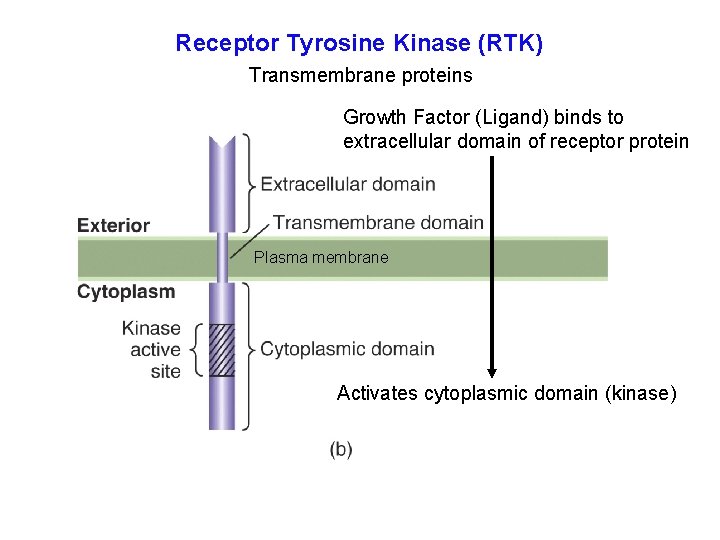
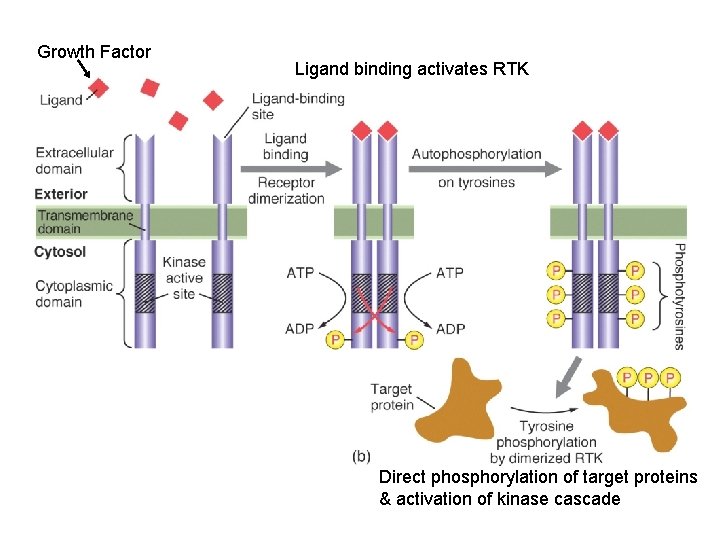
Receptor Tyrosine Kinase (RTK) Transmembrane proteins Growth Factor (Ligand) binds to extracellular domain of receptor protein Plasma membrane Activates cytoplasmic domain (kinase)
Growth Factor Ligand binding activates RTK Direct phosphorylation of target proteins & activation of kinase cascade
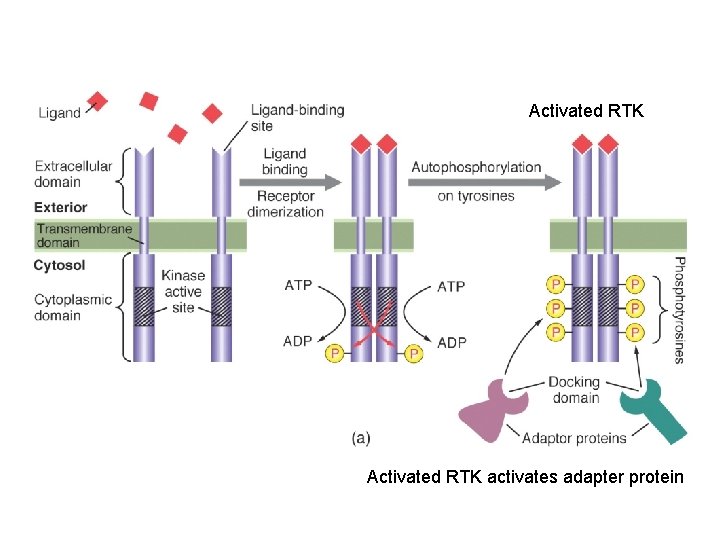
Activated RTK activates adapter protein
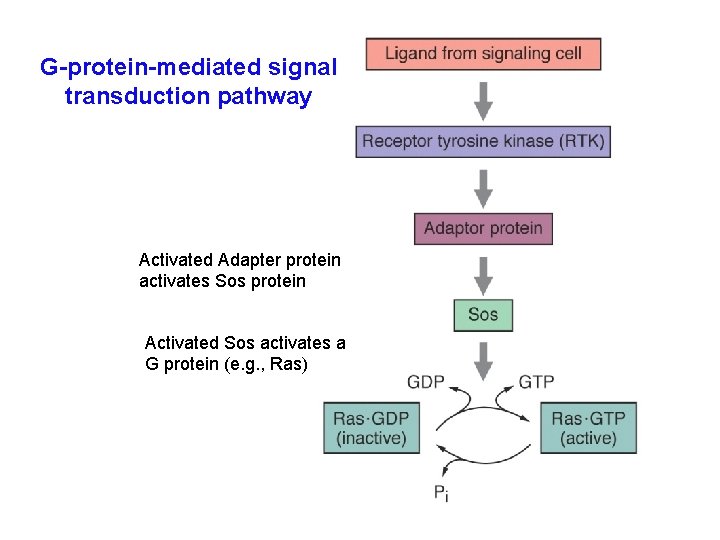
G-protein-mediated signal transduction pathway Activated Adapter protein activates Sos protein Activated Sos activates a G protein (e. g. , Ras)
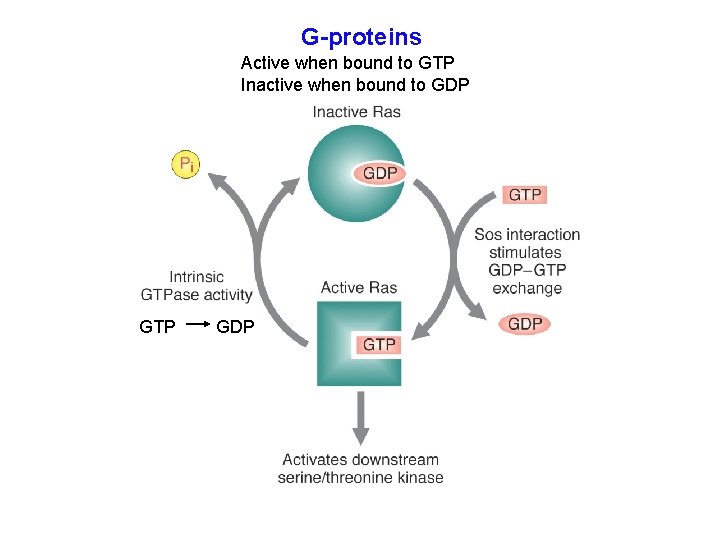
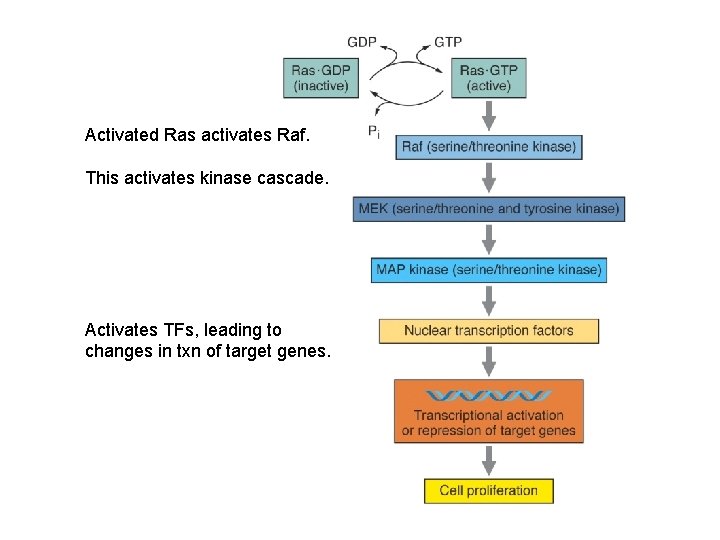
G-proteins Active when bound to GTP Inactive when bound to GDP GTP GDP
Activated Ras activates Raf. This activates kinase cascade. Activates TFs, leading to changes in txn of target genes.
Classes of Growth Factors Mitogens stimulate cell division Ex: Epidermal Growth Factor (EGF) Activates signal transduction pathway that promotes cell division. Inhibitors of cell division Activate signal transduction pathways that inhibit cell division. Ex: TGFb inhibits phosphorylation of Rb