
Into to Cellular Transport Passive Transport A molecule

- Slides: 9
Into to Cellular Transport
Passive Transport • A molecule or ion that crosses the membrane by moving down a concentration gradient and without using energy
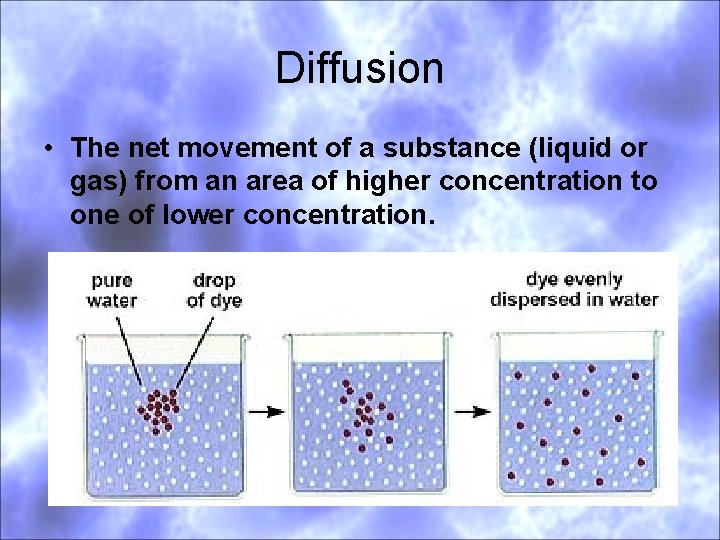
Diffusion • The net movement of a substance (liquid or gas) from an area of higher concentration to one of lower concentration.
Factors Affecting Diffusion • Concentration – the higher the concentration, the faster diffusion occurs. • Temperature – the higher the temperature, the faster diffusion occurs. • Pressure – the higher the pressure, the faster diffusion occurs.
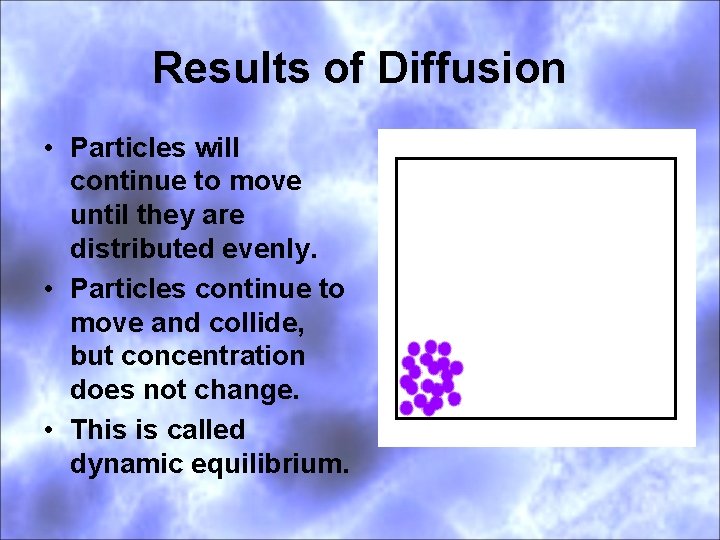
Results of Diffusion • Particles will continue to move until they are distributed evenly. • Particles continue to move and collide, but concentration does not change. • This is called dynamic equilibrium.
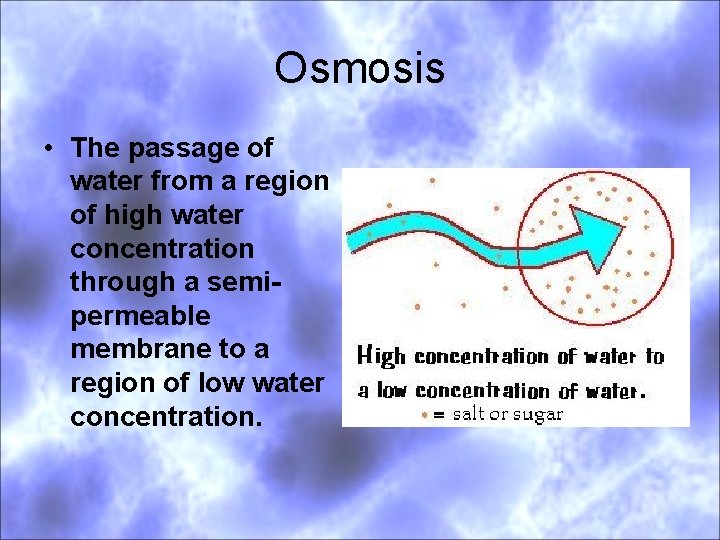
Osmosis • The passage of water from a region of high water concentration through a semipermeable membrane to a region of low water concentration.
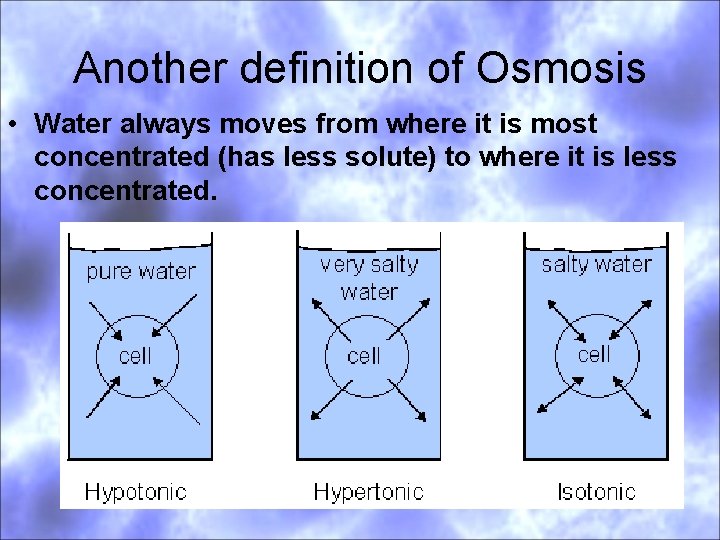
Another definition of Osmosis • Water always moves from where it is most concentrated (has less solute) to where it is less concentrated.
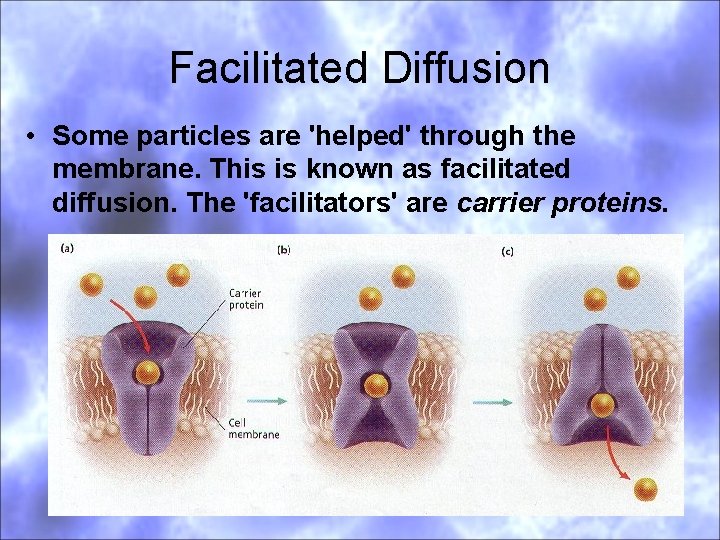
Facilitated Diffusion • Some particles are 'helped' through the membrane. This is known as facilitated diffusion. The 'facilitators' are carrier proteins.
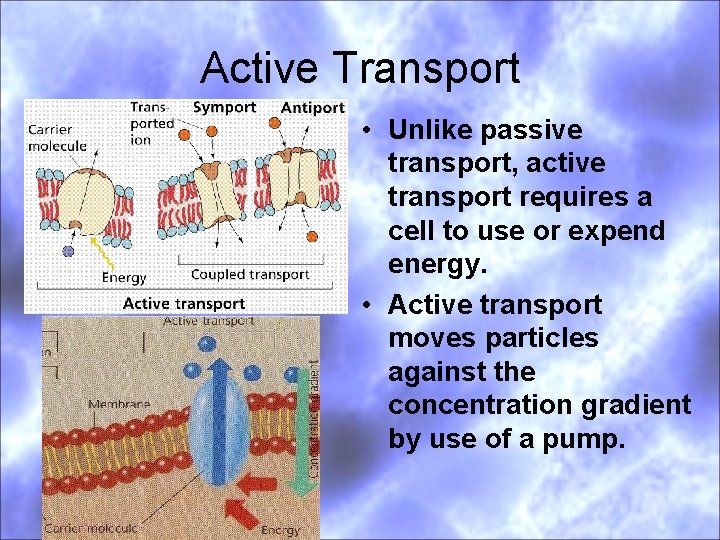
Active Transport • Unlike passive transport, active transport requires a cell to use or expend energy. • Active transport moves particles against the concentration gradient by use of a pump.