
INTIMATE PARTNER VIOLENCE BACKGROUND Kelly Annelli MS Director
INTIMATE PARTNER VIOLENCE BACKGROUND Kelly Annelli, MS Director of Membership Organization Services Connecticut Coalition Against Domestic Violence 1
What is Intimate Partner Violence? Intimate partner violence is a pattern of abusive behavior in an intimate relationship where one partner tries to control and dominate the other. The behavior may be verbally, psychologically, physically or sexually, financially or technologically abusive with the victim left feeling scared, confused, dependent and insecure. Assaulting, threatening, harassing, strangling or stalking an intimate partner is a crime in the state of Connecticut. 2
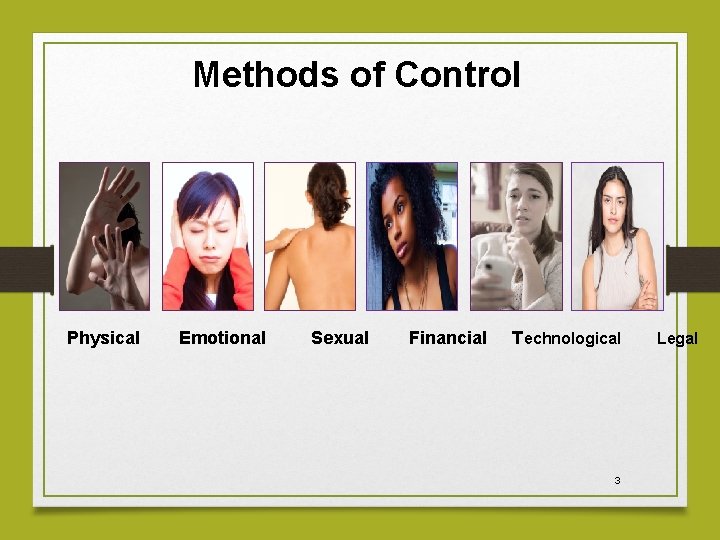
Methods of Control Physical Emotional Sexual Financial T echnological 3 Legal
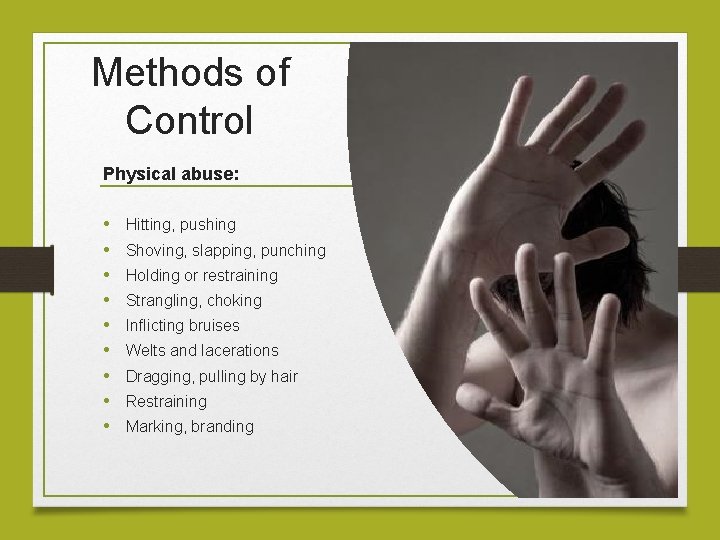
Methods of Control Physical abuse: • • • Hitting, pushing Shoving, slapping, punching Holding or restraining Strangling, choking Inflicting bruises Welts and lacerations Dragging, pulling by hair Restraining Marking, branding

Methods of Control Emotional abuse: • Threatening, intimidation • Humiliation • Extreme jealousy/possessiveness • • • Threatening acts of violence Constant criticizing Insulting and belittling Ignoring or dismissing the victim Denying, minimizing and blaming Invading privacy
Methods of Control Sexual abuse: • Coercing victim to have sex • Making victim watch pornographic movies • Sexually transmitted diseases • Demanding sexual photos • Using date rape drugs • Sabotaging birth control
Methods of Control Financial abuse: • Withholding money • No access to bank accounts/ATM and credit cards • Ruining victim’s credit • Taking pay check • Gambling
Methods of Control Technology abuse: • • Tracking location Demanding check-ins Excessive texts Spyware Spoofing, catfishing Monitoring communications Posting on Facebook and social media
Methods of Control Legal abuse: • Constant threats to gain custody of children • Excessive filing of motions at court • Using parental rights to contact victim • Calling DCF
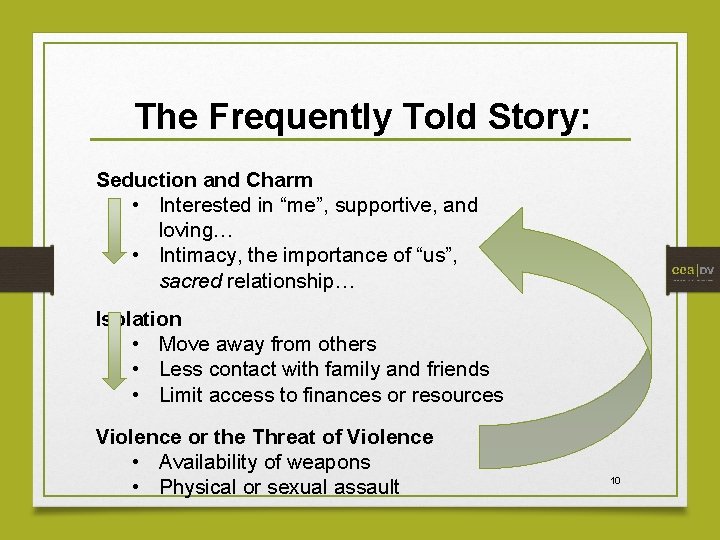
The Frequently Told Story: Seduction and Charm • Interested in “me”, supportive, and loving… • Intimacy, the importance of “us”, sacred relationship… Isolation • Move away from others • Less contact with family and friends • Limit access to finances or resources Violence or the Threat of Violence • Availability of weapons • Physical or sexual assault 10
• “Why does she/he stay? ” Hope that things will get better. Ø On average, victims deal with DV 5 -7 x before leaving • Disappointing friends, family or community. • Lack of resources to care for self or child(ren). • Religious or cultural beliefs. • Immigration Status. • Belief that they can keep themselves and child(ren) safe. • Fear of being hurt or killed. 11
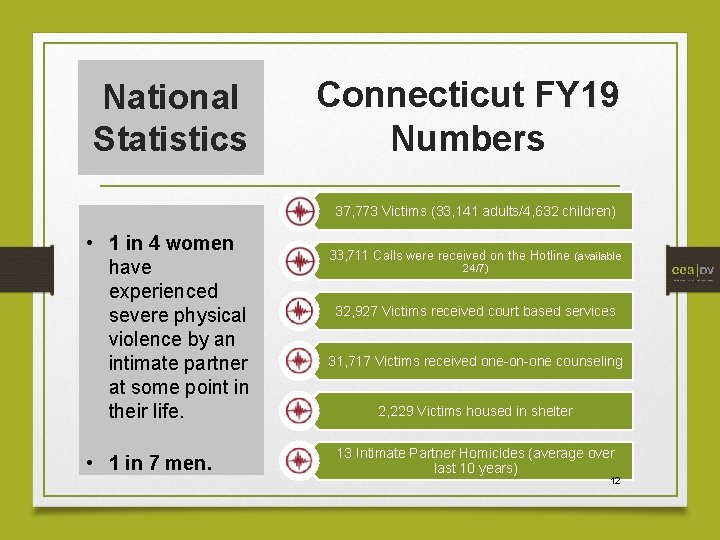
National Statistics Connecticut FY 19 Numbers 37, 773 Victims (33, 141 adults/4, 632 children) • 1 in 4 women have experienced severe physical violence by an intimate partner at some point in their life. • 1 in 7 men. 33, 711 Calls were received on the Hotline (available 24/7) 32, 927 Victims received court based services 31, 717 Victims received one-on-one counseling 2, 229 Victims housed in shelter 13 Intimate Partner Homicides (average over last 10 years) 12
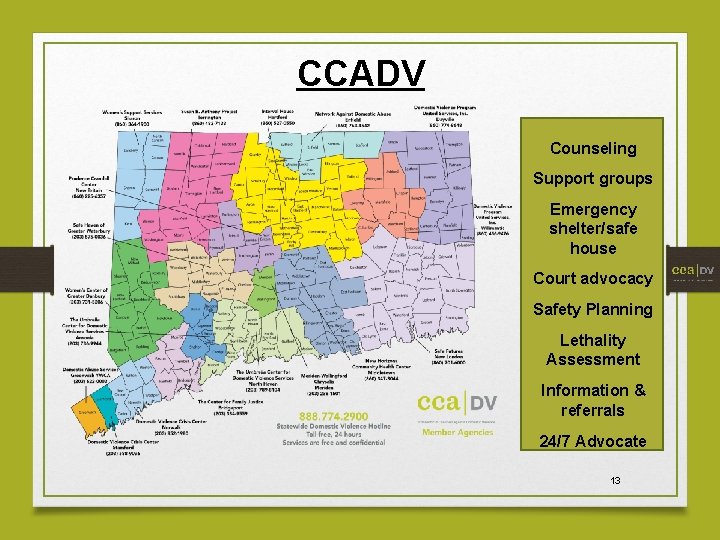
CCADV Counseling Support groups Emergency shelter/safe house Court advocacy Safety Planning Lethality Assessment Information & referrals 24/7 Advocate 13
- Slides: 13