
Intestinal Protozoa CLASSIFICATION OF PARASITES PROTOZOA HELMINTHS Unicellular
- Slides: 34
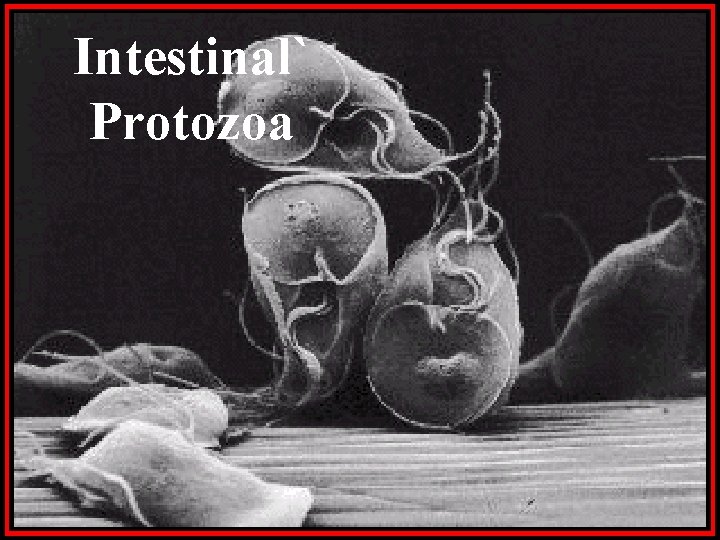
Intestinal` Protozoa
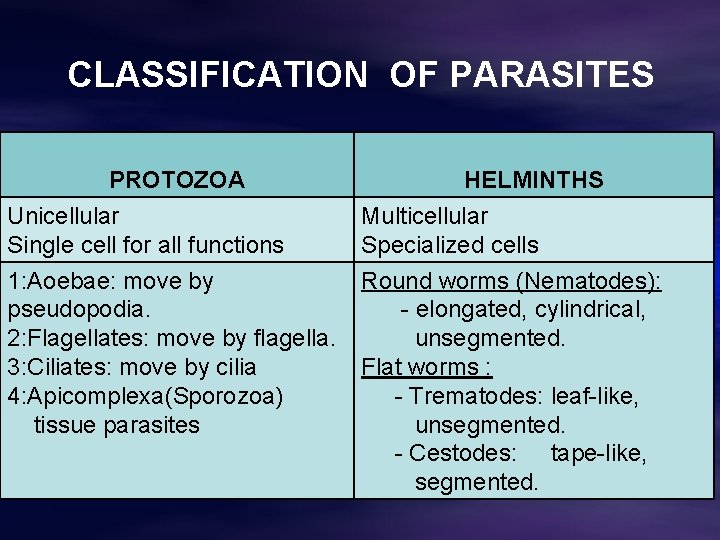
CLASSIFICATION OF PARASITES PROTOZOA HELMINTHS Unicellular Single cell for all functions Multicellular Specialized cells 1: Aoebae: move by pseudopodia. 2: Flagellates: move by flagella. 3: Ciliates: move by cilia 4: Apicomplexa(Sporozoa) tissue parasites Round worms (Nematodes): - elongated, cylindrical, unsegmented. Flat worms : - Trematodes: leaf-like, unsegmented. - Cestodes: tape-like, segmented.
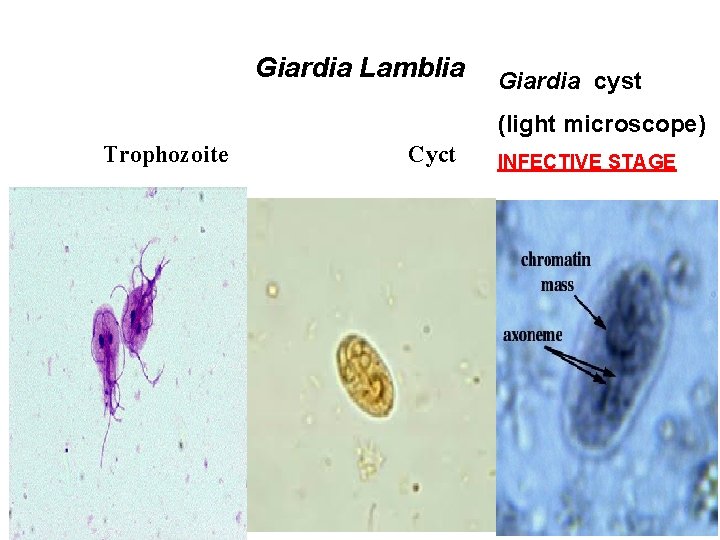
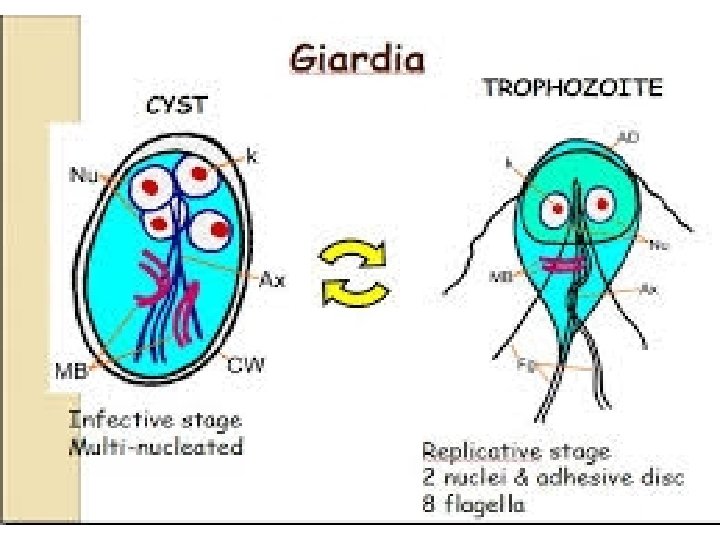
Giardia Lamblia Giardia cyst (light microscope) Trophozoite Cyct INFECTIVE STAGE
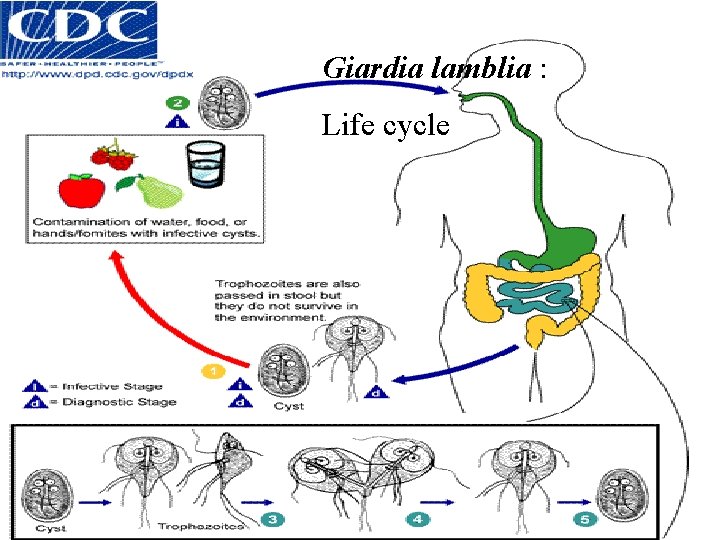
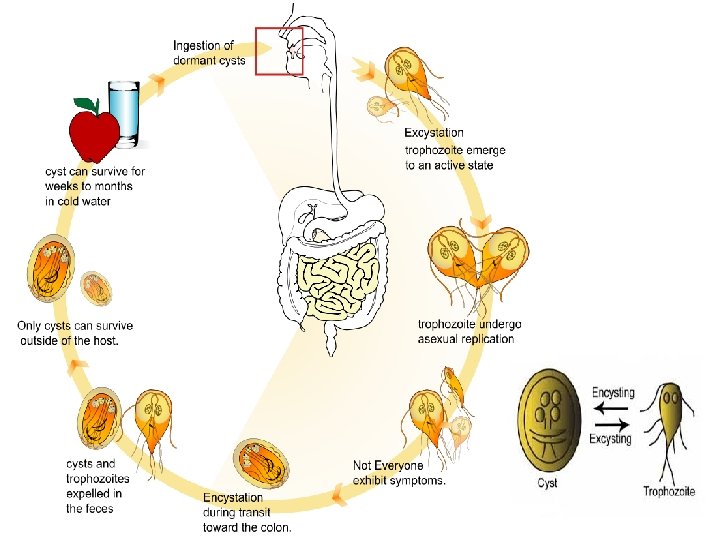
Giardia lamblia : Life cycle
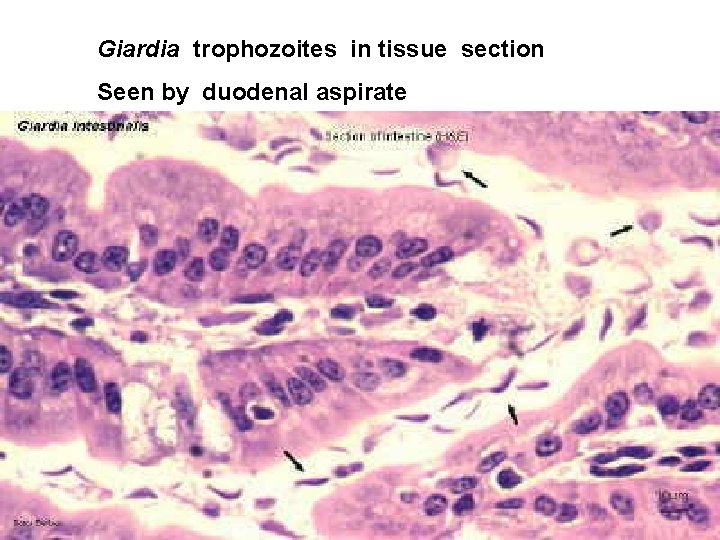
Giardia trophozoites in tissue section Seen by duodenal aspirate
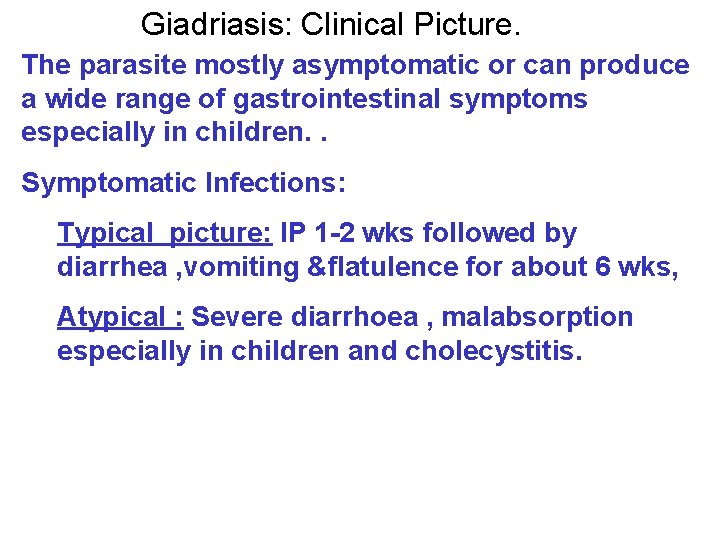
Giadriasis: Clinical Picture. The parasite mostly asymptomatic or can produce a wide range of gastrointestinal symptoms especially in children. . Symptomatic Infections: Typical picture: IP 1 -2 wks followed by diarrhea , vomiting &flatulence for about 6 wks, Atypical : Severe diarrhoea , malabsorption especially in children and cholecystitis.
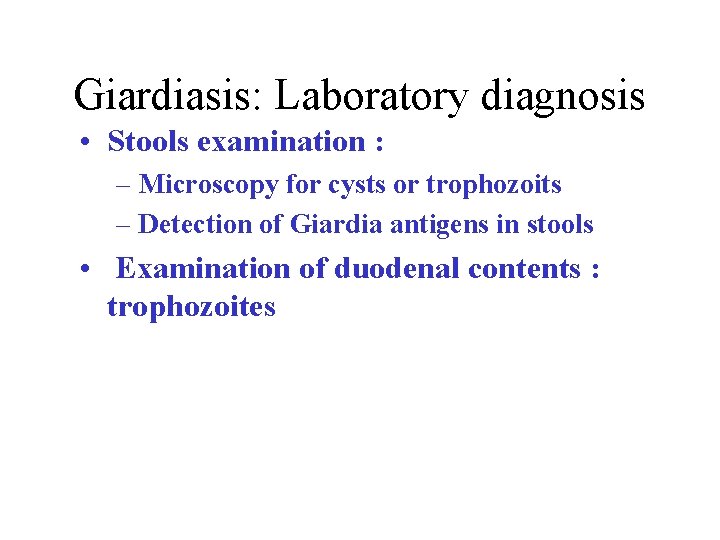
Giardiasis: Laboratory diagnosis • Stools examination : – Microscopy for cysts or trophozoits – Detection of Giardia antigens in stools • Examination of duodenal contents : trophozoites
Giardiasis: Chemotherapy • Drug of choice: Metronidazole
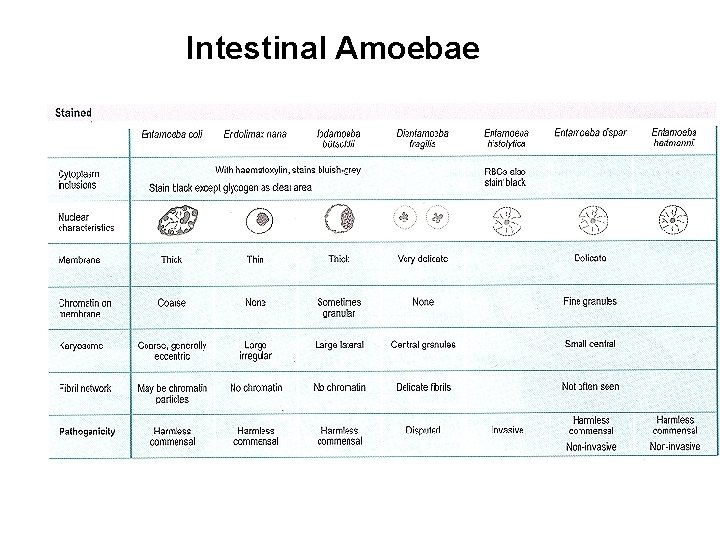
Intestinal Amoebae
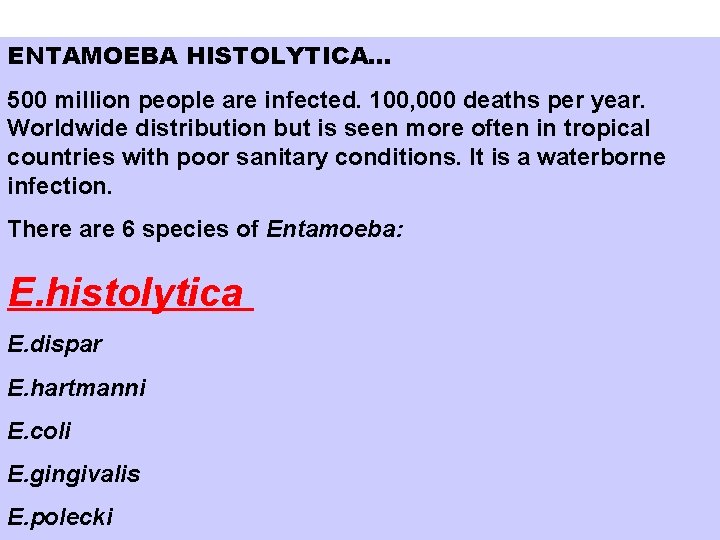
ENTAMOEBA HISTOLYTICA… 500 million people are infected. 100, 000 deaths per year. Worldwide distribution but is seen more often in tropical countries with poor sanitary conditions. It is a waterborne infection. There are 6 species of Entamoeba: E. histolytica E. dispar E. hartmanni E. coli E. gingivalis E. polecki
E. histolytica vs E. dispar Entamoeba histolytica : Amoebae that are pathogenic and invasive. E. dispar : The nonpathogenic , non invasive form. T he 2 amoebae can’t be distinguish by microscopic observation.
Entamoeba histolytica
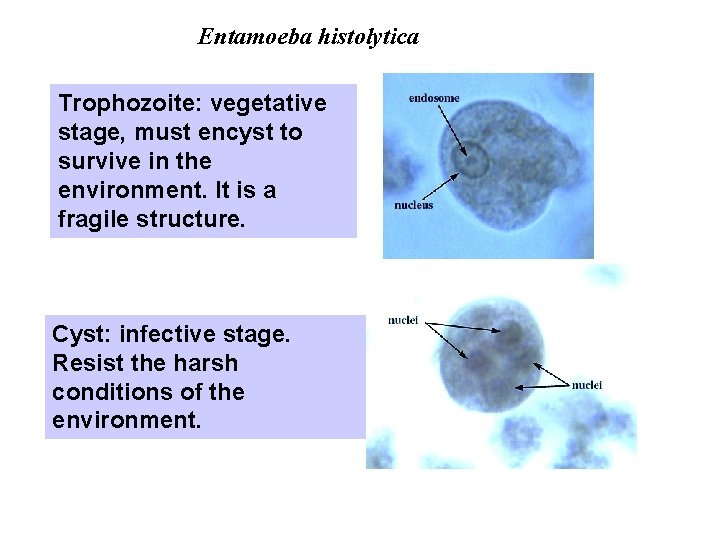
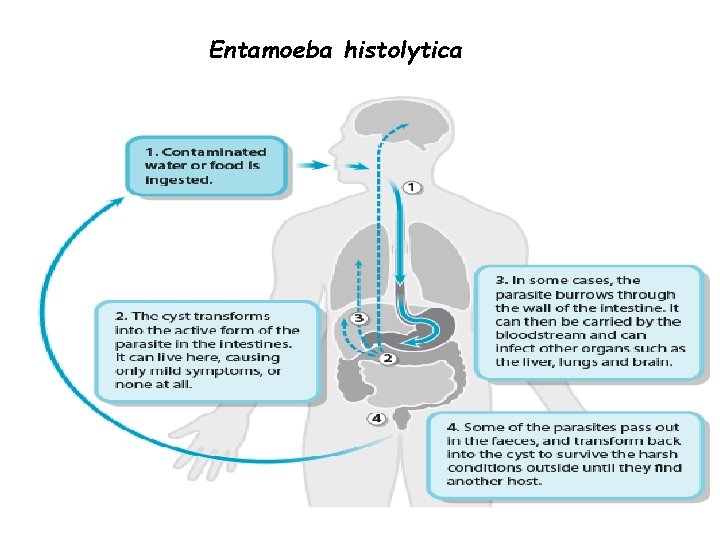
Entamoeba histolytica Trophozoite: vegetative stage, must encyst to survive in the environment. It is a fragile structure. Cyst: infective stage. Resist the harsh conditions of the environment.
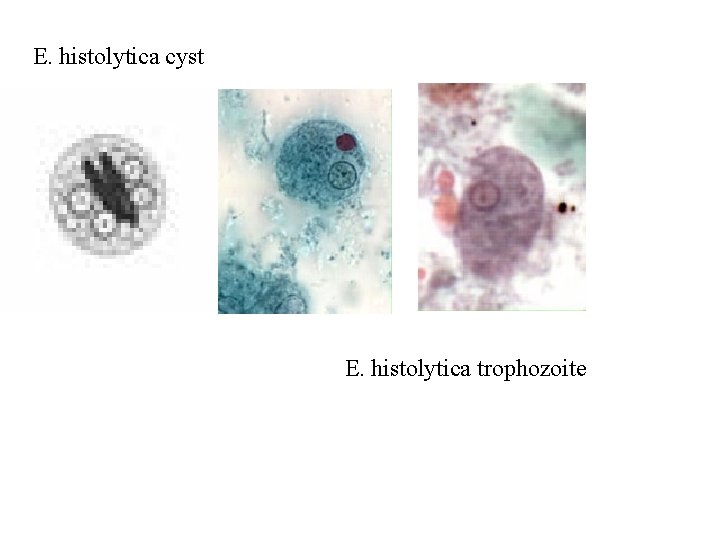
E. histolytica cyst E. histolytica trophozoite
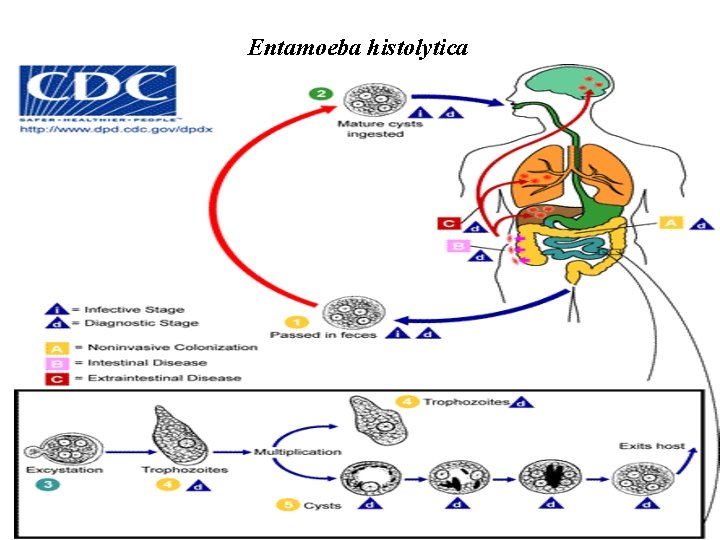
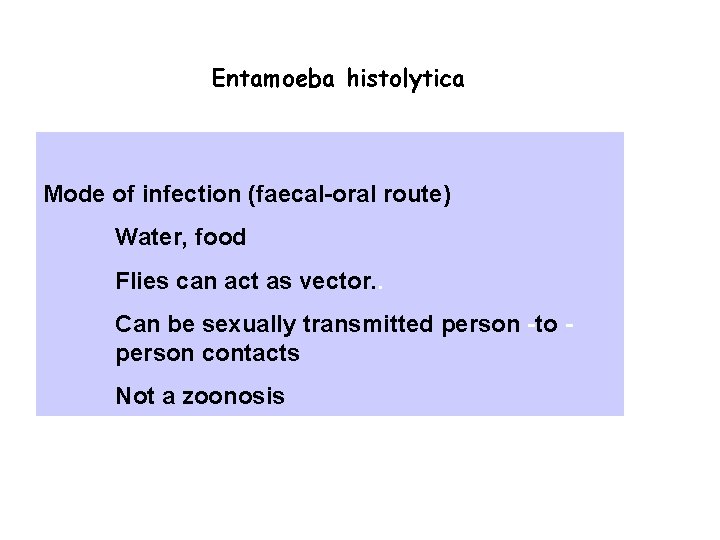
Entamoeba histolytica Mode of infection (faecal-oral route) Water, food Flies can act as vector. . Can be sexually transmitted person -to person contacts Not a zoonosis
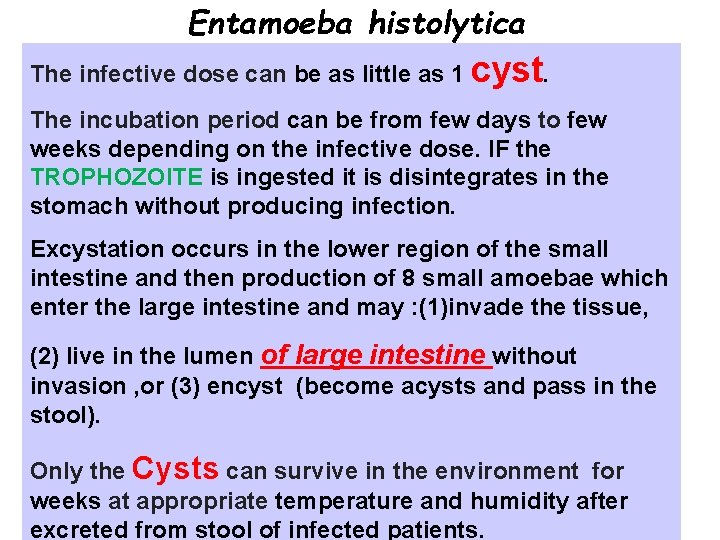
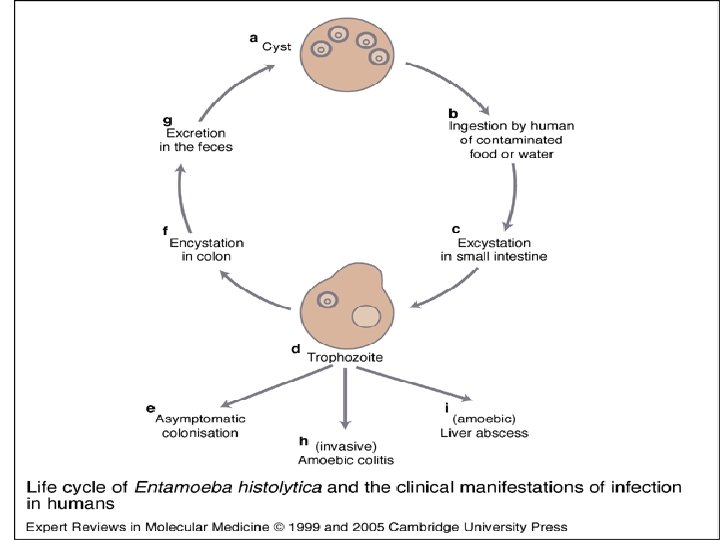
Entamoeba histolytica The infective dose can be as little as 1 cyst. The incubation period can be from few days to few weeks depending on the infective dose. IF the TROPHOZOITE is ingested it is disintegrates in the stomach without producing infection. Excystation occurs in the lower region of the small intestine and then production of 8 small amoebae which enter the large intestine and may : (1)invade the tissue, (2) live in the lumen of large intestine without invasion , or (3) encyst (become acysts and pass in the stool). Only the Cysts can survive in the environment for weeks at appropriate temperature and humidity after excreted from stool of infected patients.
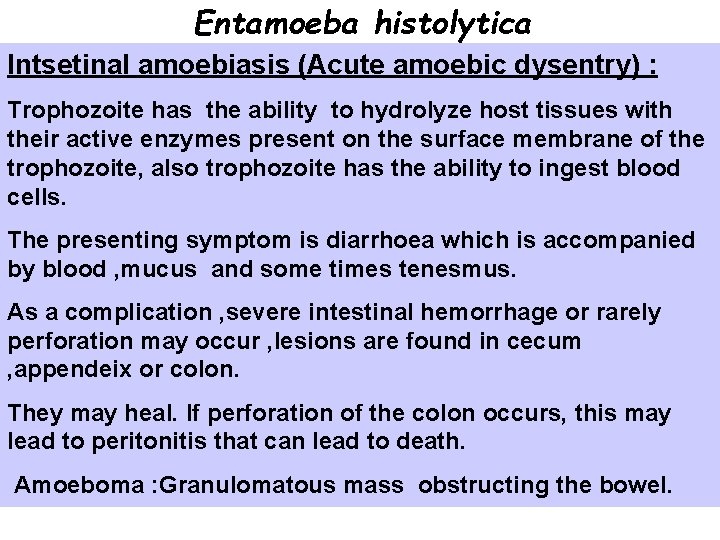
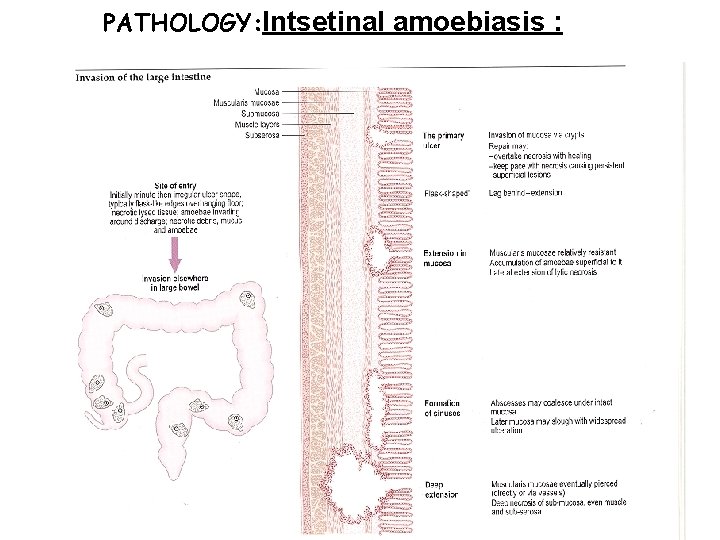
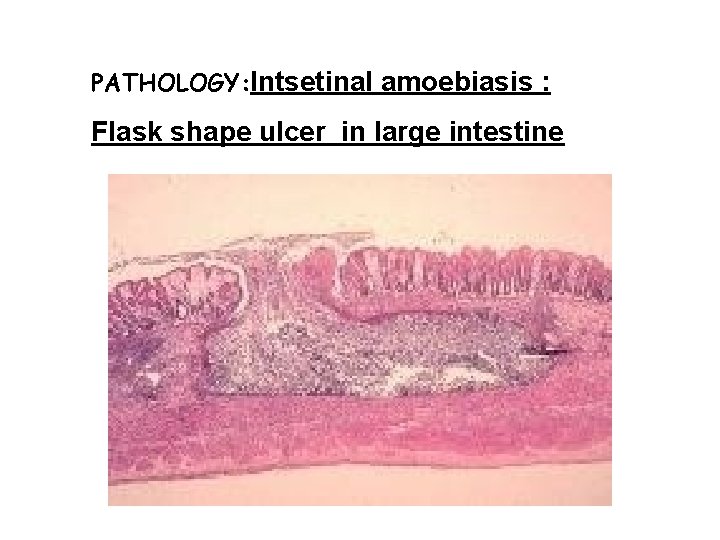
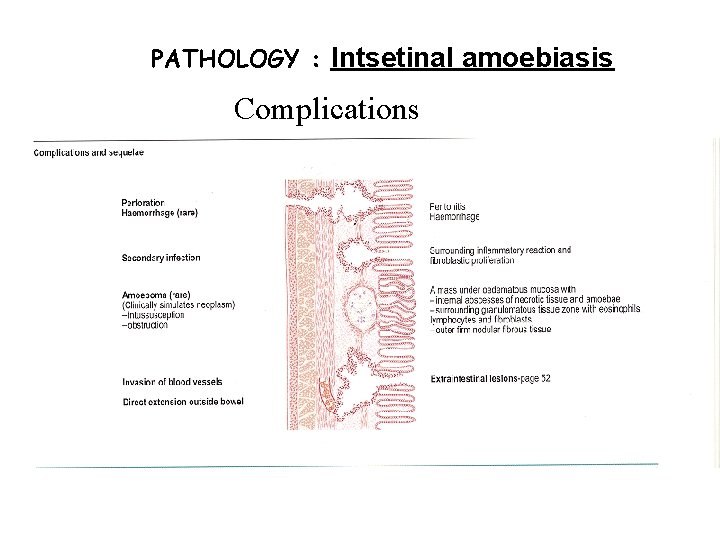
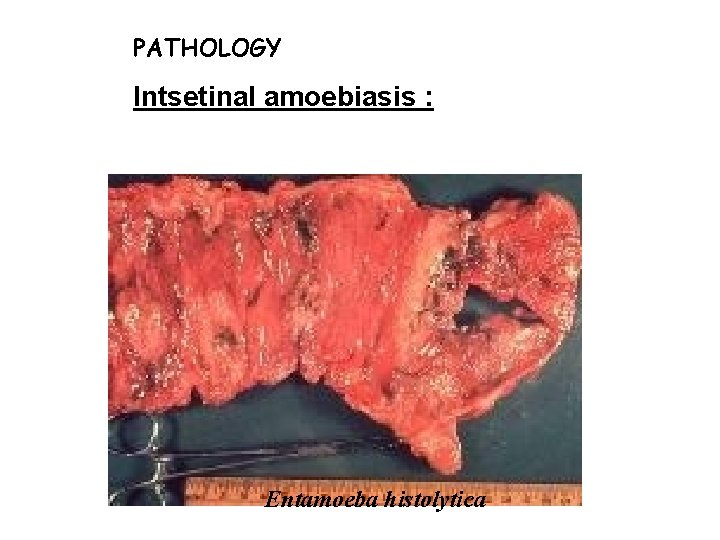
Entamoeba histolytica Intsetinal amoebiasis (Acute amoebic dysentry) : Trophozoite has the ability to hydrolyze host tissues with their active enzymes present on the surface membrane of the trophozoite, also trophozoite has the ability to ingest blood cells. The presenting symptom is diarrhoea which is accompanied by blood , mucus and some times tenesmus. As a complication , severe intestinal hemorrhage or rarely perforation may occur , lesions are found in cecum , appendeix or colon. They may heal. If perforation of the colon occurs, this may lead to peritonitis that can lead to death. Amoeboma : Granulomatous mass obstructing the bowel.
Entamoeba histolytica
PATHOLOGY: Intsetinal amoebiasis :
PATHOLOGY: Intsetinal amoebiasis : Flask shape ulcer in large intestine
PATHOLOGY : Intsetinal amoebiasis Complications
PATHOLOGY Intsetinal amoebiasis : Entamoeba histolytica
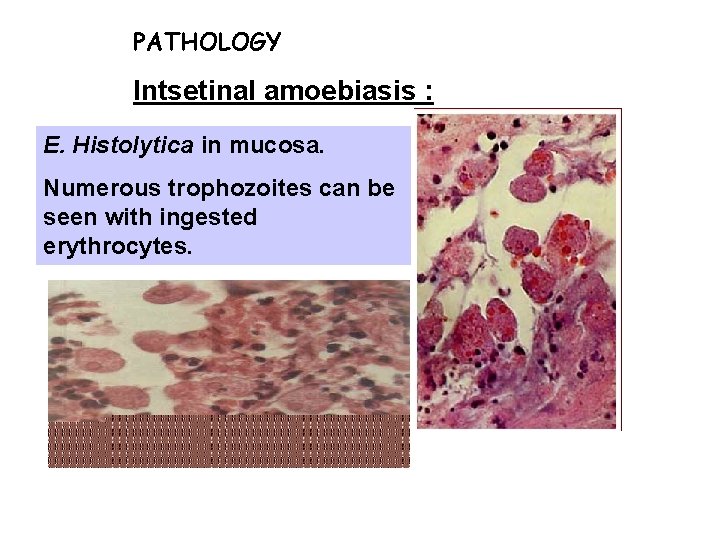
PATHOLOGY Intsetinal amoebiasis : E. Histolytica in mucosa. Numerous trophozoites can be seen with ingested erythrocytes.
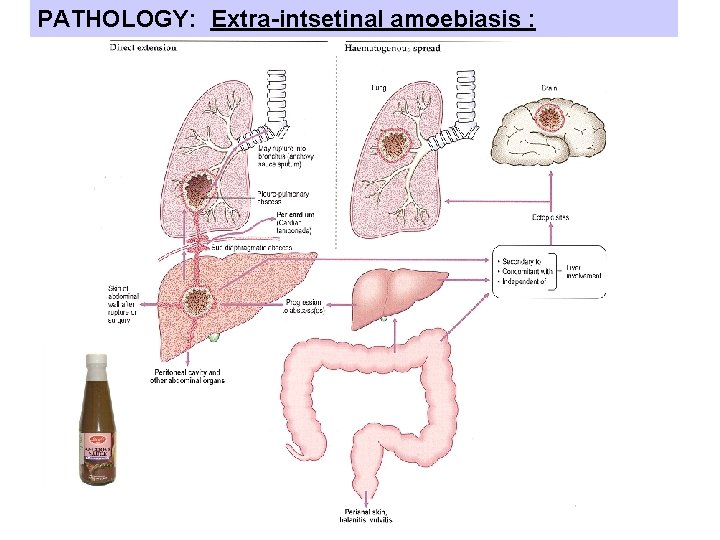
PATHOLOGY: Extra-intsetinal amoebiasis :
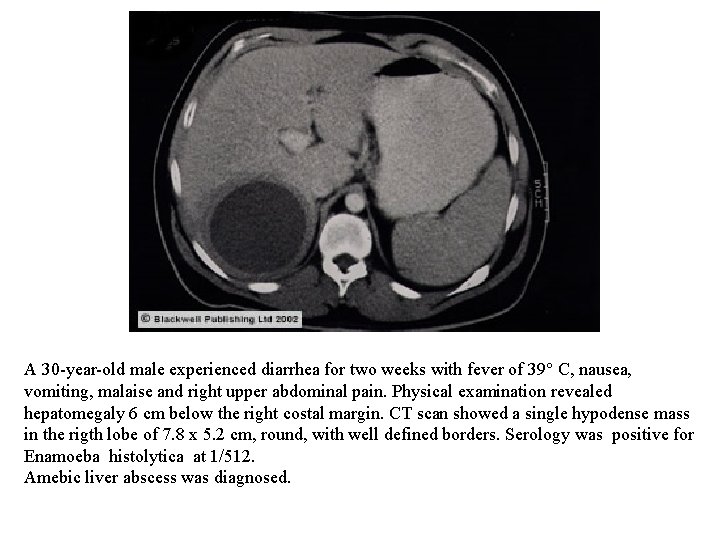
A 30 -year-old male experienced diarrhea for two weeks with fever of 39° C, nausea, vomiting, malaise and right upper abdominal pain. Physical examination revealed hepatomegaly 6 cm below the right costal margin. CT scan showed a single hypodense mass in the rigth lobe of 7. 8 x 5. 2 cm, round, with well defined borders. Serology was positive for Enamoeba histolytica at 1/512. Amebic liver abscess was diagnosed.
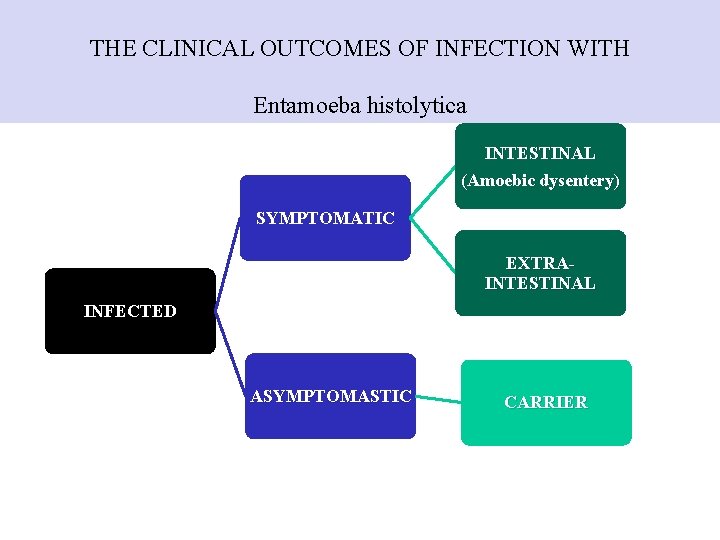
THE CLINICAL OUTCOMES OF INFECTION WITH Entamoeba histolytica INTESTINAL (Amoebic dysentery) SYMPTOMATIC EXTRAINTESTINAL INFECTED ASYMPTOMASTIC CARRIER
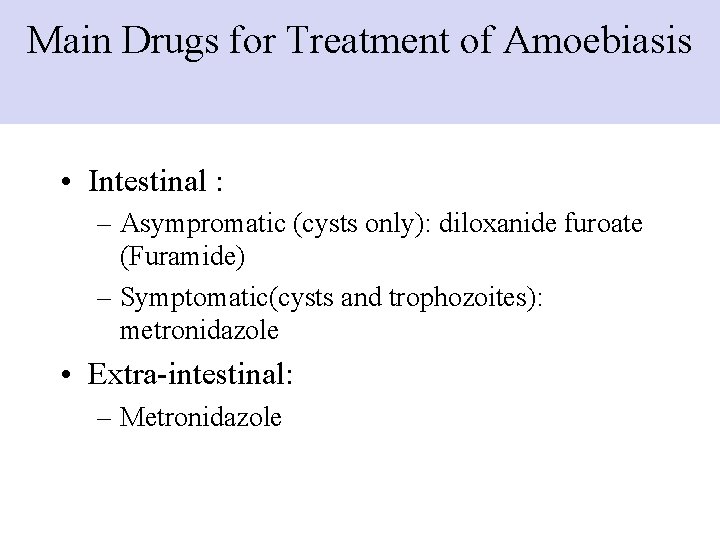
Main Drugs for Treatment of Amoebiasis • Intestinal : – Asympromatic (cysts only): diloxanide furoate (Furamide) – Symptomatic(cysts and trophozoites): metronidazole • Extra-intestinal: – Metronidazole
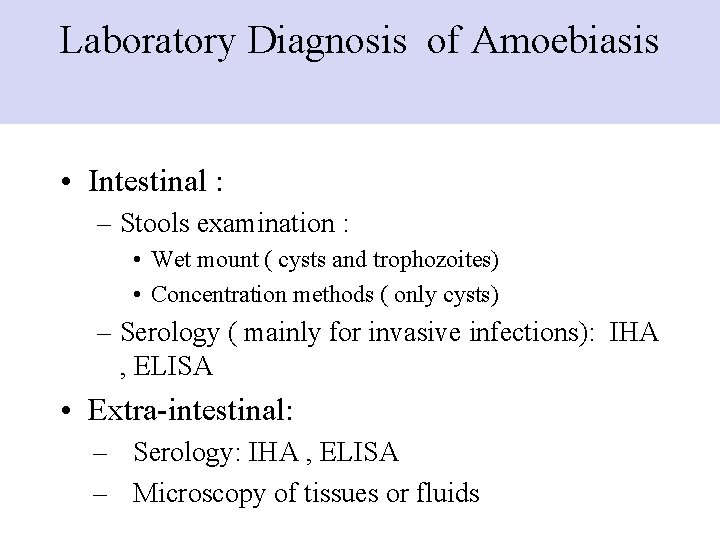
Laboratory Diagnosis of Amoebiasis • Intestinal : – Stools examination : • Wet mount ( cysts and trophozoites) • Concentration methods ( only cysts) – Serology ( mainly for invasive infections): IHA , ELISA • Extra-intestinal: – Serology: IHA , ELISA – Microscopy of tissues or fluids
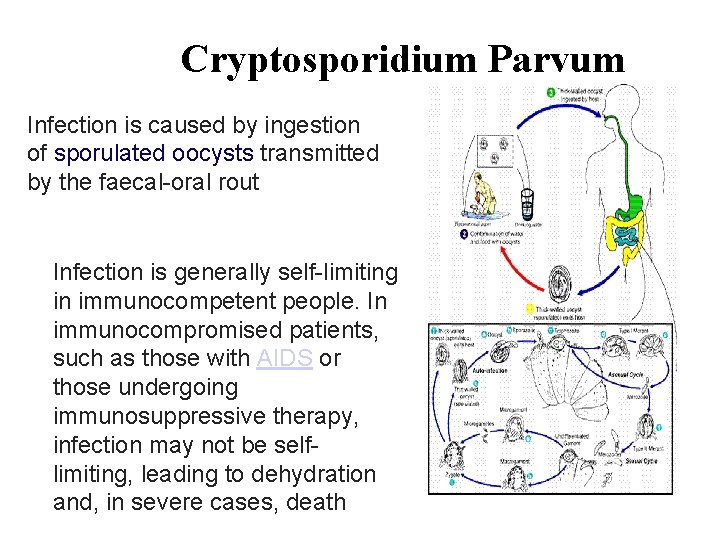
Cryptosporidium Parvum Infection is caused by ingestion of sporulated oocysts transmitted by the faecal-oral rout Infection is generally self-limiting in immunocompetent people. In immunocompromised patients, such as those with AIDS or those undergoing immunosuppressive therapy, infection may not be selflimiting, leading to dehydration and, in severe cases, death
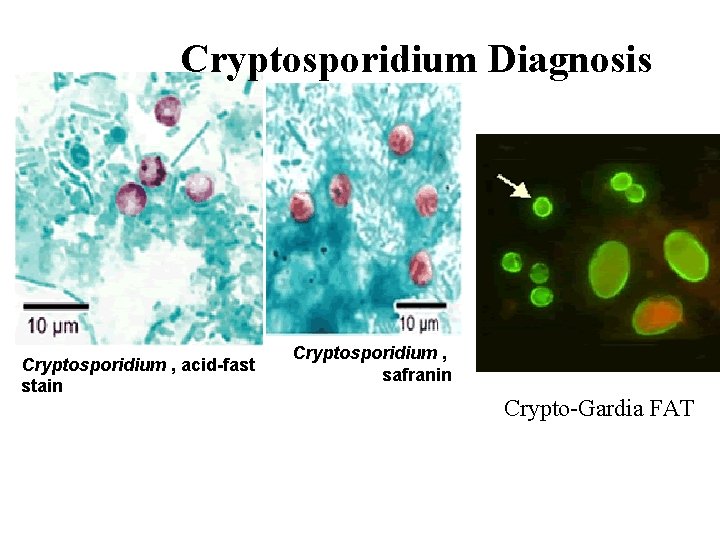
Cryptosporidium Diagnosis Cryptosporidium , acid-fast stain Cryptosporidium , safranin Crypto-Gardia FAT
Cryptosporidiosis Treatment& prevention The most effective way to prevent the spread of C. parvum is to avoid contact with contaminated feces. Avoiding this contact, especially with young children, Hygiene is the most effective way to combat this difficult-to-prevent parasite • Self-limited in immunocompetent patients • In AIDS patients : paromomycin