
Interviewing techniques for journalists Ian Reeves Why is
- Slides: 12
Interviewing techniques for journalists Ian Reeves
Why is interviewing important? Journalist’s main weapon/tool Accounts for 75%+ of newspapers/ news bulletins Good journalism is about people and how they relate to events A good interview reveals something about an event, or a person, that was otherwise hidden
Types of interview Vox pop News eyewitness The Doorstep ambush Phoner Skype Press conference TV set-piece Magazine-style ‘at home’ Celeb ‘round table’ Real-life ‘first person’ ghost Death knock Email Q & A
Styles of interview Paxman interrogation Parky ‘fireside chat’ Martin Bashir ‘prompt’ Antony Clare psychological examination News eyewitness reaction Post-match sports reaction Real life empathetic
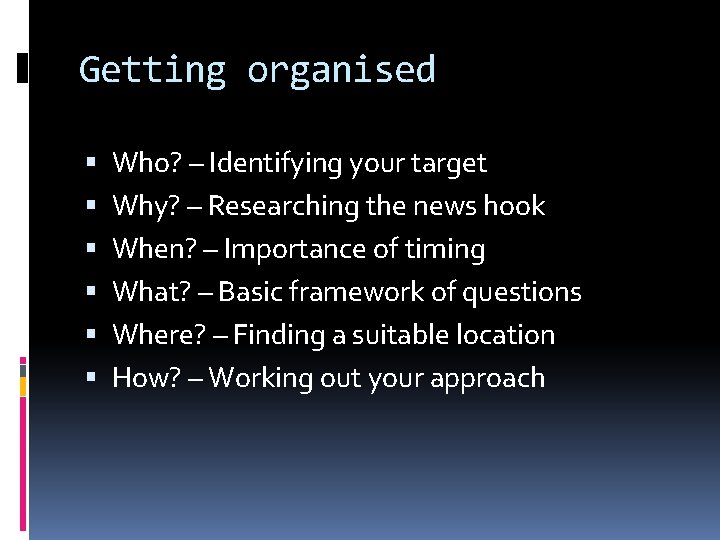
Getting organised Who? – Identifying your target Why? – Researching the news hook When? – Importance of timing What? – Basic framework of questions Where? – Finding a suitable location How? – Working out your approach
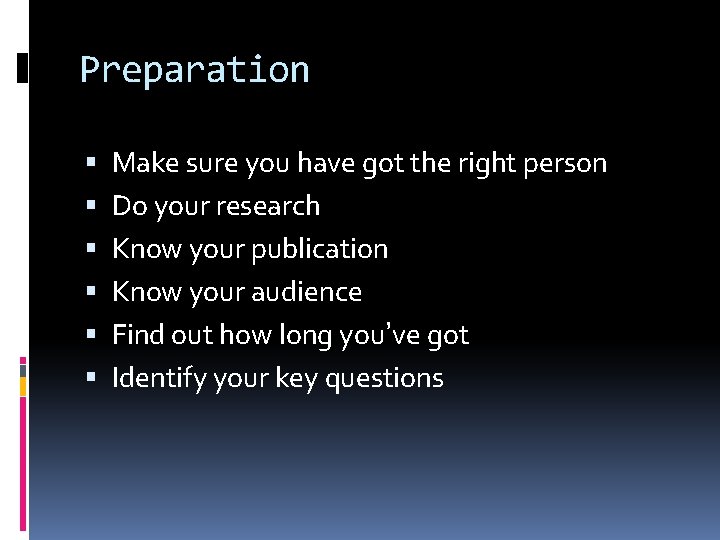
Preparation Make sure you have got the right person Do your research Know your publication Know your audience Find out how long you’ve got Identify your key questions
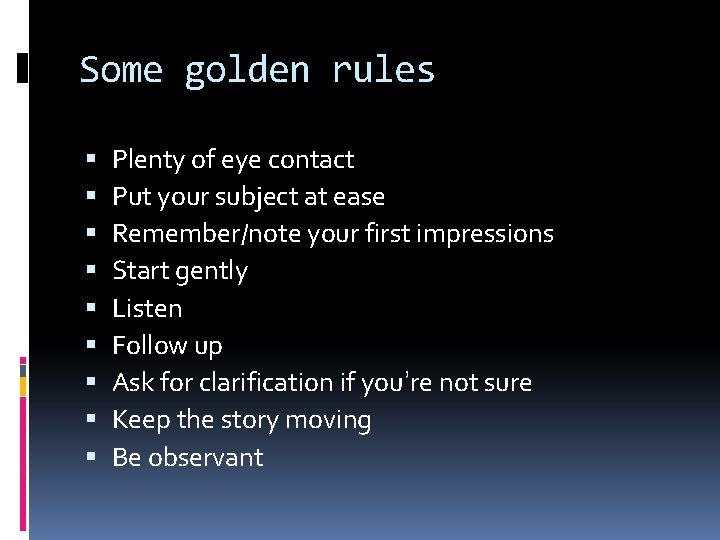
Some golden rules Plenty of eye contact Put your subject at ease Remember/note your first impressions Start gently Listen Follow up Ask for clarification if you’re not sure Keep the story moving Be observant
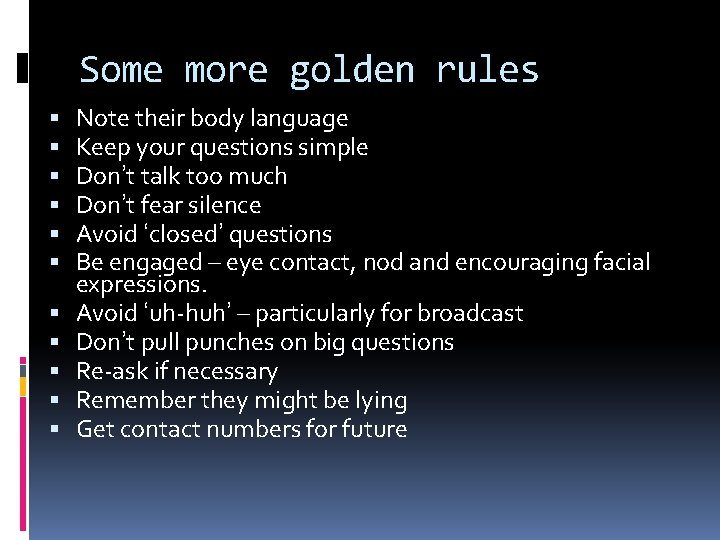
Some more golden rules Note their body language Keep your questions simple Don’t talk too much Don’t fear silence Avoid ‘closed’ questions Be engaged – eye contact, nod and encouraging facial expressions. Avoid ‘uh-huh’ – particularly for broadcast Don’t pull punches on big questions Re-ask if necessary Remember they might be lying Get contact numbers for future
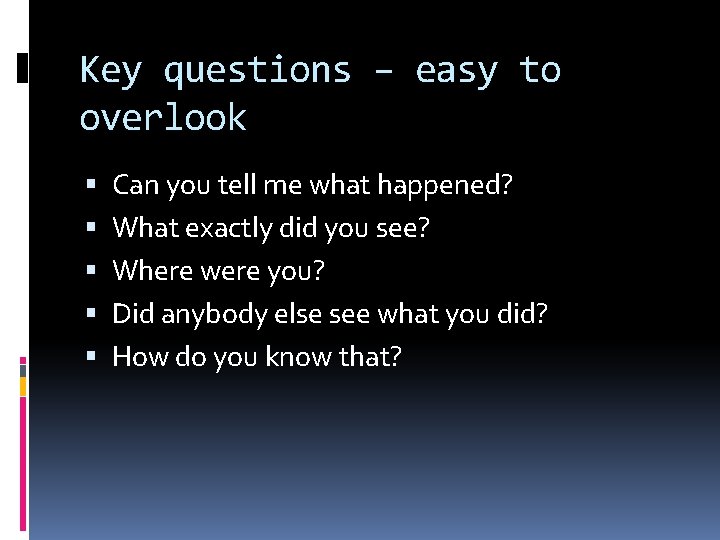
Key questions – easy to overlook Can you tell me what happened? What exactly did you see? Where were you? Did anybody else see what you did? How do you know that?
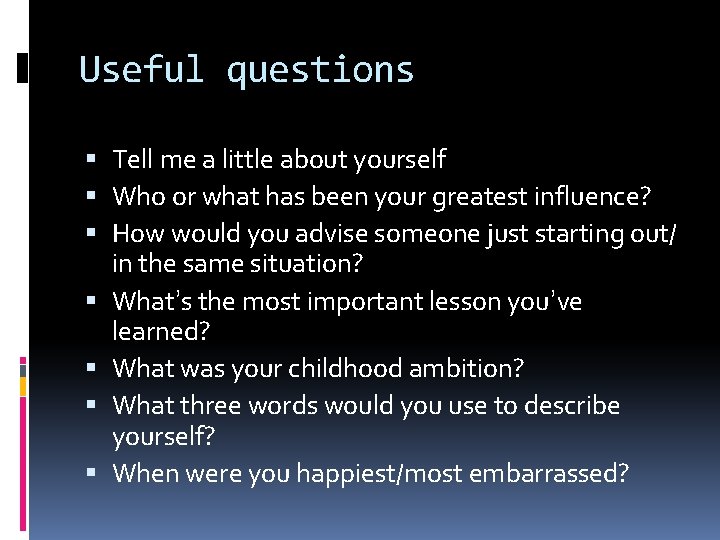
Useful questions Tell me a little about yourself Who or what has been your greatest influence? How would you advise someone just starting out/ in the same situation? What’s the most important lesson you’ve learned? What was your childhood ambition? What three words would you use to describe yourself? When were you happiest/most embarrassed?
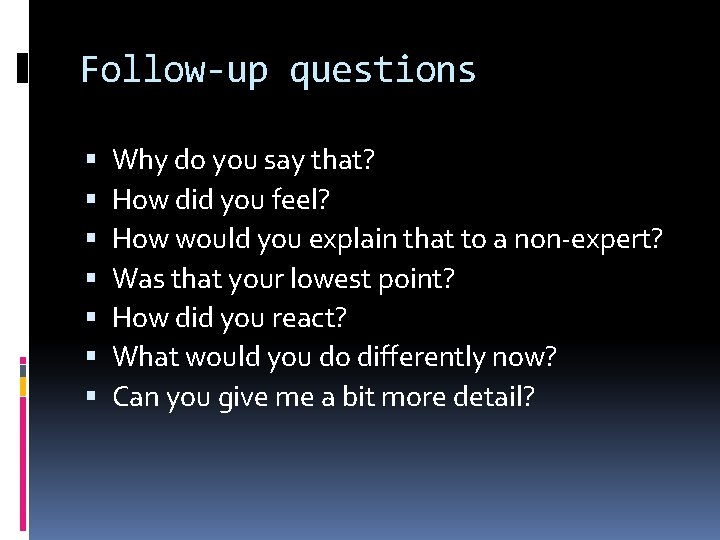
Follow-up questions Why do you say that? How did you feel? How would you explain that to a non-expert? Was that your lowest point? How did you react? What would you do differently now? Can you give me a bit more detail?
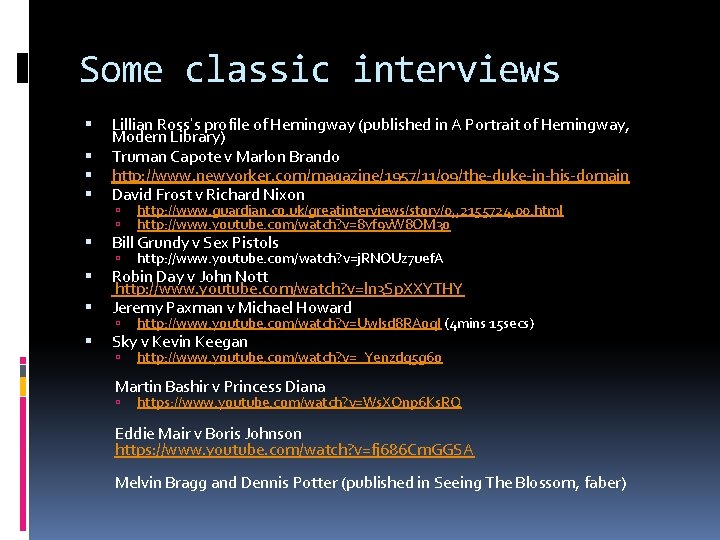
Some classic interviews Lillian Ross’s profile of Hemingway (published in A Portrait of Hemingway, Modern Library) Truman Capote v Marlon Brando http: //www. newyorker. com/magazine/1957/11/09/the-duke-in-his-domain David Frost v Richard Nixon Bill Grundy v Sex Pistols Robin Day v John Nott http: //www. youtube. com/watch? v=ln 3 Sp. XXYTHY Jeremy Paxman v Michael Howard Sky v Kevin Keegan http: //www. guardian. co. uk/greatinterviews/story/0, , 2155724, 00. html http: //www. youtube. com/watch? v=8 yf 9 v. W 8 OM 3 o http: //www. youtube. com/watch? v=j. RNOUz 7 uef. A http: //www. youtube. com/watch? v=Uwlsd 8 RAoq. I (4 mins 15 secs) http: //www. youtube. com/watch? v=_Yenzdq 5 g 6 o Martin Bashir v Princess Diana https: //www. youtube. com/watch? v=Ws. XOnp 6 Ks. RQ Eddie Mair v Boris Johnson https: //www. youtube. com/watch? v=fj 686 Cm. GGSA Melvin Bragg and Dennis Potter (published in Seeing The Blossom, faber)