
Interviewing and Observing Behavior Lecture Preview Goals Purposes

Interviewing and Observing Behavior
Lecture Preview �Goals, Purposes, and Types of Assessment �Reliability and Validity �Interviewing �Types of Interviews �Potential Threats to Effective Interviewing �Behavioral Observations �Checklists and Inventories �Physiological Testing
Since the foundation of psychology, assessment and testing have been important activities. Psychological assessment is the process to collect and evaluate information to �make diagnoses, �plan treatment, and �predict behavior.

Assessment may include �interviewing the patient, �reviewing past records (such as medical or school records), �observing behavior, and �administering psychological tests to measure various cognitive, behavioral, personality, family, and even biological factors.
Psychological testing involves specific assessment techniques utilizing reliable and valid testing instruments. These instruments enable the psychologist to compare individual scores with the scores obtained from normative samples.

Goals, Purposes, and Types of Assessment People ask questions such as: � «Am I crazy? » � «Is my child mentally retarded? » or «Is my child gifted? » � «Why do I feel so depressed when things in life appear to be going fine? » � «How can I overcome my intense fear and panic whenever I drive over a bridge? »
Before helping the patient, an initial assessment is necessary. The goal of assessment is fully understanding of the factors that contribute to the problem(s). Sometimes the presenting problem or symptom is not the real problem. Someone may seek help for headaches. After a session or two, the patient reports that her marriage is in trouble. The headaches were a “ticket” into psychotherapy.

Assessment could include �clinical interviews with a patient or significant other (family member, friend, colleague); �behavioral observations (classroom observation); �the use of checklists, inventories, and psychological tests (IQ and personality tests); �the review of previous records (medical charts, school records); and �discussions with other professionals familiar with the person (physician, school teacher, school counselor).
The choice of assessment tools depends on �the nature of the problem(s), �the skills and perspective of the psychologist, �the objectives and willingness of the patient, and �practical matters such as cost and time.
Reliability and Validity Assessment method must be reliable and valid. Assessment is used to make important decisions on people’s lives, it is critical that reliable and valid procedures are used.
Reliability is the consistency of results. Reliability is to obtain similar test scores on the same person on two different times. �interrater reliability. For example, while Dr. A is conducting an IQ test, Dr. B and Dr. C observe the testing administration and score the test as well. There should be a high degree of agreement between the raters for the test.
Types of reliability �Test-retest reliability obtaining the same results when the test is given on two separate occasions. �Alternate-form reliability: getting the same results even when two different but equal versions of the test are administered. �Split-half reliability: getting the same results even when the test is evaluated in separate but equal parts (e. g. , comparing scores from the odd numbered items with the even numbered items).
Types of reliability �Kuder-Richardson and Cronbach’s coefficient alpha reliability: statistical procedures that measure the internal consistency of an assessment procedure. �Scorer reliability: how well two or more examiners conduct the evaluation and are consistent in their testing administration and scoring.
Validity refers to how well the assessment approach measures what it purports to measure. �Does an IQ test really measure intelligence? �Does a personality test really measure personality?
Types of validity Content validity: whether the assessment procedure covers a representative sample of the behaviors it is designed to measure. Predictive validity : how well an instrument predicts performance on another test or in a specific activity.
Types of validity Concurrent validity: when the two measures of interest are available at the same time. Construct validity: how well the assessment device measures theoretical construct it purports to measure. Discriminant (Divergent) validity: two or more measures that are appropriately unrelated.
Interviewing We use interviewing as a standard approach to 1) assess problems 2) formulate hypotheses and conclusions. The purposes of clinical interviews include 1) gathering information about the patient’s difficulties and process-related variables 2) providing clinical exposure to patients 3) initiating and developing a good therapeutic alliance
Parts of the interviewing process are 1) asking critical questions, 2) carefully listening to answers, without judgment 3)attending to missing or inconsistent information, 4) observing nonverbal behavior, 5) developing hypotheses, and 6) eliminating alternative hypotheses.
![Some interviews are highly structured (PANSS, Structured Clinical Interview for DSM-IV [SCID]) and used](http://slidetodoc.com/presentation_image_h/7dcc46d4cd38a4a773b45e34ba0295ff/image-22.jpg "Some interviews are highly structured (PANSS, Structured Clinical Interview for DSM-IV [SCID]) and used")
Some interviews are highly structured (PANSS, Structured Clinical Interview for DSM-IV [SCID]) and used in research settings, others are unstructured and used in practice settings. Unstructured interviews have no standardized format. The use of structured or unstructured interviews depend on the goals of the interview.

Effective interviewing is both an art and a science. It is developed over time with practice, supervision, experience, and natural skill.
Typical Information Requested during a Standard Clinical Interview �Identifying information (e. g. , name, age, gender, address, date, marital status, education level) sociodemographic information �Referral Source (who referred the person and why) �Chief Complaint or problems (list of symptoms) �Family background �Health background �Educational background �Employment background
(Cont) Typical Information Requested during a Standard Clinical Interview �Interpersonal relationships �Developmental history (birth and early child development history) �Sexual history (sexual experiences, orientation, concerns) �Previous medical problems and treatment �Previous psychiatric problems and treatment �History of Traumas (e. g. , physical or sexual abuse, major losses, major accidents) �Current treatment goals
My favourite questions: �What do you think about contributing factors associated with the development and maintenance of the problem? �How have you tried to cope with the problems up to now? �Why do you want to get professional service now?
Purposes of interview �whenever a psychologist begins psychotherapy with a new patient. �whether someone is in a crisis and might be at risk for self-injury or injury to others. �to determine the current mental status.
Certain techniques and skills are necessary for all types of interviews: developing rapport, effective listening skills, effective communication, observation of behavior, and asking the right questions.
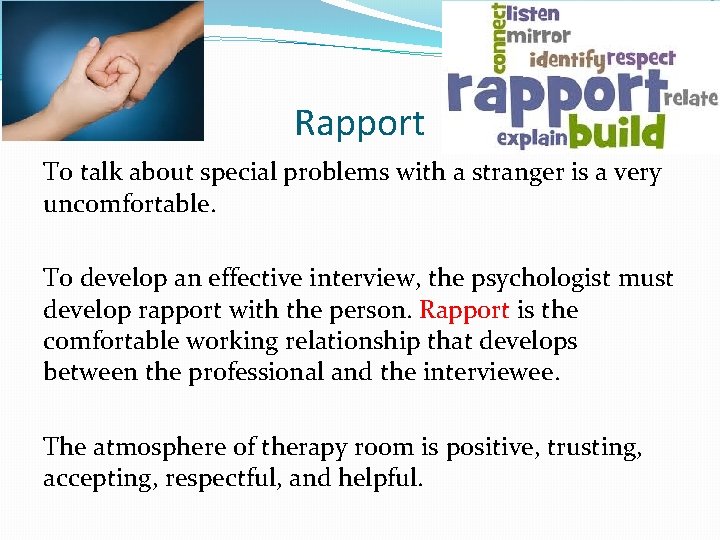
Rapport To talk about special problems with a stranger is a very uncomfortable. To develop an effective interview, the psychologist must develop rapport with the person. Rapport is the comfortable working relationship that develops between the professional and the interviewee. The atmosphere of therapy room is positive, trusting, accepting, respectful, and helpful.
For rapport The professional must focus complete attention on the patient without any telephone calls or personal concerns. The professional must maintain eye contact and facing the patient with an open posture without barrier such as a table. The psychologist actively and carefully listens. The psychologist is nonjudgmental and noncritical. Genuine respect, empathy, sincerity, and acceptance

Effective Listening Skills To fully listen to another without being distracted by your thoughts and concerns is challenging work. Careful listening includes the content of what is being said and the feelings behind what is being said. Listening also includes paying attention to what is not being said.
Active listening skills include paraphrasing, reflection, summarization, and clarification techniques. Paraphrasing involves rephrasing (rewording) the content of what is being said. A brief summary Reflection involves rephrasing the feelings of what is being said in order to encourage the person to express feeling
Active listening skills Summarization involves both paraphrasing and reflection in attempting to pull together several points into a coherent brief review of the message. Clarification includes asking questions to ensure that the message is being fully understood.
Effective Communication The professional must use language appropriate to the patient and avoids the use of professional jargon. The interviewer tries to fully understand what the patient is trying to communicate and asks for clarification when he or she is unsure. Psychologists must be sensitive to different communication styles and learn more about how race, culture, and gender impact these styles.
Observation of Behavior The psychologist pays attention to how it is being said. Observation of nonverbal communication (e. g. , body posture or body language, eye contact, voice tone, appearence) provides useful information.
Asking the Right Questions Typical questions include issues such as the frequency, duration, severity, and patient’s perception of the etiology of the presenting problem.
Types of Interviews different types of interviews �to admission to a clinic or hospital, �to determine if a patient is in danger of injuring herself or someone else, �to determine a diagnosis. highly structured X unstructured and spontaneous.
Types of Clinical Interviews �Initial Intake or Admissions Interview �Mental Status Interview �Crisis Interview �Diagnostic Interview �Structured Interviews �Computer-Assisted Interviews �Termination Interview Copyright ©Allyn & Bacon 2005
Initial Intake or Admissions Interview to develop an understanding of the patient’s symptoms or to recommend the treatment or intervention plan. The initial interview attempts �to evaluate the patient’s situation before admission to the hospital, �to determine whether the services provided by the hospital can meet the patient’s needs, �to instill trust, rapport, and hope.
Mental Status Interview is conducted to screen the patient’s level of psychological functioning and the presence or absence of abnormal mental situation such as delusions, delirium, or dementia. They include a brief evaluation and observation of the patient’s appearance and manner, speech characteristics, mood, thought processes, insight, judgment, attention, concentration, memory, and orientation.
Mental Status Interview include questions �to determine orientation to time (e. g. , “What day is it? What month is it? What year is it? ”), �place (“What city are you in? Where are you now? Which hospital are you in? ”), �and person (“Who am I? Who are you? Who is the president of Turkey? ”). It assesses short-term memory (e. g. , “I am going to name three objects I’d like you to try and remember: chair, key, and dress”) and attention-concentration (e. g. , “Count down by 7 s starting at 100. For example, 100, 93, and so forth”).
Mental Status Exam �Appearance and behavior �Speech and thought �Consciousness �Perception �Obsessions and compulsions �Orientation �Memory �Attention/concentration �General information �Intelligence �Insight and judgment
Crisis Interview is conducted when a patient is in a significant and traumatic or life-threatening crisis. We might encounter such a situation in an emergency room, a clinic, or a student health service on campus. It is critical to determine whether the person is at significant risk of hurting him- or herself or others. It is important to determine whether the alcohol, drugs, and/or medication the person taken is a lethal dose.
Crisis Interview �Primary Goal: resolve the immediate problem �Secondary Goal: refer to appropriate resources
In the case of crisis The interviewer may need to �be more directive (encouraging the person to phone the police); �break confidentiality if the person is in serious and immediate danger; �or enlist the help of others (e. g. , police department, ambulance).
Diagnostic Interview Goal: to arrive at a diagnosis Patient’s symptoms and problems are examined in order to classify into a diagnosis. the Diagnostic and Statistical Manual- V (DSM-V) is used to develop a diagnosis based on five axes. The DSM-V is used to classify and diagnose psychiatric problems.
Diagnostic Interview Axis I includes the presence of clinical syndromes (e. g. , depr, panic disorder, SCH). Axis II = potential personality disorders (e. g. , paranoid, antisocial, borderline) and mental retardation. Axis III = physical and medical problems (e. g. , heart disease, diabetes, cancer). Axis IV = psychosocial stressors currently experienced by the patient (e. g. , fired from job, marital discord, financial hardship). Axis V (Global Assessment of Functioning or GAF) = a clinician rating of how well the patient is coping with his or her problems (1 = poor coping, 100 = excellent coping).
Structured Interviews To increase the reliability and validity of clinical interviews, a number of structured interviews have been developed (e. g. , the Structured Clinical Interview for DSM-IV [SCID-I and SCID-II], the Positive and Negative Syndrome Scale [PANSS]). They include very specific questions in a detailed format. If a patient answers yes to a question, a list of additional questions might be asked to obtain details and clarification. If the patient answers no to a question, the follow-up questions are skipped.
Structured Interviews Clinical judgment are minimized or eliminated in structured interviews. Semistructured interviews offer some degree of flexibility in the questions. Structured and semistructured interviews tend to be used in research more than in private practice or clinics.
Computer-Assisted Interviews Computers can be used to ask patients questions and record their responses. Some patients feel more comfortable answering sensitive and embarrassing questions via computer rather than face-to-face interview. However, some people are uncomfortable with computers and prefer to talk with a professional. Ethical issue: There is a confidentiality concerns when sensitive material is being requested in a waiting room and when access to computer files is not controlled.
Termination Interview After completion of treatment, a termination interview may be used to evaluate the effectiveness of treatment. It might focus on �how the patient experienced the treatment, �what the patient found useful or not useful, �how he or she might best deal with problems in the future.
Potential Threats to Effective Interviewing BIAS: Interviewer’s personality, theoretical orientation, interests, values, previous experiences, and cultural background may influence how they conduct an interview. They may consciously or unconsciously distort information collected during an interview. Bias can lead to distorted approaches.
Potential Threats to Effective Interviewing Reliability and Validity: Two or more interviewers conduct independent interviews with a patient, they may or may not make the same diagnosis, hypotheses, conclusions, or treatment plans. Patients may not report the same information when questioned by several different interviewers. Interviewer gender, race, age, and skill level may affect patient response. Reliability and validity may be enhanced by using structured interviews, asking similar questions in different ways, and using multiple interviewers.
Behavioral Observations are an attempt by the psychologist to watch the problems and behaviors in the real world. The clinical interview relies on self-report information that may or may not be accurate. Information obtained through an interview may be biased. naturalistic, self-monitoring, and controlled
Behavioral Observations Functional analysis refers to a behavioral analysis of the antecedents, or what led up to the behavior, as well as the consequences of the behavior. Target behaviors are specific behaviors that are examined, evaluated, and altered by interventions. Many people have vague complaints. To isolate target behavior is difficult. Behavioral observations must identify clear target behaviors to observe. Operational definitions to define target behaviors are necessary for behavioral observations.
Naturalistic Observation Observing patients in their natural environments. It involves entering into the world of the patient to observe the person interacting with the environment in which problems occur. Disadvantages: �It can be time consuming and expensive. �Confidentiality can be problem, when teachers, coworkers, peers, and others know that there is a psychologist. �Most people behave differently when they know they are being watched. This is referred to as reactivity. �The problematic behavior may not occur during the observation. �The observation may be biased. The psychologist may expect to see certain behavior.

Self-Monitoring is conducted by the patient. The patient is instructed in how to observe and record his or her own behavior in an objective manner. Self-monitoring has become a very commonly used tool not only for assessing problems but also as an intervention. Patients are instructed to record the problematic behaviors when they occur each time as well as other important information such as feelings and thoughts. Both patient and psychologist develop a better understanding of the target behavior as well as the factors that may encourage or reinforce it.
Self-Monitoring has been successfully used with a large number of problem behaviors such as eating problems, smoking, sleeping problems, anxiety symptoms, and criminal behavior. If patients know that they must write down everything they eat, they may think twice before impulsively eating. Thus, self-monitoring is used as both an intervention and an assessment technique.
Self-Monitoring Disadvantages: Few people are willing to self-monitor for a long period of time. Some people may not record honestly because of embarrassment and /or denial.
Controlled Observations Rather than waiting for target behaviors in the natural environment or for the patient to report using selfmonitoring, controlled observations force the behavior to occur in a simulated way. The most commonly used type of controlled observation is the role play. Role plays require people to act as if they were in a particular situation that causes them concern. Role plays can be used both for the assessment of a problem and for treatment interventions.
Checklists and Inventories Interviews and observations can provide a great deal of helpful information, but both methods take a lot of time to complete and tend to be expensive. When many people’s assessment are needed at one time, they are impractical. Checklists and inventories, brief pencil-and paper questionnaires assess one or more traits or problem areas. They can be administered to a large number of people at one time, are inexpensive, and can be quickly scored analyzed.
Checklists and Inventories Information obtained from checklists and inventories are more reliable and valid than information obtained from other methods. Numerous checklists and inventories have been developed to assess and diagnose a wide variety of problems such as anxiety, depr, eating disorders, and ADHD. They are very brief, easy to complete, and need little instruction or supervision from a professional.
Beck Inventories A. Beck, father of CBT, has developed a series of inventories to assess depr, anx, hopelessness, and suicidal ideation. All the Beck Scales are brief and are used with persons who range in age from 17 to 80 years. Each scale takes only 5 to 10 minutes to complete and has a simple scoring system. �The Beck Depression Inventory (BDI) is the most widely used instrument to assess the severity of depressive symptoms. �The Beck Anxiety Scale is a popular instrument for assessing the intensity of anx symptoms. �The Beck Hopelessness Scale assesses hopelessness about the future.
The Symptom Checklist 90 -Revised (SCL-90 -R) is a brief and multidimensional self-report measure for major psychiatric symptoms. It consists of 90 items, scored on a 5 -point scale. The checklist can be administered to people ages 13 through adulthood and takes 10 to 15 minutes to complete.
Other Checklists and Inventories Many instruments have been developed for specific populations or clinical problems. Disadvantages: �Because these instruments rely on self-report information, people may distort their answers or try to present themselves in a favorable way. �These instruments do not provide the depth and complexity of information.
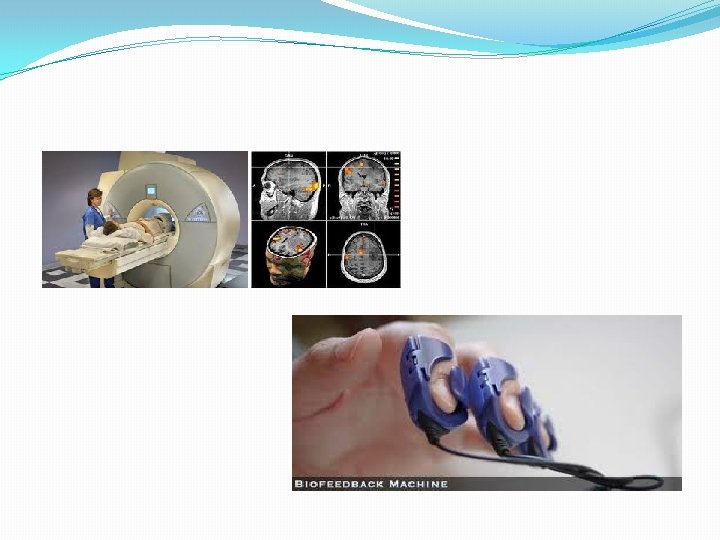
Physiological Testing Anxiety and stress can be assessed through noninvasive techniques that measure physiological activity (e. g. , blood pressure, heart rate, and sweating, respiration, and muscle tension). Neuroimaging techniques such as Magnetic Resonance Imaging (MRI), Computerized Axial Tomography (CAT), and Position Emission Tomography (PET) examine physiological activities associated with mood.
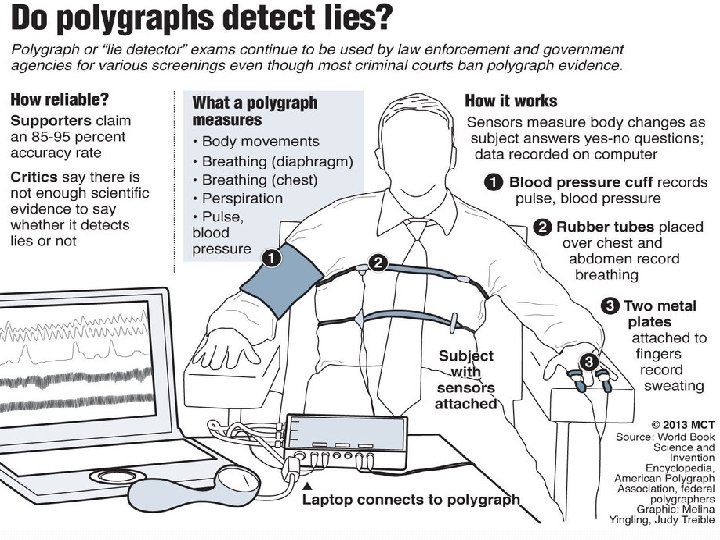
Physiological Testing Polygraphs, or lie detector tests, measure physiological reactions. Biofeedback equipment is similar to polygraphs. Unlike polygraphs, biofeedback provides information to patients about their level of physiological arousal through visual or auditory feedback. High-pitched tone sounds when heart rate is fast and low-pitched tone sounds when heart rate is slow. Biofeedback provides information to patients who try to lower their physiological arousal through the use of relaxation.
- Slides: 71