
Interview techniques and Multicamera Learning Outcomes By the
Interview techniques and Multi-camera
Learning Outcomes By the end of this Power. Point you will understand the importance of: 1. Question Types 2. Interview techniques 3. Interview structures 4. Communication skills
1. Question Types Open Closed Single Multiple Direct Suggestive
Before we get started What is the purpose of interviews? How do we consume interviews?
Closed Questions If you can answer a question with only a "yes" or "no” response, then you are answering a close-ended type of question. Examples of close-ended questions are: Are you feeling better today? May I use the bathroom? Is the prime rib a special tonight? Should I date him?
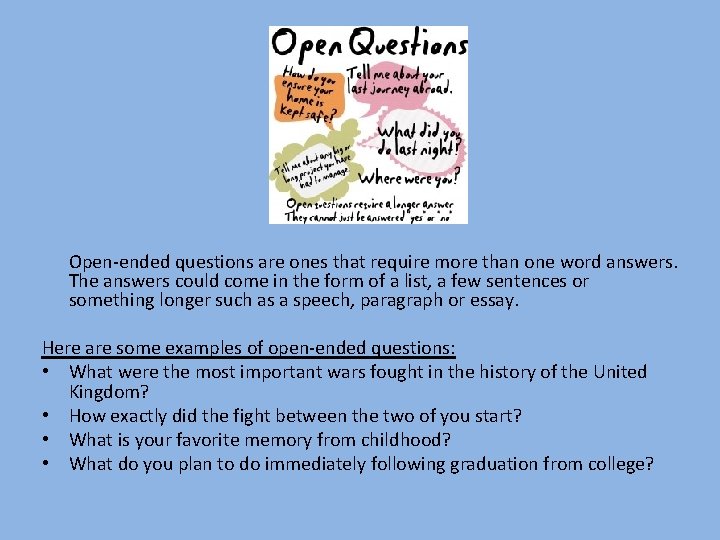
Open-ended questions are ones that require more than one word answers. The answers could come in the form of a list, a few sentences or something longer such as a speech, paragraph or essay. Here are some examples of open-ended questions: • What were the most important wars fought in the history of the United Kingdom? • How exactly did the fight between the two of you start? • What is your favorite memory from childhood? • What do you plan to do immediately following graduation from college?
Multi and single stranded questions • Multi-stranded questions are questions with more the one question/point. This type works well with investigative and conversational interviews Where did you go today and did you enjoy yourself? Tell us about your favourite experience of the day • Single-stranded questions are questions with just one point. Where did you go today?
Direct Questioning 1. Direct questions: Questions which end in a question mark? ? ? ? Are you crazy? 2. Indirect questions: A sentence that reports a question and ends with a period rather than a question mark. She asked if I was crazy! Both warrant a response but in a very different manor
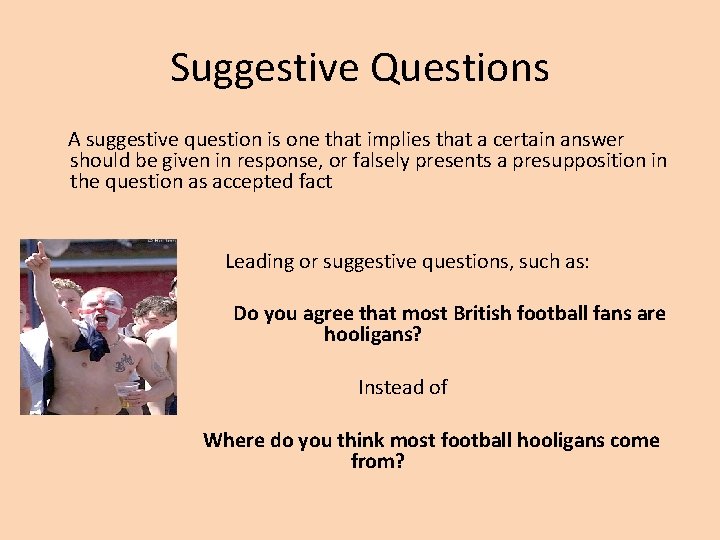
Suggestive Questions A suggestive question is one that implies that a certain answer should be given in response, or falsely presents a presupposition in the question as accepted fact Leading or suggestive questions, such as: Do you agree that most British football fans are hooligans? Instead of Where do you think most football hooligans come from?
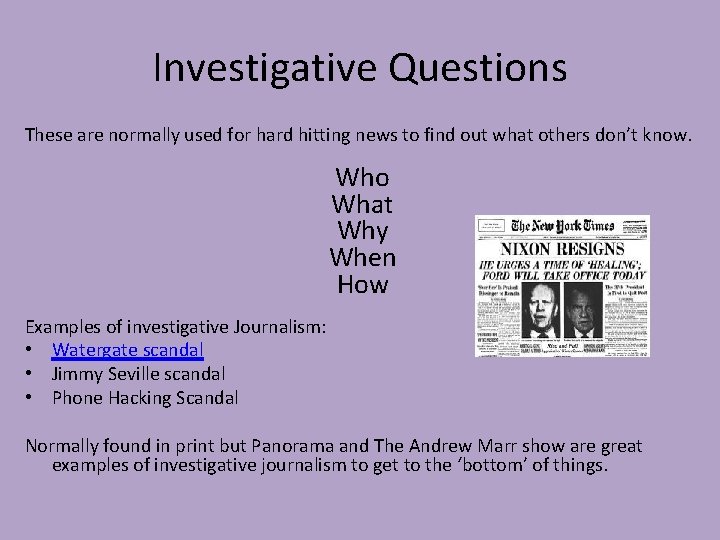
Investigative Questions These are normally used for hard hitting news to find out what others don’t know. Who What Why When How Examples of investigative Journalism: • Watergate scandal • Jimmy Seville scandal • Phone Hacking Scandal Normally found in print but Panorama and The Andrew Marr show are great examples of investigative journalism to get to the ‘bottom’ of things.
Interview Styles • Hard news http: //www. youtube. com/watch? v=k. Z 2 hm 2 Sfk. Q 0 • Light-hearted http: //www. youtube. com/watch? v=5 V 4 s. T 6 A 4 n. N 0 • Entertainment http: //www. youtube. com/watch? v=F 8 RUN 3 Kly. CA http: //www. youtube. com/watch? v=0 ld. Tph. Yt 89 M • Investigative https: //www. youtube. com/watch? v=nh. LURj. B 99 D 0
Structuring • • Introduction Developmental questions Confidence building Key questions Sound bites (not in all interviews) Summary Windup
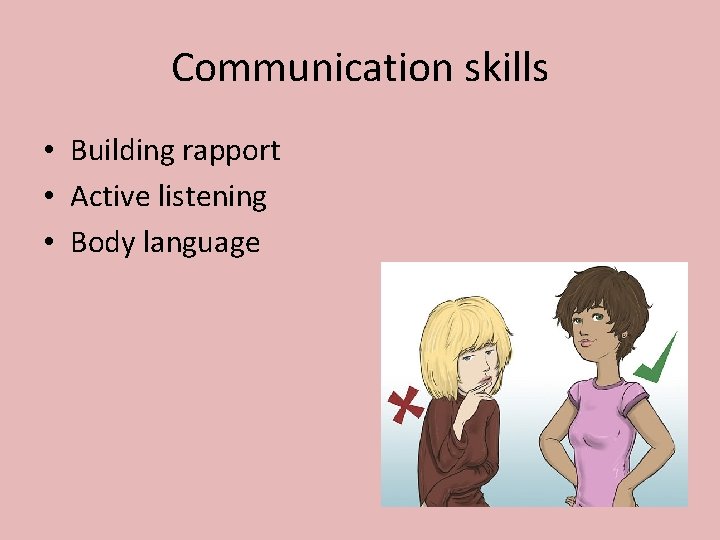
Communication skills • Building rapport • Active listening • Body language
Telephone Techniques • Gathering information • Obtaining comments https: //www. youtube. com/watch v=Bqg. YX 40 b. G 5 M
Task One • • We are going to watch a series of interviews. As we watch them you need to discuss with the class what techniques have been used. 1. Meg Ryan and Parkinson (the ultimate in interview power play! ie you can ask all the questions you like but doesn't mean anyone is going to answer them!) 1. Paxman on Question Time where he keeps repeating the same question 2. Recent Boris Johnson and Eddie Mair BBC interview where he just falls apart 3. Justin Bieber Radio interview (cringe!!) 4. Charlie Sheen interview exploitation and ethics (its where he is all over the place, slurring his words, and talking about coke and aliens - very strange and pitiful)
Task Two You now need to get into groups of 3 and put an interview together which includes the following: (please film your interview) • An interview style will be given to each group (pulled out of a hat) • You must follow the correct structure • You must show that you can build rapport • Have active listening and good body language • Use ALL questions types • You must stick to the genre of your interview style!
- Slides: 16