
Interview Skills Effectively handling common interview questions Wei
- Slides: 27
Interview Skills Effectively handling common interview questions Wei Li Wong Centre for Career Development CRICOS 00111 D TOID 3059
Workshop Aims § Interview preparation § Techniques to enhance interview performance § Handling common interview questions through practice and feedback § How the Centre for Career Development can assist you
Purpose of the interview The employer’s objective: to attract and appoint the best applicant for the organisation. They want to assess: § Can you do the job? § Will you fit in?
Interview skill tips Cultural differences § Interviewers expect open & direct answers to questions § Need to talk about your achievements with a positive, marketing focus § Body language needs to be open § Eye contact needs to be maintained Communication skills § English may be your second language – focus on speaking slowly & clearly § Focus on the benefits of your foreign language skills
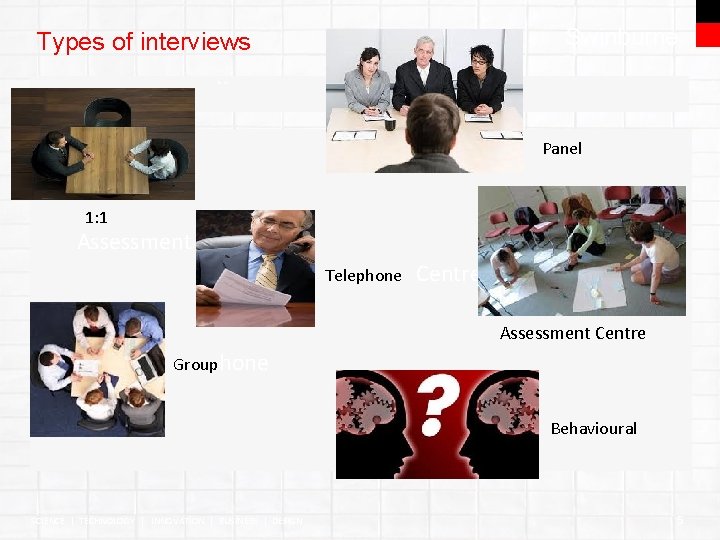
Swinburne Types of interviews Panel • 1: 1 Panel Group 1: 1 Assessment Telephone Centre Assessment Centre Grouphone Behavioural SCIENCE | TECHNOLOGY | INNOVATION | BUSINESS | DESIGN Behavioural 5
Preparing for an interview
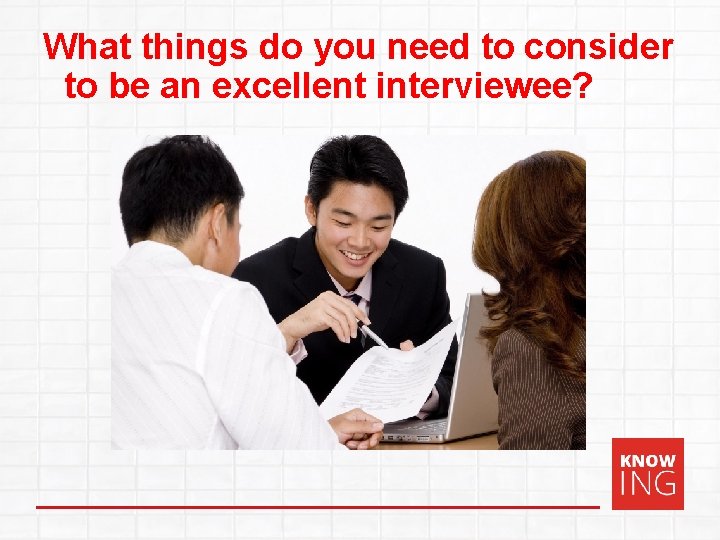
What things do you need to consider to be an excellent interviewee?
Now get into pairs…… You will be working with this person through this workshop.
“Tell me about yourself” • Does not mean tell me everything, but rather tell me about yourself in relation to this job • Your answer should refer to your: ü Qualifications and skills as a result ü Employment/experience and skills as a result ü Personal characteristics ü Interest in the position and insight into the company
Your turn Tell me about yourself
Why do you want to work in this profession? You could talk about: § Your interest and passion for the field § Skills you have, such as problem solving, that relate to your profession § If this has been a lifelong goal, talk about why § Any relevant experience you have and what you enjoyed about it § Why your course at university has cemented your motivation to work within this field, such as major projects
Your turn Why do you want to work in this profession?
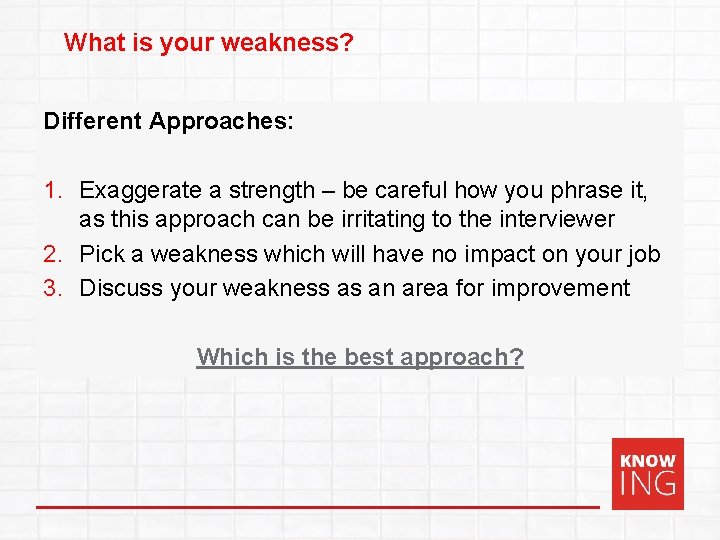
What is your weakness? Different Approaches: 1. Exaggerate a strength – be careful how you phrase it, as this approach can be irritating to the interviewer 2. Pick a weakness which will have no impact on your job 3. Discuss your weakness as an area for improvement Which is the best approach?
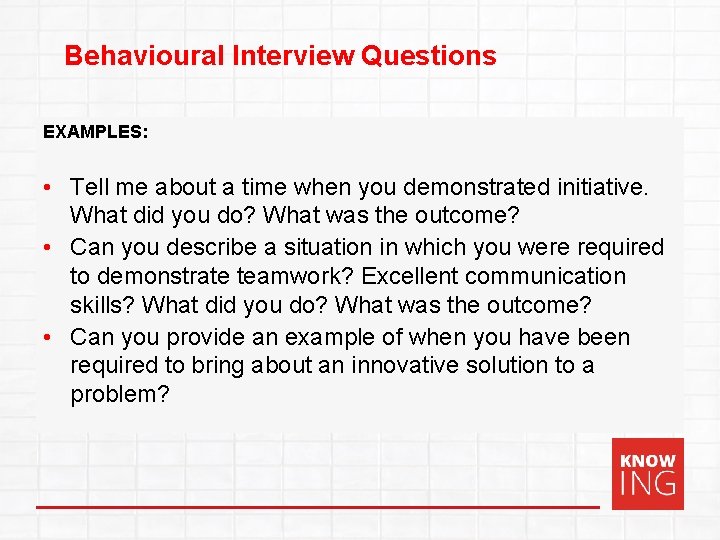
Behavioural Interview Questions EXAMPLES: • Tell me about a time when you demonstrated initiative. What did you do? What was the outcome? • Can you describe a situation in which you were required to demonstrate teamwork? Excellent communication skills? What did you do? What was the outcome? • Can you provide an example of when you have been required to bring about an innovative solution to a problem?
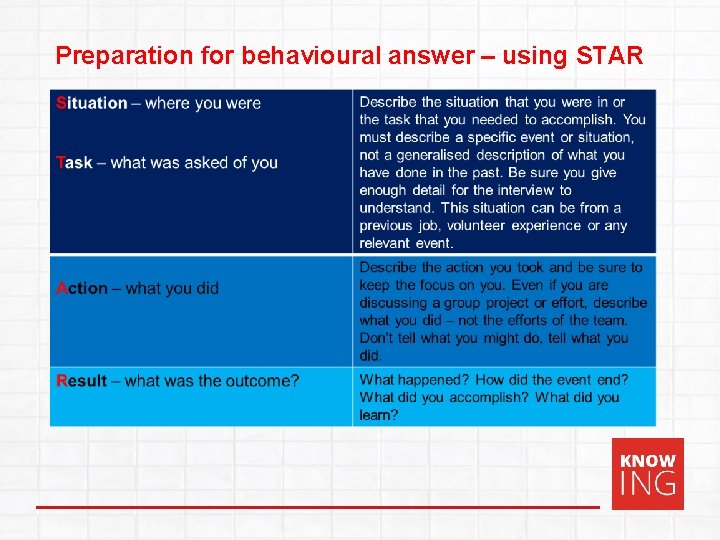
Preparation for behavioural answer – using STAR
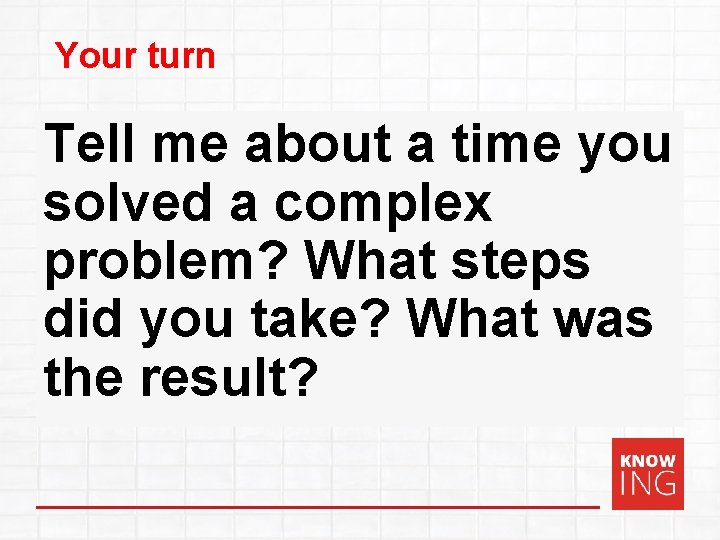
Your turn Tell me about a time you solved a complex problem? What steps did you take? What was the result?
Tips § The interviewer is trying to determine what you define as ‘complex' so try to choose an example that is challenging but not impossible to resolve. § The interviewer wants to see that you have problem-solving skills, initiative and the ability to work around less-than desirable situations. Clearly explain how you identified the problem and reached a solution both professionally and quickly. § Keep in mind they are interested in determining how your actions and decisions will affect the business, so always describe a conclusion that shows you acting in a positive way for the company.
Your turn Tell me about a time you had to work as part of a team and you had a team member who wasn’t helping or doing their share of the work. What did you do to fix the situation? What was the result?
Tips § Talk about an example where you had the chance to solve the problem and you (or your group) used a method that worked § Give examples of how you were a good team member, including being willing to listen and contribute, respecting and encouraging of others skills § As a result, what are the skills you have gained? Perhaps an ability to reach agreements with others and/or identify team member’s strengths and divide tasks appropriately
Practice makes permanent § Practicing your answers provides greater confidence § The interviewers want to hear about you, from you and what makes you suitable for the position on offer – to do this successfully you need to have rehearsed § If you haven’t thought about the message you want to get Off across beat questions test your ability to think quickly, your you may inadvertently provide personal information rather than highlight your professional qualities. a result sense of humour and whether or not you will ‘fit’As into the discrimination may occur organisation: § Employers want to hear relevant examples – so write out your examples prior to the interview and rehearse Examples: § Video a practice interview and see yourself back
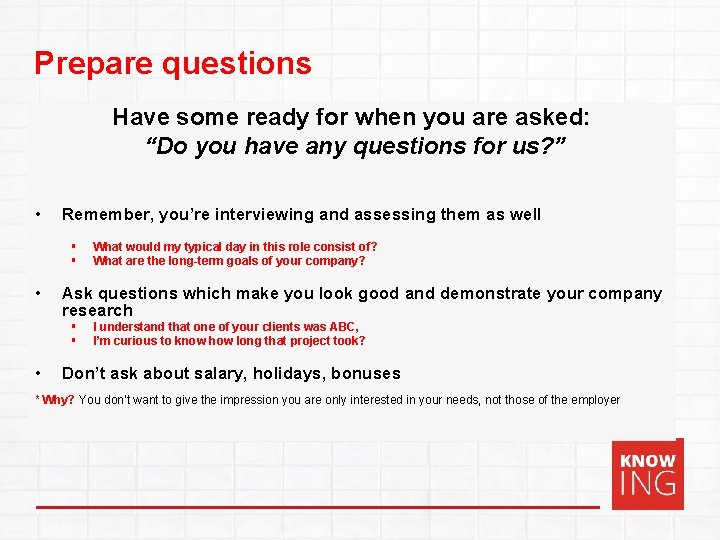
Prepare questions Have some ready for when you are asked: “Do you have any questions for us? ” • Remember, you’re interviewing and assessing them as well § § What would my typical day in this role consist of? What are the long-term goals of your company? § I’m curious to know how long that project took? Off beat questions test your ability to think quickly, your sense of humour and whether not you will ‘fit’ your into company the • Ask questions which make you look or good and demonstrate research organisation: § I understand that one of your clients was ABC, Examples: • Don’t ask about salary, holidays, bonuses * Why? You don’t want to give the impression you are only interested in your needs, not those of the employer
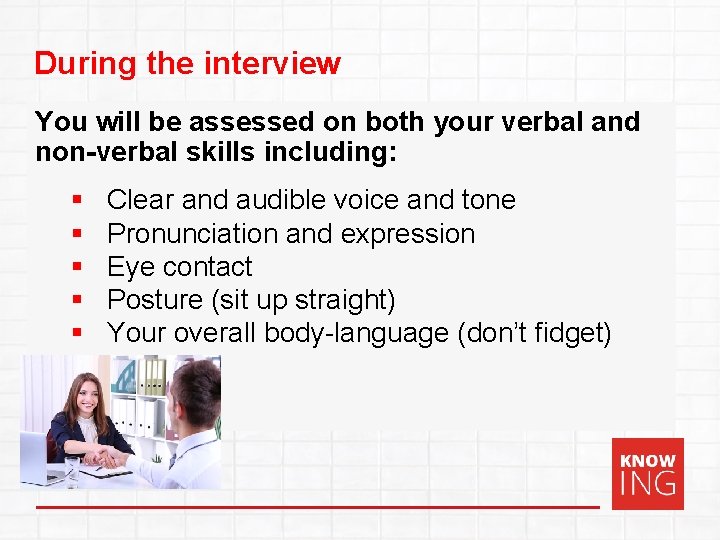
During the interview You will be assessed on both your verbal and non-verbal skills including: § Clear and audible voice and tone § Pronunciation and expression Off §beat questions test your ability to think quickly, your Eye contact sense of humour and whether or not you will ‘fit’ into the § Posture (sit up straight) organisation: § Your overall body-language (don’t fidget) Examples:
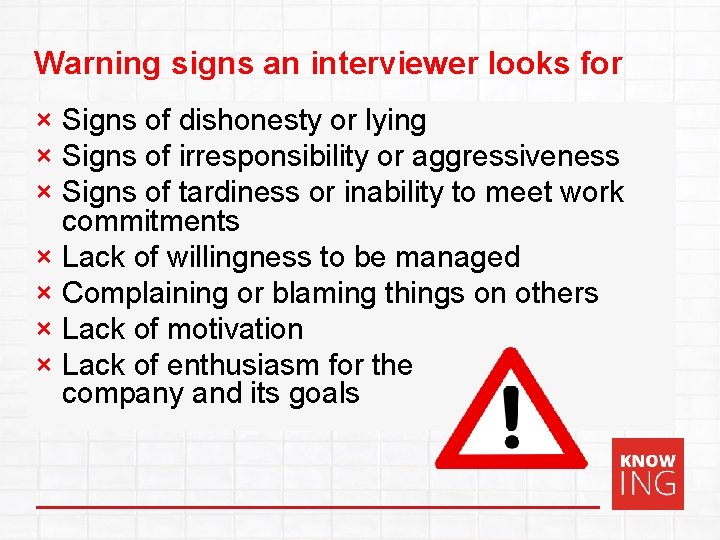
Warning signs an interviewer looks for × Signs of dishonesty or lying × Signs of irresponsibility or aggressiveness × Signs of tardiness or inability to meet work commitments × Lack of willingness to be managed × Complaining or blaming others Off beat questions test your abilitythings to thinkon quickly, your × Lack of motivation sense of humour and whether or not you will ‘fit’ into the organisation: × Lack of enthusiasm for the company and its goals Examples:
Learn from your mistakes § Debrief – talk to someone about the interview so that you can remind yourself of the questions and your answers, that way you’ll Learn from your mistakes be better prepared for your next interview § If you miss out on the job – ring and ask why § Ask to be kept in mind if any other similar or suitable positions become available § Don’t give up!
The Centre For Career Development Web: https: //swin. careerhub. com. au Facebook: Swinburne Careers and Employment Twitter: @swincareers Linked. In: Swinburne Centre for Career Development Group LEVEL 2, The George Building, Hawthorn Campus
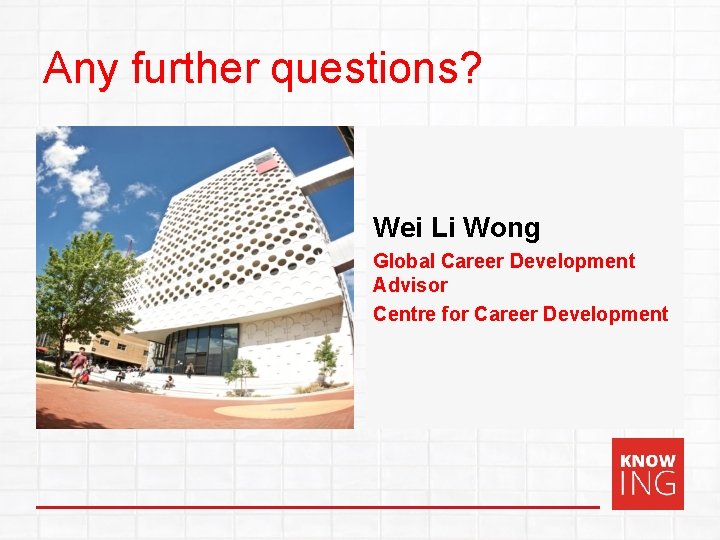
Any further questions? Wei Li Wong Global Career Development Advisor Centre for Career Development