
Intervention in Micro and Mezzo Level of Practice

















- Slides: 47
Intervention in Micro and Mezzo Level of Practice Chapter 8
LEARNING OBJECTIVES 1. Understand that intervention is the time to carry out goals and objective specified in the contract 2. Understand apply the basic principles of counseling with individuals and small groups 3. Understand apply the basic principles for facilitating information and referral 4. Understand apply the basic principles for engagement in crisis intervention, case management, small task group interventions, psychosocial intervention groups, and team work 5. Understand the basic principles underpinning different intervention modalities at micro and 2 mezzo levels of practice
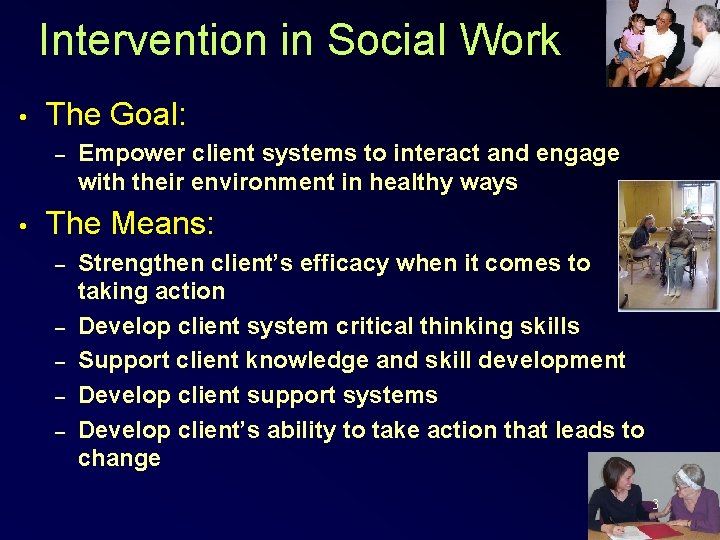
Intervention in Social Work • The Goal: – • Empower client systems to interact and engage with their environment in healthy ways The Means: – – – Strengthen client’s efficacy when it comes to taking action Develop client system critical thinking skills Support client knowledge and skill development Develop client support systems Develop client’s ability to take action that leads to change 3
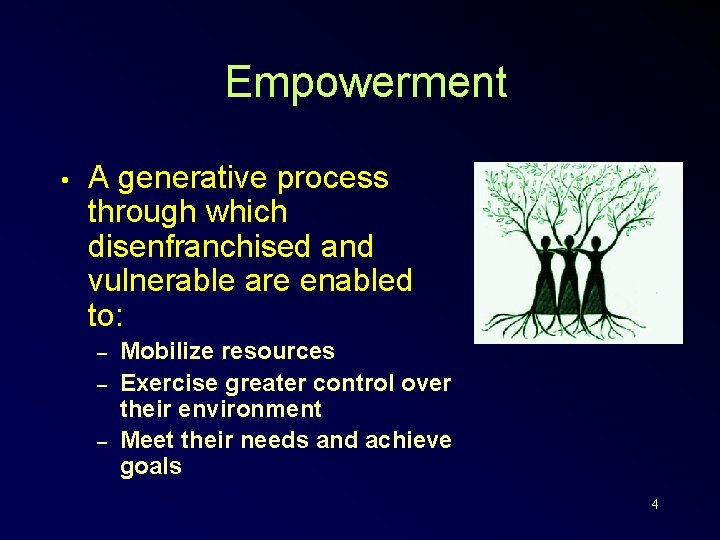
Empowerment • A generative process through which disenfranchised and vulnerable are enabled to: – – – Mobilize resources Exercise greater control over their environment Meet their needs and achieve goals 4
Yes or No… • • Having a mentally ill friend or neighbor is OK by me. Homosexuality is normal. It is OK for educated homeless people to be teachers of children. Families with homosexual parents should be portrayed in some children's books. It is OK for homeless people to get legally married, and receive the legal benefits of marriage. It is OK for mentally ill people to raise children. It would be OK by me if one or more of my children were developmentally challenged 5
Are you ready to work with… The mentally ill The developmentally challenged The disenfranchised The poor The outcast
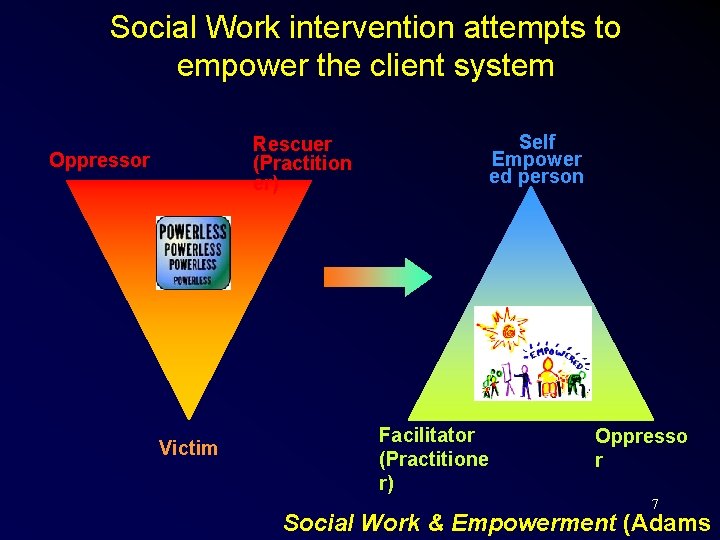
Social Work intervention attempts to empower the client system Self Empower ed person Rescuer (Practition er) Oppressor Victim Facilitator (Practitione r) Oppresso r 7 Social Work & Empowerment (Adams
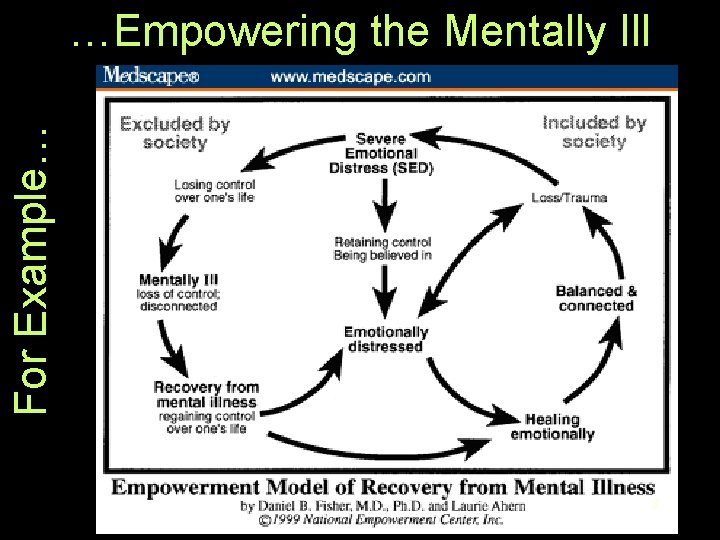
For Example… …Empowering the Mentally Ill http: //www. tmha. org/The. Shaken. Tree. ht m 8
Empowerment Learning Techniques • • • Problem-Solving Educational Drama Assertiveness Training Social Skills Training Client-centered counseling Group Work 9
Counseling of the Client-Centered Kind We're seeing a much larger influx here. They're not looking for doctors or lawyer, but for counselors and emotional healing.
Counseling q A strengths-based problem-solving process that takes the form of dialogue, questions, actions, and transactions that guide and facilitate: q Resolution and mitigation of problems or issues q Acquisition or strengthening of internal personal resources q Development of affective coping and adaptation q Enhancement of well-being 11
Counseling • Requires: – • Broad range of relationship and strengths-based problem solving strategies Contemporary strategies and techniques used include: – – – Eco-maps Sculpting Genograms Force-field analysis Adolescent Grid 12
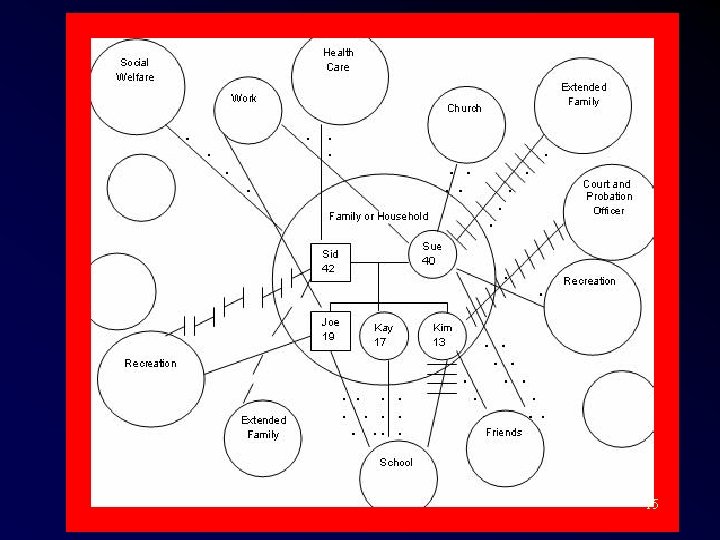
Eco-maps • • Paper-and-pencil assessment tool used to assess specific troubles and plan intervention for clients. A drawing of the client or client family in its social environment. 13
Eco-Map 14
15
Force Field Analysis • This technique gives you a way of: – – – Diagnosing a situation Planning for change Implementing a change strategy and programme. 16
• Driving forces are factors that indicate an openness towards change. They are positive forces for change. • Restraining forces maintain the status quo. They hinder change. Equilibrium 17
• Useful tool when working with clients on goalsetting 18
Information and Referral Occurs in social work practice when the client system does not have the information or resources necessary for problem resolution
Information and Referral A process in which the generalist social worker : q Clarifies the problem or need for which help is being sought q Gathers information about appropriate and available resources q Provides information to the client system q Discusses options for problem resolution q Examines the means through which client system can gain access to selected service option q Facilitates means of referral q Discusses means for follow-up 20
Referral • • Directing clients to another resource for help with an identified problem or need Successful referral requires: – – – Clear and concise description of problem Identification of available resources Discussion of referral options with client Planning and contracting with referral sources Meeting referral source with the client Monitoring and following up on interaction between client and referral source 21
Making a Referral • Questions you are likely to be asked: – – – – Does the client know about the referrals? Demographics Physical, Psychological, Behavioral Client Profile Degree of risk Family History Environmental context Available Supports Major issues/problems 22
Sample Referrals Forms • • • http: //www. southwark. gov. uk/Uploads/FILE_9 457. pdf http: //www. bloorview. ca/pages/documents/out patientreferralform. doc http: //www. togethertrust. org. uk/section_nav/u ploads/18949606. pdf http: //www. daisyhouse. org/DHreferralform. pdf http: //www. nenqayni. com/_images/pdf/fadpint akeassesment. pdf http: //www. vch. ca/home_page/mood/docs/M DC_Referral_Form. pdf 23
What a Crisis? A temporary state of upset and disorganization, characterized by an inability to cope with a particular situation using customary methods of problem solving, and by the potential for a radically positive or negative outcome
Crises… q Occur in everyone’s lives q Not necessarily pathological, may encourage growth and change q Time limited to a brief period, 4 -6 weeks except death q A person’s perception determines the crisis 25
CRISIS INTERVENTION BALANCING FACTORS Crisis- good outcome 1. Perception of event realistic 2. Situational support adequate 3. Coping mechanism adequate No crisis Crisis- development 1. Perception of event distorted 2. Situational support inadequate 3. Coping mechanisms inadequate Crisis 26
PHASES OF CRISIS SEVERE ANXIETY PERSONALITY DISORGANIZATION (CRISIS) TRIAL & ERROR SOLUTIONS STRESS ANXIETY USUAL COPING MECHANISMS OR INEFFECTIVE NEW PROBLEM- SOLVING SOLUTIONS AND SUPPORT ANXIETY PRE-CRISIS LEVEL OF FUNCTIONING 27
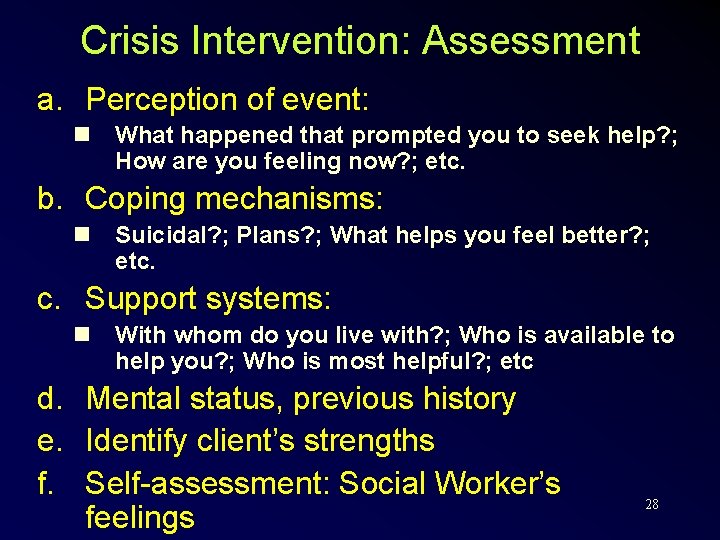
Crisis Intervention: Assessment a. Perception of event: n What happened that prompted you to seek help? ; How are you feeling now? ; etc. b. Coping mechanisms: n Suicidal? ; Plans? ; What helps you feel better? ; etc. c. Support systems: n With whom do you live with? ; Who is available to help you? ; Who is most helpful? ; etc d. Mental status, previous history e. Identify client’s strengths f. Self-assessment: Social Worker’s feelings 28
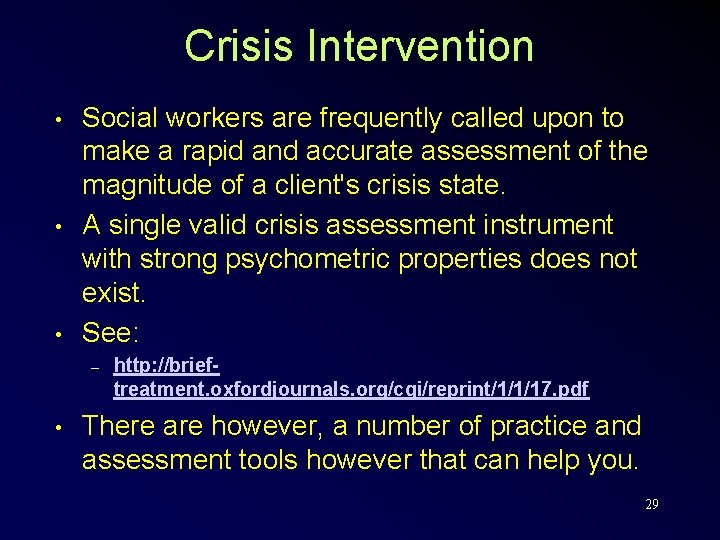
Crisis Intervention • • • Social workers are frequently called upon to make a rapid and accurate assessment of the magnitude of a client's crisis state. A single valid crisis assessment instrument with strong psychometric properties does not exist. See: – • http: //brieftreatment. oxfordjournals. org/cgi/reprint/1/1/17. pdf There are however, a number of practice and assessment tools however that can help you. 29
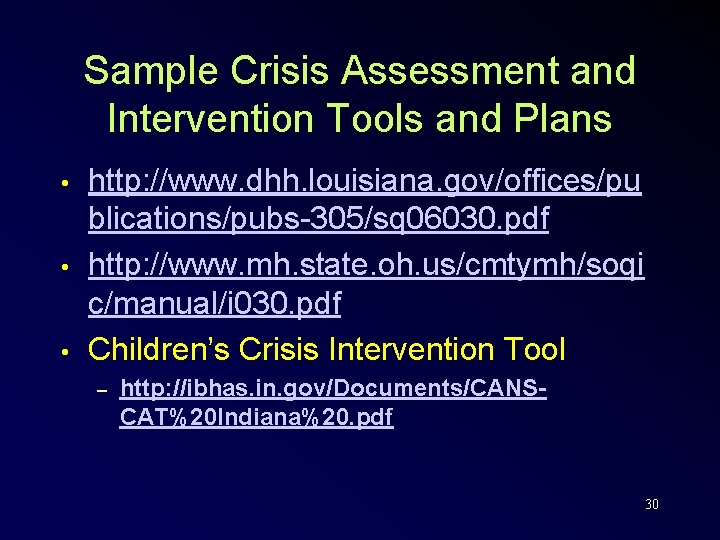
Sample Crisis Assessment and Intervention Tools and Plans • • • http: //www. dhh. louisiana. gov/offices/pu blications/pubs-305/sq 06030. pdf http: //www. mh. state. oh. us/cmtymh/soqi c/manual/i 030. pdf Children’s Crisis Intervention Tool – http: //ibhas. in. gov/Documents/CANSCAT%20 Indiana%20. pdf 30
Crisis Intervention Goals • • Alleviate Stressful Impact Mobilize Client system strengths and resources Support client in developing strengths-based problem-solving skills Assist client in regaining optimal levels of psychosocial functioning Social Worker Client Resource System 31
Small Group Intervention q Applying methods in generalist practice to Meet group member needs q Resolve targeted problems in psychosocial functioning q Complete specified tasks q
Task Groups • Small collectivities of people drawn together by mutual concerns and interested in accomplishing specific tasks 33
Tasks Groups 1. 2. 3. 4. Intervention with task groups moves through different phases: Orientation Accommodation of groups members to each other 5. Generation of ideas about needs and solutions 6. Integrative problem-solving 7. Task completion 34
Psychosocial Intervention Groups • • Focus on enabling members to benefit from the group. Goals: – – – – Identify issues/problems of concern Education Social skills and self-efficacy development Foster mutual support among group members Promote strengths Achievement of personal goals Change behavior Develop problem-solving skills 35
Case Management A process of actions taken by the generalist social worker to mobilize, bring together, and coordinate a continuum of care of client system services.
NASW Standards for Case Management 37
Commonly Involves Referral Assessment Action Plan Intervention Review 38
Case Management q Typically, the process includes: q Assessment of client system needs, assets, strengths, and use of resources in relation to problems or issues q Identification of informal and formal resources q Enabling and empowering the client system by promoting self-determination in making choices and acting q Enabling primary groups in the client system’s environment to expand their care giving capacity q Facilitating effective negotiations for resources between various formal and informal systems of care 39
Case Management Resources • Case Management in Healthcare – • Integrated Case Management – • http: //www. sswlhc. org/docs/swbestpractices. doc http: //www. mcf. gov. bc. ca/icm/pdfs/ICM_quickr ef_upper_island. pdf Case Management Society of America – http: //www. cmsa. org/HOME/tabid/67/Default. as px 40
Teamwork • As a case manager your role will most likely require to bring together a variety of resources to work together in common planning, decision making, and consolidated action. – • The result of this is called TEAMWORK Increasingly, dealing with clients involves coordinated and integrated service delivery across education, health and social services. – This is referred to as multidisciplinary collaboration 41
Team Work A coordinated group service delivery process across different professional systems. Typically, effective team work involves: • • Obtaining sanctions Building a supportive team structure Identifying and maximizing the use of resources Meeting regularly • • • Specifying task activities in relation to goals and objectives Setting up a process of monitoring and evaluation of goal accomplishments Sharing 42 responsibilities
Teamwork Phases • • • Clarify the problem and purpose for organizing Share data Agree on goals and a plan for intervention Assign tasks Evaluate Terminate contact 43
Monitoring Intervention It is important to monitor and document the intervention process
Monitoring Intervention • Entails a variety of activities including: – – – – Narrative documentation Qualitative Assessment Direct Observation Consultation Documentation Review Phone Calls Face to Face Interviews Site Visits 45
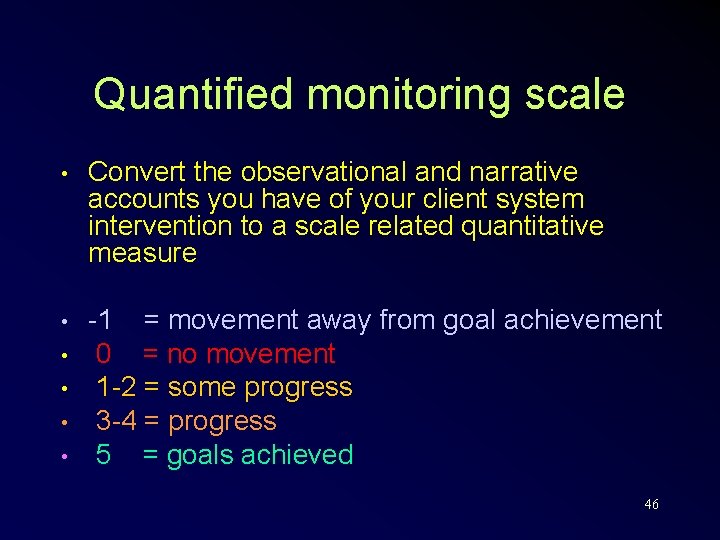
Quantified monitoring scale • Convert the observational and narrative accounts you have of your client system intervention to a scale related quantitative measure • -1 = movement away from goal achievement 0 = no movement 1 -2 = some progress 3 -4 = progress 5 = goals achieved • • 46
Summary • Counseling, Information and Referral, Crisis Intervention, Small group intervention and case management and teamwork – Can apply more than one of the above in social work practice 47