
Intervals Halfwhole steps Perfect Tritone MajorMinor AugmentedDiminished Intervals



- Slides: 30
Intervals Half/whole steps Perfect Tritone Major/Minor Augmented/Diminished
Intervals: the distance between any two pitches 5 kinds of intervals 1. Perfect 2. Major 3. Minor 4. Augmented 5. Diminished
Why is this important? • This may feel tedious. • We need to understand intervals in order to understand chords (3 or more notes), as well as good composing skills.
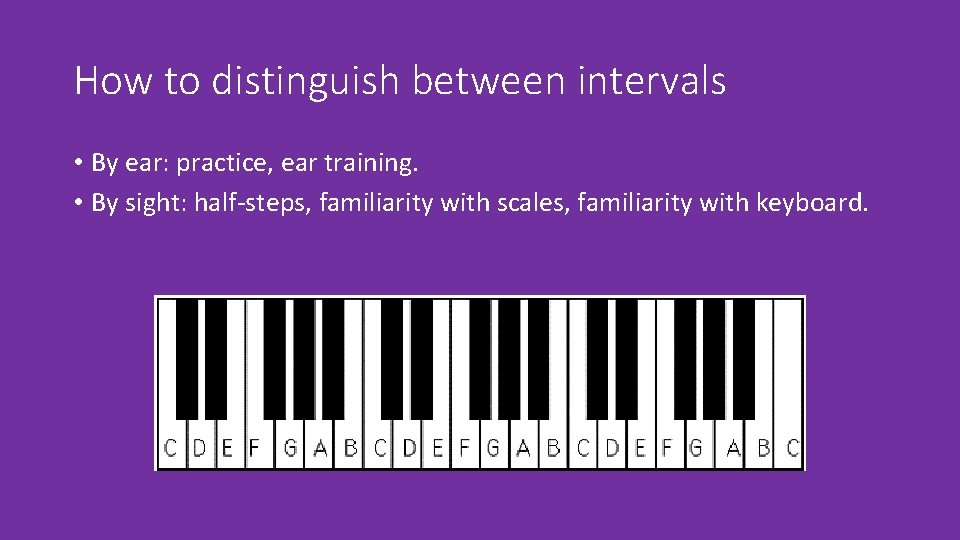
How to distinguish between intervals • By ear: practice, ear training. • By sight: half-steps, familiarity with scales, familiarity with keyboard.
When measuring most intervals • When observing an interval, consider one of the two pitches as “ 1. ” Then, count from that pitch to the next: “ 2, 3, 4, …” etc. to accurately identify the kind of interval. • Intervals named: 2 nds, 3 rds, 4 ths, etc. Tutorial: http: //www. musictheory. net/lessons/30 https: //www. musictheory. net/lessons/31
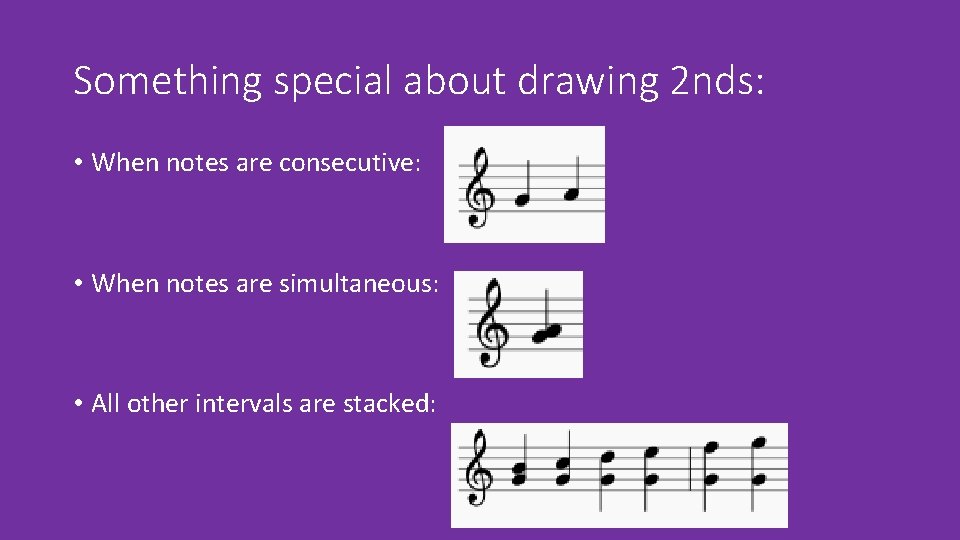
Something special about drawing 2 nds: • When notes are consecutive: • When notes are simultaneous: • All other intervals are stacked:
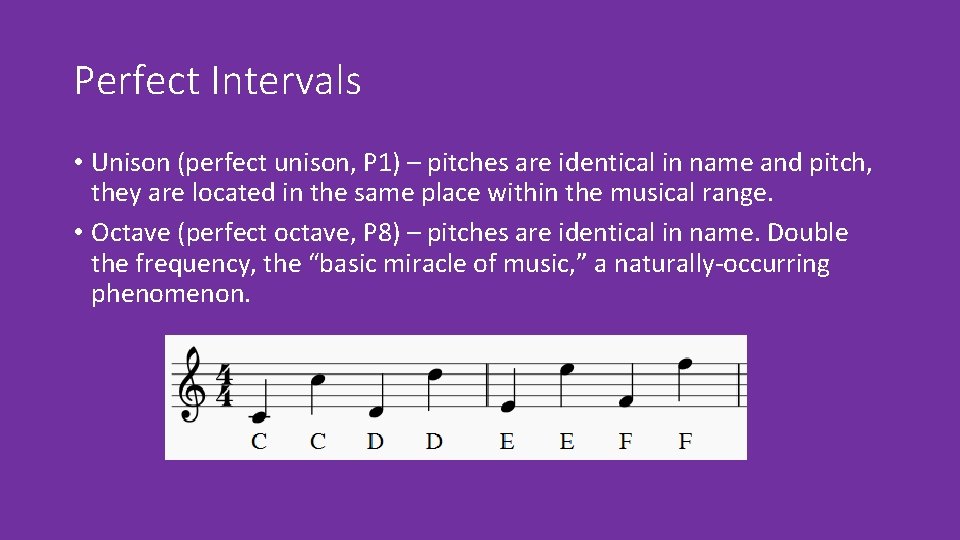
Perfect Intervals • Unison (perfect unison, P 1) – pitches are identical in name and pitch, they are located in the same place within the musical range. • Octave (perfect octave, P 8) – pitches are identical in name. Double the frequency, the “basic miracle of music, ” a naturally-occurring phenomenon.
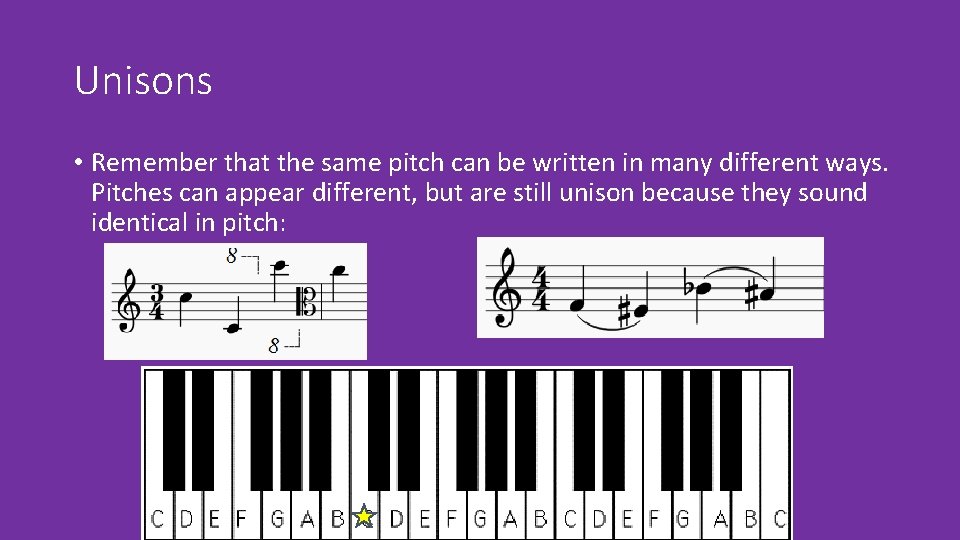
Unisons • Remember that the same pitch can be written in many different ways. Pitches can appear different, but are still unison because they sound identical in pitch:
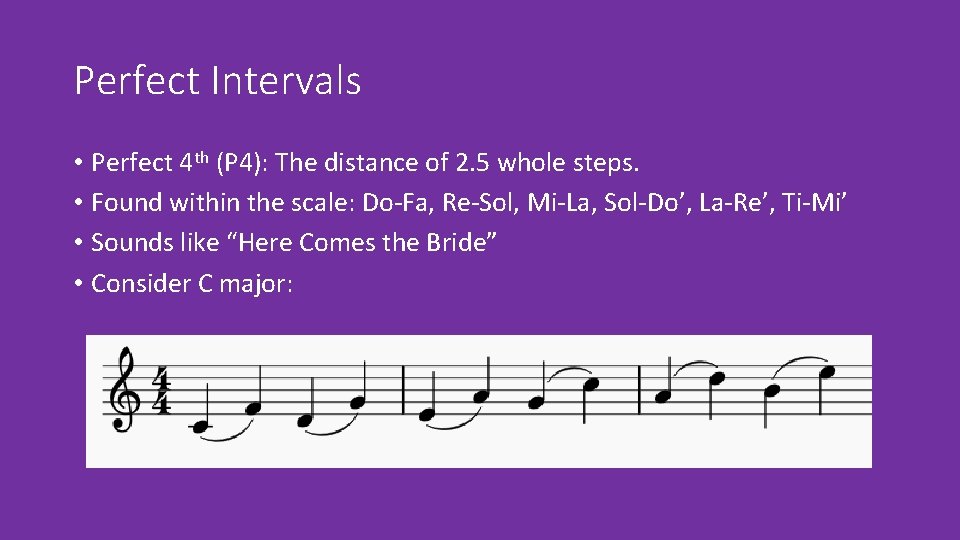
Perfect Intervals • Perfect 4 th (P 4): The distance of 2. 5 whole steps. • Found within the scale: Do-Fa, Re-Sol, Mi-La, Sol-Do’, La-Re’, Ti-Mi’ • Sounds like “Here Comes the Bride” • Consider C major:
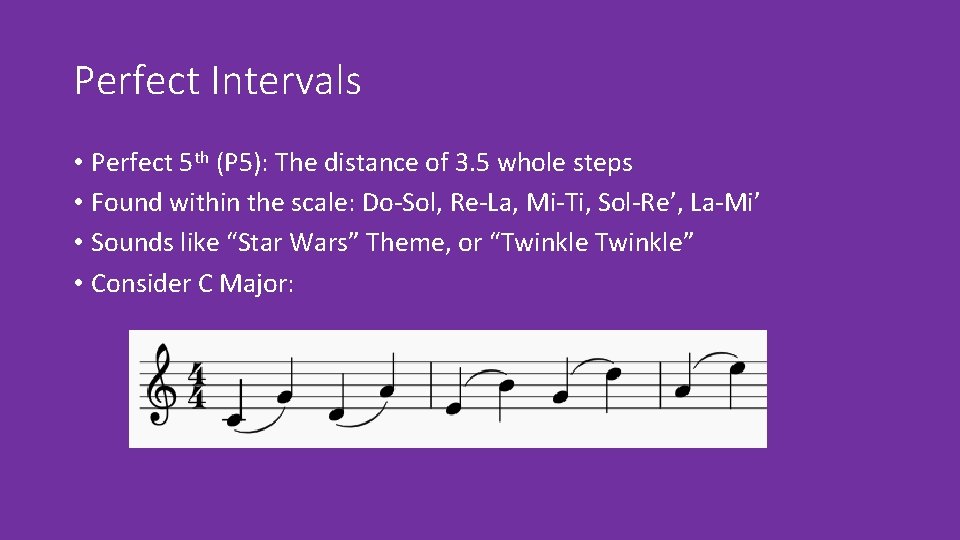
Perfect Intervals • Perfect 5 th (P 5): The distance of 3. 5 whole steps • Found within the scale: Do-Sol, Re-La, Mi-Ti, Sol-Re’, La-Mi’ • Sounds like “Star Wars” Theme, or “Twinkle” • Consider C Major:
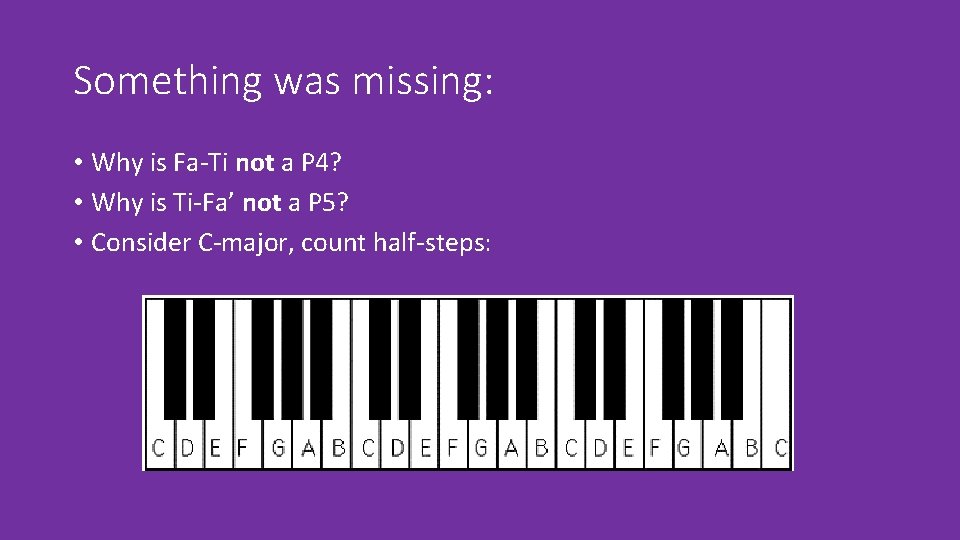
Something was missing: • Why is Fa-Ti not a P 4? • Why is Ti-Fa’ not a P 5? • Consider C-major, count half-steps:
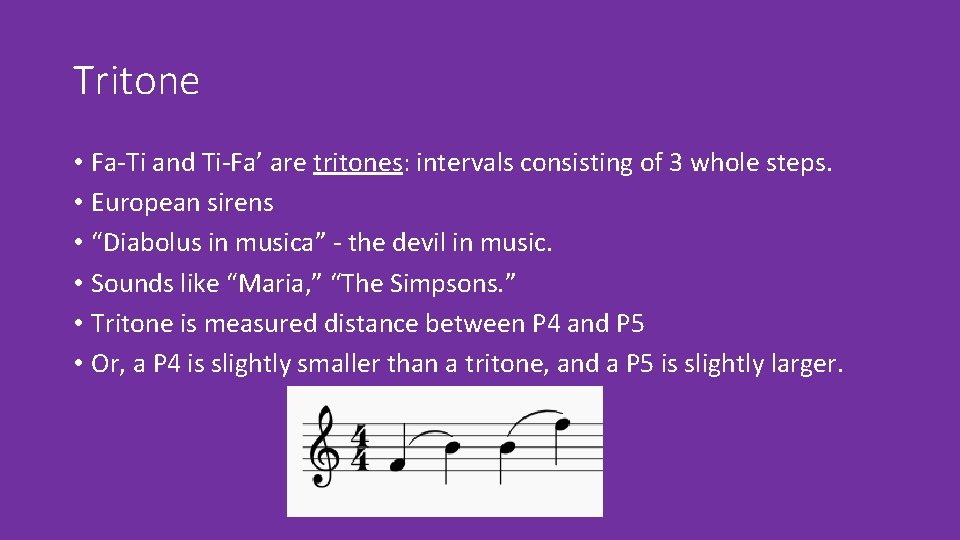
Tritone • Fa-Ti and Ti-Fa’ are tritones: intervals consisting of 3 whole steps. • European sirens • “Diabolus in musica” - the devil in music. • Sounds like “Maria, ” “The Simpsons. ” • Tritone is measured distance between P 4 and P 5 • Or, a P 4 is slightly smaller than a tritone, and a P 5 is slightly larger.
Practice
Major and Minor intervals • Every other interval that exists within the major scale is either a major or a minor interval. • 2 nds, 3 rds, 6 ths, 7 ths • Remember – a scale: consecutive pitches within the range of an octave. • Anything bigger – we’ll get there. • Handwriting from here, onward:
YES NO M 2 m 2
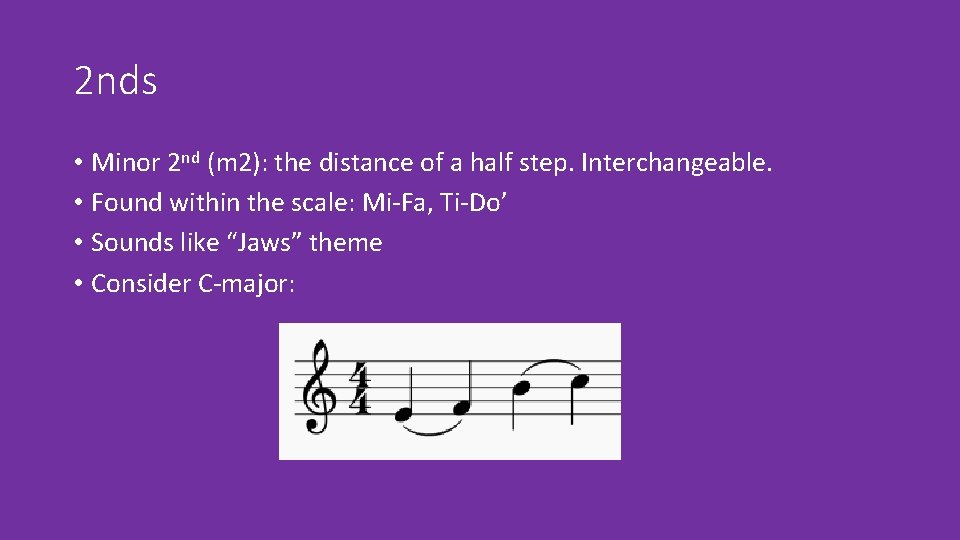
2 nds • Minor 2 nd (m 2): the distance of a half step. Interchangeable. • Found within the scale: Mi-Fa, Ti-Do’ • Sounds like “Jaws” theme • Consider C-major:
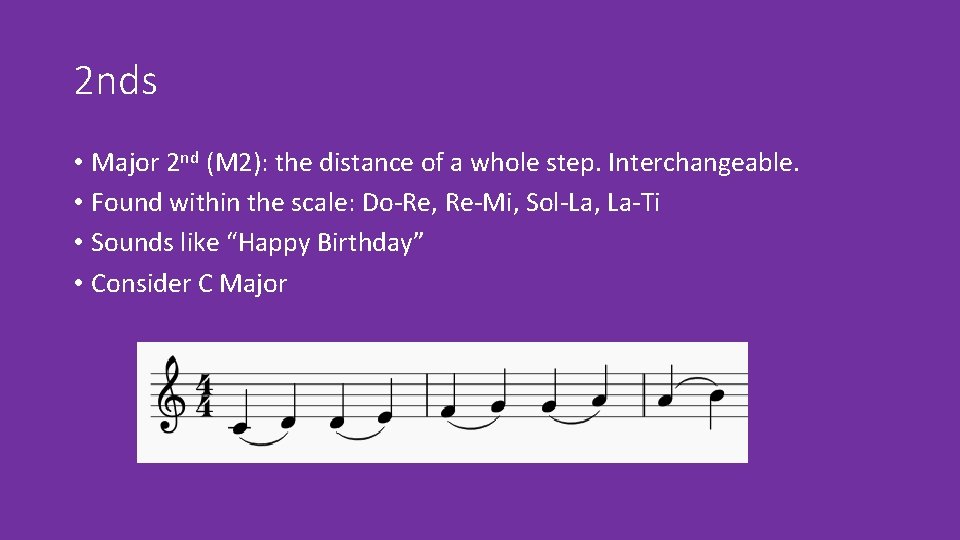
2 nds • Major 2 nd (M 2): the distance of a whole step. Interchangeable. • Found within the scale: Do-Re, Re-Mi, Sol-La, La-Ti • Sounds like “Happy Birthday” • Consider C Major
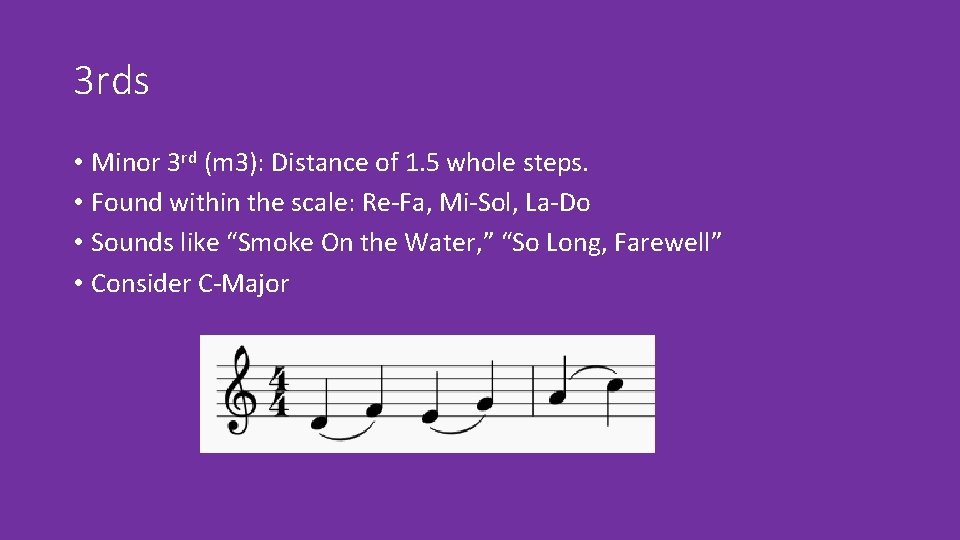
3 rds • Minor 3 rd (m 3): Distance of 1. 5 whole steps. • Found within the scale: Re-Fa, Mi-Sol, La-Do • Sounds like “Smoke On the Water, ” “So Long, Farewell” • Consider C-Major
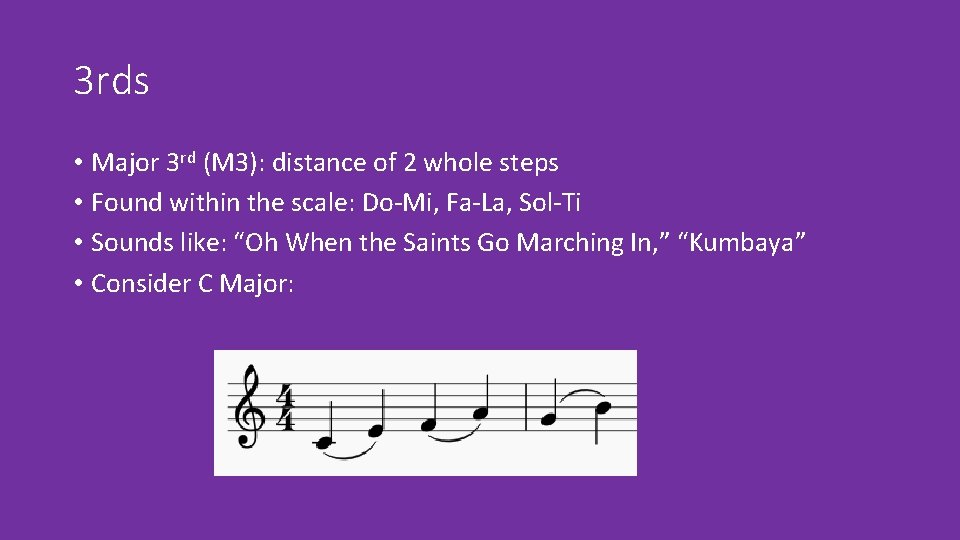
3 rds • Major 3 rd (M 3): distance of 2 whole steps • Found within the scale: Do-Mi, Fa-La, Sol-Ti • Sounds like: “Oh When the Saints Go Marching In, ” “Kumbaya” • Consider C Major:
Practice
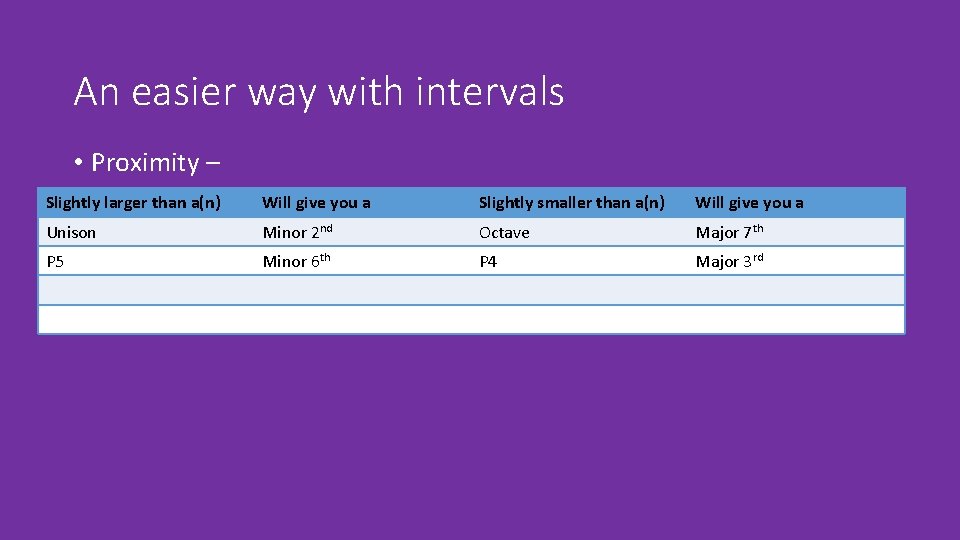
An easier way with intervals • Proximity – Slightly larger than a(n) Will give you a Slightly smaller than a(n) Will give you a Unison Minor 2 nd Octave Major 7 th P 5 Minor 6 th P 4 Major 3 rd
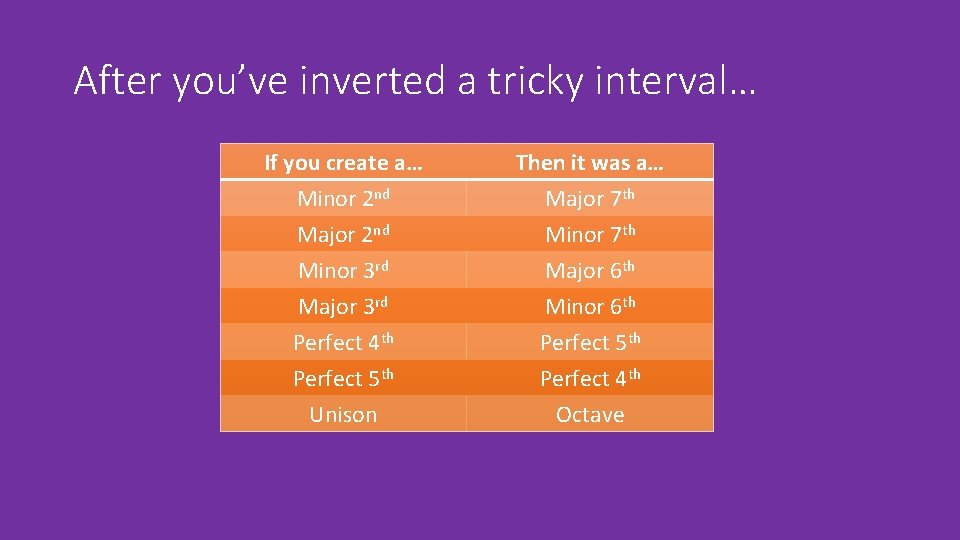
Another, easier way with intervals • Large intervals are harder to identify. • Invert, or flip, intervals, to create a shortcut. • How to invert: 1. Choose one pitch to move. Leave the other alone 2. Your chosen pitch gets swung over the other by an octave. 3. Analyze the new, smaller interval and compare:
After you’ve inverted a tricky interval… If you create a… Minor 2 nd Major 2 nd Minor 3 rd Then it was a… Major 7 th Minor 7 th Major 6 th Major 3 rd Perfect 4 th Perfect 5 th Unison Minor 6 th Perfect 5 th Perfect 4 th Octave
6 th and 7 ths – the long way… • Bear with me.
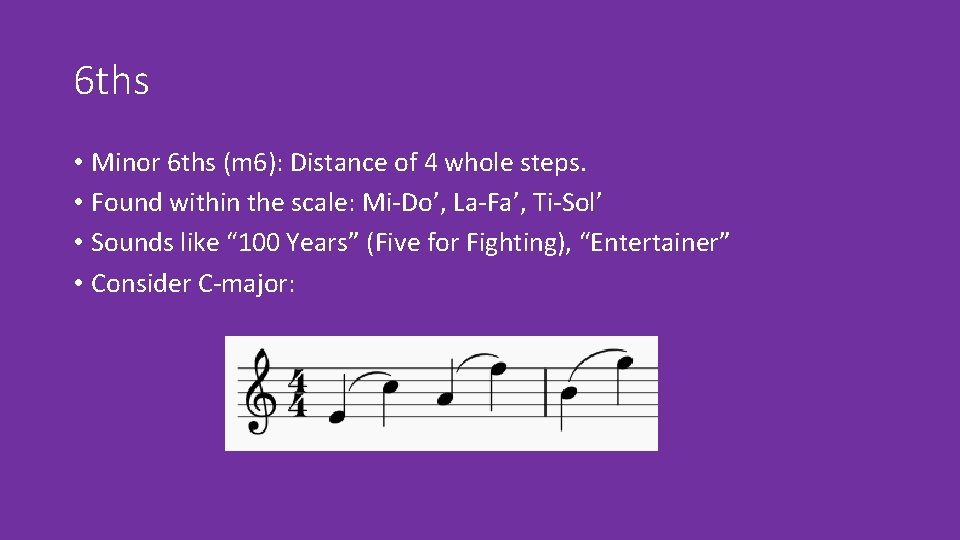
6 ths • Minor 6 ths (m 6): Distance of 4 whole steps. • Found within the scale: Mi-Do’, La-Fa’, Ti-Sol’ • Sounds like “ 100 Years” (Five for Fighting), “Entertainer” • Consider C-major:
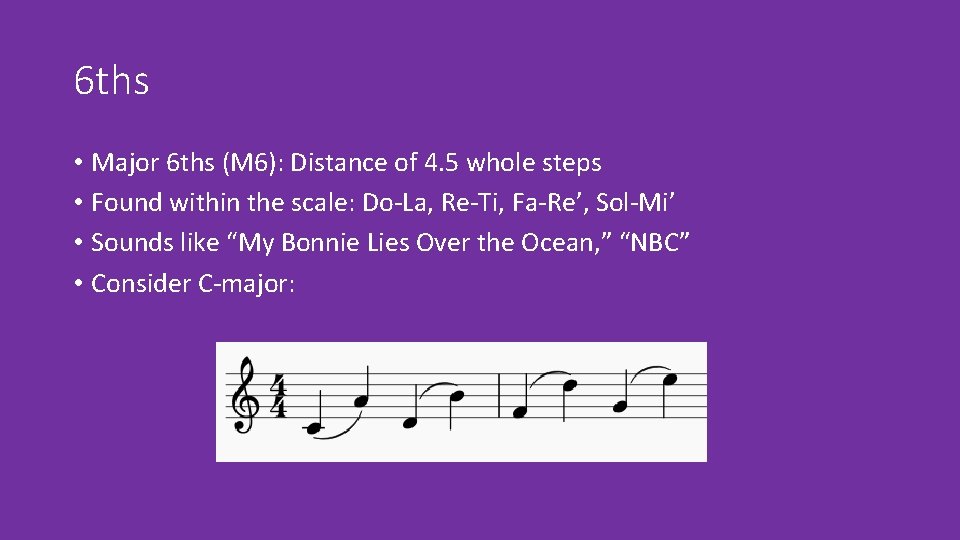
6 ths • Major 6 ths (M 6): Distance of 4. 5 whole steps • Found within the scale: Do-La, Re-Ti, Fa-Re’, Sol-Mi’ • Sounds like “My Bonnie Lies Over the Ocean, ” “NBC” • Consider C-major:
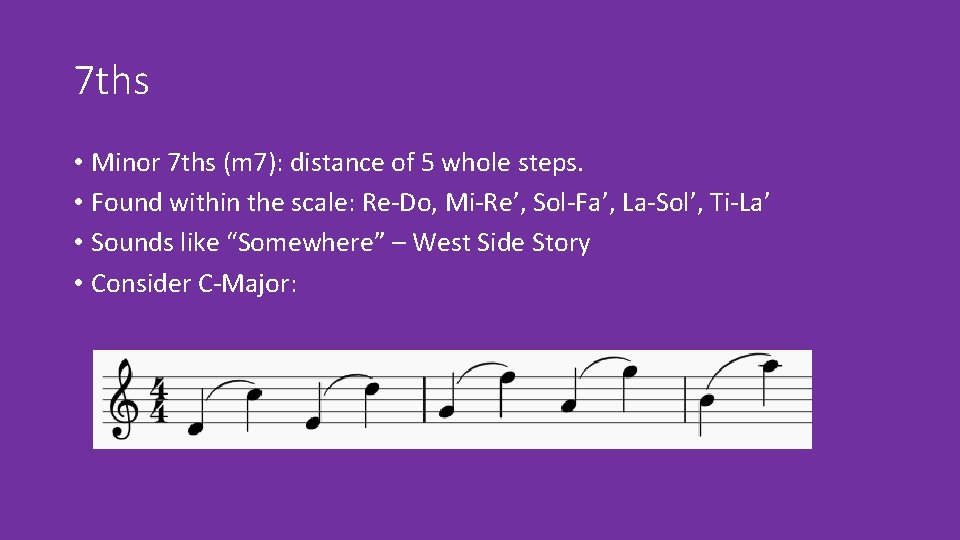
7 ths • Minor 7 ths (m 7): distance of 5 whole steps. • Found within the scale: Re-Do, Mi-Re’, Sol-Fa’, La-Sol’, Ti-La’ • Sounds like “Somewhere” – West Side Story • Consider C-Major:
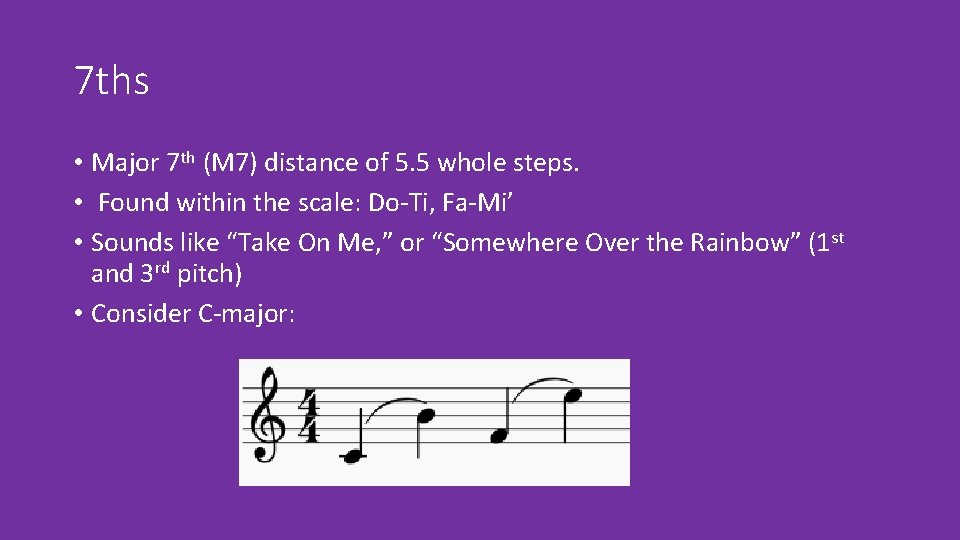
7 ths • Major 7 th (M 7) distance of 5. 5 whole steps. • Found within the scale: Do-Ti, Fa-Mi’ • Sounds like “Take On Me, ” or “Somewhere Over the Rainbow” (1 st and 3 rd pitch) • Consider C-major:
Practice
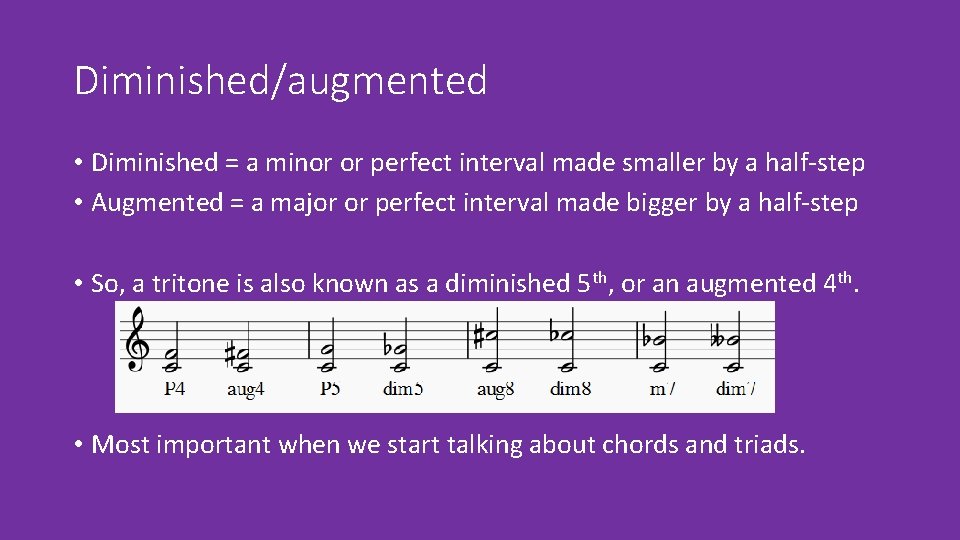
Diminished/augmented • Diminished = a minor or perfect interval made smaller by a half-step • Augmented = a major or perfect interval made bigger by a half-step • So, a tritone is also known as a diminished 5 th, or an augmented 4 th. • Most important when we start talking about chords and triads.