
Intertidal Zone Definition Intertidal the area between high
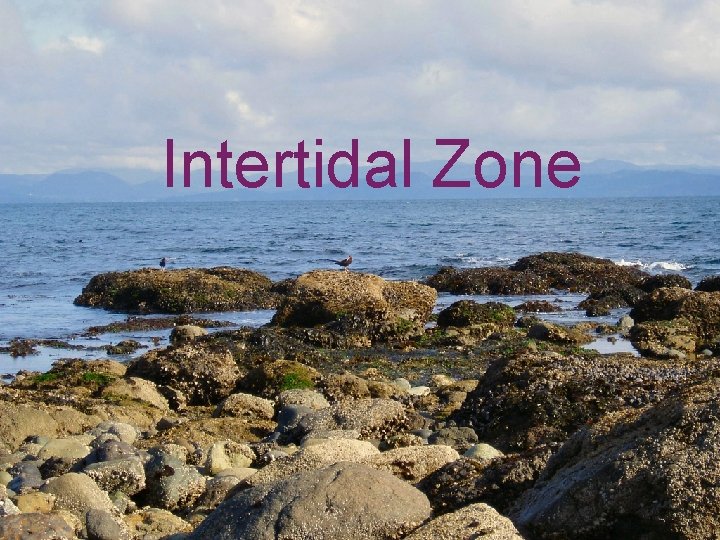
Intertidal Zone
Definition • Intertidal: the area between high tide and low tide. Sometimes covered, sometimes exposed, a very tough habitat to live in. • Also known as the littoral zone
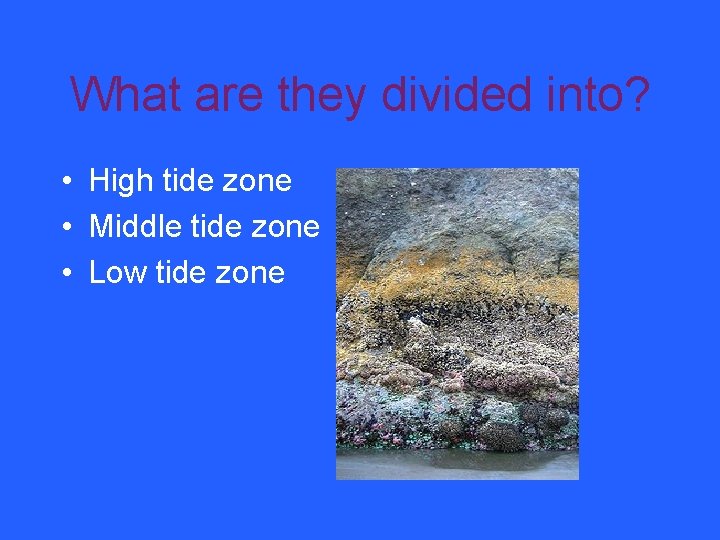
What are they divided into? • High tide zone • Middle tide zone • Low tide zone
What each one does • High tide zone: The high tide zone is flooded during high tide only, and is a highly saline environment. The abundance of water is not high enough to sustain large amounts of vegetation, although some do survive in the high tide zone • Middle tide zone: The middle tide zone is submerged and flooded for approximately equal periods of time per tide cycle. Consequently temperatures are less extreme due to shorter direct exposure to the sun, and therefore salinity is only marginally higher than ocean levels. • Low tide zone: This sub region is mostly submerged - it is only exposed at the point of low tide and for a longer period of time during extremely low tides.
Climate • The intertidal zone doesn’t really have a certain climate because it’s wherever an ocean is so it could be warm, cold, humid, sunny, or cloudy and much more.
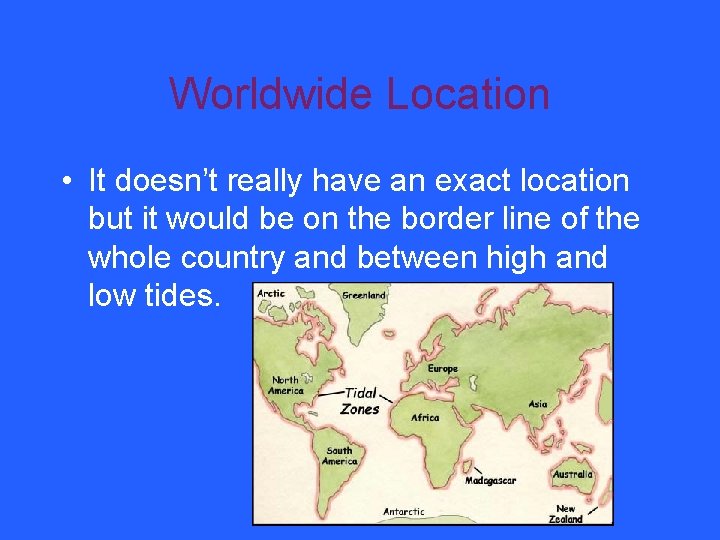
Worldwide Location • It doesn’t really have an exact location but it would be on the border line of the whole country and between high and low tides.
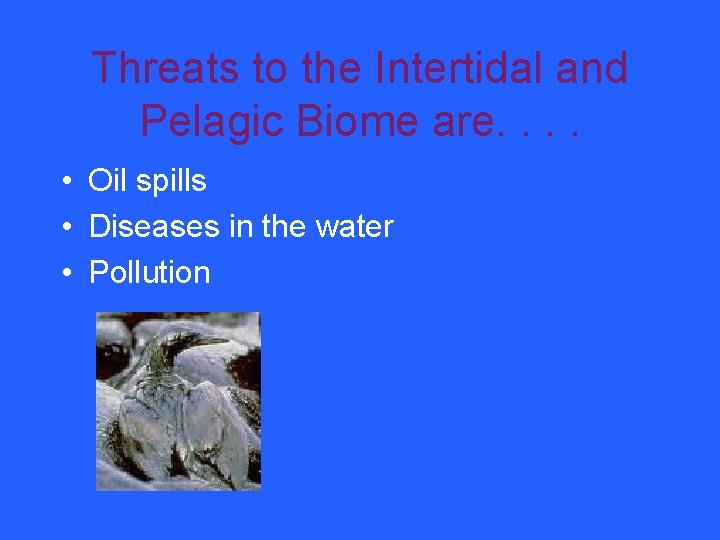
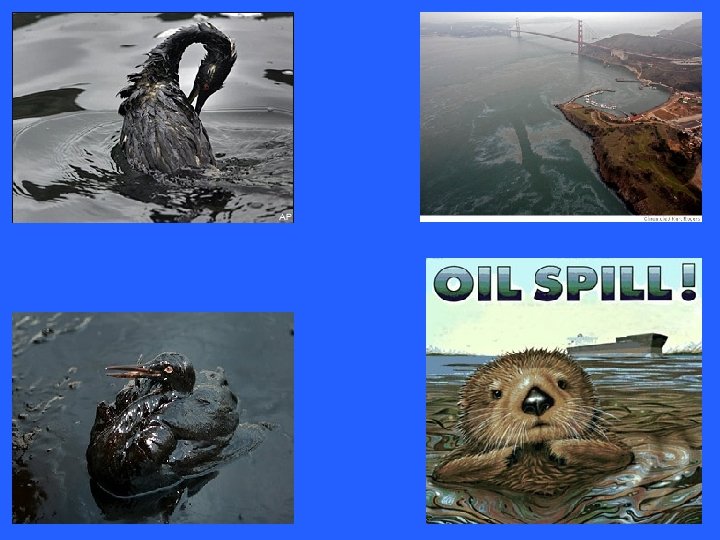
Threats to the Intertidal and Pelagic Biome are. . • Oil spills • Diseases in the water • Pollution
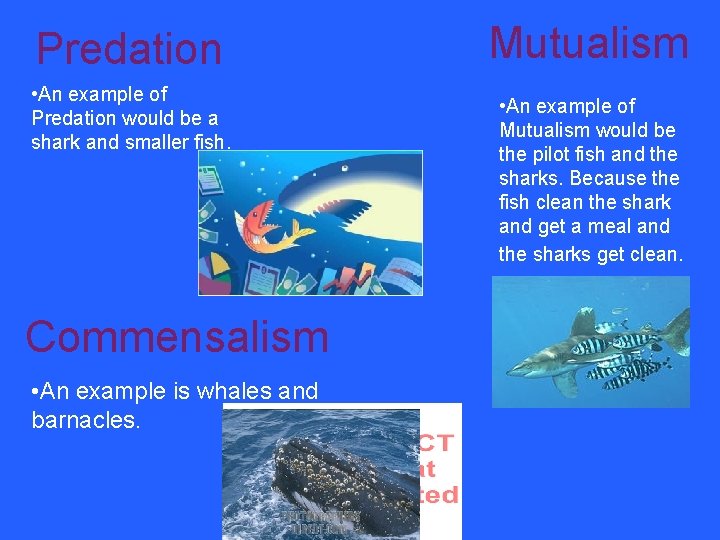
Predation • An example of Predation would be a shark and smaller fish. Commensalism • An example is whales and barnacles. Mutualism • An example of Mutualism would be the pilot fish and the sharks. Because the fish clean the shark and get a meal and the sharks get clean.
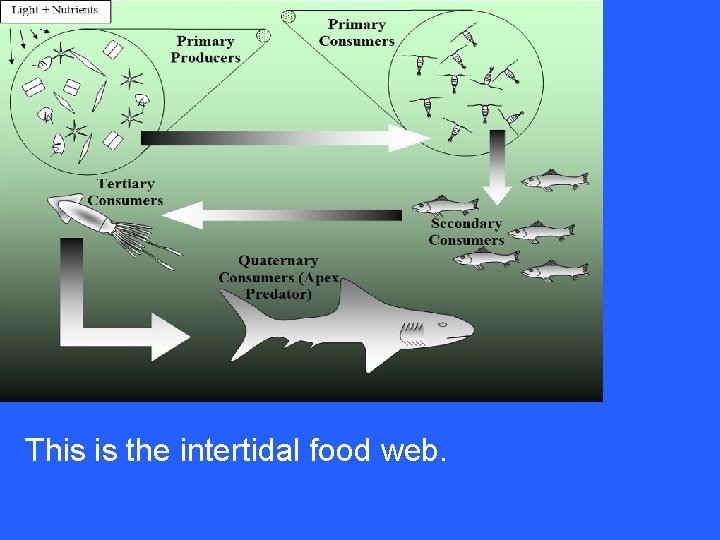
This is the intertidal food web.
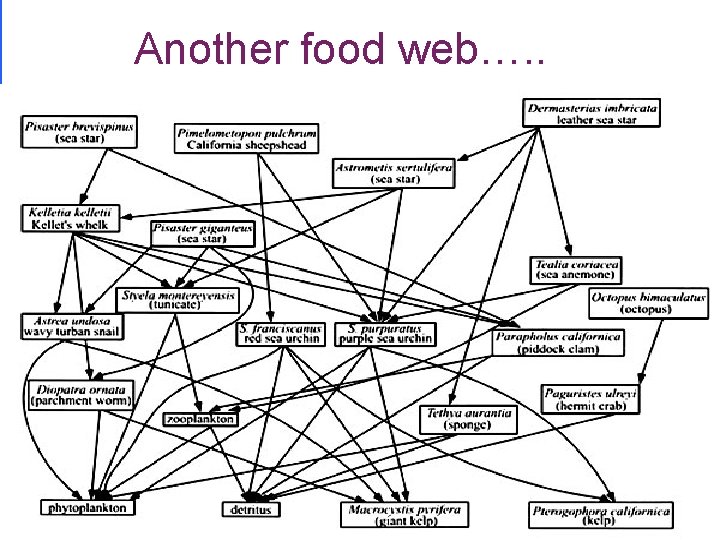
Another food web…. .

Biodiversity
You might ask yourself how do us as humans benefit from this biome? • We benefit from this biome in the following ways. . • • Food Recreation Transportation Oil
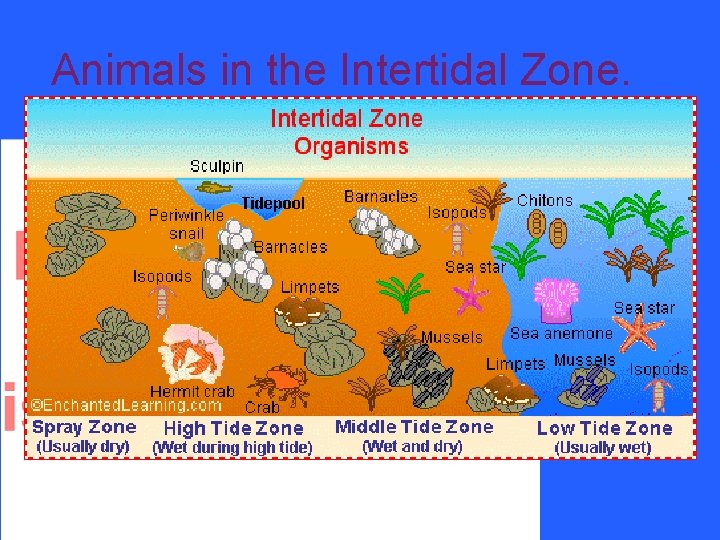
Animals in the Intertidal Zone.
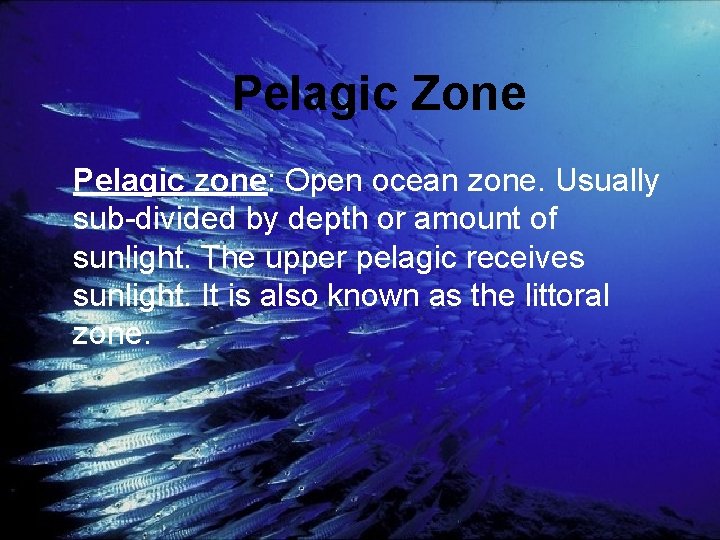
Pelagic. Zone Pelagic zone: Open ocean zone. Usually sub-divided by depth or amount of sunlight. The upper pelagic receives sunlight. It is also known as the littoral zone. • Pelagic zone: Open ocean zone. Usually sub-divided by depth or amount of sunlight. The upper pelagic receives sunlight. It is also known as the littoral zone.
Climate • The Pelagic Zone kind of has a climate but it would depend what level you would be on so it could be warm or cold and in between. The temperature of the water depends on where the water is located in the world. The ocean temperatures in the North Pacific tend to be warmer than those in the South Pacific. • The precipitation in the winter is 20 -65 cm per year. During the summer its really dry.
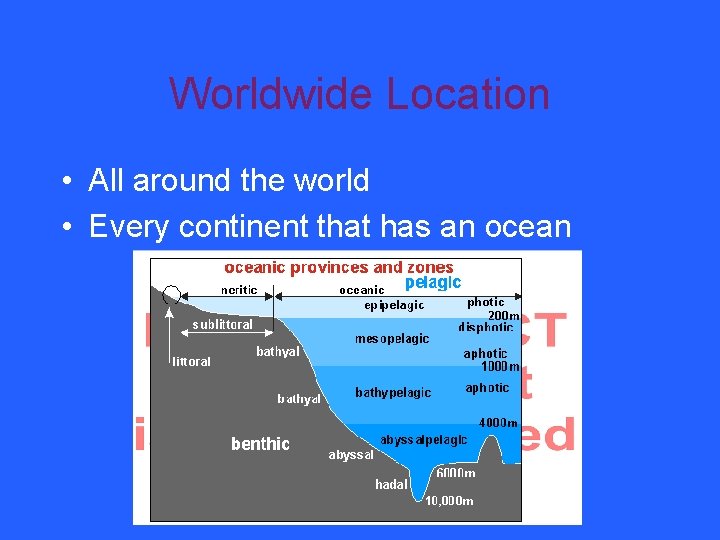
Worldwide Location • All around the world • Every continent that has an ocean
Plants • Pelagic organisms include plankton, which float along with currents, and nekton, which are active swimmers. Plankton are divided into phytoplankton, which include photosynthesizing species such as algae , and zooplankton, which are consumer species. Zooplankton consist largely of copepods (tiny crustaceans).
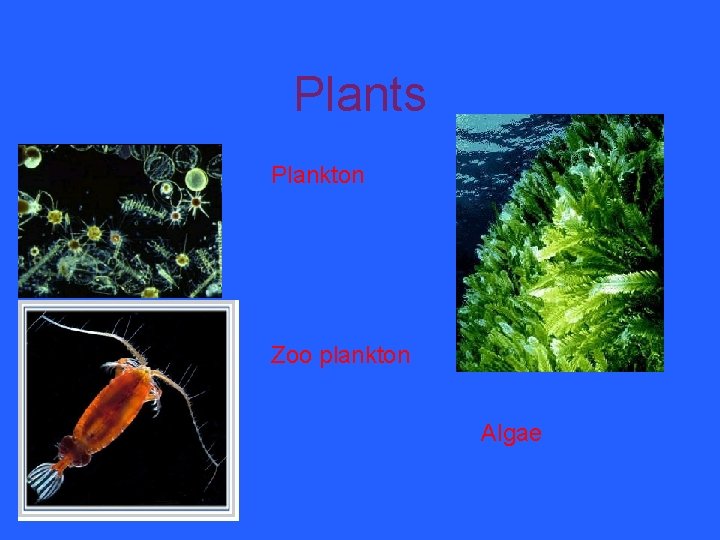
Plants Plankton Zoo plankton Algae
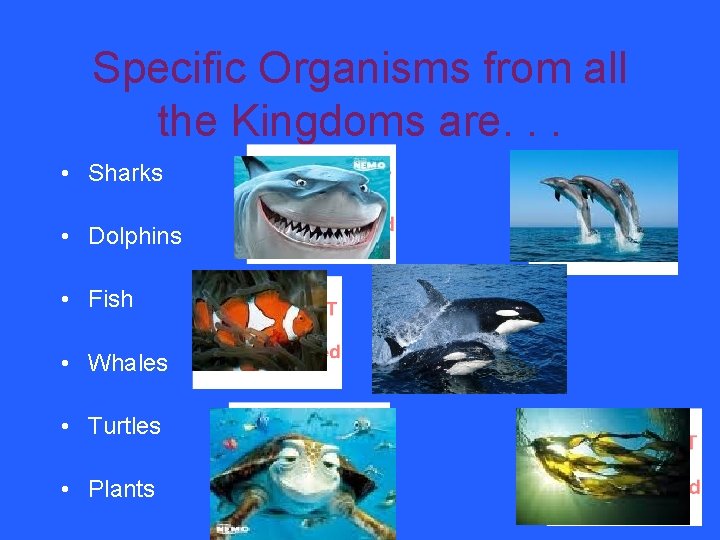
Specific Organisms from all the Kingdoms are. . . • Sharks • Dolphins • Fish • Whales • Turtles • Plants
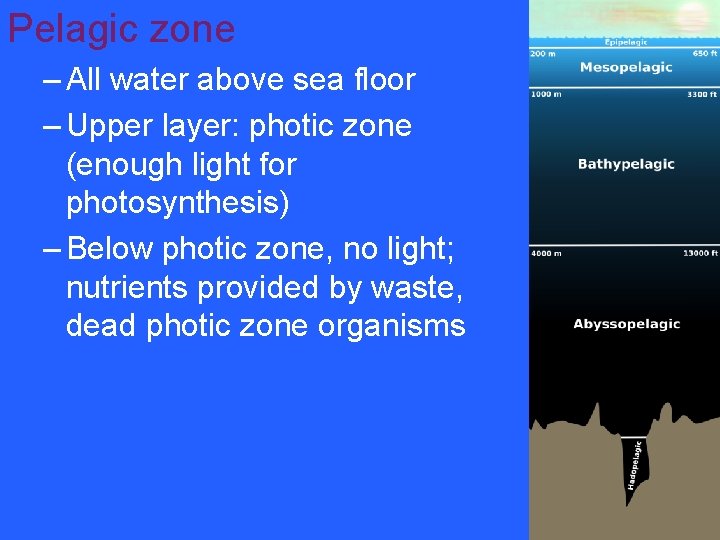
Pelagic zone – All water above sea floor – Upper layer: photic zone (enough light for photosynthesis) – Below photic zone, no light; nutrients provided by waste, dead photic zone organisms
Each of the levels -Epipalegic zone: Ocean surface from 650 feet deep. -Mesopelagic zone: 650 -3300 feet -Bathypelagic zone: feet -Abbyssopelagic zone: 3, 300 -13, 000 feet -Hadopelagic zone: Deep ocean trenches, greater than 13, 000 feet
What we would do • Recycle: Not to pollute and litter. When you throw your trash on the ground it somehow ends up into the ocean. • Less oil: The less oil you have in the ocean the more less likely you will have an oil spill. So we need to stop using so much oil and find other ways to get around.
Current News Story • Huge oil spill in the Gulf of Mexico • BP caused it they were digging a whole in the bottom of the ocean and then it exploded and now it’s all over the ocean by the Gulf • Animals are dying because there is too much oil • BP said it will take $350 million to clean up all the oil
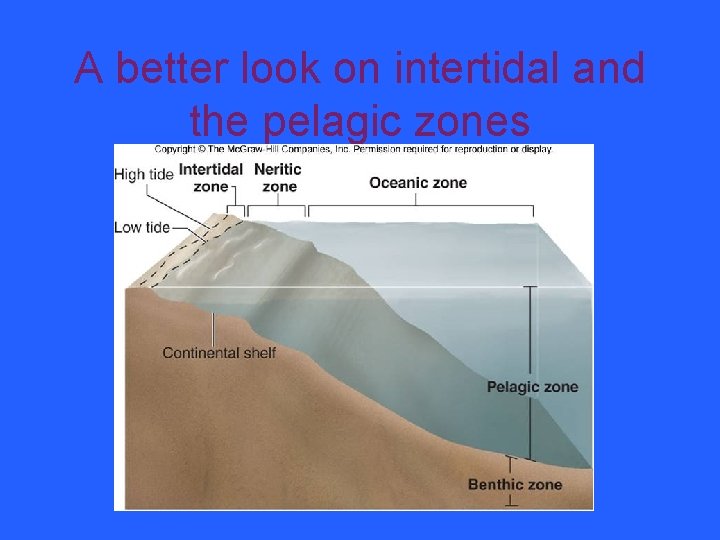
A better look on intertidal and the pelagic zones
- Slides: 25