
Interstellar Scattering Joseph Lazio Naval Research Laboratory J
Interstellar Scattering Joseph Lazio (Naval Research Laboratory) J. Cordes, A. Fey, S. Spangler, B. Dennison, B. Rickett, M. Goss, E. Waltman, M. Claussen, D. Jauncey, L. Kedziora. Chudczer, R. Ojha
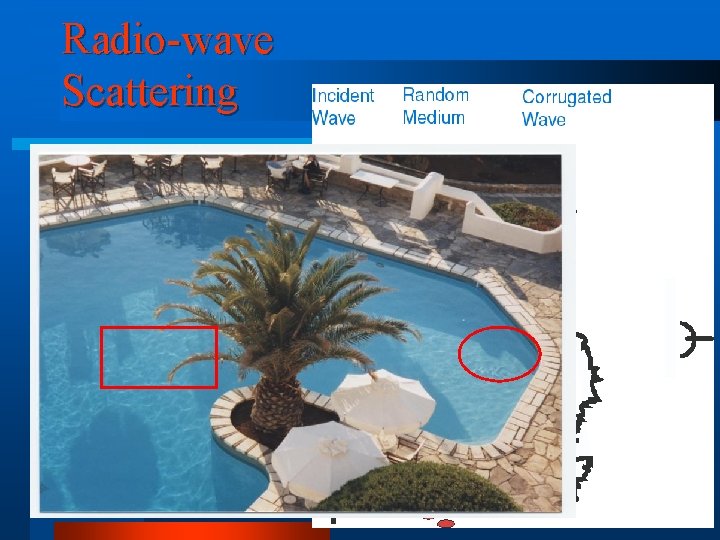
Radio-wave Scattering re ne ds l Electron density fluctuations Þ Refractive index fluctuations Þ Corrugated phase fronts Þ Image distortions (cf. atmospheric seeing) l Characterized by a scattering measure SM ne 2 dx l
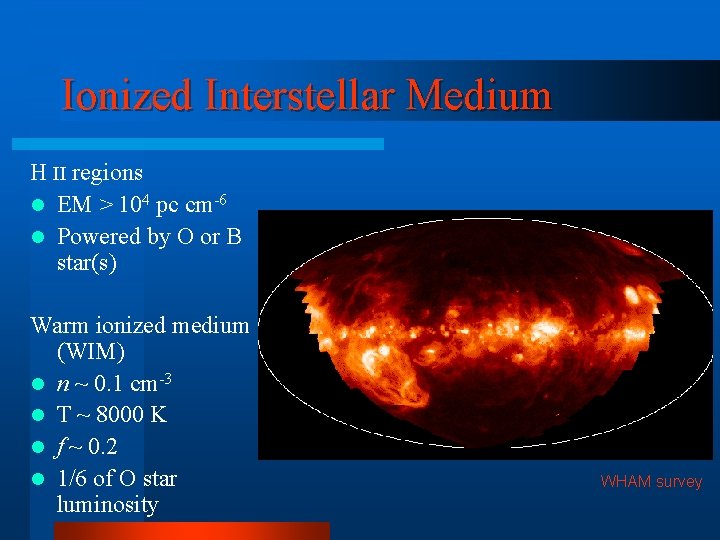
Ionized Interstellar Medium H II regions l EM > 104 pc cm-6 l Powered by O or B star(s) Warm ionized medium (WIM) l n ~ 0. 1 cm-3 l T ~ 8000 K l f ~ 0. 2 l 1/6 of O star luminosity WHAM survey
Scattering Observables l – Pulsars Scattering characterized typically by scattering measure SM ne 2 dx Not really scattering observables, but related observables include – Extragalactic sources l Rotation measure Angular broadening – Pulsars – Extragalactic sources – Masers and other Galactic sources l l Intensity scintillations Pulse broadening/scintillation bandwidth Pulsars l (Spectral broadening) l Optical emission from diffuse gas ( EM = ne 2 dx) l Dispersion measure variations (DM = ne dx) l Diffuse gamma-ray emission?
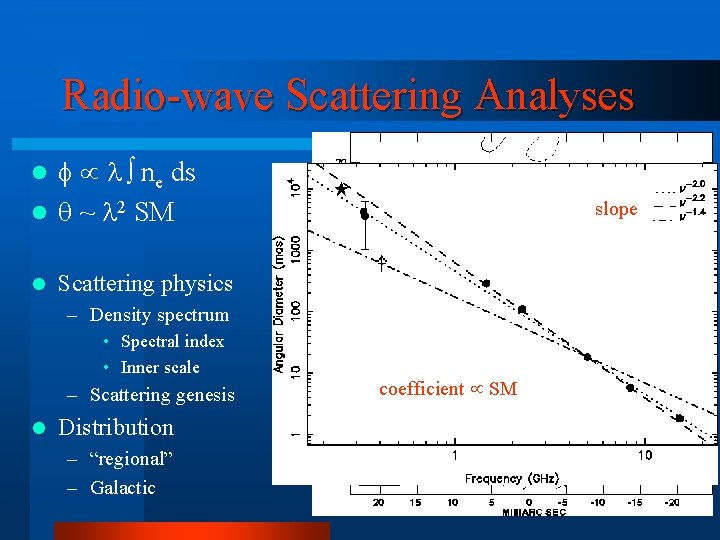
Radio-wave Scattering Analyses ne ds l ~ 2 SM l l slope Scattering physics – Density spectrum • Spectral index • Inner scale – Scattering genesis l Distribution – “regional” – Galactic coefficient SM
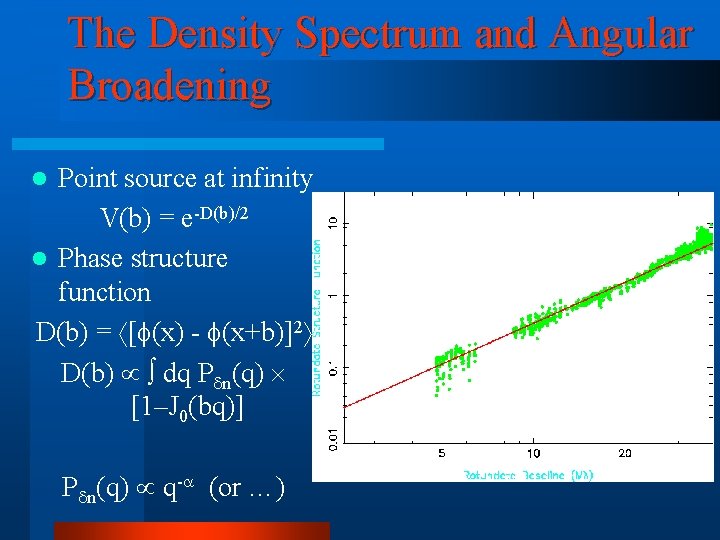
The Density Spectrum and Angular Broadening Point source at infinity V(b) = e-D(b)/2 l Phase structure function D(b) = [ (x) - (x+b)]2 D(b) dq P n(q) [1–J 0(bq)] l P n(q) q- (or …)
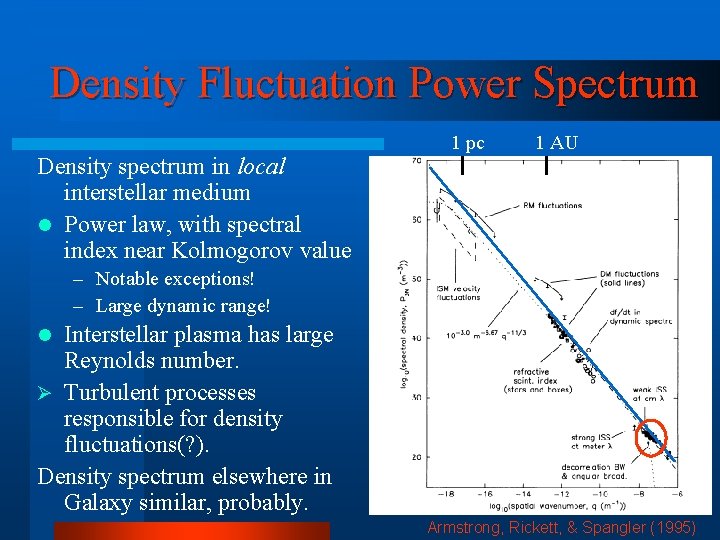
Density Fluctuation Power Spectrum Density spectrum in local interstellar medium l Power law, with spectral index near Kolmogorov value 1 pc 1 AU – Notable exceptions! – Large dynamic range! Interstellar plasma has large Reynolds number. Ø Turbulent processes responsible for density fluctuations(? ). Density spectrum elsewhere in Galaxy similar, probably. l Armstrong, Rickett, & Spangler (1995)
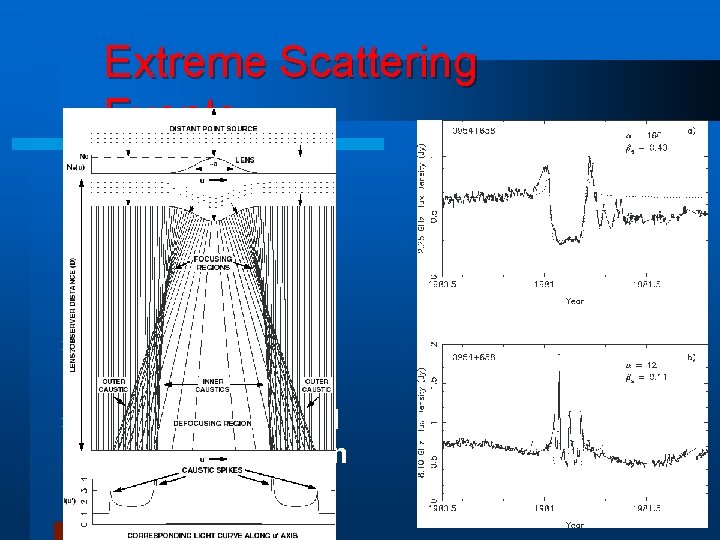
Extreme Scattering Events l Events simultaneous at 2. 2 and 8. 1 GHz l Duration of few weeks to months Þ intrinsic: Tb ~ 1015 K Þ extrinsic: AU-sized refracting clouds in our Galaxy
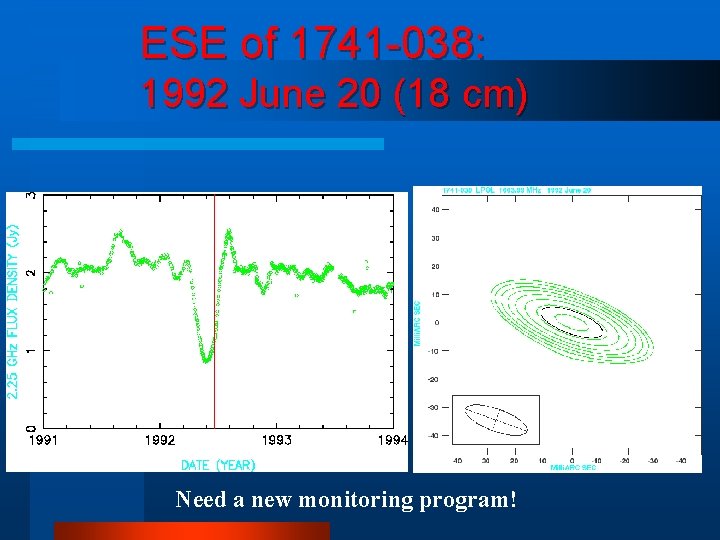
ESE of 1741 -038: 1992 June 20 (18 cm) Need a new monitoring program!
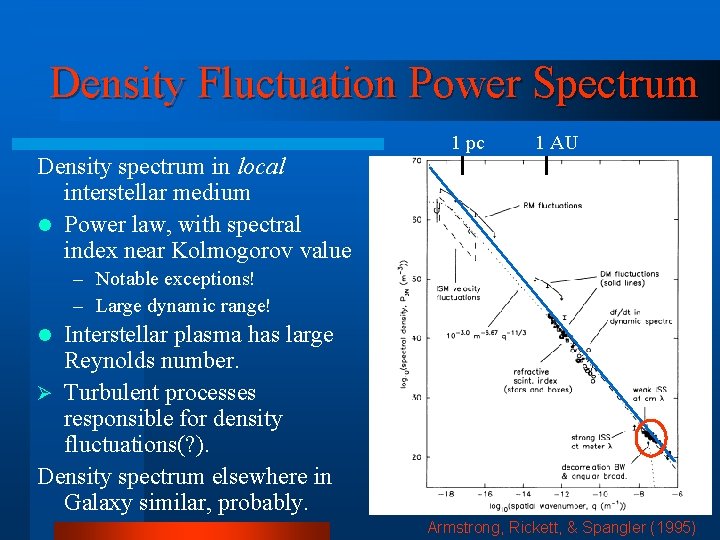
Density Fluctuation Power Spectrum Density spectrum in local interstellar medium l Power law, with spectral index near Kolmogorov value 1 pc 1 AU – Notable exceptions! – Large dynamic range! Interstellar plasma has large Reynolds number. Ø Turbulent processes responsible for density fluctuations(? ). Density spectrum elsewhere in Galaxy similar, probably. l Armstrong, Rickett, & Spangler (1995)
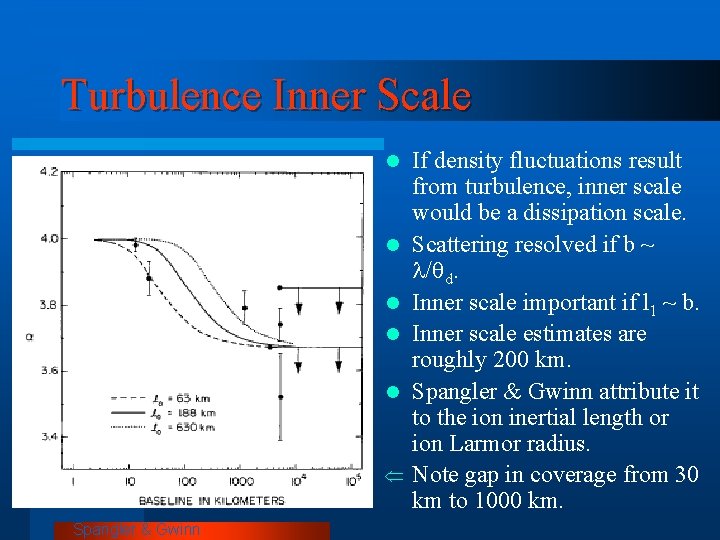
Turbulence Inner Scale l l l Ü Spangler & Gwinn If density fluctuations result from turbulence, inner scale would be a dissipation scale. Scattering resolved if b ~ / d. Inner scale important if l 1 ~ b. Inner scale estimates are roughly 200 km. Spangler & Gwinn attribute it to the ion inertial length or ion Larmor radius. Note gap in coverage from 30 km to 1000 km.
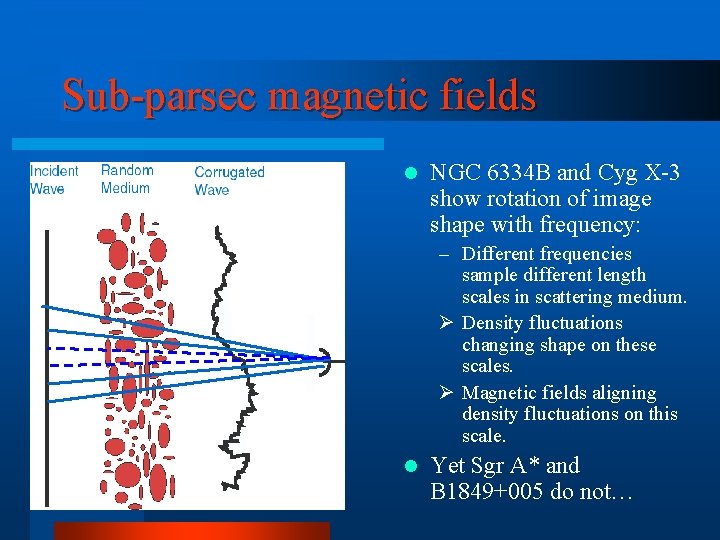
Sub-parsec magnetic fields l NGC 6334 B and Cyg X-3 show rotation of image shape with frequency: – Different frequencies sample different length scales in scattering medium. Ø Density fluctuations changing shape on these scales. Ø Magnetic fields aligning density fluctuations on this scale. l Yet Sgr A* and B 1849+005 do not…

Scattering Genesis l Scattering traces star formation – NGC 6334 B (Trotter et al. ) – Cygnus region (many studies) l Direct link more difficult to establish – Spangler et al. vs. Simonetti & Cordes and Spangler & Cordes l Should be able to do much better today and in future CTA 1 2013+370/G 74. 9+1. 2
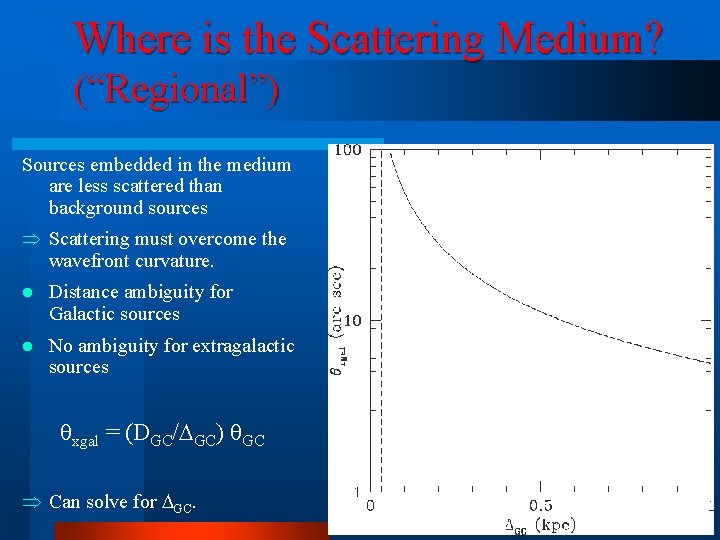
Where is the Scattering Medium? (“Regional”) Sources embedded in the medium are less scattered than background sources Þ Scattering must overcome the wavefront curvature. l Distance ambiguity for Galactic sources l No ambiguity for extragalactic sources xgal = (DGC/ GC) GC Þ Can solve for GC.
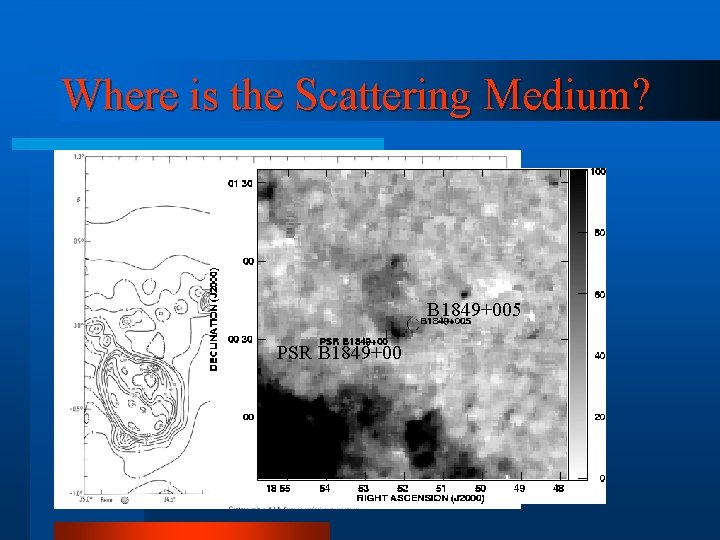
Where is the Scattering Medium? B 1849+005 PSR B 1849+00
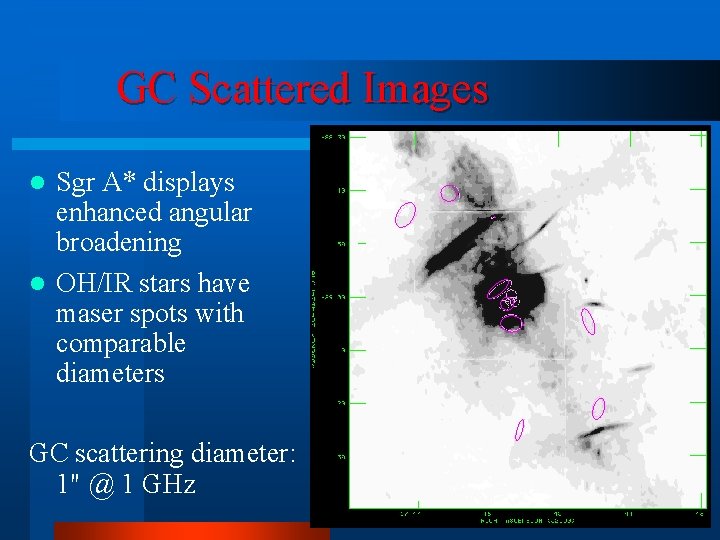
GC Scattered Images Sgr A* displays enhanced angular broadening l OH/IR stars have maser spots with comparable diameters l GC scattering diameter: 1" @ 1 GHz
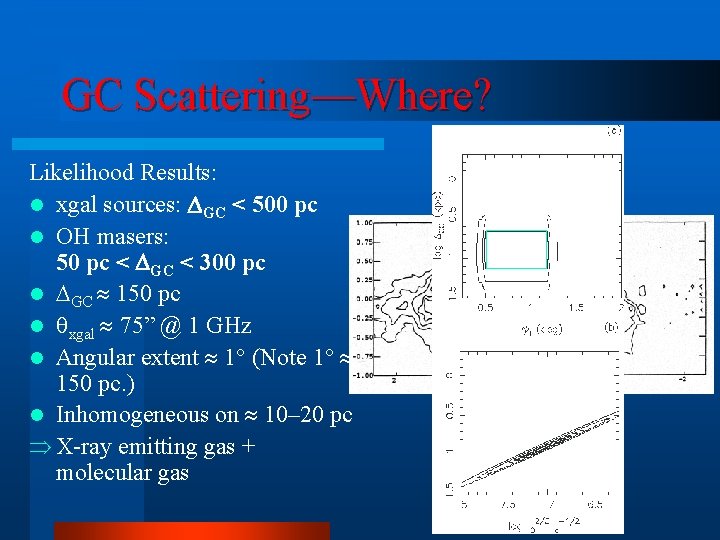
GC Scattering—Where? Likelihood Results: l xgal sources: GC < 500 pc l OH masers: 50 pc < GC < 300 pc l GC 150 pc l xgal 75” @ 1 GHz l Angular extent 1 (Note 1° 150 pc. ) l Inhomogeneous on 10– 20 pc Þ X-ray emitting gas + molecular gas
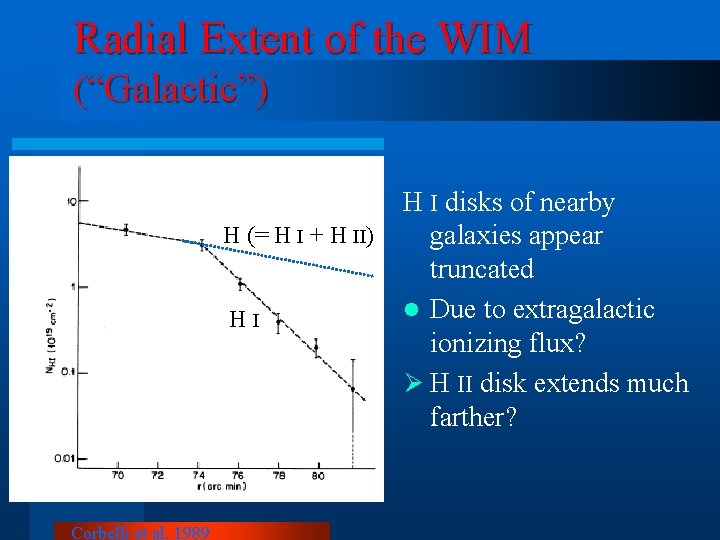
Radial Extent of the WIM (“Galactic”) H (= H I + H II) H I Corbelli et al. 1989 H I disks of nearby galaxies appear truncated l Due to extragalactic ionizing flux? Ø H II disk extends much farther?
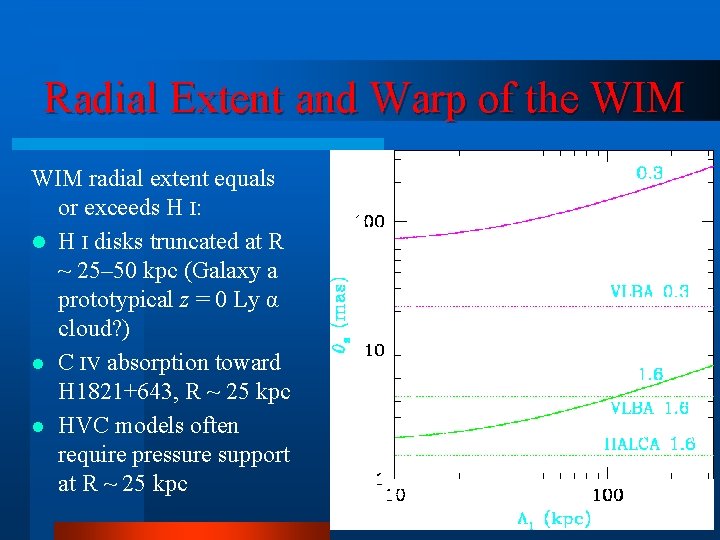
Radial Extent and Warp of the WIM radial extent equals or exceeds H I: l H I disks truncated at R ~ 25– 50 kpc (Galaxy a prototypical z = 0 Ly α cloud? ) l C IV absorption toward H 1821+643, R ~ 25 kpc l HVC models often require pressure support at R ~ 25 kpc
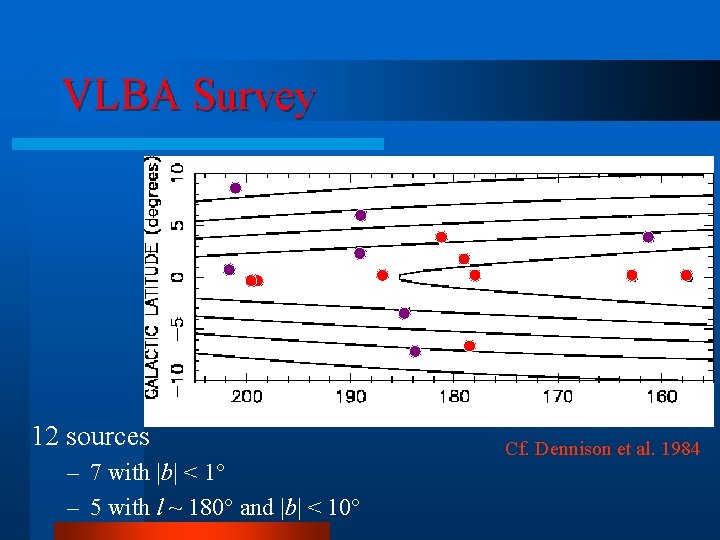
VLBA Survey 12 sources – 7 with |b| < 1° – 5 with l ~ 180° and |b| < 10° Cf. Dennison et al. 1984
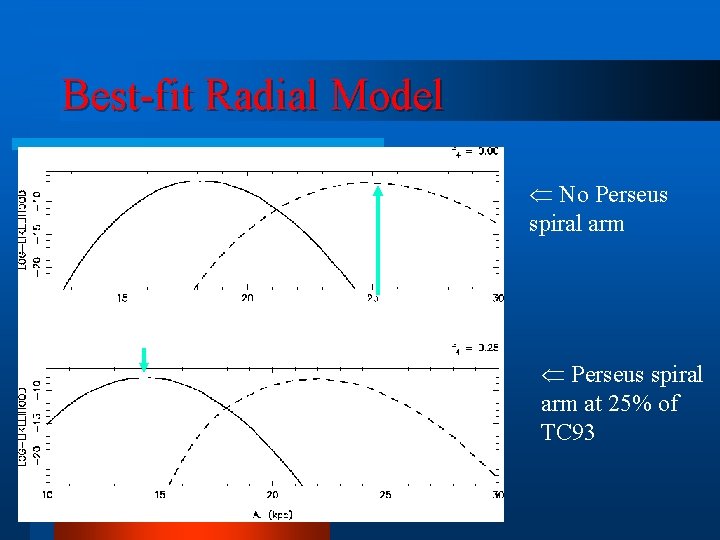
Best-fit Radial Model Ü No Perseus spiral arm truncated disk sech 2 disk Ü Perseus spiral arm at 25% of TC 93
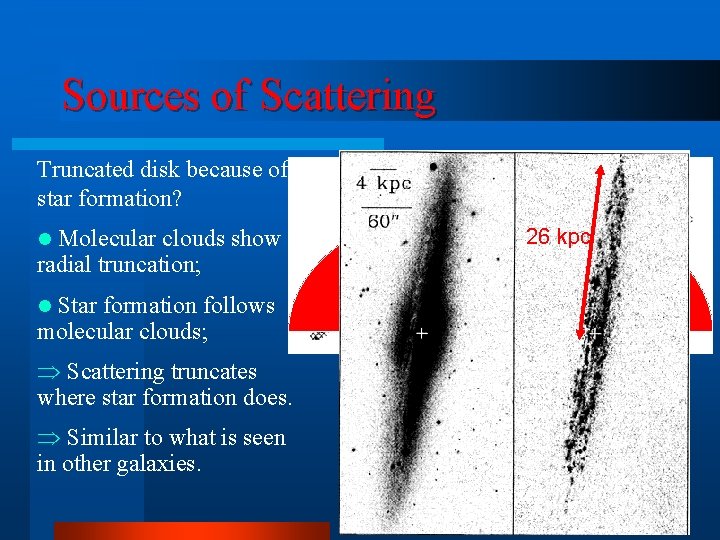
Sources of Scattering Truncated disk because of star formation? l Molecular clouds show 26 kpc radial truncation; l Star formation follows molecular clouds; Þ Scattering truncates where star formation does. Þ Similar to what is seen in other galaxies. Molecular cloud distribution from CO survey by Wouterloot & Brand
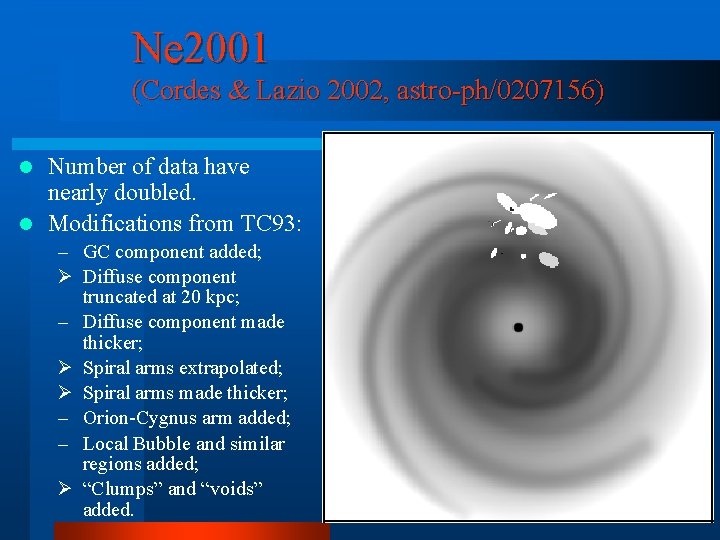
Ne 2001 (Cordes & Lazio 2002, astro-ph/0207156) Number of data have nearly doubled. l Modifications from TC 93: l – GC component added; Ø Diffuse component truncated at 20 kpc; – Diffuse component made thicker; Ø Spiral arms extrapolated; Ø Spiral arms made thicker; – Orion-Cygnus arm added; – Local Bubble and similar regions added; Ø “Clumps” and “voids” added.
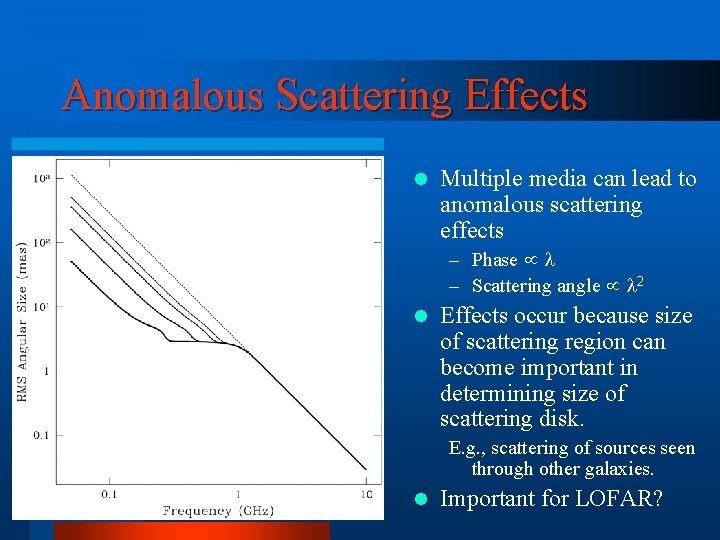
Anomalous Scattering Effects Infinitely extended scattering screen … l Multiple media can lead to anomalous scattering effects – Phase – Scattering angle 2 l Or not. Effects occur because size of scattering region can become important in determining size of scattering disk. E. g. , scattering of sources seen through other galaxies. l Important for LOFAR?
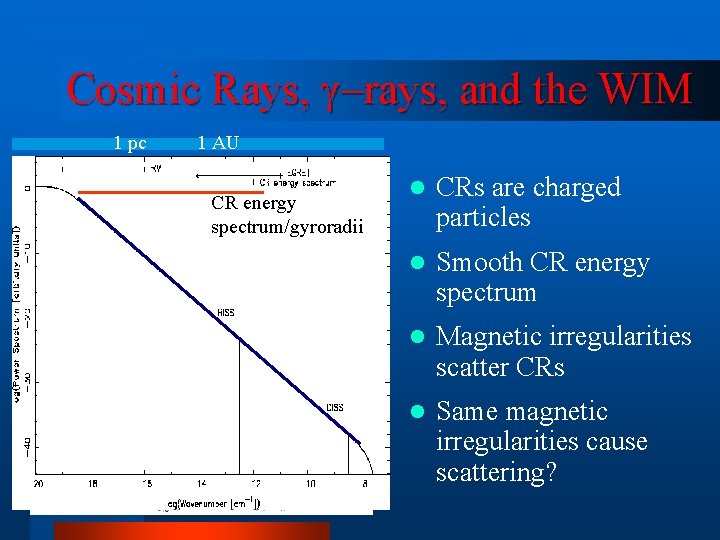
Cosmic Rays, g-rays, and the WIM 1 pc 1 AU CR energy spectrum/gyroradii l CRs are charged particles l Smooth CR energy spectrum l Magnetic irregularities scatter CRs l Same magnetic irregularities cause scattering?
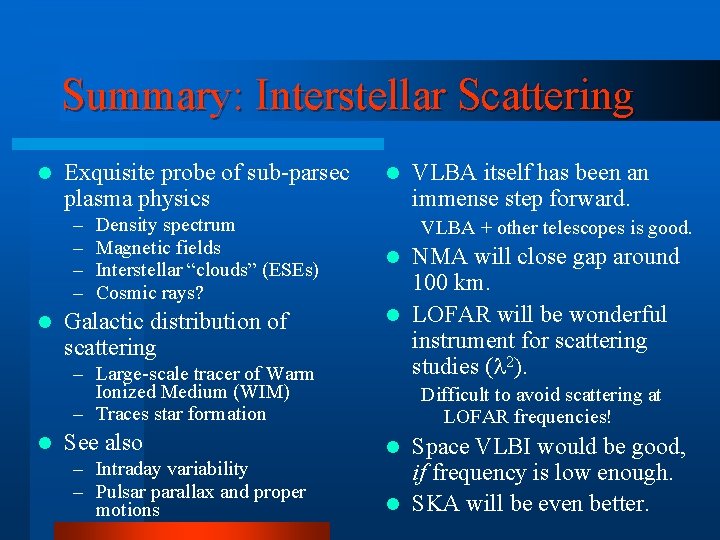
Summary: Interstellar Scattering l Exquisite probe of sub-parsec plasma physics – – l Density spectrum Magnetic fields Interstellar “clouds” (ESEs) Cosmic rays? Galactic distribution of scattering – Large-scale tracer of Warm Ionized Medium (WIM) – Traces star formation l See also – Intraday variability – Pulsar parallax and proper motions l VLBA itself has been an immense step forward. VLBA + other telescopes is good. NMA will close gap around 100 km. l LOFAR will be wonderful instrument for scattering studies ( 2). l Difficult to avoid scattering at LOFAR frequencies! Space VLBI would be good, if frequency is low enough. l SKA will be even better. l

FINIS
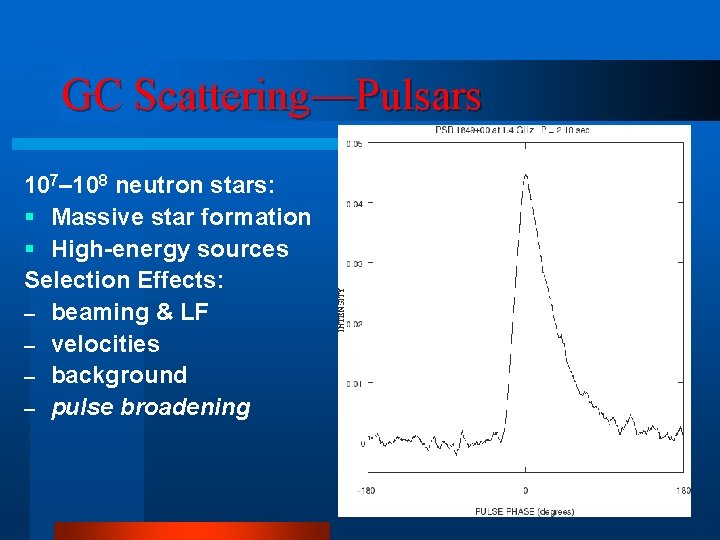
GC Scattering—Pulsars 107– 108 neutron stars: § Massive star formation § High-energy sources Selection Effects: – beaming & LF – velocities – background – pulse broadening
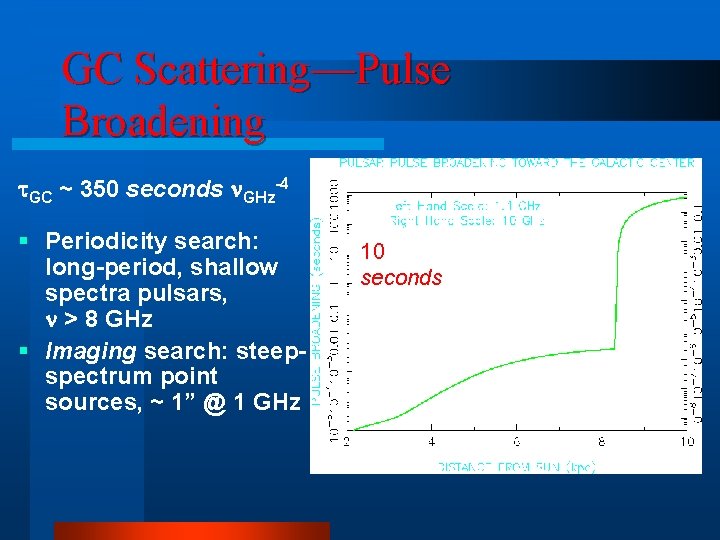
GC Scattering—Pulse Broadening GC ~ 350 seconds GHz-4 § Periodicity search: long-period, shallow spectra pulsars, > 8 GHz § Imaging search: steepspectrum point sources, ~ 1” @ 1 GHz 10 seconds
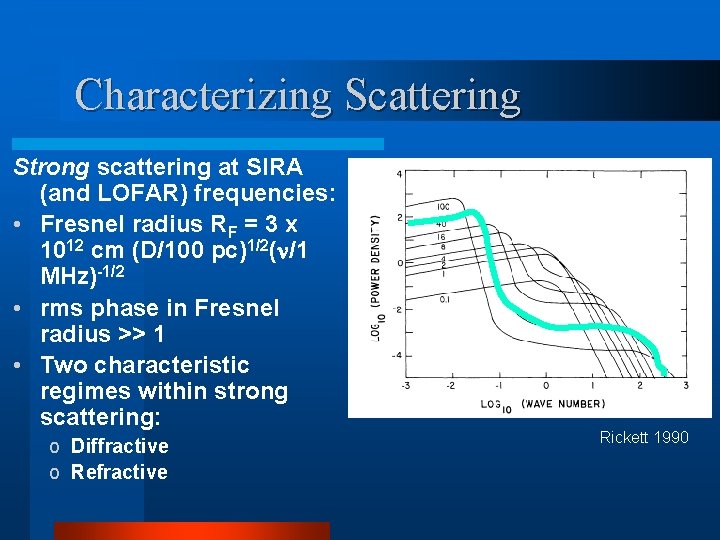
Characterizing Scattering Strong scattering at SIRA (and LOFAR) frequencies: • Fresnel radius RF = 3 x 1012 cm (D/100 pc)1/2( /1 MHz)-1/2 • rms phase in Fresnel radius >> 1 • Two characteristic regimes within strong scattering: o Diffractive o Refractive Rickett 1990
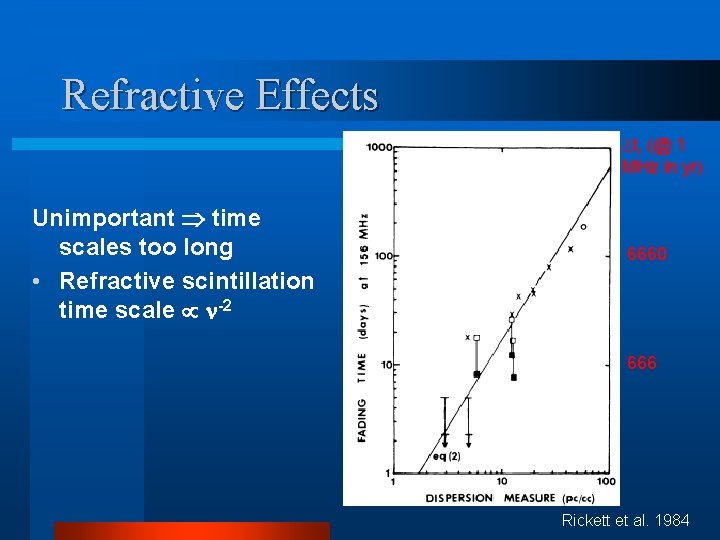
Refractive Effects tr (@ 1 MHz in yr) Unimportant time scales too long • Refractive scintillation time scale -2 6660 666 Rickett et al. 1984
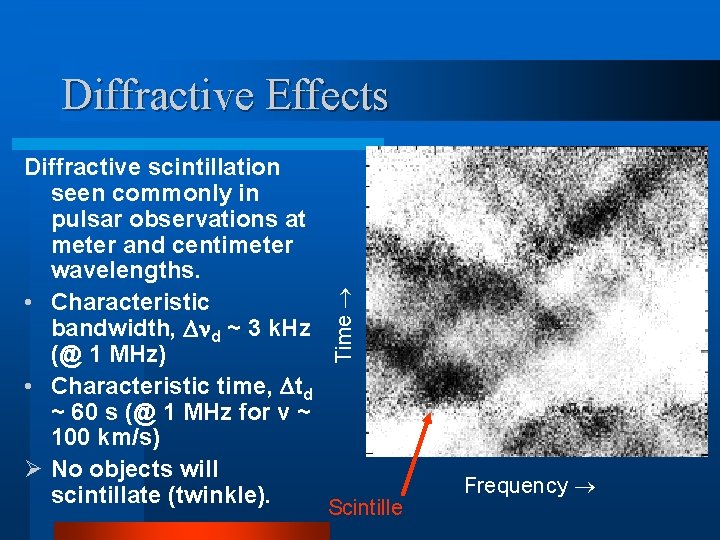
Diffractive Effects Time Diffractive scintillation seen commonly in pulsar observations at meter and centimeter wavelengths. • Characteristic bandwidth, d ~ 3 k. Hz (@ 1 MHz) • Characteristic time, td ~ 60 s (@ 1 MHz for v ~ 100 km/s) Ø No objects will scintillate (twinkle). Scintille Frequency
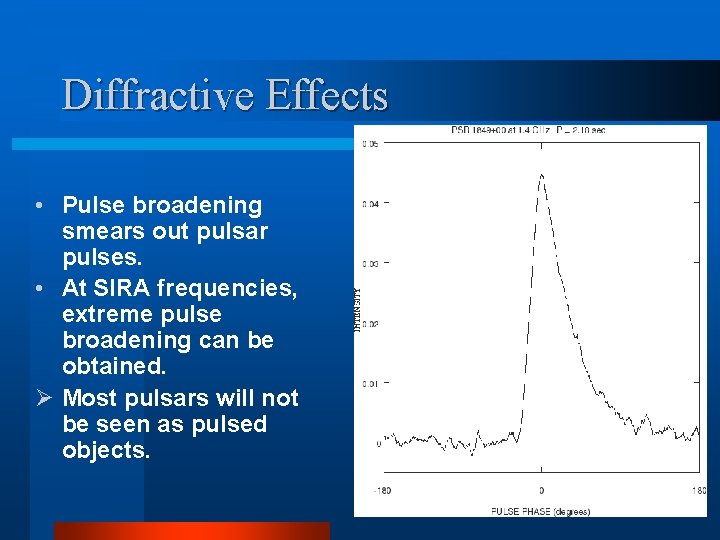
Diffractive Effects • Pulse broadening smears out pulsar pulses. • At SIRA frequencies, extreme pulse broadening can be obtained. Ø Most pulsars will not be seen as pulsed objects.
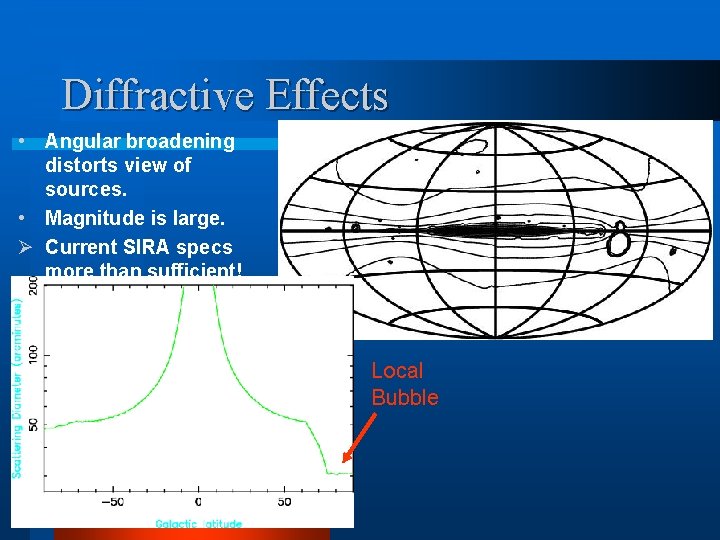
Diffractive Effects • Angular broadening distorts view of sources. • Magnitude is large. Ø Current SIRA specs more than sufficient! Local Bubble
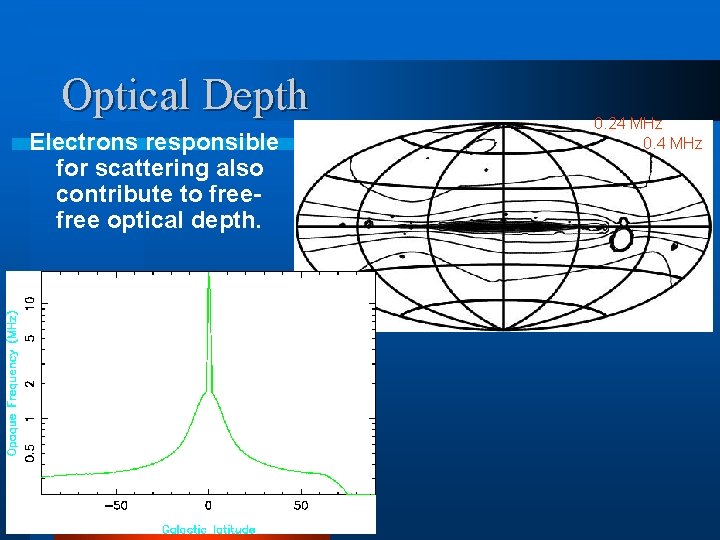
Optical Depth Electrons responsible for scattering also contribute to free optical depth. 0. 24 MHz 0. 4 MHz
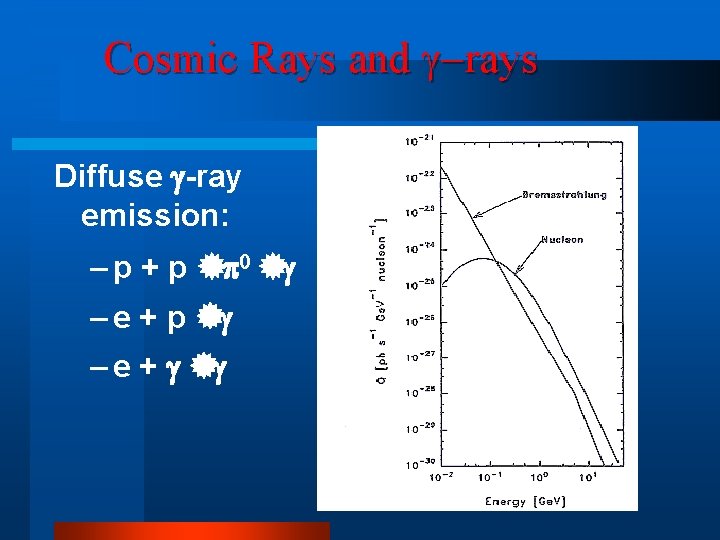
Cosmic Rays and g-rays Diffuse g-ray emission: – p + p ® p 0 ®g – e + p ®g – e + g ®g
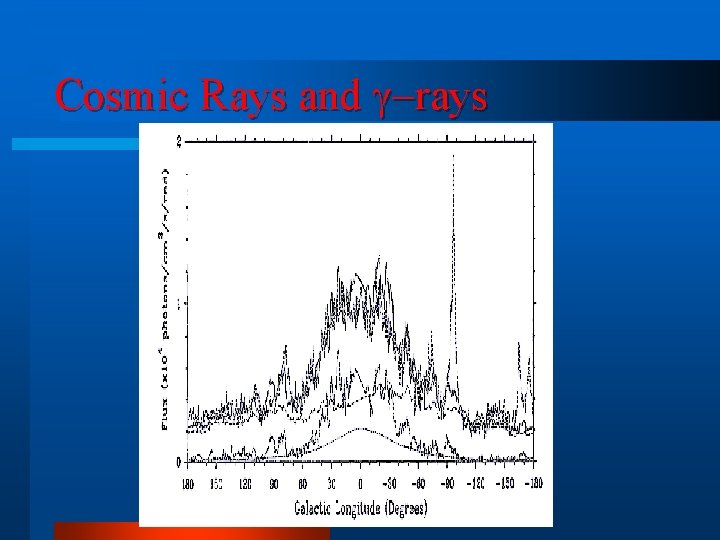
Cosmic Rays and g-rays
- Slides: 37