
Intersection Operation TERMINOLOGY Intersection area shared by two
Intersection Operation
TERMINOLOGY ● Intersection – area shared by two or more roads ●Grade separated ●At grade Conflict points – determined by number of approaches, turning movements, type of traffic control ●
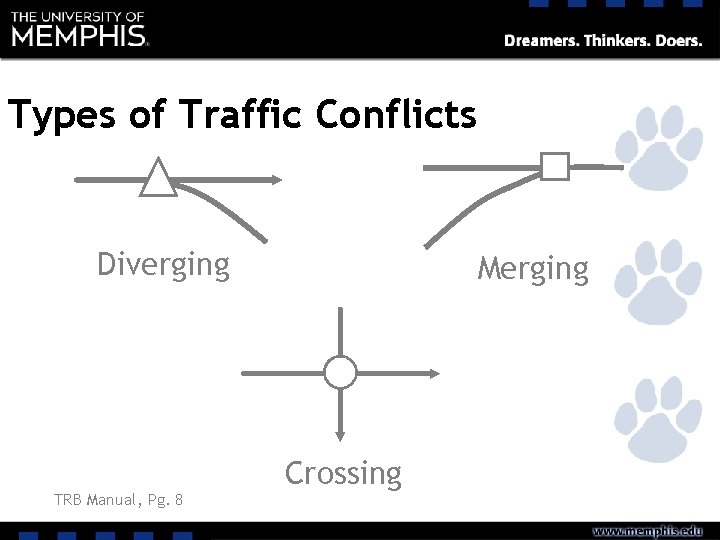
Types of Traffic Conflicts Diverging TRB Manual, Pg. 8 Merging Crossing
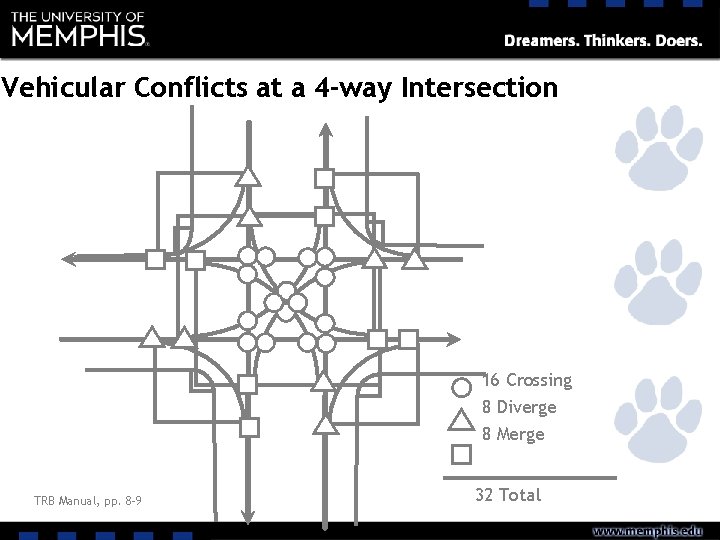
Vehicular Conflicts at a 4 -way Intersection 16 Crossing 8 Diverge 8 Merge TRB Manual, pp. 8 -9 32 Total
GOAL IN DESIGN OF TRAFFIC CONTROL SYSTEMS: Reduce the # of significant conflict points! ●What determines significance? ● Type ●Volume ●speed ●
Change/Clearance Intervals and the Dilemma Zone
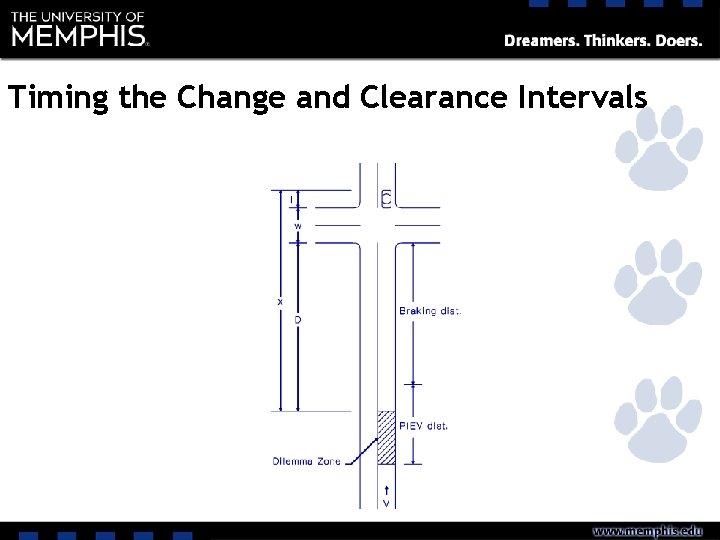
TIMING THE CHANGE AND CLEARANCE INTERVALS Change Interval- (Y) – alerts drivers that green interval is about to end ● Clearance Interval (AR or Y) – allows vehicles that entered the intersection at the end of Y to clear before conflicting traffic is given green ● Dilemma zone- drivers can neither safely stop nor safely clear (while driving at a constant V) the intersection ●

Timing the Change and Clearance Intervals Approach speed = V (ft/sec) Reaction time = PIEV (sec) Deceleration rate = a (ft/sec 2) Intersection width = w (ft) Average vehicle length = l (ft. )
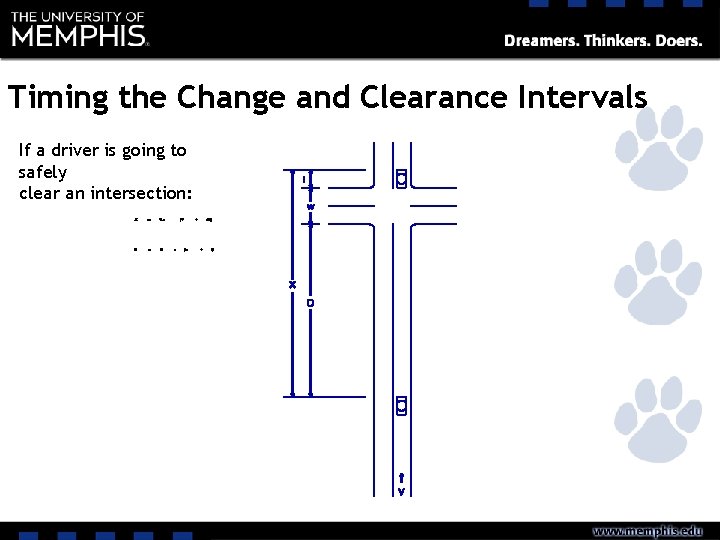
Timing the Change and Clearance Intervals If a driver is going to safely clear an intersection:
Timing the Change and Clearance Intervals
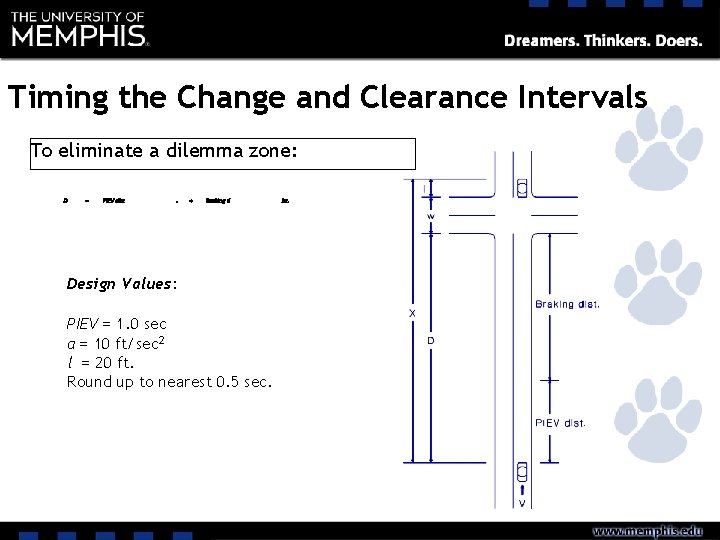
Timing the Change and Clearance Intervals To eliminate a dilemma zone: Design Values: PIEV = 1. 0 sec a = 10 ft/sec 2 l = 20 ft. Round up to nearest 0. 5 sec.
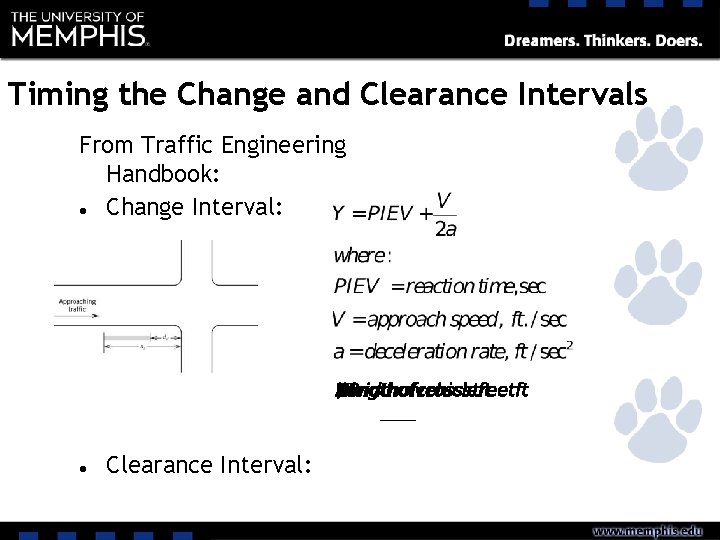
Timing the Change and Clearance Intervals From Traffic Engineering Handbook: ● Change Interval: ● Clearance Interval:
EXAMPLE Given: Approach speed = 35 mph (5280 feet = 1 mile; 3600 sec = 1 hour) 5 -lane cross street (each lane is 12’) Y + AR = 4 sec a. Is the existing clearance interval timing satisfactory? b. If not, determine a suitable clearance interval, and show the location of the dilemma zone for the existing timing on a sketch.
- Slides: 13