
InterRelationship Digraph Scott Davis QI Coordinator Tacoma Pierce
- Slides: 9
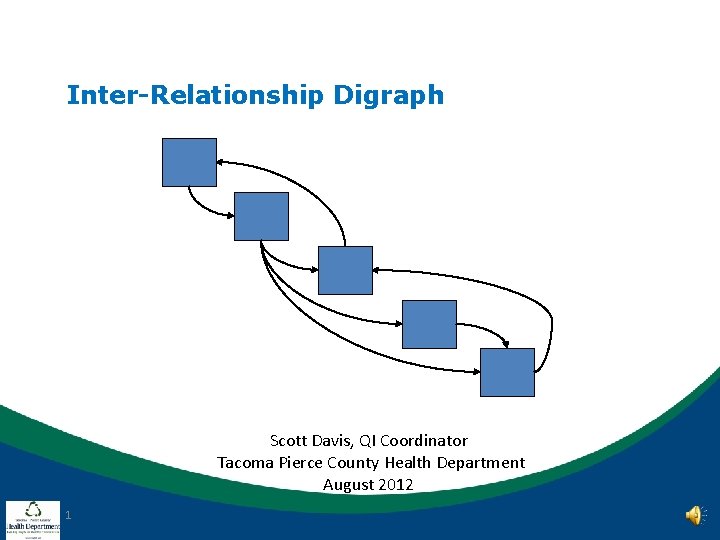
Inter-Relationship Digraph Scott Davis, QI Coordinator Tacoma Pierce County Health Department August 2012 1
Objectives By end of session participants will… – Understand purpose of Inter-relationship diagraph – When to use – How to build – How to interpret 2
Inter-relationship Digraph When to use this tool? – Planning … need to determine priority among high-level goals – Problem solving … need to determine which variable to focus on – Quality Improvement … need to understand complex relationship of dynamic variables 3
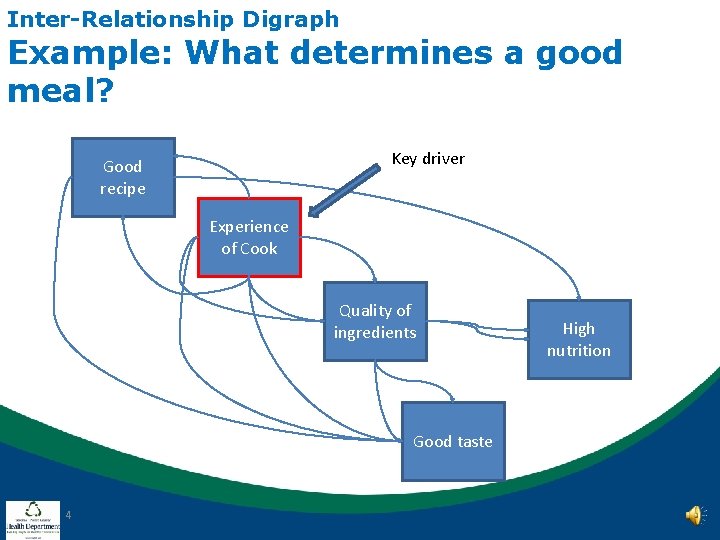
Inter-Relationship Digraph Example: What determines a good meal? Key driver Good recipe Experience of Cook Quality of ingredients Good taste 4 High nutrition
Inter-relationship Digraph Interpretation – Many lines OUT may indicate a driver – Many lines IN may indicate something which is dependent upon other things – An even distribution could point to a mutually determined set of variables 5
Inter-Relationship Digraph Steps 1. 2. 3. 4. List goals/issues Consolidate/prioritize to 4 -7 Organize on large paper or whiteboard Have 2 -3 people (without speaking) draw lines from those goals/issues which effect others toward which they affect 5. Discuss those with the most “out” arrows and whether they are in fact “Key Drivers” within the system/organization/network that you are working on 6
I-D Exercise Pick a list (A or B) of systemic factors and apply the Inter-relationship Diagraph. What drives what? A. Poverty Homelessness Substance Abuse Mental Illness Crime 7 B. Profit Absenteeism Employee Morale Compensation Customer Service
What next? Validate the assumed relationships with data, literature search, system modeling Focus on key drivers FIRST 8
References The Memory Jogger Plus: Featuring the Seven Management and Planning Tools, Michael Brassard, Goal/QPC, 1989 The Team Handbook, Peter Scholtes, Joiner Press, 1988 9