
INTERPROSCAN 5 Analyses Architecture and JMS Introduction to

- Slides: 19
INTERPROSCAN 5 Analyses, Architecture and JMS
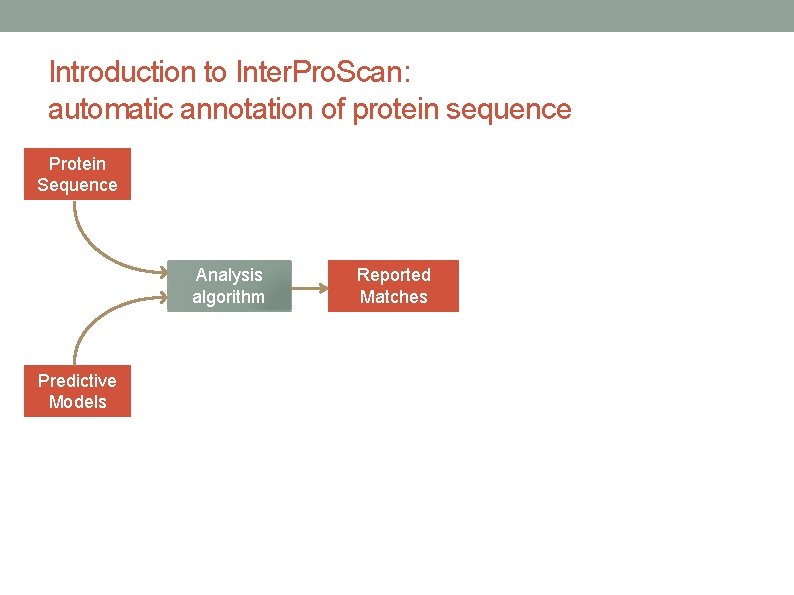
Introduction to Inter. Pro. Scan: automatic annotation of protein sequence Protein Sequence Analysis algorithm Predictive Models Reported Matches
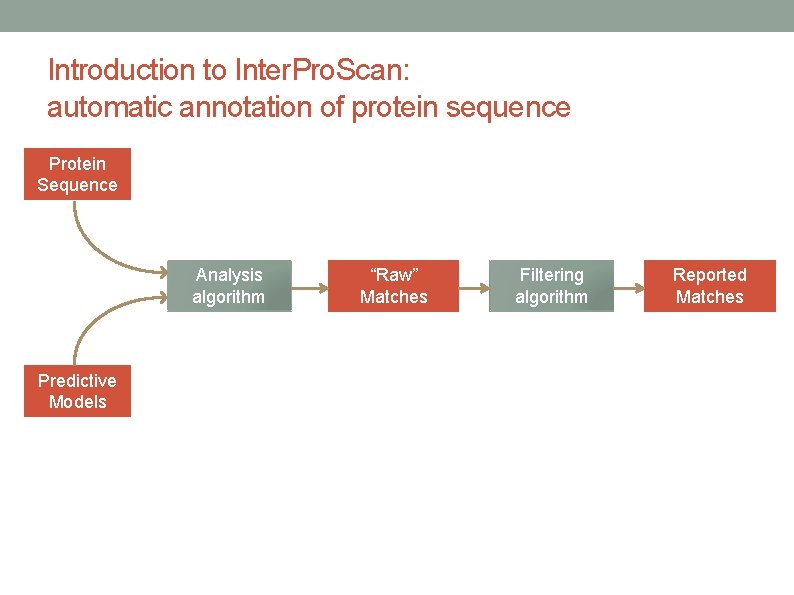
Introduction to Inter. Pro. Scan: automatic annotation of protein sequence Protein Sequence Analysis algorithm Predictive Models “Raw” Matches Filtering algorithm Reported Matches
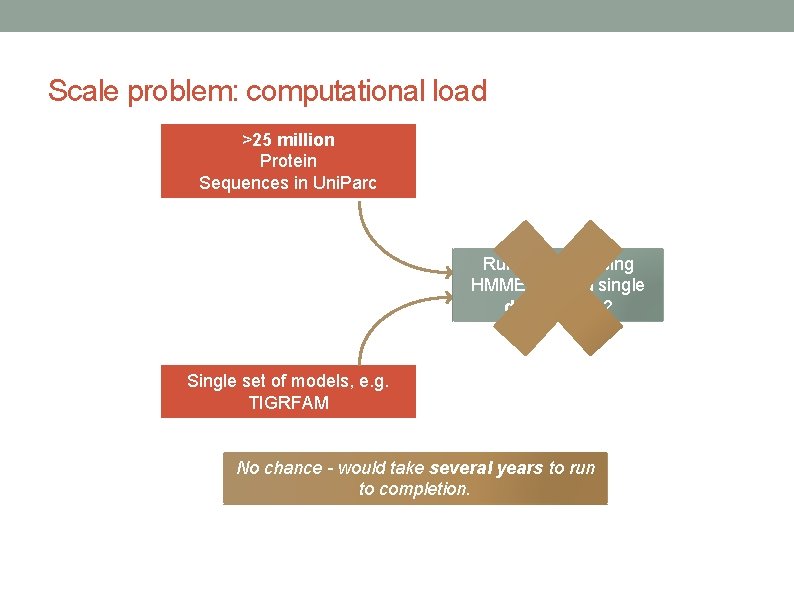
Scale problem: computational load >25 million Protein Sequences in Uni. Parc Run analysis using HMMER 2 on a single desktop PC? Single set of models, e. g. TIGRFAM No chance - would take several years to run to completion.
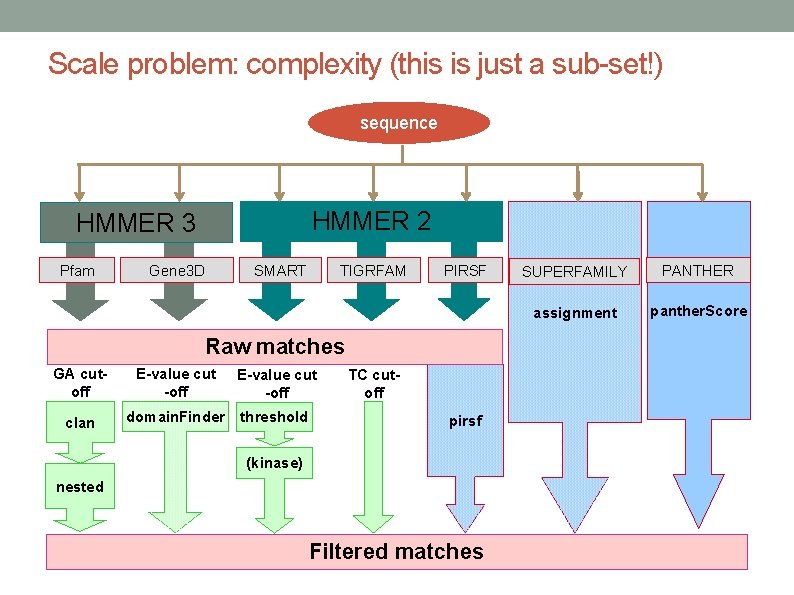
Scale problem: complexity (this is just a sub-set!) sequence HMMER 2 HMMER 3 Pfam Gene 3 D SMART TIGRFAM PIRSF Raw matches GA cutoff E-value cut -off clan domain. Finder threshold TC cutoff pirsf (kinase) nested Filtered matches SUPERFAMILY PANTHER assignment panther. Score
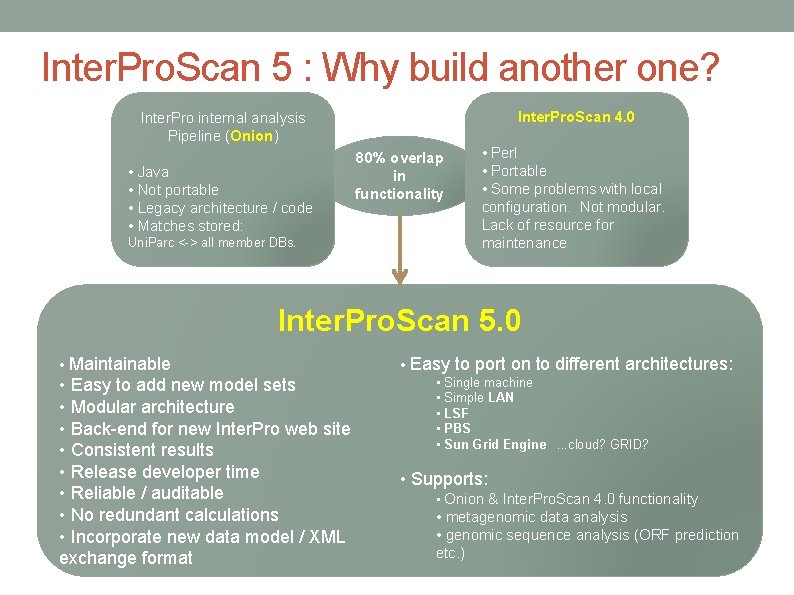
Inter. Pro. Scan 5 : Why build another one? Inter. Pro. Scan 4. 0 Inter. Pro internal analysis Pipeline (Onion) • Java • Not portable • Legacy architecture / code • Matches stored: Uni. Parc <-> all member DBs. 80% overlap in functionality • Perl • Portable • Some problems with local configuration. Not modular. Lack of resource for maintenance Inter. Pro. Scan 5. 0 • Maintainable • Easy to add new model sets • Modular architecture • Back-end for new Inter. Pro web site • Consistent results • Release developer time • Reliable / auditable • No redundant calculations • Incorporate new data model / XML exchange format • Easy to port on to different architectures: • Single machine • Simple LAN • LSF • PBS • Sun Grid Engine. . . cloud? GRID? • Supports: • Onion & Inter. Pro. Scan 4. 0 functionality • metagenomic data analysis • genomic sequence analysis (ORF prediction etc. )
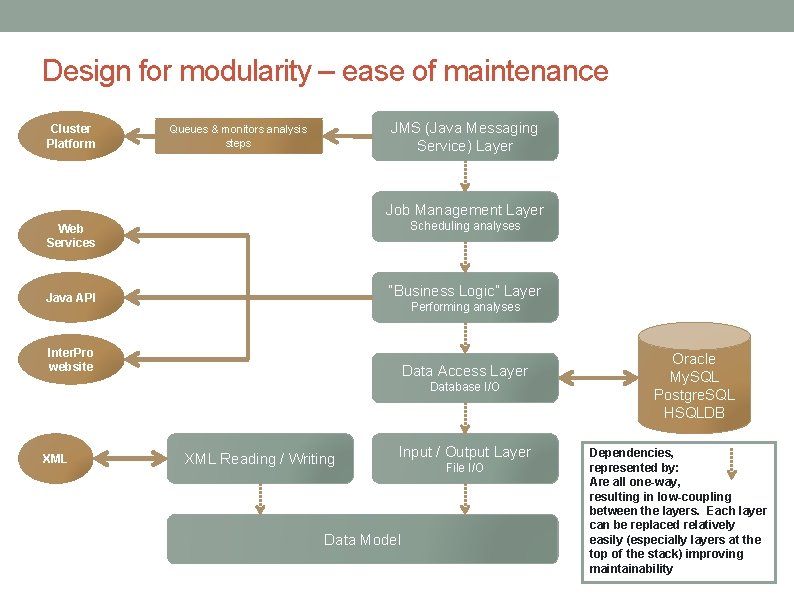
Design for modularity – ease of maintenance Cluster Platform JMS (Java Messaging Service) Layer Queues & monitors analysis steps Job Management Layer Scheduling analyses Web Services “Business Logic” Layer Java API Performing analyses Inter. Pro website Data Access Layer Database I/O XML Reading / Writing Input / Output Layer Data Model File I/O Oracle My. SQL Postgre. SQL HSQLDB Dependencies, represented by: Are all one-way, resulting in low-coupling between the layers. Each layer can be replaced relatively easily (especially layers at the top of the stack) improving maintainability
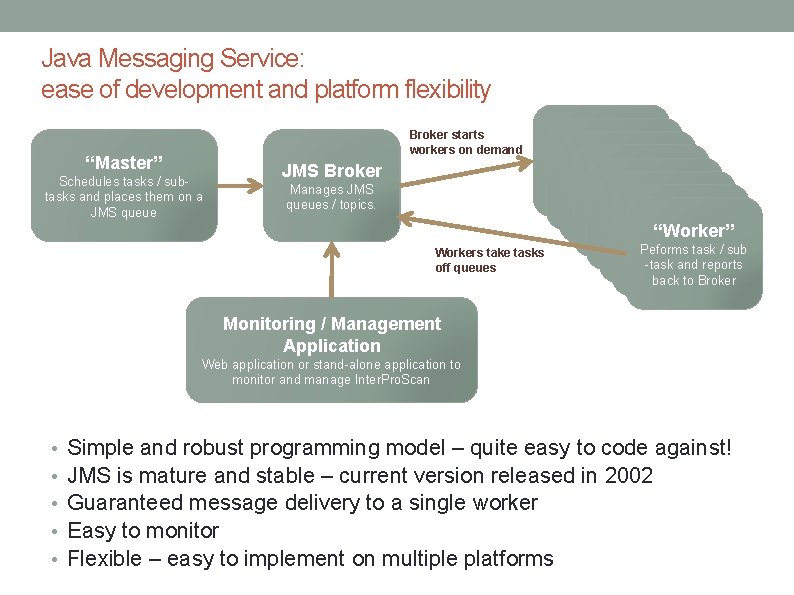
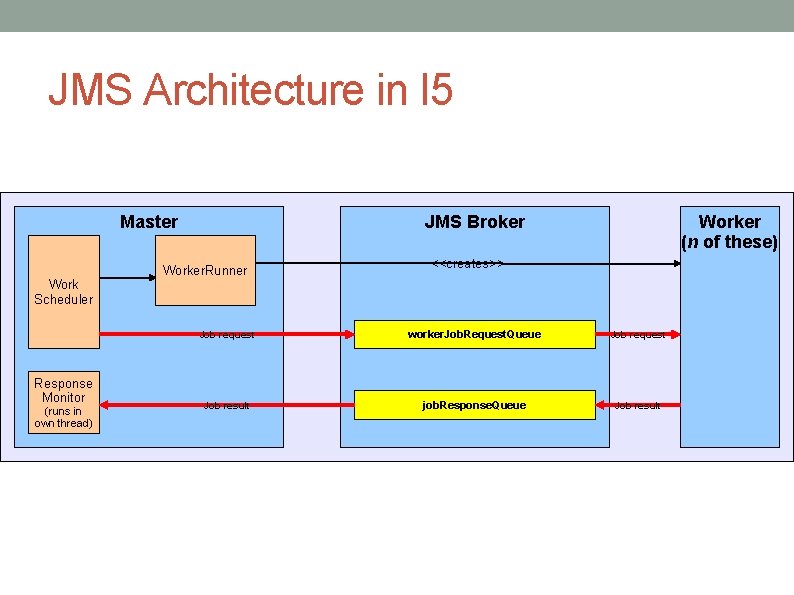
Java Messaging Service: ease of development and platform flexibility Broker starts workers on demand “Master” Schedules tasks / subtasks and places them on a JMS queue JMS Broker Manages JMS queues / topics. Workers take tasks off queues “Worker” Peforms task / sub -task and reports “Worker” Peforms task / sub -tasktoand reports back Broker “Worker” Peforms task / sub -task reports back toand Broker -tasktoand reports back Broker back to Broker Monitoring / Management Application Web application or stand-alone application to monitor and manage Inter. Pro. Scan • • • Simple and robust programming model – quite easy to code against! JMS is mature and stable – current version released in 2002 Guaranteed message delivery to a single worker Easy to monitor Flexible – easy to implement on multiple platforms
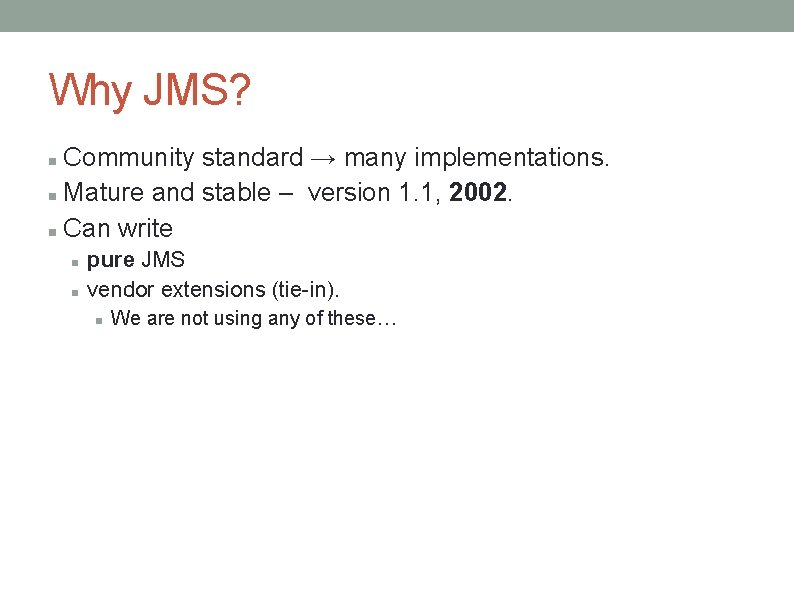
Why JMS? Community standard → many implementations. Mature and stable – version 1. 1, 2002. Can write pure JMS vendor extensions (tie-in). We are not using any of these…
What are messages? Have a header and body Can be filtered by the recipient Body may consist of: Text. Message (just a String) Bytes. Message (for legacy messaging system interoperability) Map. Message Stream. Message Object. Message (anything Serializable)
Message Modes Point-to-point. Guarantees delivery to. . . Publish / Subscribe (pub/sub) Zero or one client (non-persistent message) Exactly one client (persistent message) 'Multicast' messages Message Transport Options In-JVM, TCP/IP, HTTPS, RMI. . .
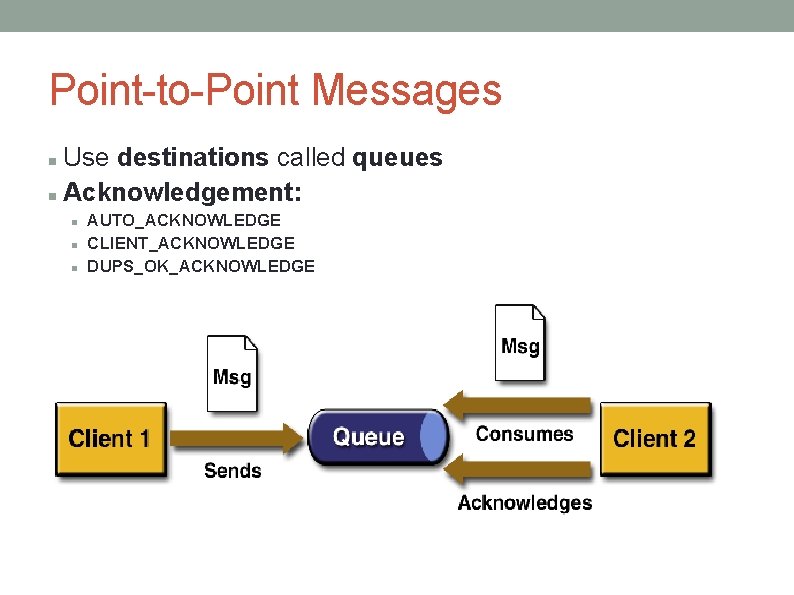
Point-to-Point Messages Use destinations called queues Acknowledgement: AUTO_ACKNOWLEDGE CLIENT_ACKNOWLEDGE DUPS_OK_ACKNOWLEDGE
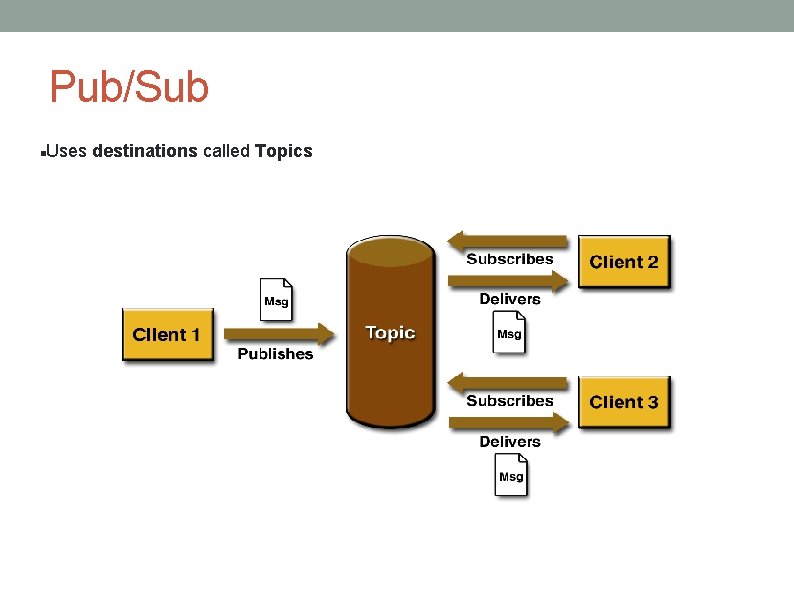
Pub/Sub Uses destinations called Topics
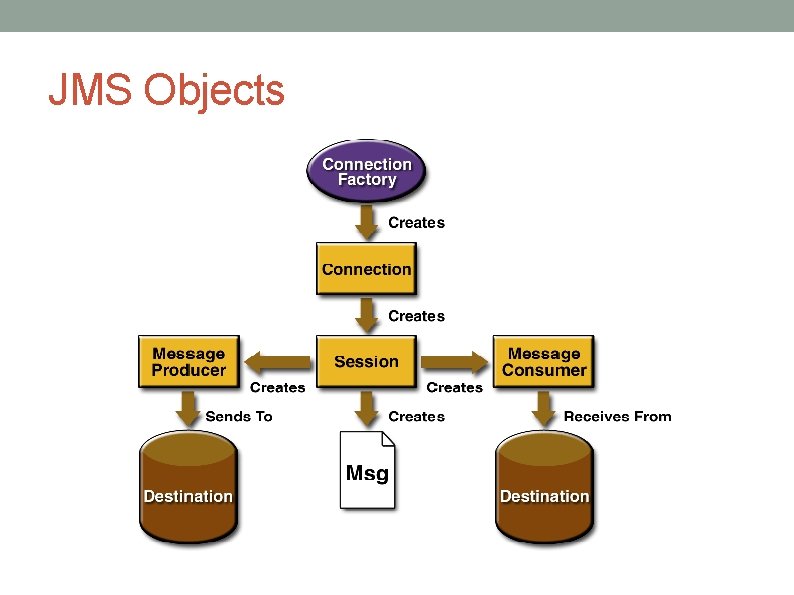
JMS Objects
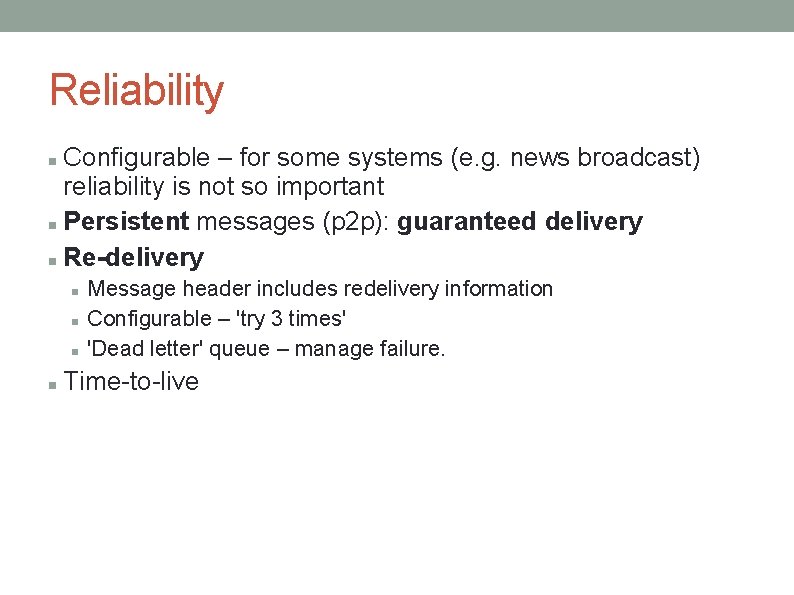
Reliability Configurable – for some systems (e. g. news broadcast) reliability is not so important Persistent messages (p 2 p): guaranteed delivery Re-delivery Message header includes redelivery information Configurable – 'try 3 times' 'Dead letter' queue – manage failure. Time-to-live
JMS Architecture in I 5 Master Work Scheduler Response Monitor (runs in own thread) JMS Broker Worker. Runner Worker (n of these) <<creates>> Job request worker. Job. Request. Queue Job request Job result job. Response. Queue Job result
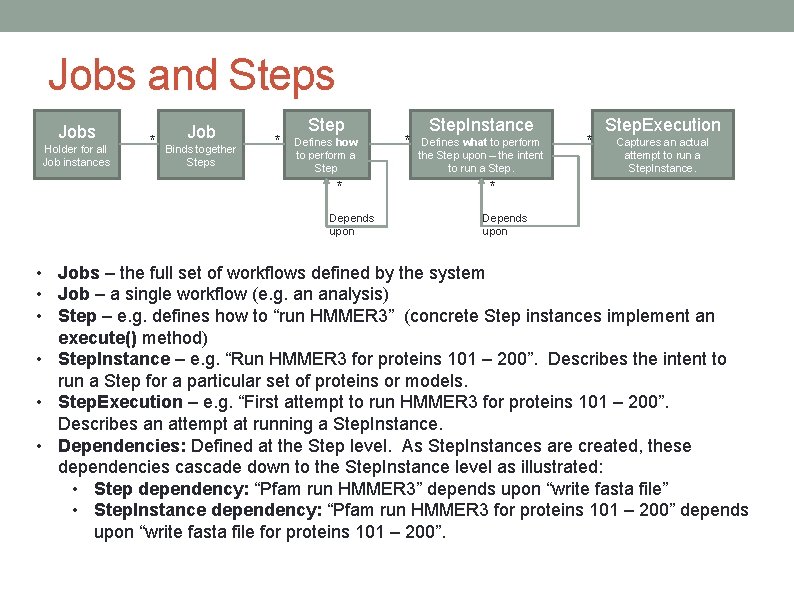
Jobs and Steps Jobs Holder for all Job instances * Job Binds together Steps * Step Defines how to perform a Step * Depends upon * Step. Instance Defines what to perform the Step upon – the intent to run a Step. * Step. Execution Captures an actual attempt to run a Step. Instance. * Depends upon • Jobs – the full set of workflows defined by the system • Job – a single workflow (e. g. an analysis) • Step – e. g. defines how to “run HMMER 3” (concrete Step instances implement an execute() method) • Step. Instance – e. g. “Run HMMER 3 for proteins 101 – 200”. Describes the intent to run a Step for a particular set of proteins or models. • Step. Execution – e. g. “First attempt to run HMMER 3 for proteins 101 – 200”. Describes an attempt at running a Step. Instance. • Dependencies: Defined at the Step level. As Step. Instances are created, these dependencies cascade down to the Step. Instance level as illustrated: • Step dependency: “Pfam run HMMER 3” depends upon “write fasta file” • Step. Instance dependency: “Pfam run HMMER 3 for proteins 101 – 200” depends upon “write fasta file for proteins 101 – 200”.
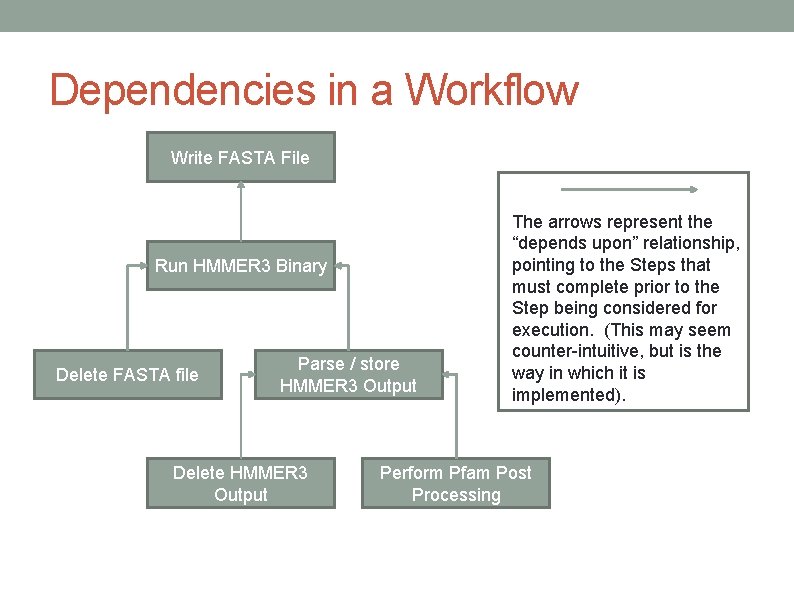
Dependencies in a Workflow Write FASTA File Run HMMER 3 Binary Delete FASTA file Parse / store HMMER 3 Output Delete HMMER 3 Output The arrows represent the “depends upon” relationship, pointing to the Steps that must complete prior to the Step being considered for execution. (This may seem counter-intuitive, but is the way in which it is implemented). Perform Pfam Post Processing
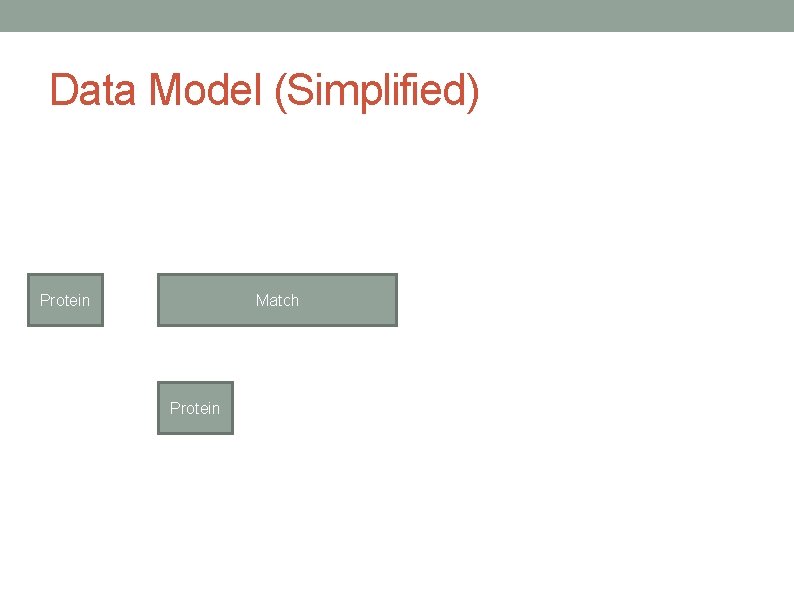
Data Model (Simplified) Protein Match Protein