
INTERPROFESSIONAL COLLABORATION IMPROVING THE HEALTH OF URBAN POOR
INTERPROFESSIONAL COLLABORATION IMPROVING THE HEALTH OF URBAN POOR APHA, November, 2015 Sr. Bat Baber, RSM Janet Buelow, Ph. D, MSN, MPH Suzanne Cashman, Sc. D Anita Nivens, Ph. D, RN, FNP-BC Greg Knofczynski, Ph. D Paula Tillman, DNP, RN Funding from HRSA, Grant UD 7 HP 25051 1
Disclosure 2 No author has any relevant financial relationships with any commercial interests.
Session Objectives 3 Explain strategies for developing an interprofessional working culture Compare selected collaborative team practices to prior practices and patient outcomes Explain student patient advocacy teams
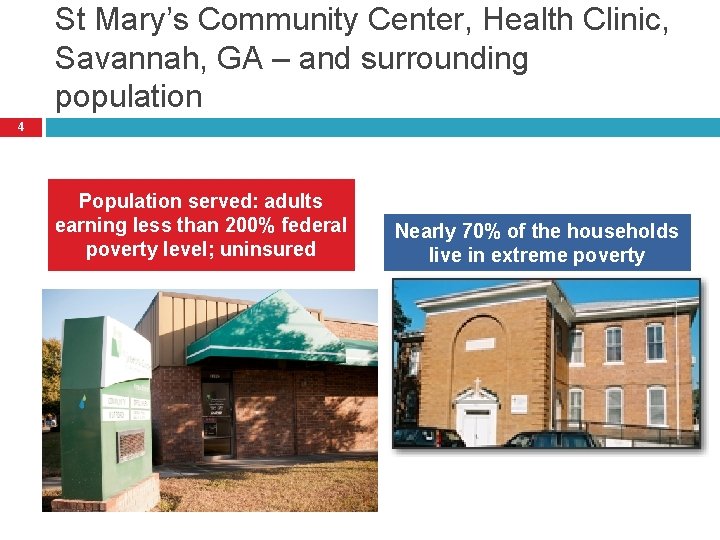
St Mary’s Community Center, Health Clinic, Savannah, GA – and surrounding population 4 Population served: adults earning less than 200% federal poverty level; uninsured Nearly 70% of the households live in extreme poverty
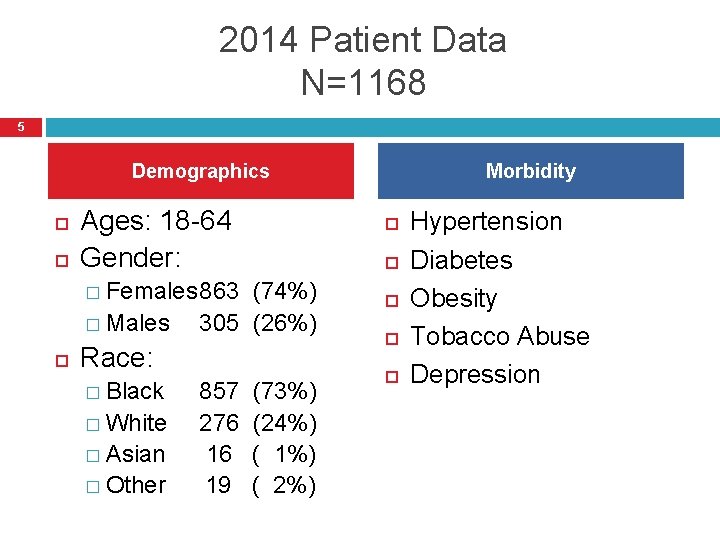
2014 Patient Data N=1168 5 Demographics Ages: 18 -64 Gender: � Females 863 � Males (74%) 305 (26%) Race: � Black � White � Asian � Other 857 276 16 19 Morbidity (73%) (24%) ( 1%) ( 2%) Hypertension Diabetes Obesity Tobacco Abuse Depression
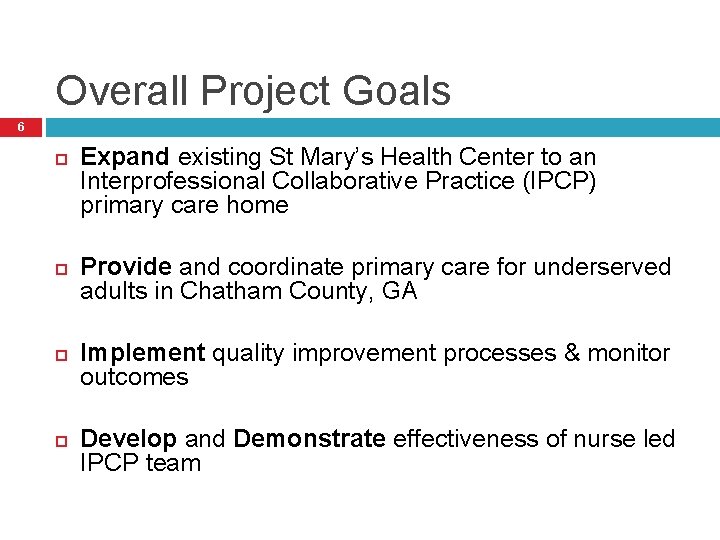
Overall Project Goals 6 Expand existing St Mary’s Health Center to an Interprofessional Collaborative Practice (IPCP) primary care home Provide and coordinate primary care for underserved adults in Chatham County, GA Implement quality improvement processes & monitor outcomes Develop and Demonstrate effectiveness of nurse led IPCP team
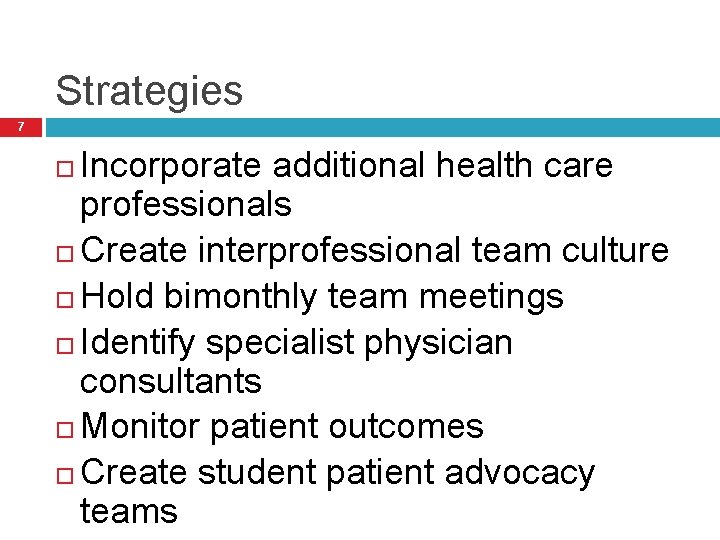
Strategies 7 Incorporate additional health care professionals Create interprofessional team culture Hold bimonthly team meetings Identify specialist physician consultants Monitor patient outcomes Create student patient advocacy teams
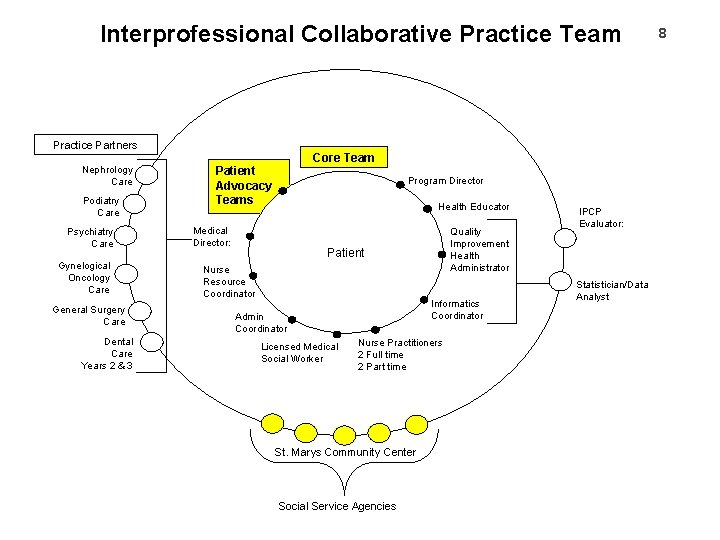
Interprofessional Collaborative Practice Team Practice Partners Nephrology Care Podiatry Care Psychiatry Care Gynelogical Oncology Care General Surgery Care Dental Care Years 2 & 3 Core Team Patient Advocacy Teams Program Director Health Educator Medical Director: Quality Improvement Health Administrator Patient Nurse Resource Coordinator Informatics Coordinator Admin Coordinator Licensed Medical Social Worker Nurse Practitioners 2 Full time 2 Part time St. Marys Community Center Social Service Agencies IPCP Evaluator: Statistician/Data Analyst 8
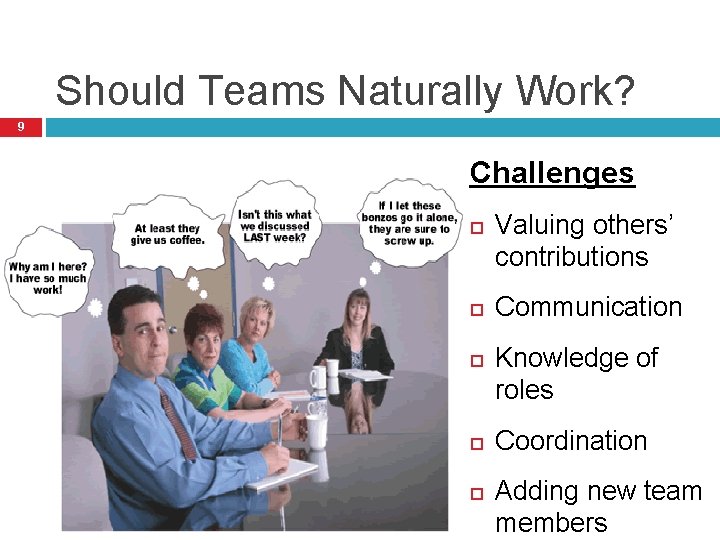
Should Teams Naturally Work? 9 Challenges Valuing others’ contributions Communication Knowledge of roles Coordination Adding new team members
Training Core Team Members 10 Five workshops 11/2012 4/2014 �Background, mission, goals, objectives �Achievements/challenges, roles �Conflict competence, team norms �Data, PDSA, QI groups �Data, QI
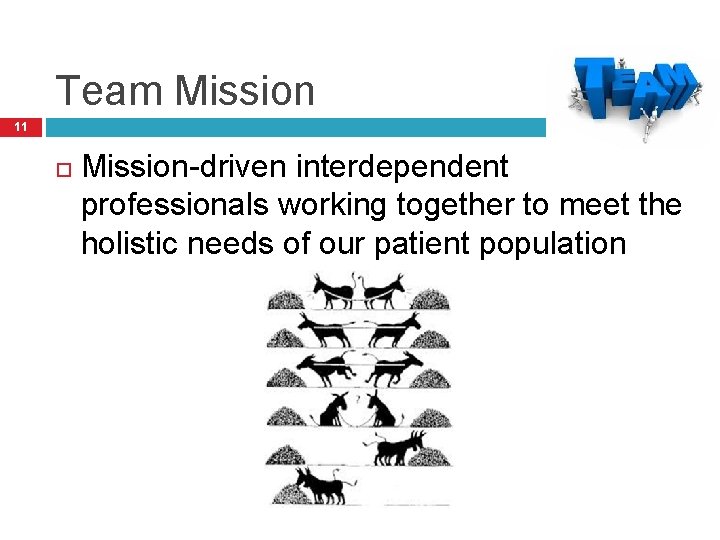
Team Mission 11 Mission-driven interdependent professionals working together to meet the holistic needs of our patient population
Maintenance 12 Twice monthly Friday morning team meetings �Updates/Burning issues �Patient presentation �New practice partner introductions �QI team work
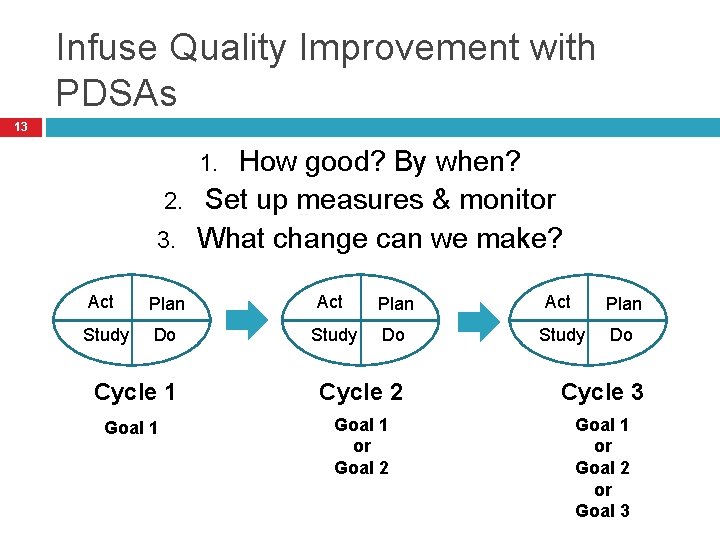
Infuse Quality Improvement with PDSAs 13 How good? By when? 2. Set up measures & monitor 3. What change can we make? 1. Act Plan Study Do Cycle 1 Cycle 2 Cycle 3 Goal 1 or Goal 2 or Goal 3
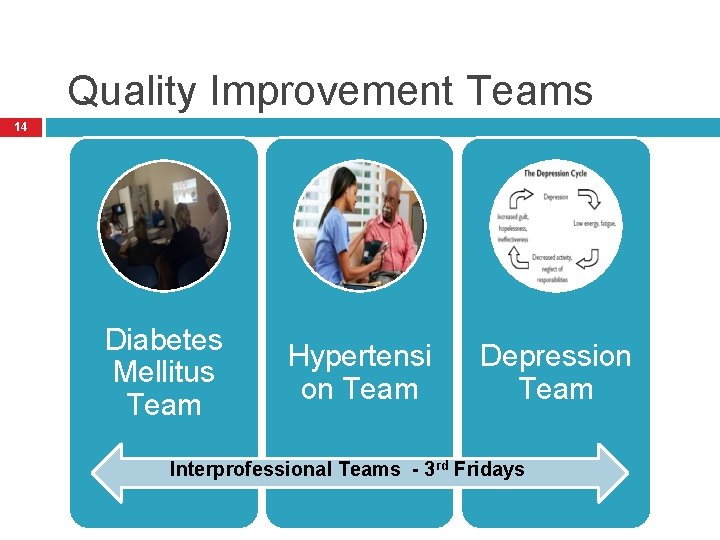
Quality Improvement Teams 14 Diabetes Mellitus Team Hypertensi on Team Depression Team Interprofessional Teams - 3 rd Fridays
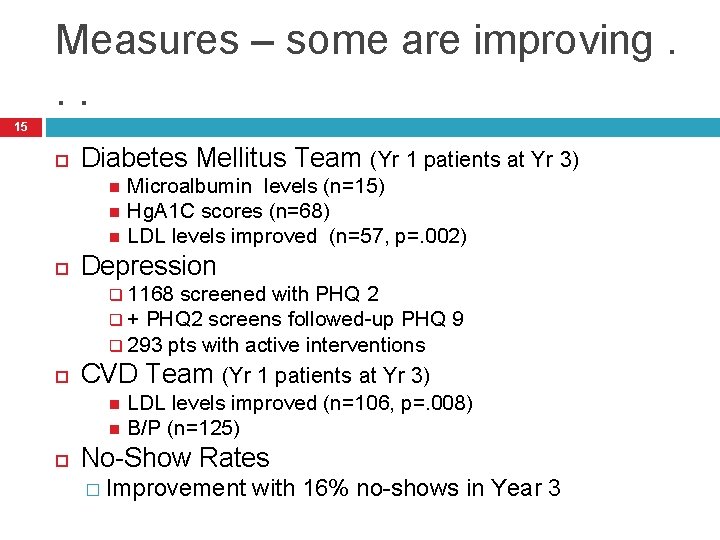
Measures – some are improving. . . 15 Diabetes Mellitus Team (Yr 1 patients at Yr 3) Microalbumin levels (n=15) Hg. A 1 C scores (n=68) LDL levels improved (n=57, p=. 002) Depression q 1168 screened with PHQ 2 q + PHQ 2 screens followed-up PHQ 9 q 293 pts with active interventions CVD Team (Yr 1 patients at Yr 3) LDL levels improved (n=106, p=. 008) B/P (n=125) No-Show Rates � Improvement with 16% no-shows in Year 3
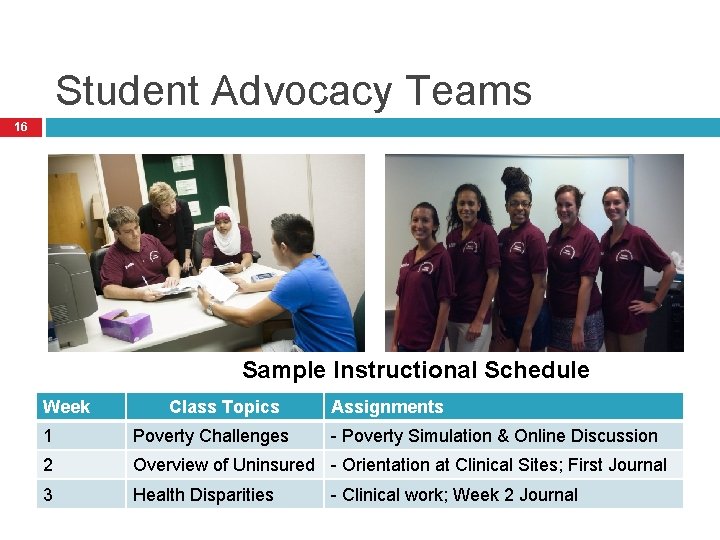
Student Advocacy Teams 16 Sample Instructional Schedule Week Class Topics Assignments 1 Poverty Challenges - Poverty Simulation & Online Discussion 2 Overview of Uninsured - Orientation at Clinical Sites; First Journal 3 Health Disparities - Clinical work; Week 2 Journal
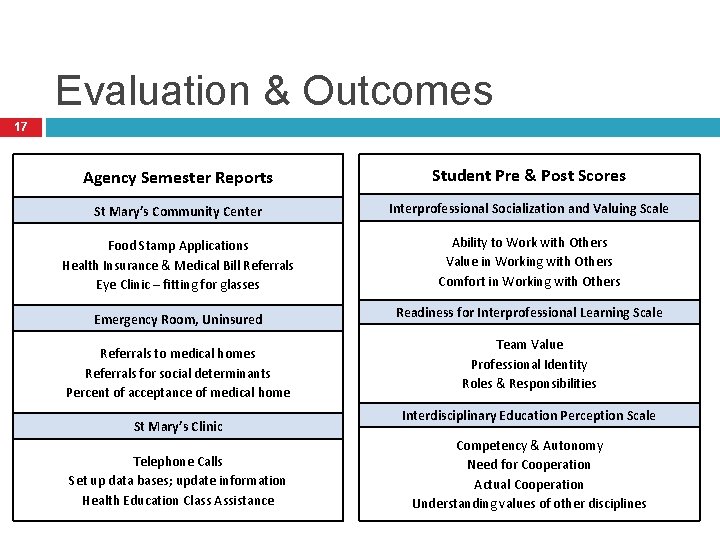
Evaluation & Outcomes 17 Agency Semester Reports Student Pre & Post Scores St Mary’s Community Center Interprofessional Socialization and Valuing Scale Food Stamp Applications Health Insurance & Medical Bill Referrals Eye Clinic – fitting for glasses Ability to Work with Others Value in Working with Others Comfort in Working with Others Emergency Room, Uninsured Readiness for Interprofessional Learning Scale Referrals to medical homes Referrals for social determinants Percent of acceptance of medical home St Mary’s Clinic Telephone Calls Set up data bases; update information Health Education Class Assistance Team Value Professional Identity Roles & Responsibilities Interdisciplinary Education Perception Scale Competency & Autonomy Need for Cooperation Actual Cooperation Understanding values of other disciplines
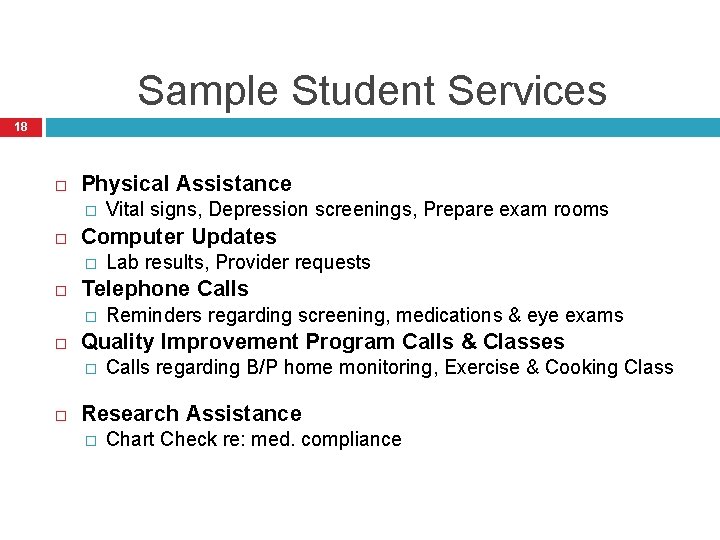
Sample Student Services 18 Physical Assistance � Computer Updates � Reminders regarding screening, medications & eye exams Quality Improvement Program Calls & Classes � Lab results, Provider requests Telephone Calls � Vital signs, Depression screenings, Prepare exam rooms Calls regarding B/P home monitoring, Exercise & Cooking Class Research Assistance � Chart Check re: med. compliance
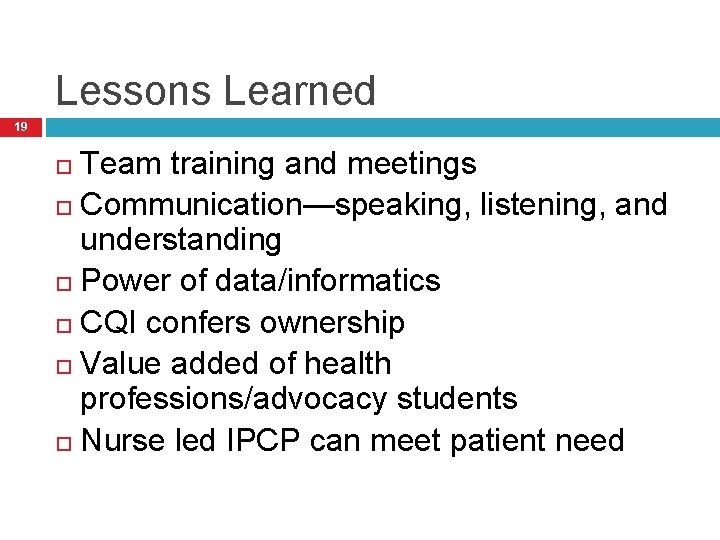
Lessons Learned 19 Team training and meetings Communication—speaking, listening, and understanding Power of data/informatics CQI confers ownership Value added of health professions/advocacy students Nurse led IPCP can meet patient need
Next Steps 20 Academic-Community Partner Model sustainability Fiscal and funding considerations Exploration of other ways to collaborate
- Slides: 20