
Interpreting T Wave Alternans Tests Daniel M Bloomfield
Interpreting T Wave Alternans Tests Daniel M. Bloomfield, MD Herbert Irving Assistant Professor of Medicine Director, Syncope Center Columbia Presbyterian Medical Center Columbia University College of Physicians & Surgeons
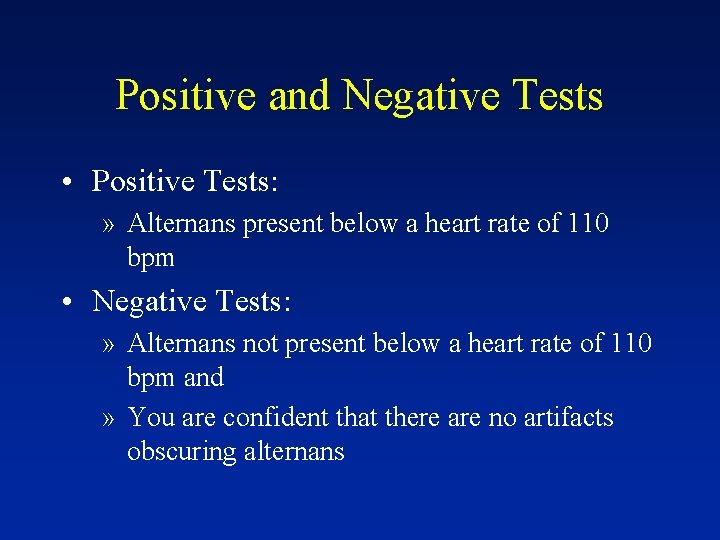
Positive and Negative Tests • Positive Tests: » Alternans present below a heart rate of 110 bpm • Negative Tests: » Alternans not present below a heart rate of 110 bpm and » You are confident that there are no artifacts obscuring alternans
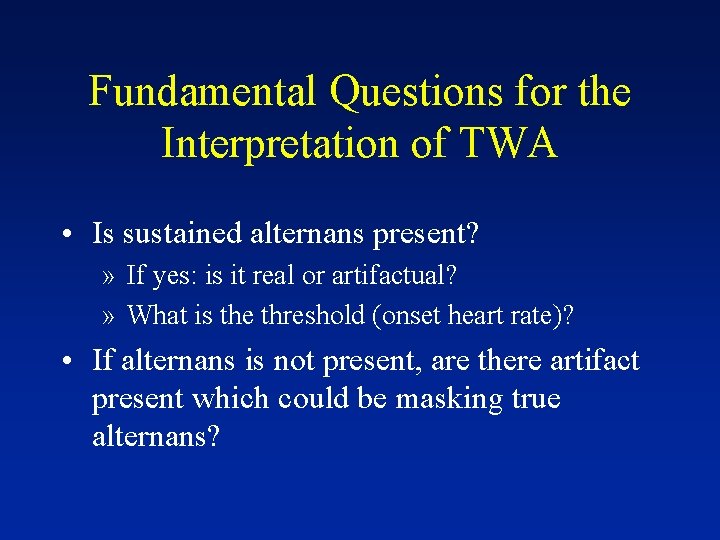
Fundamental Questions for the Interpretation of TWA • Is sustained alternans present? » If yes: is it real or artifactual? » What is the threshold (onset heart rate)? • If alternans is not present, are there artifact present which could be masking true alternans?
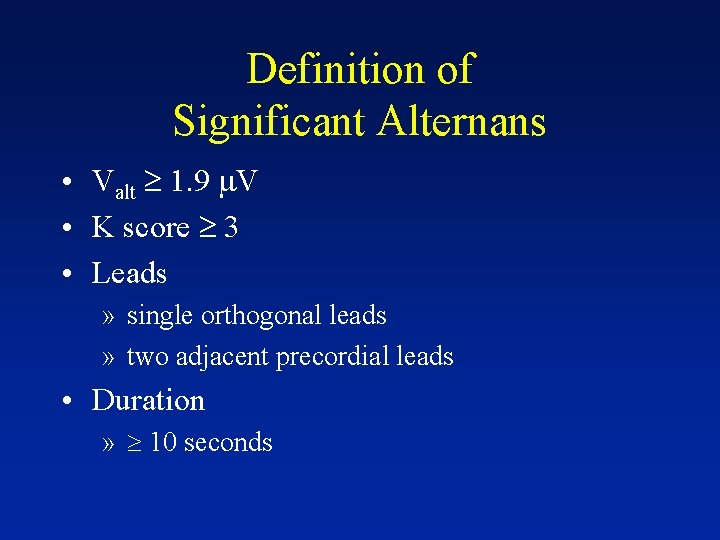
Definition of Significant Alternans • Valt 1. 9 V • K score 3 • Leads » single orthogonal leads » two adjacent precordial leads • Duration » 10 seconds
What is sustained alternans? • Duration of alternans » 1 minute • Relationship of alternans to heart rate » alternans must persist above a patient specific heart rate threshold • “Heart rate centric” view of alternans
Significant vs. Sustained Alternans • Both require » Valt 1. 9 V » K 3 • Sustained is 1 minute and consistently present above threshold heart rate • Significant alternans must only be 10 seconds in duration and need not be present above a threshold heart rate (non-sustained)
What is onset heart rate? • Heart rate threshold above which significant alternans is consistently present • Can read onset heart rate during increase in heart rate in exercise (preferable) or during decrease in heart rate in recovery • In precordial leads: read onset heart rate when 2 adjacent leads have significant alternans
What is a positive tracing? • Sustained alternans » 1. 9 V » K 3, » for 1 minute in duration • Threshold heart rate » Onset HR must be below predetermined threshold heart rate (currently 110 bpm) • Artifact free interval » documented as dark black bar
Rest Alternans • Sustained alternans is present at lowest smoothed heart rate » regardless of whether this lowest smoothed heart rate occurs at the beginning of the tracing • Rest alternans is classified as positive regardless of the Onset. HR • “rest” does not refer to a stage of the exercise test • Max. Neg. HR = 0
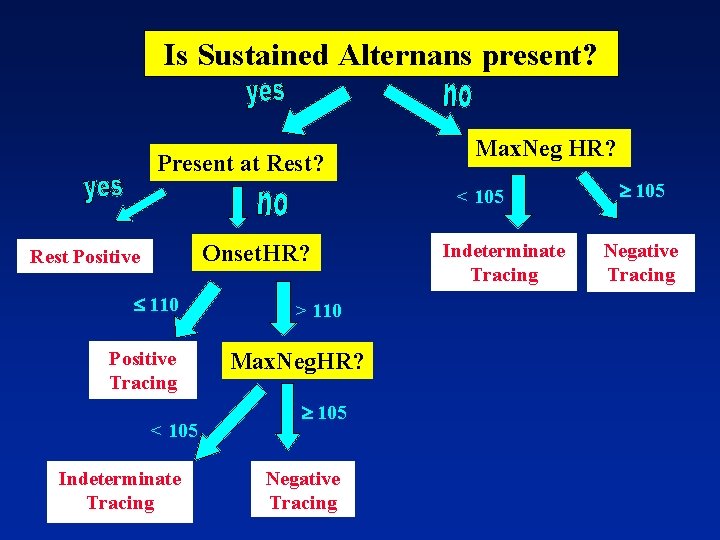
Is Sustained Alternans present? Present at Rest? Max. Neg HR? < 105 Onset. HR? Rest Positive 110 Positive Tracing < 105 Indeterminate Tracing > 110 Max. Neg. HR? 105 Negative Tracing Indeterminate Tracing 105 Negative Tracing
Interpreting TWA in the Presence of Artifacts • Artifacts which can cause alternans (false alternans) • Artifacts which can obscure (or mask) true alternans
Artifacts Causing Alternans • • • RR interval alternans Ectopic beats Rapid changes in heart rate Excessive noise Motion artifact Respiration
Interpreting Alternans During Periods of Potential Artifacts • Wary of considering alternans “real” if only present during periods of potential artifacts • Characteristics of alternans may be helpful » relationship to heart rate » alternans during artifact free intervals
What is a negative tracing? • Tracing without sustained alternans » or with sustained alternans with an Onset. HR > 110 bpm • Max. Neg. HR 105 bpm » Clean interval with interval heart rate 105
Maximum Negative Heart Rate • Highest interval heart rate at which sustained alternans is definitively not present
“Clean interval” 1 minute • without significant alternans • without artifacts that could potentially obscure alternans » < 10 % ectopic or bad beats » noise levels < 1. 8 V
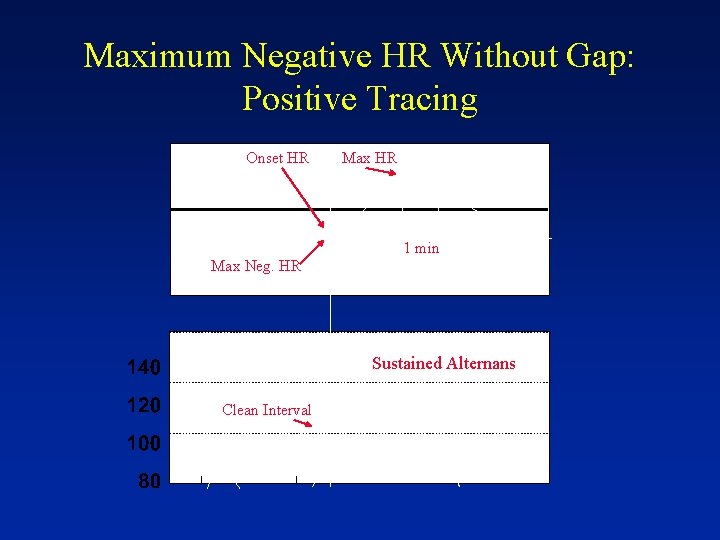
Maximum Negative HR Without Gap: Positive Tracing Onset HR Max HR 1 min Max Neg. HR Sustained Alternans Clean Interval
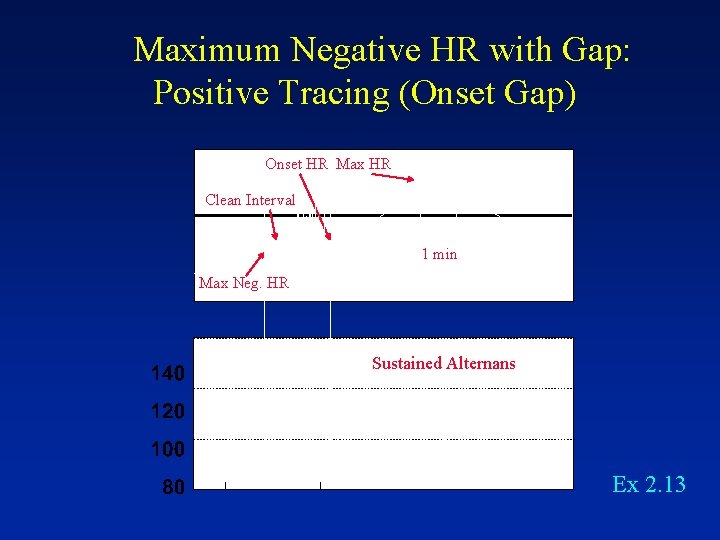
Maximum Negative HR with Gap: Positive Tracing (Onset Gap) Onset HR Max HR Clean Interval 1 min Max Neg. HR Sustained Alternans Ex 2. 13
Factors That May Obscure Alternans • Noise » loss of K score » reduce alternans voltage (complete loss of alternans uncommon) • Ectopic beats » high levels of alternans may rapidly disappear and reappear centered on an ectopic • Rapid changes in heart rate » especially immediately after exercise » look carefully at the instantaneous heart rate Ex 2. 5, 2. 6, 2. 9
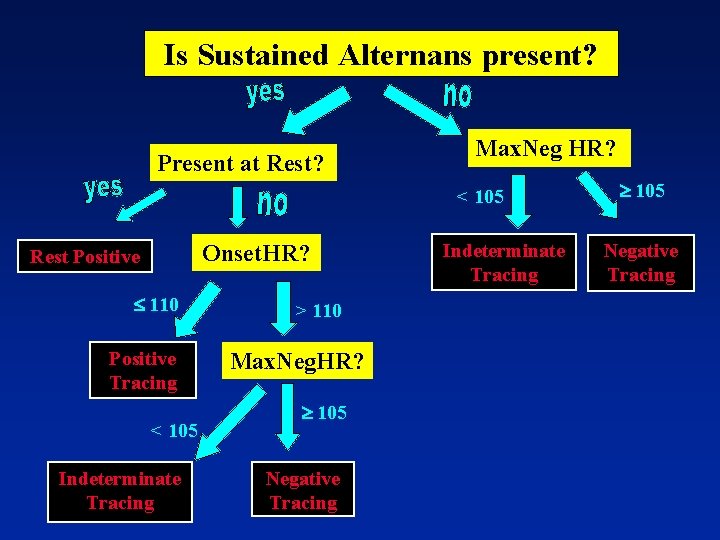
Is Sustained Alternans present? Present at Rest? Max. Neg HR? < 105 Onset. HR? Rest Positive 110 Positive Tracing < 105 Indeterminate Tracing > 110 Max. Neg. HR? 105 Negative Tracing Indeterminate Tracing 105 Negative Tracing
Effect of Factors That May Obscure Alternans • Interpreting gaps in sustained alternans • Interpreting maximum negative heart rate in the presence of factors that may obscure alternans
Gaps in Sustained Alternans • Duration of the gap relative to duration of sustained alternans • Explicable vs. inexplicable gaps • Characteristics of alternans » relationship to heart rate » alternans during artifact free intervals » confirmation in other leads
Maximum negative heart rate in the presence of factors that obscure alternans • Heart rate above which you are confident that alternans is not present • Confidence is affected by these factors that may obscure alternans • Maximum negative heart rate is the highest interval heart rate of all “clean” intervals”
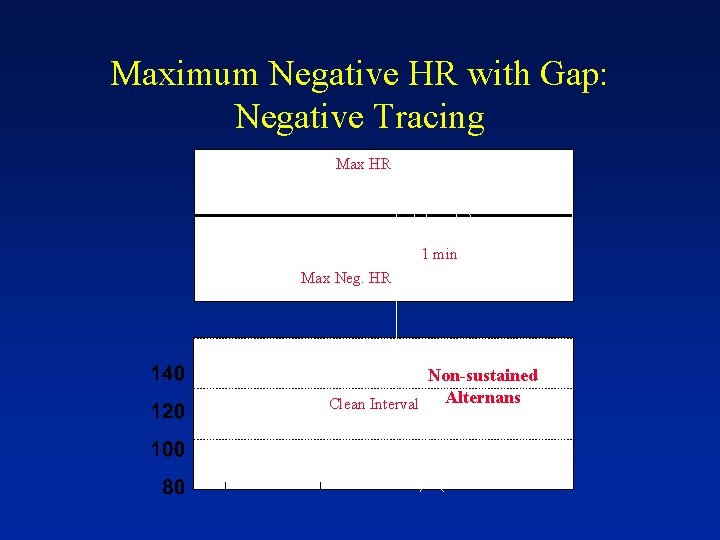
Maximum Negative HR with Gap: Negative Tracing Max HR 1 min Max Neg. HR Non-sustained Alternans Clean Interval
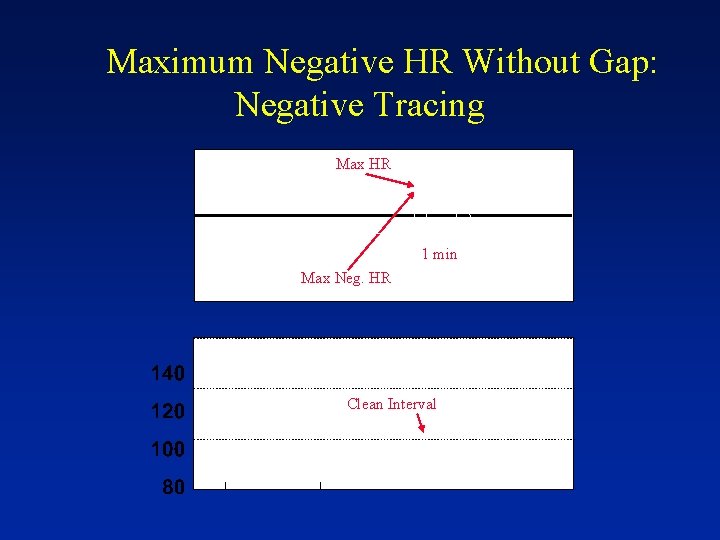
Maximum Negative HR Without Gap: Negative Tracing Max HR 1 min Max Neg. HR Clean Interval
- Slides: 25