
Interpreting Regional Assessment Tables The following slides explains

Interpreting Regional Assessment Tables The following slides explains each column in the tables for evaluating species vulnerability for a specific geographic region
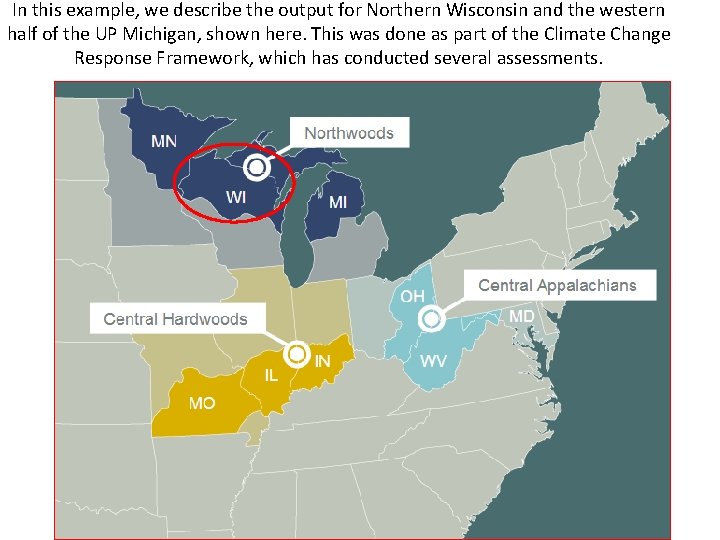
In this example, we describe the output for Northern Wisconsin and the western half of the UP Michigan, shown here. This was done as part of the Climate Change Response Framework, which has conducted several assessments.
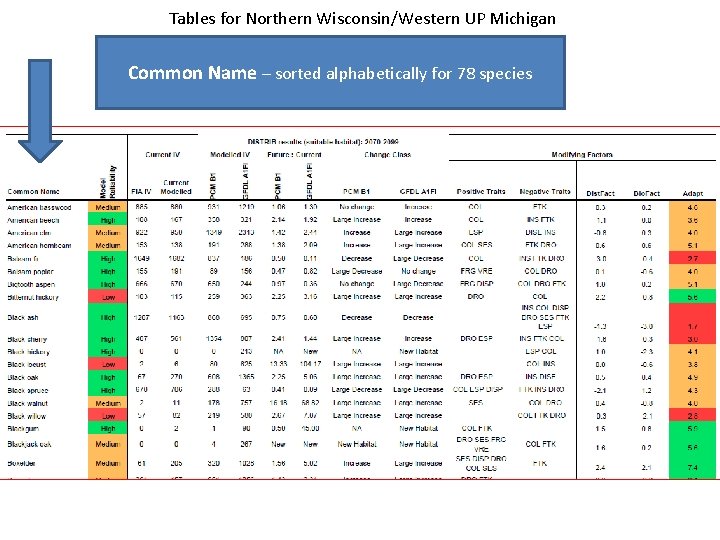
Tables for Northern Wisconsin/Western UP Michigan Common Handout Name – Sample sorted alphabetically for 78 species Tree Atlas Output
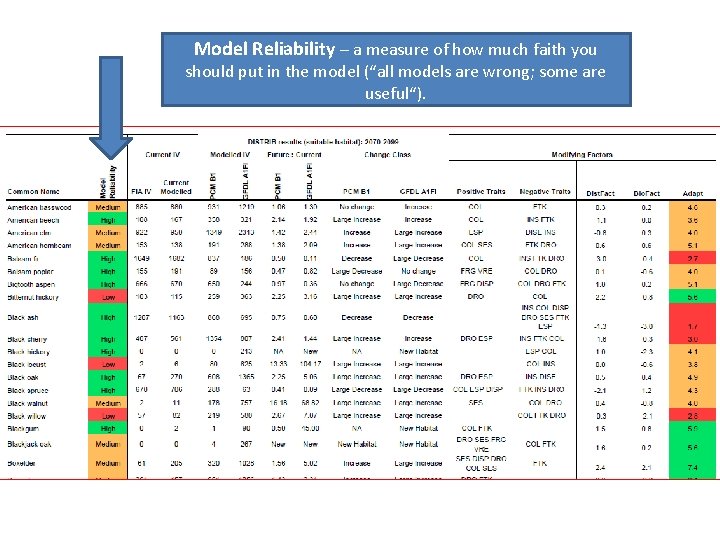
Model Reliability – a measure of how much faith you should put in. Sample the model (“all models wrong; some are Handout Tree Atlas are Output useful“).
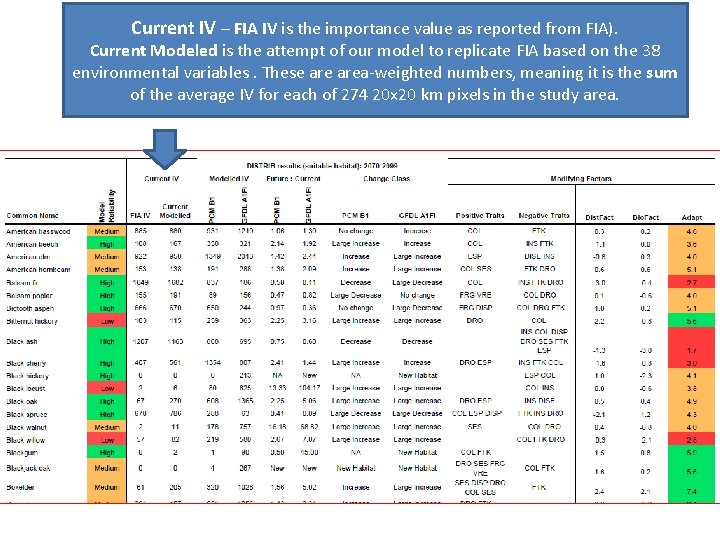
Current IV – FIA IV is the importance value as reported from FIA). Current Modeled is the attempt of our model to replicate FIA based on the 38 environmental variables. These area-weighted Handout Sample Tree Atlasnumbers, Output meaning it is the sum of the average IV for each of 274 20 x 20 km pixels in the study area.

Modeled IV – Estimates of future area-weighted IV for 2070 -2099. PCM B 1 is a mild scenario A 1 FI is a harsh scenario Handout. GFDL Sample Tree Atlas Output The idea is to create ‘bookends’ on what may happen to tree species habitats.
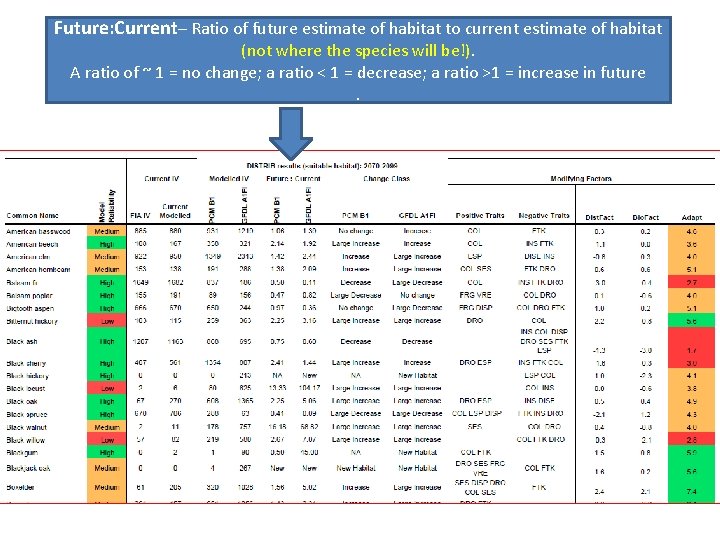
Future: Current– Ratio of future estimate of habitat to current estimate of habitat (not where the species will be!). A ratio of ~ 1 = no change; ratio < 1 = decrease; a ratio >1 = increase in future Handouta. Sample Tree Atlas Output.
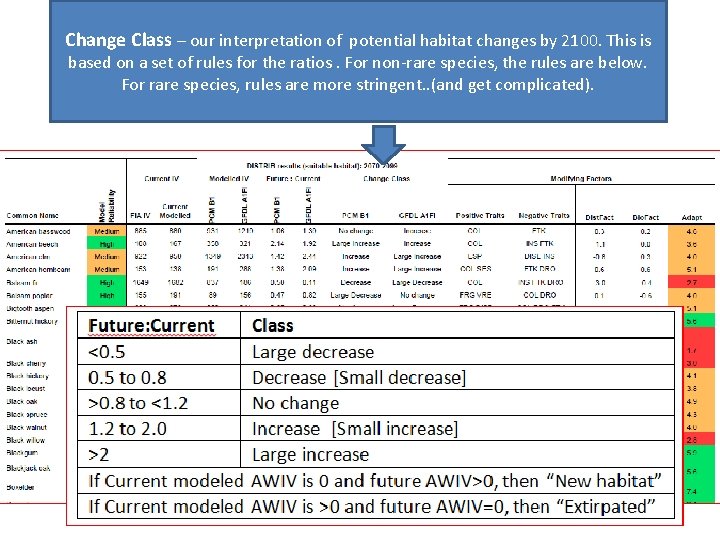
Change Class – our interpretation of potential habitat changes by 2100. This is based on a set of rules for the ratios. For non-rare species, the rules are below. Handout Sample Tree Atlas Output For rare species, rules are more stringent. . (and get complicated).
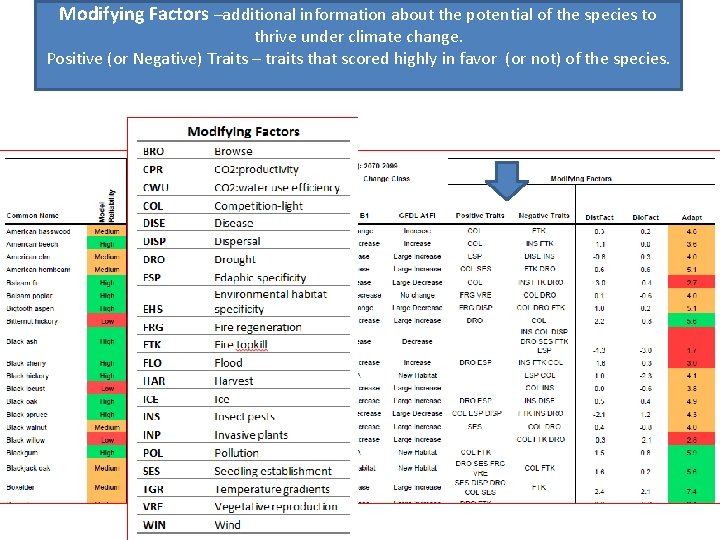
Modifying Factors –additional information about the potential of the species to thrive under climate change. Positive (or Negative) Traits – traits that scored highly in favor (or not) of the species. Handout Sample Tree Atlas Output
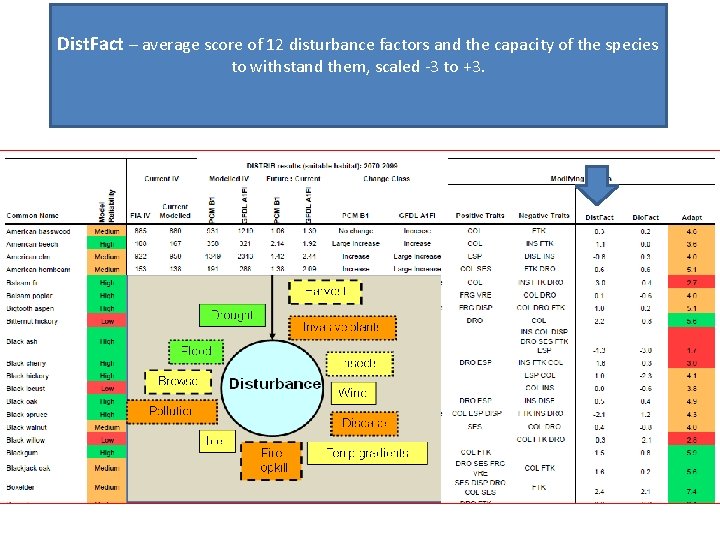
Dist. Fact – average score of 12 disturbance factors and the capacity of the species to withstand -3 to. Output +3. Handout Sample them, scaled Tree Atlas
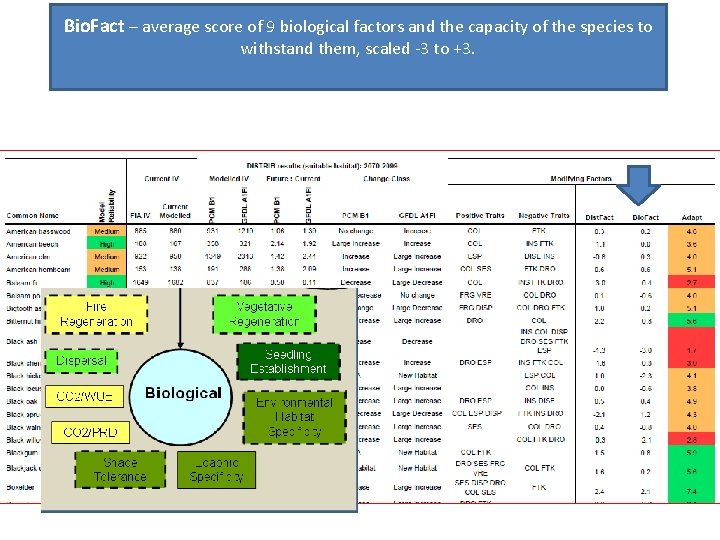
Bio. Fact – average score of 9 biological factors and the capacity of the species to withstand them, scaled -3 to +3. Handout Sample Tree Atlas Output
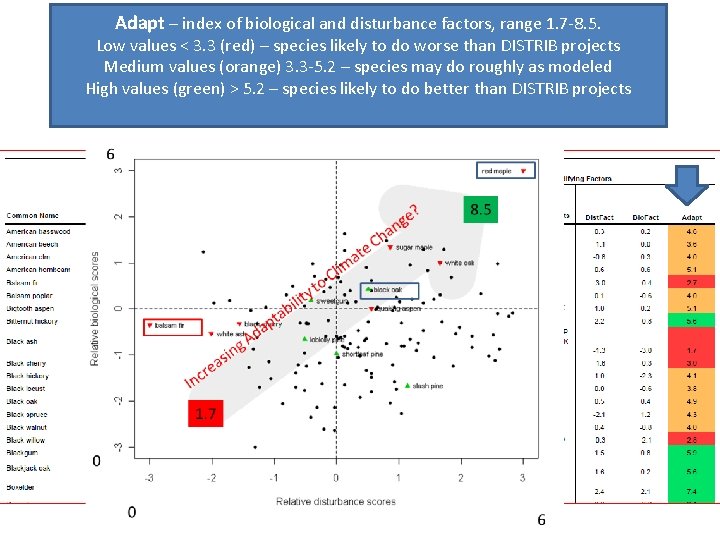
Adapt – index of biological and disturbance factors, range 1. 7 -8. 5. Low values < 3. 3 (red) – species likely to do worse than DISTRIB projects Medium values (orange)Sample 3. 3 -5. 2 – species roughly as modeled Handout Treemay Atlasdo. Output High values (green) > 5. 2 – species likely to do better than DISTRIB projects
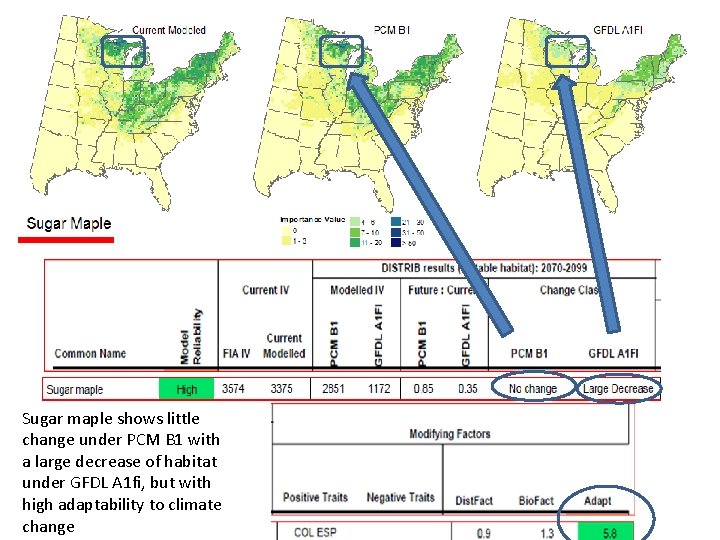
Sugar maple shows little change under PCM B 1 with a large decrease of habitat under GFDL A 1 fi, but with high adaptability to climate change
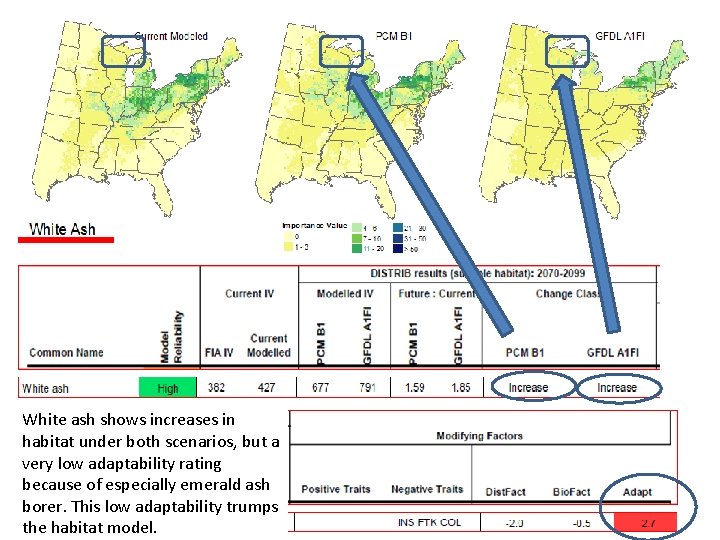
White ash shows increases in habitat under both scenarios, but a very low adaptability rating because of especially emerald ash borer. This low adaptability trumps the habitat model.

Good luck in using the assessment tables! Use this powerpoint as a guide as you download and work with the summary tables for each region.
- Slides: 15