
Interpreting Geologic History Earth and Space Science Earthcomm
- Slides: 14
Interpreting Geologic History Earth and Space Science Earthcomm: Understanding Your Environment, pages 53 -55
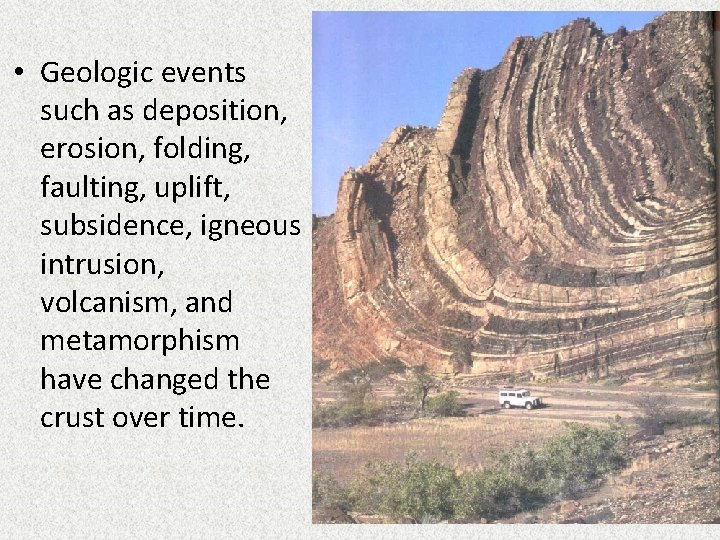
• Geologic events such as deposition, erosion, folding, faulting, uplift, subsidence, igneous intrusion, volcanism, and metamorphism have changed the crust over time.
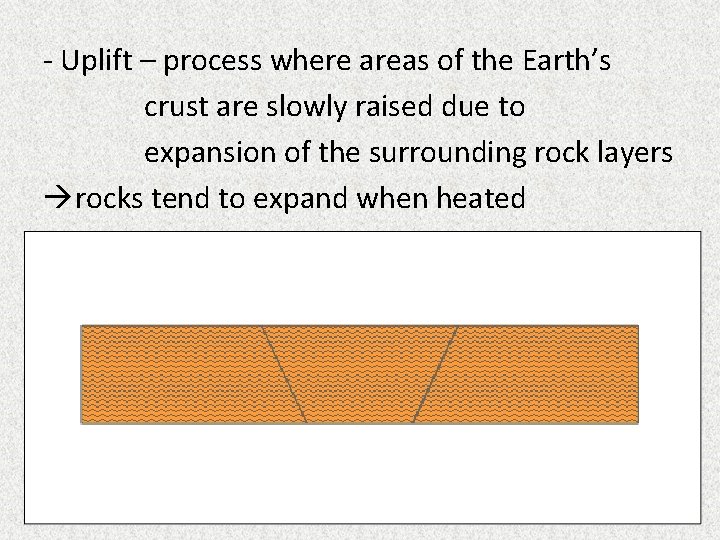
- Uplift – process where areas of the Earth’s crust are slowly raised due to expansion of the surrounding rock layers rocks tend to expand when heated
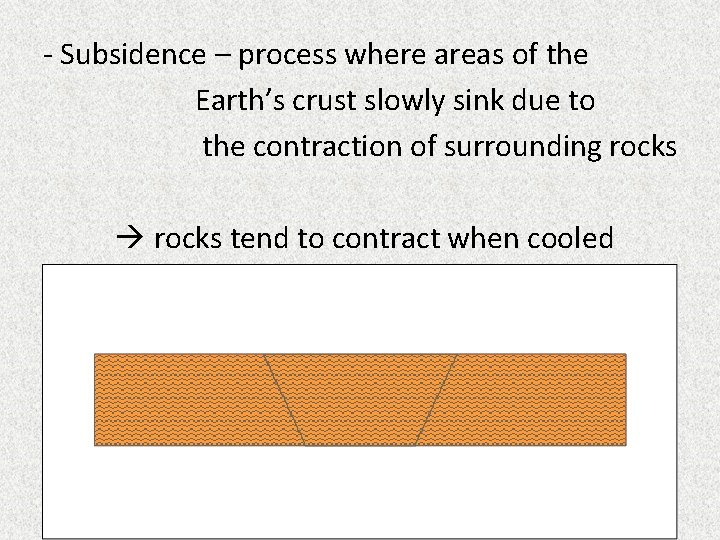
- Subsidence – process where areas of the Earth’s crust slowly sink due to the contraction of surrounding rocks tend to contract when cooled
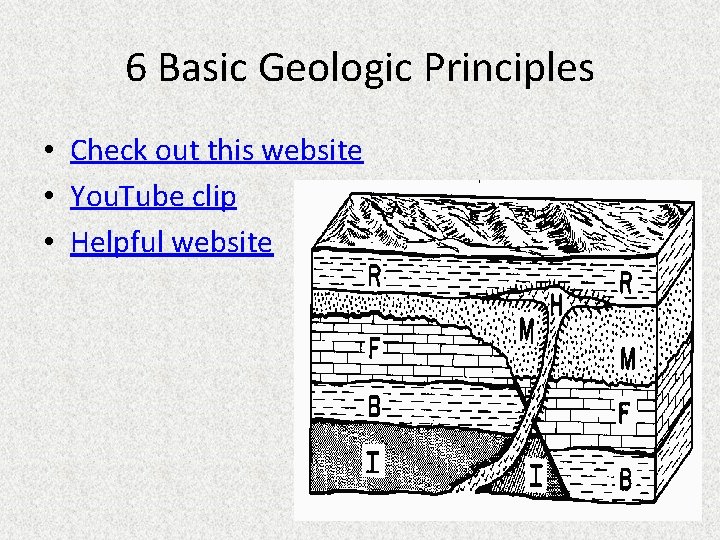
6 Basic Geologic Principles • Check out this website • You. Tube clip • Helpful website
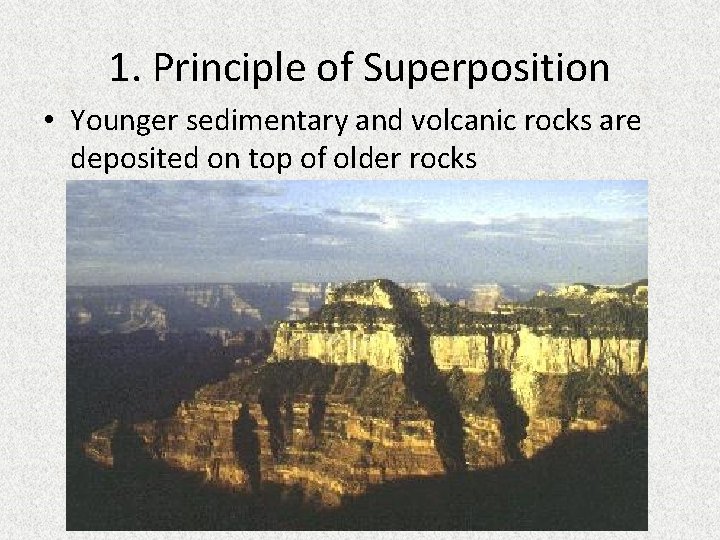
1. Principle of Superposition • Younger sedimentary and volcanic rocks are deposited on top of older rocks
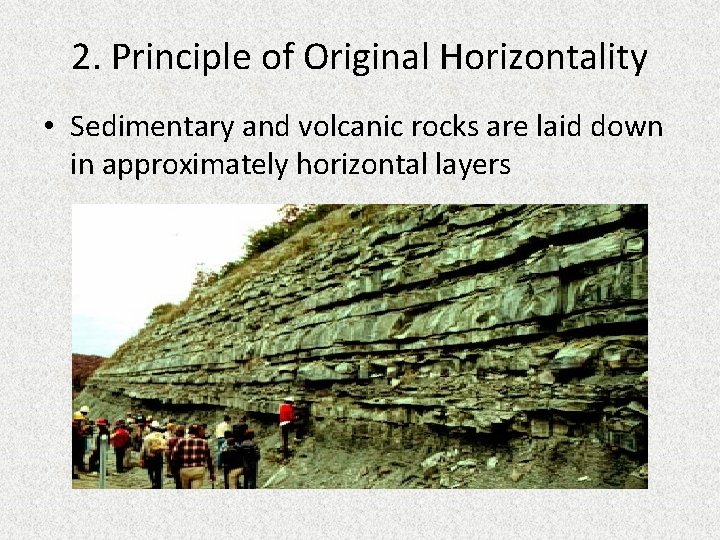
2. Principle of Original Horizontality • Sedimentary and volcanic rocks are laid down in approximately horizontal layers
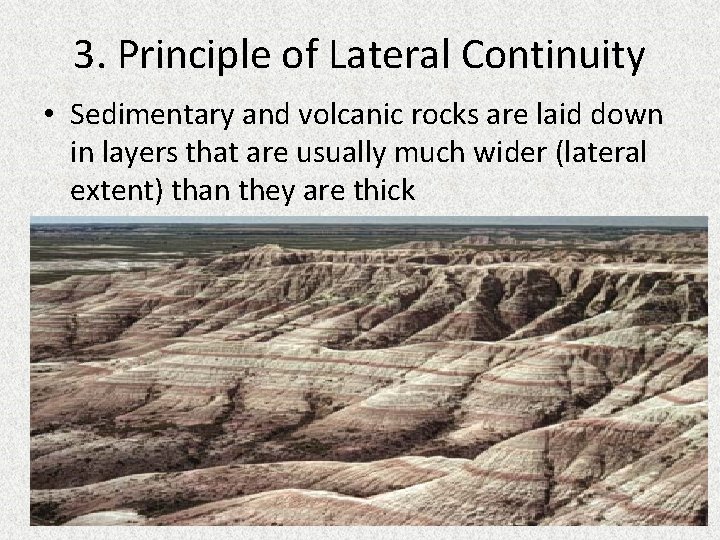
3. Principle of Lateral Continuity • Sedimentary and volcanic rocks are laid down in layers that are usually much wider (lateral extent) than they are thick
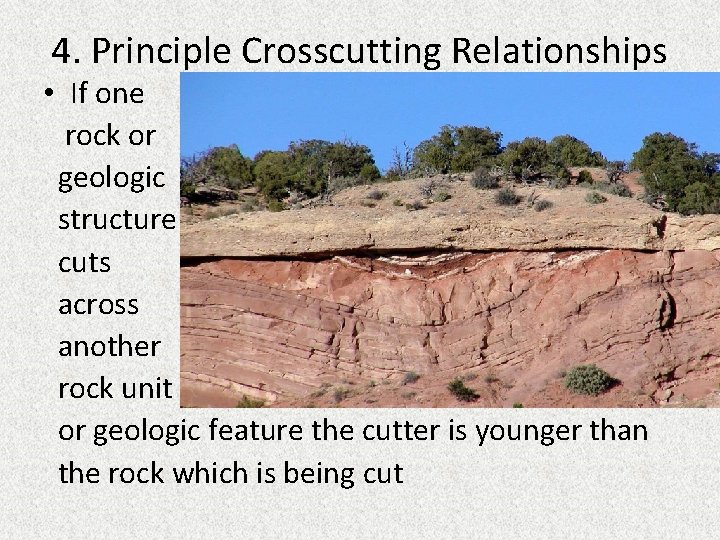
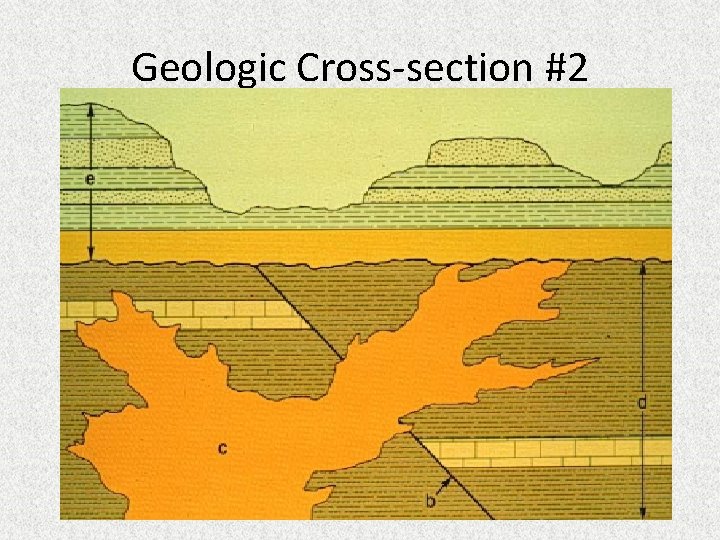
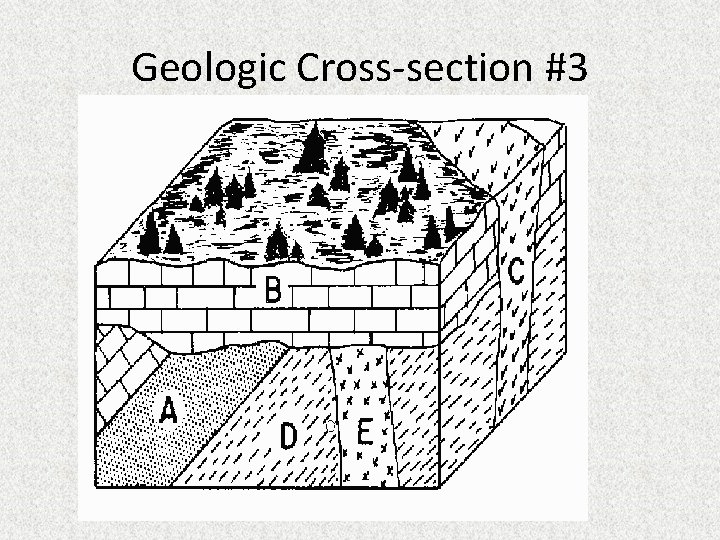
4. Principle Crosscutting Relationships • If one rock or geologic structure cuts across another rock unit or geologic feature the cutter is younger than the rock which is being cut
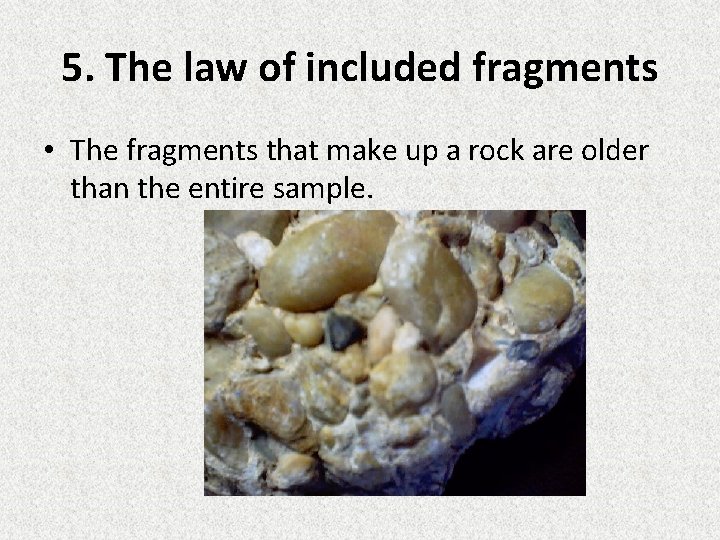
5. The law of included fragments • The fragments that make up a rock are older than the entire sample.
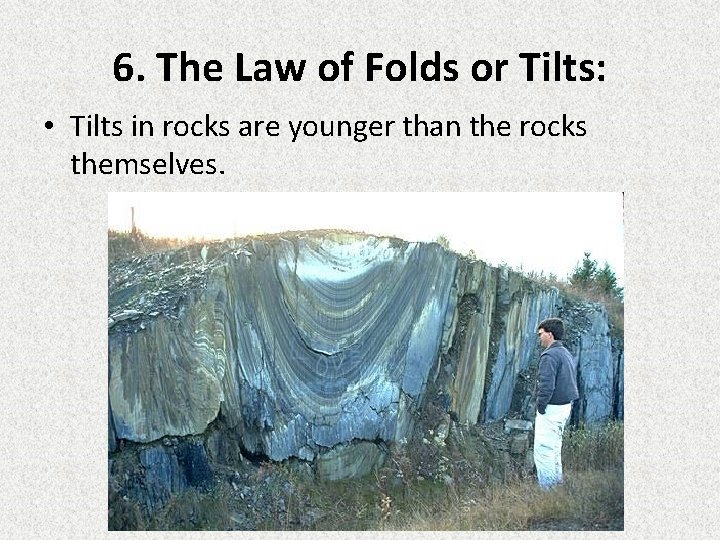
6. The Law of Folds or Tilts: • Tilts in rocks are younger than the rocks themselves.
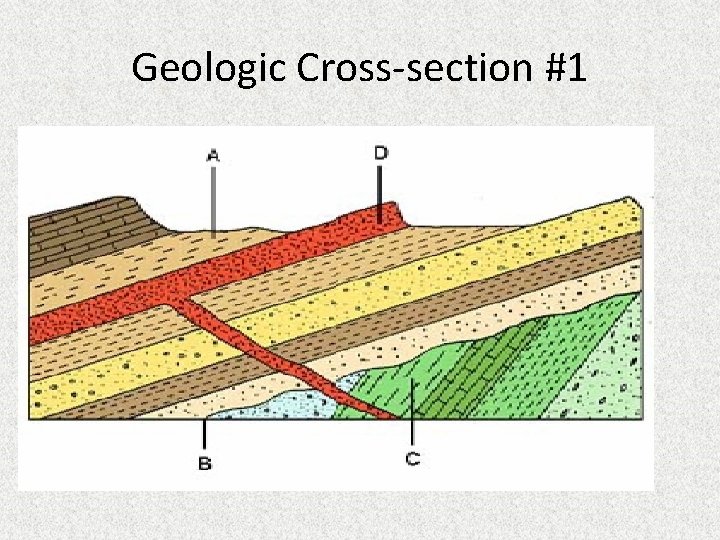
Geologic Cross-section #1
Geologic Cross-section #2
Geologic Cross-section #3