
INTERPRETING AND CREATING PROCESS DIAGRAMS HCS 150 Unit
- Slides: 16
INTERPRETING AND CREATING PROCESS DIAGRAMS HCS 150 Unit 3 This work is licensed under a Creative Commons Attribution-Non. Commercial-Share. Alike 4. 0 International License. Based on a work at http: //oli. cmu. edu. This workforce product was funded by a grant awarded by the U. S. Department of Labor's Employment and Training Administration. The product was created by the grantee and does not necessarily reflect the official position of the U. S. Department of Labor. The Department of Labor makes no guarantees, warranties, or assurances of any kind, express or implied, with respect to such information, including any information on linked sites and including, but not limited to, accuracy of the information or its completeness, timeliness, usefulness, adequacy, continued availability, or ownership.
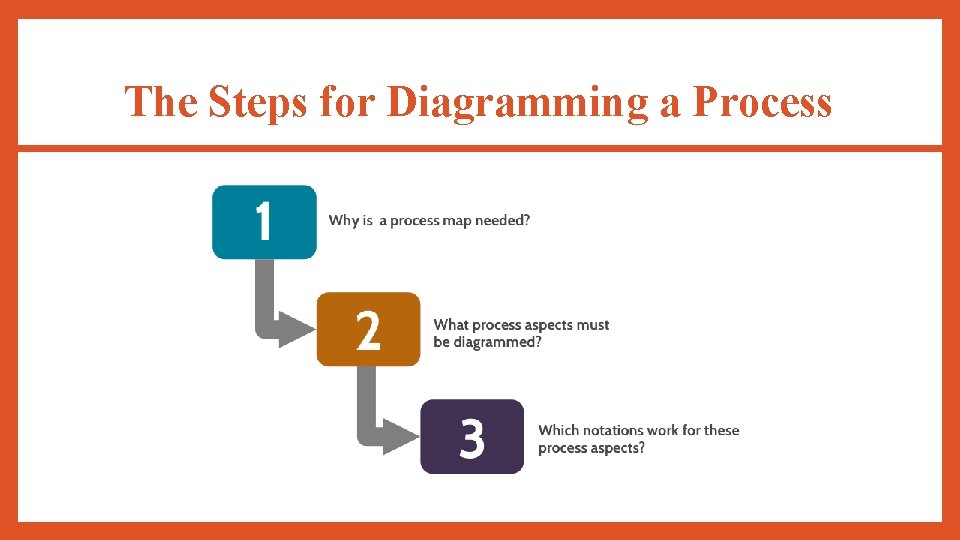
Many different process aspects and clinical processes can be diagrammed in health IT. It should be no surprise, then, that many different types of process maps can be created in the HIT environment. Healthcare professionals may encounter any of these types of process maps in the HIT environment, so it is helpful to have a basic understanding of them. Some basic guidelines for creating clinical process maps are discussed first.
Prediagramming Guidelines The ultimate goal of process mapping is to understand the current process as a means of improving it before and after the implementation of a process redesign. The “current process” is situational, so the specific need for each process map must be identified. Over the coming years, EHR implementation will be a major reason for diagramming processes in the HIT environment.
Prediagramming Guidelines (cont. . ) Once the purpose of the process map is identified, the process aspect or aspects to be represented must be identified. Again, the situation determines not only which notation to use but also how many different process maps and/or notations to use. If the process being analyzed is not too complicated, it is possible to clearly represent more than one process aspect on a single process map (using a single notation). Otherwise, it may be best to create separate process maps for different process aspects, even using different notations as appropriate. The process analysis helps guide the approach for clearly capturing the current process or processes as well as the areas for improvement.
The Steps for Diagramming a Process
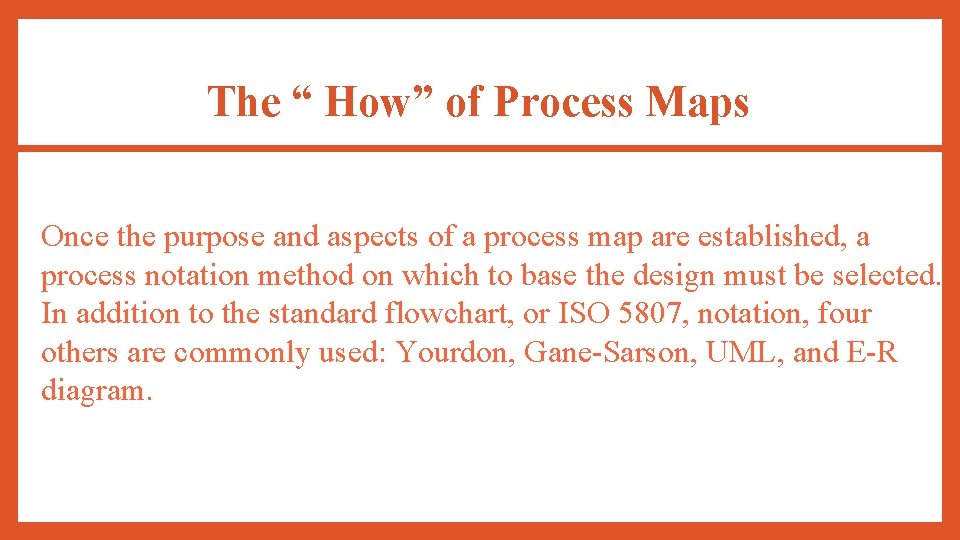
The “ How” of Process Maps Once the purpose and aspects of a process map are established, a process notation method on which to base the design must be selected. In addition to the standard flowchart, or ISO 5807, notation, four others are commonly used: Yourdon, Gane-Sarson, UML, and E-R diagram.
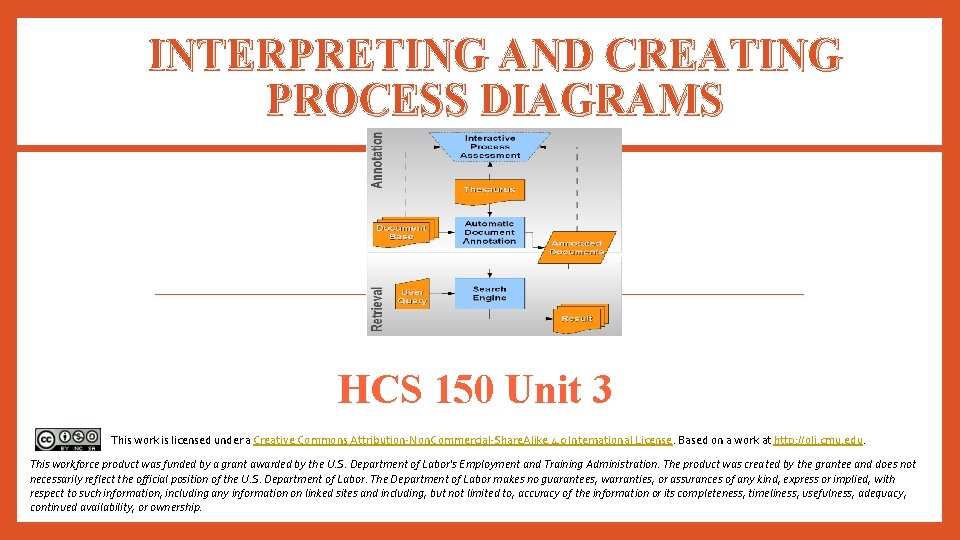
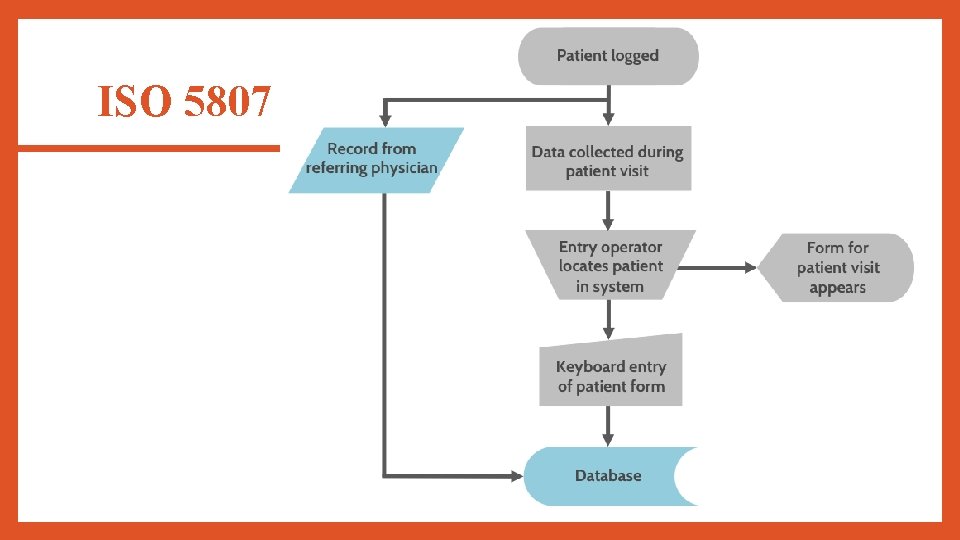
ISO 5807 notation is used to create standard flowcharts. This type of diagram works well for representing step-by-step processes or calculations. The following figure presents an example that includes symbols for representing data, which are discussed in more detail on the next page.
ISO 5807
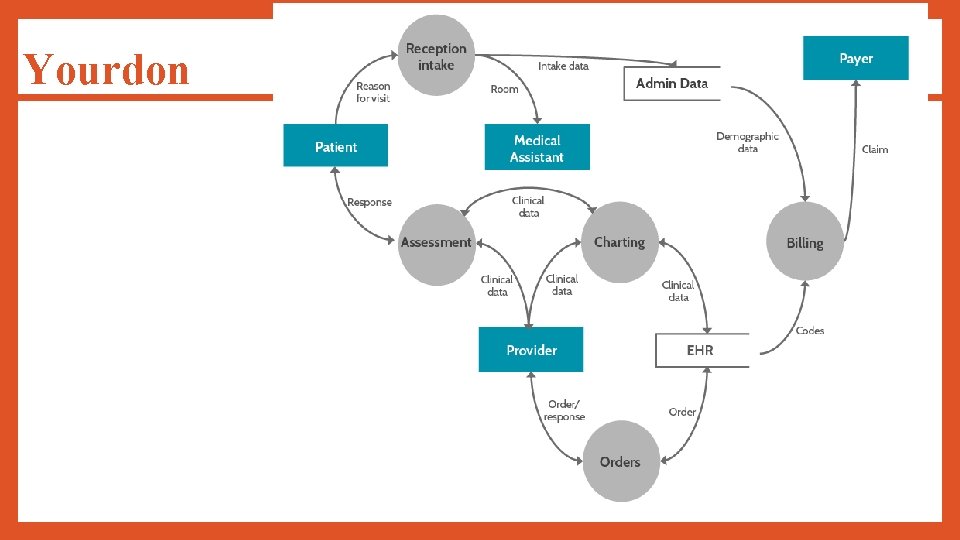
Yourdon diagrams are often used to represent data flows. These diagrams are known as data flow diagram (DFDs) and work well for representing inputs and outputs as well as data storage. In contrast to flowcharts, DFDs do not show timing or sequence within a process. The following figure shows a DFD for a patient visit.
Yourdon
Yourdon (cont. . ) In addition to illustrating data flow, Yourdon diagrams can be used to represent the larger context of and roles involved in a process. These are called context diagrams, as shown in the following figure of a context diagram representing the people necessary to manually refill a prescription.
Gane-Sarson A good notation for representing the transformation of data through a process is Gane-Sarson. This notation can also be used to show data exchange and storage as they pertain to a process. Following is an example of a simplified online appointment scheduling process.
Unified Modeling Language (UML) Originally created for software design and development, the UML notation has been adapted for other purposes. It is particularly useful for representing the complex business processes behind physical process steps, though it is not well suited for representing the actual physical process steps. However, UML diagrams may contain useful information that could be used for creating other types of diagrams. Following is a UML class diagram for a software design pattern. Notice that a relationship in this process is shown.
E-R Diagram Also known as an entity relationship diagram, or ERD, the E-R diagram is a good way to represent the interrelationships among stored data in a process. As with UML diagrams, it may be useful to use E-R diagrams to create other types of diagrams, especially data flow diagrams. These diagrams do not show “the physical locations of the data values within computer memory or how they are stored in a database. ” [6] Following is an E-R diagram showing the data relationships among the entities involved in a patient visit.
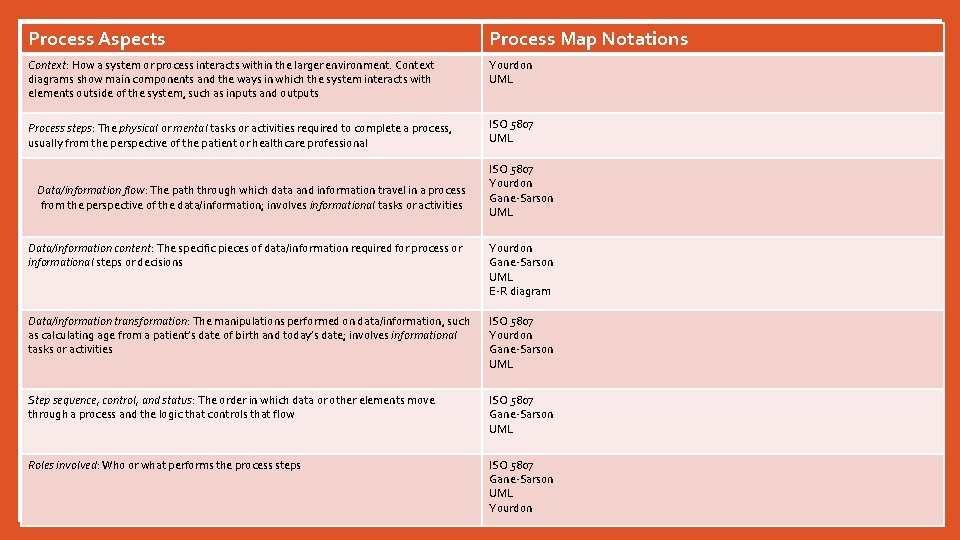
Comparing Process Map Notations The different types of process maps differ in the process aspects they represent, and in the notations used to create them, and most important, in the aspects of processes and information flow that each is designed to cover. Because process aspects largely determine which notation is used in creating a process map, it is useful to discuss them, particularly those mapped in an HIT environment, in a little more detail. The following table outlines the key HIT process aspects and the corresponding process map notations that can be used to diagram them.
Process Aspects Process Map Notations Context: How a system or process interacts within the larger environment. Context diagrams show main components and the ways in which the system interacts with elements outside of the system, such as inputs and outputs Yourdon UML Process steps: The physical or mental tasks or activities required to complete a process, usually from the perspective of the patient or healthcare professional ISO 5807 UML Data/information flow: The path through which data and information travel in a process from the perspective of the data/information; involves informational tasks or activities ISO 5807 Yourdon Gane-Sarson UML Data/information content: The specific pieces of data/information required for process or informational steps or decisions Yourdon Gane-Sarson UML E-R diagram Data/information transformation: The manipulations performed on data/information, such as calculating age from a patient’s date of birth and today’s date; involves informational tasks or activities ISO 5807 Yourdon Gane-Sarson UML Step sequence, control, and status: The order in which data or other elements move through a process and the logic that controls that flow ISO 5807 Gane-Sarson UML Roles involved: Who or what performs the process steps ISO 5807 Gane-Sarson UML Yourdon