
Interpretation of policy language Jan or Completely random

- Slides: 7
Interpretation of policy language Jan Žorž Completely random member of Internet community, no hats Presenter Name, Date
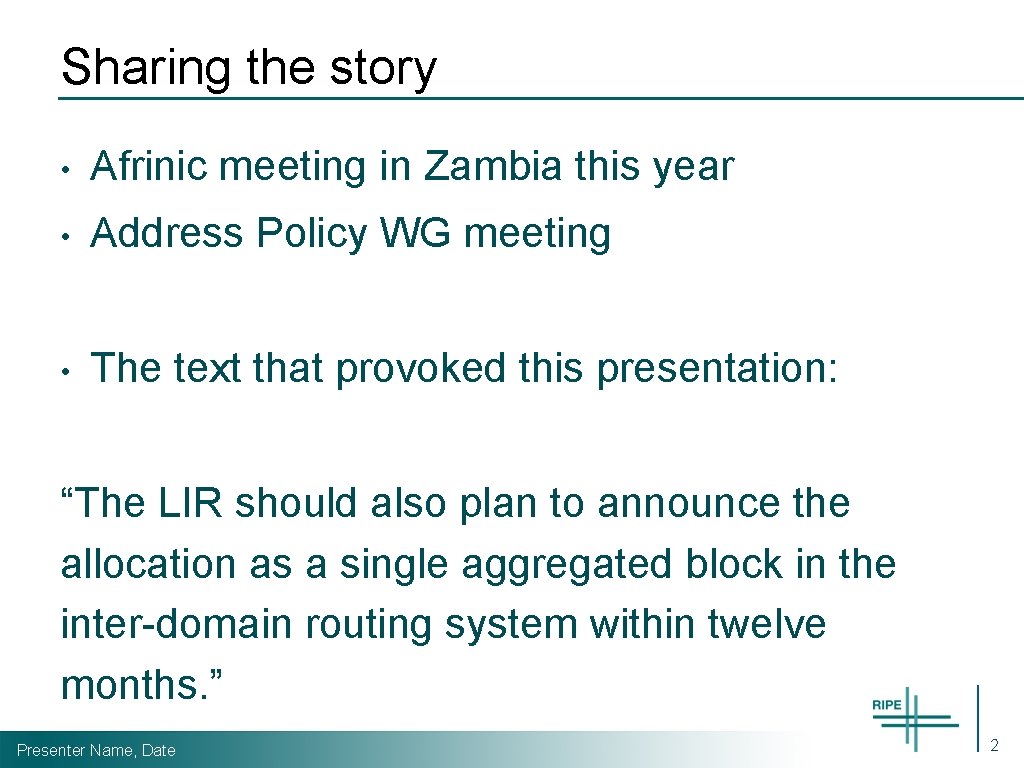
Sharing the story • Afrinic meeting in Zambia this year • Address Policy WG meeting • The text that provoked this presentation: “The LIR should also plan to announce the allocation as a single aggregated block in the inter-domain routing system within twelve months. ” Presenter Name, Date 2
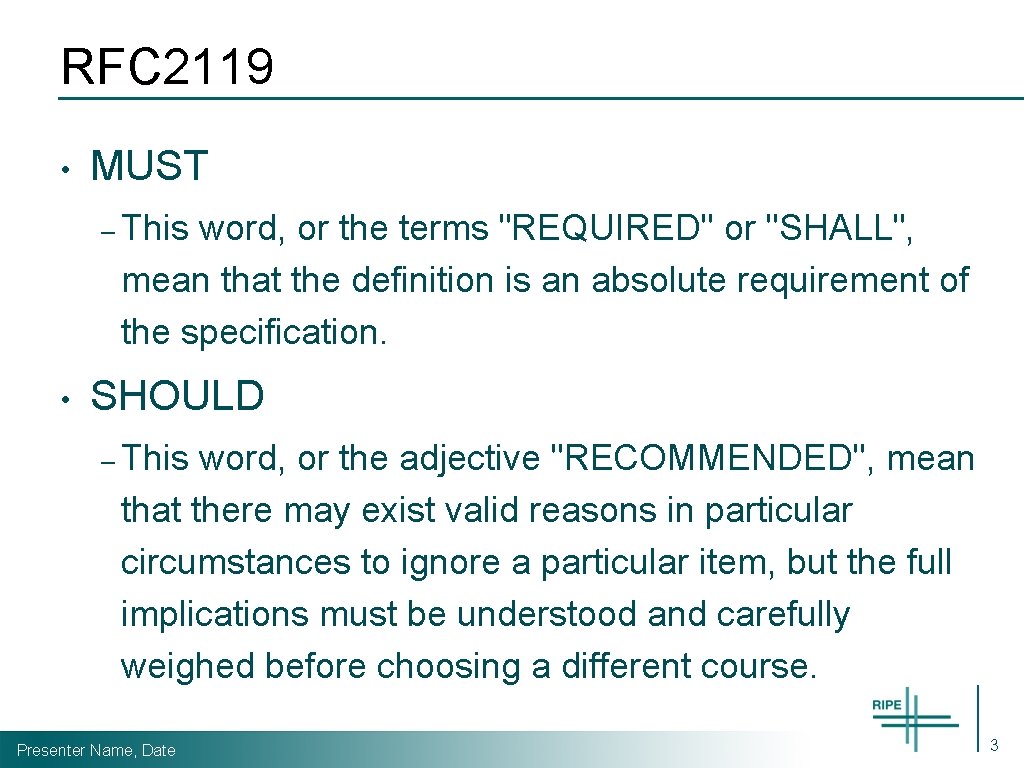
RFC 2119 • MUST – This word, or the terms "REQUIRED" or "SHALL", mean that the definition is an absolute requirement of the specification. • SHOULD – This word, or the adjective "RECOMMENDED", mean that there may exist valid reasons in particular circumstances to ignore a particular item, but the full implications must be understood and carefully weighed before choosing a different course. Presenter Name, Date 3
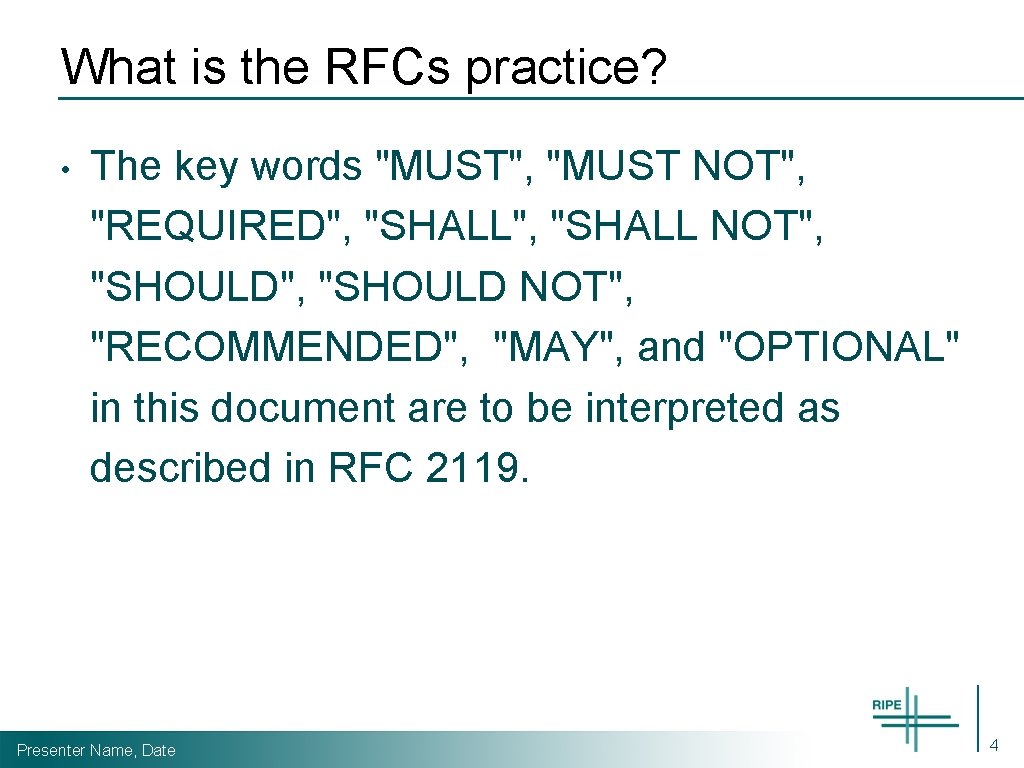
What is the RFCs practice? • The key words "MUST", "MUST NOT", "REQUIRED", "SHALL NOT", "SHOULD NOT", "RECOMMENDED", "MAY", and "OPTIONAL" in this document are to be interpreted as described in RFC 2119. Presenter Name, Date 4
There is more • Other terms/words aren’t clearly defined as well – End User – End Site – Etc. Presenter Name, Date 5
Questions: • Is this not a problem and we do nothing? • Should we interpret “should” as a “must”? • Should we adopt the RFC 2119 specification in the policy text? • Should we include other recurring terms/words? Presenter Name, Date 6
Questions?