
Interpret operator symbols correctly in varied contexts List
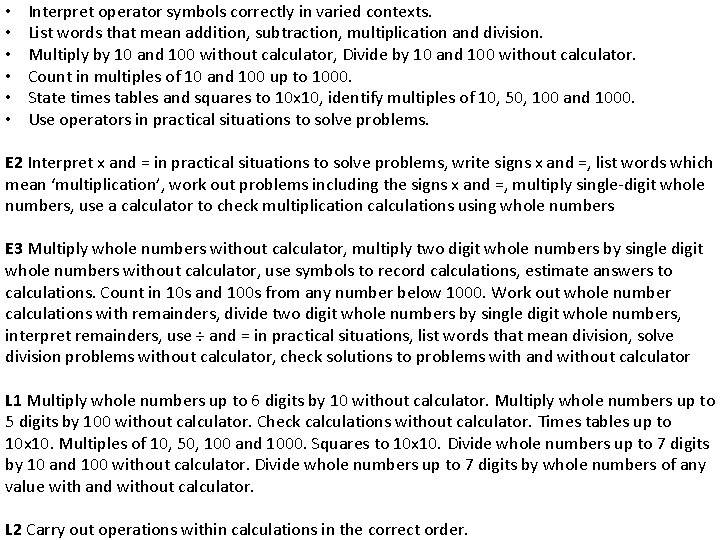
• • • Interpret operator symbols correctly in varied contexts. List words that mean addition, subtraction, multiplication and division. Multiply by 10 and 100 without calculator, Divide by 10 and 100 without calculator. Count in multiples of 10 and 100 up to 1000. State times tables and squares to 10 x 10, identify multiples of 10, 50, 100 and 1000. Use operators in practical situations to solve problems. E 2 Interpret x and = in practical situations to solve problems, write signs x and =, list words which mean ‘multiplication’, work out problems including the signs x and =, multiply single-digit whole numbers, use a calculator to check multiplication calculations using whole numbers E 3 Multiply whole numbers without calculator, multiply two digit whole numbers by single digit whole numbers without calculator, use symbols to record calculations, estimate answers to calculations. Count in 10 s and 100 s from any number below 1000. Work out whole number calculations with remainders, divide two digit whole numbers by single digit whole numbers, interpret remainders, use ÷ and = in practical situations, list words that mean division, solve division problems without calculator, check solutions to problems with and without calculator L 1 Multiply whole numbers up to 6 digits by 10 without calculator. Multiply whole numbers up to 5 digits by 100 without calculator. Check calculations without calculator. Times tables up to 10 x 10. Multiples of 10, 50, 100 and 1000. Squares to 10 x 10. Divide whole numbers up to 7 digits by 10 and 100 without calculator. Divide whole numbers up to 7 digits by whole numbers of any value with and without calculator. L 2 Carry out operations within calculations in the correct order.
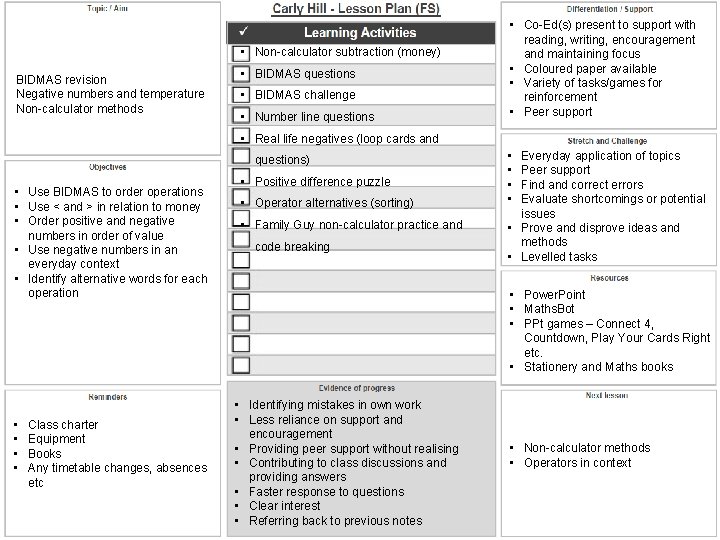
• Non-calculator subtraction (money) BIDMAS revision Negative numbers and temperature Non-calculator methods • BIDMAS questions • BIDMAS challenge • Number line questions • Co-Ed(s) present to support with reading, writing, encouragement and maintaining focus • Coloured paper available • Variety of tasks/games for reinforcement • Peer support • Real life negatives (loop cards and questions) • Use BIDMAS to order operations • Use < and > in relation to money • Order positive and negative numbers in order of value • Use negative numbers in an everyday context • Identify alternative words for each operation • • Class charter Equipment Books Any timetable changes, absences etc • Positive difference puzzle • Operator alternatives (sorting) • Family Guy non-calculator practice and code breaking • • Everyday application of topics Peer support Find and correct errors Evaluate shortcomings or potential issues • Prove and disprove ideas and methods • Levelled tasks • Power. Point • Maths. Bot • PPt games – Connect 4, Countdown, Play Your Cards Right etc. • Stationery and Maths books • Identifying mistakes in own work • Less reliance on support and encouragement • Providing peer support without realising • Contributing to class discussions and providing answers • Faster response to questions • Clear interest • Referring back to previous notes • Non-calculator methods • Operators in context
This week: • BIDMAS recap • Negative numbers • Non-calculator methods Carly Hill Maths
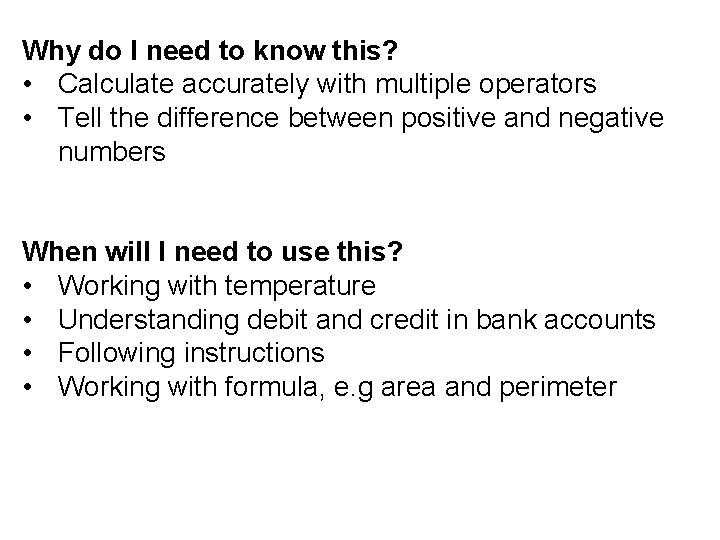
Why do I need to know this? • Calculate accurately with multiple operators • Tell the difference between positive and negative numbers When will I need to use this? • Working with temperature • Understanding debit and credit in bank accounts • Following instructions • Working with formula, e. g area and perimeter
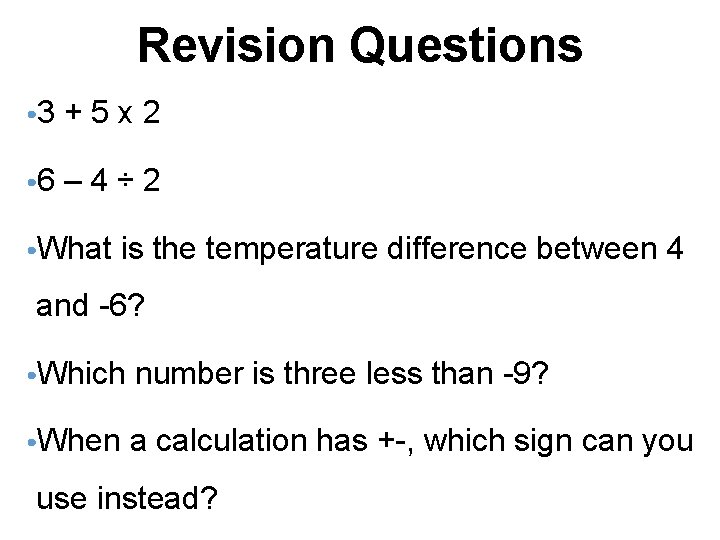
Revision Questions • 3 +5 x 2 • 6 – 4÷ 2 • What is the temperature difference between 4 and -6? • Which number is three less than -9? • When a calculation has +-, which sign can you use instead?

+ - x ÷ 1. Add 2. Subtract 3. Multiply 4. Divide 5. Multiple of 6. Share equally 7. Minus 8. Take away 9. Decrease 10. Lots of 11. Multiple 12. Share 13. Increase 14. Together 15. Total 16. Plus 17. In groups of 18. Times 19. Product of 20. Sum 21. Reduced by 22. Multiplication 23. Division 24. Subtraction 25. Addition 26. Divisible by 27. Fewer 28. Times table 29. Take from 30. More than 31. Less than 32. Divided by 33. Combined 34. In all 35. Difference between 36. Reduce 37. Double 40. Quarter 38. Triple 39. Half

+ • • • Add Increase Total Plus Sum Addition More than Combined In all Together • • • Subtract Minus Take away Decrease Reduced by Subtraction Fewer Take from Less than Difference between • Reduce x • • • Multiply Multiple of Lots of Times Product of Multiplication Times table Double (x 2) Triple (x 3) ÷ • Divide • Share equally • Share • In groups of • Division • Divisible by • Divided by • Half (÷ 2) • Quarter (÷ 4)
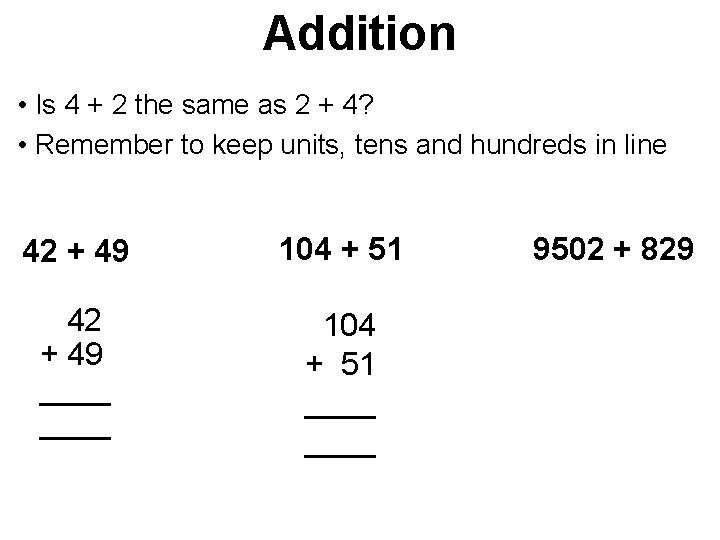
Addition • Is 4 + 2 the same as 2 + 4? • Remember to keep units, tens and hundreds in line 42 + 49 104 + 51 42 + 49 ____ 104 + 51 ____ 9502 + 829
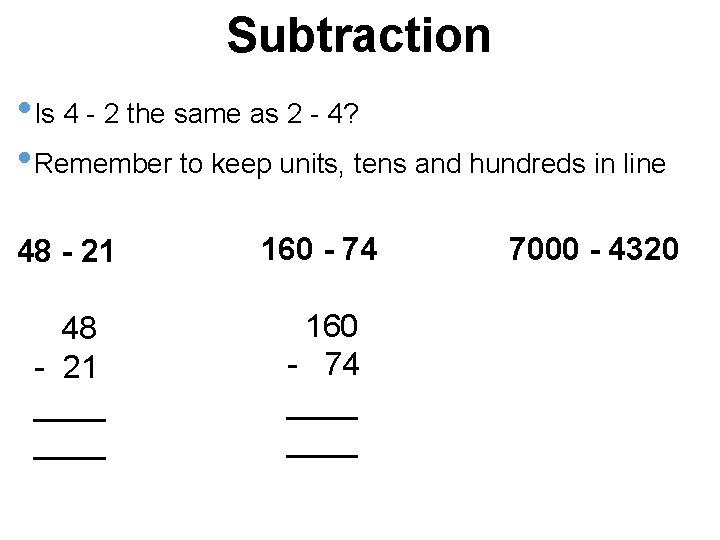
Subtraction • Is 4 - 2 the same as 2 - 4? • Remember to keep units, tens and hundreds in line 48 - 21 160 - 74 48 - 21 ____ 160 - 74 ____ 7000 - 4320
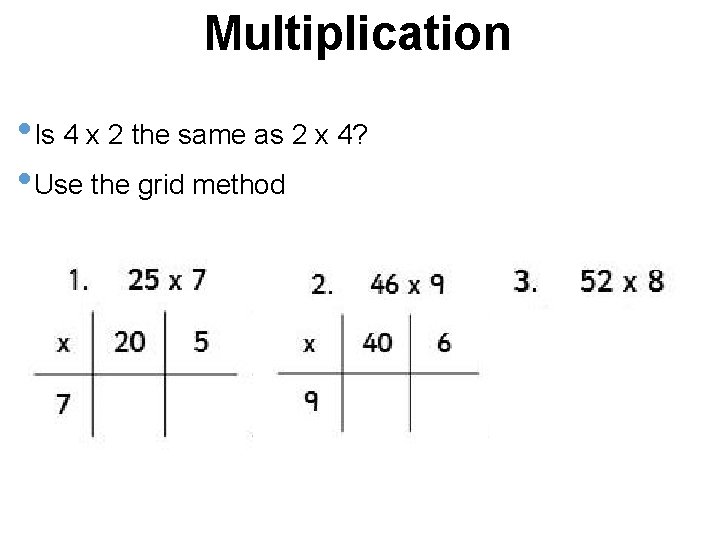
Multiplication • Is 4 x 2 the same as 2 x 4? • Use the grid method
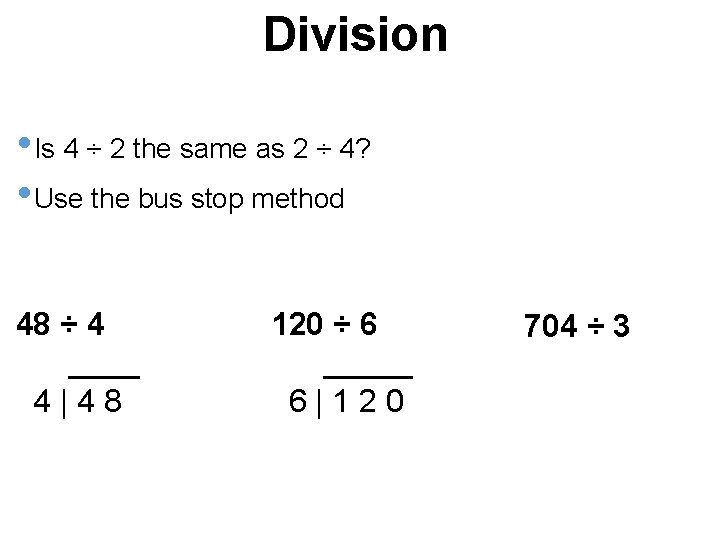
Division • Is 4 ÷ 2 the same as 2 ÷ 4? • Use the bus stop method 48 ÷ 4 ____ 4|48 120 ÷ 6 _____ 6|120 704 ÷ 3

Brian Mayor Wests’ Cat Launcher has been stolen… Chris ire Meg Stewie Lois Peter Quag m …Who is the thief of Quahog? Joe
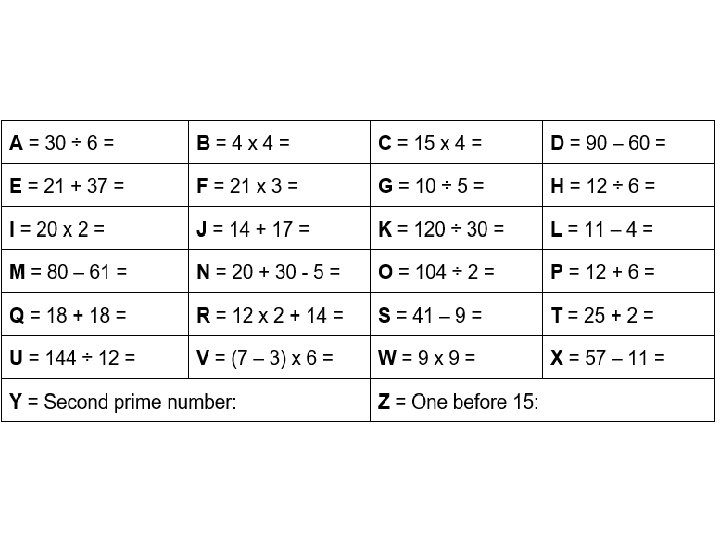
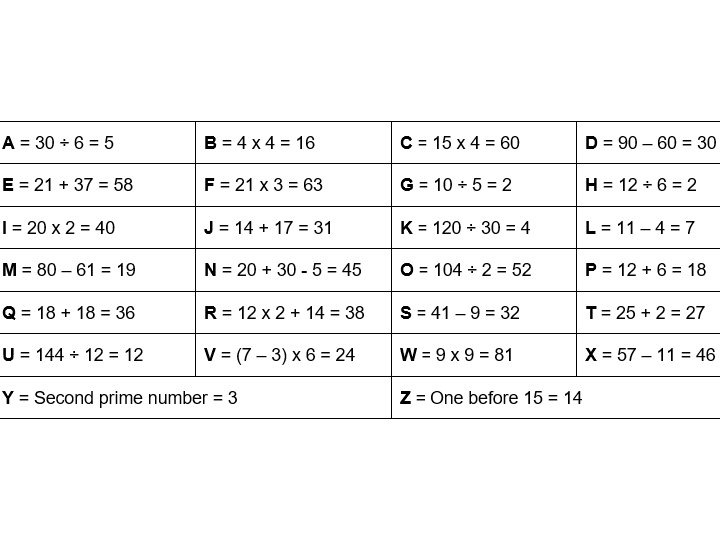
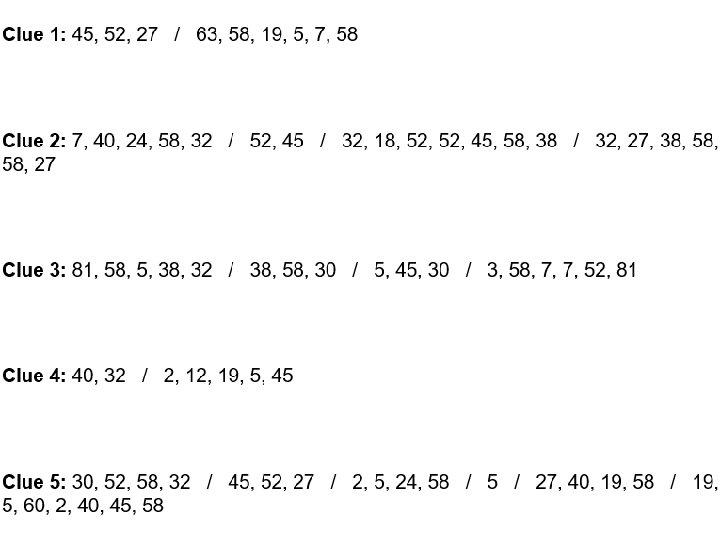
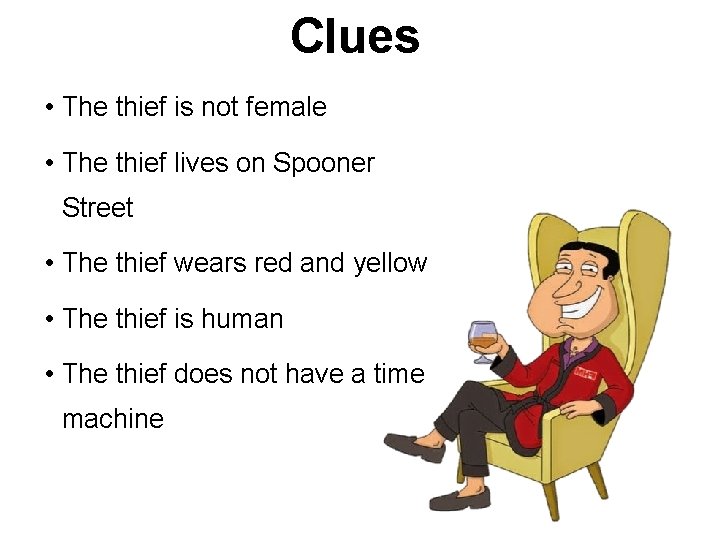
Clues • The thief is not female • The thief lives on Spooner Street • The thief wears red and yellow • The thief is human • The thief does not have a time machine
- Slides: 16