
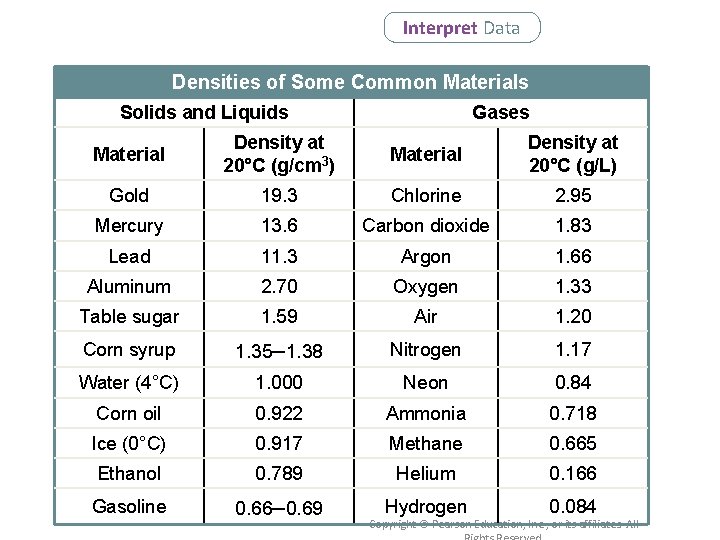
Interpret Data Densities of Some Common Materials Solids
- Slides: 36
Interpret Data Densities of Some Common Materials Solids and Liquids Gases Material Density at 20°C (g/cm 3) Material Density at 20°C (g/L) Gold 19. 3 Chlorine 2. 95 Mercury 13. 6 Carbon dioxide 1. 83 Lead 11. 3 Argon 1. 66 Aluminum 2. 70 Oxygen 1. 33 Table sugar 1. 59 Air 1. 20 Corn syrup 1. 35– 1. 38 Nitrogen 1. 17 Water (4°C) 1. 000 Neon 0. 84 Corn oil 0. 922 Ammonia 0. 718 Ice (0°C) 0. 917 Methane 0. 665 Ethanol 0. 789 Helium 0. 166 Gasoline 0. 66– 0. 69 Hydrogen 0. 084 Copyright © Pearson Education, Inc. , or its affiliates. All
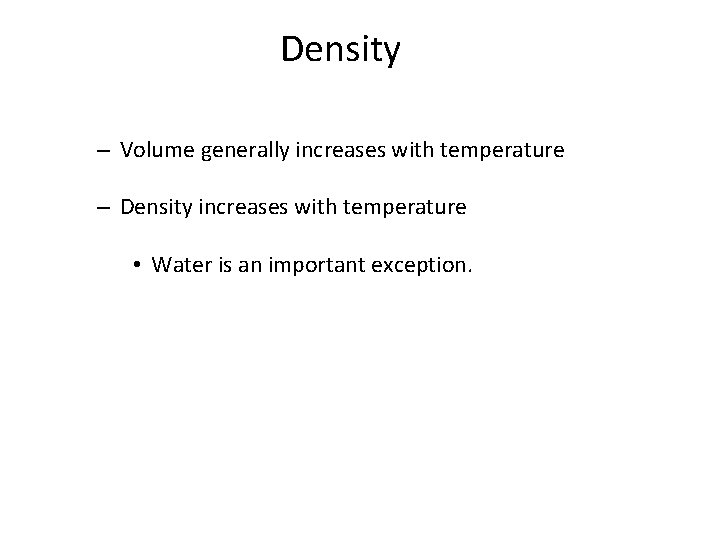
Density – Volume generally increases with temperature – Density increases with temperature • Water is an important exception.
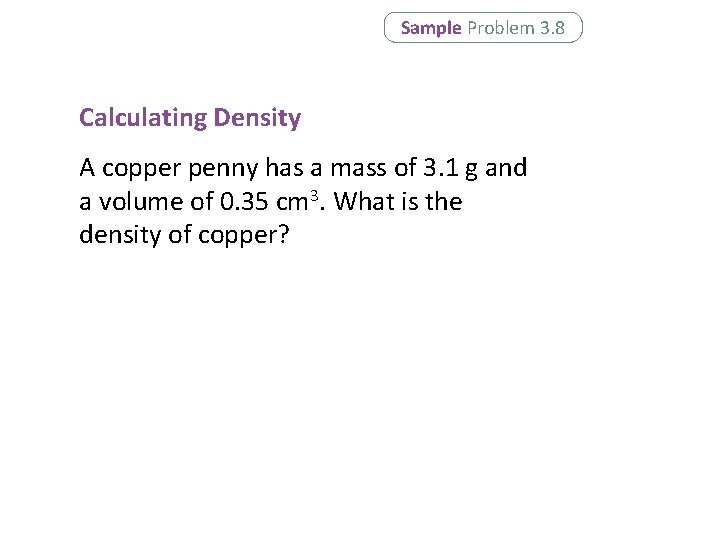
Sample Problem 3. 8 Calculating Density A copper penny has a mass of 3. 1 g and a volume of 0. 35 cm 3. What is the density of copper?
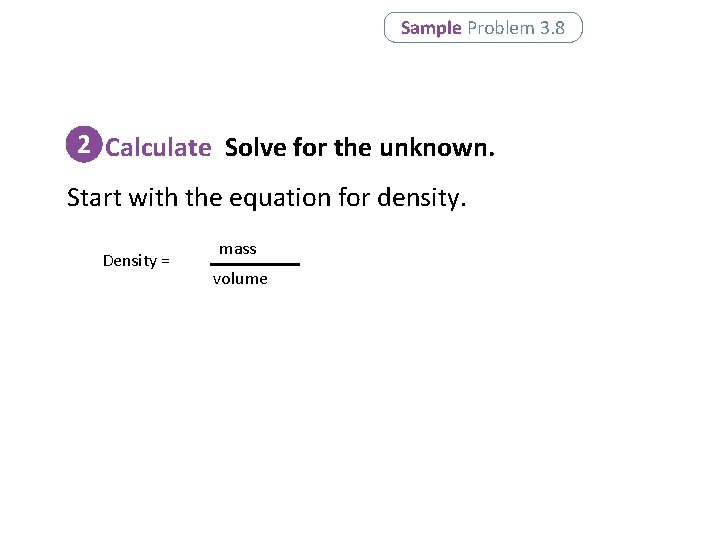
Sample Problem 3. 8 2 Calculate Solve for the unknown. Start with the equation for density. Density = mass volume
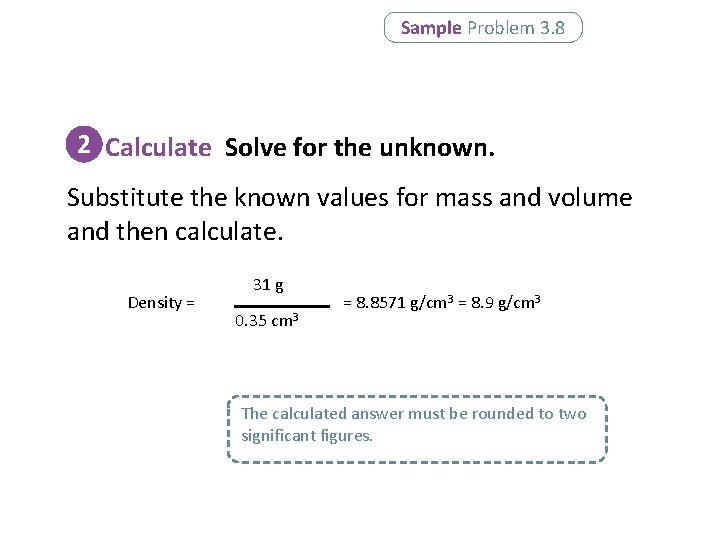
Sample Problem 3. 8 2 Calculate Solve for the unknown. Substitute the known values for mass and volume and then calculate. Density = 31 g 0. 35 cm 3 = 8. 8571 g/cm 3 = 8. 9 g/cm 3 The calculated answer must be rounded to two significant figures.
Can you assume that something with a low weight will float in water?
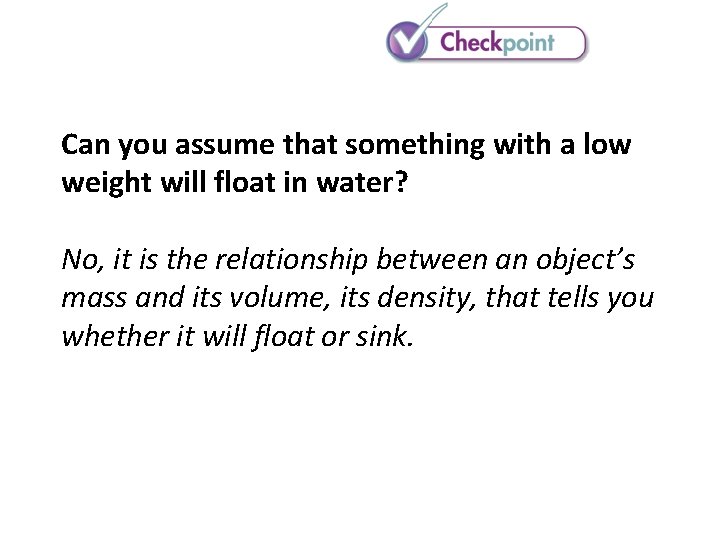
Can you assume that something with a low weight will float in water? No, it is the relationship between an object’s mass and its volume, its density, that tells you whether it will float or sink.
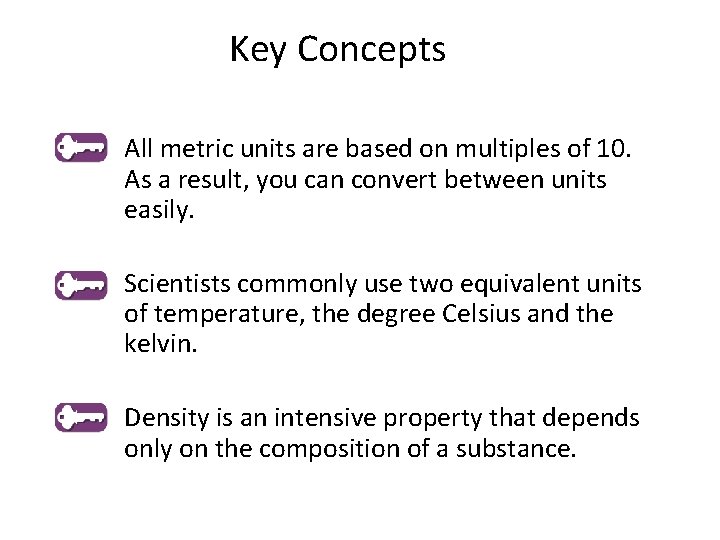
Key Concepts All metric units are based on multiples of 10. As a result, you can convert between units easily. Scientists commonly use two equivalent units of temperature, the degree Celsius and the kelvin. Density is an intensive property that depends only on the composition of a substance.
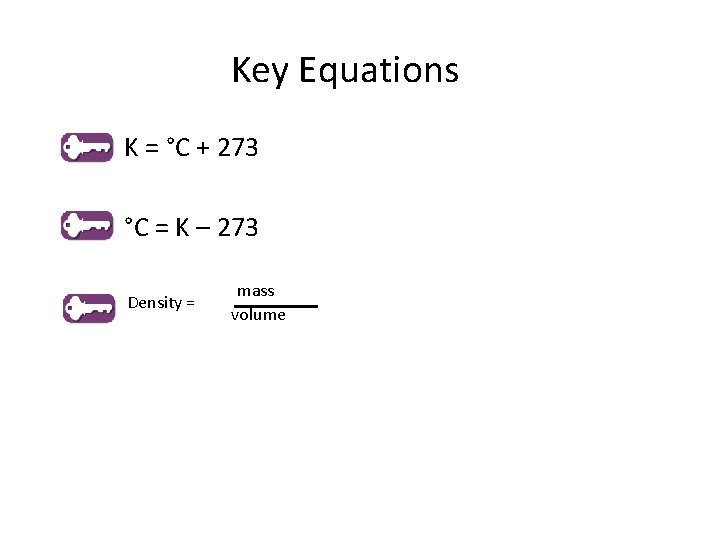
Key Equations K = °C + 273 °C = K – 273 Density = mass volume
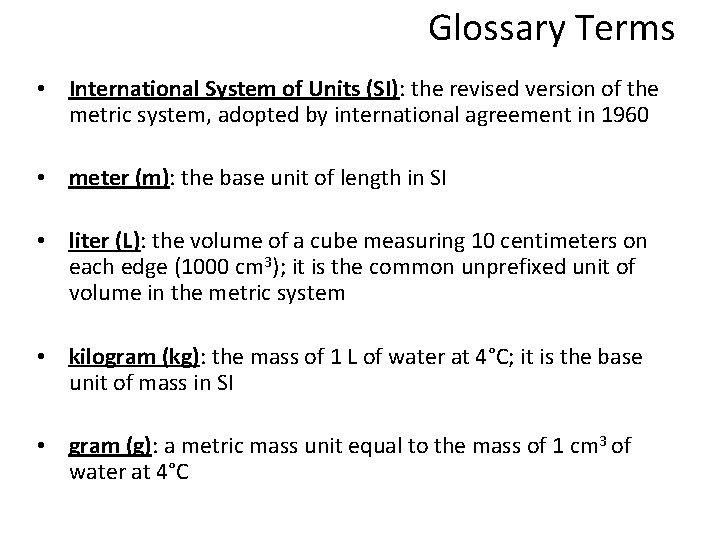
Glossary Terms • International System of Units (SI): the revised version of the metric system, adopted by international agreement in 1960 • meter (m): the base unit of length in SI • liter (L): the volume of a cube measuring 10 centimeters on each edge (1000 cm 3); it is the common unprefixed unit of volume in the metric system • kilogram (kg): the mass of 1 L of water at 4°C; it is the base unit of mass in SI • gram (g): a metric mass unit equal to the mass of 1 cm 3 of water at 4°C
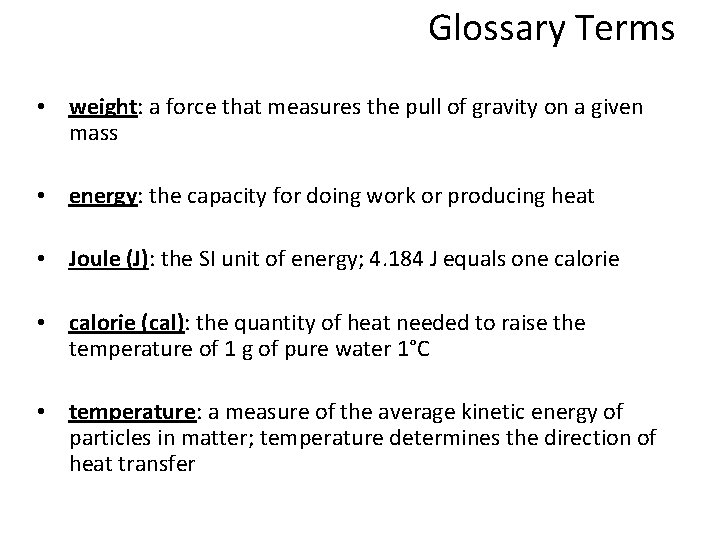
Glossary Terms • weight: a force that measures the pull of gravity on a given mass • energy: the capacity for doing work or producing heat • Joule (J): the SI unit of energy; 4. 184 J equals one calorie • calorie (cal): the quantity of heat needed to raise the temperature of 1 g of pure water 1°C • temperature: a measure of the average kinetic energy of particles in matter; temperature determines the direction of heat transfer
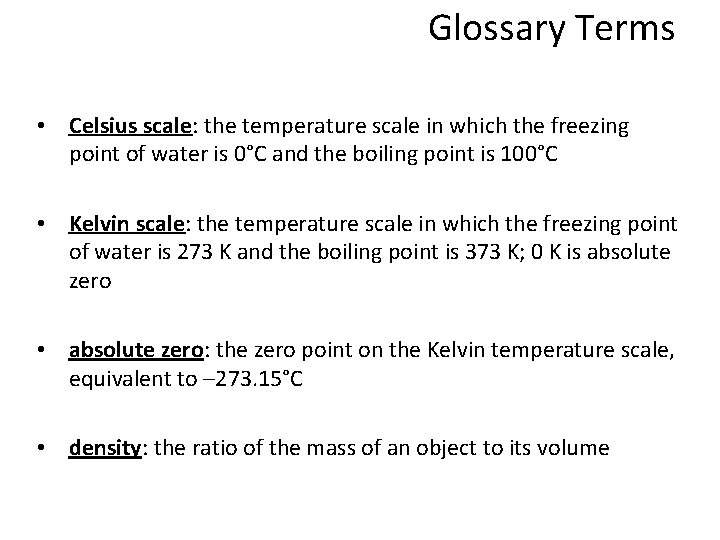
Glossary Terms • Celsius scale: the temperature scale in which the freezing point of water is 0°C and the boiling point is 100°C • Kelvin scale: the temperature scale in which the freezing point of water is 273 K and the boiling point is 373 K; 0 K is absolute zero • absolute zero: the zero point on the Kelvin temperature scale, equivalent to – 273. 15°C • density: the ratio of the mass of an object to its volume
Conversion Problems
Conversion Factors – If you think about any number of everyday situations, you will realize that a quantity can usually be expressed in several different ways. – For example: • 1 dollar = 4 quarters = 10 dimes = 20 nickels = 100 pennies – These are all expressions, or measurements, of the same amount of money.
– The same is true of scientific quantities. – For example: • 1 meter = 10 decimeters = 100 centimeters = 1000 millimeters
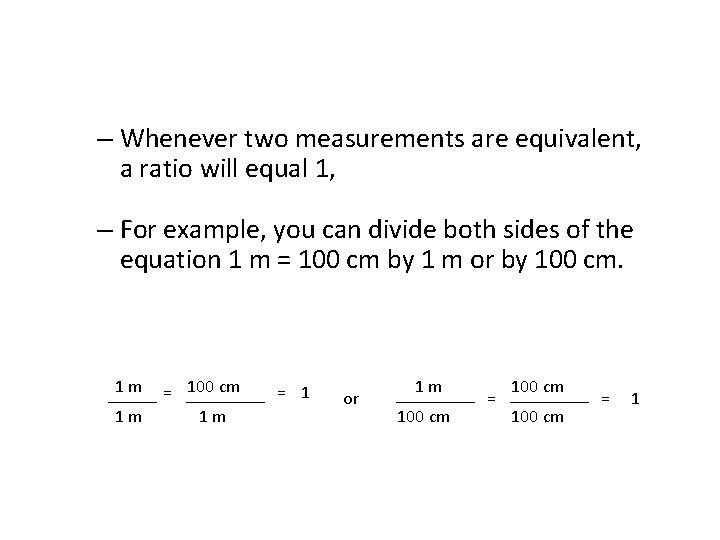
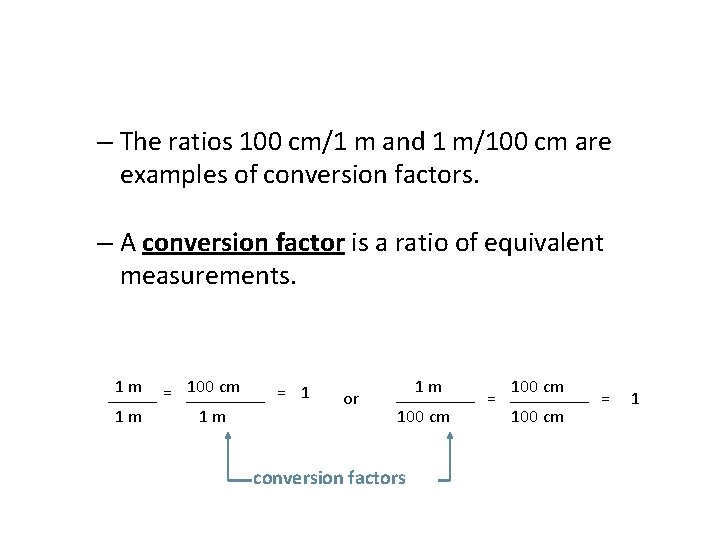
– Whenever two measurements are equivalent, a ratio will equal 1, – For example, you can divide both sides of the equation 1 m = 100 cm by 1 m or by 100 cm. 1 m 1 m = 100 cm 1 m = 1 or 1 m 100 cm = 1
– The ratios 100 cm/1 m and 1 m/100 cm are examples of conversion factors. – A conversion factor is a ratio of equivalent measurements. 1 m 1 m = 100 cm 1 m = 1 or 1 m 100 cm conversion factors = 100 cm = 1
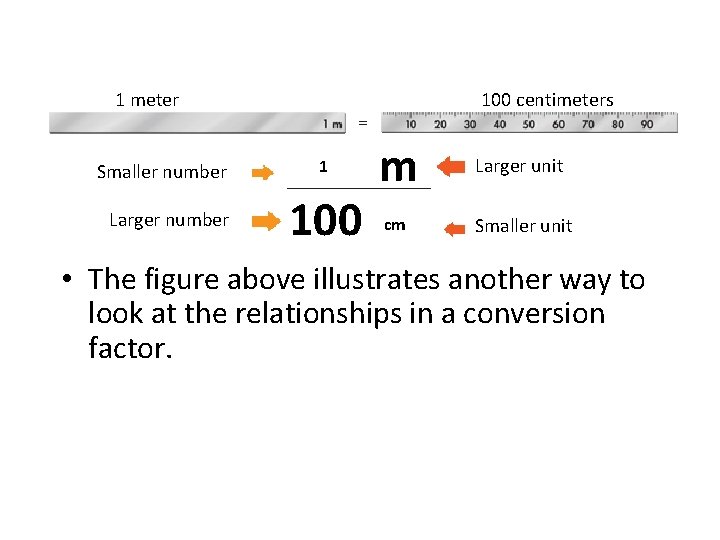
1 meter Smaller number Larger number 100 centimeters 1 100 m Larger unit cm Smaller unit • The figure above illustrates another way to look at the relationships in a conversion factor.
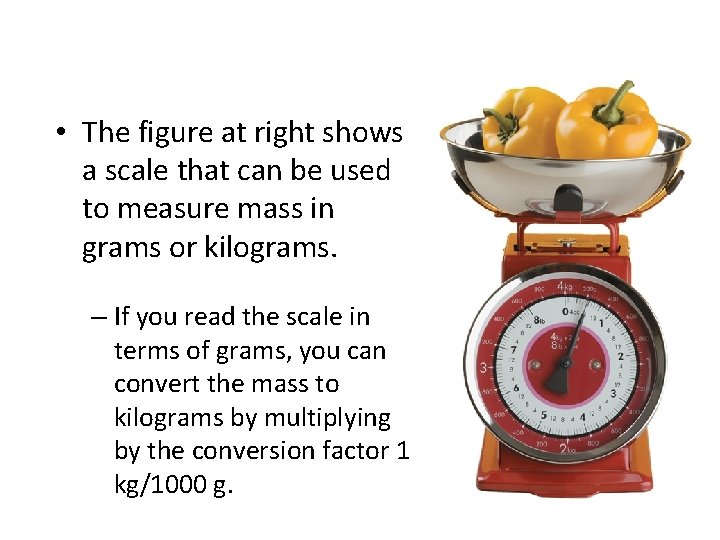
• The figure at right shows a scale that can be used to measure mass in grams or kilograms. – If you read the scale in terms of grams, you can convert the mass to kilograms by multiplying by the conversion factor 1 kg/1000 g.
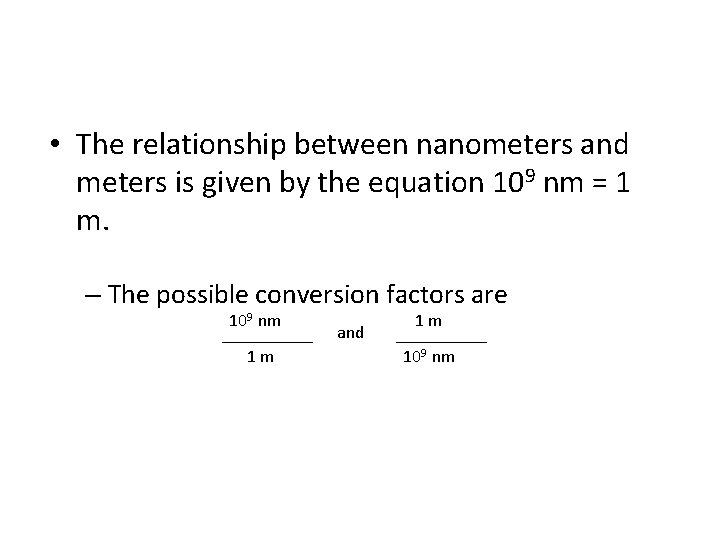
• The relationship between nanometers and meters is given by the equation 109 nm = 1 m. – The possible conversion factors are 109 nm 1 m and 1 m 109 nm
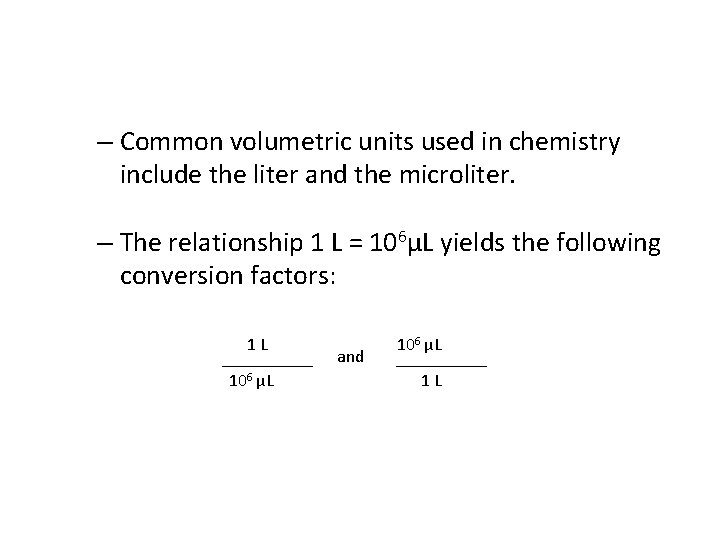
– Common volumetric units used in chemistry include the liter and the microliter. – The relationship 1 L = 106μL yields the following conversion factors: 1 L 106 μL and 106 μL 1 L
Dimensional Analysis – Many problems in chemistry are conveniently solved using dimensional analysis, rather than algebra. – Dimensional analysis is a way to analyze and solve problems using the units, or dimensions, of the measurements.
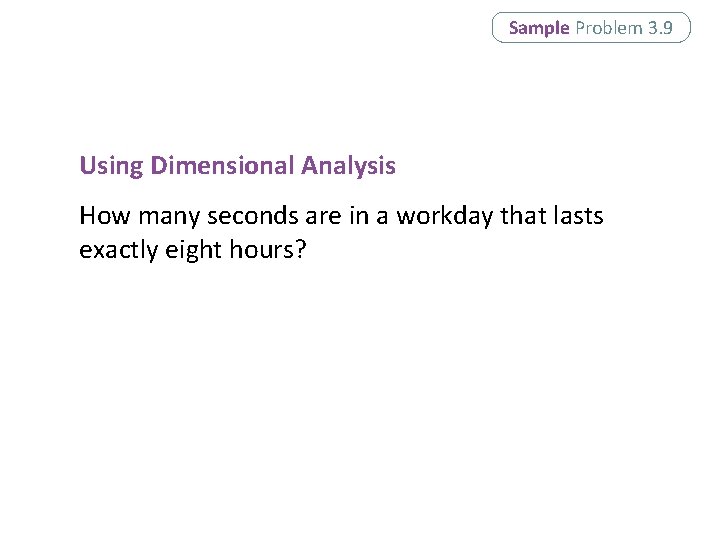
Sample Problem 3. 9 Using Dimensional Analysis How many seconds are in a workday that lasts exactly eight hours?
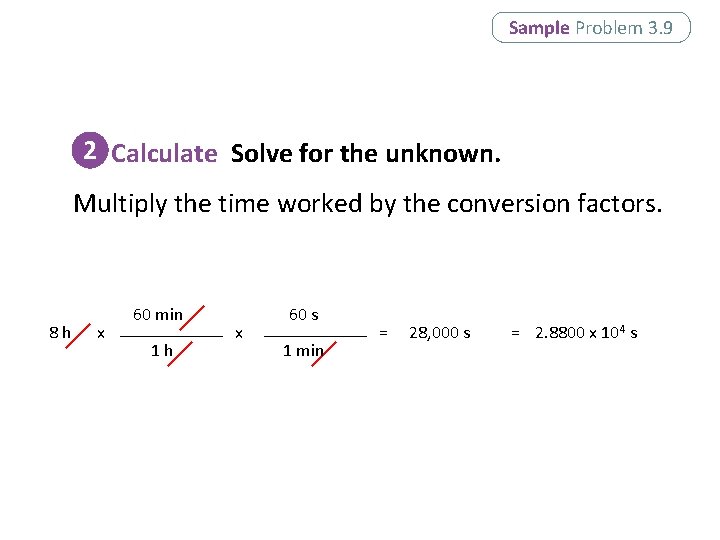
Sample Problem 3. 9 2 Calculate Solve for the unknown. Multiply the time worked by the conversion factors. 8 h x 60 min 1 h x 60 s 1 min = 28, 000 s = 2. 8800 x 104 s
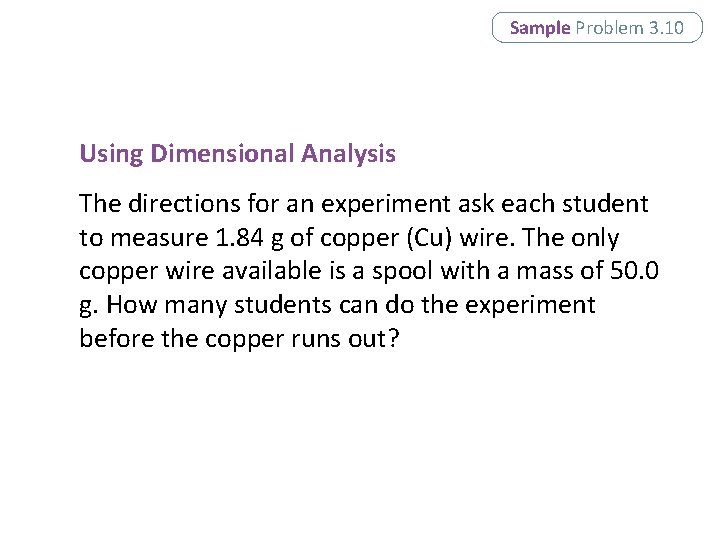
Sample Problem 3. 10 Using Dimensional Analysis The directions for an experiment ask each student to measure 1. 84 g of copper (Cu) wire. The only copper wire available is a spool with a mass of 50. 0 g. How many students can do the experiment before the copper runs out?
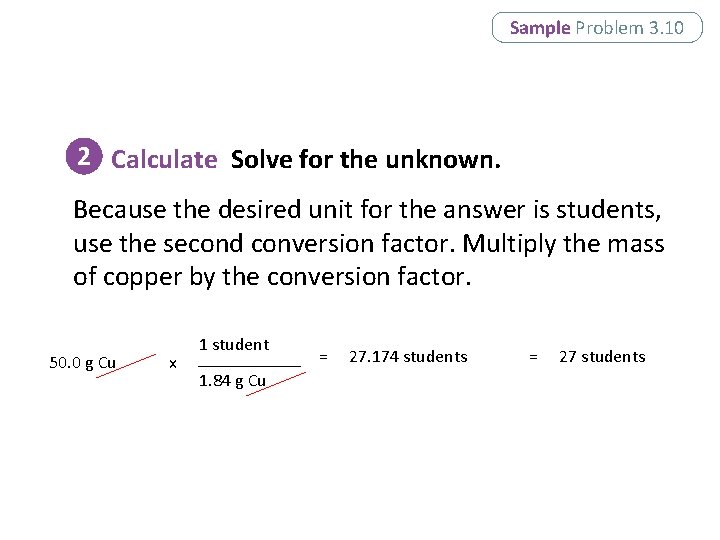
Sample Problem 3. 10 2 Calculate Solve for the unknown. Because the desired unit for the answer is students, use the second conversion factor. Multiply the mass of copper by the conversion factor. 50. 0 g Cu x 1 student 1. 84 g Cu = 27. 174 students = 27 students
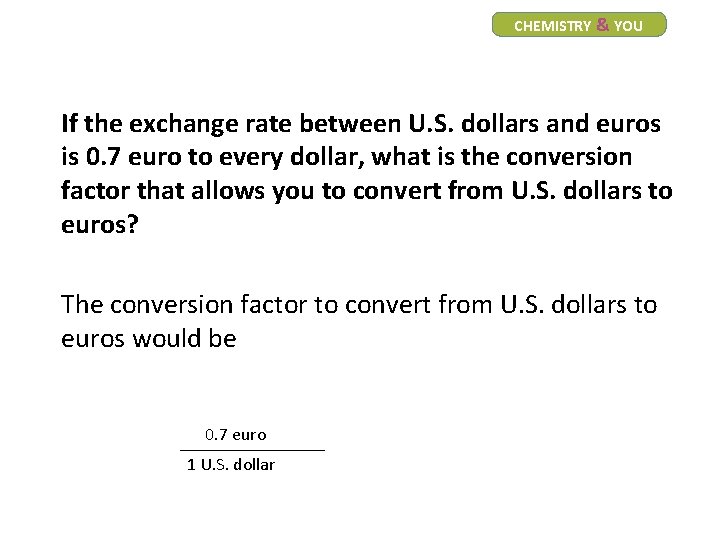
CHEMISTRY & YOU If the exchange rate between U. S. dollars and euros is 0. 7 euro to every dollar, what is the conversion factor that allows you to convert from U. S. dollars to euros? The conversion factor to convert from U. S. dollars to euros would be 0. 7 euro 1 U. S. dollar
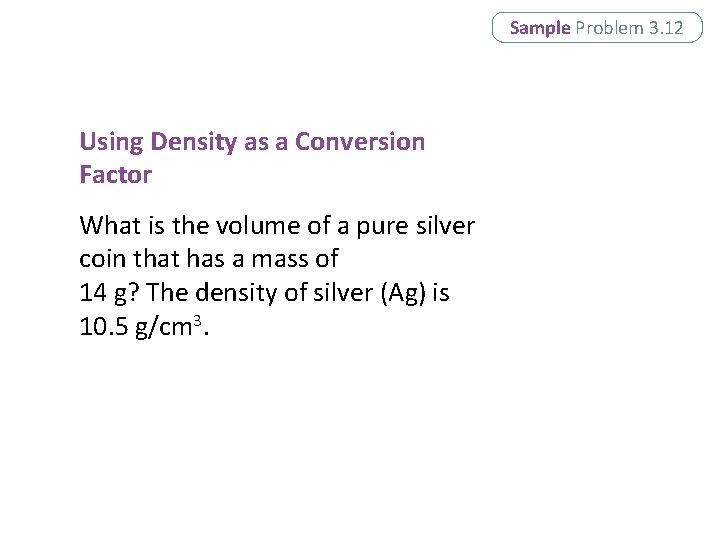
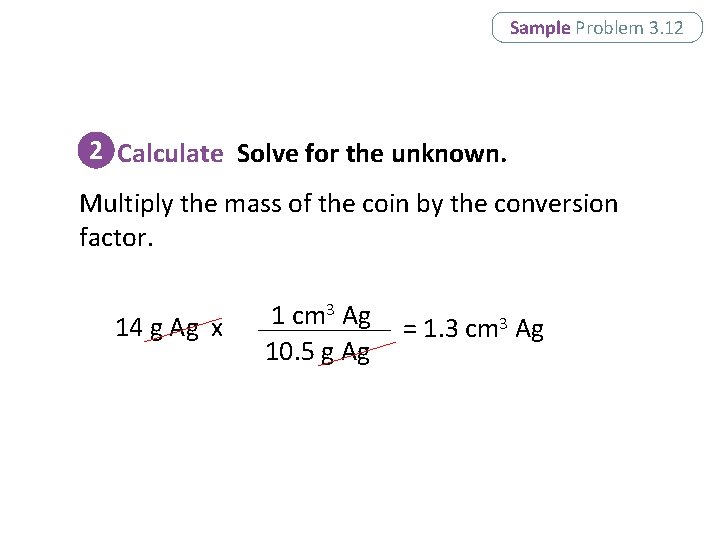
Sample Problem 3. 12 Using Density as a Conversion Factor What is the volume of a pure silver coin that has a mass of 14 g? The density of silver (Ag) is 10. 5 g/cm 3.
Sample Problem 3. 12 2 Calculate Solve for the unknown. Multiply the mass of the coin by the conversion factor. 14 g Ag x 1 cm 3 Ag 10. 5 g Ag = 1. 3 cm 3 Ag
Dimensional Analysis Multistep Problems – Many complex tasks in your life are best handled by breaking them down into smaller, manageable parts. – Similarly, many complex word problems are more easily solved by breaking the solution down into steps.
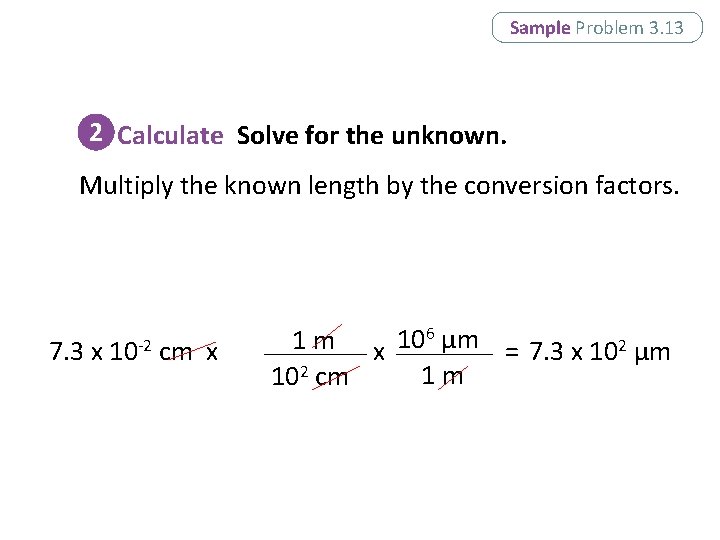
Sample Problem 3. 13 Converting Between Metric Units The diameter of a sewing needle is 0. 073 cm. What is the diameter in micrometers?
Sample Problem 3. 13 2 Calculate Solve for the unknown. Multiply the known length by the conversion factors. 7. 3 x 10 -2 cm x 106 μm = 7. 3 x 102 μm 1 m 102 cm
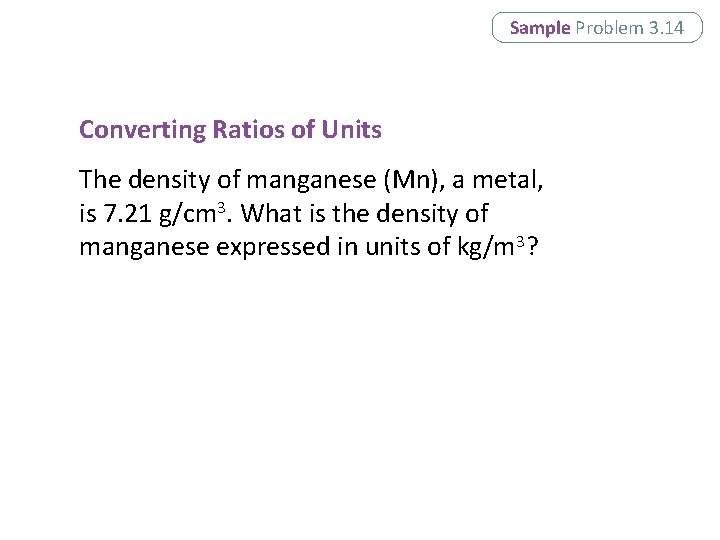
Sample Problem 3. 14 Converting Ratios of Units The density of manganese (Mn), a metal, is 7. 21 g/cm 3. What is the density of manganese expressed in units of kg/m 3?
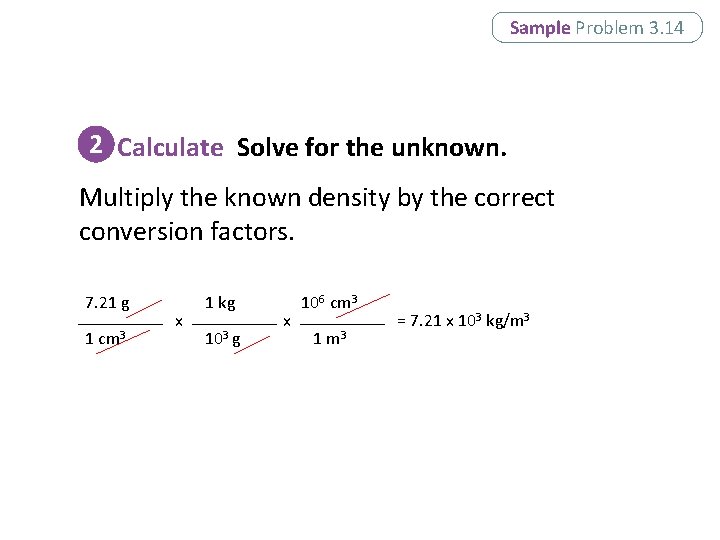
Sample Problem 3. 14 2 Calculate Solve for the unknown. Multiply the known density by the correct conversion factors. 7. 21 g 1 cm 3 x 1 kg 103 g x 106 cm 3 1 m 3 = 7. 21 x 103 kg/m 3
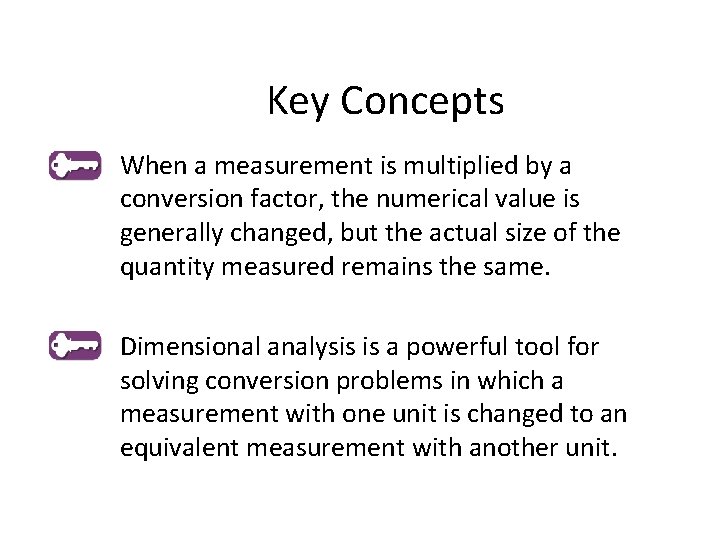
Key Concepts When a measurement is multiplied by a conversion factor, the numerical value is generally changed, but the actual size of the quantity measured remains the same. Dimensional analysis is a powerful tool for solving conversion problems in which a measurement with one unit is changed to an equivalent measurement with another unit.
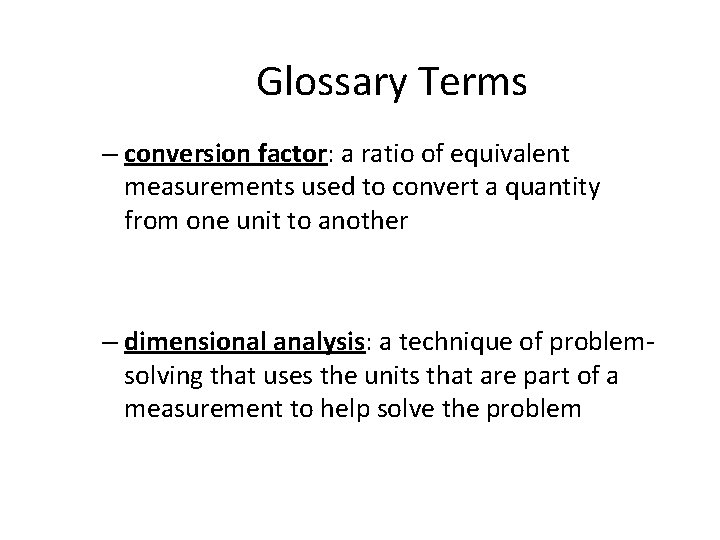
Glossary Terms – conversion factor: a ratio of equivalent measurements used to convert a quantity from one unit to another – dimensional analysis: a technique of problemsolving that uses the units that are part of a measurement to help solve the problem