
Interpersonal Communication CHAPTER 6 Communication Embracing Difference Dunn
Interpersonal Communication CHAPTER 6 Communication: Embracing Difference Dunn & Goodnight

Today’s Objectives • Chapter 6
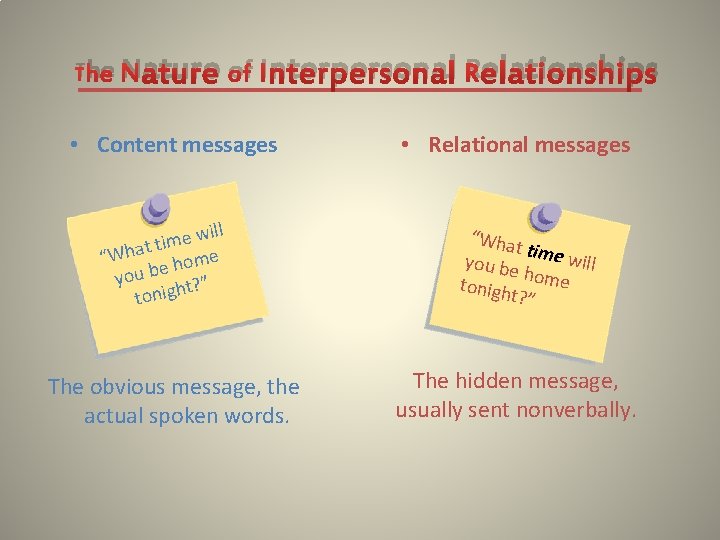
T he N ature of Interpersonal Relationships • Content messages will e m i t t “Wha home e you b t? ” tonigh The obvious message, the actual spoken words. • Relational messages “What t you be ime will h tonigh ome t? ” The hidden message, usually sent nonverbally.
Interpersonal Relationships Intimacy A sense of closeness & trust shared with others. • Physical: Shared closeness such as a mother and child. • Emotional: Through self-discloser we create intimacy. • Intellectual: discuss abstract concepts or challenging ideas • Spiritual: Sharing a strong faith in God or higher powers.
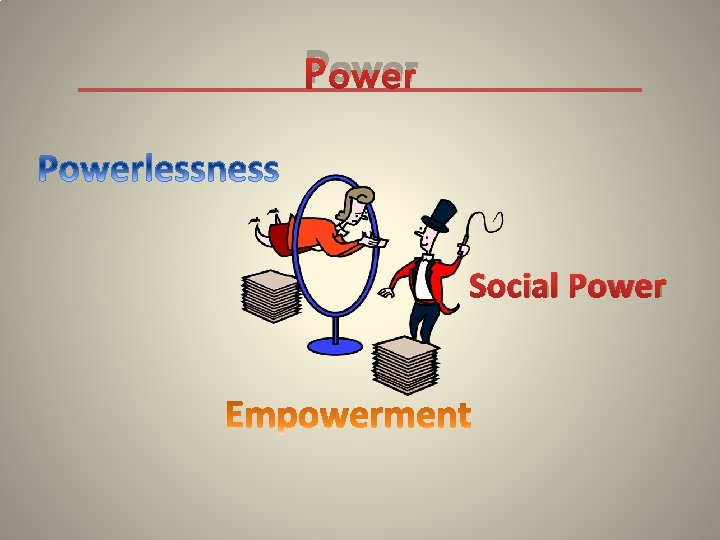
Power Social Power
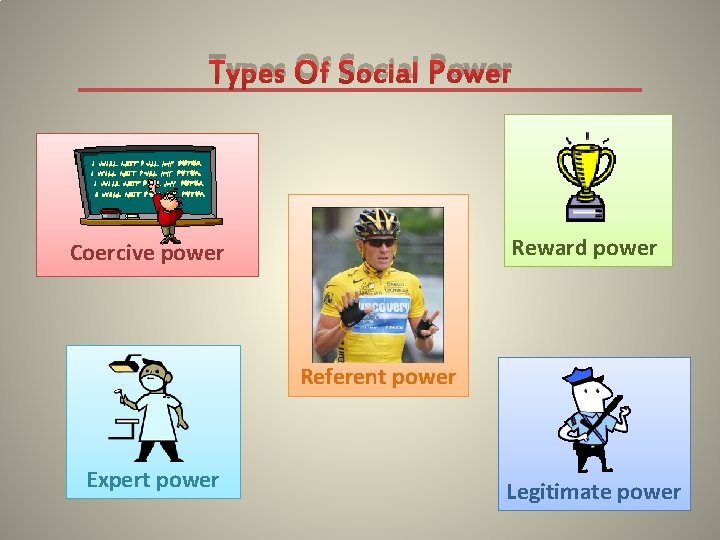
Types Of Social Power Reward power Coercive power Referent power Expert power Legitimate power
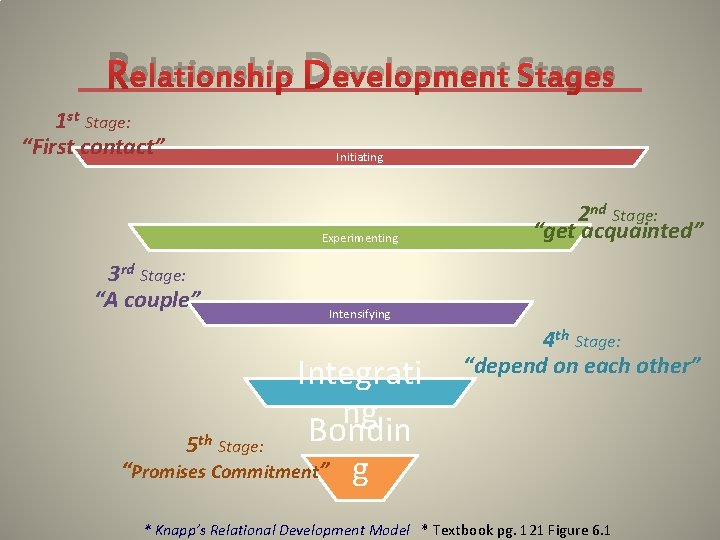
Relationship Development Stages 1 st Stage: “First contact” Initiating Experimenting 3 rd Stage: “A couple” 2 nd Stage: “get acquainted” Intensifying Integrati ng Bondin 5 th Stage: “Promises Commitment” g 4 th Stage: “depend on each other” * Knapp’s Relational Development Model * Textbook pg. 121 Figure 6. 1
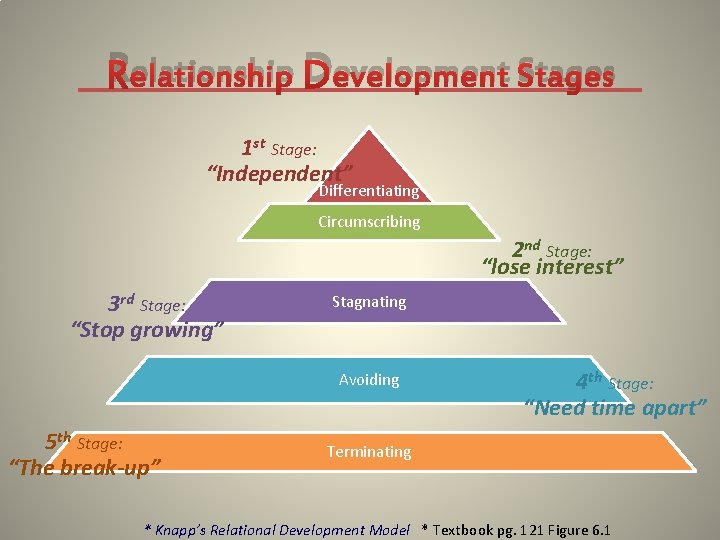
Relationship Development Stages 1 st Stage: “Independent” Differentiating Circumscribing 2 nd Stage: “lose interest” 3 rd Stage: “Stop growing” Stagnating Avoiding 5 th Stage: “The break-up” 4 th Stage: “Need time apart” Terminating * Knapp’s Relational Development Model * Textbook pg. 121 Figure 6. 1
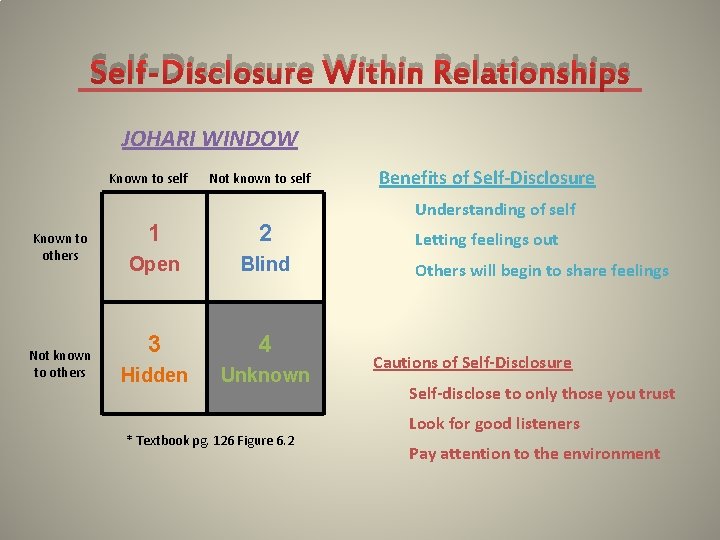
Self-Disclosure Within Relationships JOHARI WINDOW Known to self Known to others Not known to self 1 2 Open Blind 3 4 Hidden Unknown * Textbook pg. 126 Figure 6. 2 Benefits of Self-Disclosure Understanding of self Letting feelings out Others will begin to share feelings Cautions of Self-Disclosure Self-disclose to only those you trust Look for good listeners Pay attention to the environment
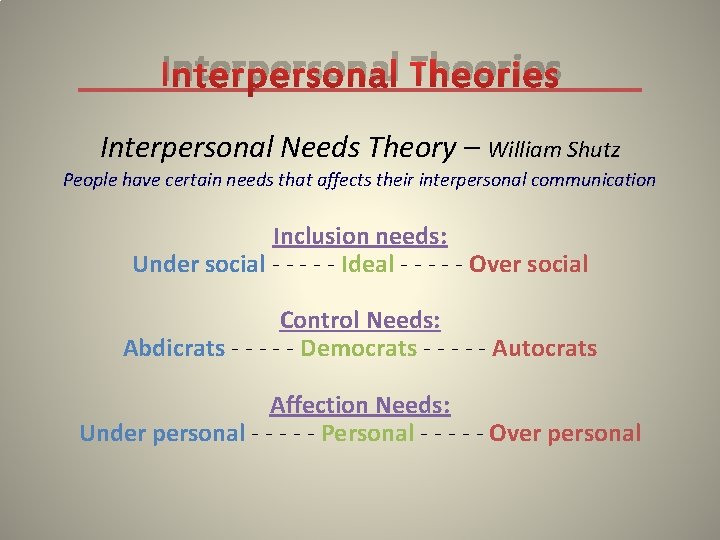
Interpersonal Theories Interpersonal Needs Theory – William Shutz People have certain needs that affects their interpersonal communication Inclusion needs: Under social - - - Ideal - - - Over social Control Needs: Abdicrats - - - Democrats - - - Autocrats Affection Needs: Under personal - - - Personal - - - Over personal
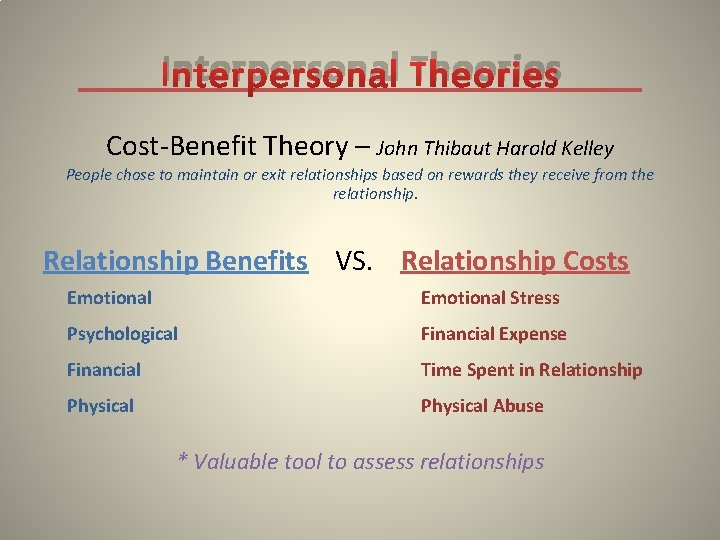
Interpersonal Theories Cost-Benefit Theory – John Thibaut Harold Kelley People chose to maintain or exit relationships based on rewards they receive from the relationship. Relationship Benefits VS. Relationship Costs Emotional Stress Psychological Financial Expense Financial Time Spent in Relationship Physical Abuse * Valuable tool to assess relationships
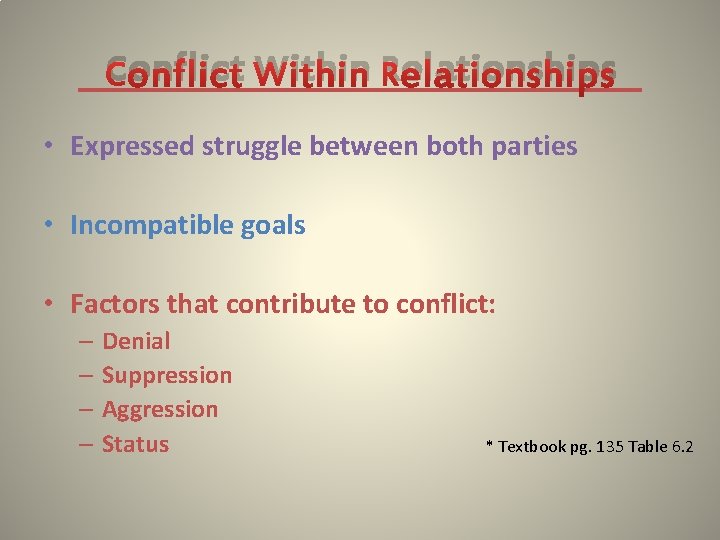
Conflict Within Relationships • Expressed struggle between both parties • Incompatible goals • Factors that contribute to conflict: – Denial – Suppression – Aggression – Status * Textbook pg. 135 Table 6. 2
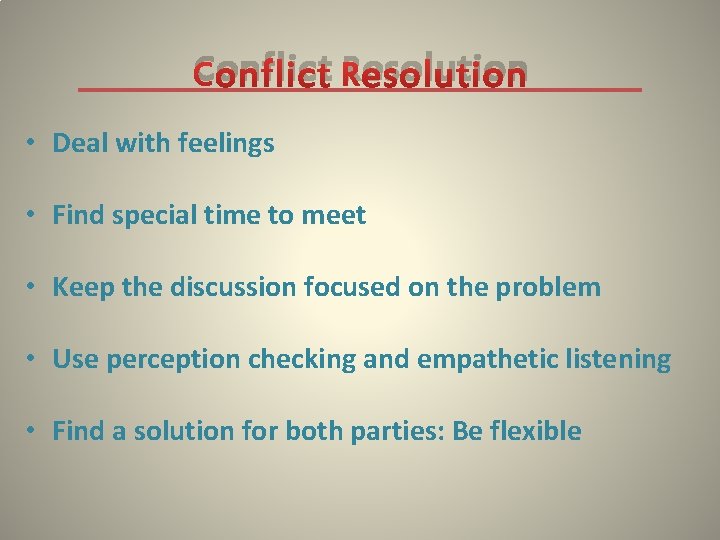
Conflict Resolution • Deal with feelings • Find special time to meet • Keep the discussion focused on the problem • Use perception checking and empathetic listening • Find a solution for both parties: Be flexible
For Next Class
- Slides: 14