
Interpersonal Attraction liking for a person will result

- Slides: 38
Interpersonal Attraction • “liking for a person will result under those conditions in which an individual experiences reward in the presence of that person, regardless of the relationship between the other person and the rewarding event or state of affairs. ” (Lott and Lott, . 1974, p. 172)
Lott and Lott’s close relationships axiom: We’re attracted to those who reward us, as well as to those associated with reward.
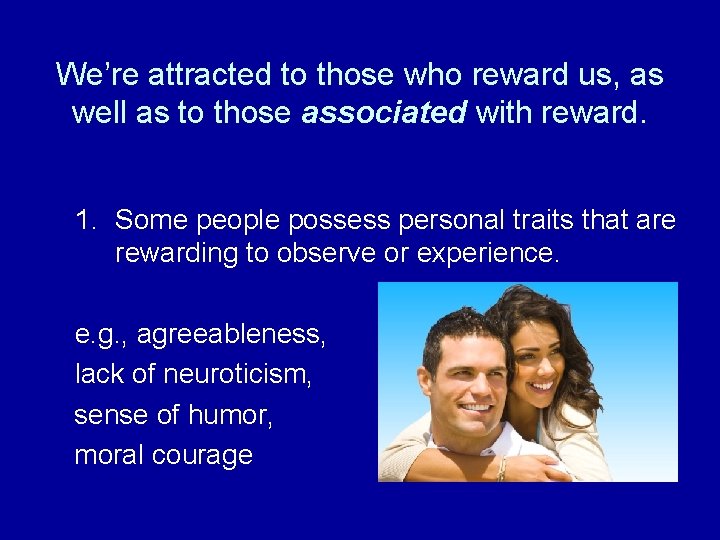
We’re attracted to those who reward us, as well as to those associated with reward. 1. Some people possess personal traits that are rewarding to observe or experience. e. g. , agreeableness, lack of neuroticism, sense of humor, moral courage
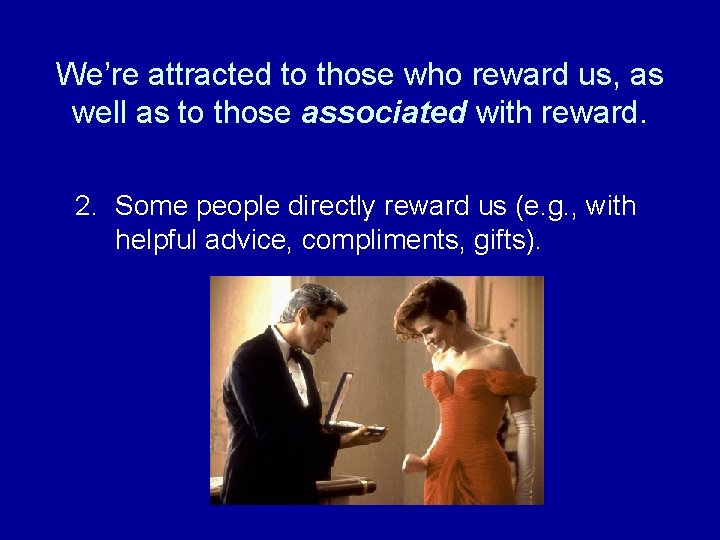
We’re attracted to those who reward us, as well as to those associated with reward. 2. Some people directly reward us (e. g. , with helpful advice, compliments, gifts).
This explains why Liberty loves Brooklyn (my daughter) more than Liberty loves me. Brooklyn’s job is to _____ Liberty. My job is to _____ Liberty.
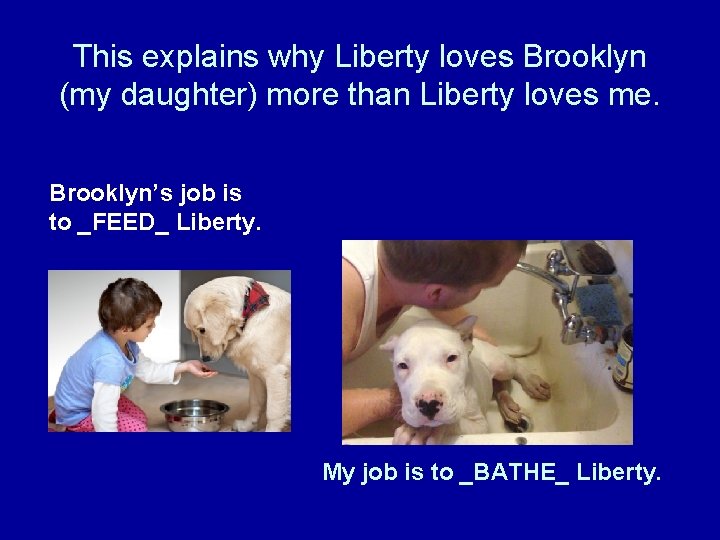
This explains why Liberty loves Brooklyn (my daughter) more than Liberty loves me. Brooklyn’s job is to _FEED_ Liberty. My job is to _BATHE_ Liberty.
We’re attracted to those who reward us, as well as to those associated with reward. 3. Some people are instrumental in getting others to reward us (e. g. , coaches, advocates, referees for job applications)
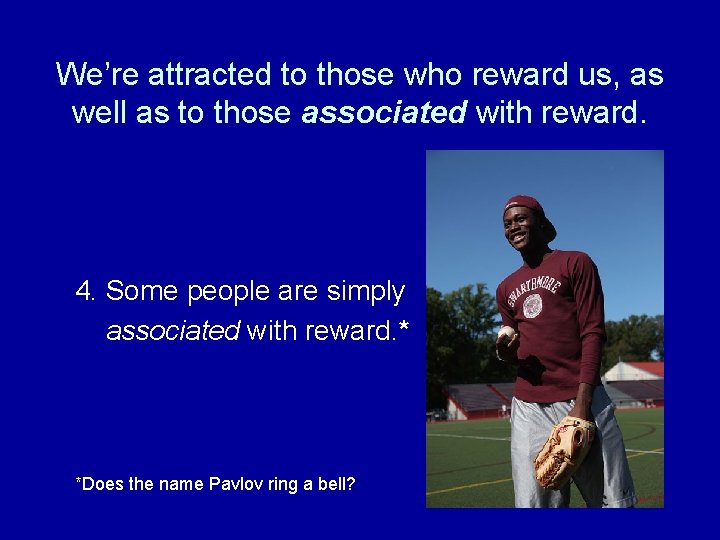
We’re attracted to those who reward us, as well as to those associated with reward. 4. Some people are simply associated with reward. * *Does the name Pavlov ring a bell?
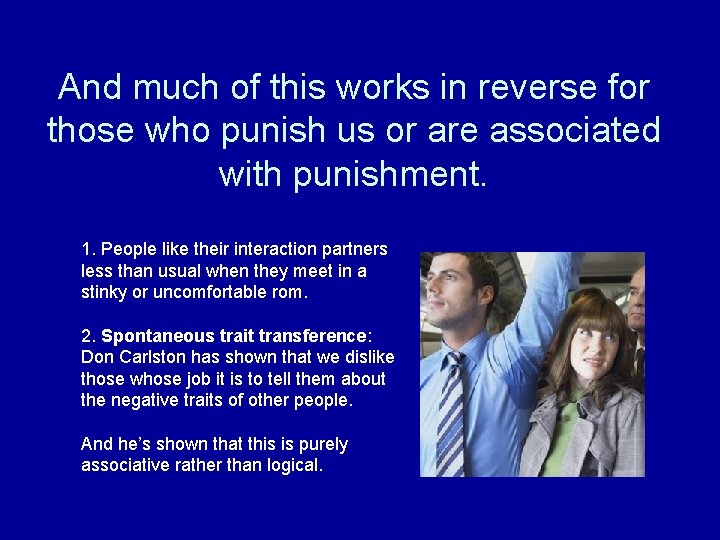
And much of this works in reverse for those who punish us or are associated with punishment. 1. People like their interaction partners less than usual when they meet in a stinky or uncomfortable rom. 2. Spontaneous trait transference: Don Carlston has shown that we dislike those whose job it is to tell them about the negative traits of other people. And he’s shown that this is purely associative rather than logical.
Five Smaller Principles & Findings: • The Five Tees (“tys”) of Initial Attraction – proximity – familiarity – similarity – reciprocity – beauty (physical attractiveness)
1. Proximity One of the best predictors of both initial and long term attraction is sheer closeness in physical space. Festinger, Schacter & Back MIT studies (1950): Couples in married student housing at MIT became closest to their nearest neighbors. This was based on pragmatic closeness rather than pure distance. Seating patterns often affect closeness. Most people marry physically close others.
1. Proximity • Why does proximity matter? – Familiarity: Close others become familiar. – Convenience/reward: It’s much easier to be rewarded by someone who is nearby
2. Familiarity • We like people we’ve seen (or think we’ve seen) more than we like strangers. Moreland & Beach (1992) had women sit in on a large lecture class for 0, 5, 10, 15, or 20 visits. Those who visited more often were perceived as more likeable, attractive and even intelligent. Hartly (1946) asked people to evaluate groups such as Pyrenneans and Danerians. People disliked them.
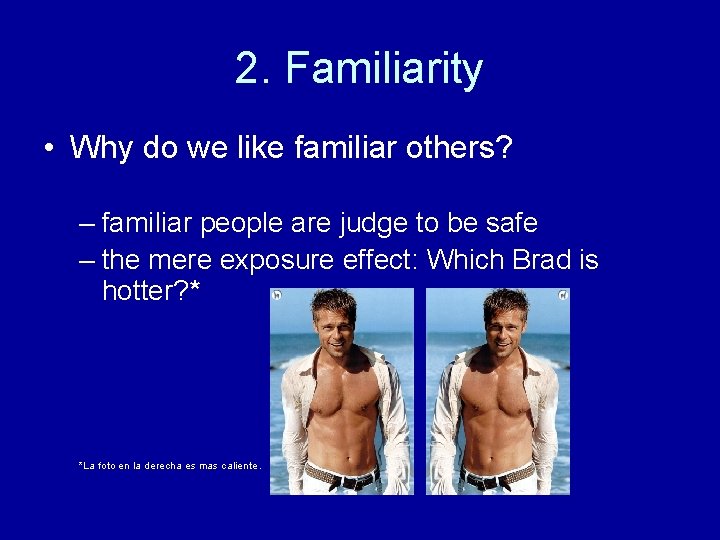
2. Familiarity • Why do we like familiar others? – familiar people are judge to be safe – the mere exposure effect: Which Brad is hotter? * *La foto en la derecha es mas caliente.
2. Familiarity: A Caveat or Two • familiarity may diminish sexual attraction under some conditions
2. Familiarity: A Caveat or Two • familiarity may diminish sexual attraction under some conditions – humans raised together in childhood have diminished sexual attraction in adulthood – Coolidge effect
3. Similarity 1. Across many, many dimensions people are attracted to similar others. This applies to age, ethnicity, culture, religion, education level, and even earlobe shape. This has been documented in experiments as well as in survey studies.
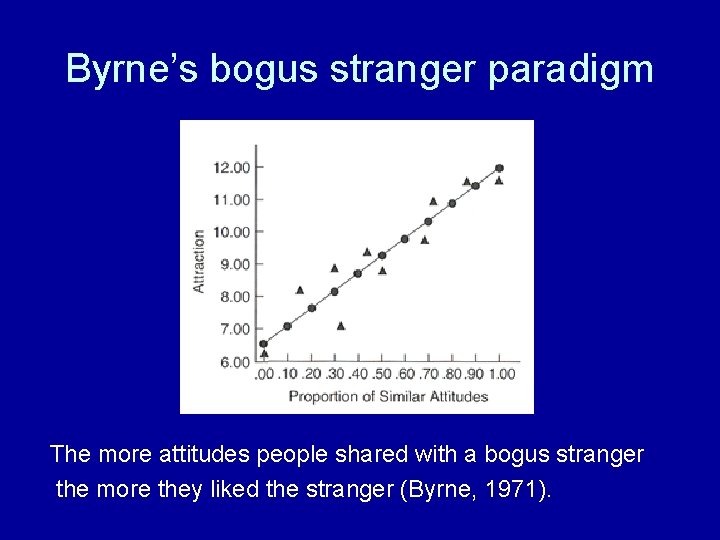
Byrne’s bogus stranger paradigm The more attitudes people shared with a bogus stranger the more they liked the stranger (Byrne, 1971).
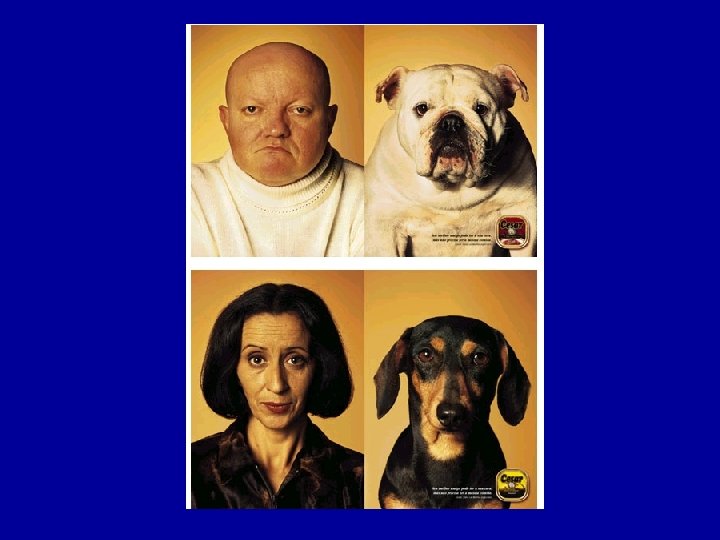
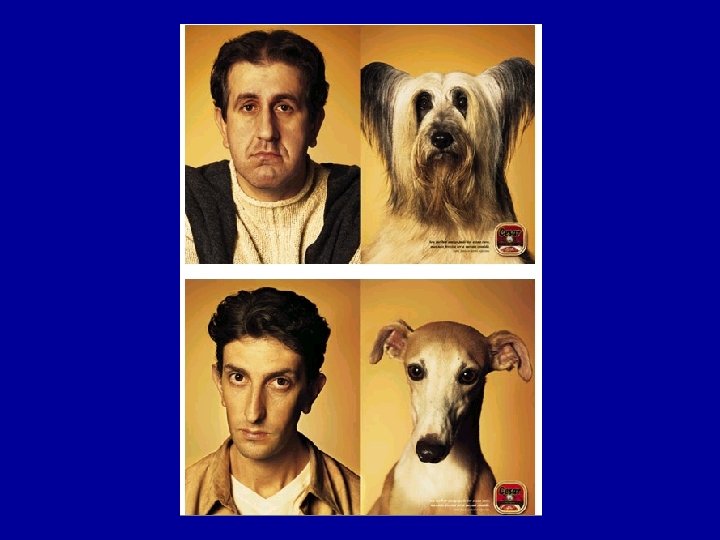
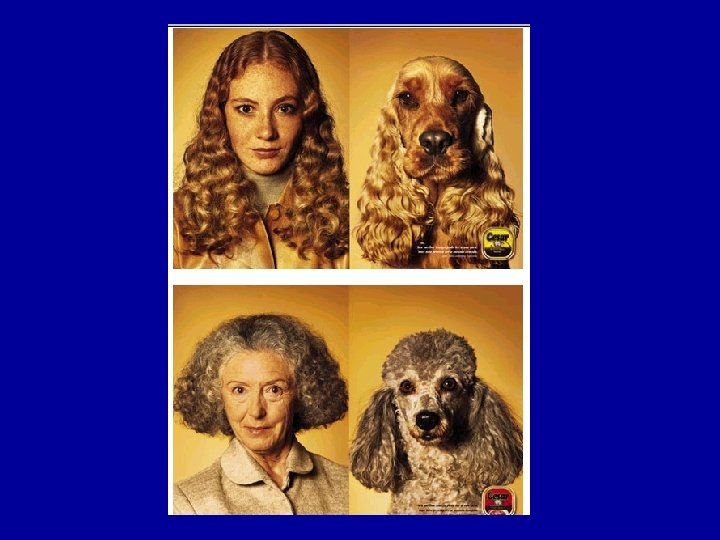
SIMILARITY IS VERY PERVASIVE: Finalists in the 2002 Philadelphia Dog-Owner Look-alike Contest
An interesting cousin of the similarity effect is transference - We like others who are similar to people we like - We dislike others who are similar to those we dislike - This happens completely outside of our awareness (e. g. , Andersen & Cole, 1991)
3. Similarity One kind of similarity has been studied so heavily that it has its own name. The “Matching Hypothesis” is the (wellsupported) idea that we pair off with others whose level of physical attractiveness is about the same as our own.
Did we see evidence of matching (or similarity) in the results of the matching game?
Can you think of any exceptions to this powerful rule?
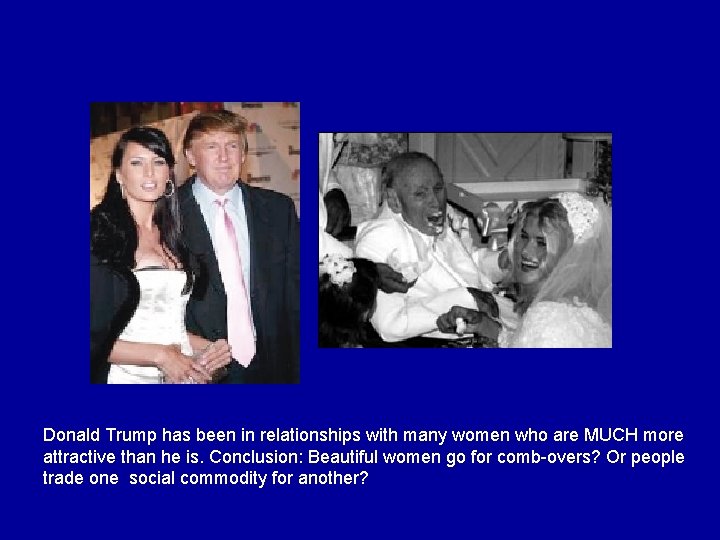
Donald Trump has been in relationships with many women who are MUCH more attractive than he is. Conclusion: Beautiful women go for comb-overs? Or people trade one social commodity for another?
3. Similarity: Why?
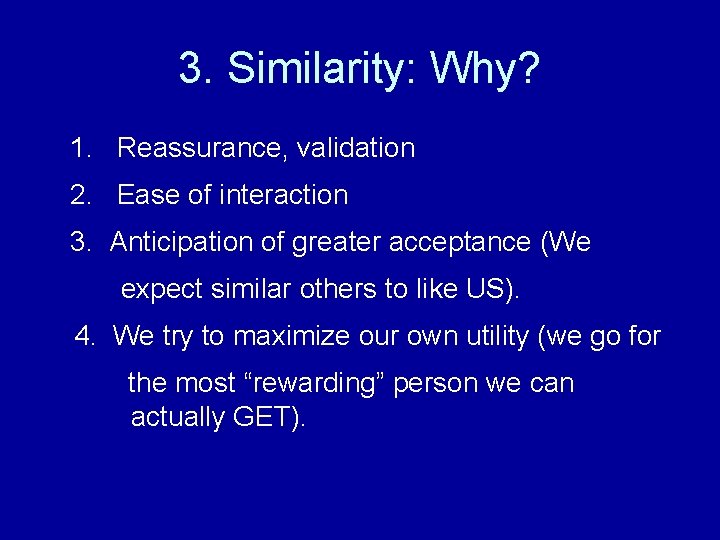
3. Similarity: Why? 1. Reassurance, validation 2. Ease of interaction 3. Anticipation of greater acceptance (We expect similar others to like US). 4. We try to maximize our own utility (we go for the most “rewarding” person we can actually GET).
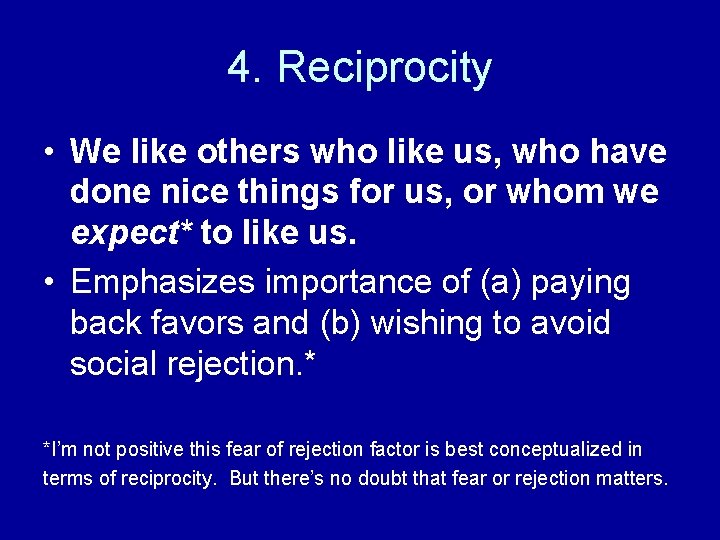
4. Reciprocity • We like others who like us, who have done nice things for us, or whom we expect* to like us. • Emphasizes importance of (a) paying back favors and (b) wishing to avoid social rejection. * *I’m not positive this fear of rejection factor is best conceptualized in terms of reciprocity. But there’s no doubt that fear or rejection matters.
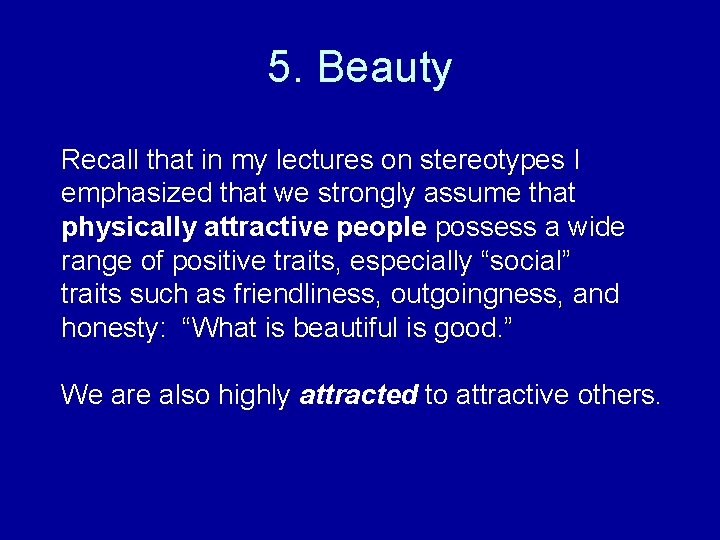
5. Beauty Recall that in my lectures on stereotypes I emphasized that we strongly assume that physically attractive people possess a wide range of positive traits, especially “social” traits such as friendliness, outgoingness, and honesty: “What is beautiful is good. ” We are also highly attracted to attractive others.
5. Beauty • The “Computer Dance Study” (Berscheid, Dion, Walster & Walster, 1971) • measured college students’ intelligence, social skills, personality, and attractiveness • paired couples randomly as dates for a dance • measured attraction at end of dance (& much later) • Attractiveness predicted attraction better than anything else.
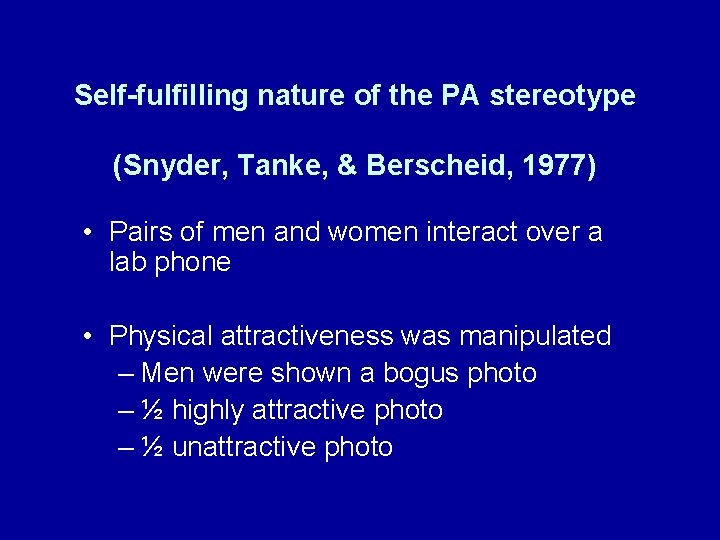
Self-fulfilling nature of the PA stereotype (Snyder, Tanke, & Berscheid, 1977) • Pairs of men and women interact over a lab phone • Physical attractiveness was manipulated – Men were shown a bogus photo – ½ highly attractive photo – ½ unattractive photo
Self-fulfilling nature of stereotype (Snyder, Tanke, & Berscheid, 1977) • Men rated their partners before and after conversation. • Conversations were tape recorded analyzed by judges
Results • Is beautiful good? • Prior to their interaction with the woman: – males rated “attractive” females as more sociable, humorous and poised and rated “unattractive” females as unsociable, awkward and serious!
Results • Evidence for self-fulfilling nature of stereotype? • Judges rated men who interacted with “attractive women” to be more comfortable, to like their partner more, to take more initiative than men in the “unattractive” condition. – Judges rated “attractive” women as more confident, more animated than “unattractive” women. • This process = behavioral confirmation
Putting It All Together • Did these basic principles of attraction play any role in the matching game? • Proximity • Familiarity • Similarity • Reciprocity • Beauty
Putting It All Together • How do principles of reward apply to the 5 well-established principles of attraction? • Proximity • Familiarity • Similarity • Reciprocity • Beauty