
Interoperability Tests for IEC 61968 9 Scott Neumann
Interoperability Tests for IEC 61968 -9 Scott Neumann November 12, 2009
Why are Inter. Ops Important? • They prove that a standard works and is more than an abstract document • They can identify shortcomings that need to be addressed in subsequent editions of a standard • They force people from different vendors to work together to the benefit of the industry as a whole • Provides a baseline for comparison of implementations and future extensions • Provides a benefit to participating vendors in the marketplace • Test reports help utilities make decisions 2 Proprietary and Confidential
Why is IEC 61968 -9 Important? • IEC 61968 -9 is a new IEC standard that defines information exchanges between metering systems and other enterprise systems • The information exchanges standardized are based on the CIM and include meter readings, controls to end devices (includes meters) and events from end devices and other types of end devices • Many vendors have actively participated in the development of this standard • This standard will significantly simplify the integration of advanced metering infrastructures by filling in some key standardization gaps • IEC 61968 -9 is a key standard on the NIST Smart Grid Road Map • Part 13 aside, part 9 provides the first normative part of 61968 3 Proprietary and Confidential

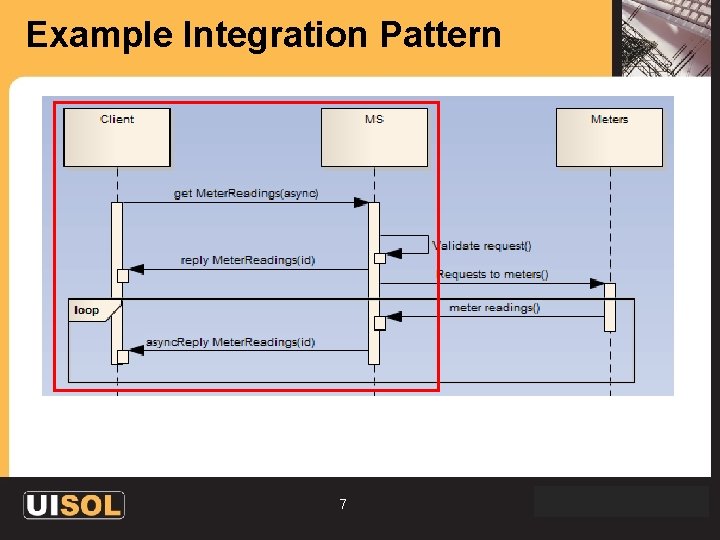
What is Being Tested? • The ability of a vendor product to send an/or receive messages with IEC 61968 -9 standard profile definitions for payloads using either: • Web services • JMS • Messaging may use one of the following integration patterns: • Synchronous request/reply • Events using publish/subscribe • Asynchronous request/reply (very important for metering system integration) • Messages use an IEC 61968 envelope with verb, noun and payload • Messaging details including integration patterns, WSDLs, etc. are described in EPRI TR 1018795 (basis for future 61968 -1 -1) • The XML Schemas provided in IEC 61968 -9 are normative • Intitial Inter. Op will purposely ‘keep it simple’ … but future Inter. Ops will have increased scope and complexity 4 Proprietary and Confidential

Product Roles • Some of the types of products that participate in the 61968 -9 testing include: • Metering system (head end) • Meter data manager • OMS • Within a given test, a product can take on one of the following roles: • A service that accepts requests and provides responses, and also generates events • A client that makes requests and accepts responses • An event listener, that listens for events that may be published from a variety of sources 5 Proprietary and Confidential
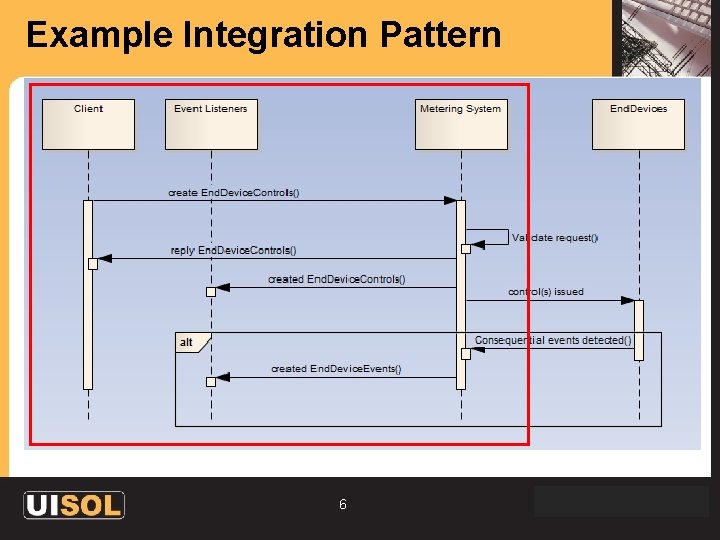
Example Integration Pattern 6 Proprietary and Confidential
Example Integration Pattern 7 Proprietary and Confidential
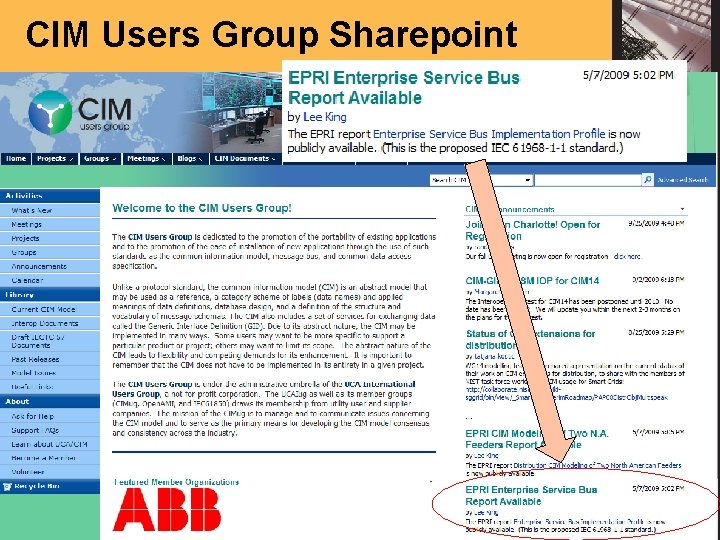
EPRI Technical Report 1018795 • Describes an implementation approach for IEC 61968 using an Enterprise Service Bus • Is freely available from EPRI web site • Is intended as the basis for a proposed IEC 61968 -1 -1 (EPRI has now provided a copyright release to the IEC for this purpose) • It describes implementation details for one integration approach using JMS and/or web services • Standard will include extensions, such as: • • Asynchronous request/reply pattern More granular error handling Events via web services … TBD 8 Proprietary and Confidential
CIM Users Group Sharepoint 9 Proprietary and Confidential
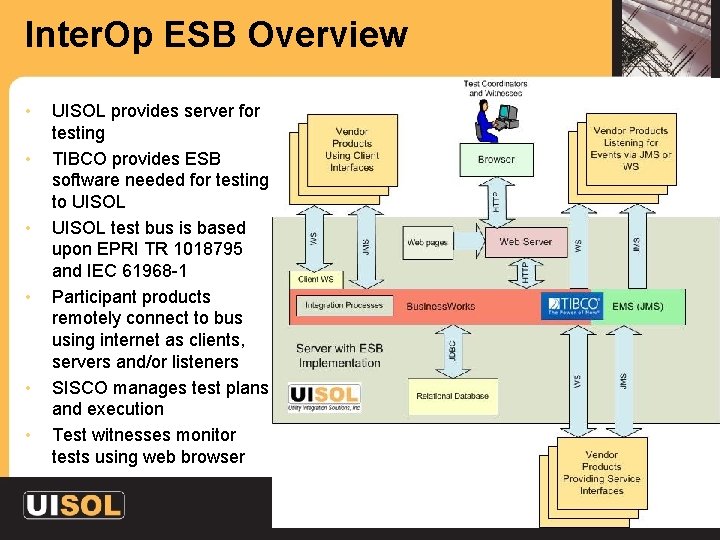
Inter. Op ESB Overview • • • UISOL provides server for testing TIBCO provides ESB software needed for testing to UISOL test bus is based upon EPRI TR 1018795 and IEC 61968 -1 Participant products remotely connect to bus using internet as clients, servers and/or listeners SISCO manages test plans and execution Test witnesses monitor tests using web browser 10 Proprietary and Confidential
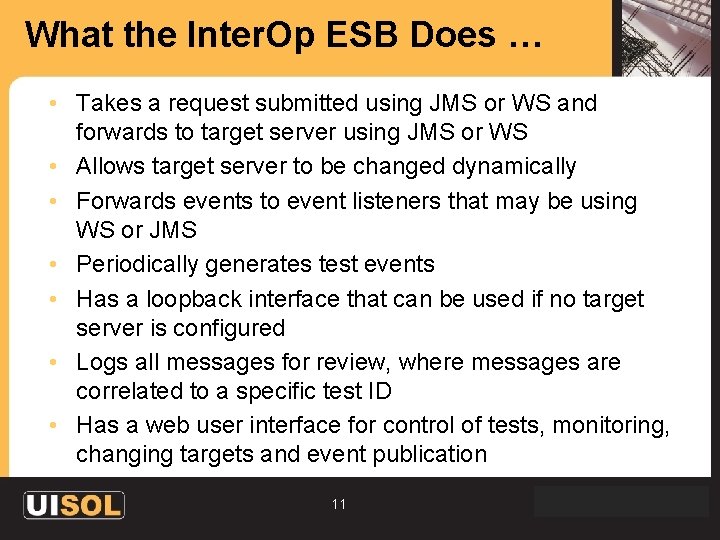
What the Inter. Op ESB Does … • Takes a request submitted using JMS or WS and forwards to target server using JMS or WS • Allows target server to be changed dynamically • Forwards events to event listeners that may be using WS or JMS • Periodically generates test events • Has a loopback interface that can be used if no target server is configured • Logs all messages for review, where messages are correlated to a specific test ID • Has a web user interface for control of tests, monitoring, changing targets and event publication 11 Proprietary and Confidential
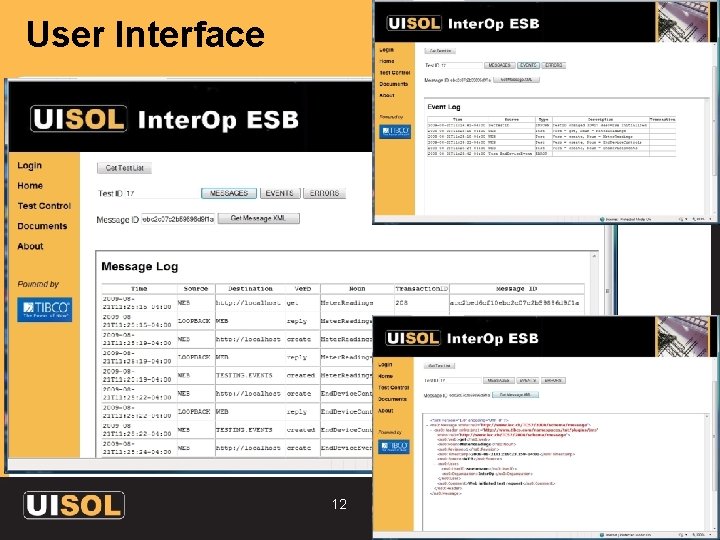
User Interface 12 Proprietary and Confidential
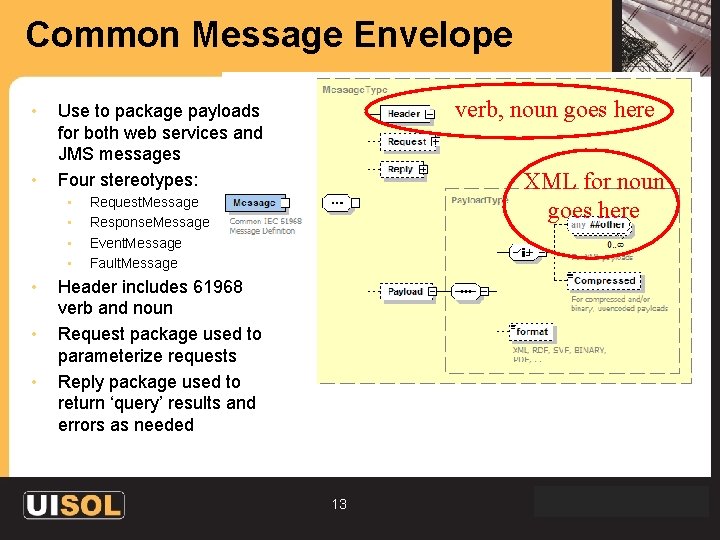
Common Message Envelope • • • verb, noun goes here Use to package payloads for both web services and JMS messages Four stereotypes: XML for noun goes here Request. Message Response. Message Event. Message Fault. Message Header includes 61968 verb and noun Request package used to parameterize requests Reply package used to return ‘query’ results and errors as needed 13 Proprietary and Confidential
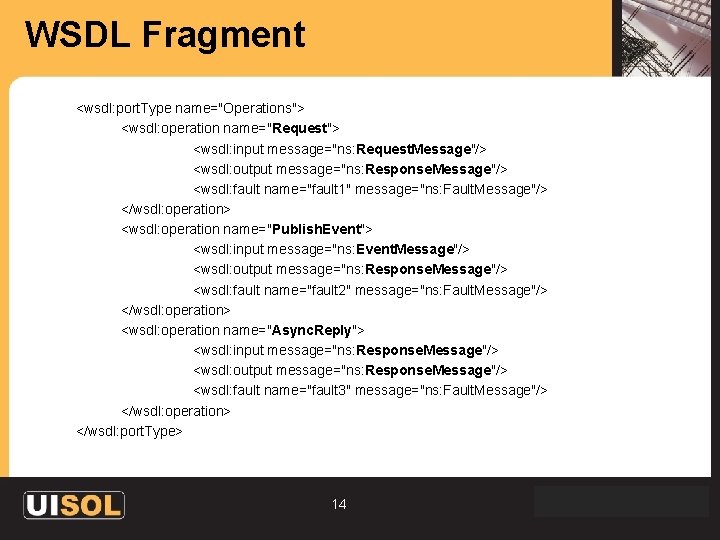
WSDL Fragment <wsdl: port. Type name="Operations"> <wsdl: operation name="Request"> <wsdl: input message="ns: Request. Message"/> <wsdl: output message="ns: Response. Message"/> <wsdl: fault name="fault 1" message="ns: Fault. Message"/> </wsdl: operation> <wsdl: operation name="Publish. Event"> <wsdl: input message="ns: Event. Message"/> <wsdl: output message="ns: Response. Message"/> <wsdl: fault name="fault 2" message="ns: Fault. Message"/> </wsdl: operation> <wsdl: operation name="Async. Reply"> <wsdl: input message="ns: Response. Message"/> <wsdl: output message="ns: Response. Message"/> <wsdl: fault name="fault 3" message="ns: Fault. Message"/> </wsdl: operation> </wsdl: port. Type> 14 Proprietary and Confidential
Outputs of IOP Efforts • Official test report to be published by EPRI that describes tests and results by each vendor • Test plans that can be leveraged for future testing and compliance efforts • Recommendations for extensions or improvements to the next edition of the IEC 61968 -9 standard • Recommendations for inclusion within proposed IEC 61968 -1 -1 • A ‘blue print’ that can be leveraged by utilities for the integration of metering systems with other enterprise systems using an ESB 15 Proprietary and Confidential
Benefits • Helps to advance important Smart Grid standards by validating the standards and validating that multiple vendors can implement IEC 61968 -9 • IOP tests are performed using a technical infrastructure that is consistent with a modern enterprise, using web services and JMS • Provides an infrastructure that can be readily leveraged for expanded testing in the future, supporting testing of other parts of IEC 61968 • No travel by participants is required as the test bus can be accessed remotely, reducing participation costs to all participants and providing opportunities for increased participation • With EPRI TR 1018795 and the documentation provided, utilities should be able to re-implement/re-create compatible integrations using other ESB products 16 Proprietary and Confidential
More Information • UISOL web site: http: //uisol. com • EPRI web site: http: //www. epri. com • E-mail: sneumann@uisol. com 17 Proprietary and Confidential
- Slides: 17