
Interoperability Test Message Patterns for IEC 61968 9

Interoperability Test Message Patterns for IEC 61968 -9 Scott Neumann September 1, 2009
Introduction • The purpose of this presentation is to describe messaging patterns to be potentially used for interoperability tests for IEC 61968 -9 • This is intended to supplement the EPRI technical report • Important to note that messaging between metering systems and end devices is outside the scope of this Inter. Op • This document is currently a draft, where comments from metering vendors as a consequence of the 9/1/2009 call are pending 2 Proprietary and Confidential
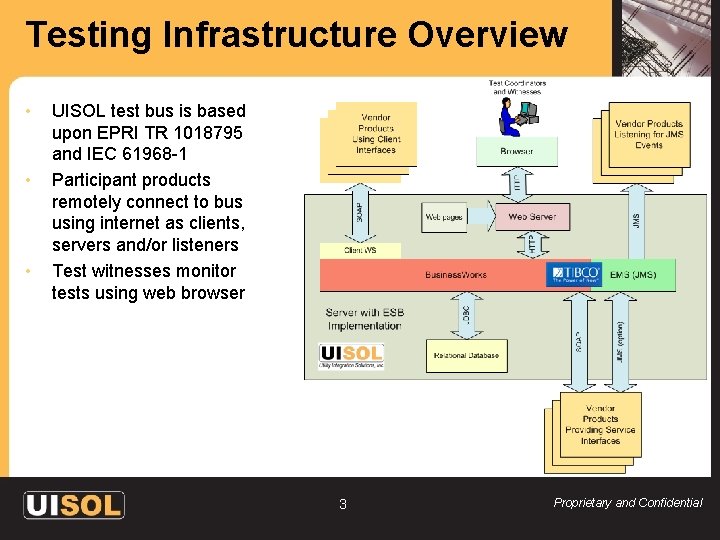
Testing Infrastructure Overview • • • UISOL test bus is based upon EPRI TR 1018795 and IEC 61968 -1 Participant products remotely connect to bus using internet as clients, servers and/or listeners Test witnesses monitor tests using web browser 3 Proprietary and Confidential

Controls and Events 4 Proprietary and Confidential
Controls and Events 1. 2. 3. 4. 5. 6. Client process issues request to MS as ‘create End. Device. Controls’, where each End. Device. Control has a unique m. RID (using a GUID) MS replies to client synchronous, as ‘reply End. Device. Controls’ Event published ‘created End. Device. Controls’ to notify potentially interested clients that a control has been requested or scheduled MS processes control request issuing messages to end devices as needed (the messaging and processing sequences here are outside the scope of 61968 -9) Consequences of controls may be reported to metering system from end devices Events published ‘created End. Device. Events’ to notify potentially interested clients, where if possible, the m. RID for each End. Device. Event should use the m. RID from the corresponding End. Device. Control 5 Proprietary and Confidential
Metering System 6 Proprietary and Confidential
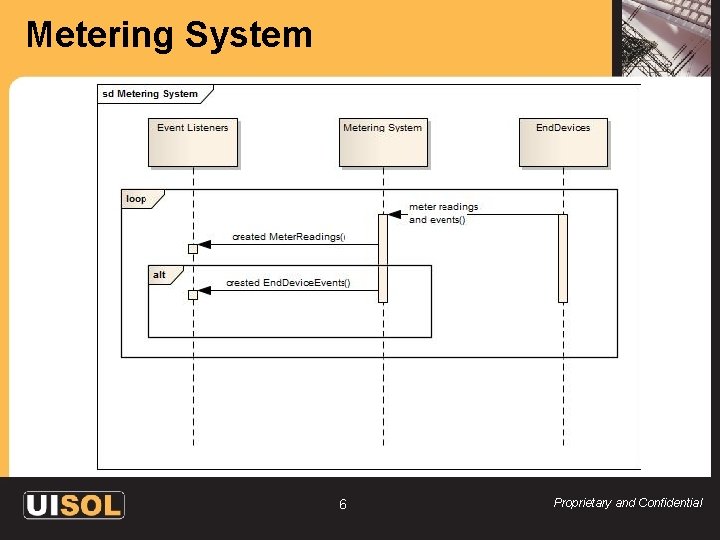
Metering System 1. Meter readings are collected by metering system 2. Metering system publishes messages using ‘created Meter. Readings’ to potentially interested clients 3. Some of the information collected from meters may be events, or may cause events to be inferenced and reported using ‘created End. Device. Events’ 7 Proprietary and Confidential
Asynchronous Replies 8 Proprietary and Confidential
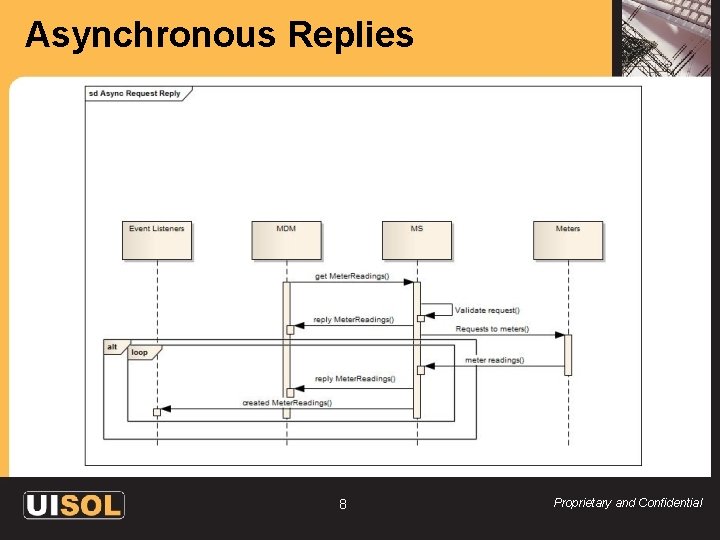
Asynchronous Replies 1. Client (e. g. MDM) may request meter readings from metering system using ‘get Meter. Readings’ 2. Metering system replies to client synchronously using ‘reply Meter. Readings’ with whatever data is available that is relevant to the request if it chooses 3. Meters may later return the desired data to metering system 4. Metering system replies asynchronously to client using ‘reply Meter. Readings’ to specified reply topic/queue and correlation ID used on initial request 5. Metering system may also publish data using ‘created Meter. Readings’ to any potentially interested client 9 Proprietary and Confidential
More on Asynchronous Replies • Both client and server must support • Client responsibilities: • • • Correlation. ID in header must be used to allow client to correlate multiple replies to an initial request Async. Reply. Flag in header should be set to true Reply. Address should identify topic/queue to be used for asynchronous replies • Server responsibilities: • • Server (e. g. metering system) must be will to dedicate a thread or process to process the request asynchronously Server must send replies to the designated destination with the appropriate correlation. ID as initially supplied by the client All but last reply should use ‘PARTIAL’ for the Reply. Code Last reply should use ‘OK’ for the Reply. Code • Need to decide if asynchronous replies will be fully supported for the Inter. Op tests 10 Proprietary and Confidential
More Information • UISOL web site: http: //uisol. com • E-mail: sneumann@uisol. com • EPRI Technical Report: ESB Implementation Profile Using IEC 61968 11 Proprietary and Confidential
- Slides: 11