
InternetBased TSP Computation with Javelin Michael Neary Peter
Internet-Based TSP Computation with Javelin++ Michael Neary & Peter Cappello Computer Science, UCSB
Introduction Goals • Service parallel applications that are: – Large: too big for a cluster – Coarse-grain: to hide communication latency • Simplicity of use – Design focus: decomposition [composition] of computation. • Scalable high performance – despite large communication latency • Fault-tolerance – 1000 s of hosts, each dynamically [dis]associates.
Introduction Some Related Work
Introduction Some Applications • Search for extra-terrestrial life • Computer-generated animation • Computer modeling of drugs for: – Influenza – Cancer – Reducing chemotherapy’s side-effects • Financial modeling • Storing nuclear waste
Outline • Architecture • Model of Computation • API • Scalable Computation • Experimental Results • Conclusions & Future Work
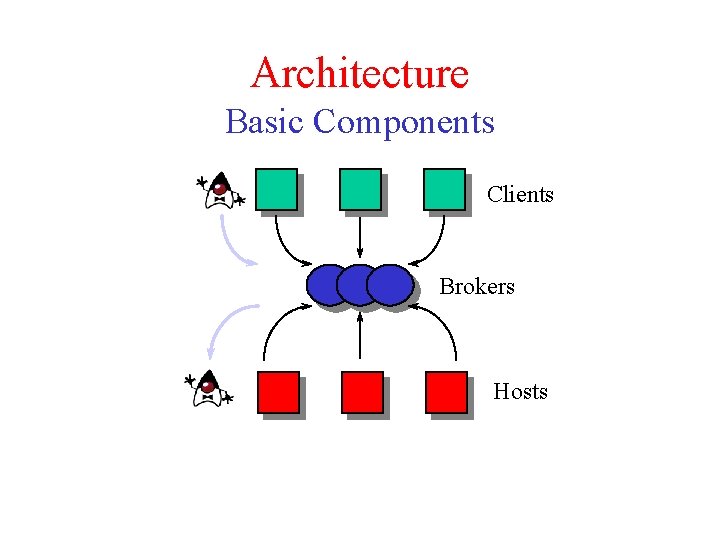
Architecture Basic Components Clients Brokers Hosts
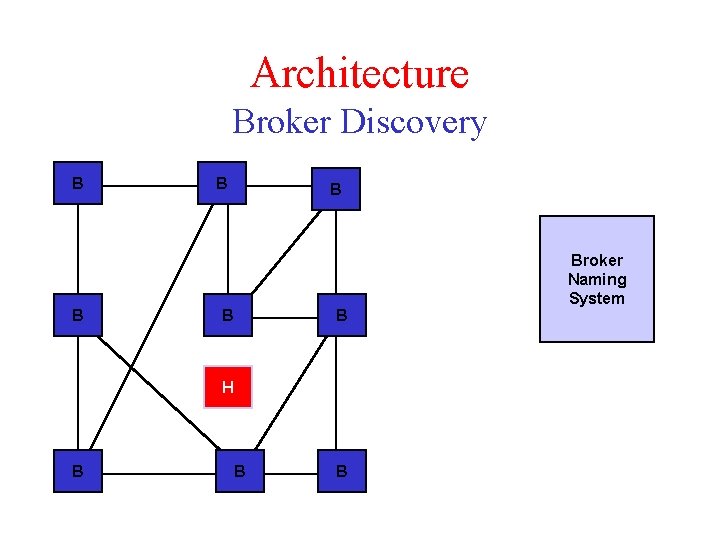
Architecture Broker Discovery B B B H B Broker Naming System
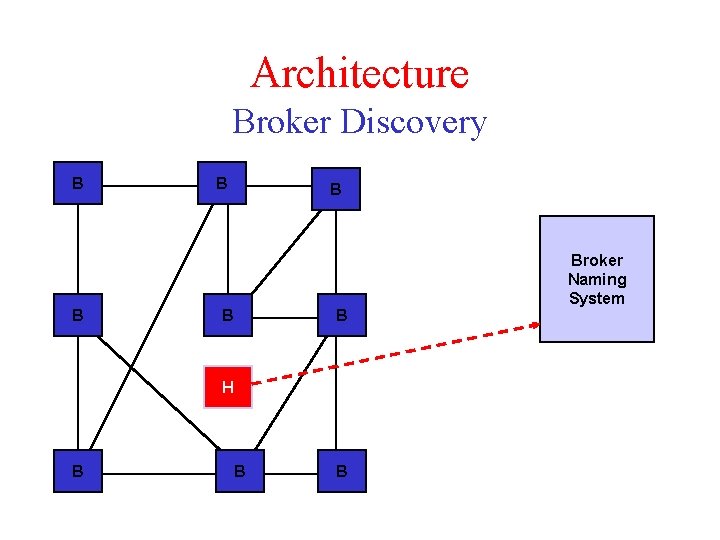
Architecture Broker Discovery B B B H B Broker Naming System
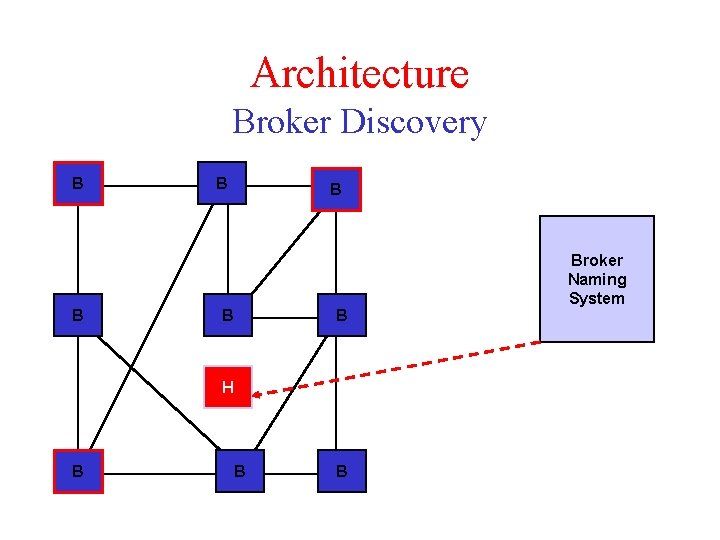
Architecture Broker Discovery B B B H B Broker Naming System
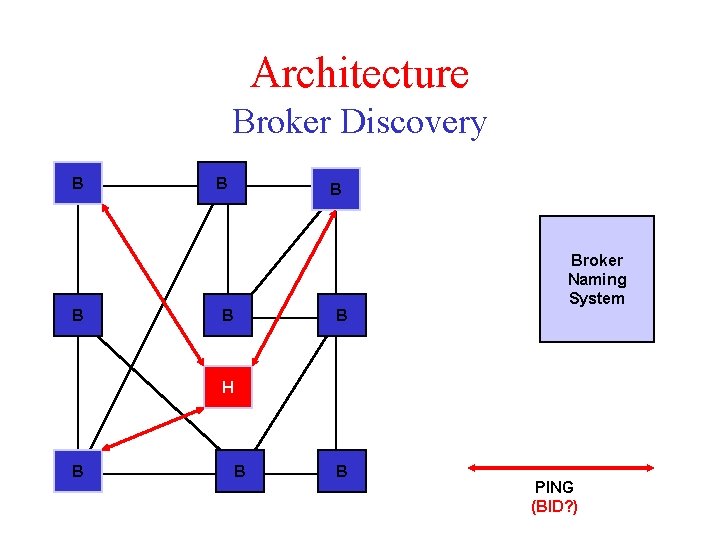
Architecture Broker Discovery B B B Broker Naming System H B B B PING (BID? )
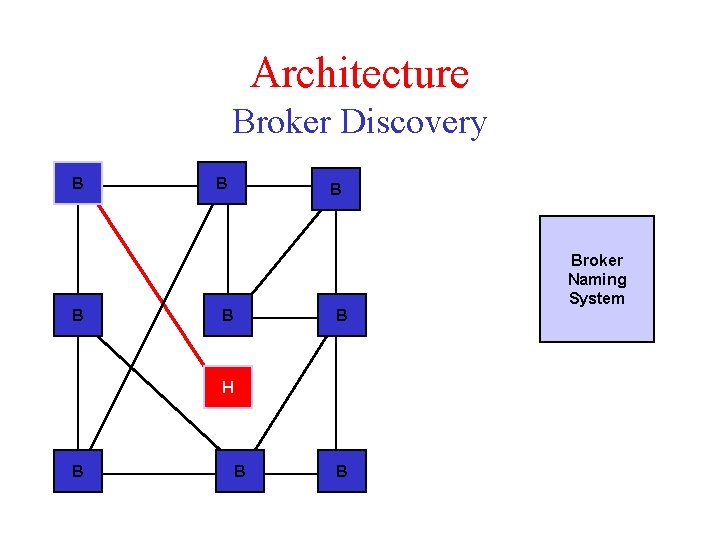
Architecture Broker Discovery B B B H B Broker Naming System
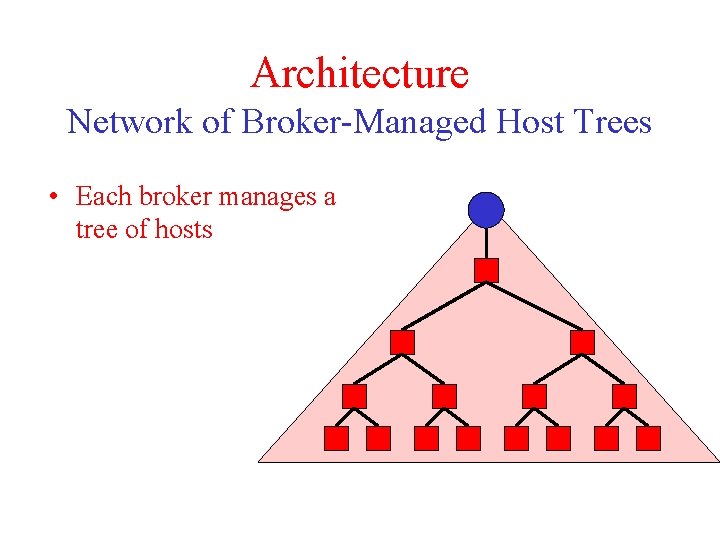
Architecture Network of Broker-Managed Host Trees • Each broker manages a tree of hosts
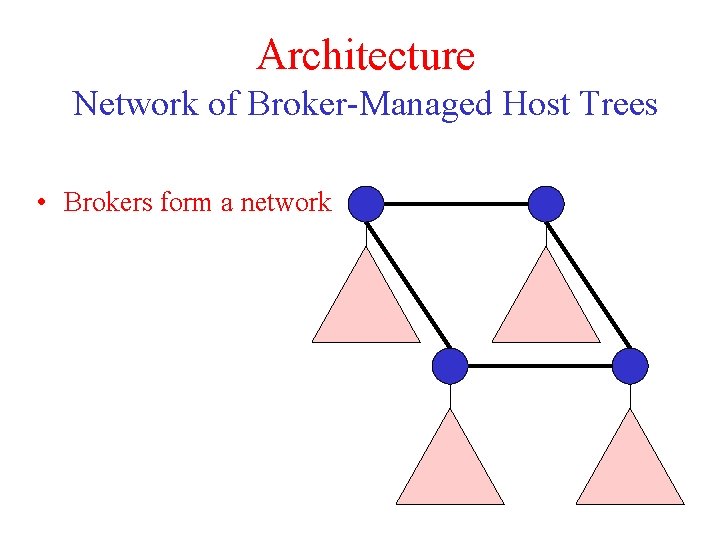
Architecture Network of Broker-Managed Host Trees • Brokers form a network
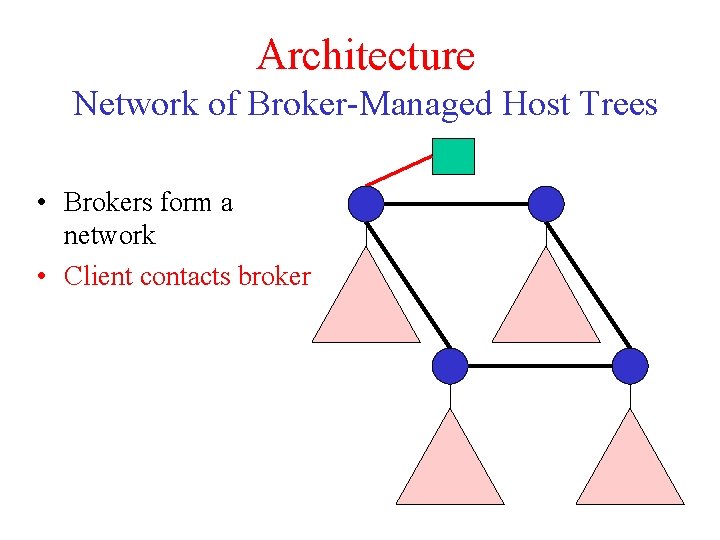
Architecture Network of Broker-Managed Host Trees • Brokers form a network • Client contacts broker
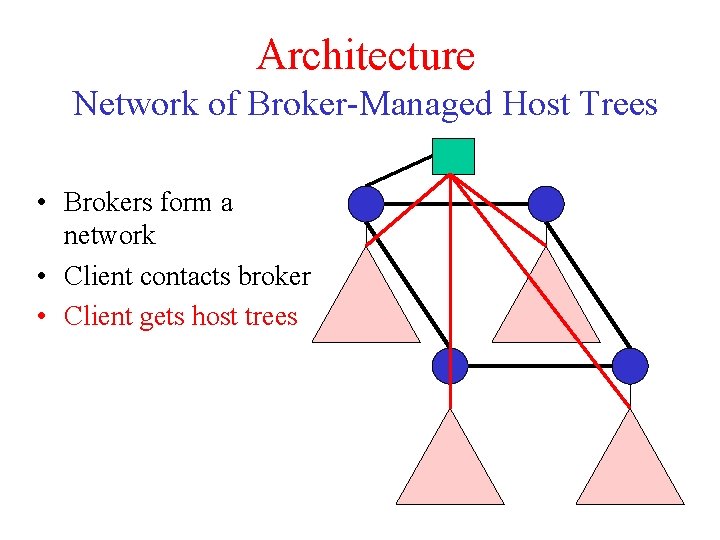
Architecture Network of Broker-Managed Host Trees • Brokers form a network • Client contacts broker • Client gets host trees
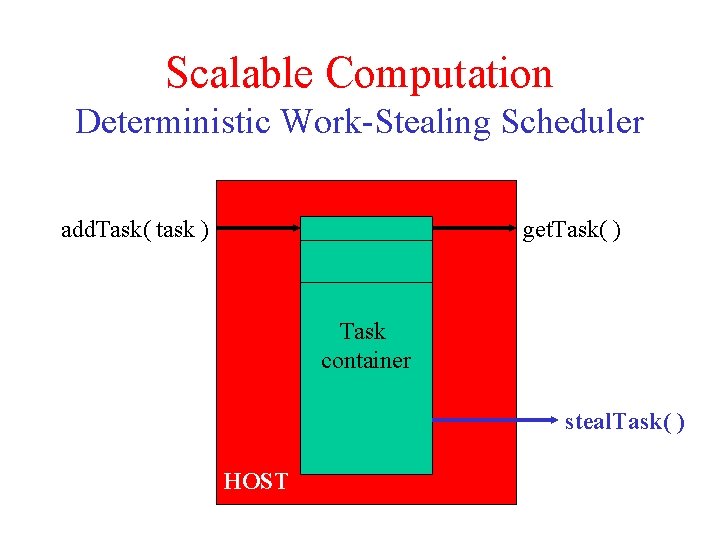
Scalable Computation Deterministic Work-Stealing Scheduler add. Task( task ) get. Task( ) Task container steal. Task( ) HOST
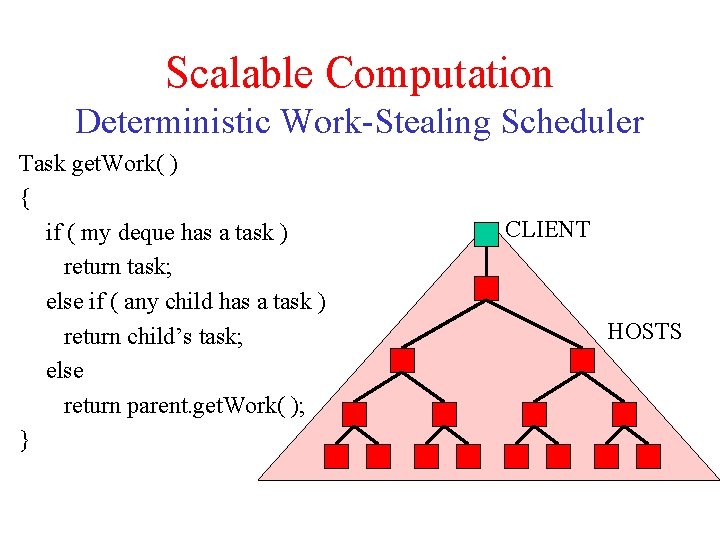
Scalable Computation Deterministic Work-Stealing Scheduler Task get. Work( ) { if ( my deque has a task ) return task; else if ( any child has a task ) return child’s task; else return parent. get. Work( ); } CLIENT HOSTS
Models of Computation • Master-slave – AFAIK all proposed commercial applications • Branch-&-bound optimization – A generalization of master-slave.
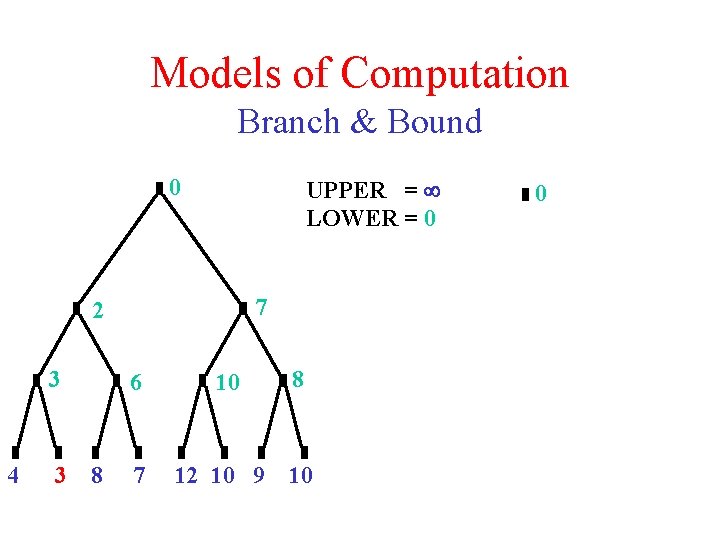
Models of Computation Branch & Bound 0 UPPER = LOWER = 0 7 2 4 3 6 3 8 7 10 12 10 9 8 10 0
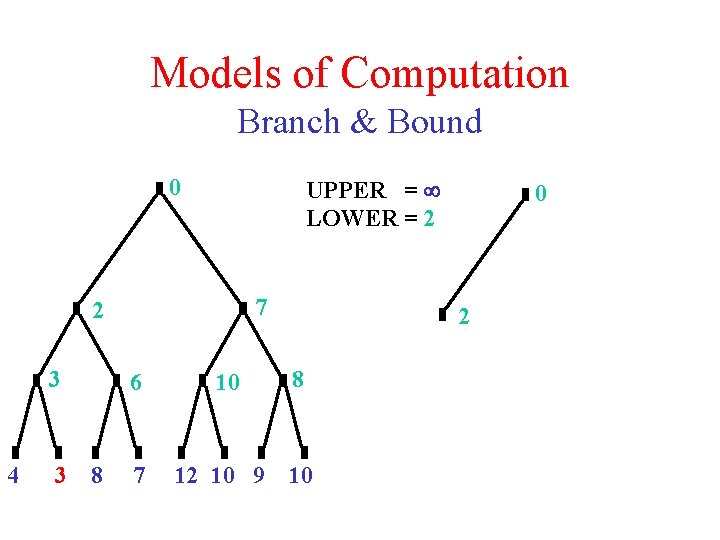
Models of Computation Branch & Bound 0 UPPER = LOWER = 2 7 2 4 3 6 3 8 7 10 12 10 9 0 2 8 10
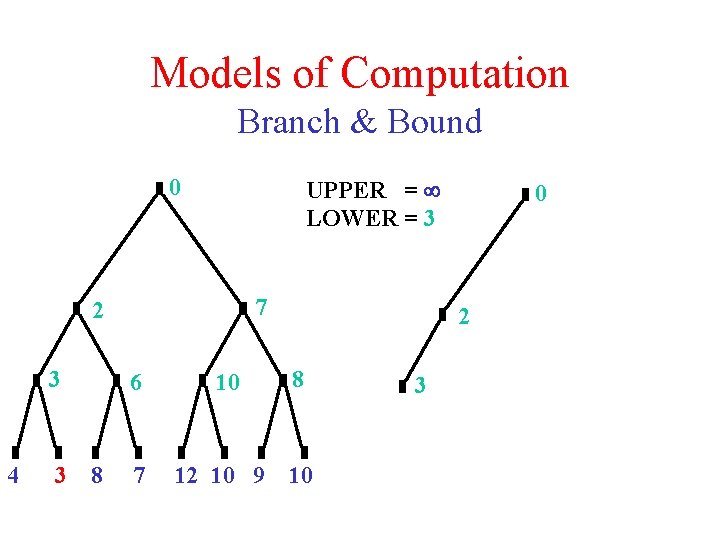
Models of Computation Branch & Bound 0 UPPER = LOWER = 3 7 2 4 3 6 3 8 7 10 12 10 9 0 2 8 10 3
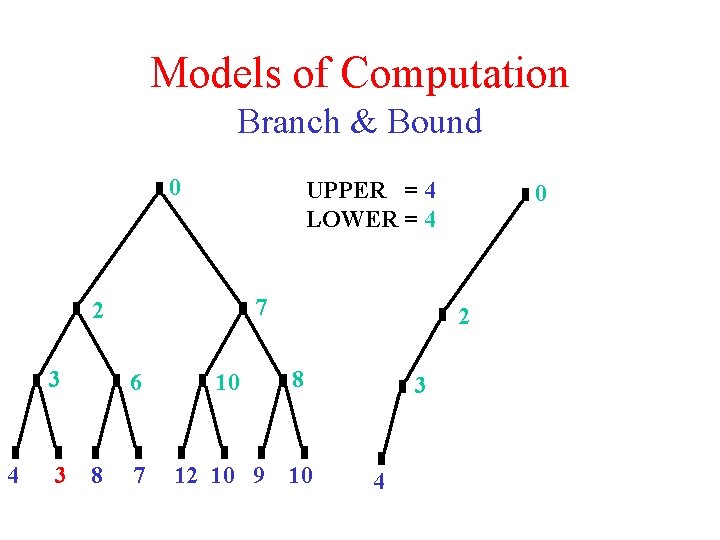
Models of Computation Branch & Bound 0 UPPER = 4 LOWER = 4 7 2 4 3 6 3 8 7 10 12 10 9 0 2 8 10 3 4
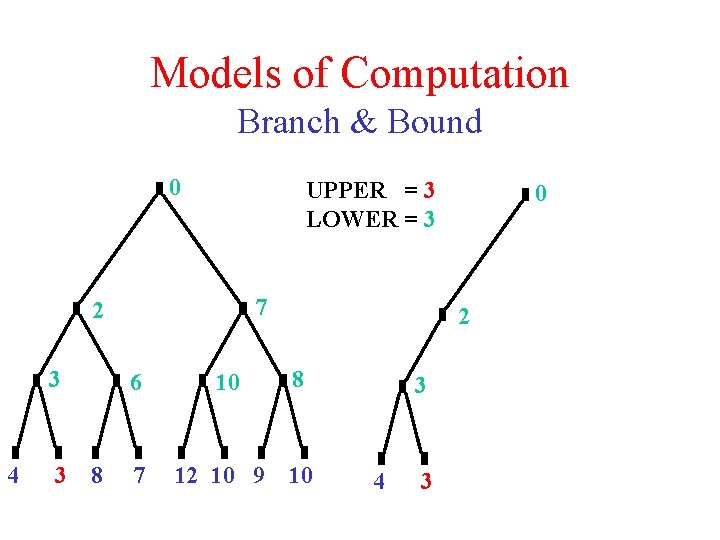
Models of Computation Branch & Bound 0 UPPER = 3 LOWER = 3 7 2 4 3 6 3 8 7 10 12 10 9 0 2 8 10 3 4 3
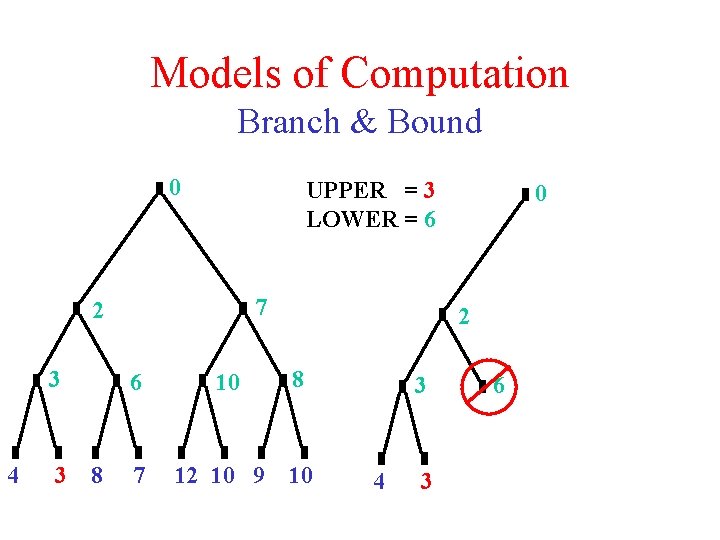
Models of Computation Branch & Bound 0 UPPER = 3 LOWER = 6 7 2 4 3 6 3 8 7 10 12 10 9 0 2 8 10 3 4 3 6
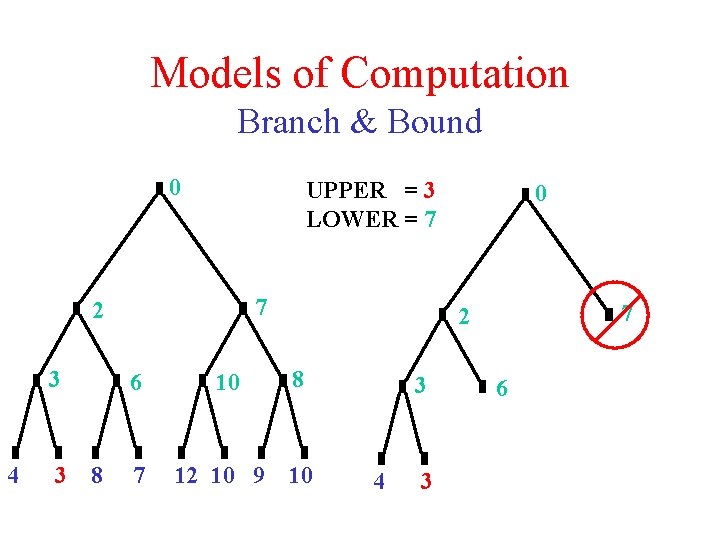
Models of Computation Branch & Bound 0 UPPER = 3 LOWER = 7 7 2 4 3 6 3 8 7 10 12 10 9 0 7 2 8 10 3 4 3 6
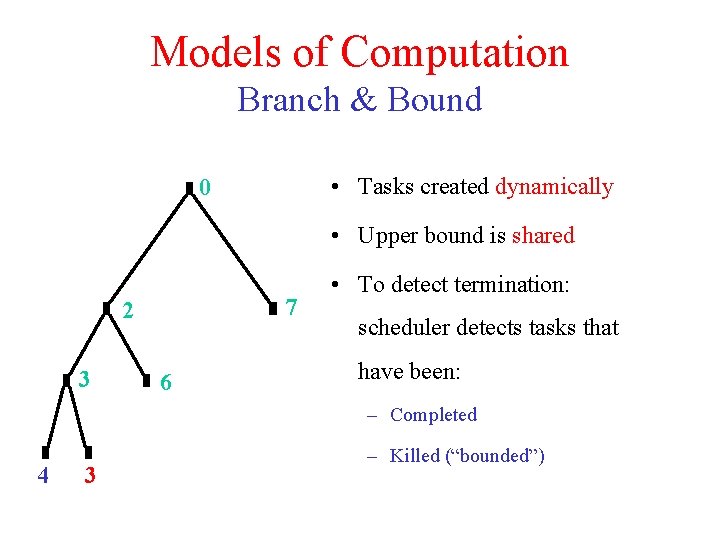
Models of Computation Branch & Bound • Tasks created dynamically 0 • Upper bound is shared 7 2 3 6 • To detect termination: scheduler detects tasks that have been: – Completed 4 3 – Killed (“bounded”)
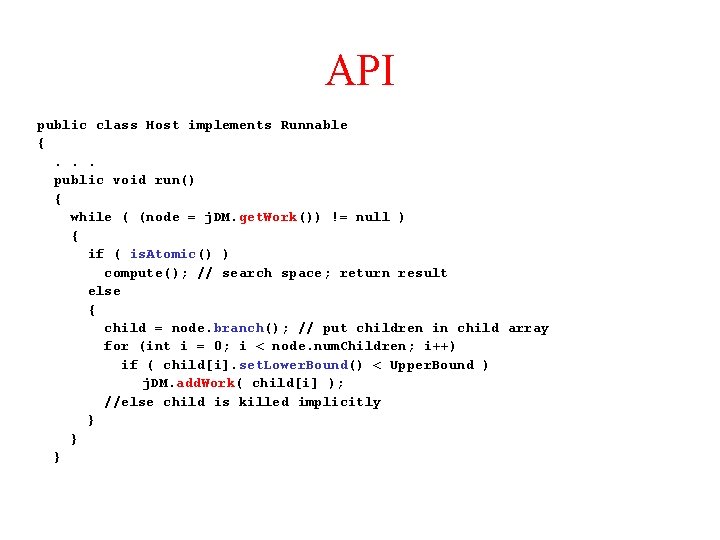
API public class Host implements Runnable {. . . public void run() { while ( (node = j. DM. get. Work()) != null ) { if ( is. Atomic() ) compute(); // search space; return result else { child = node. branch(); // put children in child array for (int i = 0; i < node. num. Children; i++) if ( child[i]. set. Lower. Bound() < Upper. Bound ) j. DM. add. Work( child[i] ); //else child is killed implicitly } } }
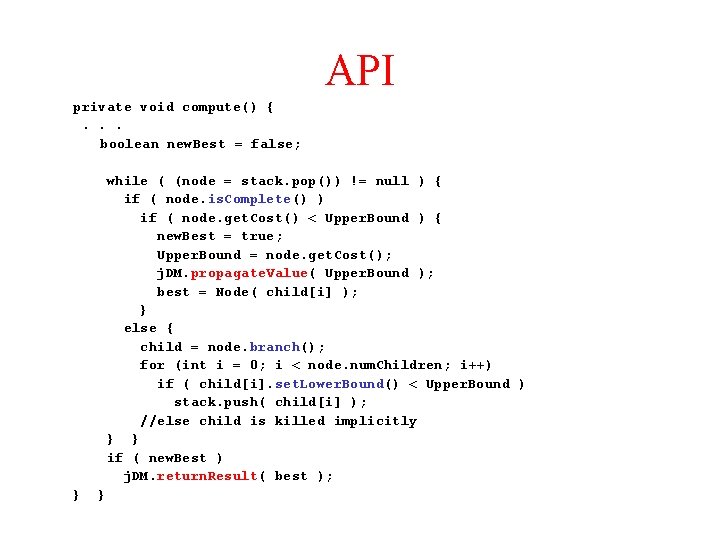
API private void compute() {. . . boolean new. Best = false; while ( (node = stack. pop()) != null ) { if ( node. is. Complete() ) if ( node. get. Cost() < Upper. Bound ) { new. Best = true; Upper. Bound = node. get. Cost(); j. DM. propagate. Value( Upper. Bound ); best = Node( child[i] ); } else { child = node. branch(); for (int i = 0; i < node. num. Children; i++) if ( child[i]. set. Lower. Bound() < Upper. Bound ) stack. push( child[i] ); //else child is killed implicitly } } if ( new. Best ) j. DM. return. Result( best ); } }
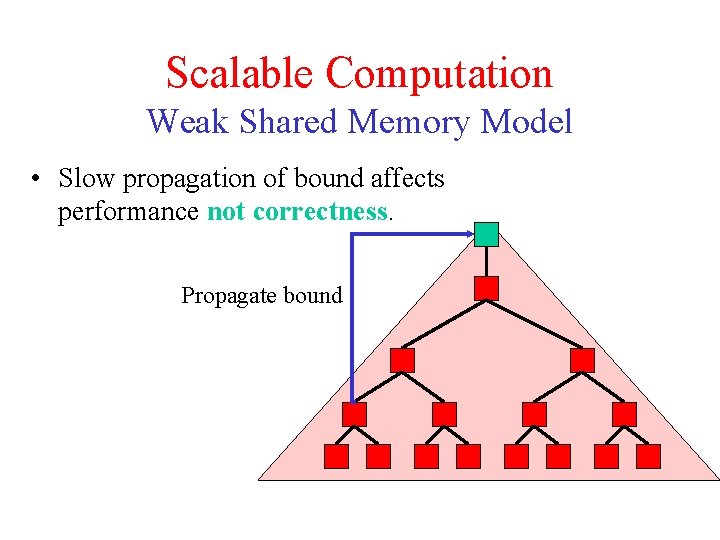
Scalable Computation Weak Shared Memory Model • Slow propagation of bound affects performance not correctness. Propagate bound
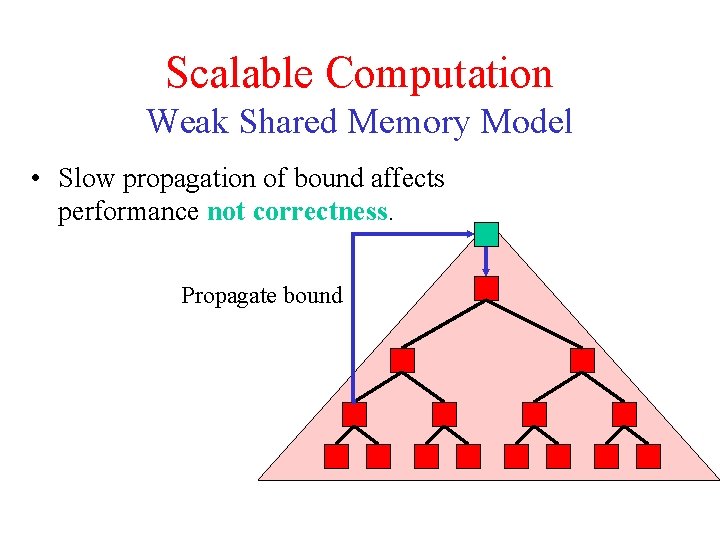
Scalable Computation Weak Shared Memory Model • Slow propagation of bound affects performance not correctness. Propagate bound
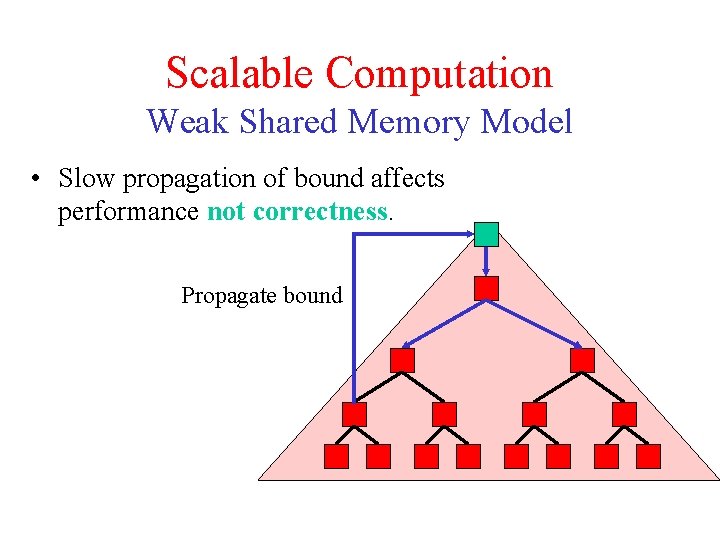
Scalable Computation Weak Shared Memory Model • Slow propagation of bound affects performance not correctness. Propagate bound
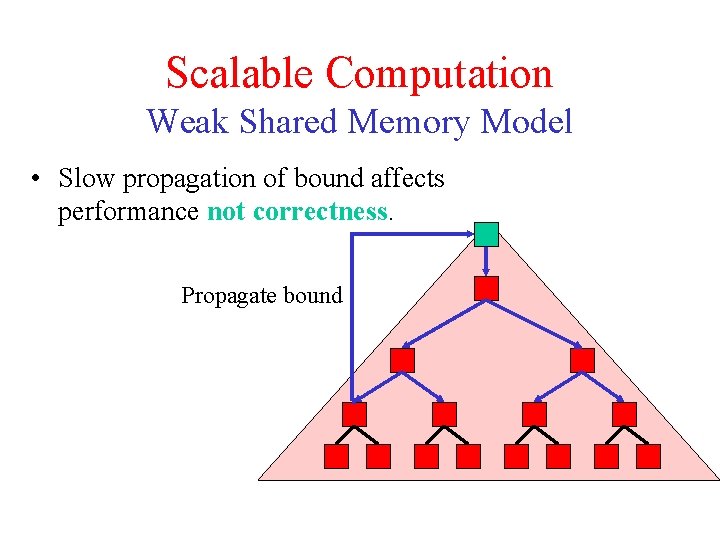
Scalable Computation Weak Shared Memory Model • Slow propagation of bound affects performance not correctness. Propagate bound
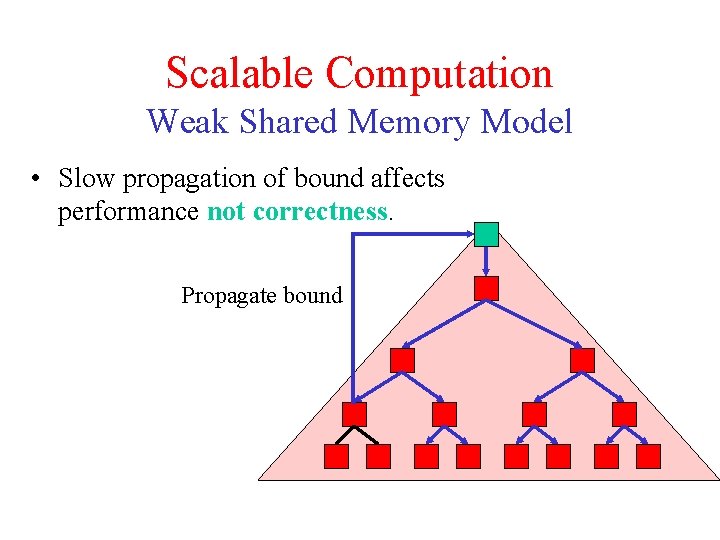
Scalable Computation Weak Shared Memory Model • Slow propagation of bound affects performance not correctness. Propagate bound
Scalable Computation Fault Tolerance via Eager Scheduling When: • All tasks have been assigned • Some results have not been reported • A host wants a new task Re-assign a task! • Eager scheduling tolerates faults & balances the load. – Computation completes, if at least 1 host communicates with client.
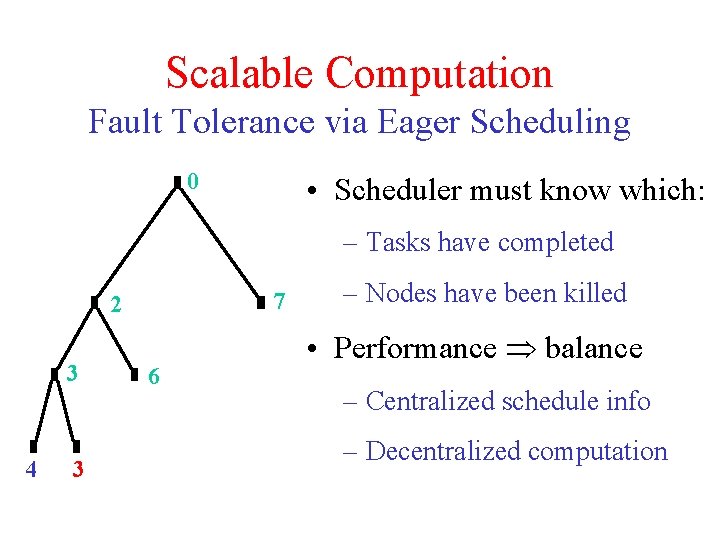
Scalable Computation Fault Tolerance via Eager Scheduling 0 • Scheduler must know which: – Tasks have completed 7 2 3 4 3 6 – Nodes have been killed • Performance balance – Centralized schedule info – Decentralized computation
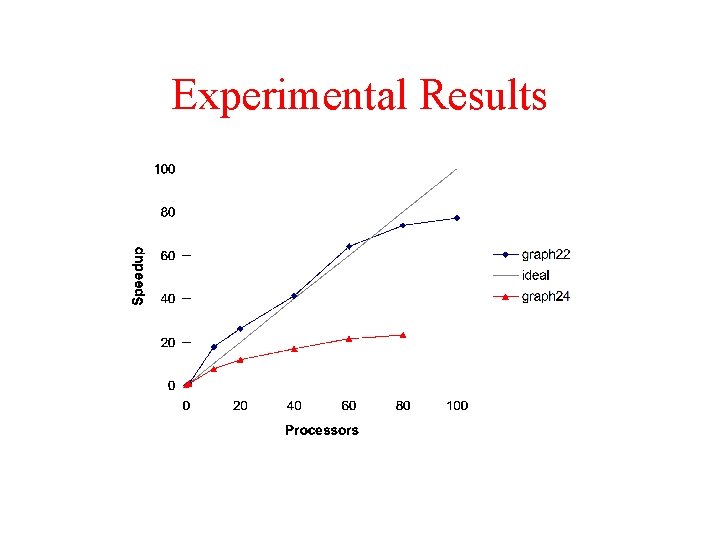
Experimental Results
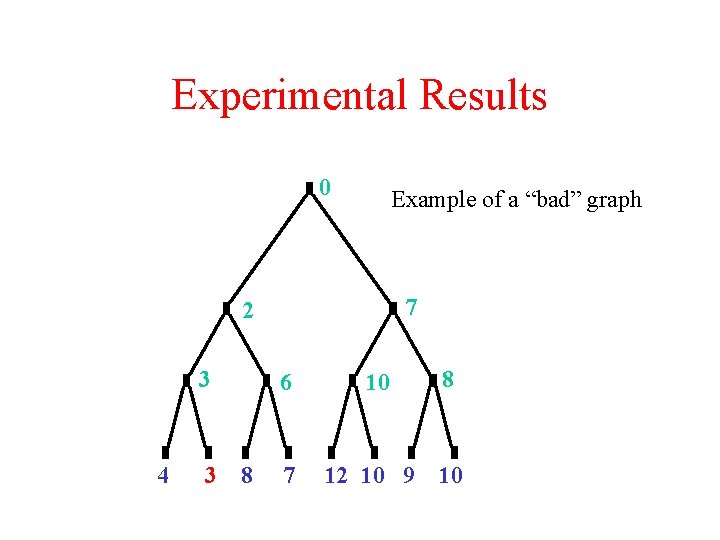
Experimental Results 0 Example of a “bad” graph 7 2 4 3 6 3 8 7 10 12 10 9 8 10
Conclusions • Javelin 2 relieves designer/programmer managing a set of [Inter-] networked processors that is: – Dynamic – Faulty • A wide set of applications is covered by: – Master-slave model – Branch & bound model • Weak shared memory performs well. • Use multicast (? ) for: – Code distribution – Propagating values
Future Work • Improve support for long-lived computation: – Do not require that the client run continuously. • A dag model of computation – with limited weak shared memory.
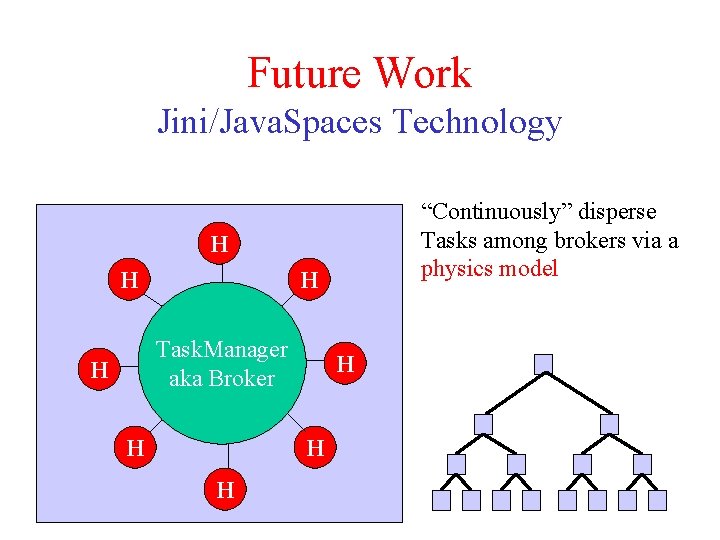
Future Work Jini/Java. Spaces Technology “Continuously” disperse Tasks among brokers via a physics model H H H Task. Manager aka Broker H H H
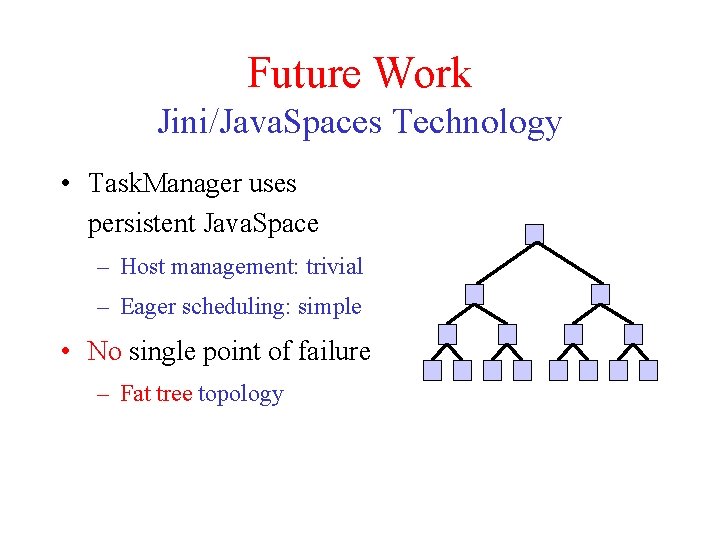
Future Work Jini/Java. Spaces Technology • Task. Manager uses persistent Java. Space – Host management: trivial – Eager scheduling: simple • No single point of failure – Fat tree topology
Future Work Advanced Issues • Privacy of data & algorithm • Algorithms – New computational complexity model “Minimize” communication between machines – N-body problem, … • Accounting: Associate specific work with specific host – Correctness – Compensation (how to quantify? ) • Create international open source organization – System infrastructure – Application codes

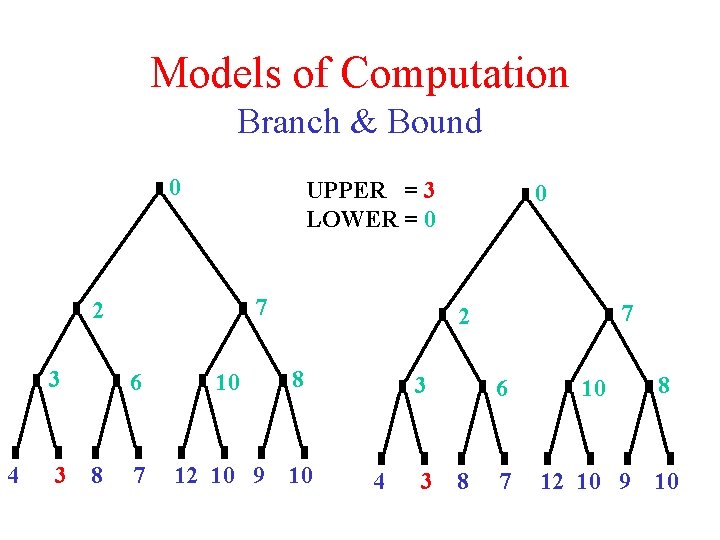
Models of Computation Branch & Bound 0 UPPER = 3 LOWER = 0 7 2 4 3 6 3 8 7 10 12 10 9 0 7 2 8 10 4 3 6 3 8 7 10 12 10 9 8 10
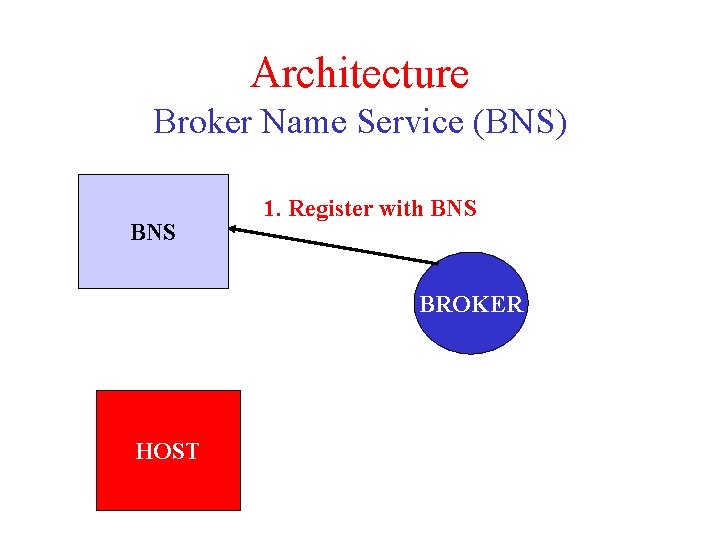
Architecture Broker Name Service (BNS) BNS 1. Register with BNS BROKER HOST
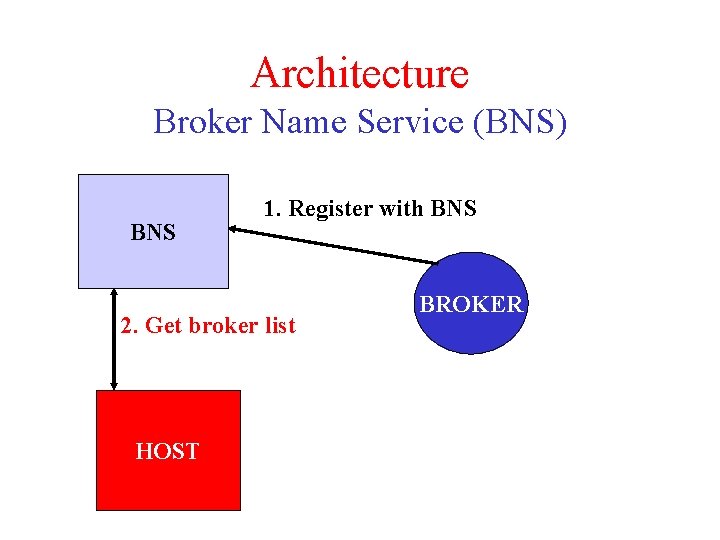
Architecture Broker Name Service (BNS) BNS 1. Register with BNS 2. Get broker list HOST BROKER
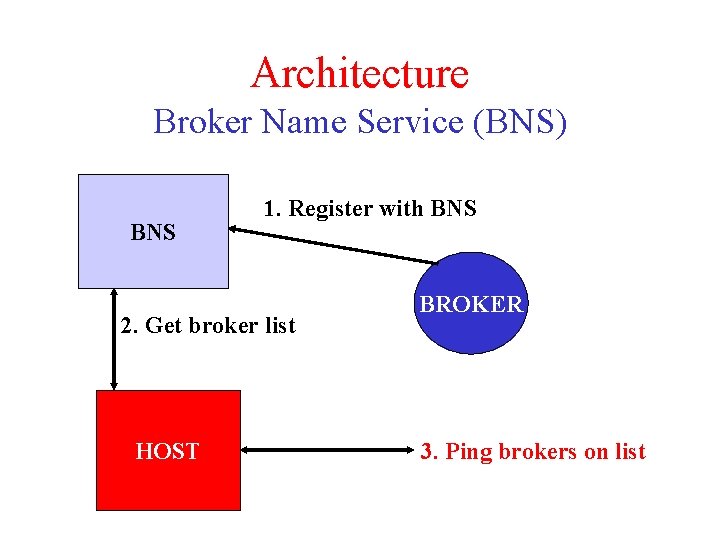
Architecture Broker Name Service (BNS) BNS 1. Register with BNS 2. Get broker list HOST BROKER 3. Ping brokers on list
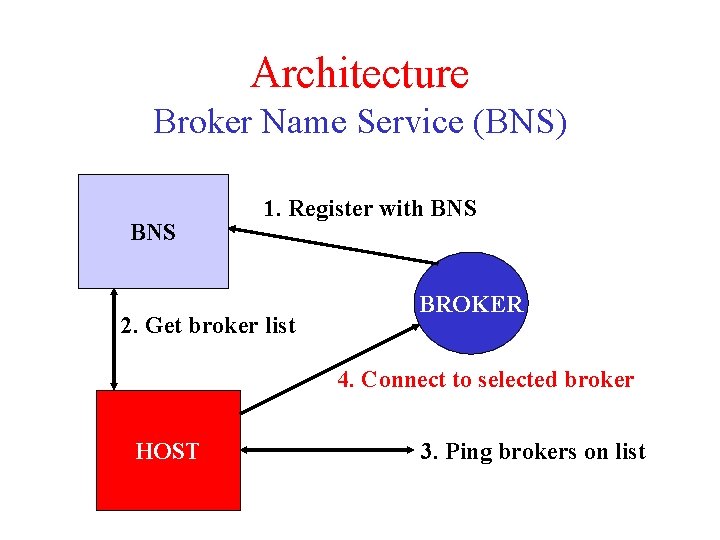
Architecture Broker Name Service (BNS) BNS 1. Register with BNS 2. Get broker list BROKER 4. Connect to selected broker HOST 3. Ping brokers on list
- Slides: 48