
International Trade Why Nations Trade Resources Distribution Natural
International Trade

Why Nations Trade – Resources Distribution • Natural Resources – Copper, iron, timber • Human Capital – Education, skill • Physical Capital – Roads, warehouses, machines – Unequal Resource Distribution • Most resources are not evenly divided around the world. Some countries have far more of one resource than others
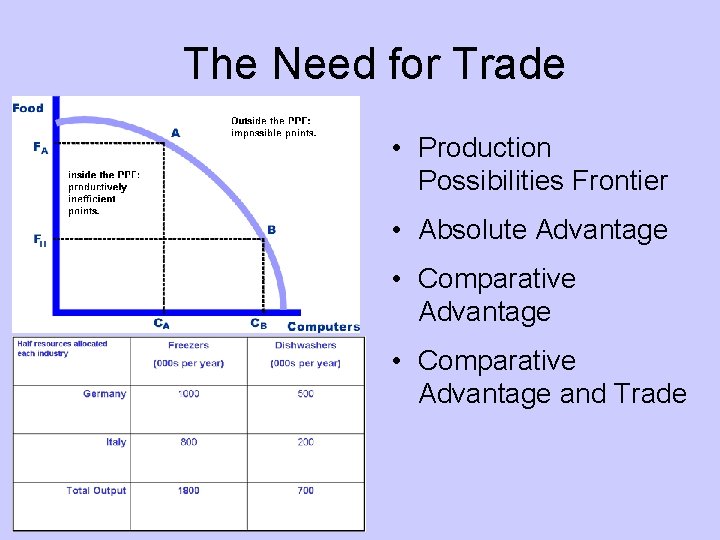
The Need for Trade • Production Possibilities Frontier • Absolute Advantage • Comparative Advantage and Trade
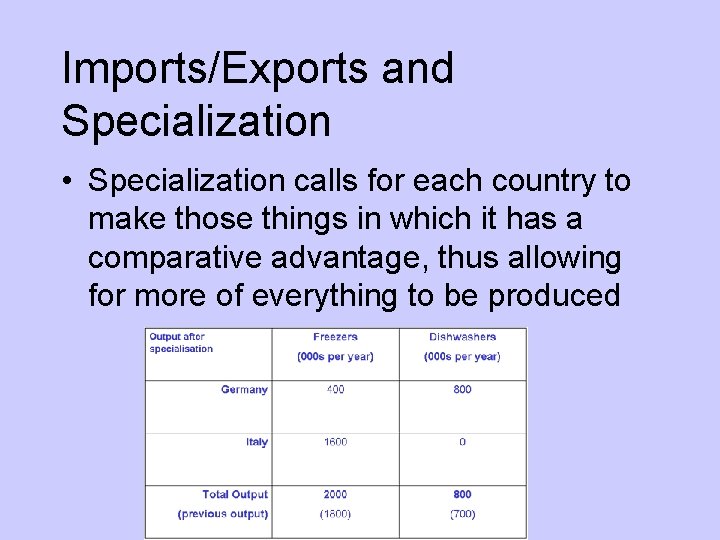
Imports/Exports and Specialization • Specialization calls for each country to make those things in which it has a comparative advantage, thus allowing for more of everything to be produced
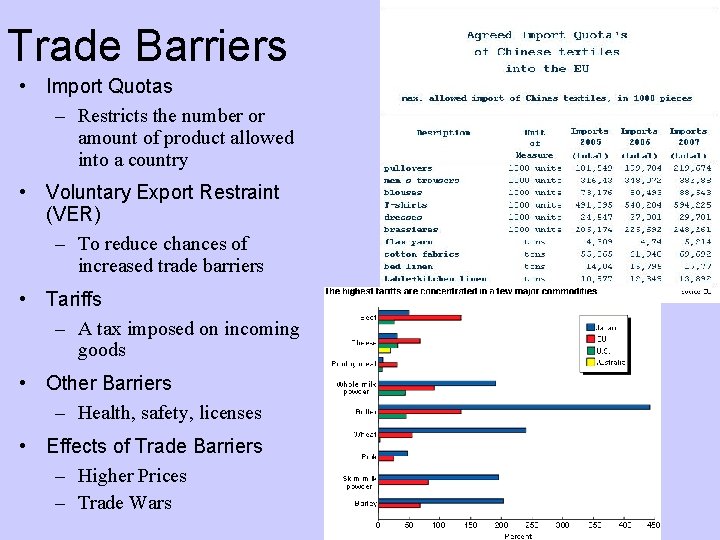
Trade Barriers • Import Quotas – Restricts the number or amount of product allowed into a country • Voluntary Export Restraint (VER) – To reduce chances of increased trade barriers • Tariffs – A tax imposed on incoming goods • Other Barriers – Health, safety, licenses • Effects of Trade Barriers – Higher Prices – Trade Wars
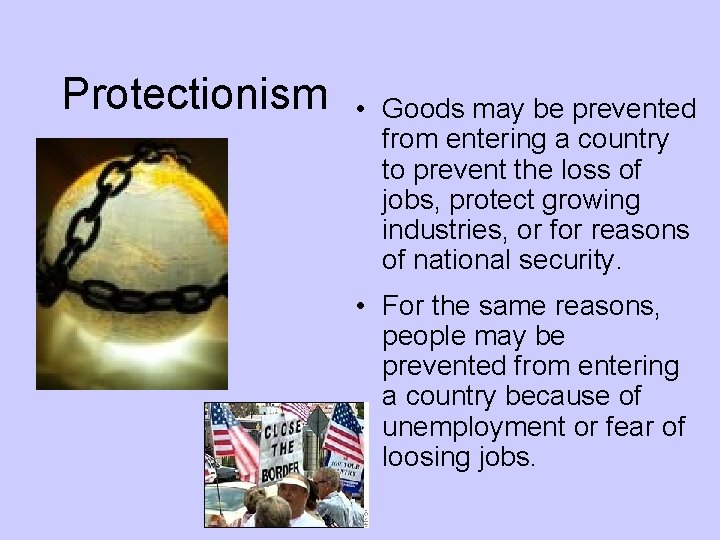
Protectionism • Goods may be prevented from entering a country to prevent the loss of jobs, protect growing industries, or for reasons of national security. • For the same reasons, people may be prevented from entering a country because of unemployment or fear of loosing jobs.
International Agreements • Most Favored Nation – A nation that has reduced trade tariffs with the U. S. • General Agreement on Tariffs and Trade (GATT) – The first international agreement on trade • World Trade Organization (WTO) – An expansion of and more robust version of GATT • European Union – To compete better, most European countries formalized an agreement to eliminate trade barriers within the Union, and to adopt a singe currency • North American Free Trade Agreement (NAFTA) – Agreement between Canada, the U. S. , and Mexico to reduce and eliminate trade barriers • Other Agreements – Many other agreements exist around the world to facilitate trade between groups of countries
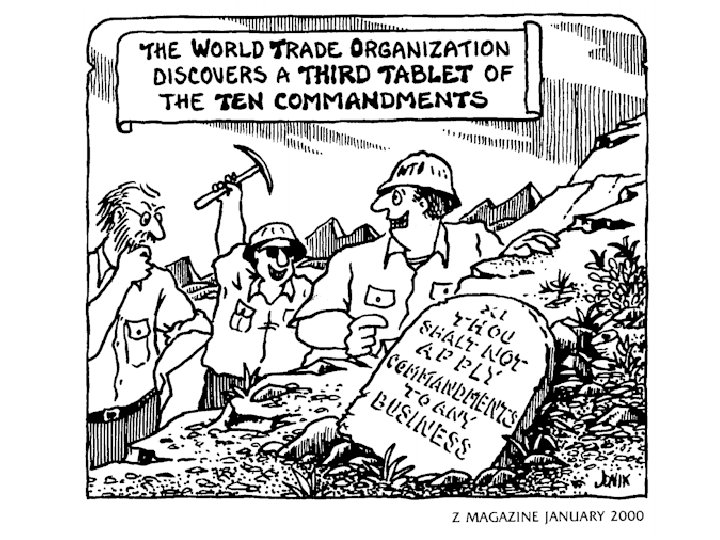

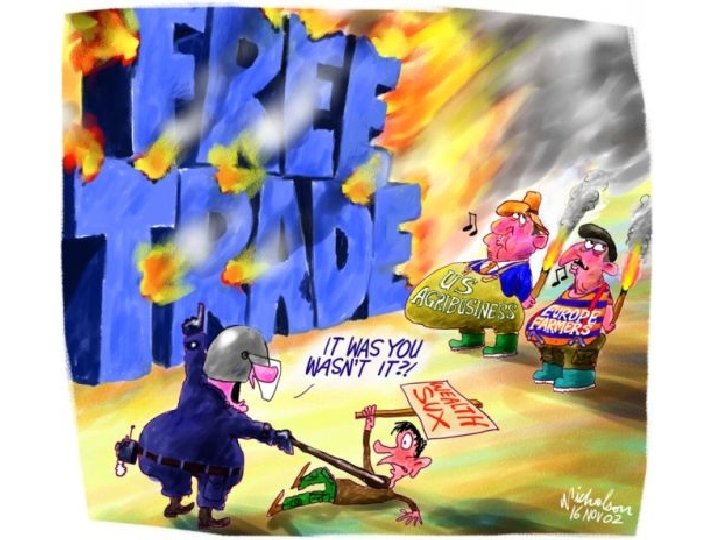
Protests Against WTO • The free trade movement pushed by businesses has also created a backlash by people who think that free trade agreements promote labor abuses and job losses
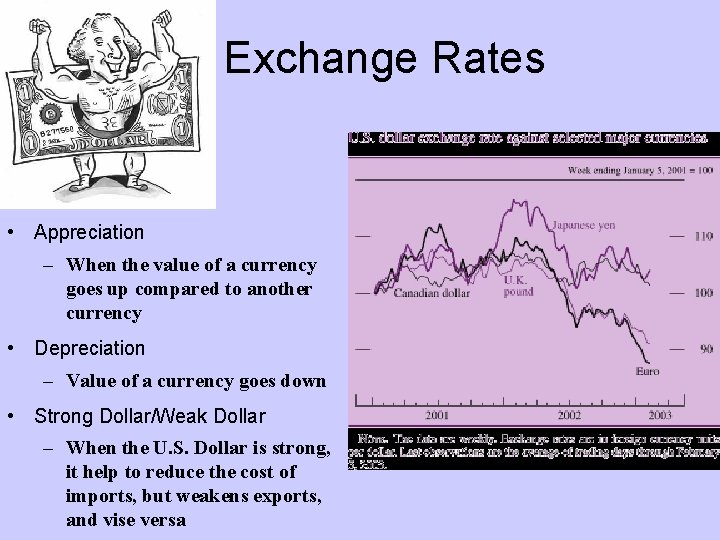
Exchange Rates • Appreciation – When the value of a currency goes up compared to another currency • Depreciation – Value of a currency goes down • Strong Dollar/Weak Dollar – When the U. S. Dollar is strong, it help to reduce the cost of imports, but weakens exports, and vise versa
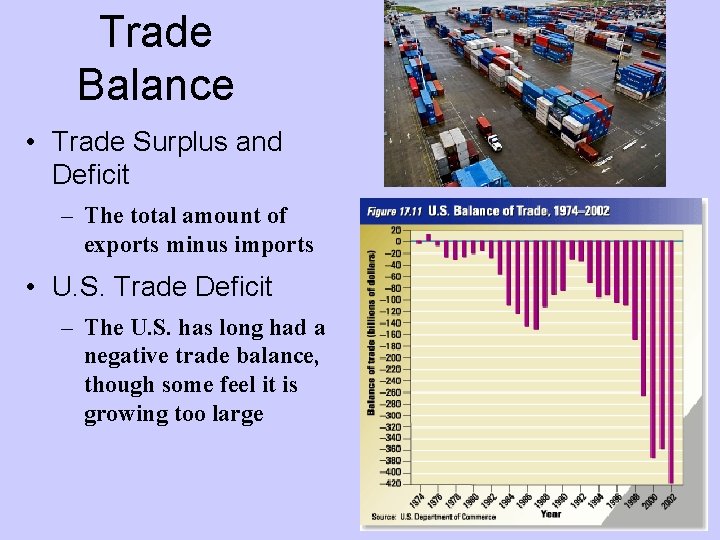
Trade Balance • Trade Surplus and Deficit – The total amount of exports minus imports • U. S. Trade Deficit – The U. S. has long had a negative trade balance, though some feel it is growing too large
- Slides: 12