
INTERNATIONAL TRADE THEORY AND PRACTICE The Ricardian model
- Slides: 6
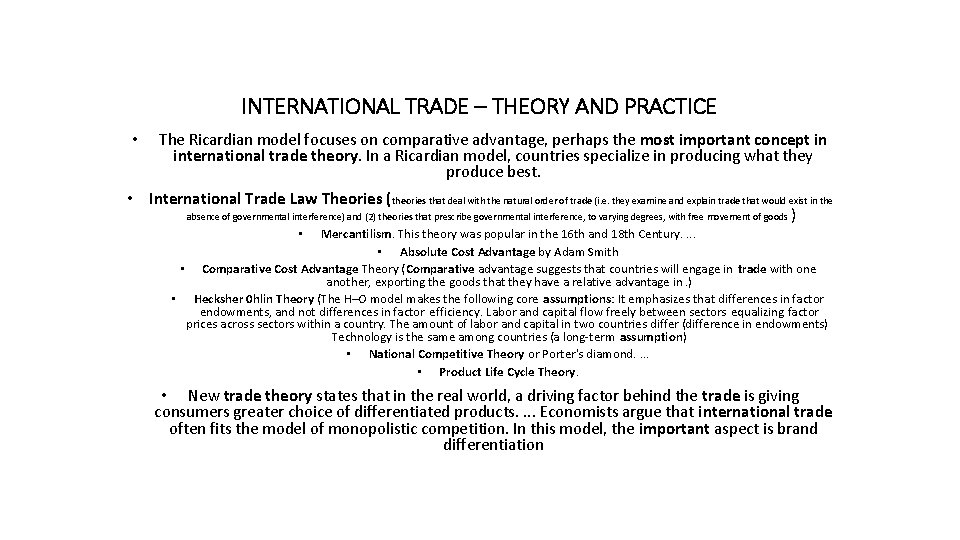
INTERNATIONAL TRADE – THEORY AND PRACTICE • The Ricardian model focuses on comparative advantage, perhaps the most important concept in international trade theory. In a Ricardian model, countries specialize in producing what they produce best. • International Trade Law Theories (theories that deal with the natural order of trade (i. e. they examine and explain trade that would exist in the absence of governmental interference) and (2) theories that prescribe governmental interference, to varying degrees, with free movement of goods ) Mercantilism. This theory was popular in the 16 th and 18 th Century. . • Absolute Cost Advantage by Adam Smith • Comparative Cost Advantage Theory (Comparative advantage suggests that countries will engage in trade with one another, exporting the goods that they have a relative advantage in. ) • Hecksher 0 hlin Theory (The H–O model makes the following core assumptions: It emphasizes that differences in factor endowments, and not differences in factor efficiency. Labor and capital flow freely between sectors equalizing factor prices across sectors within a country. The amount of labor and capital in two countries differ (difference in endowments) Technology is the same among countries (a long-term assumption) • National Competitive Theory or Porter's diamond. . • Product Life Cycle Theory. • • New trade theory states that in the real world, a driving factor behind the trade is giving consumers greater choice of differentiated products. . Economists argue that international trade often fits the model of monopolistic competition. In this model, the important aspect is brand differentiation
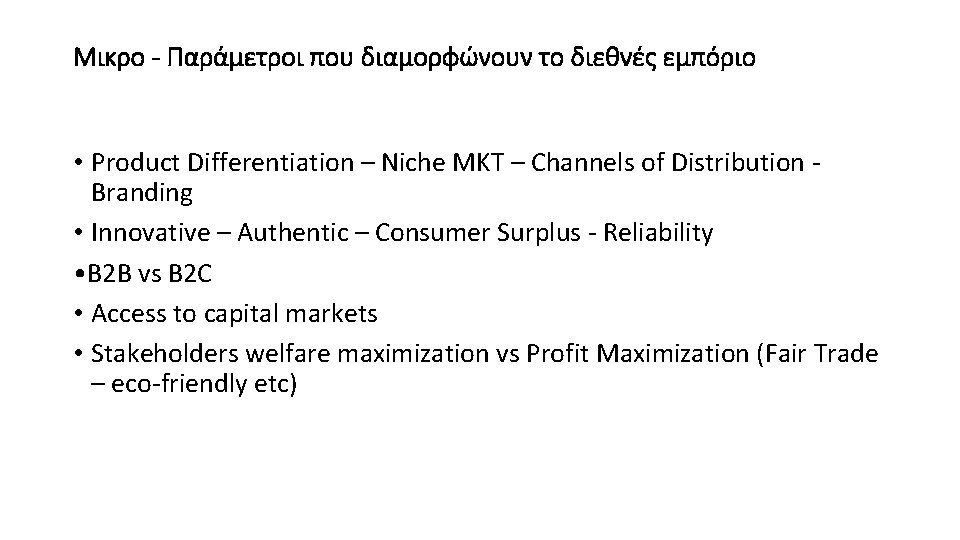
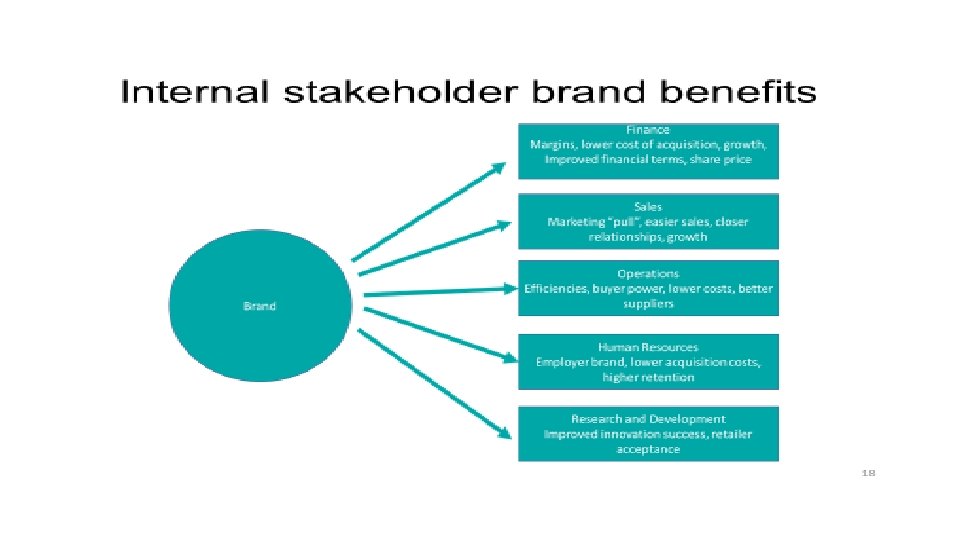
Μικρο - Παράμετροι που διαμορφώνουν το διεθνές εμπόριο • Product Differentiation – Niche MKT – Channels of Distribution Branding • Innovative – Authentic – Consumer Surplus - Reliability • B 2 B vs B 2 C • Access to capital markets • Stakeholders welfare maximization vs Profit Maximization (Fair Trade – eco-friendly etc)