
International Trade and Comparative Advantage Three reasons for
- Slides: 11
International Trade and Comparative Advantage • Three reasons for trade : (1) Cross country differences in supply (different technologies, different industrial organization, etc. ) (2) Cross country differences in demand (difference preferences) (3) Exploiting Economies of Scale
Comparative Advantage: The Ricardian Model • Assumptions : (1) (2) (3) (4) (5) One factor Differences in labor productivity across countries Two goods Two countries Constant returns to scale • Main idea : Countries engage in trade because they are different from each other in relative labor productivity.
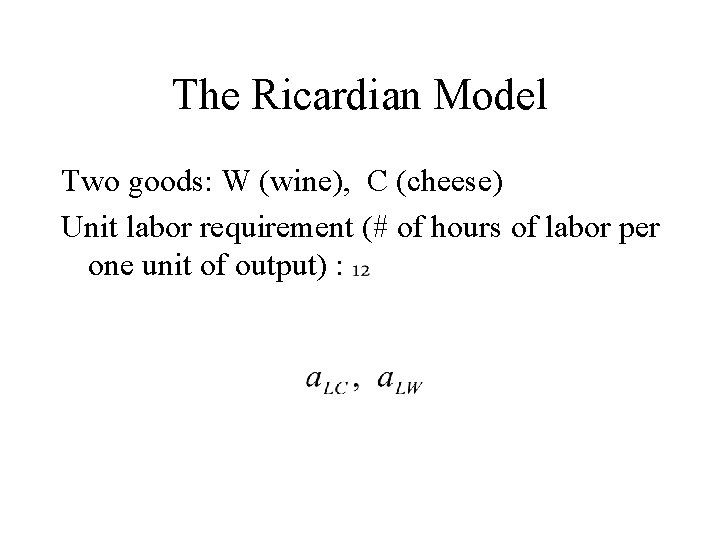
The Ricardian Model Two goods: W (wine), C (cheese) Unit labor requirement (# of hours of labor per one unit of output) :
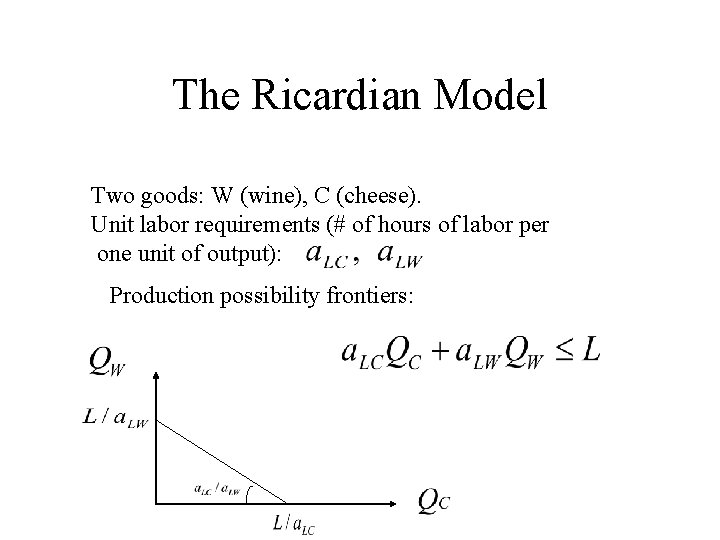
The Ricardian Model Two goods: W (wine), C (cheese). Unit labor requirements (# of hours of labor per one unit of output): Production possibility frontiers:
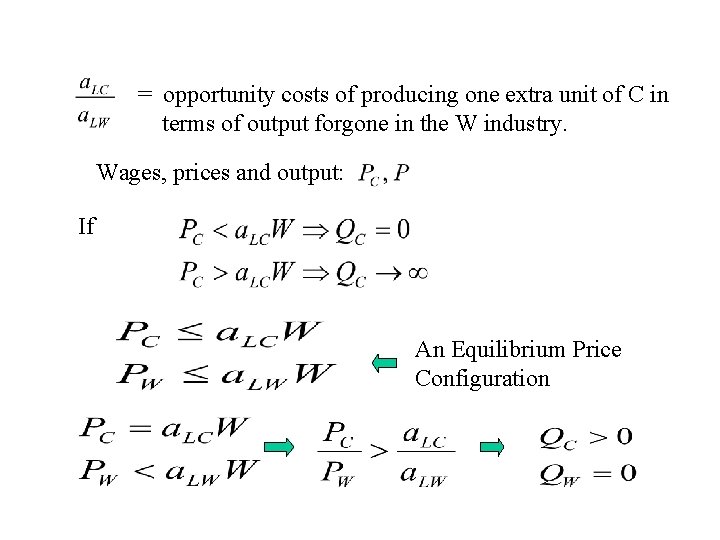
= opportunity costs of producing one extra unit of C in terms of output forgone in the W industry. Wages, prices and output: If An Equilibrium Price Configuration
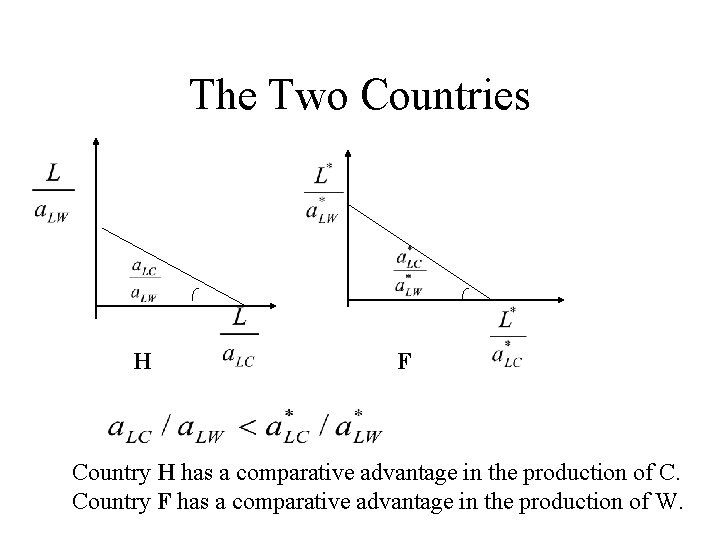
The Two Countries H F Country H has a comparative advantage in the production of C. Country F has a comparative advantage in the production of W.
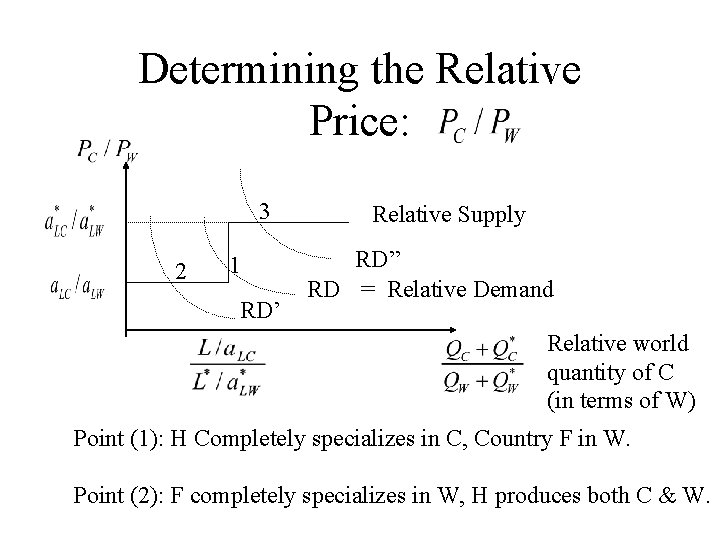
Determining the Relative Price: 3 2 1 RD’ Relative Supply RD” RD = Relative Demand Relative world quantity of C (in terms of W) Point (1): H Completely specializes in C, Country F in W. Point (2): F completely specializes in W, H produces both C & W.
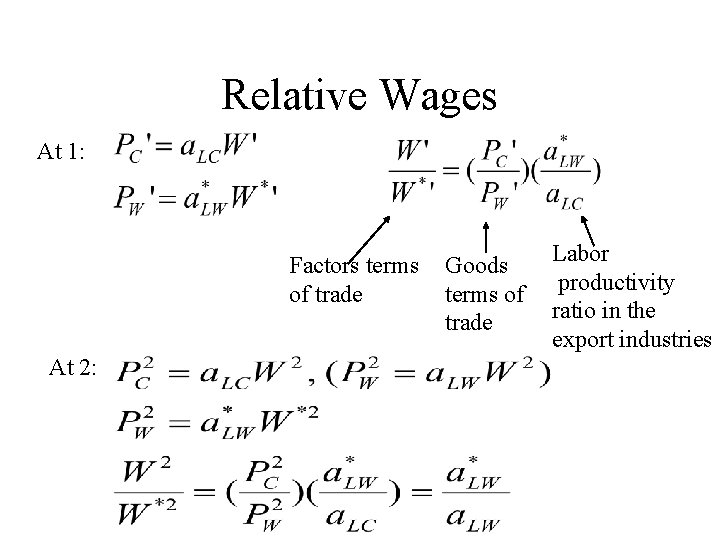
Relative Wages At 1: Factors terms of trade At 2: Goods terms of trade Labor productivity ratio in the export industries
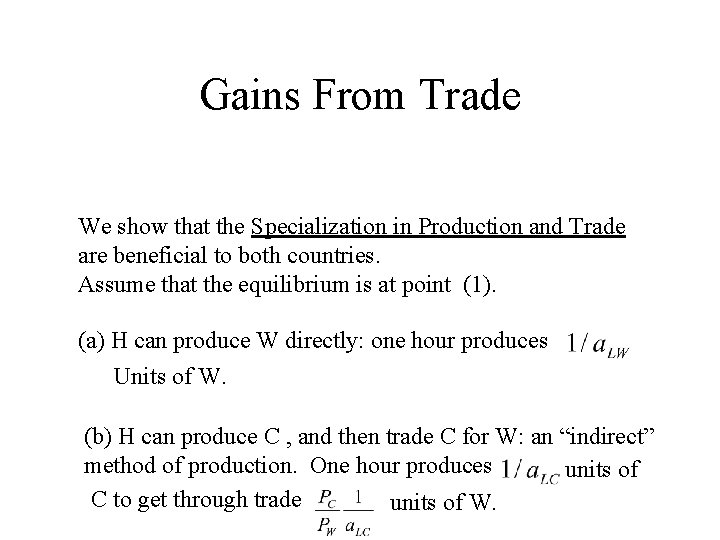
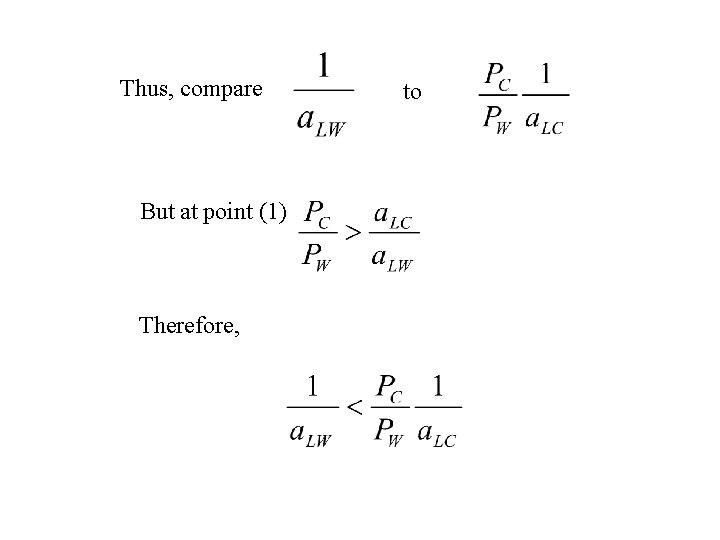
Gains From Trade We show that the Specialization in Production and Trade are beneficial to both countries. Assume that the equilibrium is at point (1). (a) H can produce W directly: one hour produces Units of W. (b) H can produce C , and then trade C for W: an “indirect” method of production. One hour produces units of C to get through trade units of W.
Thus, compare But at point (1) Therefore, to
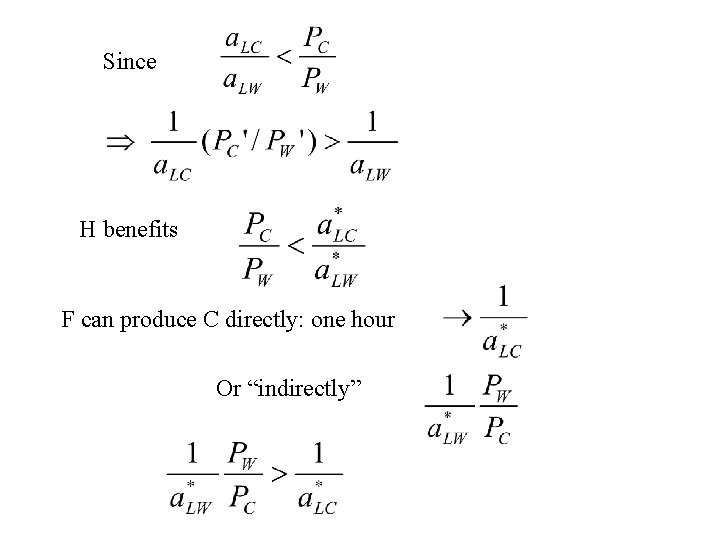
Since H benefits F can produce C directly: one hour Or “indirectly”