
International Technical Working Group on IESCity Framework Consensus
- Slides: 9
International Technical Working Group on IES-City Framework: Consensus PPI April 15, 2016 Dr. Martin Burns Electronic Engineer Smart Grid and Cyber Physical Systems Program Engineering Laboratory National Institute of Standards and Technology 1
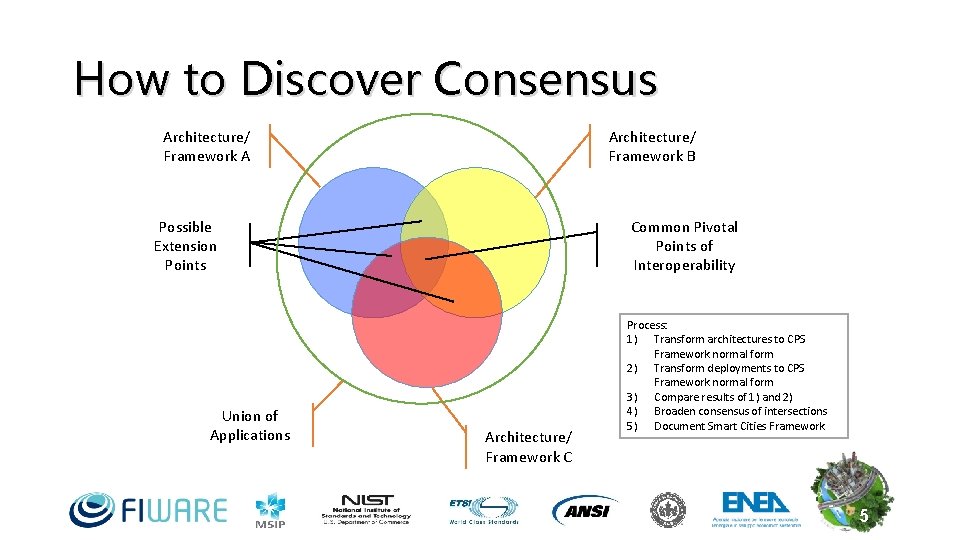
Pivotal Points of Interoperability - PPI If you standardize everything, you freeze out innovation. If you standardize nothing, you get non -interoperable clusters that can’t be easily integrated. The principle of Pivotal Points of Interoperability is to find consensus standardized interfaces that deal with composition of CPS without constraining innovation. 2
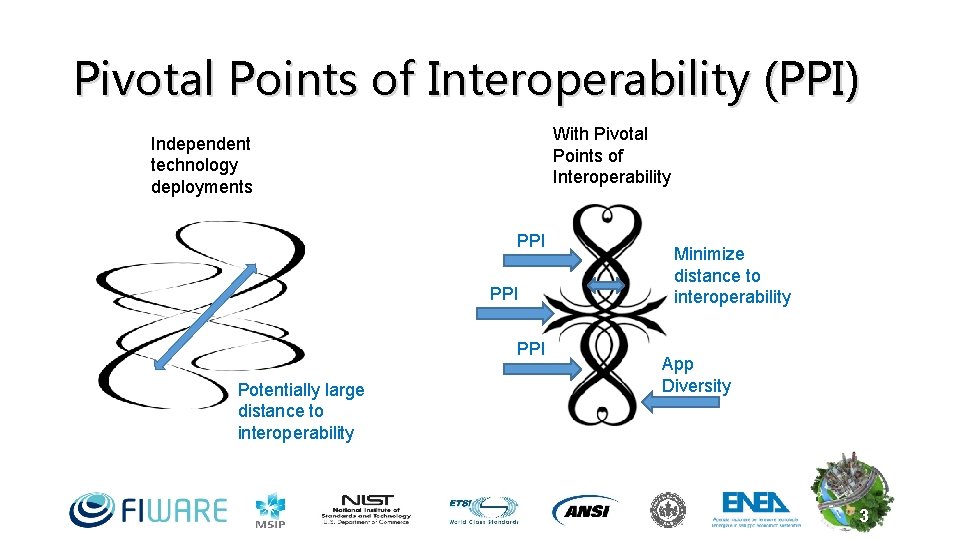
Pivotal Points of Interoperability (PPI) With Pivotal Points of Interoperability Independent technology deployments PPI PPI Potentially large distance to interoperability Minimize distance to interoperability App Diversity 3
Some potential PPIs • Domain-specific Data/Semantic/Information Models • Separate PII from Data • Standard metadata about objects, measurements, time, cost • REST APIs • IP Networking • Transport Layer Security (TLS) • Certificate Authentication • Role Based Access Control • OAuth 2. 0 to establish third party access and regulate roles 4
How to Discover Consensus Architecture/ Framework A Architecture/ Framework B Possible Extension Points Union of Applications Common Pivotal Points of Interoperability Architecture/ Framework C Process: 1) Transform architectures to CPS Framework normal form 2) Transform deployments to CPS Framework normal form 3) Compare results of 1) and 2) 4) Broaden consensus of intersections 5) Document Smart Cities Framework 5
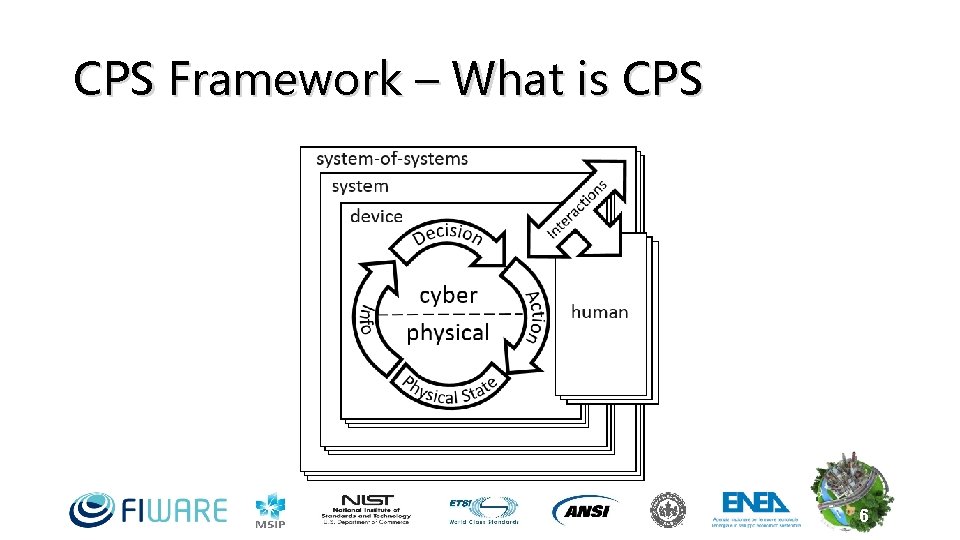
CPS Framework – What is CPS 6
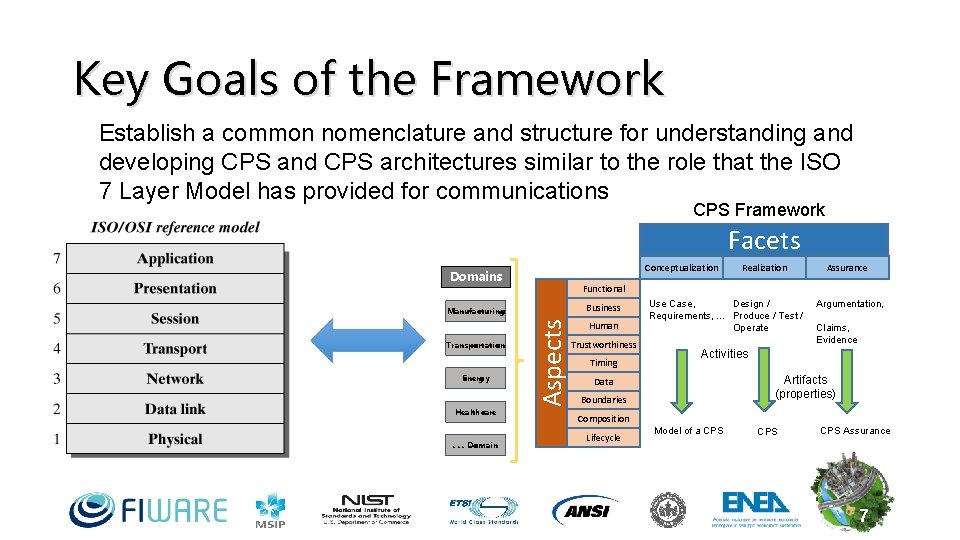
Key Goals of the Framework Establish a common nomenclature and structure for understanding and developing CPS and CPS architectures similar to the role that the ISO 7 Layer Model has provided for communications CPS Framework Facets Conceptualization Domains Business Healthcare . . . Domain Aspects Energy Assurance Functional Manufacturing Transportation Realization Human Trustworthiness Timing Use Case, Design / Requirements, … Produce / Test / Operate Artifacts (properties) Boundaries Lifecycle Claims, Evidence Activities Data Composition Argumentation, Model of a CPS CPS Assurance 7
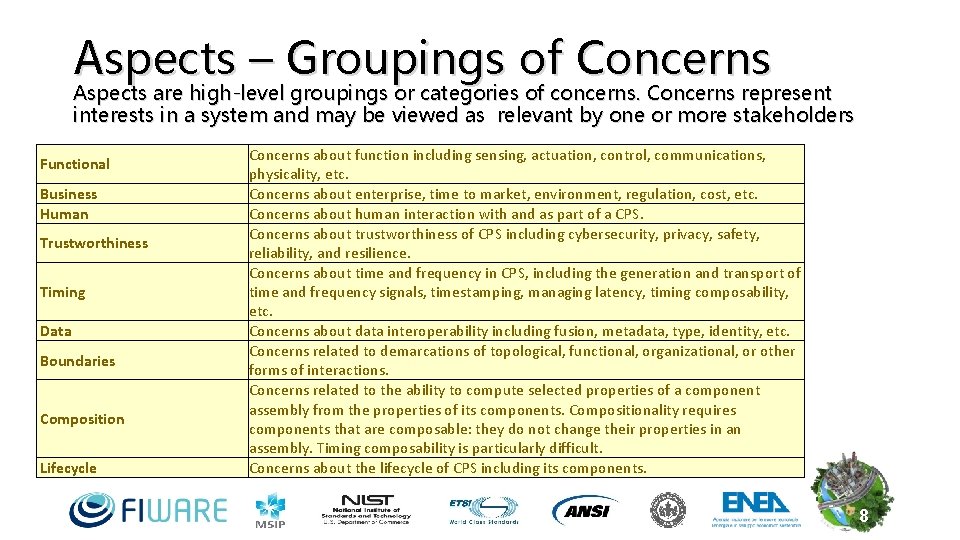
Aspects – Groupings of Concerns Aspects are high-level groupings or categories of concerns. Concerns represent interests in a system and may be viewed as relevant by one or more stakeholders Functional Business Human Trustworthiness Timing Data Boundaries Composition Lifecycle Concerns about function including sensing, actuation, control, communications, physicality, etc. Concerns about enterprise, time to market, environment, regulation, cost, etc. Concerns about human interaction with and as part of a CPS. Concerns about trustworthiness of CPS including cybersecurity, privacy, safety, reliability, and resilience. Concerns about time and frequency in CPS, including the generation and transport of time and frequency signals, timestamping, managing latency, timing composability, etc. Concerns about data interoperability including fusion, metadata, type, identity, etc. Concerns related to demarcations of topological, functional, organizational, or other forms of interactions. Concerns related to the ability to compute selected properties of a component assembly from the properties of its components. Compositionality requires components that are composable: they do not change their properties in an assembly. Timing composability is particularly difficult. Concerns about the lifecycle of CPS including its components. 8
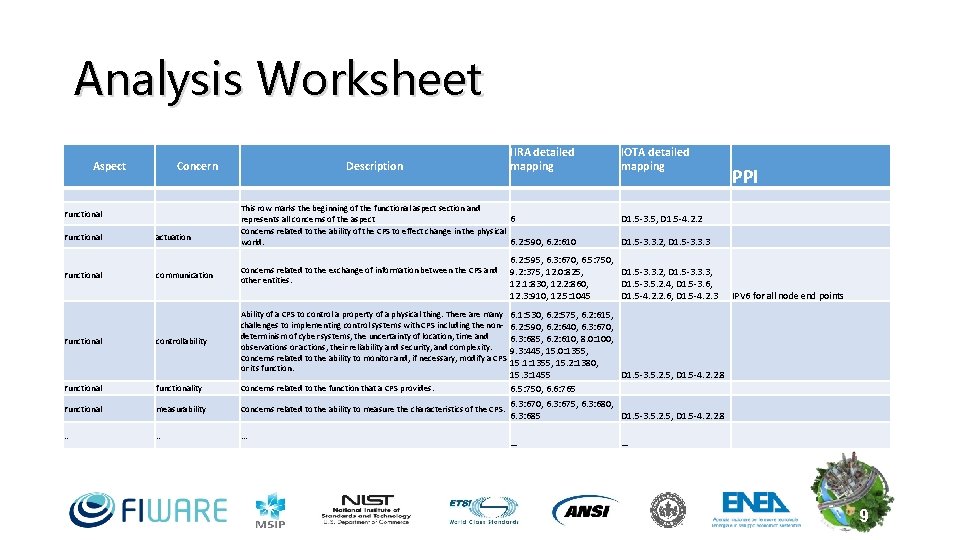
Analysis Worksheet Aspect Concern Functional actuation Functional communication Description IIRA detailed mapping This row marks the beginning of the functional aspect section and represents all concerns of the aspect 6 Concerns related to the ability of the CPS to effect change in the physical world. 6. 2: 590, 6. 2: 610 Concerns related to the exchange of information between the CPS and other entities. IOTA detailed mapping D 1. 5 -3. 5, D 1. 5 -4. 2. 2 D 1. 5 -3. 3. 2, D 1. 5 -3. 3. 3 6. 2: 595, 6. 3: 670, 6. 5: 750, 9. 2: 375, 12. 0: 825, D 1. 5 -3. 3. 2, D 1. 5 -3. 3. 3, 12. 1: 830, 12. 2: 860, D 1. 5 -3. 5. 2. 4, D 1. 5 -3. 6, 12. 3: 910, 12. 5: 1045 D 1. 5 -4. 2. 2. 6, D 1. 5 -4. 2. 3 Functional controllability Ability of a CPS to control a property of a physical thing. There are many 6. 1: 530, 6. 2: 575, 6. 2: 615, challenges to implementing control systems with CPS including the non- 6. 2: 590, 6. 2: 640, 6. 3: 670, determinism of cyber systems, the uncertainty of location, time and 6. 3: 685, 6. 2: 610, 8. 0: 100, observations or actions, their reliability and security, and complexity. 9. 3: 445, 15. 0: 1355, Concerns related to the ability to monitor and, if necessary, modify a CPS 15. 1: 1355, 15. 2: 1380, or its function. Functional functionality Concerns related to the function that a CPS provides. Functional measurability Concerns related to the ability to measure the characteristics of the CPS. 6. 3: 670, 6. 3: 675, 6. 3: 680, … … … 15. 3: 1455 6. 5: 750, 6. 6: 765 PPI IPV 6 for all node end points D 1. 5 -3. 5. 2. 5, D 1. 5 -4. 2. 2. 8 6. 3: 685 D 1. 5 -3. 5. 2. 5, D 1. 5 -4. 2. 2. 8 … … 9