
International Standards on Regulating DNFBPs The way forward
International Standards on Regulating DNFBPs & The way forward Narcotics Division, Security Bureau Mr Ping-Yiu MA Assistant Secretary for Security 4 March 2010
Agenda Ø Financial Action Task Force (FATF) requirements on accountants Ø Highlight of the FATF recommendations relevant to accountants Ø Way Forward in regulating accountants 2
FATF The Financial Action Task Force (FATF) : Ø an inter-governmental body Ø created in 1989 by ‘G 7’ Ø sets standards, develops and promotes policies to combat money laundering and terrorist financing Ø has published 40+9 Recommendations to achieve its purpose 3
Designated Non-Financial Businesses and Professions (DNFBPs) DNFBPs as defined by Financial Action Task Force (FATF) are: Ø Lawyers Ø Accountants Ø Trust and Company Service Providers (TCSPs) Ø Real Estate Agents Ø Dealers in Precious Metals/ Stones Ø Casinos 4
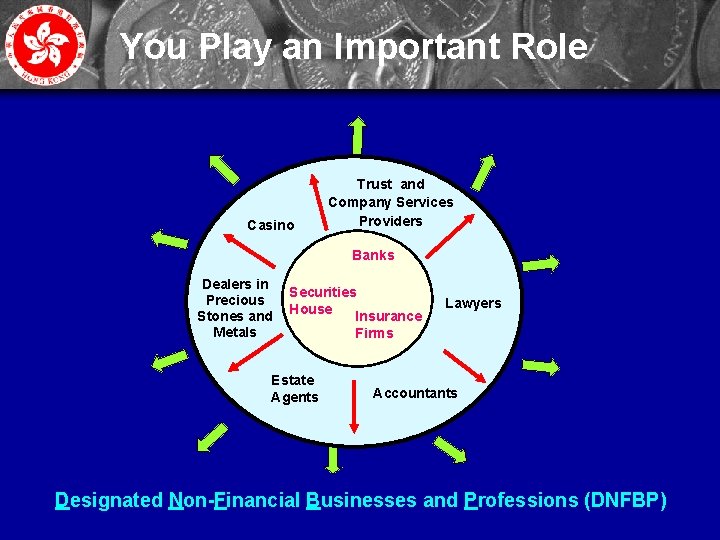
You Play an Important Role Casino Trust and Company Services Providers Banks Dealers in Precious Stones and Metals Securities House Insurance Firms Estate Agents Lawyers Accountants Designated Non-Financial Businesses and Professions (DNFBP) 5

6

Be a Gatekeeper for Hong Kong 7
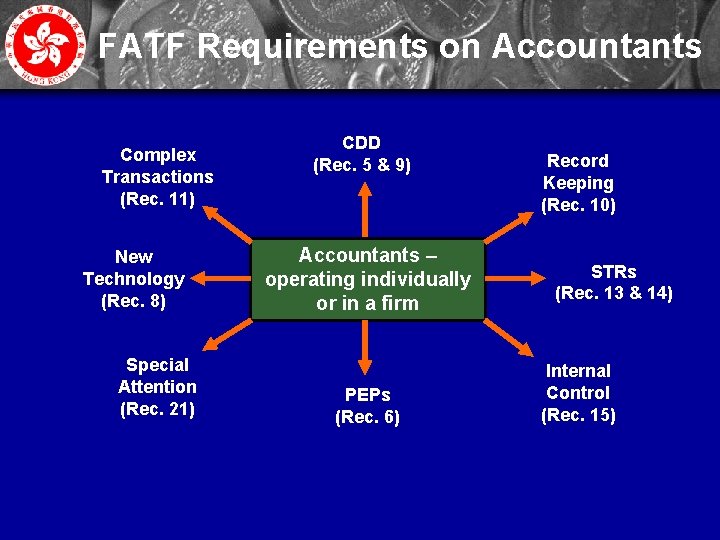
FATF Requirements on Accountants Complex Transactions (Rec. 11) New Technology (Rec. 8) Special Attention (Rec. 21) CDD (Rec. 5 & 9) Accountants – operating individually or in a firm PEPs (Rec. 6) Record Keeping (Rec. 10) STRs (Rec. 13 & 14) Internal Control (Rec. 15) 8
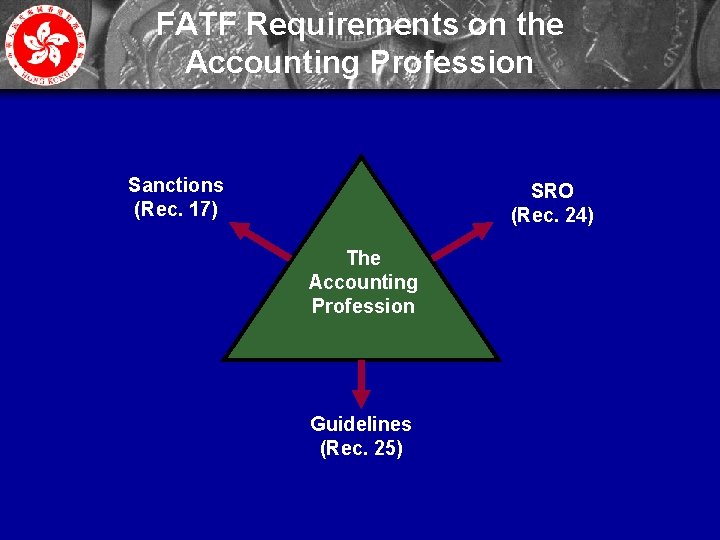
FATF Requirements on the Accounting Profession Sanctions (Rec. 17) SRO (Rec. 24) The Accounting Profession Guidelines (Rec. 25) 9
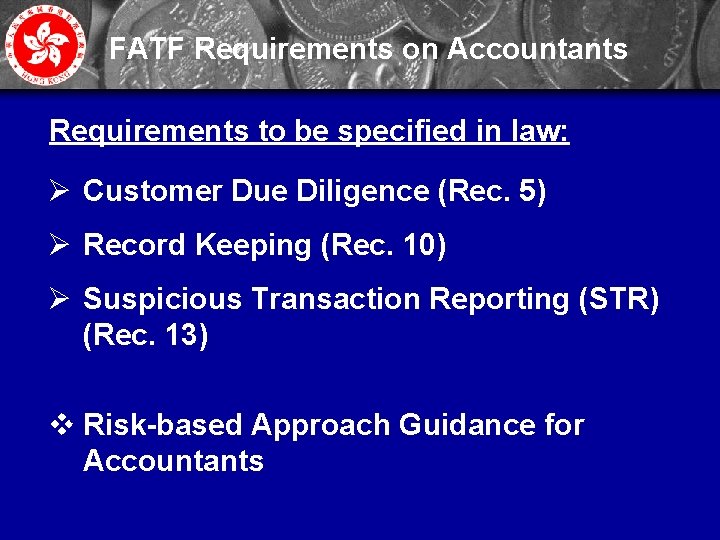
FATF Requirements on Accountants Requirements to be specified in law: Ø Customer Due Diligence (Rec. 5) Ø Record Keeping (Rec. 10) Ø Suspicious Transaction Reporting (STR) (Rec. 13) v Risk-based Approach Guidance for Accountants 10
When to Conduct CDD? When accountants prepare for or carry out transactions in relation to: Ø Buying and selling of real estates; Ø Managing of client money, securities or other assets; Ø Management of bank, savings or securities accounts; Ø Organisation of contributions for the creation, operation or management of companies; Ø Creation, operation or management of legal persons or arrangements, and buying and selling of business entities. 11
When to Conduct CDD? When accountants act as Trust and Company Service Providers and Ø Acting as a formation agent of legal person; Ø Acting as a director or secretary of a company; Ø Providing a registered office, etc for a company; Ø Acting as a trustee of an express trust; Ø Acting as a nominee shareholder for another person. v They have to comply with Rec. 5, 6, 8 -11, 21. 12
FATF Requirements on Accountants Other selected requirements: Ø Internal Controls (Rec. 15) Ø Self Regulatory Organisation (SRO) (Rec. 24) 13
Internal Controls Ø To establish / maintain internal policies / procedures to prevent ML / TF. Ø Policies / procedures to cover CDD, record keeping and STR obligations. Ø To communicate these to employees. Ø To develop appropriate compliance management (e. g. AML/CFT Compliance Officer at management level). 14
Internal Controls Ø On-going staff training. Ø Independent audit function to test compliance with the policies and procedures. Ø To put in place screening procedures to ensure high standards in hiring employees. Ø The type and extent of measures to be taken should commensurate with: v the level of ML / TF risk; and v the size of the business. 15
SRO – Responsibilities & Sanctions Ø Government authority or SRO to monitor and ensure compliance with AML / CFT requirements. Ø Power to sanction in case of noncompliance. Ø Effective, proportionate and dissuasive criminal, civil or administrative sanctions be available. 16
SRO - Sanctions Ø Range of sanctions available should be broad and proportionate to severity of noncompliance. Ø Sanctions should be available to legal persons, their directors and senior management. 17
SRO - Resources Ø Adequate structuring, funding, staff with sufficient technical and other resources to fully and effectively perform their functions. Ø Sufficient operational independence and autonomy to ensure freedom from interference. Ø Staff be of high professional standard & integrity and adequately trained for AML / CFT. 18
SRO - Guidelines Ø Government authority or SRO to establish guidelines to include the following: v ML / FT techniques and methods; and v any additional measures that accounting firms/accountants could take to ensure their AML / CFT measures are effective. 19
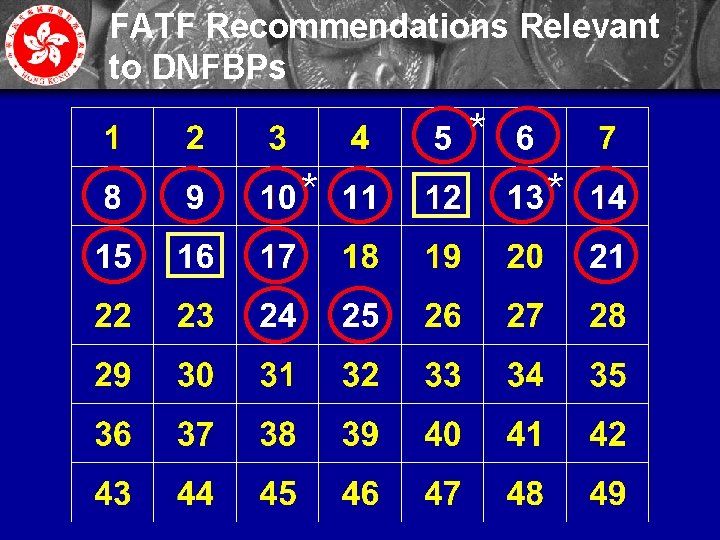
FATF Recommendations Relevant to DNFBPs * * * 20
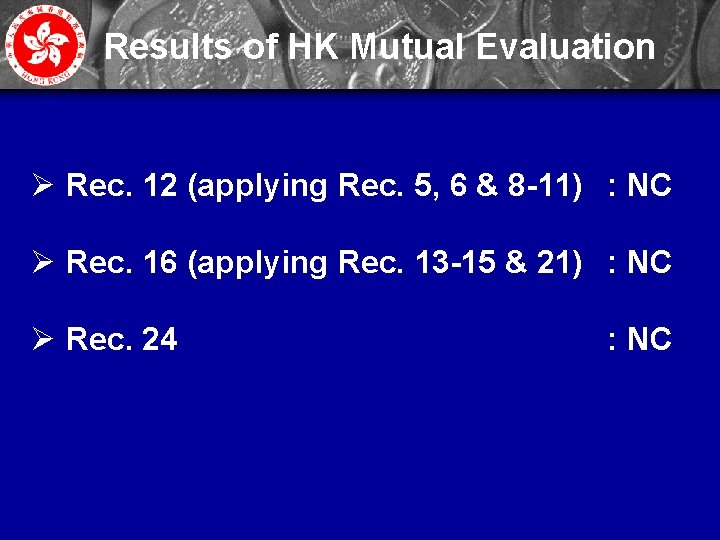
Results of HK Mutual Evaluation Ø Rec. 12 (applying Rec. 5, 6 & 8 -11) : NC Ø Rec. 16 (applying Rec. 13 -15 & 21) : NC Ø Rec. 24 : NC 21
Post ME Development (1) Ø Establishment of Central Co-ordinating Committee (CCC), chaired by Financial Secretary. Ø To steer & co-ordinate the strategic development of HK’s AML/CFT regime in line with internationally recognised standards. 22
Post ME Development (2) Ø Financial Services & the Treasury Bureau (FSTB) is the overall co-ordinator for AML / CFT matters and with specific responsibilities on financial sectors. Ø Security Bureau (Narcotics Division) looks after DNFBPs and Non-profit Organisations. 23
Way Forward (1) Legislation on CDD & Record Keeping Ø Phase I : Financial Sectors Ø Phase II: DNFBPs 24
Way Forward (2) Ø FSTB Consultation on Legislative Proposals Against Money Laundering ended on 6 February 2010. v Proposes to allow continued reliance on unregulated Third Parties by Financial Institutions. Ø To be introduced into Leg. Co – Q 2 2010. 25
Way Forward (3) Ø To prepare for Phase II, SB will step up outreaching activities to raise awareness on AML / CFT and work closely with professional bodies. Ø CPD Seminars. Ø Sector Specific Guidelines. Ø Revised Interactive Training Kit. 26
Consultation with Non-Financial Sectors Issues Ø Timeline Ø Compliance costs Ø Regulatory Authority 27

Timeline (1) 2010 2011 2015 2013 2012 2014 2016 28

Timeline (2) FATF 35 members 29
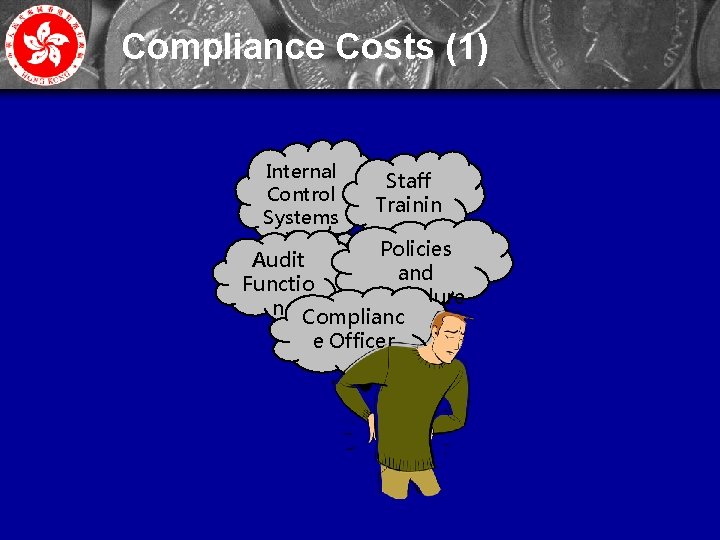
Compliance Costs (1) Internal Control Systems Staff Trainin g Policies Audit and Functio Procedure n Complianc s e Officer 30
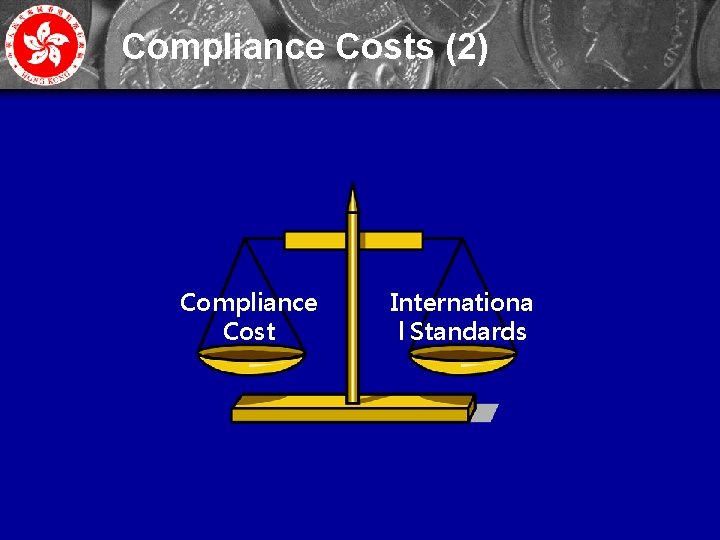
Compliance Costs (2) Compliance Cost Internationa l Standards 31
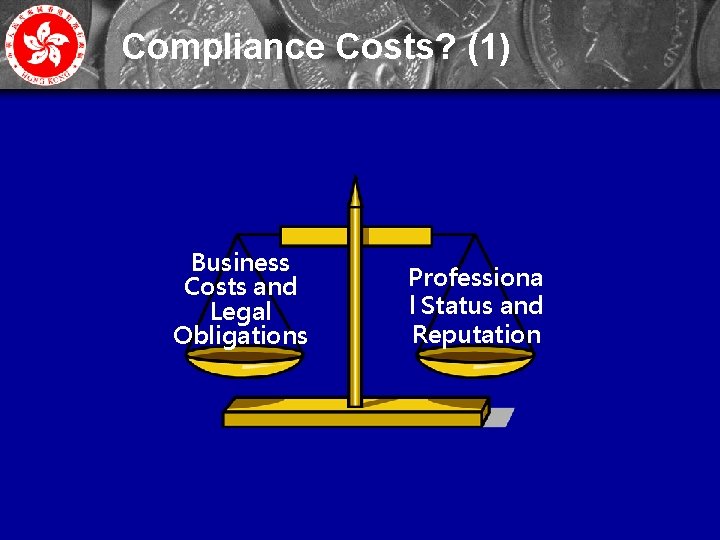
Compliance Costs? (1) Business Costs and Legal Obligations Professiona l Status and Reputation 32
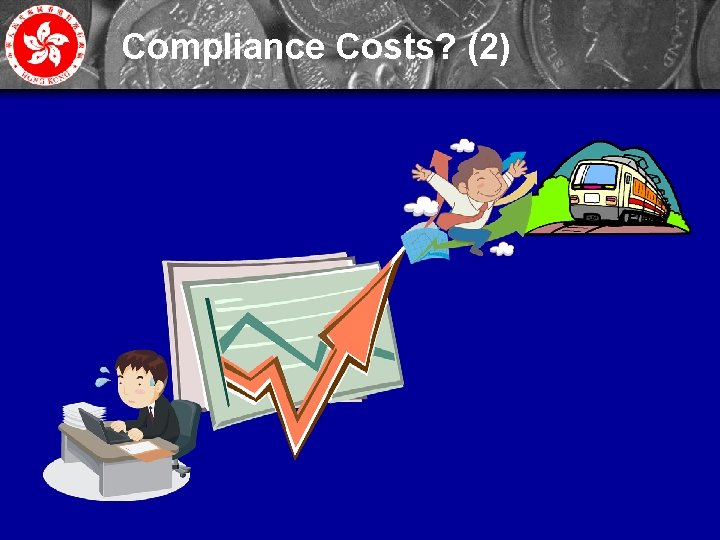
Compliance Costs? (2) 33

Open-minded 34

Partnership 35

Thank you! 36
- Slides: 36