
International relations theories Theory is an explanation of

- Slides: 61
International relations theories
Theory is an explanation of why things happen. Anything beyond a simple statement of fact is to some degree a theory. When you gather many facts and categorize and then generalize about them, you are beginning to theorize.
IR Theories There are four theories in IR. Realism Liberalism Constructivism Marxism
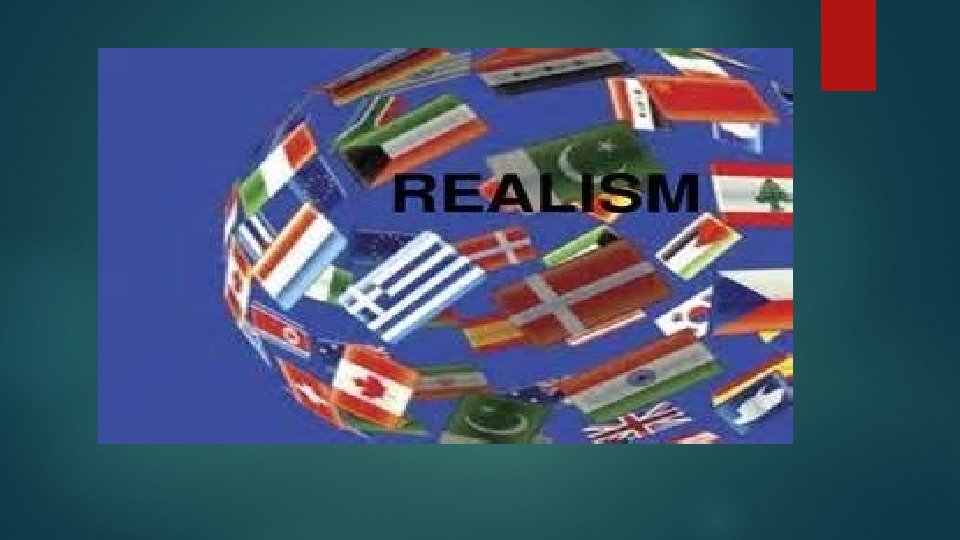
Realism IR theory that emphasizes power and national interest. Your people and their interest come before anything else in the world This is the oldest IR theory and is still the most accepted theory by many academics and practitioners.
Realism is made up of five basic components. Power counts most States are the units that matter National interest trumps ideology Balance of power still operates Amorality reigns
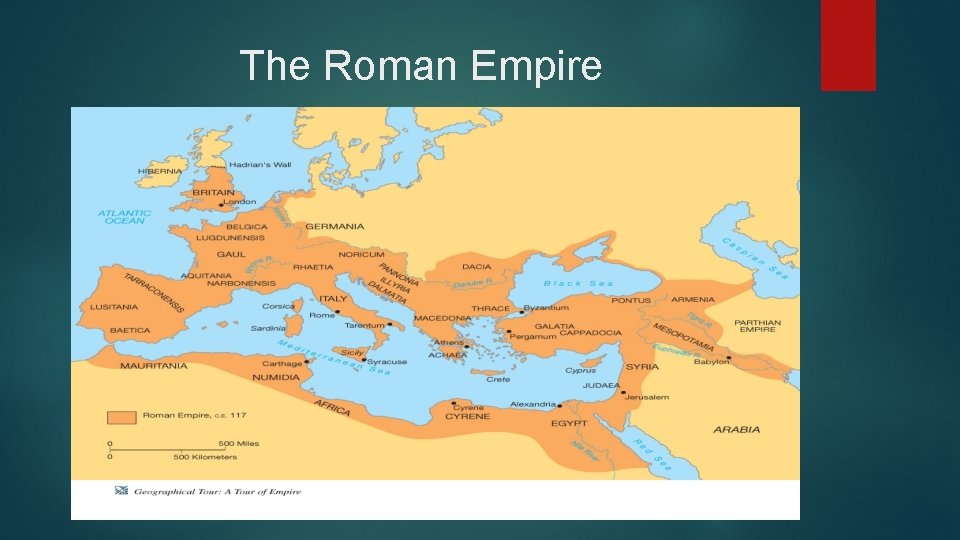
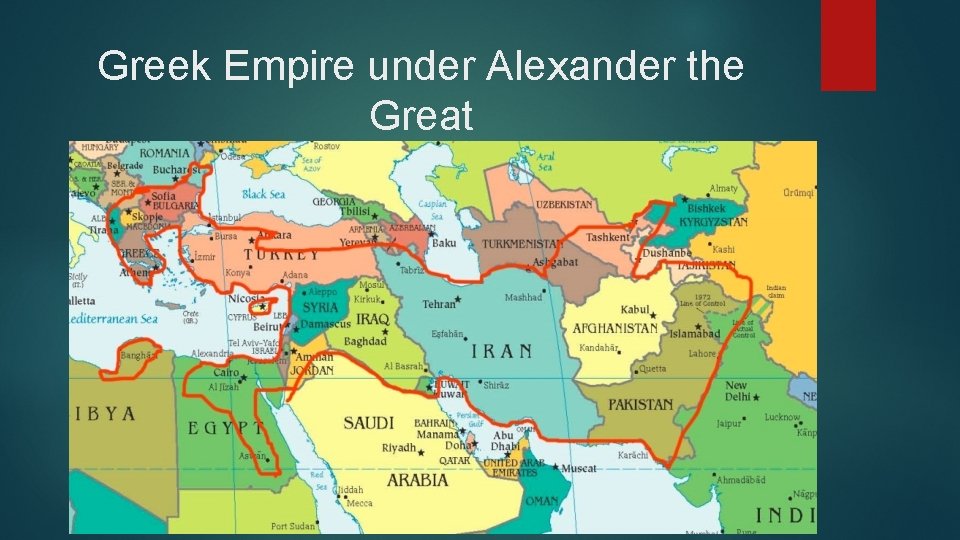
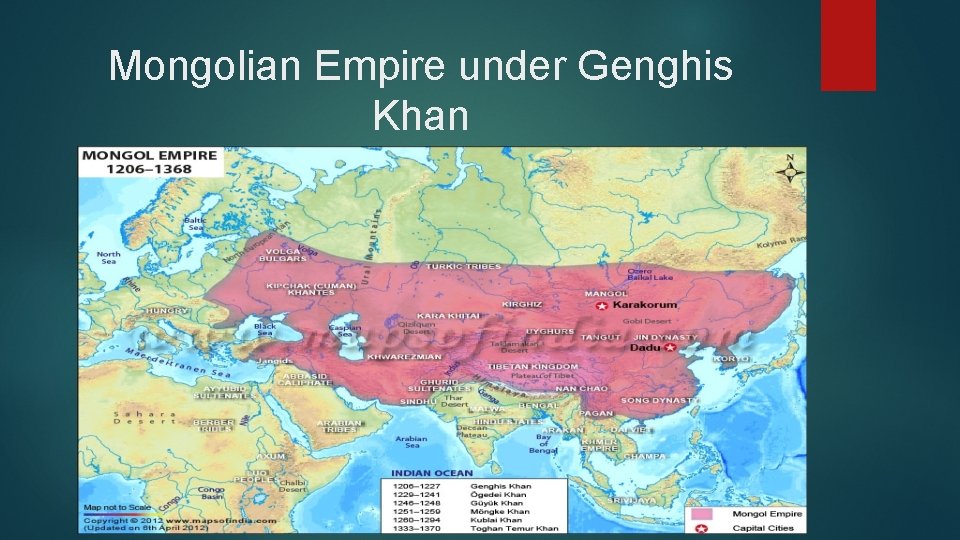
Power Counts Most important component in realism is power. Power consists of the economic, political, psychological, and military tools by which A gets B to do what A wants. Ancient kings and empires knew all about power, most of them pursued it with single-minded determination and emphasized its military aspect.
The Roman Empire
Greek Empire under Alexander the Great
Mongolian Empire under Genghis Khan
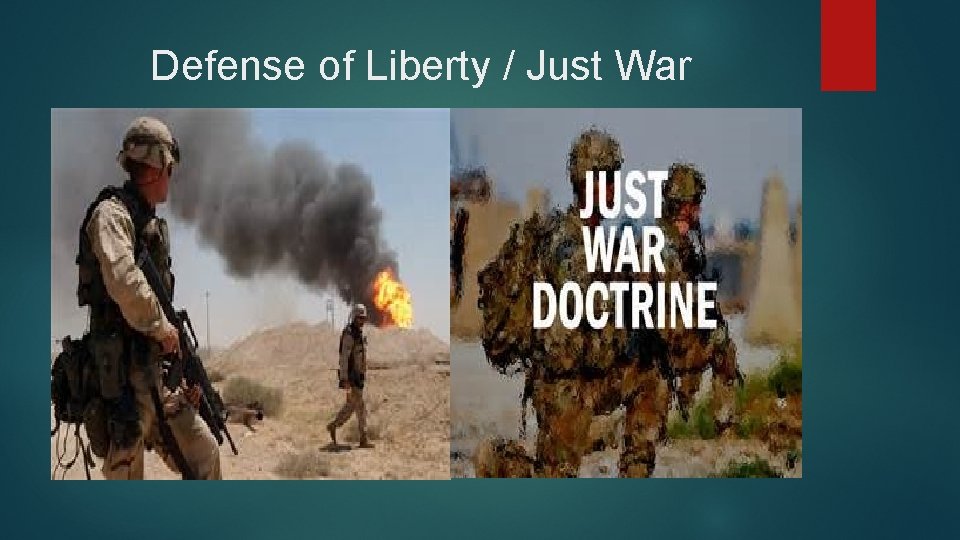
Power Counts Most U. S. founders and early presidents were shrewd realist who understood that the new, weak republic had to navigate among much stronger powers. In today’s world, power motives are often purposely disguised with high sounding phrases such as, “defense of liberty, ” “just war, ” or “crusade to liberate the Holy Land. ”
Defense of Liberty / Just War
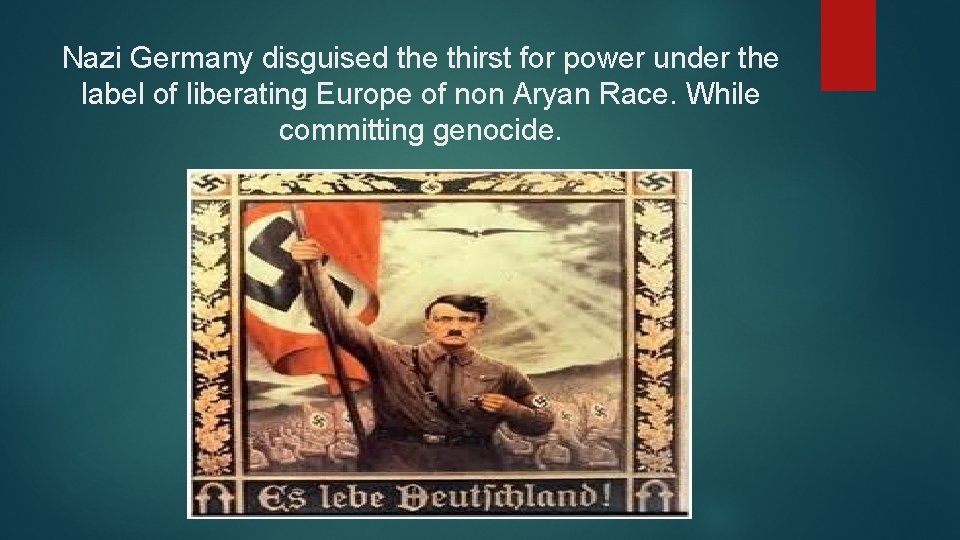
Nazi Germany disguised the thirst for power under the label of liberating Europe of non Aryan Race. While committing genocide.
States Are The Unites That Matter Specific leaders and their motivations do not matter in realism. They look at the history of a country or a region to explain why things happen. Realist do not look at Joseph Stalin’s warped personality to explain his takeover of East Europe; they look to the repeated invasions of Russia from east Russia.
States Are The Unites That Matter Under this believe, the United States charged that Afghanistan, by letting al Qaeda operate on Afghan soil, was responsible for 9/11 and they invaded in 2001. Al Qaeda was not a terror organization ran by the Afghanistan government.
National Interests Trumps Ideology National Interest: what is good for a country as a whole in international relations. A leaders ideology (personal ideas) should not be pursued over the interest of the majority. National interest, if smartly pursued, tells leaders how to use their power effectively.
National Interest Trumps Ideology If you are scattering or wasting your power in “crusades, ” you are harming your national interest and are therefore irrational. Many realists called the Vietnam and Iraq wars ideological wars. (both wars will be discussed in depth later) Crusades are ideological wars unrelated to the true national interest.
National Interest Trumps Ideology Is Islamic fundamentalism (ISIS) a vital U. S. interest or a secondary one? Should we invade distant lands to eradicate them? Explain your answer in two paragraphs
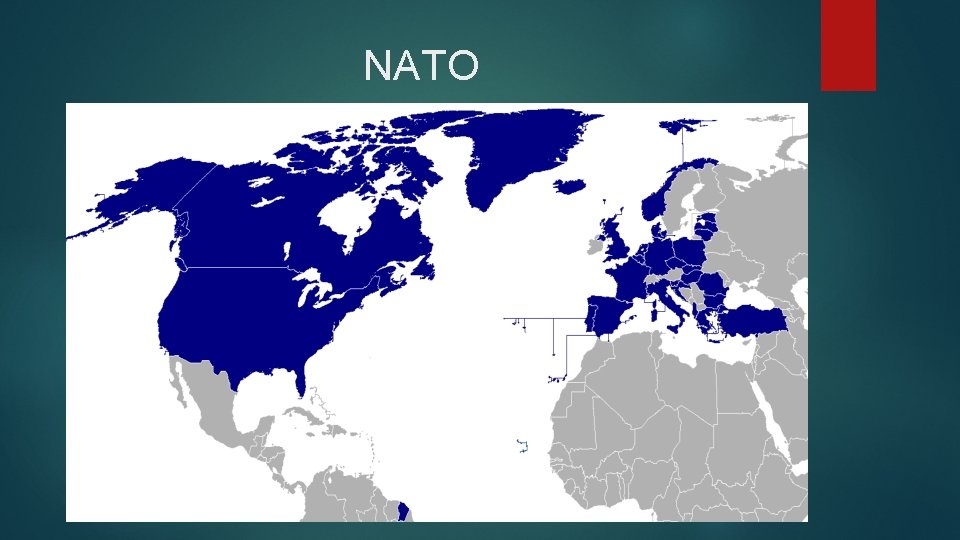
Balance of Power Still Operates The balance of power rarely aimed at peace; it is aimed at enabling states to survive and not get absorbed by other states. The North Atlantic Treaty Organization (NATO) alliance come to be because of the fear of a Soviet takeover. Ideology had nothing to do with this alliances; they were formed to offset threatening power.
NATO
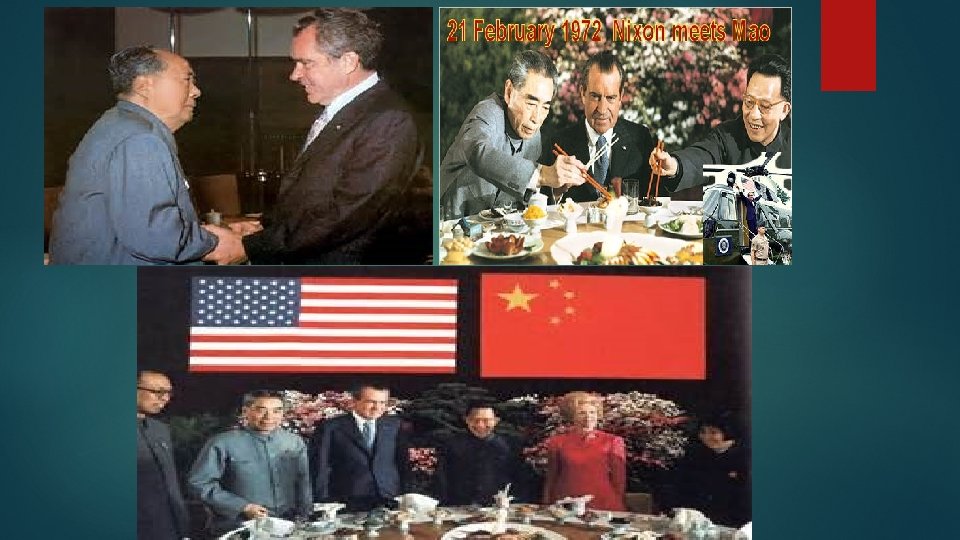
Balance of Power Still Operates USA (capitalist) and China (Communism) came together in 1972 to offset Soviet power even further. Mao (China’s Supreme Leader) and Richard Nixon (U. S. President) abandoned their ideologies in favor of using balance of power to safeguard their respective states.
Amorality Reigns Realist try to avoid labeling events “good” or “bad”; they look instead for what is. Doing the ‘right’ thing might be ‘wrong’ when in comes to a countries national interest. In mid-1941, when Hitler invaded Russia, Britain allied with the Soviet Union, although Churchill (Britain’s prime minister) knew full well what a murderer Stalin (USSR’s dictator) was. Unite against a great good; whether right or wrong.
Realism Review Realism is made up of five basic components. Power counts most States are the units that matter National interest trumps ideology Balance of power still operates Amorality reigns
Liberalism
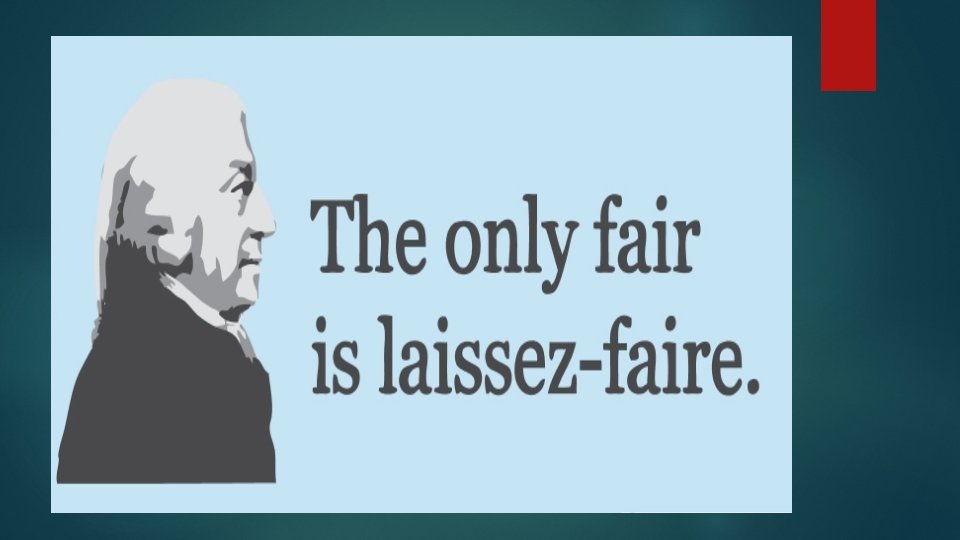
Liberalism Liberalism, sometimes known as ‘idealism, ’ repudiates the realist approach, which liberals charge, leads to war. This liberalism is the classical liberalism founded by Adam Smith. Urges that government keep its hands off the market and has turned into U. S. conservatism.
Liberalism Classical liberalism is the opposite of the modern liberalism that tries to fix social wrongs by redistributing money from rich to poor. In IR, the old liberal thinkers claim that, just as the free market peacefully regulates itself, so would free trading and deals among nations.
Liberals are Optimists Realists are pessimists. Countries are not inherently hostile to one another, argue liberals. Liberals believe that societies are tolerable but unstable at times. It just needs a little help from government institutions.
Focus on Power is Wrong Liberals believe that stressing power (like the realist) inclines nations to use force. Balance of power is an illusion. Balances of power do not lead to peace; they lead to war.
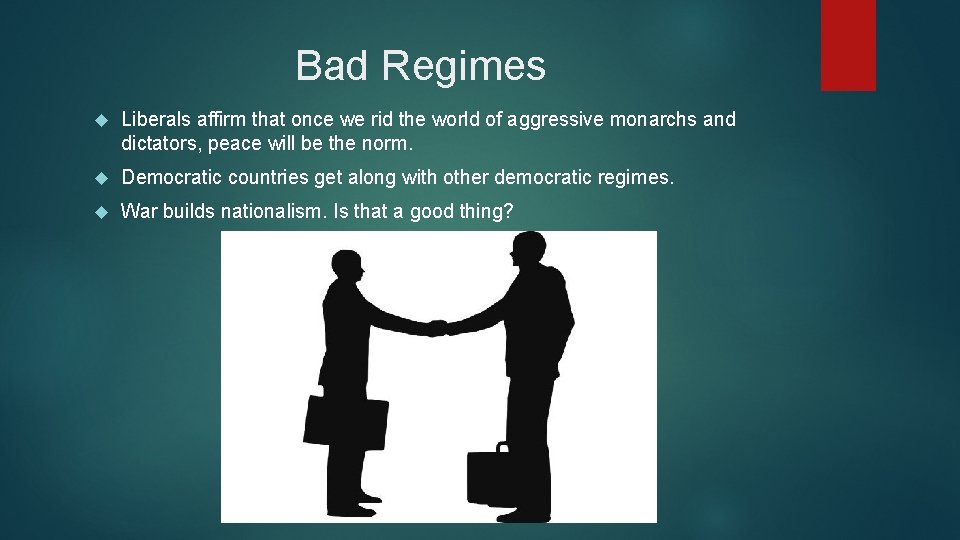
Bad Regimes Liberals affirm that once we rid the world of aggressive monarchs and dictators, peace will be the norm. Democratic countries get along with other democratic regimes. War builds nationalism. Is that a good thing?
Free Trade International liberals further argue that free trade among nations binds them to one another and makes war unlikely because it would hurt everyone’s economy. War between the United States and China unlikely.
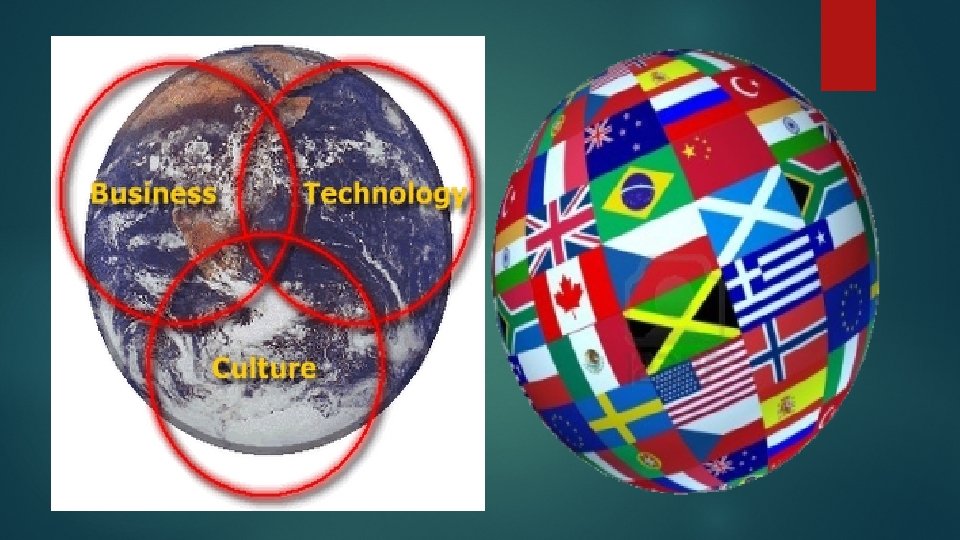
Free Trade Many liberals argued that the decline of world trade during the Great Depression propelled the Nazis and Japanese militarists to power and then to war. (WWII) Many liberals see globalization as a path to peace.
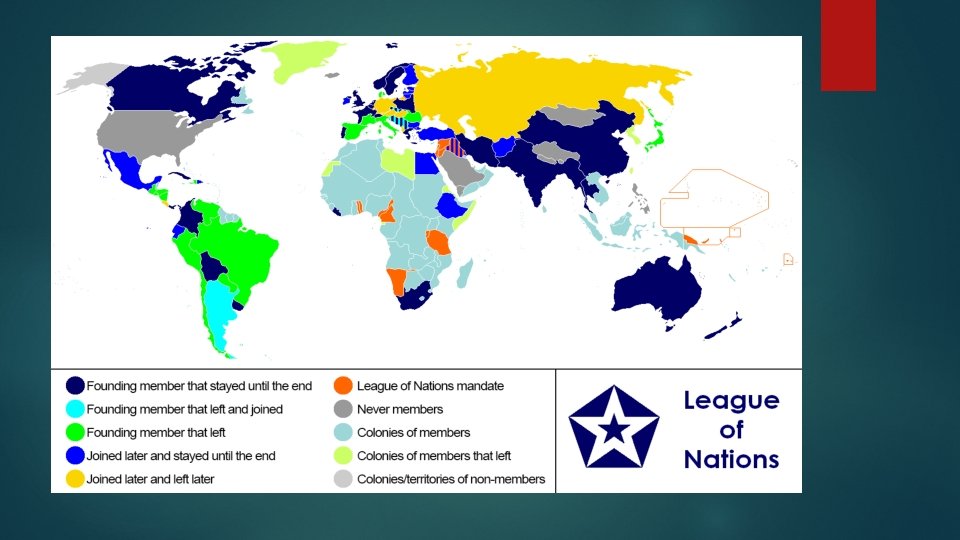
International Law & Organization Liberals see international law as a device to smooth frictions between countries and stabilize friendly relations. Such as the United Nations (UN) Liberals also wish to participate actively in international organizations such as the UN and the World Trade Organization (WTO) Some argue that the U. S. absence from the League of Nations led to World War I
Criticisms of Liberalism If all leaders are not rational fair thinkers then free trade will not work for everyone. Countries often fear that free trade greatly benefits the rich and powerful, making the poorer and the richer. Rich countries will take advantage of poor countries. Most rich countries resist total free trade; they fear it means the export of their factory jobs to low-wage lands. Currently happening in the U. S.
Constructivism
Constructivism argues that subjective understandings rather than objective reality are what influence reality. Facts are objective, opinions are subjective. What is seen as ‘right’ by one generation could be seen as ‘wrong’ by future generations. Constructivism change. discovered that basic views can
Constructivism Laws change under the impact of debate and reasoning. How can you prove that 18, not 21, is the age of maturity? Why is drinking alcohol and using tobacco products legal but using marijuana is illegal? Like realism and liberalism, constructivism has several elements.
Reality is what you think it is Facts, especially in the social sciences, are slippery, open to interpretations that change over time. Relevant Tribes units: and clans Empires Kingdoms Nation- states You can talk yourself into mistaken national interest, constructivists point out.
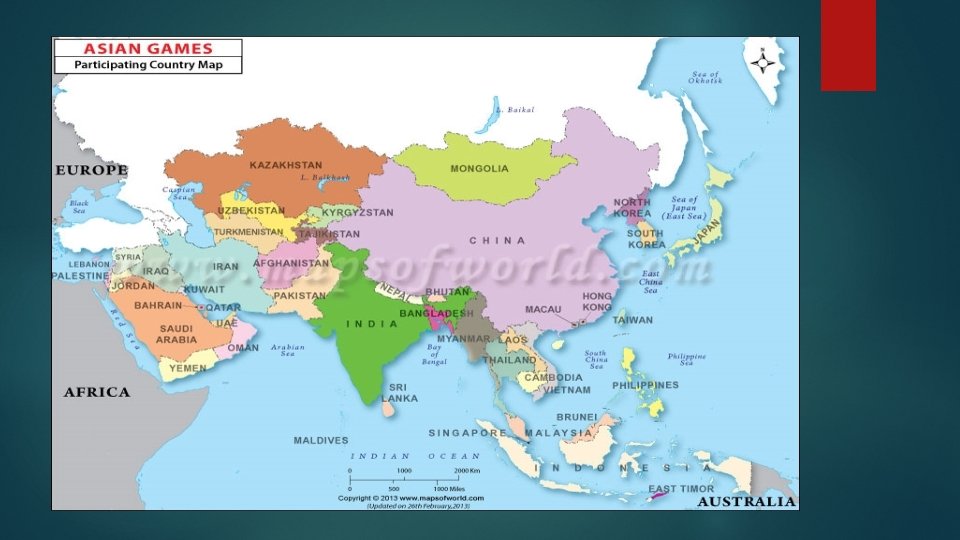
Reality is what you think it is One U. S. national interest in the late 1800 s and in the early 1900 s was expanding America into an empire. (The government’s) In order to do this, the U. S. arranged a “splendid little war” with Spain in 1898 to grab Cuba, Puerto Rico, and the Philippines and soon had the enthusiastic backing of most Americans, few of whom could find the Philippines on a map.
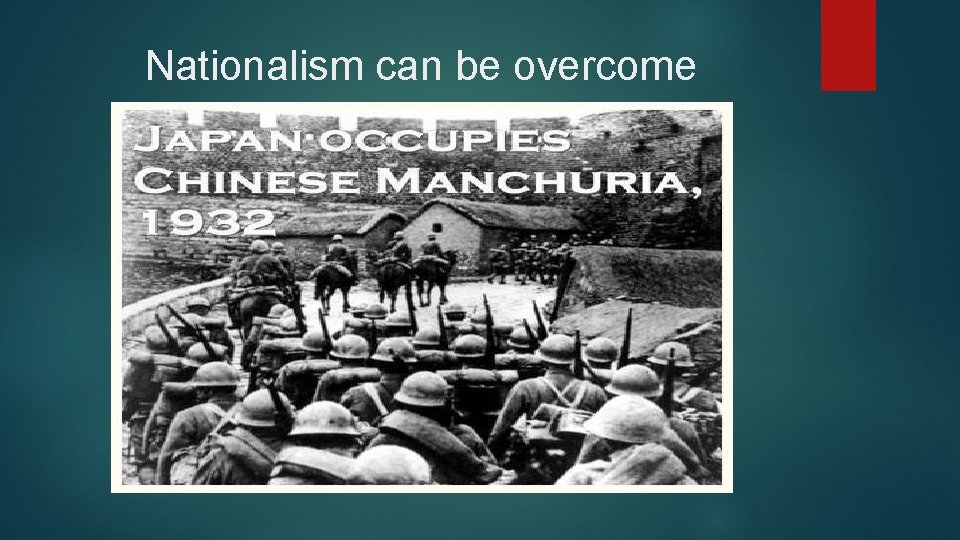
Nationalism can be overcome People are nationalistic because their regimes feed them nationalist rhetoric, argue constructivists. Most government-approved history books portray a national pageant unflawed by mistakes or tragedies. North Korea’s government tells its people that they are a pure-blooded race that Americans Aim to destroy. They also tell their people that well feed and safe while the outside world is in turmoil and starving.
Nationalism can be overcome
Nationalism can be overcome
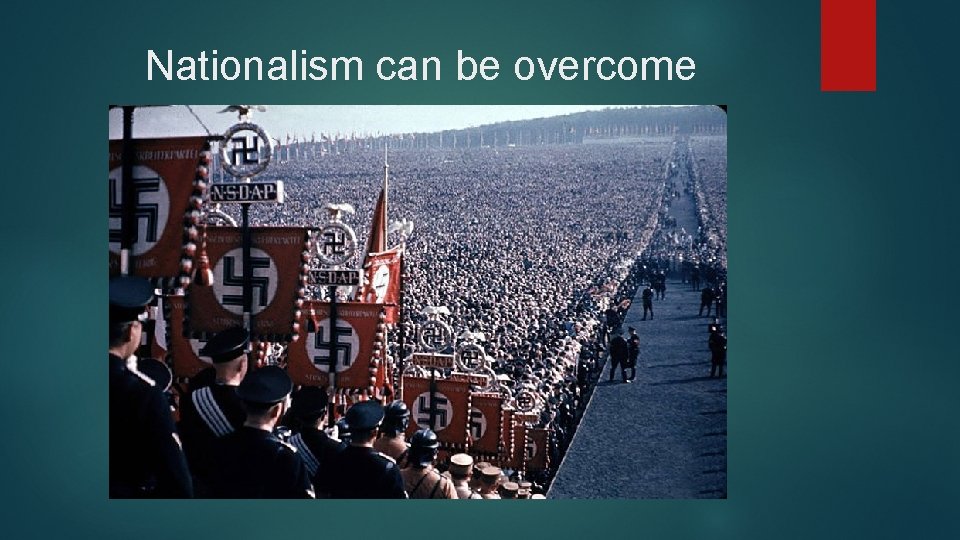
Nationalism can be overcome Hot-headed nationalists, such as Nazi and Japanese militarists, can be calmed (or destroyed) and turned into countries integrated into the world. Neither were genetically power-mad nationalists; they learned it under certain circumstances, Then they unlearned it.
Liberals are better than realists Both liberals and constructivists think they could build a better, more peaceful world. Constructivists seriously dislike realists for supposing there is an objective reality out there and that power is the way to navigate through it.
Foreign policy is a constructivist playground A nation’s foreign policy can change from generation to generation, even from years to years. U. S. isolationists refused to see war coming until Pearl Harbor. (1918 -1945) Then the U. S. accepted the Cold War containment theory (1947 -1965) Until they had to pat for it in Vietnam (1965 -1973)
Marxist Theories of IR
Marxism portrays itself as the ultimate in realism, claiming that all motivations in IR are for the economic gain of the ruling classes.
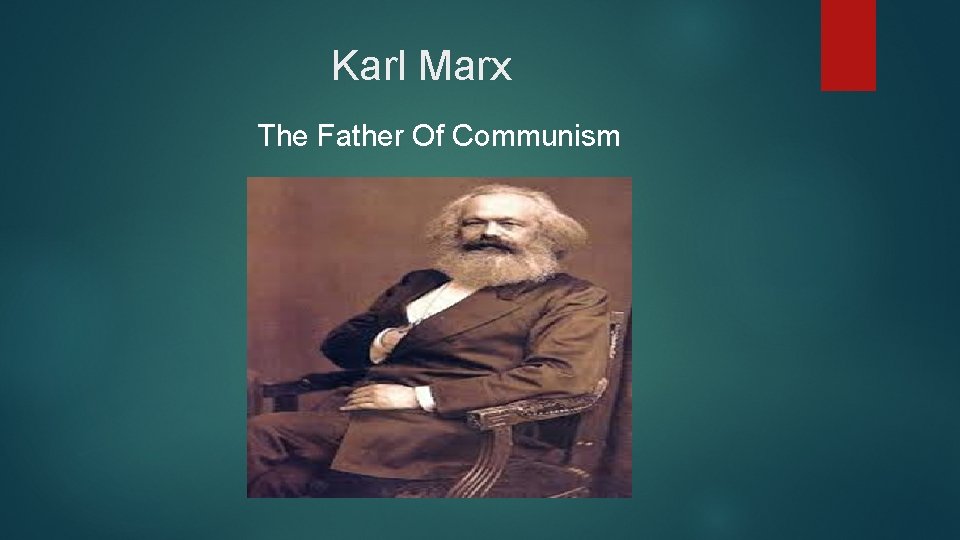
Karl Marx The Father Of Communism
Karl Marx believed that the upper ranks of the bourgeoisie, the “ruling circle of capitalism, ” basically own and run a country, determining economic policy, foreign policy, laws, and governance, all in service to themselves.
Karl Marx The working and middle class will eventually get fed up with capitalism. The rich will get richer, inflation will lead to the working and middle class not being able to afford the output of a capitalism economy. This will lead to overproduction, which leads to recurring depressions. Eventually, there will be a depression so big and a working class so angry that they will overthrow capitalism and install socialism.
Marxism theories of IR contain the following elements: This is a material world Rich capitalist countries still run much of the globe Capitalist countries try to remake the world in their image The world economy is unstable Governments serve capitalists
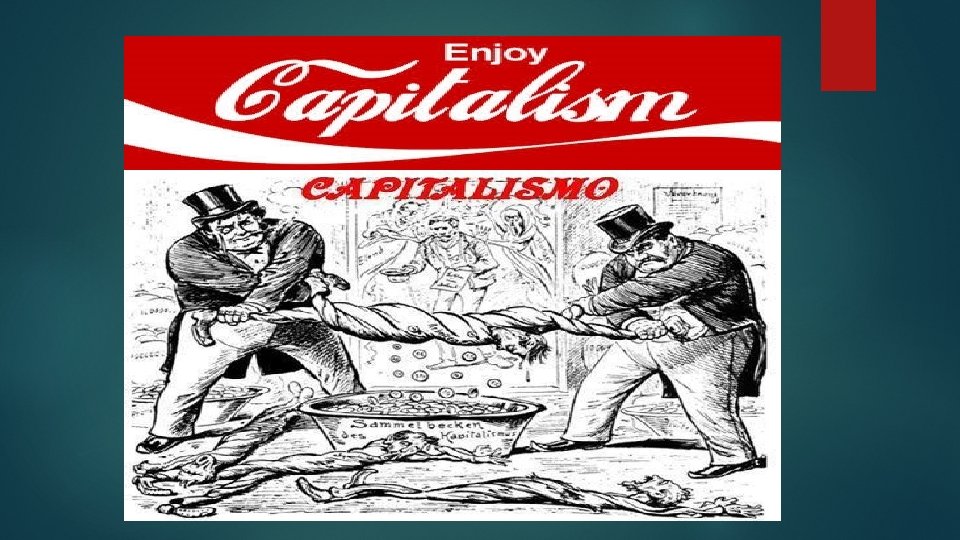
This is a material world People are reflections of their material conditions. Capitalist celebrate the free market because it serves their interests. Capitalist use propaganda in order to brainwash people to believe they are worth their material things. (Buy!)
Rich capitalist countries still run much of the globe Rich Poor countries keep third world countries poor. countries need money to survive they borrow from the rich countries (at a high interest rate) rich countries own the poor
The world economy is unstable Eventually a global depression will destroy capitalism. Some foresee a series of recessions that will force governments into regulating and limiting markets.
Governments serve capitalists Most countries’ policies serve the major centers of wealth, argue Marxists. i. e. - The U. S. Congress bailed out giant corporations in 2008 and 2009. In capitalist countries the interests of the rich and powerful dominate. Does government bail out citizens before they declare bankruptcy?
Governments serve capitalists The Marshall Plan that rescued Europe WWII also opened it to American corporations. Most U. S. foreign aid is “tied, ” that is, it can be used to purchase only U. S. products.