
International Regulatory Capacity Building Global Curriculum Project 2012
International Regulatory Capacity Building Global Curriculum Project
2012 Institute of Medicine Report Ensuring Safe Food and Medical Products Through Stronger Regulatory Systems Abroad
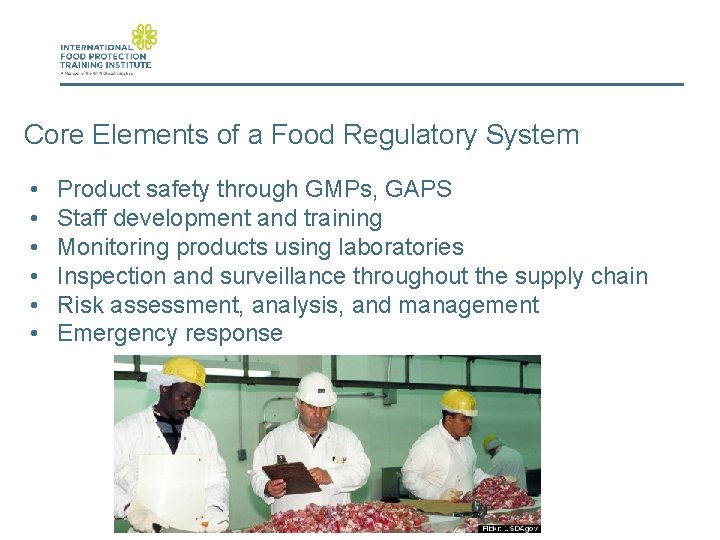
Core Elements of a Food Regulatory System • • • Product safety through GMPs, GAPS Staff development and training Monitoring products using laboratories Inspection and surveillance throughout the supply chain Risk assessment, analysis, and management Emergency response
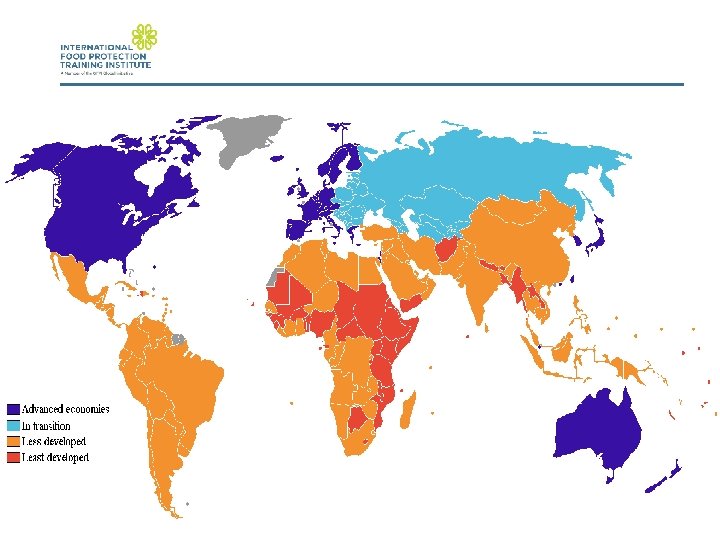
Nine Problems Facing Product Safety Systems in Developing Countries 1. Adherence to international standards 2. Supply chain problems 3. Infrastructure deficits 4. Lack of/ confusing regulatory laws § Neglected § Unequally applied § Non existent product liability laws
Nine Problems Facing Product Safety Systems in Developing Countries 5. Regulatory responsibilities scattered across agencies 6. Poor public health/ food safety surveillance systems 7. Poor communication § § § Within a regulatory authority Across government agencies that share regulatory responsibilities Between government and the regulated industry Between government and the public With counterpart agencies in other countries 8. Lack of accountability/ public will
9. Regulatory workforce § Insufficient § Retention problems, low pay § Lack of training / lack of academic curricula § Poor morale § Corruption is a cause and effect § Undue political influence § Fragmentation
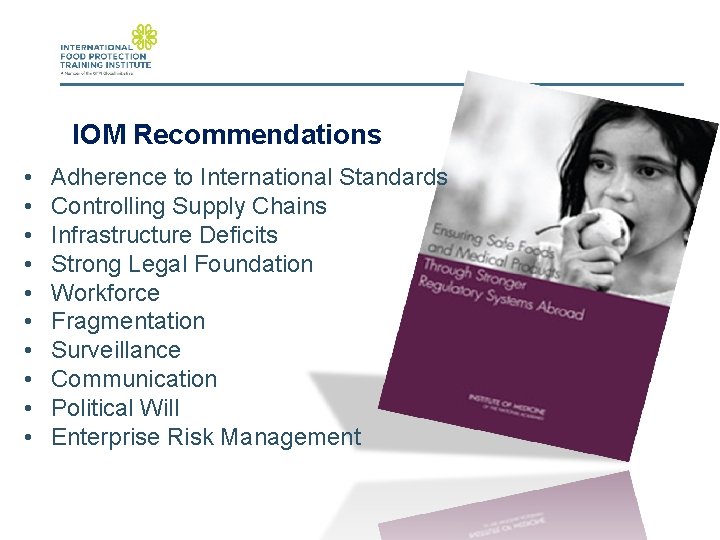
IOM Recommendations • • • Adherence to International Standards Controlling Supply Chains Infrastructure Deficits Strong Legal Foundation Workforce Fragmentation Surveillance Communication Political Will Enterprise Risk Management
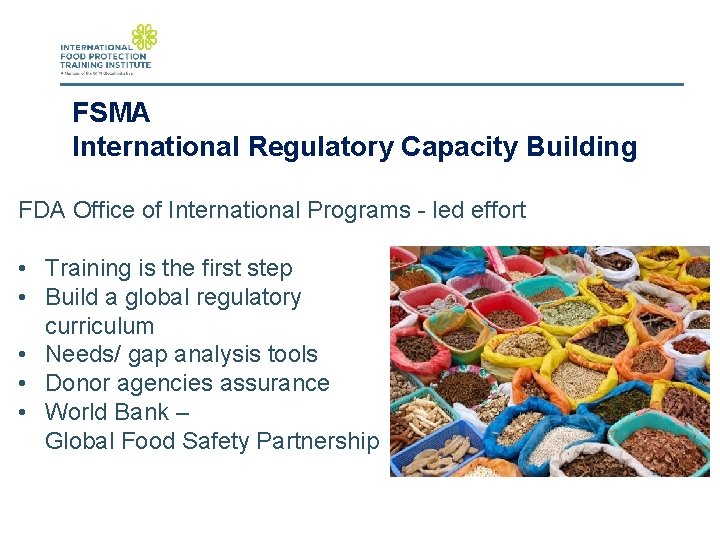
FSMA International Regulatory Capacity Building FDA Office of International Programs - led effort • Training is the first step • Build a global regulatory curriculum • Needs/ gap analysis tools • Donor agencies assurance • World Bank – Global Food Safety Partnership
Global Curriculum Project FDA Office of International Programs
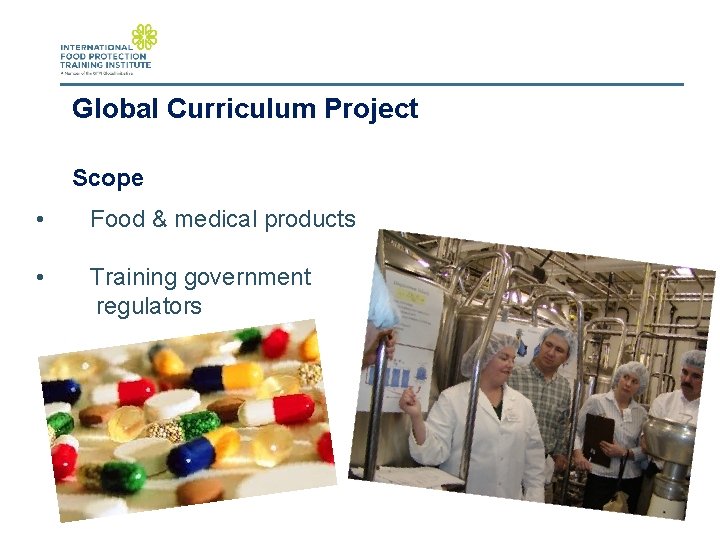
Global Curriculum Project Scope • Food & medical products • Training government regulators
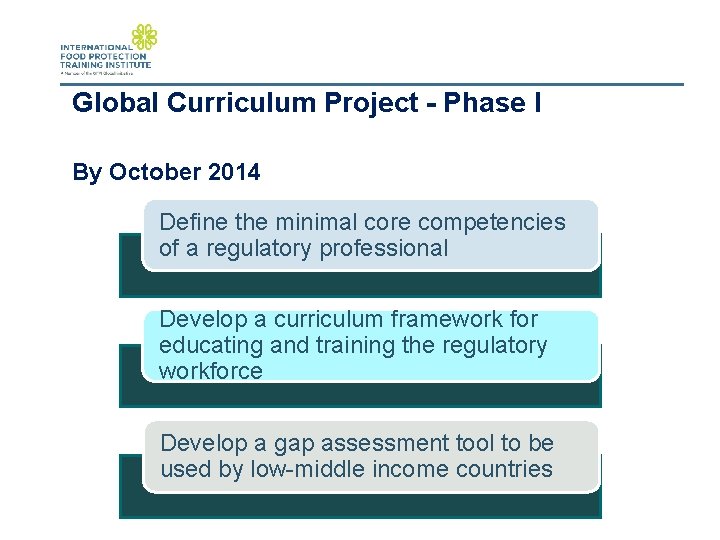
Global Curriculum Project - Phase I By October 2014 Define the minimal core competencies of a regulatory professional Develop a curriculum framework for educating and training the regulatory workforce Develop a gap assessment tool to be used by low-middle income countries
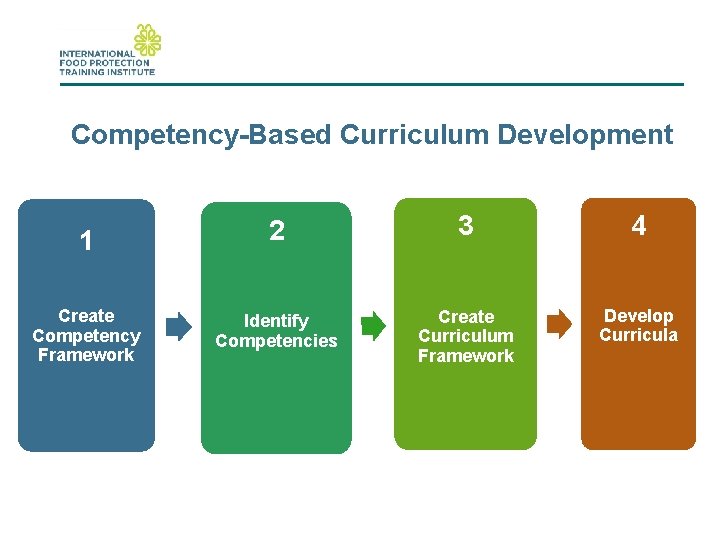
Competency-Based Curriculum Development 1 Create Competency Framework 2 3 4 Identify Competencies Create Curriculum Framework Develop Curricula
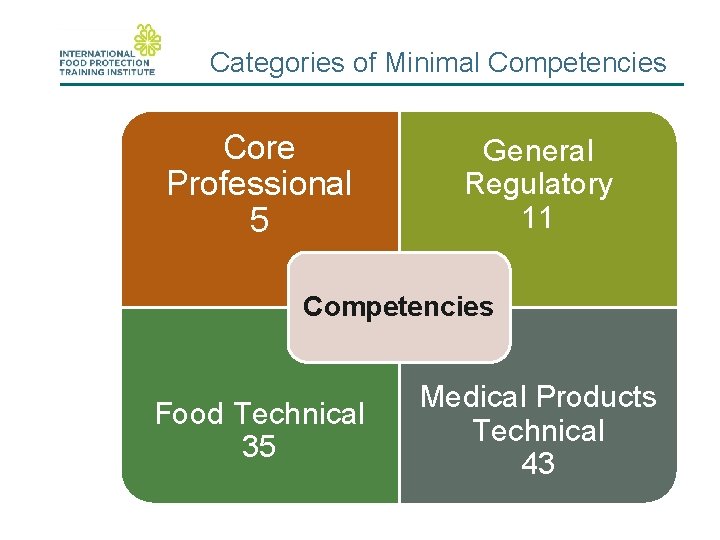
Categories of Minimal Competencies Core Professional 5 General Regulatory 11 Competencies Food Technical 35 Medical Products Technical 43
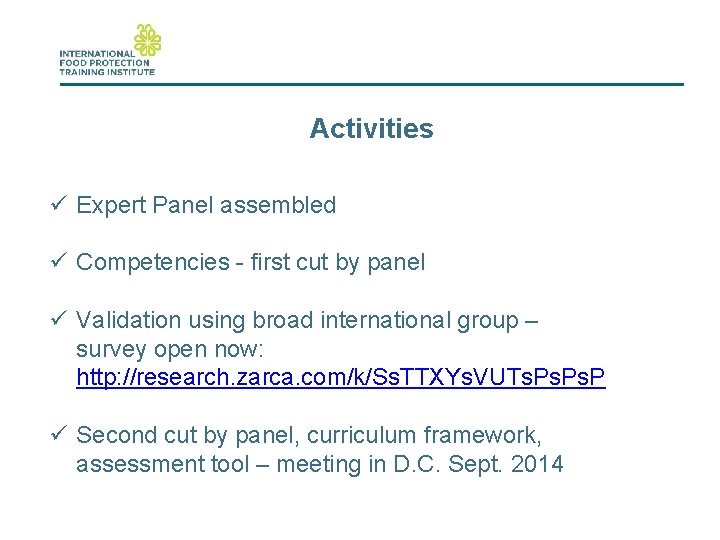
Activities ü Expert Panel assembled ü Competencies - first cut by panel ü Validation using broad international group – survey open now: http: //research. zarca. com/k/Ss. TTXYs. VUTs. Ps. P ü Second cut by panel, curriculum framework, assessment tool – meeting in D. C. Sept. 2014
Phase II – Next Steps
- Slides: 18