
International Perspectives on Recovery Professor David Best Recovery
International Perspectives on Recovery Professor David Best
Recovery enablers - Humphreys and Lembke (2013) Three key areas of clear evidence-based models for recovery • RECOVERY HOUSING • MUTUAL AID • PEER DELIVERED INTERVENTIONS • Peer models are successful because they provide the personal direction, encouragement and role modelling necessary to initiate engagement and then to support ongoing participation
Litt et al (2007, 2009) • Post-alcohol detox • Clients randomised to aftercare as usual or Network Support • Those randomised to Network Support had a 27% reduction in chances of alcohol relapse in the next year • This is assertive linkage • Illustrates power of MA and mentor role
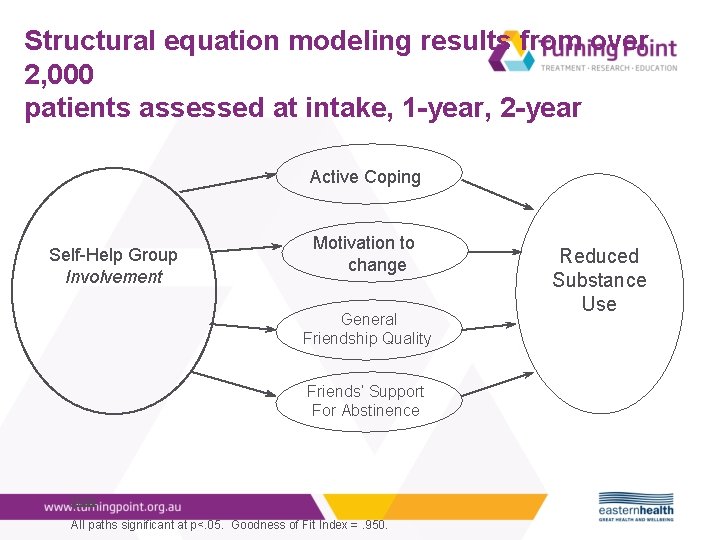
Structural equation modeling results from over 2, 000 patients assessed at intake, 1 -year, 2 -year Active Coping Self-Help Group Involvement Motivation to change General Friendship Quality Friends’ Support For Abstinence Note All paths significant at p<. 05. Goodness of Fit Index =. 950. Reduced Substance Use
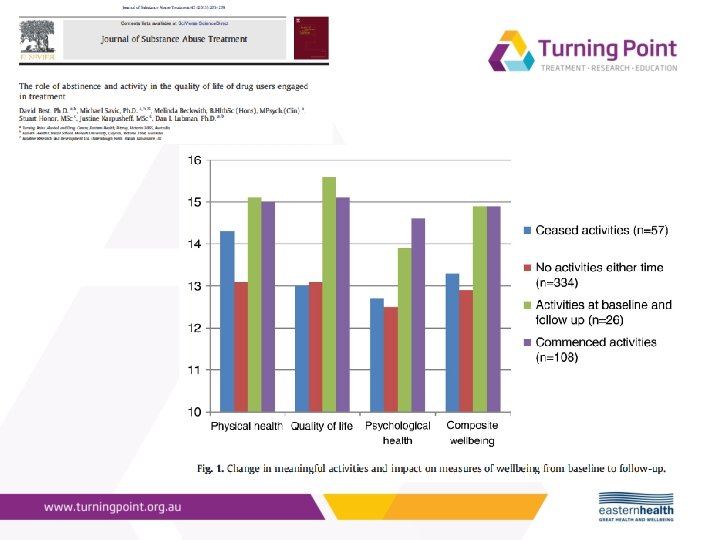
Recovery studies in Birmingham and Glasgow (Best et al, 2011 a; Best et al, 2011 b) • More time spent with other people in recovery • More time in the last week spent: • • • Childcare Engaging in community groups Volunteering Education or training Employment
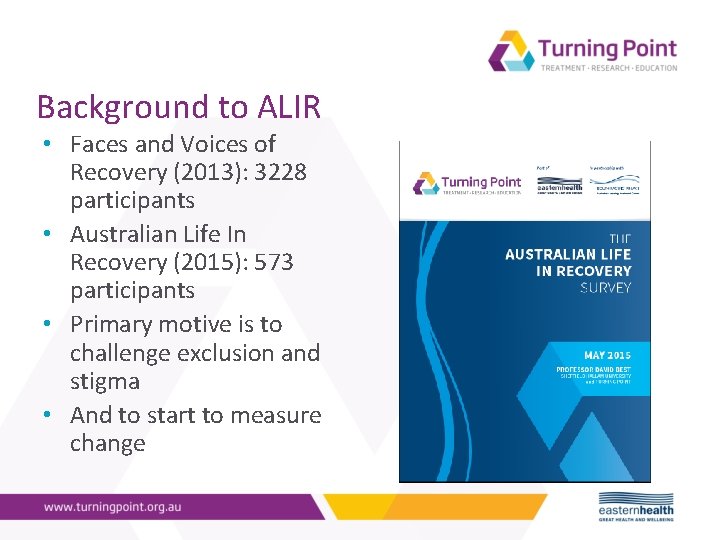
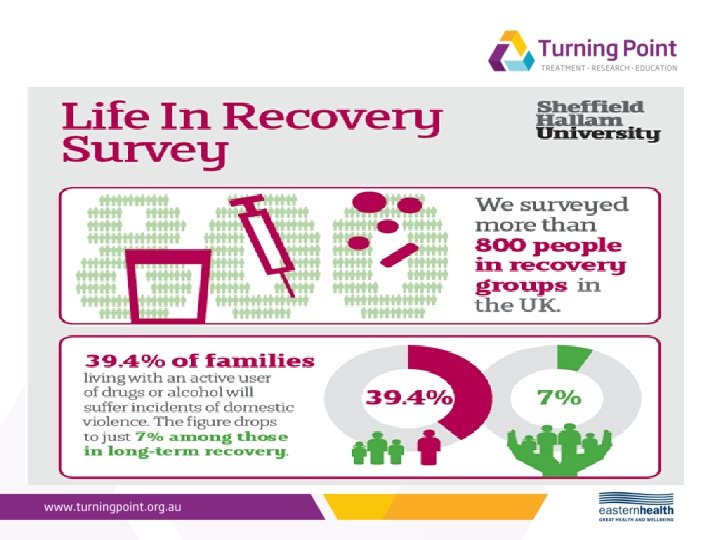
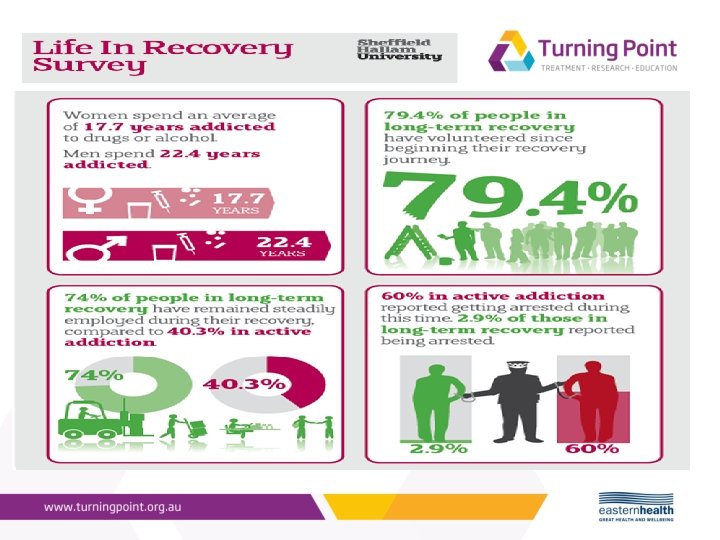
Background to ALIR • Faces and Voices of Recovery (2013): 3228 participants • Australian Life In Recovery (2015): 573 participants • Primary motive is to challenge exclusion and stigma • And to start to measure change
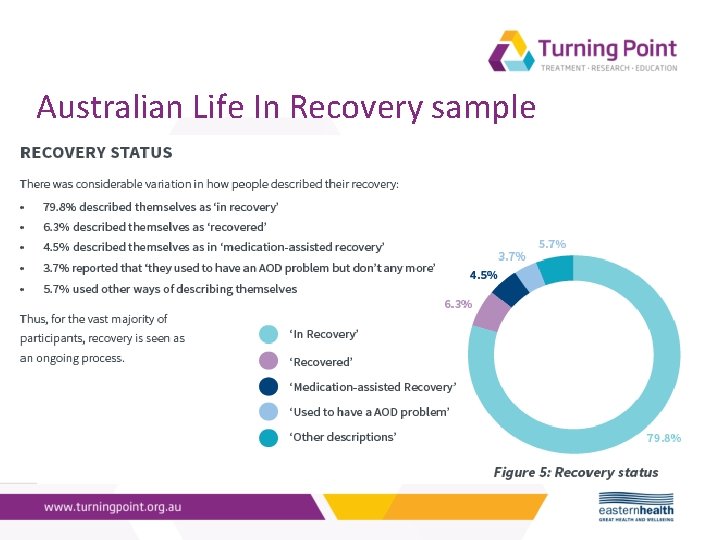
Australian Life In Recovery sample
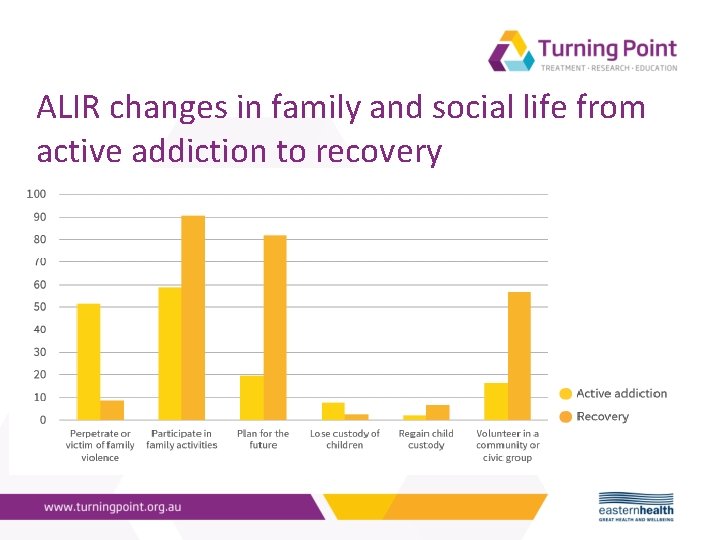
ALIR changes in family and social life from active addiction to recovery
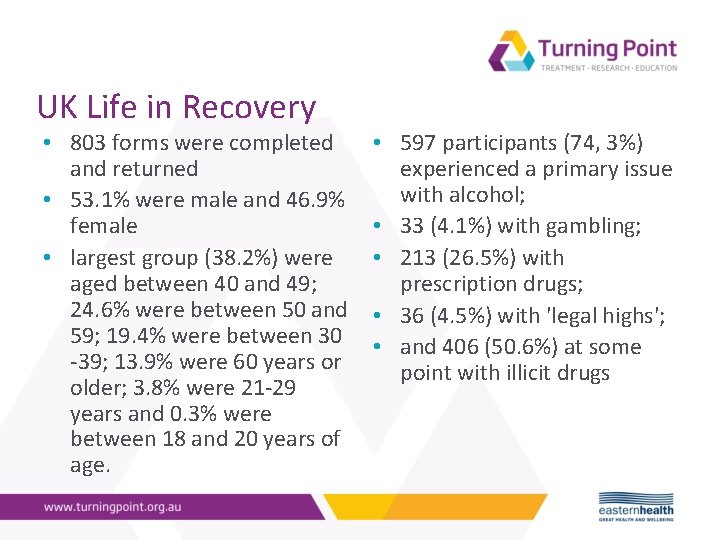
UK Life in Recovery • 803 forms were completed and returned • 53. 1% were male and 46. 9% female • largest group (38. 2%) were aged between 40 and 49; 24. 6% were between 50 and 59; 19. 4% were between 30 -39; 13. 9% were 60 years or older; 3. 8% were 21 -29 years and 0. 3% were between 18 and 20 years of age. • 597 participants (74, 3%) experienced a primary issue with alcohol; • 33 (4. 1%) with gambling; • 213 (26. 5%) with prescription drugs; • 36 (4. 5%) with 'legal highs'; • and 406 (50. 6%) at some point with illicit drugs
Therapeutic landscapes • Williams (1999): “changing places, settings, situations, locales and milieus that encompass the physical, psychological and social environments associated with treatment or healing” (Williams, 1999, p. 2) • Wilton and De. Verteuil (2006) describe a cluster of alcohol and drug treatment services in San Pedro, California as a ‘recovery landscape’ as a foundation of spaces and activities that promote recovery
Therapeutic landscapes (2) • Wilton and De. Verteuil: a social project that extends beyond the boundaries of addiction services into the community through the emergence of an enduring recovery community, in which a sense of fellowship is developed in the wider community • Challenge stigma • Change community recovery capital
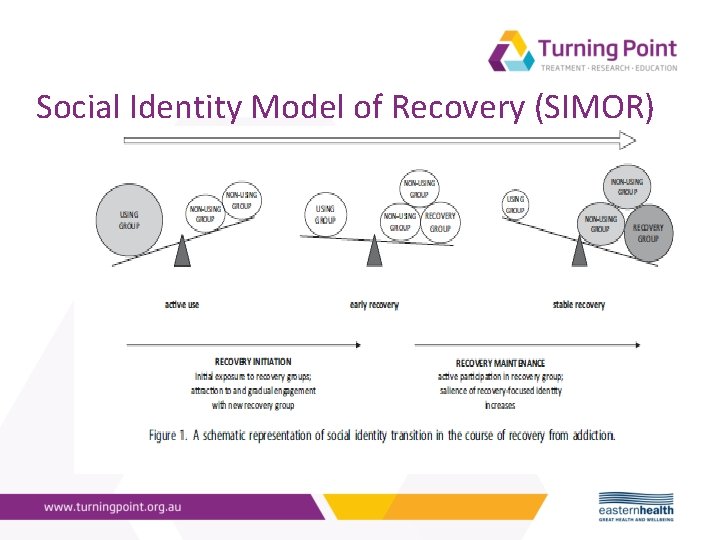
Social Identity Model of Recovery (SIMOR)
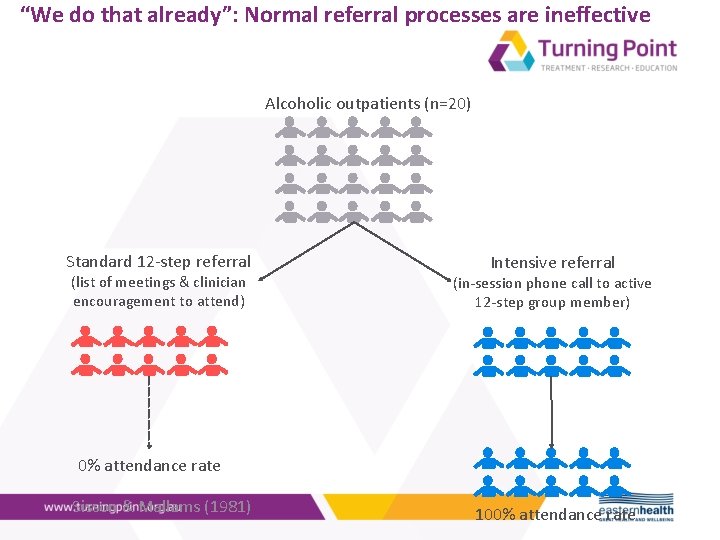
“We do that already”: Normal referral processes are ineffective Alcoholic outpatients (n=20) Standard 12 -step referral (list of meetings & clinician encouragement to attend) Intensive referral (in-session phone call to active 12 -step group member) 0% attendance rate Sisson & Mallams (1981) 100% attendance rate
Manning et al (2012) – rationale and setting • Acute Assessment Unit at the Maudsley Hospital • Low rates of meeting attendance while on ward • RCT with three conditions: • Information only • Doctor referral • Peer support
Manning et al (2012) – findings • Those in the assertive linkage condition: • More meeting attendance (AA, NA, CA) on ward • More meeting attendance in the 3 months after departure • Reduced substance use in the three months after departure
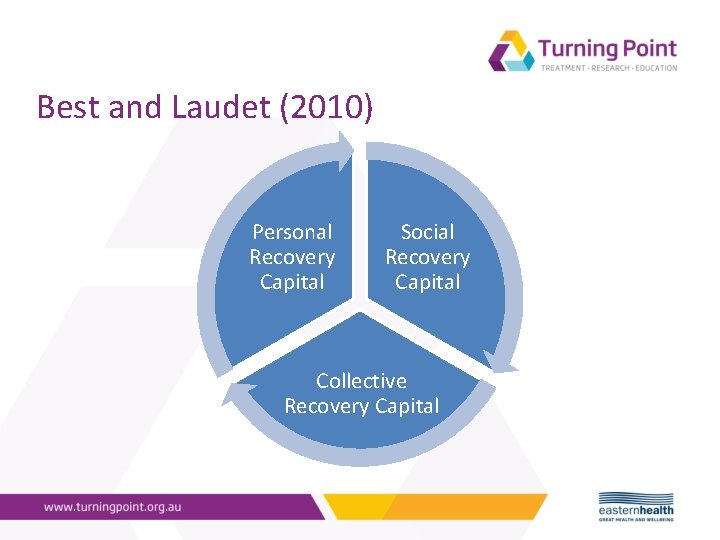
Best and Laudet (2010) Personal Recovery Capital Social Recovery Capital Collective Recovery Capital
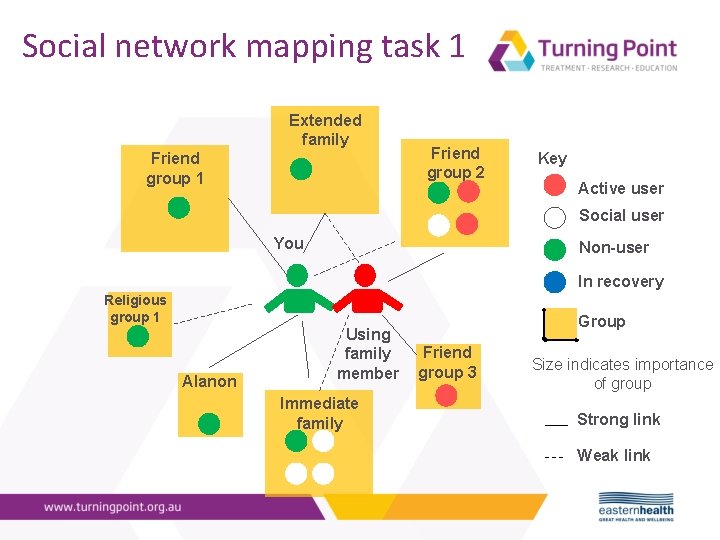
Social network mapping task 1 Extended family Friend group 1 Friend group 2 Key Active user Social user You Non-user In recovery Religious group 1 Alanon Using family member Immediate family Group Friend group 3 Size indicates importance of group Strong link Weak link
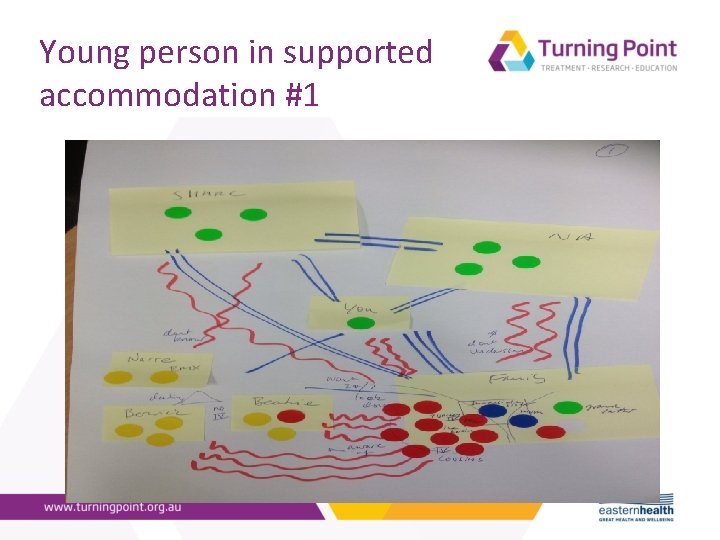
Young person in supported accommodation #1
An innovative model: Jobs, Friends and Houses • A social enterprise developed by Lancashire Police • Blackpool is an area of significant deprivation and dislocation • Standard treatment pathways but with increased emphasis on prison release (Gateways) • The aim is to build a recovery community
Jobs, Friends and Houses Transforming the building stock in the town Physically building a recovery community Providing a recovery housing pathway Providing meaningful employment and training (8 -week Build It Up course then 2 -year apprenticeship) • Increasing the visibility of recovery • Create a sense of collective pride • •
Offending changes • Before joining JFH, the clients had a total of 1142 recorded offences on the Police National Computer (an average of 32 person), over criminal careers lasting 13 years. • Twenty-eight JFH staff had experienced a total of 176 imprisonments before the start of JFH. • Since joining JFH, a total of five offences had been recorded resulting in charge (by three individuals). • The average annual offence rate was 2. 46 pre JFH and 0. 15 since joining JFH. This represents a 94. 1% reduction in the annual recorded offence rate.
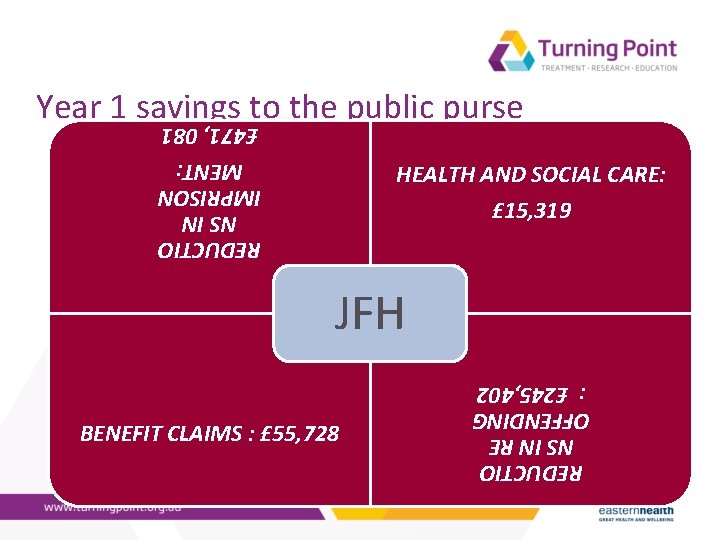
Year 1 savings to the public purse REDUCTIO NS IN IMPRISON MENT: £ 471, 081 HEALTH AND SOCIAL CARE: £ 15, 319 JFH REDUCTIO NS IN RE OFFENDING : £ 245, 402 BENEFIT CLAIMS : £ 55, 728
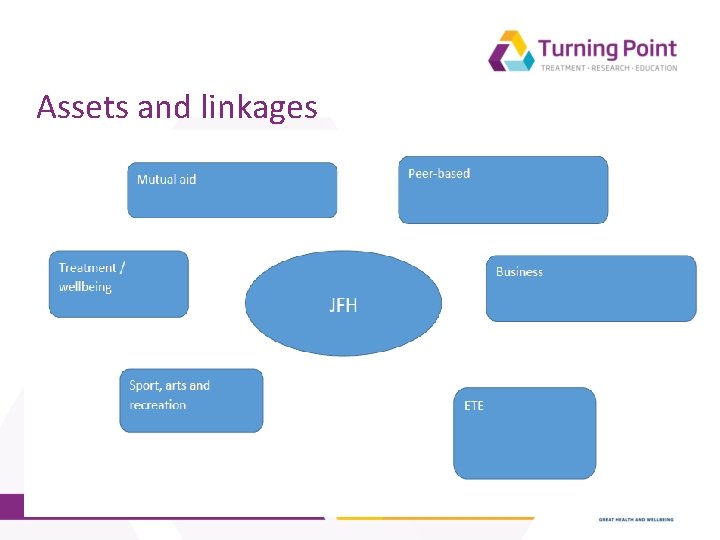
Assets and linkages
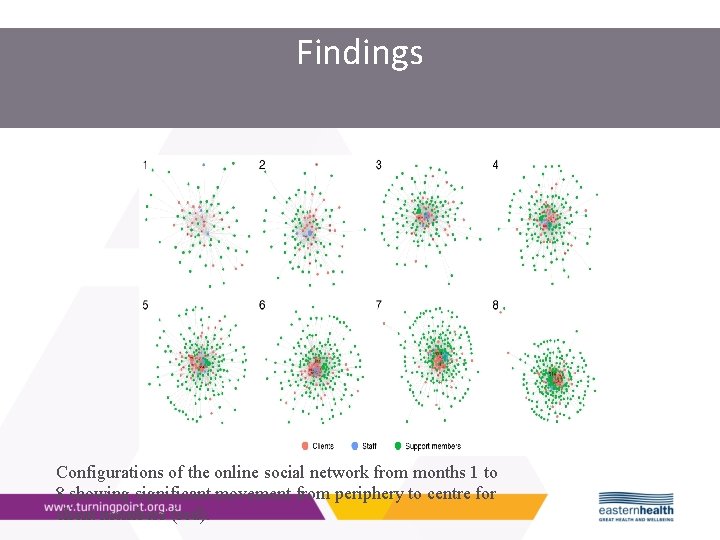
Findings Configurations of the online social network from months 1 to 8 showing significant movement from periphery to centre for client members (red).
Facebook page analysis • Use of SNA and PIWC • More likes, more network centrality and more 'we' language associated with longer retention in recovery programme • CHIME and social identity
First FARR Publication
Addiction Professional paper (2)
Time in residence + meaningful activities to positive outcomes (FARR)
Key themes • • Recovery capital Social connectedness Social identity Therapeutic landscapes of recovery • davidb@turningpoint. org. au • David. best@monash. edu
- Slides: 32