
international operations management 17 i n t e

- Slides: 27
international operations management 17 - i n t e r n a t i o n a l b u s i n e s s , 5 t h e d i t i o n chapter 17
Chapter Objectives 1 • Describe the nature of international operations management • Analyze the supply chain management and vertical integration decisions facing international production managers • Analyze the meaning of productivity and discuss how international firms work to improve it 17 -2
Chapter Objectives 2 • Explain how firms control quality and discuss total quality management in international business • Analyze how international firms control the information their managers need to make effective decisions 17 -3
Operations Management Operations management is the set of activities an organization uses to transform different kinds of inputs (materials, labor, and so on) into final goods and services. International operations management refers to the transformation-related activities of an international firm. 17 -4
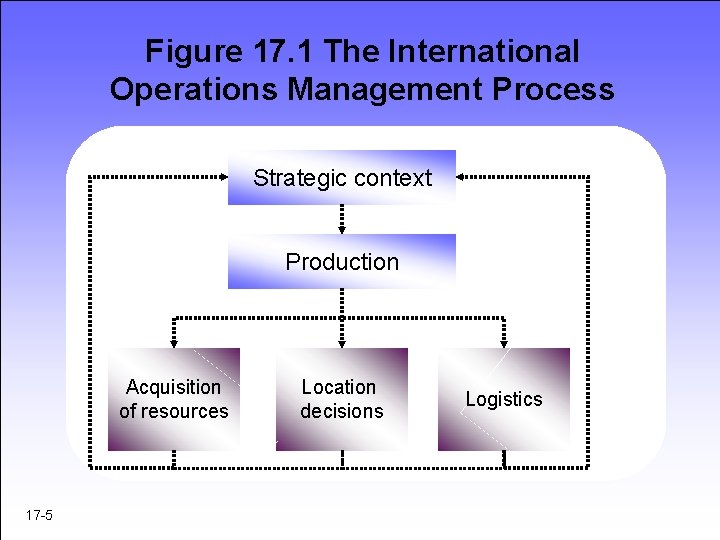
Figure 17. 1 The International Operations Management Process Strategic context Production Acquisition of resources 17 -5 Location decisions Logistics
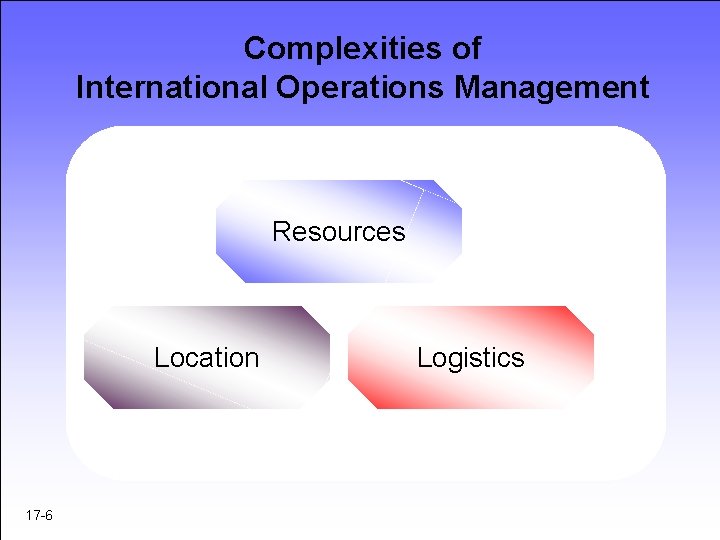
Complexities of International Operations Management Resources Location 17 -6 Logistics
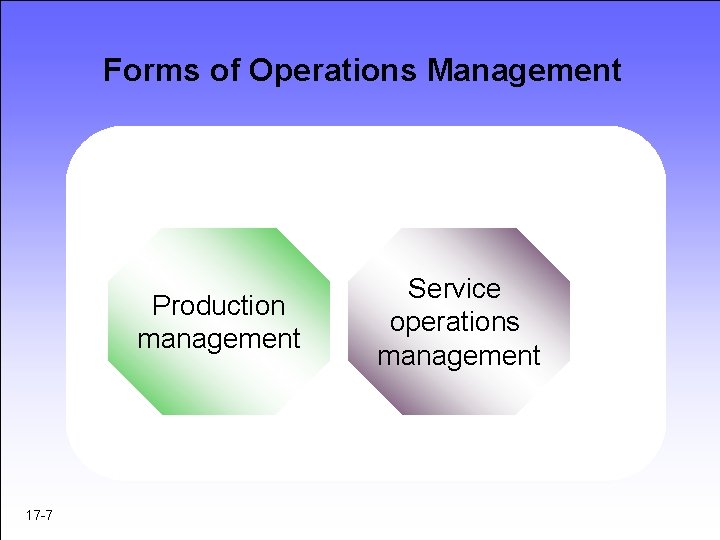
Forms of Operations Management Production management 17 -7 Service operations management
Supply Chain Management Supply chain management is the set of processes and steps a firm uses to acquire the various resources it needs to create its products. 17 -8
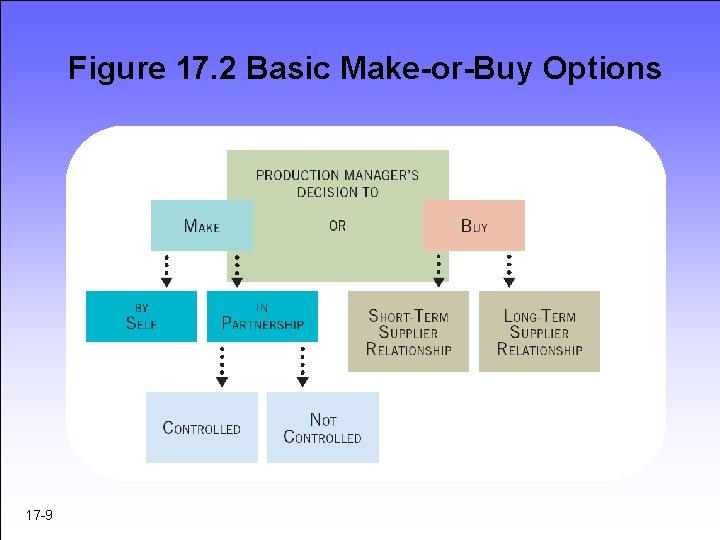
Figure 17. 2 Basic Make-or-Buy Options 17 -9
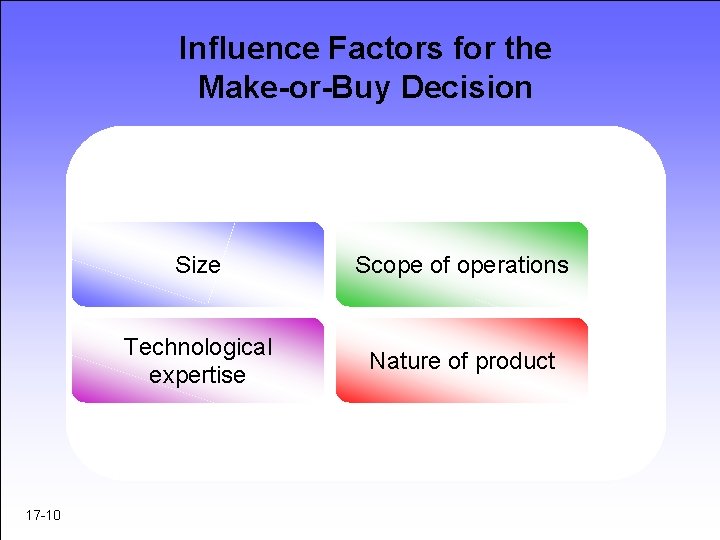
Influence Factors for the Make-or-Buy Decision 17 -10 Size Scope of operations Technological expertise Nature of product
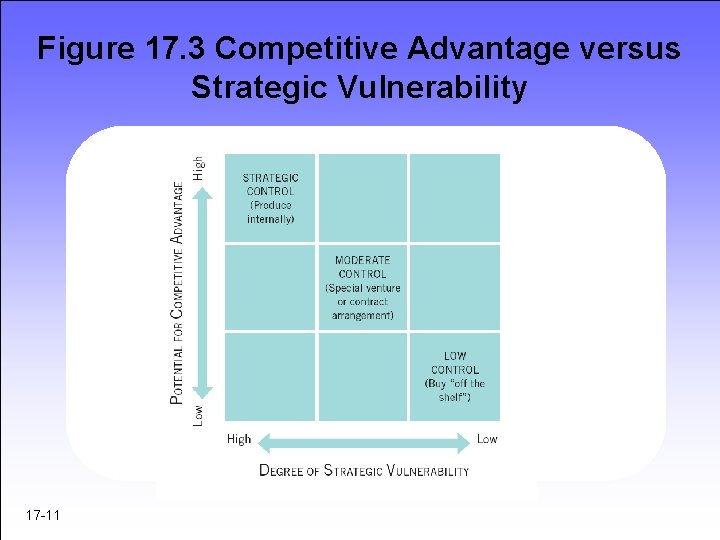
Figure 17. 3 Competitive Advantage versus Strategic Vulnerability 17 -11
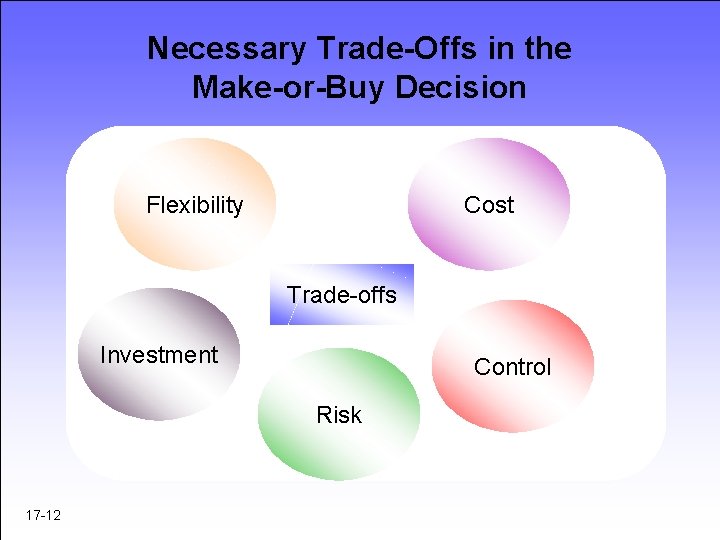
Necessary Trade-Offs in the Make-or-Buy Decision Flexibility Cost Trade-offs Investment Control Risk 17 -12
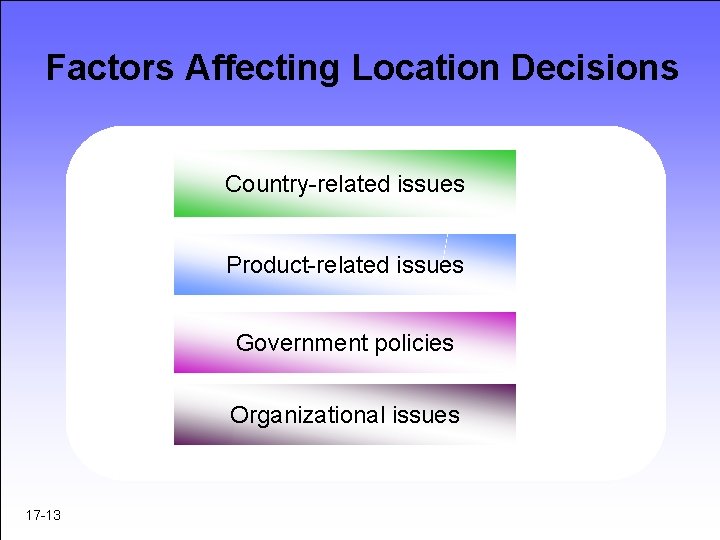
Factors Affecting Location Decisions Country-related issues Product-related issues Government policies Organizational issues 17 -13
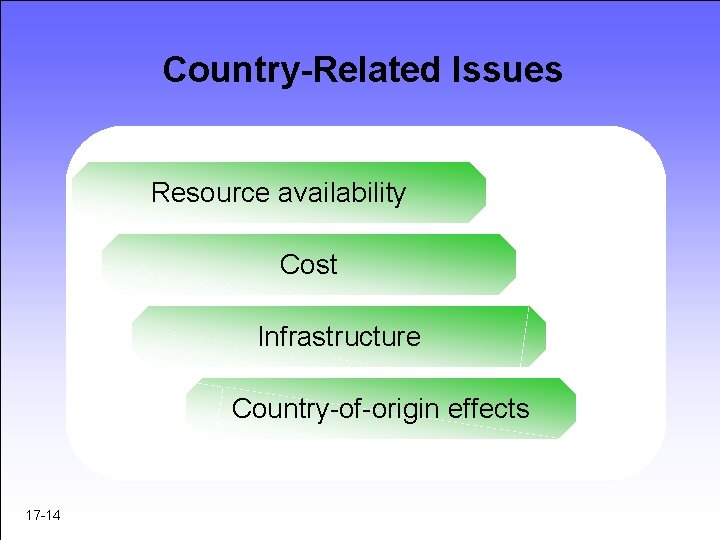
Country-Related Issues Resource availability Cost Infrastructure Country-of-origin effects 17 -14
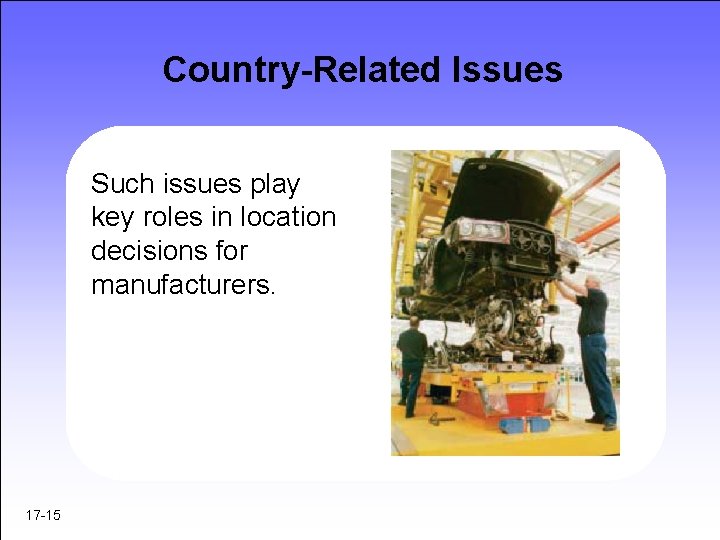
Country-Related Issues Such issues play key roles in location decisions for manufacturers. 17 -15
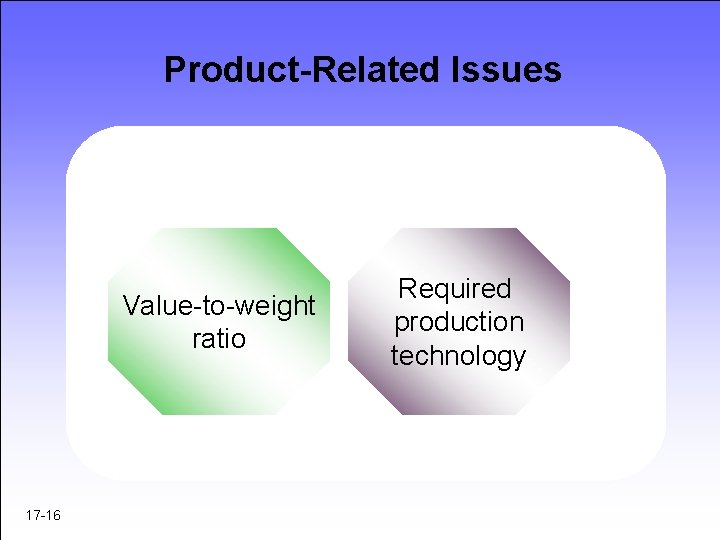
Product-Related Issues Value-to-weight ratio 17 -16 Required production technology
Government Policies • Stability of political process • National trade policies • Economic development incentives • Existence of foreign trade zones (FTZ) 17 -17
Organizational Issues Business strategy Organizational structure Inventory management policies 17 -18
International Logistics International logistics is the management of the flow of materials, parts, supplies, and other resources from suppliers to the firm; the flow of materials, parts, supplies, and other resources within and between units of the firm itself; and the flow of finished products, services, and goods from the firm to customers. 17 -19
Factors Distinguishing International and Domestic Logistics Transport distance Number of transport modes Complexity of regulatory content 17 -20
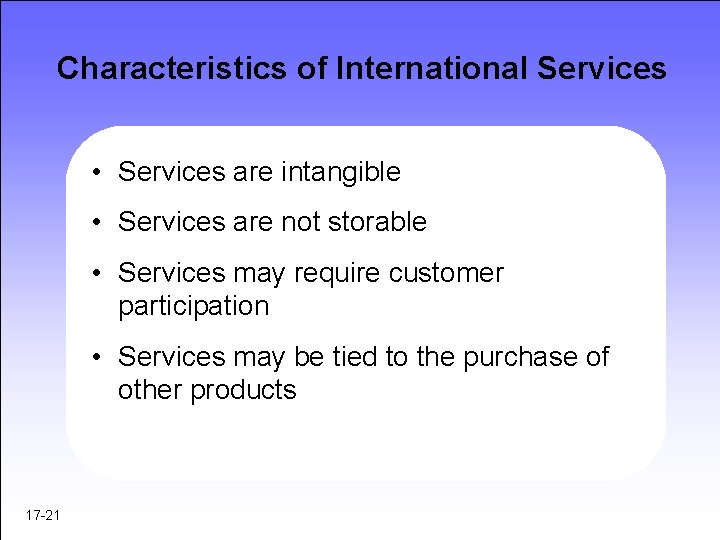
Characteristics of International Services • Services are intangible • Services are not storable • Services may require customer participation • Services may be tied to the purchase of other products 17 -21
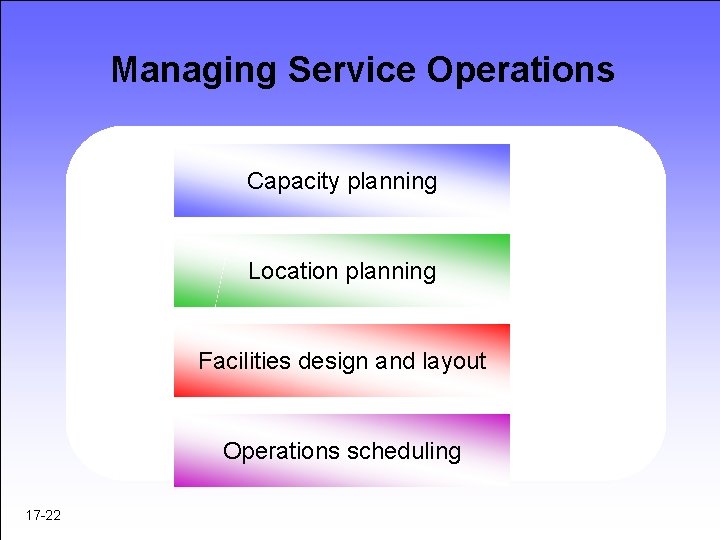
Managing Service Operations Capacity planning Location planning Facilities design and layout Operations scheduling 17 -22
Productivity is an economic measure of efficiency that summarizes the value of outputs relative to the value of the inputs used to create the outputs. 17 -23
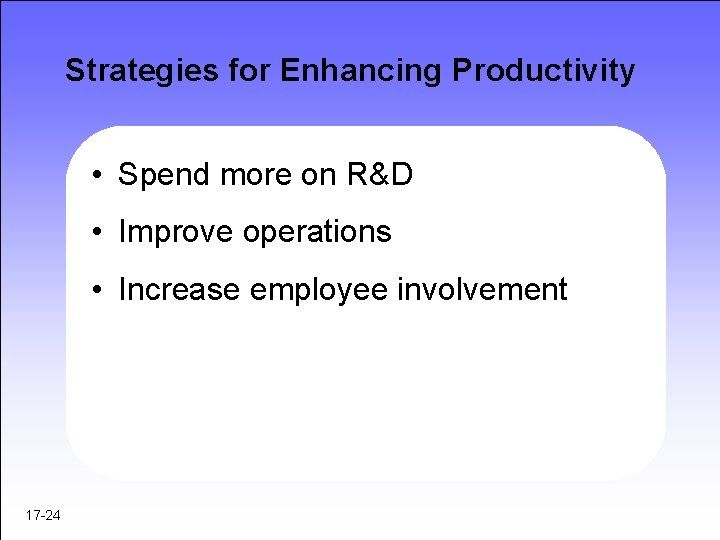
Strategies for Enhancing Productivity • Spend more on R&D • Improve operations • Increase employee involvement 17 -24
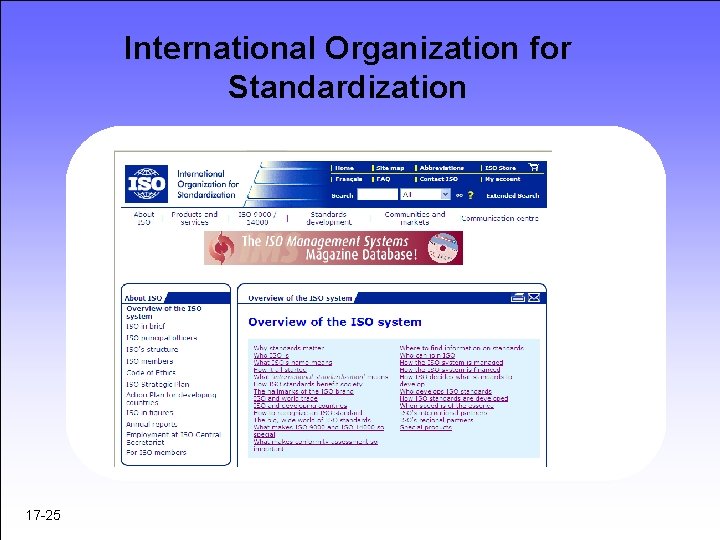
International Organization for Standardization 17 -25
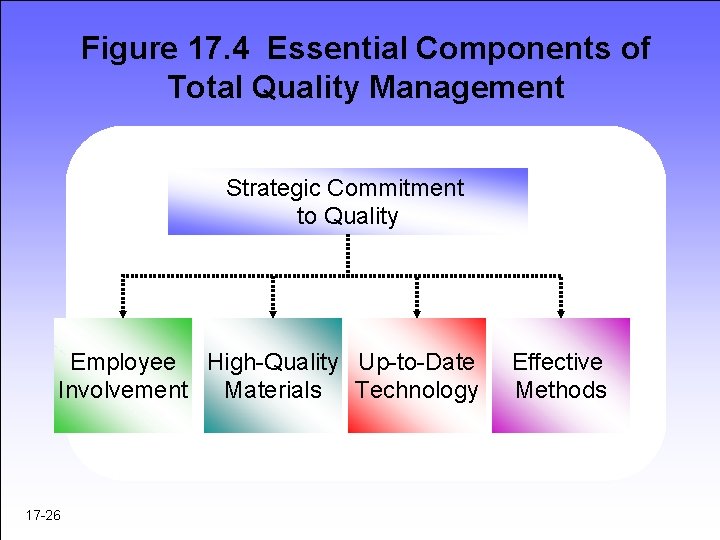
Figure 17. 4 Essential Components of Total Quality Management Strategic Commitment to Quality Employee High-Quality Up-to-Date Involvement Materials Technology 17 -26 Effective Methods
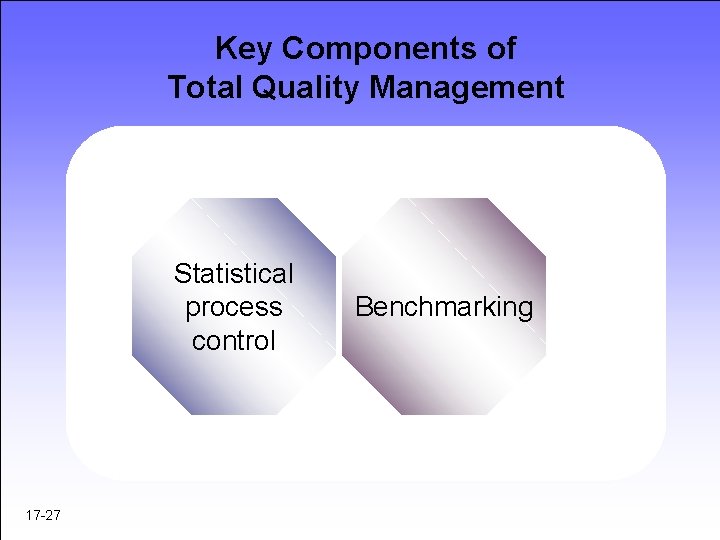
Key Components of Total Quality Management Statistical process control 17 -27 Benchmarking