
International Mentoring Association WELCOME TO THE WEBINAR MENTORING
International Mentoring Association WELCOME TO THE WEBINAR MENTORING SATISFACTION FOUND IN DIVERSE PROFESSIONS We will begin at 2: 30 pm EST. 1
Mentoring Satisfaction Found in Diverse Professions May 3, 2018 Dr. Cassondra Williams-Stokes drcwilliams 2013@gmail. com Dr. Roxanne M. Williams teachericgs@yahoo. com 2

Graduated Doctoral Student & Dissertation Chair with Mentoring Backgrounds! Cassondra Williams-Stokes Roxanne M. Williams 3
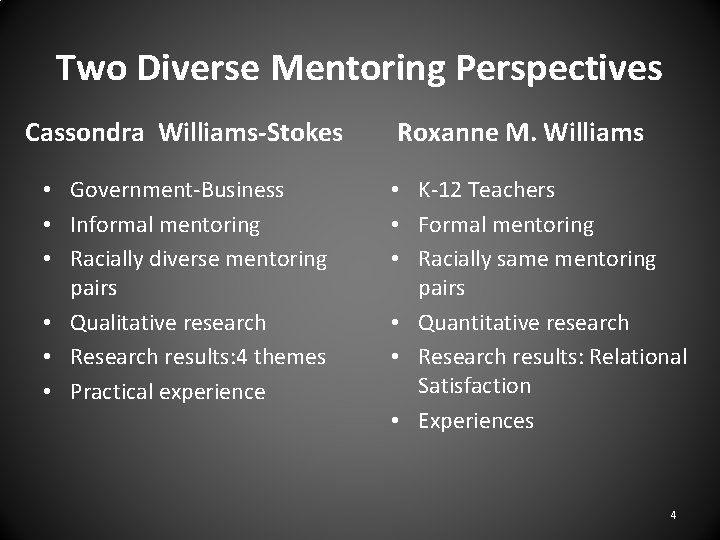
Two Diverse Mentoring Perspectives Cassondra Williams-Stokes • Government-Business • Informal mentoring • Racially diverse mentoring pairs • Qualitative research • Research results: 4 themes • Practical experience Roxanne M. Williams • K-12 Teachers • Formal mentoring • Racially same mentoring pairs • Quantitative research • Research results: Relational Satisfaction • Experiences 4
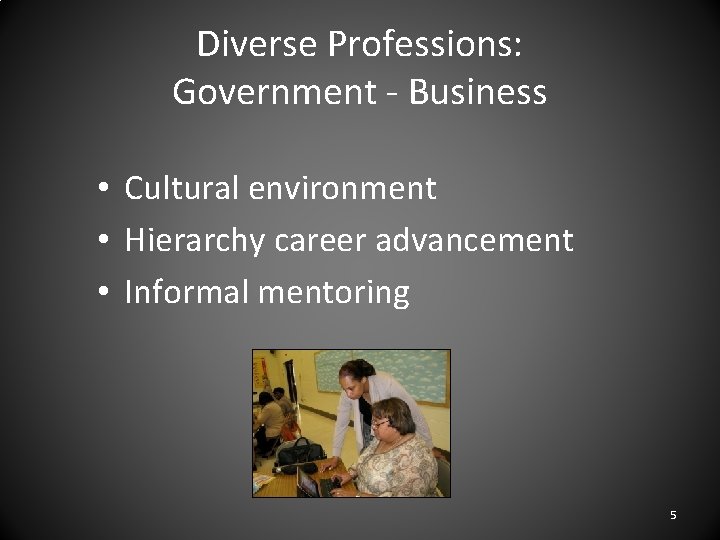
Diverse Professions: Government - Business • Cultural environment • Hierarchy career advancement • Informal mentoring 5
Diverse Professions: K-12 Teachers Mentoring Needs • • Acclimation to building Acclimation to profession Classroom management Academic expertise Befriending Time management/Navigation Professional growth 6
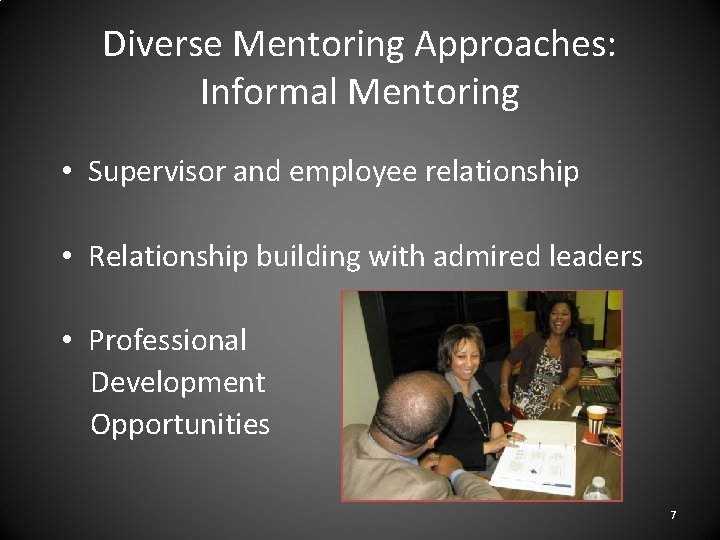
Diverse Mentoring Approaches: Informal Mentoring • Supervisor and employee relationship • Relationship building with admired leaders • Professional Development Opportunities 7
Diverse Approaches: Formal Mentoring Program • Manual • Mentor training • 2 yr. induction-mentoring process • Monthly group meetings; weekly pair meetings; monthly trio meetings • Current professional articles monthly • Classroom observations • Resources: Danielson, Clement & Wilkins, Podsen & Denmark, Wong’s text 8
Diverse Pairing Practices: Racially Diverse Pairing • Professional status varies • Gender specific • Location 9
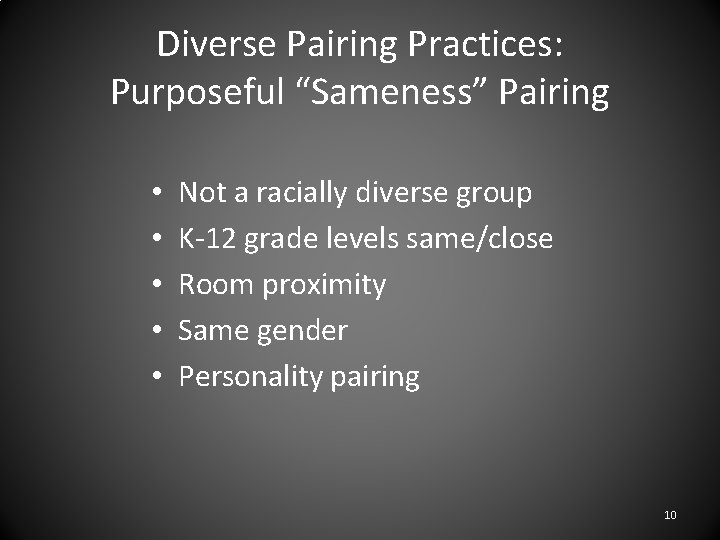
Diverse Pairing Practices: Purposeful “Sameness” Pairing • • • Not a racially diverse group K-12 grade levels same/close Room proximity Same gender Personality pairing 10
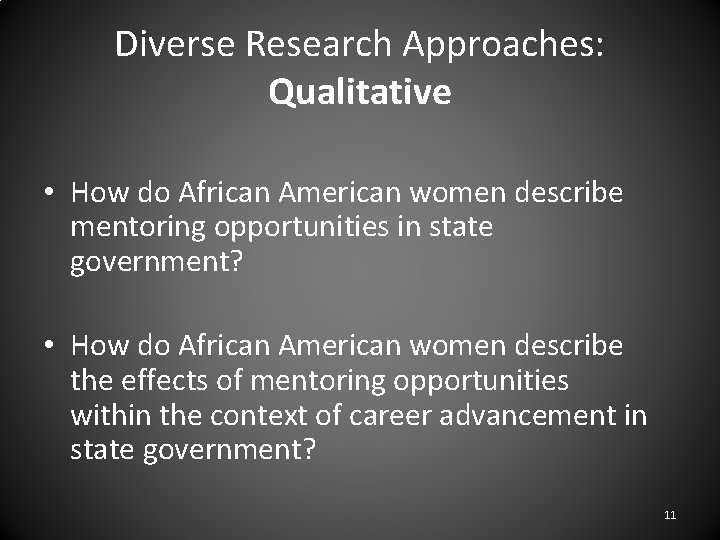
Diverse Research Approaches: Qualitative • How do African American women describe mentoring opportunities in state government? • How do African American women describe the effects of mentoring opportunities within the context of career advancement in state government? 11
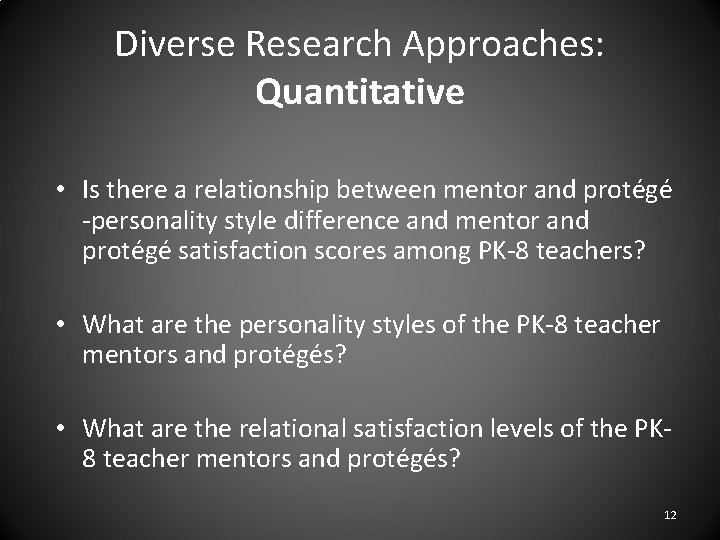
Diverse Research Approaches: Quantitative • Is there a relationship between mentor and protégé -personality style difference and mentor and protégé satisfaction scores among PK-8 teachers? • What are the personality styles of the PK-8 teacher mentors and protégés? • What are the relational satisfaction levels of the PK 8 teacher mentors and protégés? 12
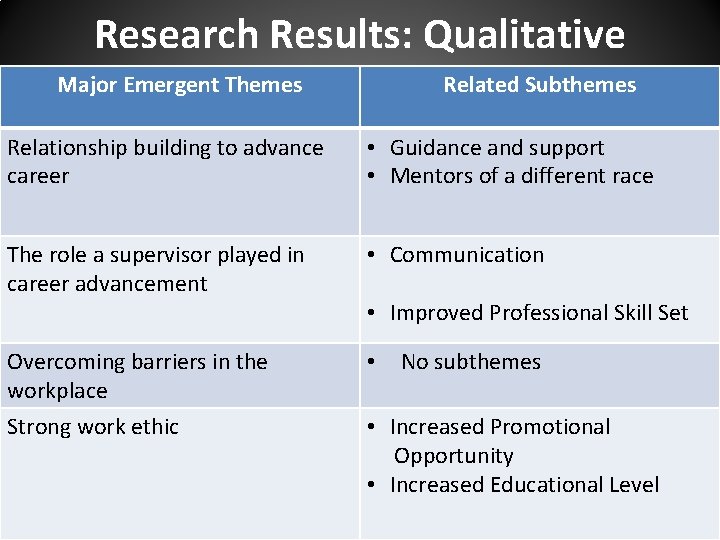
Research Results: Qualitative Major Emergent Themes Relationship building to advance career Related Subthemes • Guidance and support • Mentors of a different race The role a supervisor played in • Communication career advancement • Improved Professional Skill Set Overcoming barriers in the workplace • No subthemes Strong work ethic • Increased Promotional Opportunity • Increased Educational Level 13
Research Results: Relationship Building to Advance Career • Fifteen of 15 women emphasized that relationship building, “Helps to progress in a career path”, “Cultivates skill development throughout a career”, and “Provides sound career advice when making career decisions”. • One participant expressed that the most important advice she received was learning how to “Navigate the communication process and developing a relevant resume”. 14
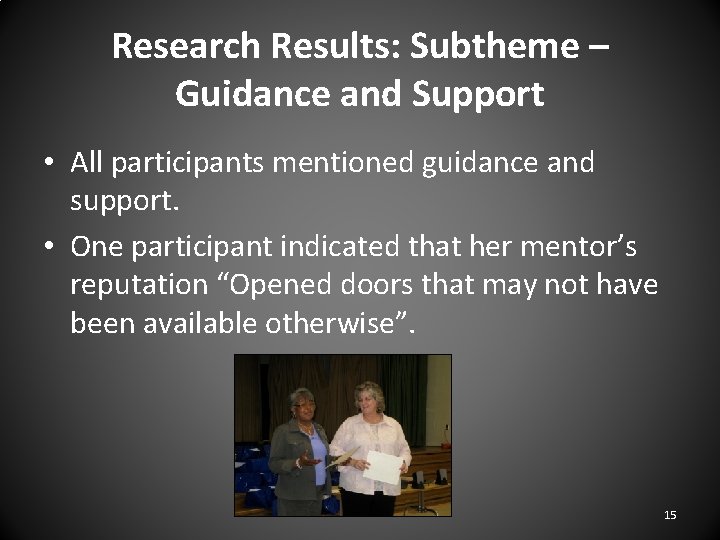
Research Results: Subtheme – Guidance and Support • All participants mentioned guidance and support. • One participant indicated that her mentor’s reputation “Opened doors that may not have been available otherwise”. 15
Research Results: Subtheme – Mentors of a Different Race • Participants shared negative views regarding the availability of African American female mentors. • “I learned to embrace opportunity regardless of the individual’s race, which can sometimes be double edged sword. ” • Six women indicated that Caucasian women were more supportive through the career advancement process than black women. 16
Research Results: The Role a Supervisor Played in Career Advancement • Ten of 15 women indicated that a supervisor supported her career advancement process and groomed her to “Step into her position”. • Participant comment: “Step into her position. ” • Another participant stated, “My supervisor kind of grabbed hold of me and took me through and explained how to be promotable. ” 17
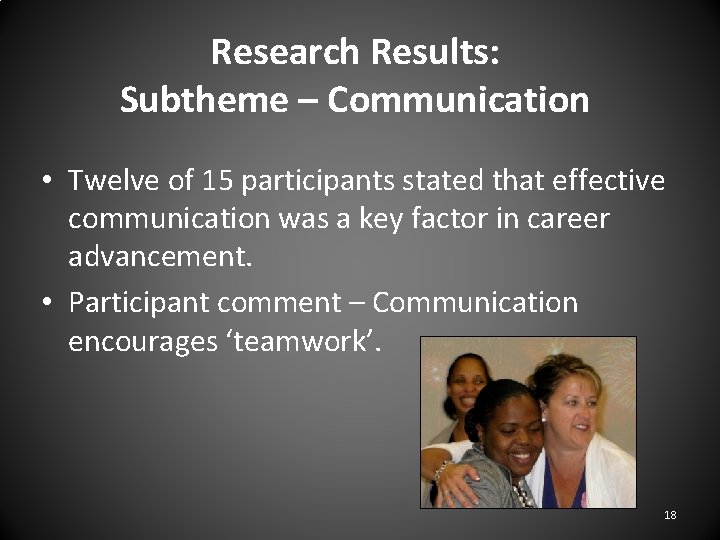
Research Results: Subtheme – Communication • Twelve of 15 participants stated that effective communication was a key factor in career advancement. • Participant comment – Communication encourages ‘teamwork’. 18
Research Results: Subtheme – Improved Professional Skill Set • Fifteen of 15 participants • RP 7 shared the importance of having personable skills to be a good leader, “Having personable skills helps me to understand that I am accountable to others in my leadership role. ” 19
Research Results: Overcoming Barriers in the Workplace • Fourteen of 15 women shared that race and gender were significant barriers to career advancement. • RP 6 explained that “She could have perceived the situation with bitterness, but instead chose to work harder. ” 20
Research Results: Strong Work Ethic • Fifteen out of 15 participants • “Having initiative, intellect, and education, whether it is institutionalized or self-educated will advance your skills in maybe a couple of areas, whereas what you learn from personal experience will give you first-hand knowledge of the issue. ” 21
Research Results: Subtheme – Increased Promotional Opportunity • Ten of the 15 women • The women expressed that throughout their careers promotions came from a mentor who was aware of their work ethic. 22
Research Results: Subtheme – Increased Educational Level • Fifteen of 15 women • Study participants also mentioned the importance of perseverance when striving to continue beyond undergraduate level degrees while maintaining full time employment • “Advanced degrees gave her more visibility”. 23
Research Results: Key Points from Study • Mentoring is important to career advancement in state government: Participants used words such as “watched how she carried herself” and “replicated her positive behaviors. ” • Overcoming barriers in the workplace is key to career advancement. 24
Research Results: Quantitative • All three research question results did not reach statistical significance; however, data did emerge worth noting: Overall, these mentor-protégé pairs within this formal mentoring program were highly satisfied! 25
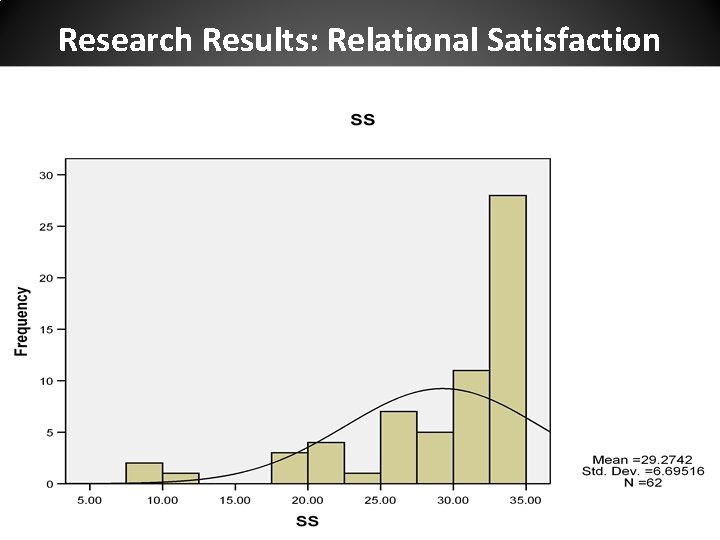
Research Results: Relational Satisfaction 26
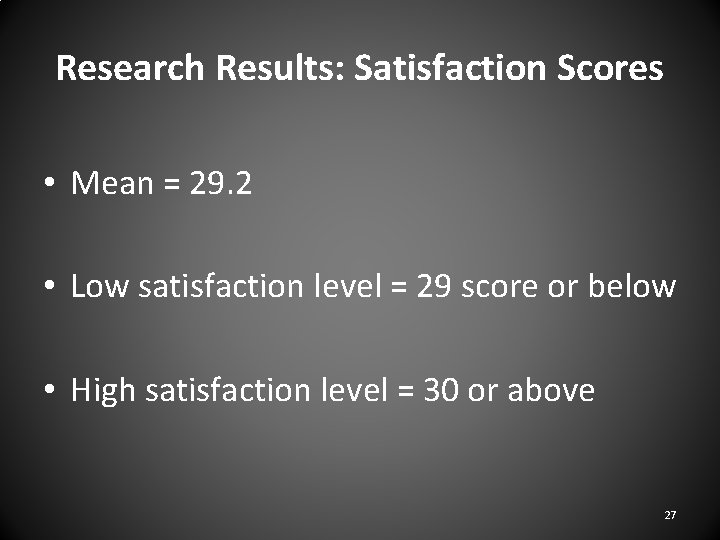
Research Results: Satisfaction Scores • Mean = 29. 2 • Low satisfaction level = 29 score or below • High satisfaction level = 30 or above 27
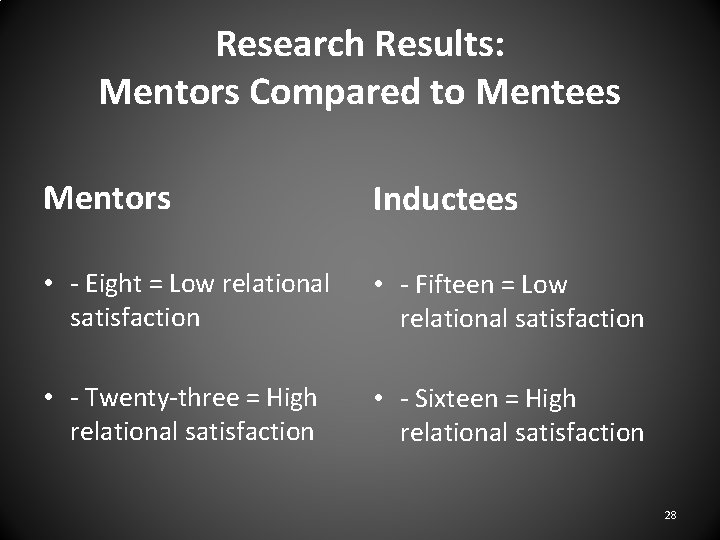
Research Results: Mentors Compared to Mentees Mentors Inductees • - Eight = Low relational satisfaction • - Fifteen = Low relational satisfaction • - Twenty-three = High relational satisfaction • - Sixteen = High relational satisfaction 28
Research Results: Why were mentors more highly satisfied in their relationships than their mentees? • According to Glickman (1990), adults’ conceptual development transforms as they mature. • Mature conceptual thinkers may be the teachers that improve their instruction. If Glickman is correct, many new teachers may not view the mentoring process and the joint inquiry found in progressive professional development as necessary in their early professional years. 29

30
Diverse Experiences: Business/Government • Develop informal mentoring relationships • Continual leadership skills development • Career development opportunities 31
Diverse Experiences: K-12 Teachers • Different satisfaction from different pairs • Leadership importance • Administrative support • Mentor – Mentee “buy-in” • Group synergy 32
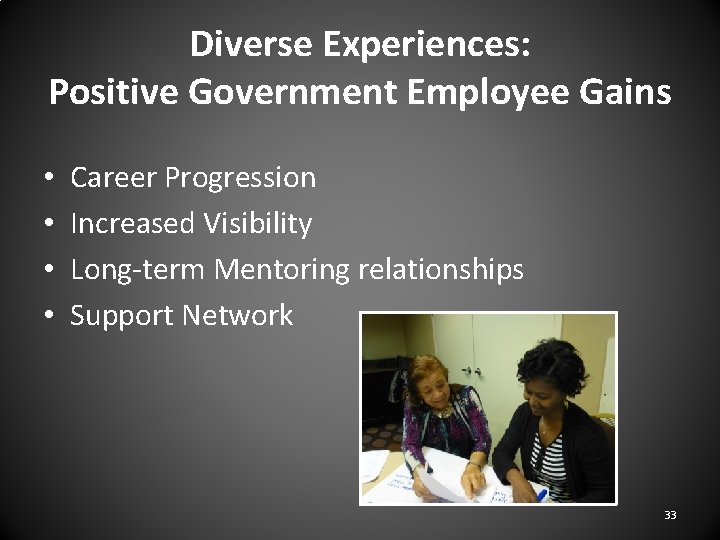
Diverse Experiences: Positive Government Employee Gains • • Career Progression Increased Visibility Long-term Mentoring relationships Support Network 33
Diverse Experiences: Positive Teacher Gains • • • Classroom Observations: Teachers modeling Group Discussions: Teachers inspired Mentor improvement! On-going forum Teacher needs assessment! 34
What Can You Do to Be a Better Mentor? Government/Business Employee Teacher • Seek out Talented Employees • Join a mentoring network • Know your values • Give Back • Be a part of formal mentoring program or begin one • Get mentor training • Be mindful of “who” you are mentoring; Are you a good match? • Be willing to learn from your mentee; joint inquiry! 35
Two Diverse Mentoring Perspectives Audience Questions and Comments Cassondra Williams-Stokes Roxanne M. Williams • Government-Business • Informal mentoring • Racially diverse mentoring pairs • Qualitative research • Research results: 4 themes • Practical experience • K-12 Teachers • Formal mentoring • Racially same mentoring pairs • Quantitative research • Research results: Relational Satisfaction • Experiences 36
Resources • Charlotte Danielson Teaching Framework Enhancing Professional Practice: A Framework for Teaching, 1996 • Podsen & Denmark Coaching and Mentoring First Year and Student Teachers, 2007 • Harry Wong The First Days of School , 2001 • Clement & Wilkins The Induction Connection: Facilitating New Teacher Success, 2011 37
Mark your Calendar - Future IMA Events June 12, 2018 – Webinar Bridging Differences: A Guide to Building Cultural Competency Lisa Fain, Center for Mentoring, Washington July 10, 2018 - Webinar Dr. David Clutterbuck, Author, Co-Founder, European Mentoring and Coaching Council, United Kingdom March 11 -13, 2019 IMA International Conference Diversity in Mentoring Initiatives: Practice and Research University of Florida, Gainesville, FL 38
THANK YOU TO OUR EXPERTS! Dr. Cassondra Williams-Stokes drcwilliams 2013@gmail. com Dr. Roxanne M. Williams teachericgs@yahoo. com The best way a mentor can prepare another leader is to expose him or her to other great people. -John C. Maxwell www. mentoringassociation. org IMA, , 4211 NW 186 th Street, Newberry, Florida 32669 Phone: 765. 621. 2471 39
- Slides: 39