
International Human Resource ManagementGlobal HRM Prof Hiteshwari Jadeja

International Human Resource Management/Global HRM Prof. Hiteshwari Jadeja 1

What is International Human Resource Management(IHRM)? The Human resource Management concepts and techniques employers use to manage the human resource challenges of their international operations 17– 2
Intercountry Differences Affecting HRM Cultural Factors Economic Systems Legal and Industrial Relations Factors The European Union 3 Human Resource Management, 5 E
Intercountry Differences Affecting HRM Cultural Factors Perceptions of “US” managers vs. other countries Examples: U. S. Managers are more concerned with getting the jobs done. Chinese Managers are more concerned with maintaining a harmonious environment. Hong Kong Managers fell between these extremes. Compared to U. S. employees, Mexican workers expect managers to keep distance and be formal When the workload increases, Australian and Singaporean firms add more staff while Korean and Japanese firms insist existing staff to work for longer
Cont…. Economic Systems Difference in labor costs are substantial 5 Examples: Some countries in Euro zone put more restrictions on the number on hours an employee can work. Portuguese workers average about 1980 hours of work annually while German workers average 1648 hours. Differences in labour cost are also substantial: Compensation costs for production workers in Mexico is $2. 75, in Taiwan is $6. 43, in US is $23. 82, in UK is $27. 10, in Germany is $34. 21 Workers in France can expect two and half days of paid holiday per full month of service. Germans get about 18 vacation days per year.
Cont…. . Legal and Industrial Relations Factors Examples: U. S. Employment at will does not exist in Europe, where firing or laying off workers is usually expensive. After expanding in Germany, Walmart discovered that Germany’s commercial laws discourage ads based on price comparisons. They soon left Germany. The European Union Must consult workers about certain corporate actions such 6 as mass layoffs Examples: In England, written statement is required about the details of the employment i. e. rate of pay, hours of work, etc. Germany doesn’t require a written contract.
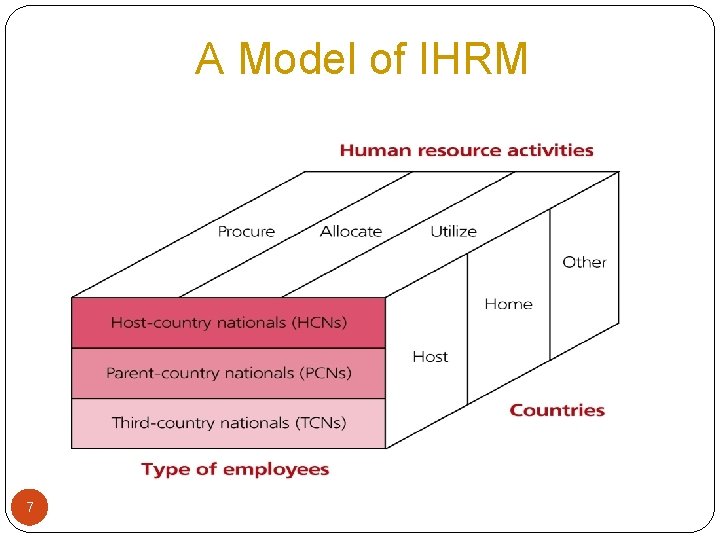
A Model of IHRM 7
What does IHRM add into the Traditional Framework of HRM? Types of employees HCNs PCNs TCNs Human resource activities Procurement Allocation Utilization of human resources Nation/country categories where firms expand operate Host country Parent country Third country 8
Sources of Global Recruitment Parent Country Nationals: Citizens of the country in which the multinational company has its headquarters. Host Country Nationals: Employees of the company’s subsidiary who are the citizens of the country where the subsidiary is located. Third Country National: For eg: Mr. Akhil- an Indian citizen-is working for an American subsidiary in France. Mr. Akhil for the American subsidiary in France is called third country national.
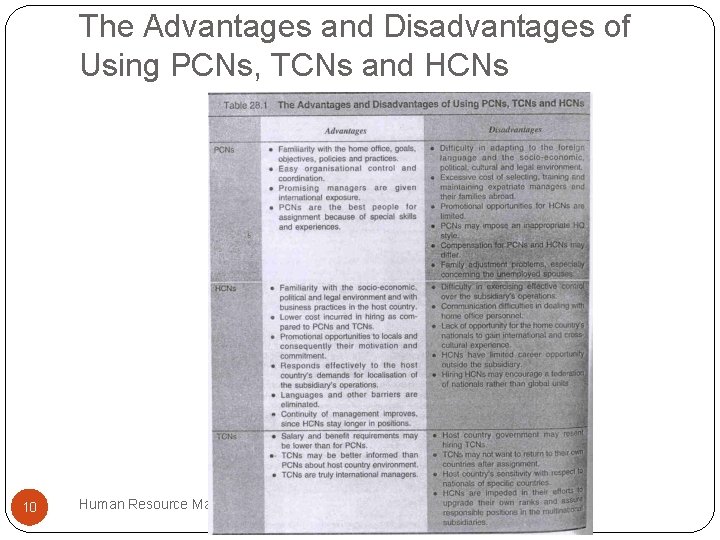
The Advantages and Disadvantages of Using PCNs, TCNs and HCNs 10 Human Resource Management, 5 E
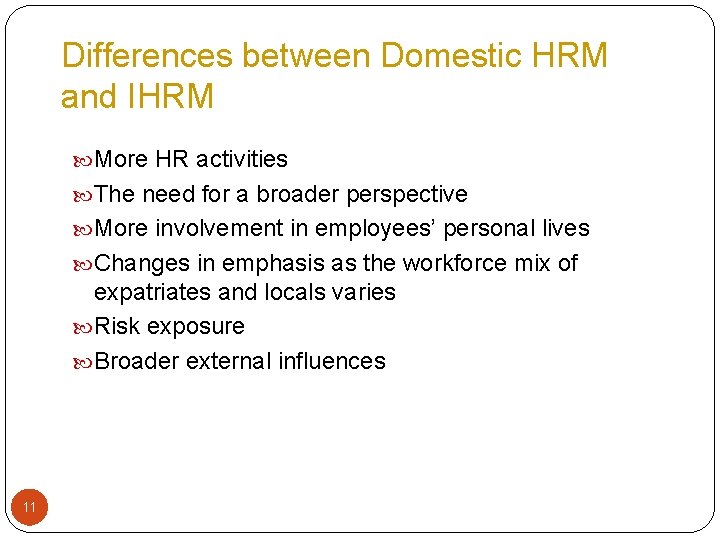
Differences between Domestic HRM and IHRM More HR activities The need for a broader perspective More involvement in employees’ personal lives Changes in emphasis as the workforce mix of expatriates and locals varies Risk exposure Broader external influences 11
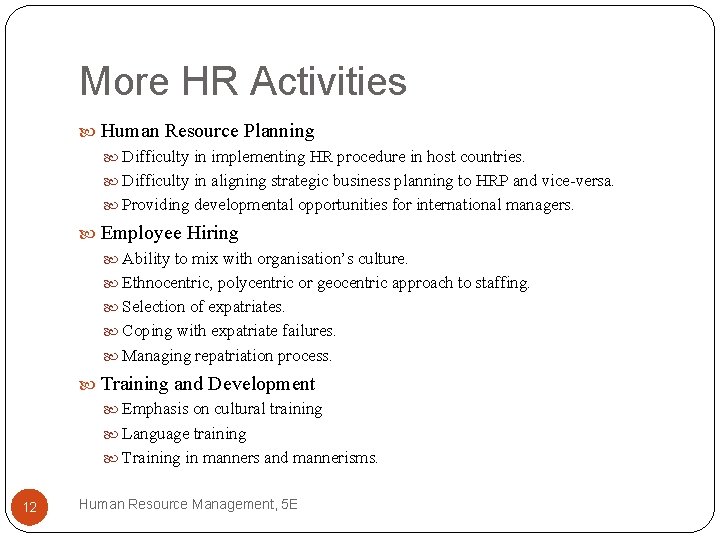
More HR Activities Human Resource Planning Difficulty in implementing HR procedure in host countries. Difficulty in aligning strategic business planning to HRP and vice-versa. Providing developmental opportunities for international managers. Employee Hiring Ability to mix with organisation’s culture. Ethnocentric, polycentric or geocentric approach to staffing. Selection of expatriates. Coping with expatriate failures. Managing repatriation process. Training and Development Emphasis on cultural training Language training Training in manners and mannerisms. 12 Human Resource Management, 5 E
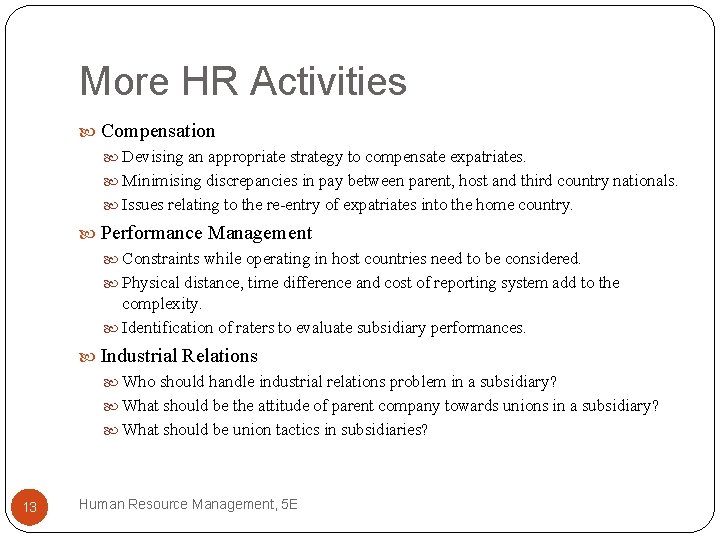
More HR Activities Compensation Devising an appropriate strategy to compensate expatriates. Minimising discrepancies in pay between parent, host and third country nationals. Issues relating to the re-entry of expatriates into the home country. Performance Management Constraints while operating in host countries need to be considered. Physical distance, time difference and cost of reporting system add to the complexity. Identification of raters to evaluate subsidiary performances. Industrial Relations Who should handle industrial relations problem in a subsidiary? What should be the attitude of parent company towards unions in a subsidiary? What should be union tactics in subsidiaries? 13 Human Resource Management, 5 E
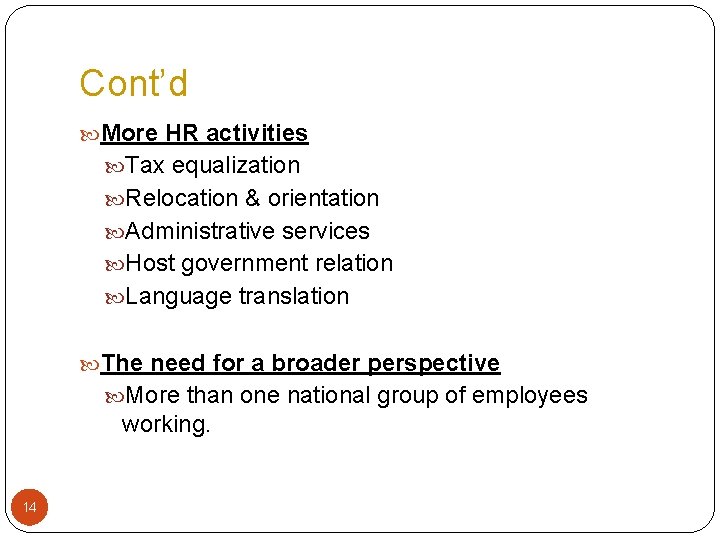
Cont’d More HR activities Tax equalization Relocation & orientation Administrative services Host government relation Language translation The need for a broader perspective More than one national group of employees working. 14
Cont’d More involvement in employees’ personal lives Schooling, housing Banking, investment Recreational program Changes in emphasis as the workforce mix of expatriates and locals varies As operations matures Local staff availability Taxation, relocation, orientation Staffing, training & development 15
Cont’d Risk exposure Expatriate failure Under performance Higher cost of failure – direct & indirect Terrorism Broader external influences Type of government Developed / developing country 16
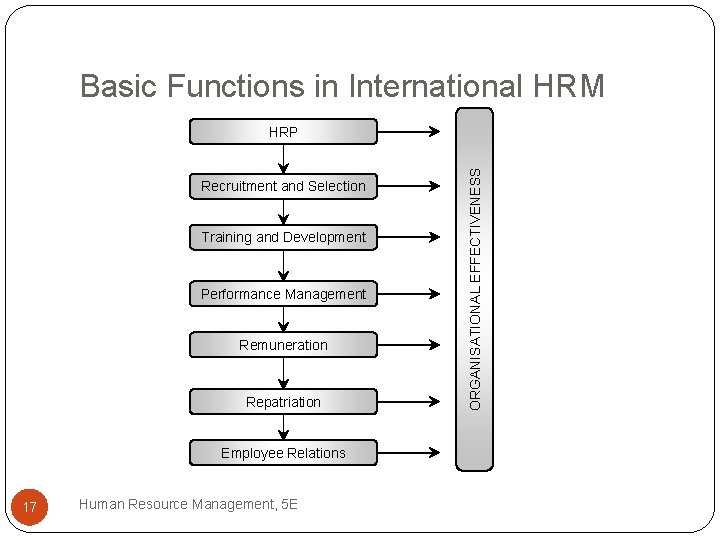
Basic Functions in International HRM Recruitment and Selection Training and Development Performance Management Remuneration Repatriation Employee Relations 17 Human Resource Management, 5 E ORGANISATIONAL EFFECTIVENESS HRP
Six Key Issues in IHRM Identifying top-management potential early. Identifying critical success factors for future international managers. Providing developmental opportunities. Tracking and maintaining commitment to individuals in international career paths. Tying strategic business planning to HRP and vice-versa. Dealing with multiple business units while attempting to achieve globally and regionally focused (e. g. European or Asian) strategies. 18 Human Resource Management, 5 E
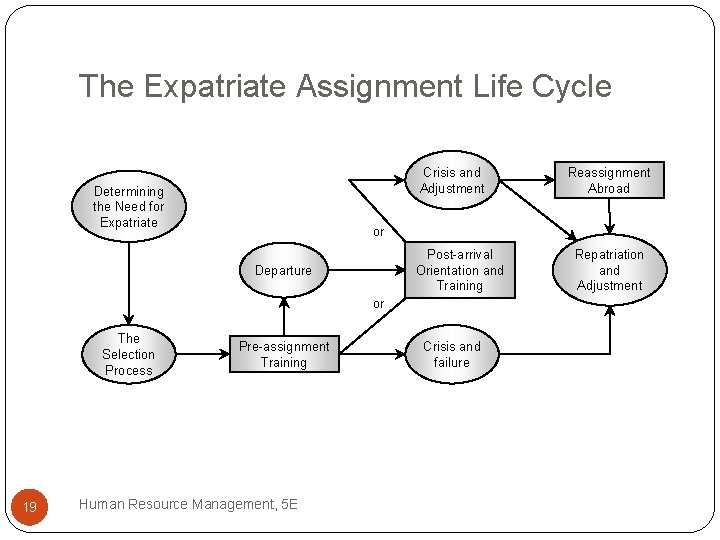
The Expatriate Assignment Life Cycle Crisis and Adjustment Determining the Need for Expatriate or Post-arrival Orientation and Training Departure or The Selection Process 19 Reassignment Abroad Pre-assignment Training Human Resource Management, 5 E Crisis and failure Repatriation and Adjustment
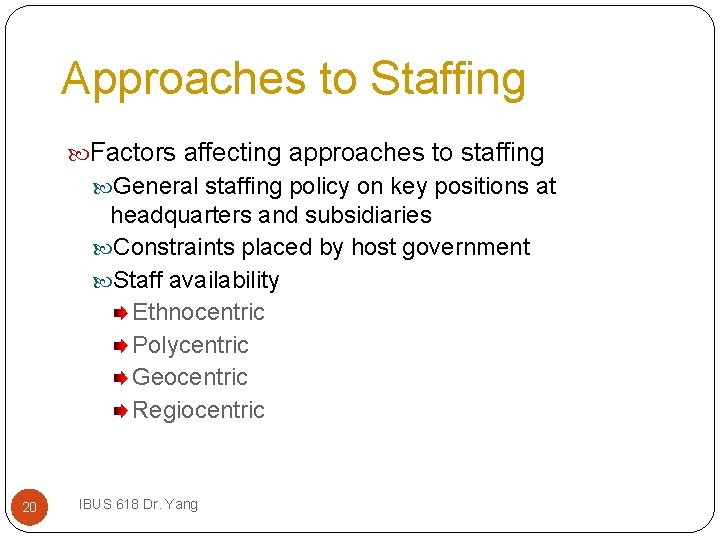
Approaches to Staffing Factors affecting approaches to staffing General staffing policy on key positions at headquarters and subsidiaries Constraints placed by host government Staff availability Ethnocentric Polycentric Geocentric Regiocentric 20 IBUS 618 Dr. Yang
Ethnocentric Strategic decisions are made at headquarters; Limited subsidiary autonomy; Key positions in domestic and foreign operations are held by headquarters’ personnel; PCNs manage subsidiaries.
Polycentric Each subsidiary is a distinct national entity with some decision-making autonomy; HCNs manage subsidiaries who are seldom promoted to HQ positions; PCNs rarely transferred to subsidiary positions. 22
Geocentric A global approach - worldwide integration; View that each part of the organization makes a unique contribution; Nationality is ignored in favor of ability: Best person for the job; Color of passport does not matter when it comes to rewards, promotion and development. 23
Regiocentric Reflects a regional strategy and structure; Regional autonomy in decision making; Staff move within the designated region, rather than globally; Staff transfers between regions are rare. 24 IBUS 618 Dr. Yang
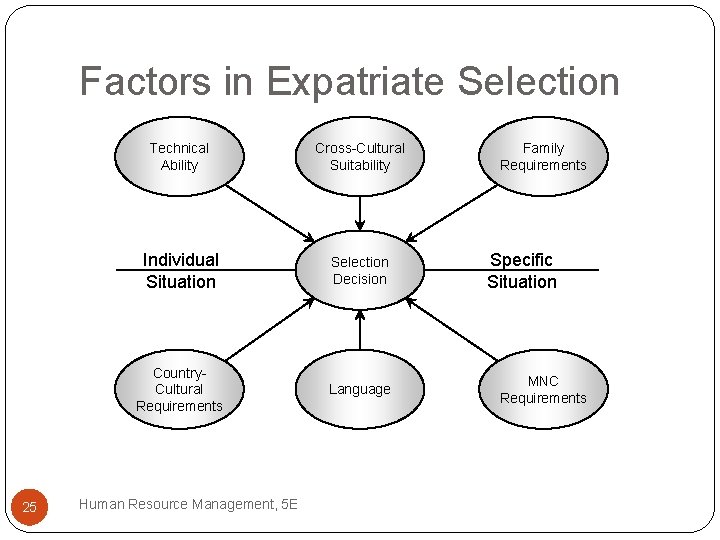
Factors in Expatriate Selection 25 Technical Ability Cross-Cultural Suitability Individual Situation Selection Decision Country. Cultural Requirements Language Human Resource Management, 5 E Family Requirements Specific Situation MNC Requirements
Why Expatriate Assignments Fail Personality Personal intentions Family pressures Inability of the spouse to adjust Inability to cope with larger overseas responsibility. Lack of cultural skills 17– 26 © 2005 Prentice Hall Inc. All rights reserved.
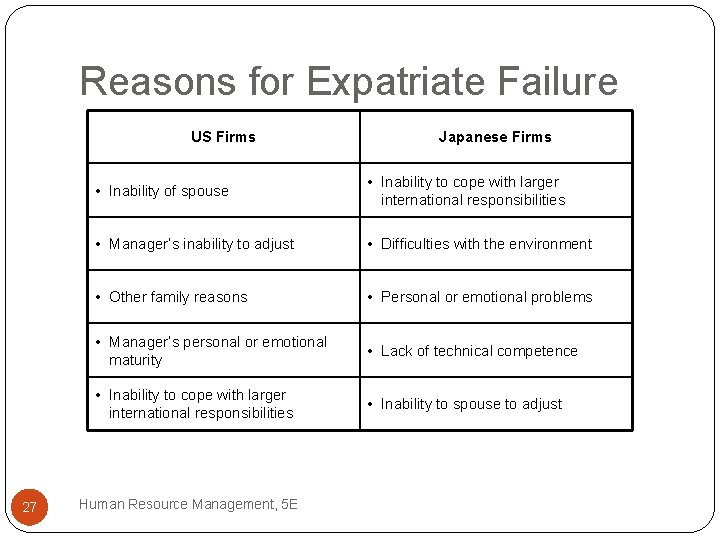
Reasons for Expatriate Failure US Firms 27 Japanese Firms • Inability of spouse • Inability to cope with larger international responsibilities • Manager’s inability to adjust • Difficulties with the environment • Other family reasons • Personal or emotional problems • Manager’s personal or emotional maturity • Lack of technical competence • Inability to cope with larger international responsibilities • Inability to spouse to adjust Human Resource Management, 5 E
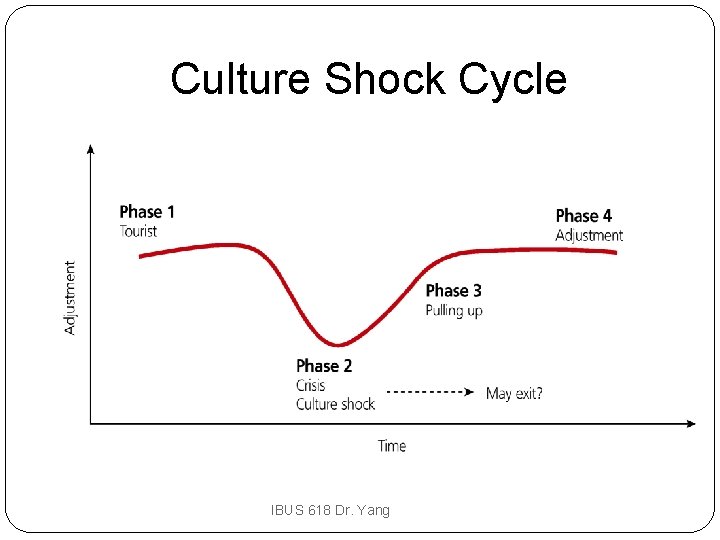
Culture Shock Cycle IBUS 618 Dr. Yang
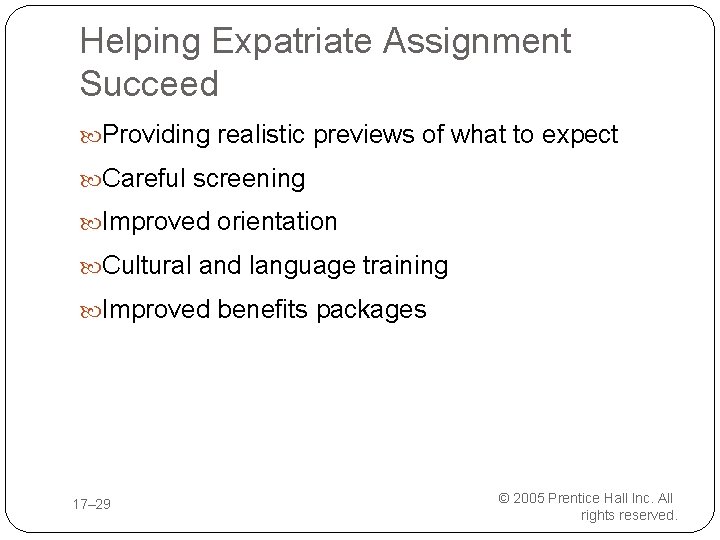
Helping Expatriate Assignment Succeed Providing realistic previews of what to expect Careful screening Improved orientation Cultural and language training Improved benefits packages 17– 29 © 2005 Prentice Hall Inc. All rights reserved.
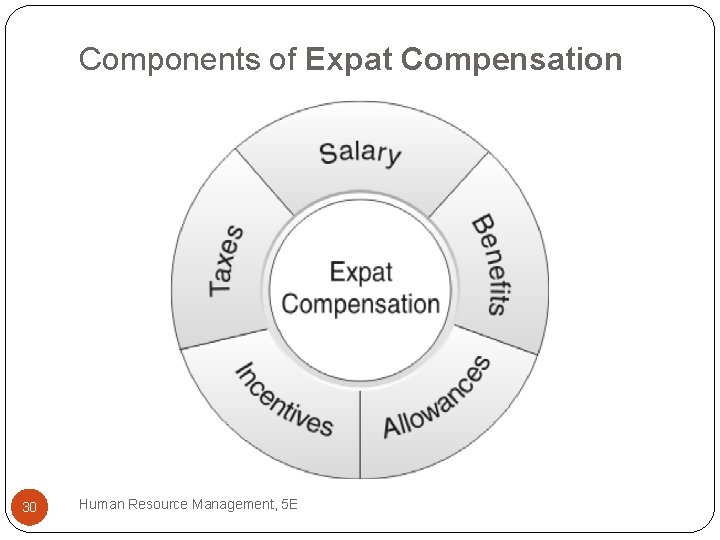
Components of Expat Compensation 30 Human Resource Management, 5 E
Compensating Expatriates The “Balance Sheet Approach” Equalize purchasing power across countries Home-country groups of expenses—income taxes, housing, goods and services, and discretionary expenses—are the focus of attention. The employer estimates what each of these four expenses is in the expatriate’s home country, and what each will be in the host country. The employer then pays any differences such as additional income taxes or housing expenses. 17– 31 © 2005 Prentice Hall Inc. All rights reserved.
Incentives Foreign service premiums Financial payments over and above regular base pay, and typically range between 10% and 30% of base pay. Hardship allowances Payments to compensate expatriates for exceptionally hard living and working conditions at certain foreign locations. Mobility premiums Lump-sum payments to reward employees for moving from one assignment to another. 17– 32 © 2005 Prentice Hall Inc. All rights reserved.
Components of Effective Training Cultural awareness programs Preliminary visits Language training Practical assistance Training for the training role TCN and HCN expatriate training Non-traditional assignments and training 33 IBUS 618, Dr. Yang
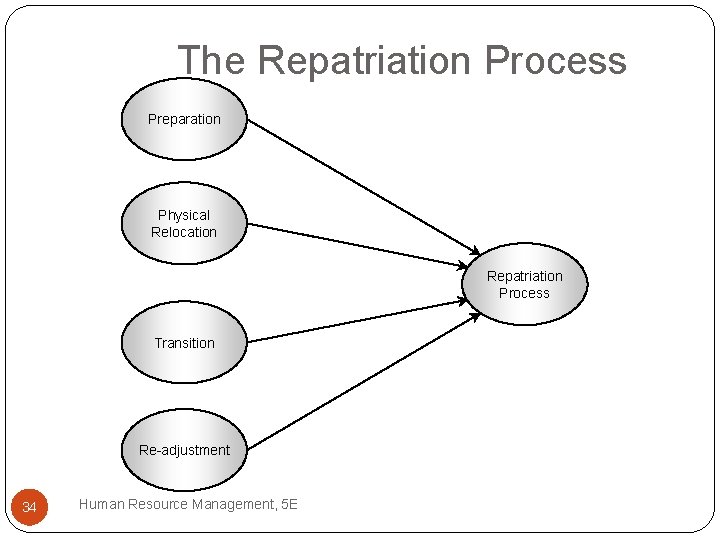
The Repatriation Process Preparation Physical Relocation Repatriation Process Transition Re-adjustment 34 Human Resource Management, 5 E

Thank You 35 Human Resource Management, 5 E
- Slides: 35