
international human resource management and labor relations 20
international human resource management and labor relations 20 - i n t e r n a t i o n a l b u s i n e s s , 5 t h e d i t i o n chapter 20
Chapter Objectives 1 • Describe the nature of human resource management in international business • Detail how firms recruit and select managers for international assignments • Explain how international businesses train and develop expatriate managers • Describe labor relations in international business 20 -2
Chapter Objectives 2 • Discuss how international firms conduct performance appraisals and determine compensation for their expatriate managers • Analyze retention and turnover issues in international business • Explain basic human resource issues involving nonmanagerial employees 20 -3

Human Resource Management Human resource management is the set of activities directed at attracting, developing, and maintaining the effective workforce necessary to achieve a firm’s objectives. 20 -4
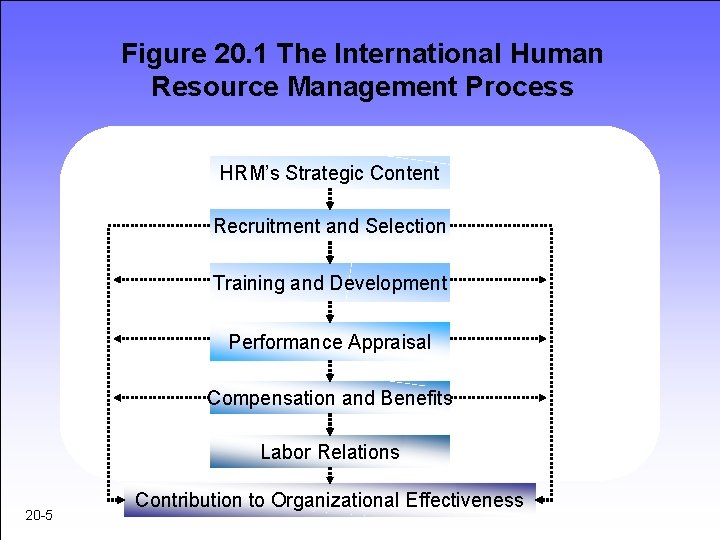
Figure 20. 1 The International Human Resource Management Process HRM’s Strategic Content Recruitment and Selection Training and Development Performance Appraisal Compensation and Benefits Labor Relations 20 -5 Contribution to Organizational Effectiveness
International Staffing Needs Managerial/Executive employees Nonmanagerial employees 20 -6
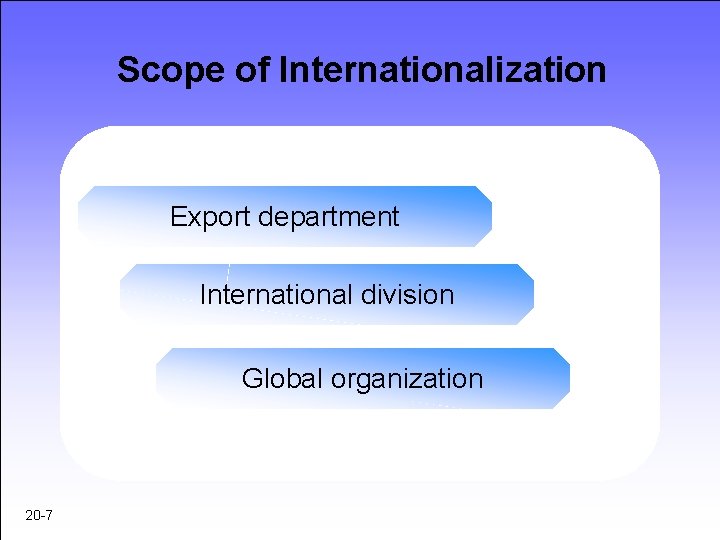
Scope of Internationalization Export department International division Global organization 20 -7
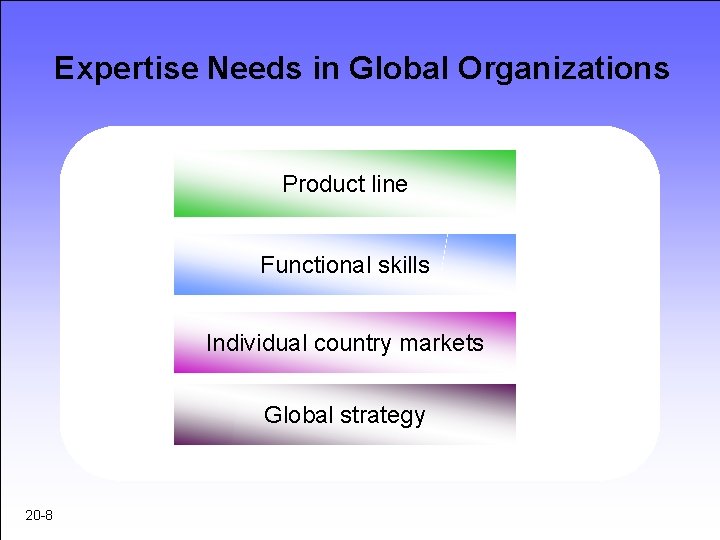
Expertise Needs in Global Organizations Product line Functional skills Individual country markets Global strategy 20 -8
Centralization versus Decentralization of Control • Centralized firms – Favor home country managers – Most common amongst international division form • Decentralized firms – Favor host country managers – Most common amongst multidomestic firms 20 -9
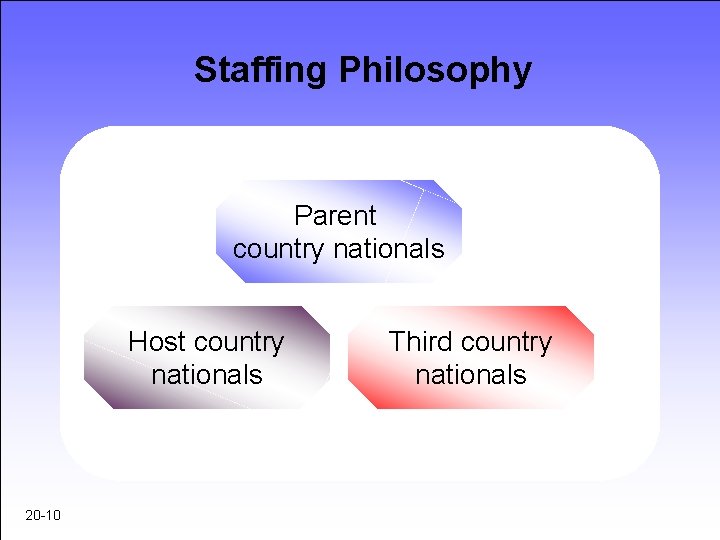
Staffing Philosophy Parent country nationals Host country nationals 20 -10 Third country nationals
Strategies for Staffing • Ethnocentric staffing model • Polycentric staffing model • Geocentric staffing model 20 -11
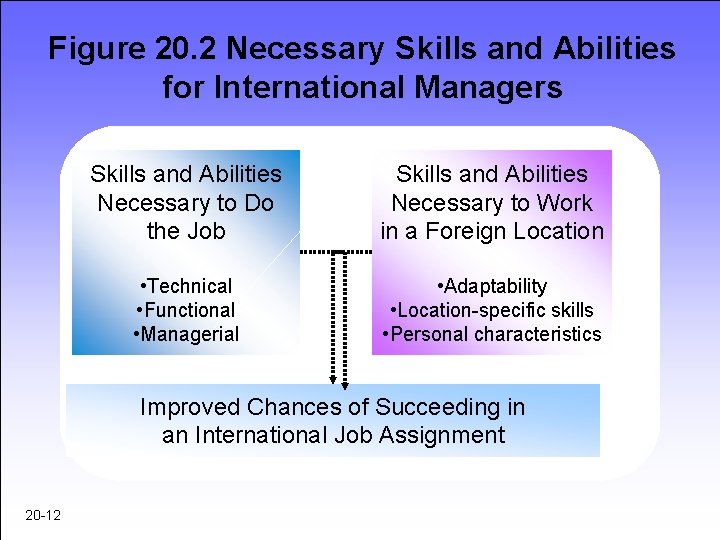
Figure 20. 2 Necessary Skills and Abilities for International Managers Skills and Abilities Necessary to Do the Job Skills and Abilities Necessary to Work in a Foreign Location • Technical • Functional • Managerial • Adaptability • Location-specific skills • Personal characteristics Improved Chances of Succeeding in an International Job Assignment 20 -12
Recruitment of Managers Experienced managers 20 -13 Younger managers
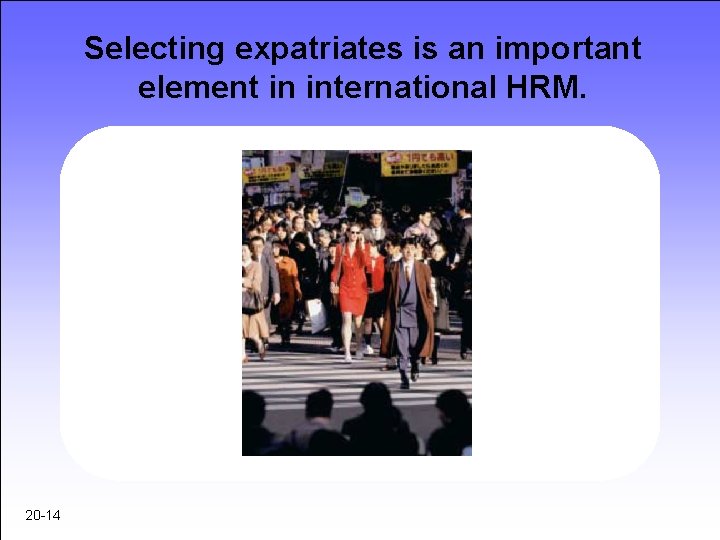
Selecting expatriates is an important element in international HRM. 20 -14
Selection of Managers Managerial competence Appropriate training Adaptability to new situations 20 -15
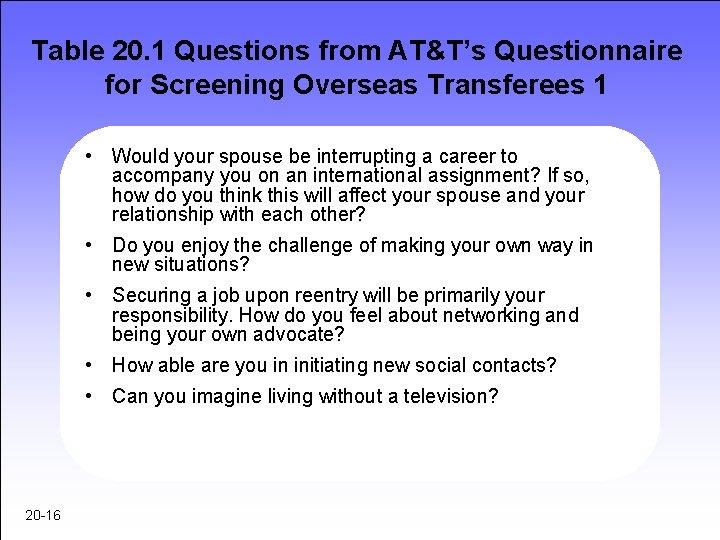
Table 20. 1 Questions from AT&T’s Questionnaire for Screening Overseas Transferees 1 • Would your spouse be interrupting a career to accompany you on an international assignment? If so, how do you think this will affect your spouse and your relationship with each other? • Do you enjoy the challenge of making your own way in new situations? • Securing a job upon reentry will be primarily your responsibility. How do you feel about networking and being your own advocate? • How able are you in initiating new social contacts? • Can you imagine living without a television? 20 -16
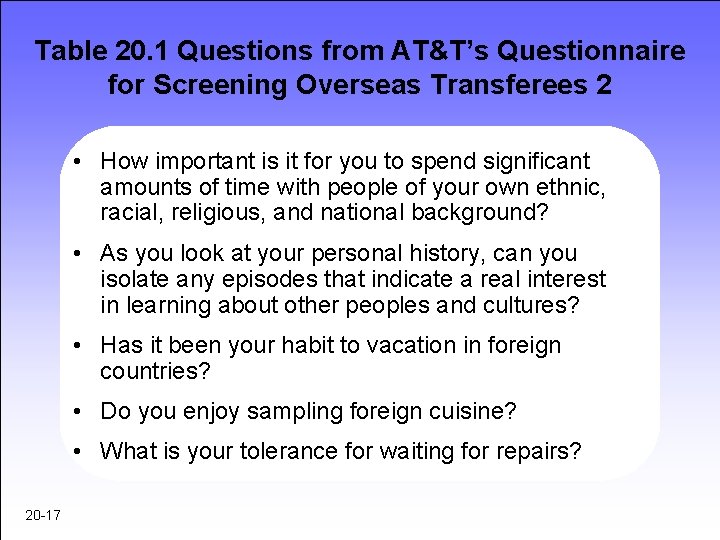
Table 20. 1 Questions from AT&T’s Questionnaire for Screening Overseas Transferees 2 • How important is it for you to spend significant amounts of time with people of your own ethnic, racial, religious, and national background? • As you look at your personal history, can you isolate any episodes that indicate a real interest in learning about other peoples and cultures? • Has it been your habit to vacation in foreign countries? • Do you enjoy sampling foreign cuisine? • What is your tolerance for waiting for repairs? 20 -17

Culture Shock Culture shock is a psychological phenomenon that may lead to feelings of fear, helplessness, irritability, and disorientation, which is commonly experienced by new expatriates who may experience a sense of loss regarding their old cultural environment as well as confusion, rejection, self-doubt, and decreased self-esteem from working in a new and unfamiliar cultural setting. 20 -18

Figure 20. 3 Phases in Acculturation Honeymoon Disillusionment Adaptation Biculturalism 20 -19
Honeymoon Phase • New culture seems exotic and stimulating • Excitement of working in new environment makes employee overestimate ease of adjusting • Lasts for first few days or months 20 -20
Disillusionment Phase • Differences between new and old environments are blown out of proportion • Challenges of everyday living • Many stay stuck in this phase 20 -21
Adaptation Phase • Employee begins to understand patterns of new culture • Gains language competence • Adjusts to everyday living 20 -22
Biculturalism • Anxiety has ended • Employee gains confidence in ability to function productively in new culture • Repatriation may be difficult 20 -23
Overseas Success • Likelihood of managers being successful at overseas assignment increases if the managers – Can freely choose whether to accept or reject the assignment – Have been given a realistic preview of the job and assignment – Have been given a realistic expectation of what their repatriation assignment will be – Have a mentor back home who will guard their interests and provide support – See a clear link between the expatriate assignment and their long-term career path 20 -24
Training and Development • Assessing training needs • Basic training methods – Standardized – Customized • Developing younger managers 20 -25
Performance Appraisal Performance appraisal is the process of assessing how effectively people are performing their jobs. 20 -26
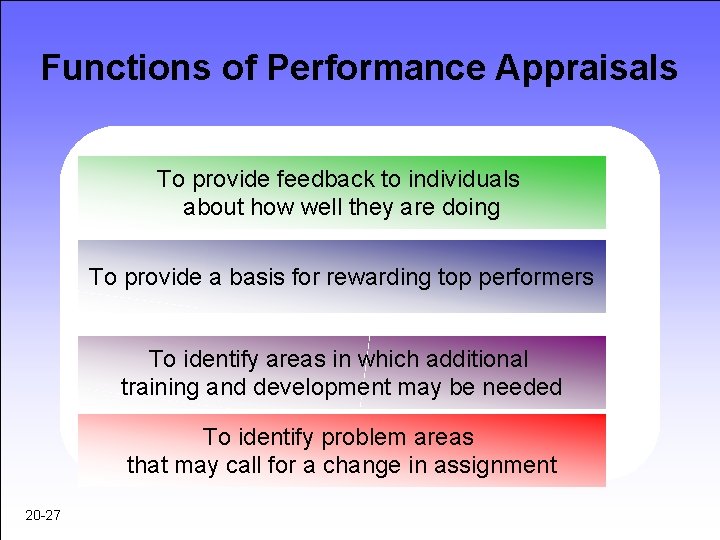
Functions of Performance Appraisals To provide feedback to individuals about how well they are doing To provide a basis for rewarding top performers To identify areas in which additional training and development may be needed To identify problem areas that may call for a change in assignment 20 -27
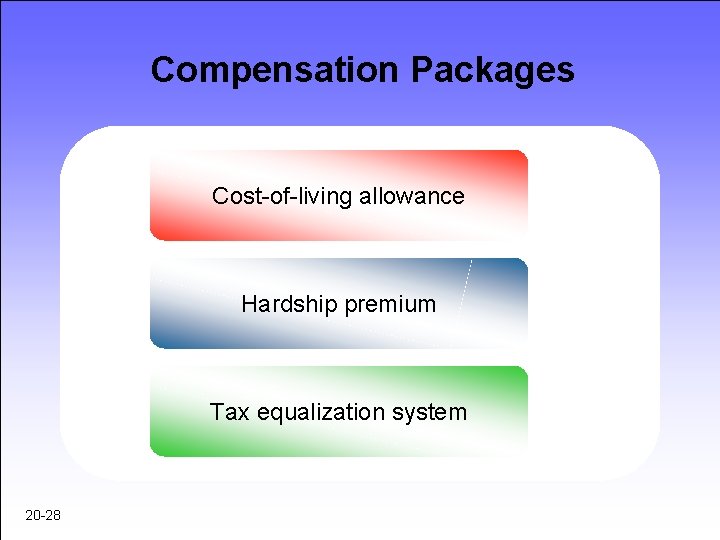
Compensation Packages Cost-of-living allowance Hardship premium Tax equalization system 20 -28
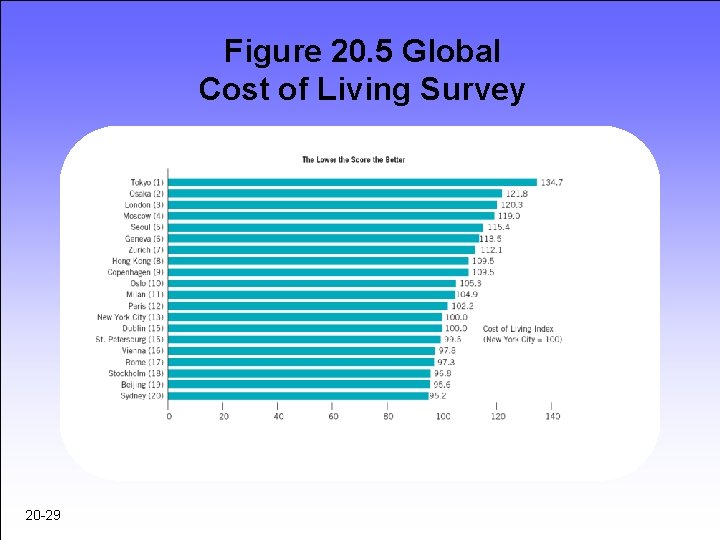
Figure 20. 5 Global Cost of Living Survey 20 -29
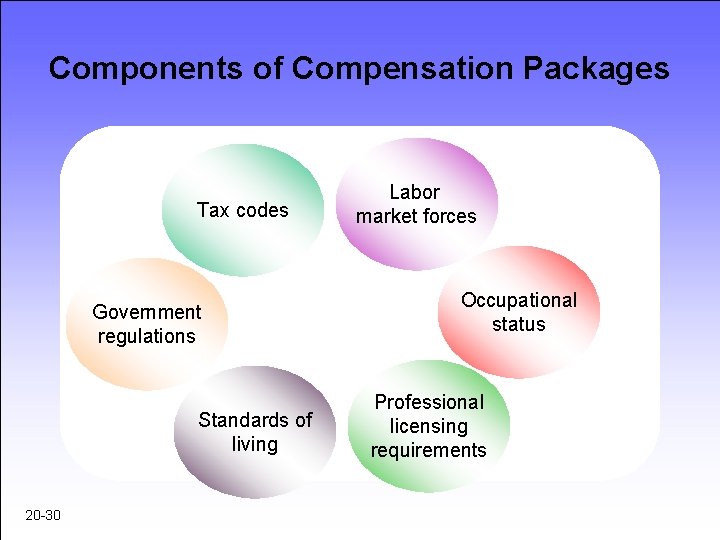
Components of Compensation Packages Tax codes Government regulations Standards of living 20 -30 Labor market forces Occupational status Professional licensing requirements
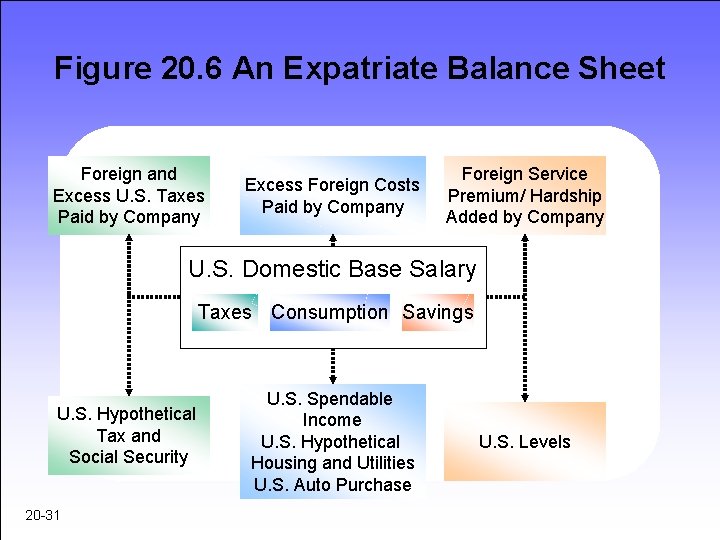
Figure 20. 6 An Expatriate Balance Sheet Foreign and Excess U. S. Taxes Paid by Company Excess Foreign Costs Paid by Company Foreign Service Premium/ Hardship Added by Company U. S. Domestic Base Salary Taxes Consumption Savings U. S. Hypothetical Tax and Social Security 20 -31 U. S. Spendable Income U. S. Hypothetical Housing and Utilities U. S. Auto Purchase U. S. Levels
Labor Relations Comparative Labor Relations Collective Bargaining Union Influence and Codetermination 20 -32
- Slides: 32