
International Family of Classifications Work on classifications United
- Slides: 34
International Family of Classifications Work on classifications United Nations Statistics Division
Overview o Programme on Statistical Classifications o Bodies of International Classifications n Statistical Commission n Expert Group / Technical Subgroup o International Family of Classifications n Types of Classifications n History of Economic/Trade Classifications n Relationships between Classifications o Role of Custodians
Programme on Statistical Classifications o To develop and maintain economic and social classifications approved as guidelines by the United Nations Statistical Commission o To provide technical support for development, implementation, interpretation, maintenance, updating and revision of these classifications o To prepare and disseminate classifications methods and materials, i. e. , statements of best practice, explanatory notes, indexes, correspondence tables, coding strategies and methods o To coordinate international cooperation in the area of statistical classifications through the Statistical Commission and through activities of the United Nations Expert Group on International Economic and Social Classifications. 3
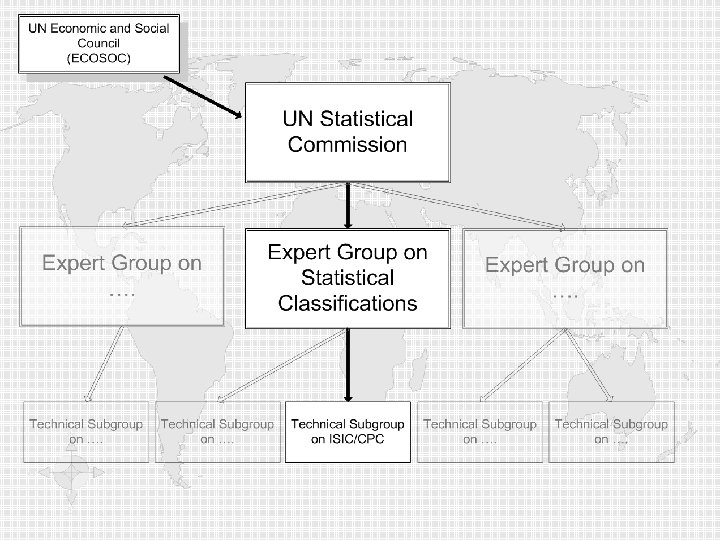
Statistical Commission o Established: 16 th February 1946 o 24 members, according to geographical distribution pattern: n n n 5 4 4 4 7 members members from from Africa Asia Eastern Europe Latin America & Caribbean Western European and other States o 4 years membership o 1 meeting per year (since 1999) 4
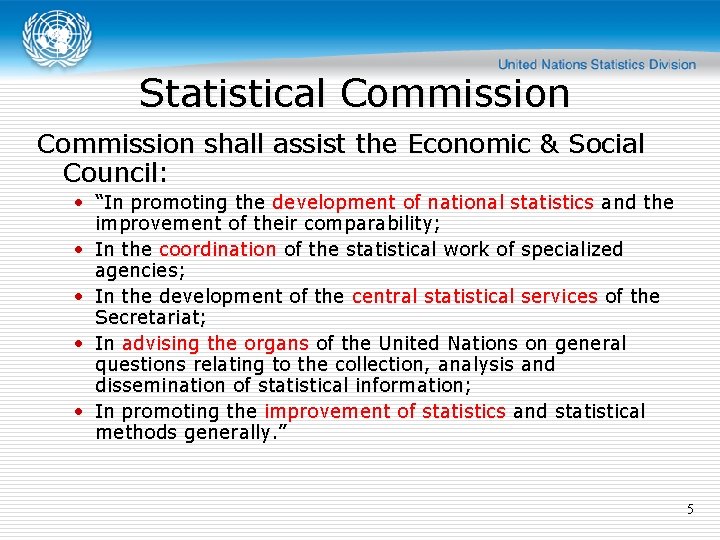
Statistical Commission shall assist the Economic & Social Council: • “In promoting the development of national statistics and the improvement of their comparability; • In the coordination of the statistical work of specialized agencies; • In the development of the central statistical services of the Secretariat; • In advising the organs of the United Nations on general questions relating to the collection, analysis and dissemination of statistical information; • In promoting the improvement of statistics and statistical methods generally. ” 5
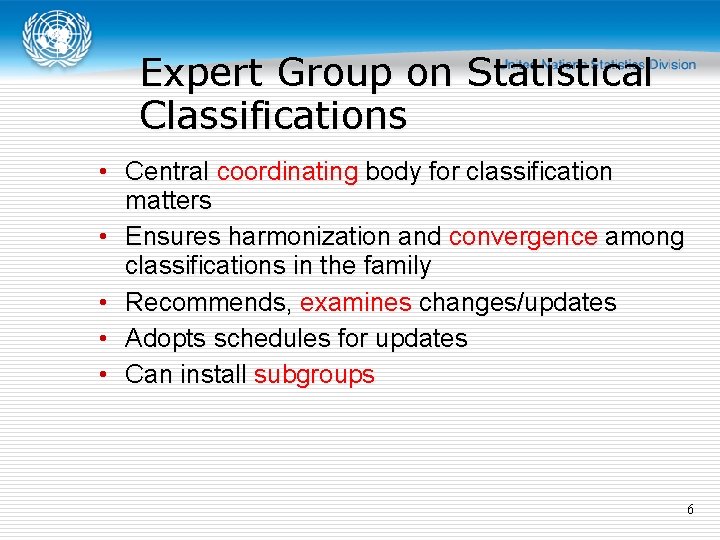
Expert Group on Statistical Classifications • Central coordinating body for classification matters • Ensures harmonization and convergence among classifications in the family • Recommends, examines changes/updates • Adopts schedules for updates • Can install subgroups 6
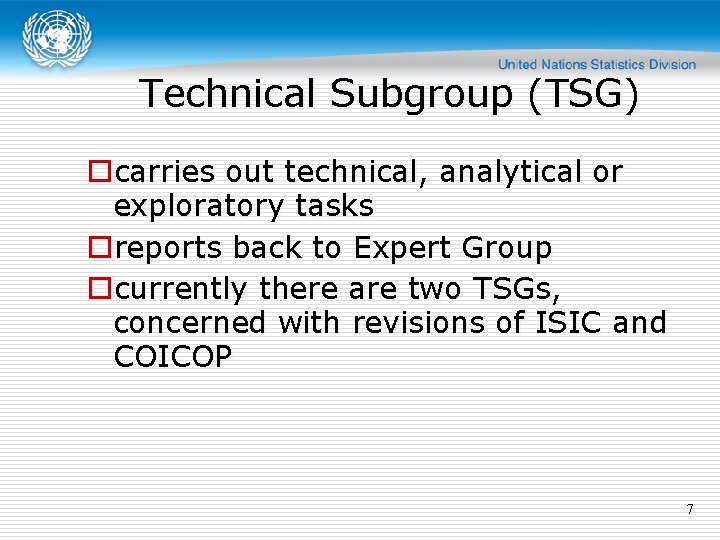
Technical Subgroup (TSG) ocarries out technical, analytical or exploratory tasks oreports back to Expert Group ocurrently there are two TSGs, concerned with revisions of ISIC and COICOP 7
Statistical Classifications o A statistical classification is a set of categories which may be assigned to one or more variables registered in statistical surveys or administrative files, and used in the production and dissemination of statistics. o The categories are defined in terms of one or more characteristics of a particular population of units of observation. o A statistical classification may have a flat, linear structure or may be hierarchically structured, such that all categories at lower levels are subcategories of a category at the next level up. o The categories at each level of the classification structure must be mutually exclusive and jointly exhaustive of all objects in the population of interest.
Statistical Classifications o Not intended to provide an exact description of a characteristic or an object o Provide categories into which the characteristics can be grouped n May be broad or narrow – e. g. for different levels in the classification
Family of Classifications o What is the Family of International Classifications? n Classification, whose custodians follow the “best practices” o What’s the purpose? n Enforce cooperation, coordination and improve quality o Which Classifications belong to the Family? n Subject matter areas: o Activities o Trade o Employment Products Expenditures Health Education Environment n International & (multi-)national 11
Types of Classifications o. Within each area there are: n. Reference Classifications n. Derived Classifications n. Related Classifications 12
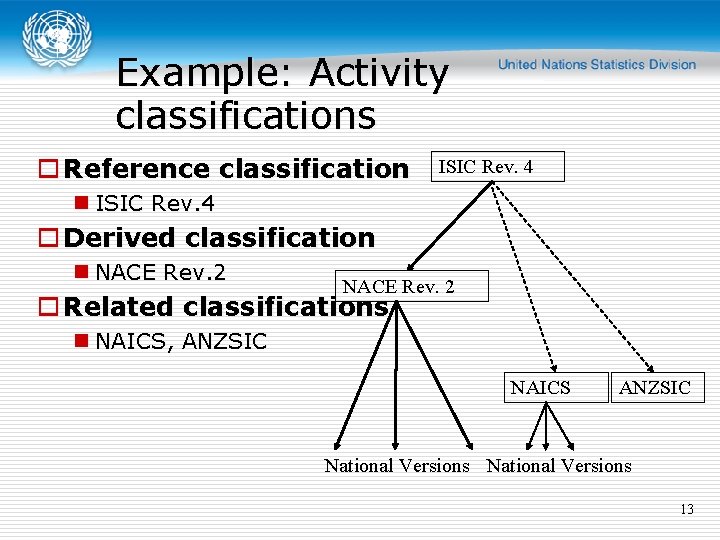
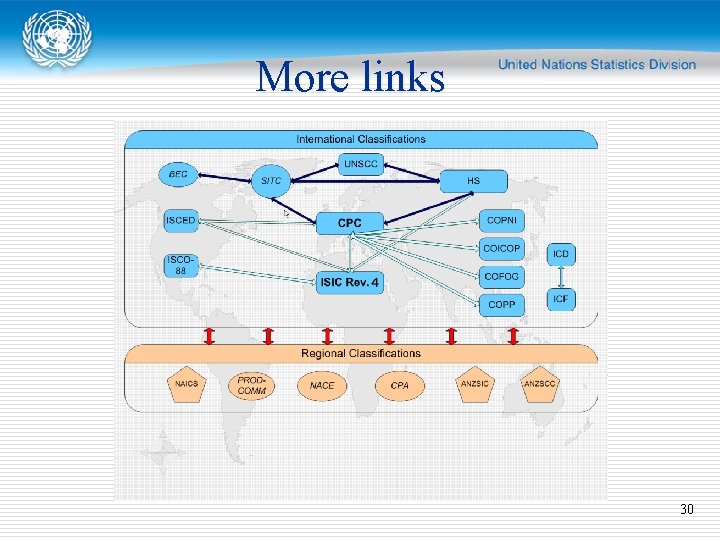
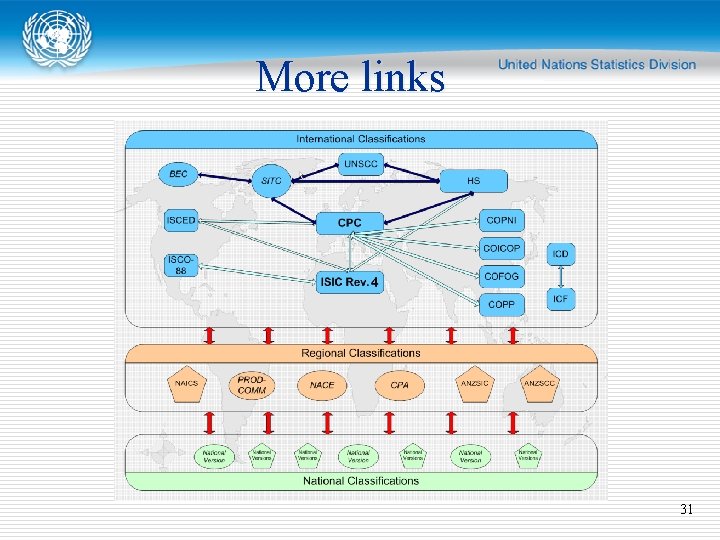
Example: Activity classifications o Reference classification ISIC Rev. 4 o Derived classification n NACE Rev. 2 o Related classifications n NAICS, ANZSIC NAICS ANZSIC National Versions 13
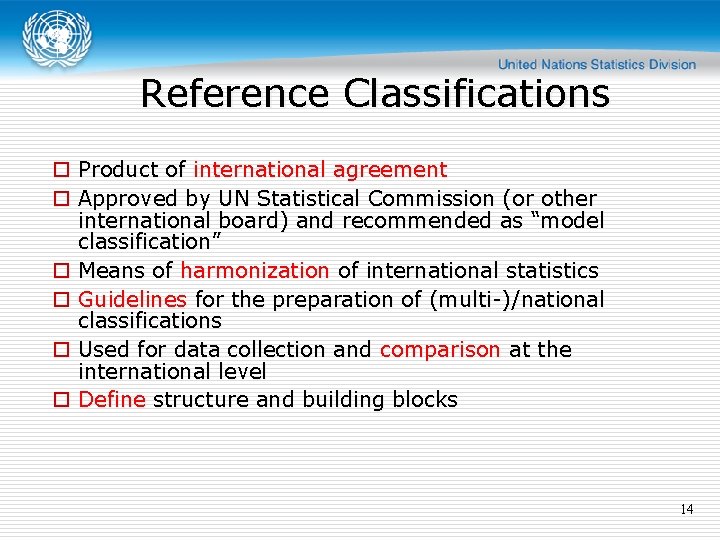
Reference Classifications o Product of international agreement o Approved by UN Statistical Commission (or other international board) and recommended as “model classification” o Means of harmonization of international statistics o Guidelines for the preparation of (multi-)/national classifications o Used for data collection and comparison at the international level o Define structure and building blocks 14
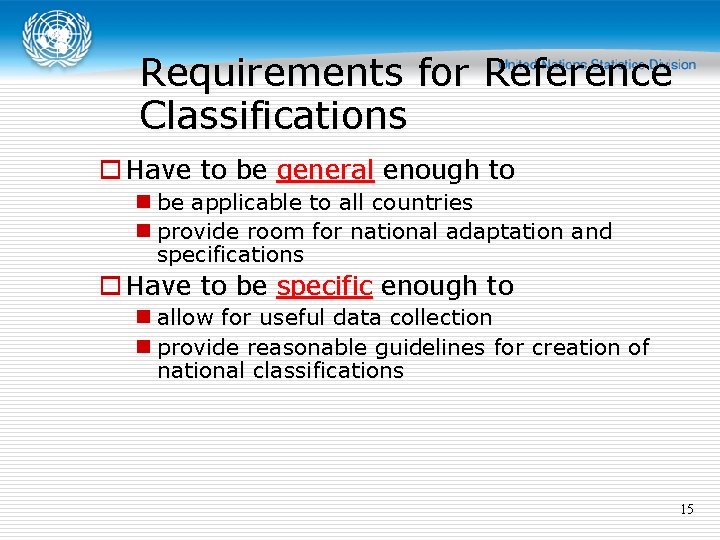
Requirements for Reference Classifications o Have to be general enough to n be applicable to all countries n provide room for national adaptation and specifications o Have to be specific enough to n allow for useful data collection n provide reasonable guidelines for creation of national classifications 15
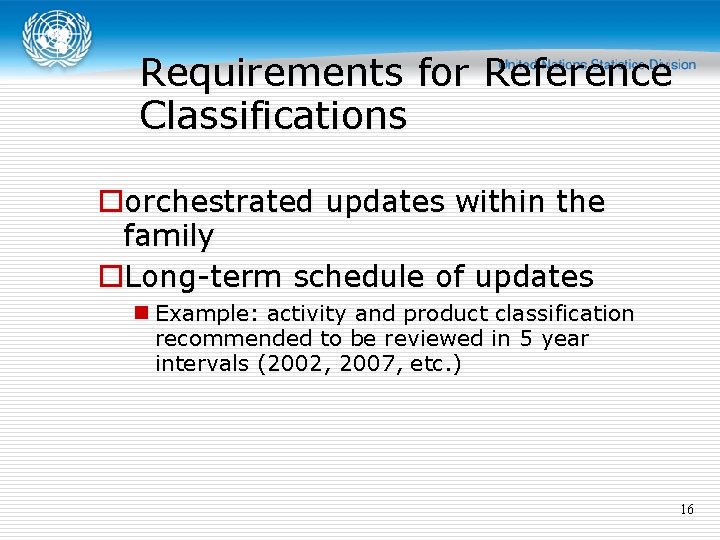
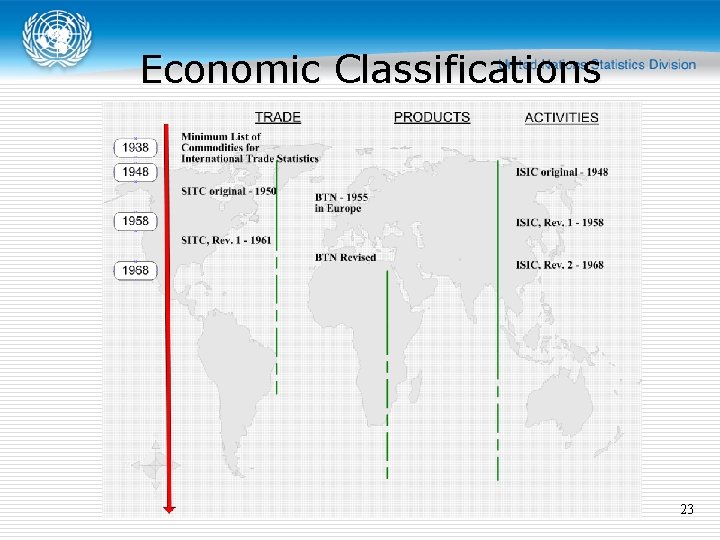
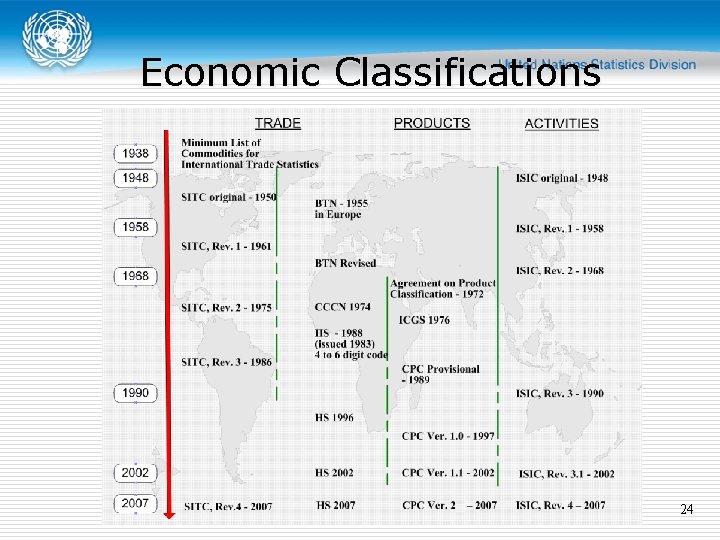
Requirements for Reference Classifications oorchestrated updates within the family o. Long-term schedule of updates n Example: activity and product classification recommended to be reviewed in 5 year intervals (2002, 2007, etc. ) 16
Derived Classifications o Based on the Reference Classification o Adopt structure n consistency of aggregates o Respect building blocks n additional detail where necessary o Tailored for use at national or multinational level 17
Related Classifications o Only partial concordance o Differ in structure and/or building blocks from reference classifications o Linked mainly through correspondence tables n many links will refer to partial correspondences 18
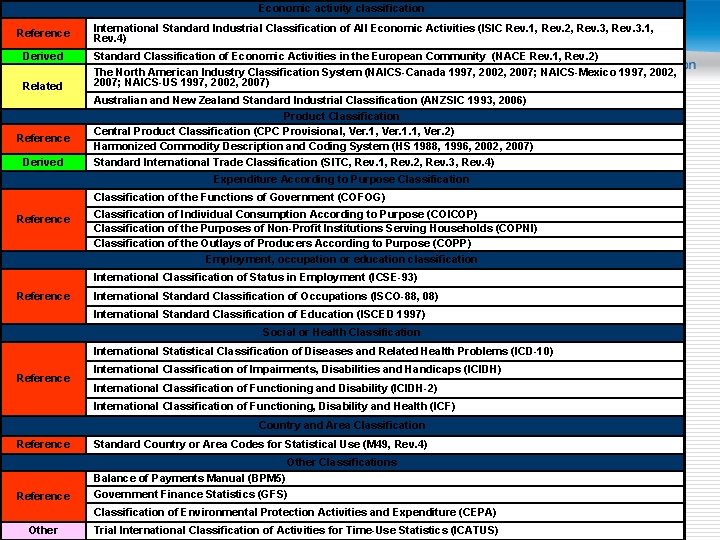
Economic activity classification Reference Derived Related Reference Derived International Standard Industrial Classification of All Economic Activities (ISIC Rev. 1, Rev. 2, Rev. 3. 1, Rev. 4) Standard Classification of Economic Activities in the European Community (NACE Rev. 1, Rev. 2) The North American Industry Classification System (NAICS-Canada 1997, 2002, 2007; NAICS-Mexico 1997, 2002, 2007; NAICS-US 1997, 2002, 2007) Australian and New Zealand Standard Industrial Classification (ANZSIC 1993, 2006) Product Classification Central Product Classification (CPC Provisional, Ver. 1. 1, Ver. 2) Harmonized Commodity Description and Coding System (HS 1988, 1996, 2002, 2007) Standard International Trade Classification (SITC, Rev. 1, Rev. 2, Rev. 3, Rev. 4) Expenditure According to Purpose Classification Reference Classification of the Functions of Government (COFOG) Classification of Individual Consumption According to Purpose (COICOP) Classification of the Purposes of Non-Profit Institutions Serving Households (COPNI) Classification of the Outlays of Producers According to Purpose (COPP) Employment, occupation or education classification International Classification of Status in Employment (ICSE-93) Reference International Standard Classification of Occupations (ISCO-88, 08) International Standard Classification of Education (ISCED 1997) Social or Health Classification International Statistical Classification of Diseases and Related Health Problems (ICD-10) Reference International Classification of Impairments, Disabilities and Handicaps (ICIDH) International Classification of Functioning and Disability (ICIDH-2) International Classification of Functioning, Disability and Health (ICF) Country and Area Classification Reference Standard Country or Area Codes for Statistical Use (M 49, Rev. 4) Other Classifications Reference Balance of Payments Manual (BPM 5) Government Finance Statistics (GFS) Classification of Environmental Protection Activities and Expenditure (CEPA) Other Trial International Classification of Activities for Time-Use Statistics (ICATUS)
Family of International Statistical Classifications o In 2013 Expert Group meeting: n Broadening of the concept of the Family n No longer restricted to small set of formally approved classifications n Include also those that are de-facto standards in some areas (e. g. environment) n Subject classifications to a review against “Principles for international classifications”
Statistical Classifications o Why do we need so many classifications? n Categorize different characteristics, even for the same object n E. g. for enterprises: o Activity o Size o Ownership type
Some examples
Economic Classifications 23
Economic Classifications 24
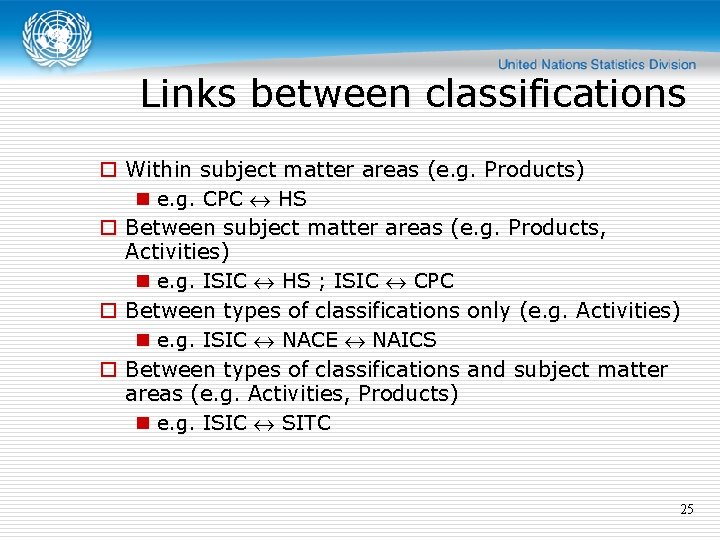
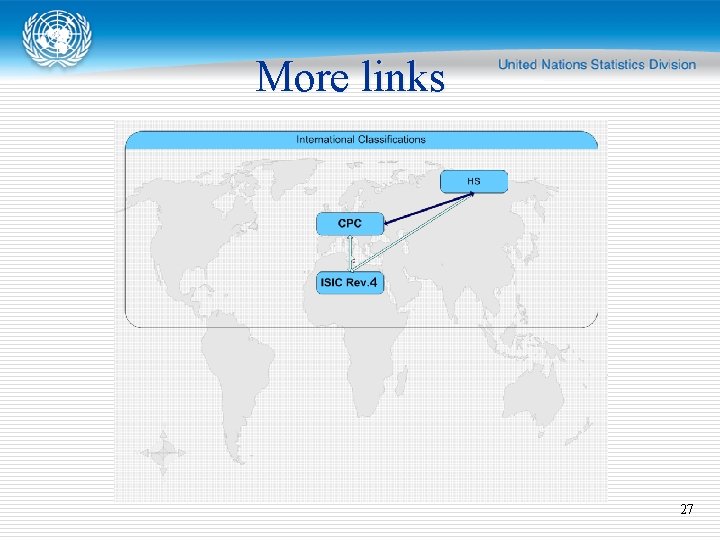
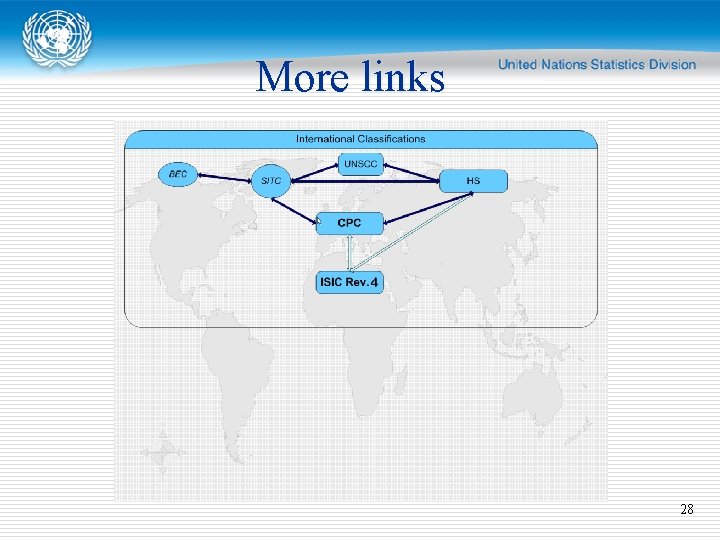
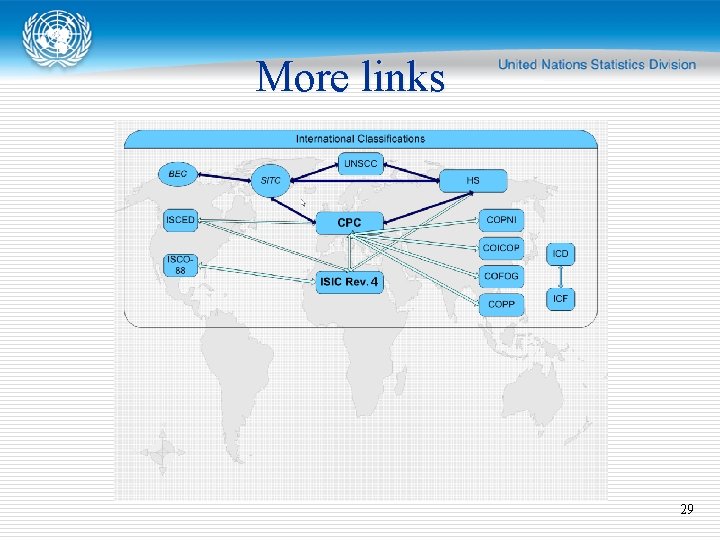
Links between classifications o Within subject matter areas (e. g. Products) n e. g. CPC HS o Between subject matter areas (e. g. Products, Activities) n e. g. ISIC HS ; ISIC CPC o Between types of classifications only (e. g. Activities) n e. g. ISIC NACE NAICS o Between types of classifications and subject matter areas (e. g. Activities, Products) n e. g. ISIC SITC 25
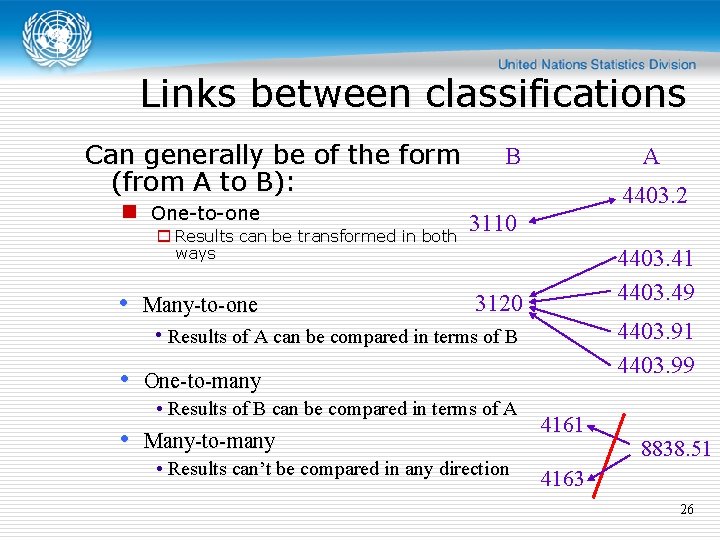
Links between classifications Can generally be of the form (from A to B): n One-to-one o Results can be transformed in both ways B 4403. 2 3110 • 3120 Many-to-one • Results of A can be compared in terms of B • One-to-many • Results of B can be compared in terms of A • A Many-to-many • Results can’t be compared in any direction 4403. 41 4403. 49 4403. 91 4403. 99 4161 8838. 51 4163 26
More links 27
More links 28
More links 29
More links 30
More links 31
Roles of Custodians o Maintenance, update and revision of “their” classification o Follow family obligations Collaborate with other custodians Willing to exchange information and work transparently Contribute their experience for advancement of Reference Classification (guidelines, definitions, interpretations, …) n Coordinate timing of changes/updates n Develop guidance and training materials n n n 32
Contacts and resources o. Classifications Hotline n. Email: CHL@un. org n. Website: unstats. un. org/unsd/class 33
Thank you for your attention!