
International Facilities Management Fire Code Basics For Folks

International Facilities Management Fire Code Basics For Folks Who Are Responsible What you really need to Know to Avoid Preventable Catastrophes June 8, 2016 by John H. Mertens Fire Protection Engineer City of Phoenix Fire Department
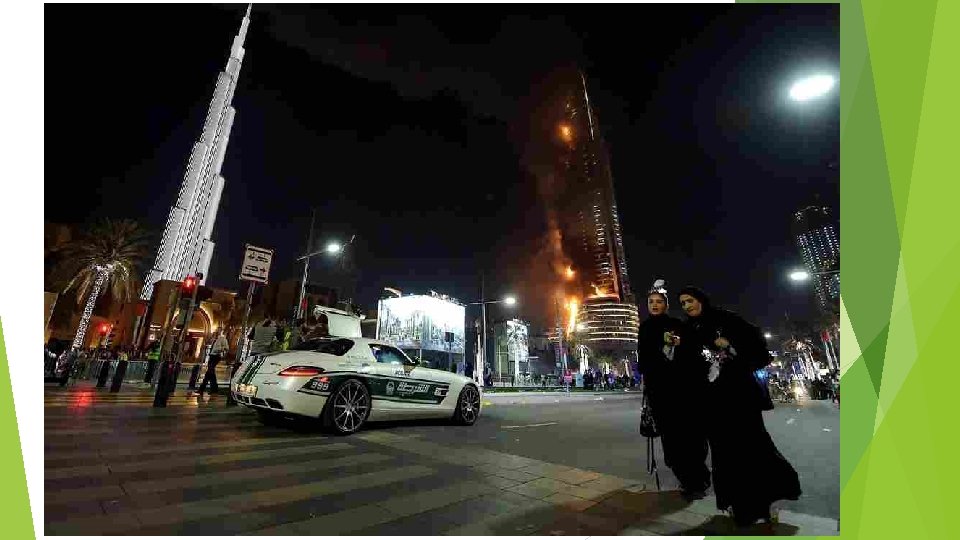
Fire Code Self Certification Guide 2

Fire Code Ø https: //www. phoenix. gov/fire/prevention/fire-code Ø http: //www. ecodes. biz/ecodes_support/free_resources/Phoenix 2012/Fire/12 PH XFire_main. html 320 changes going to Council, biggest questions were Fire Alarm Survivability and Mulch, basically IFC 2015 changes and clarifications. Buy a code. Mc. Elvaney / Mertens 3 April 2015
Administration Chapter 1 Fire Code Self Certification Guide 105. 2. 8. 2 Applicant responsibility. It shall be the responsibility of the applicant to ensure that the construction documents include all of the fire protection requirements and the shop drawings are complete and in compliance with the applicable codes and standards. Review and approval by the Fire Code Official shall not relieve the applicant of the responsibility of compliance with this code. Approval as a result of an inspection shall not be construed to be an approval of a violation of the provisions of this code or of other ordinances of the jurisdiction. Inspections presuming to give authority to violate or cancel the provisions of this code or of other ordinances of the jurisdiction shall not be valid. Accurate representation of design intent is essential. If it is wrong we cannot let it stay that way. 4
Get what you pay for? If your bid is 30% below the next bid to do the work you are probably going to be a victim of change orders to meet code at twice the difference in cost. 106. 3 New construction and alterations. Construction or work for which fire department approval is required shall be subject to inspection by the Fire Code Official and such construction or work shall remain accessible and exposed for inspection purposes until approved. . Repeat: Any questions call us. Haz-mat, special storage, sprinklers, addition of sq. footage, adding an occupancy to existing occupancy, change of occupancy, access change to site plan, door locks, don’t look uninformed.
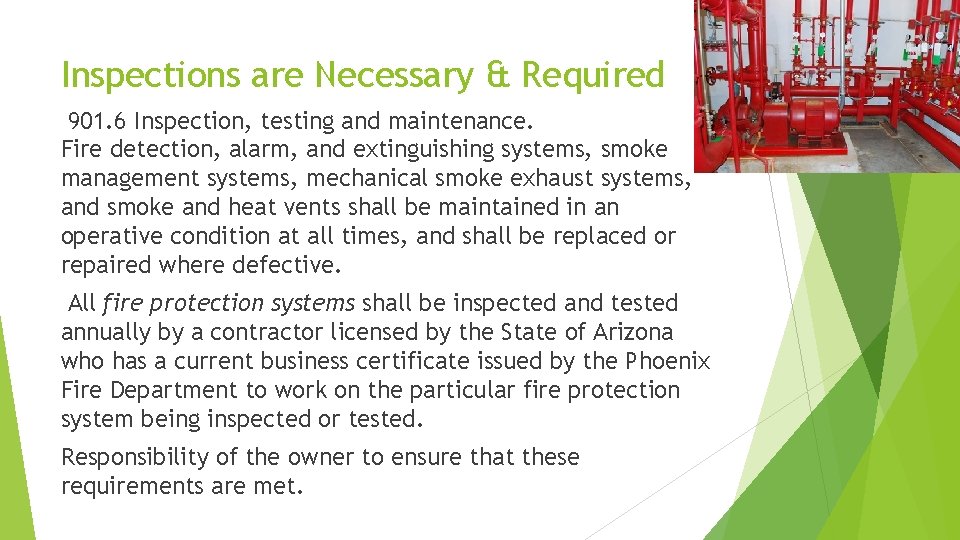
Inspections are Necessary & Required 901. 6 Inspection, testing and maintenance. Fire detection, alarm, and extinguishing systems, smoke management systems, mechanical smoke exhaust systems, and smoke and heat vents shall be maintained in an operative condition at all times, and shall be replaced or repaired where defective. All fire protection systems shall be inspected and tested annually by a contractor licensed by the State of Arizona who has a current business certificate issued by the Phoenix Fire Department to work on the particular fire protection system being inspected or tested. Responsibility of the owner to ensure that these requirements are met.
Records Keep Them Accurate and Up to Date 107. 3 A Recordkeeping. Owner’s responsibility record of periodic inspections, tests, servicing and other operations and maintenance shall be maintained on the premises or other approved location for not less than 3 years, or a different period of time where specified in this code or referenced standards. Records shall be made available for inspection by the Fire Code Official, and a copy of the records shall be provided to the Fire Code Official upon request.
Records Keep Them Accurate and Up to Date 107. 3 A Recordkeeping. record of periodic inspections, tests, servicing and other operations and maintenance shall be maintained on the premises or other approved location for not less than 3 years, or a different period of time where specified in this code or referenced standards. Records shall be made available for inspection by the Fire Code Official, and a copy of the records shall be provided to the Fire Code Official upon request.
NFPA 72 National Fire Alarm & Signaling Code 7. 5. 6. 4 The record of completion documentation shall be updated to reflect all system additions or modifications. 7. 5. 6. 5 The updated copy of the record of completion documents shall be maintained in a documentation cabinet in accordance with 7. 7. 2.
Deficiency Reporting Required by Phoenix Fire Code Section 901. 6. 2. 1 Records information. Initial records shall include the name of the installation contractor, type of components installed, manufacturer of the components, location and number of components installed per floor. Records shall also include the manufacturers’ operation and maintenance instruction manuals. Such records shall be maintained on the premises.
Deficiency Reporting Required by Phoenix Fire Code Section 901. 6. 2 Records of all system inspections, tests and maintenance required by the referenced standards shall be maintained on the premises for a minimum of three years and shall be copied to the Fire Code Official upon request.
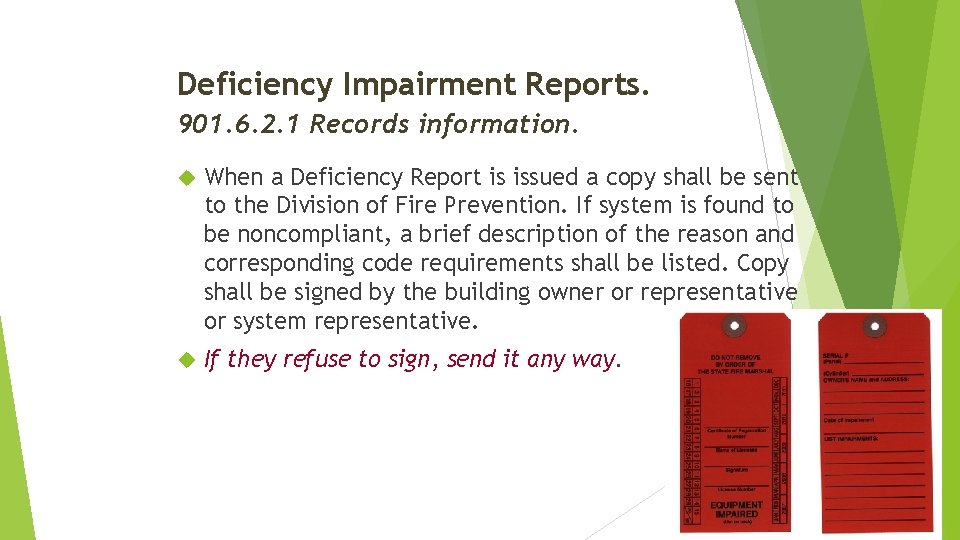
Deficiency Impairment Reports. 901. 6. 2. 1 Records information. When a Deficiency Report is issued a copy shall be sent to the Division of Fire Prevention. If system is found to be noncompliant, a brief description of the reason and corresponding code requirements shall be listed. Copy shall be signed by the building owner or representative or system representative. If they refuse to sign, send it any way. 12
Fire Life Safety Systems Contingency Plan Requirements 107. 5 Owner and occupant responsibilities. Correction and abatement of violations of this code shall be the responsibility of the owner and occupant. If an occupant creates, or allows to be created, hazardous conditions in violation of this code, the occupant and owner shall be held responsible for the abatement of such hazardous conditions. 13
Inspection and test records 901. 6. 2. 2 Inspection forms. Inspection and test records shall be documented on forms that comply with the appropriate inspection standard. The forms shall clearly identify type and quantities of all components inspected or tested and identify all deficiencies found. Deficiencies shall be identified by the appropriate code or standard referenced.
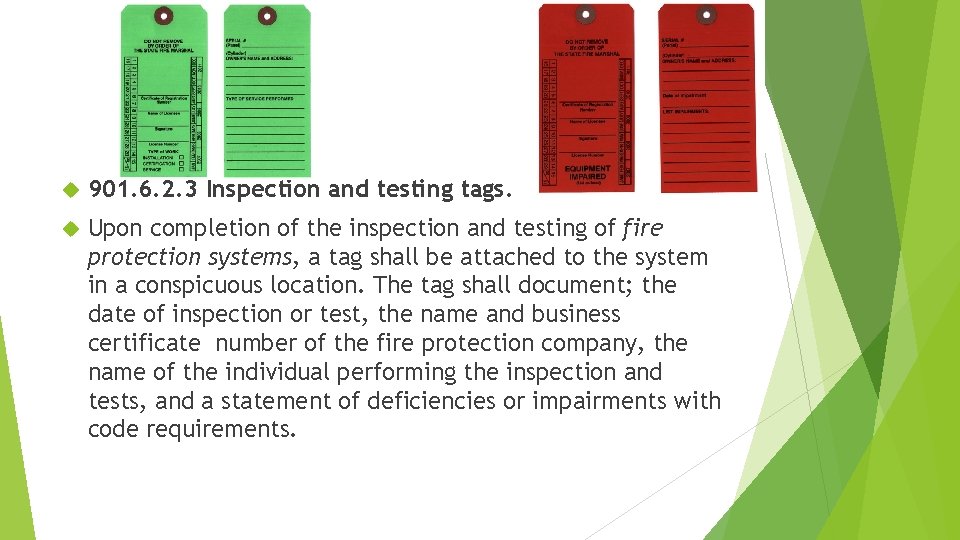
901. 6. 2. 3 Inspection and testing tags. Upon completion of the inspection and testing of fire protection systems, a tag shall be attached to the system in a conspicuous location. The tag shall document; the date of inspection or test, the name and business certificate number of the fire protection company, the name of the individual performing the inspection and tests, and a statement of deficiencies or impairments with code requirements.
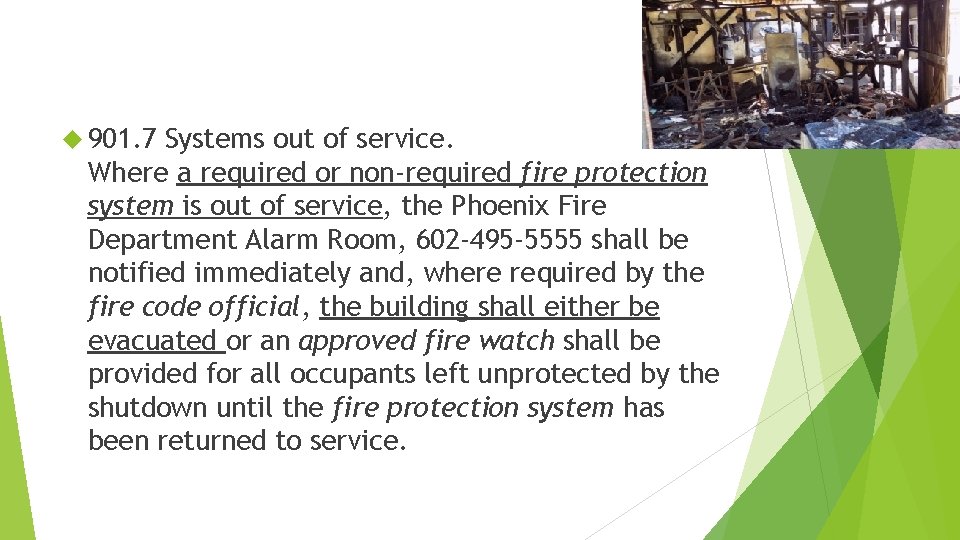
901. 7 Systems out of service. Where a required or non-required fire protection system is out of service, the Phoenix Fire Department Alarm Room, 602 -495 -5555 shall be notified immediately and, where required by the fire code official, the building shall either be evacuated or an approved fire watch shall be provided for all occupants left unprotected by the shutdown until the fire protection system has been returned to service.
![Definitions Chapter 2 Fire Code Guide [B] HOSPITALS AND PSYCHIATRIC HOSPITALS. Facilities that provide](http://slidetodoc.com/presentation_image_h/323b964a0f5a864a90db50f7d2753d98/image-17.jpg "Definitions Chapter 2 Fire Code Guide [B] HOSPITALS AND PSYCHIATRIC HOSPITALS. Facilities that provide")
Definitions Chapter 2 Fire Code Guide [B] HOSPITALS AND PSYCHIATRIC HOSPITALS. Facilities that provide care or treatment for the medical, psychiatric, obstetrical, or surgical treatment of inpatient care recipients that are incapable of self-preservation. [B] 24 -HOUR CARE. The actual time that a person is an occupant within a facility for the purpose of receiving care. It shall not include a facility that is open for 24 hours and is capable of providing care to someone visiting the facility during any segment of the 24 hours. 17
![Fire Code Guide [BG] Condition 1. This occupancy condition shall include buildings in which](http://slidetodoc.com/presentation_image_h/323b964a0f5a864a90db50f7d2753d98/image-18.jpg "Fire Code Guide [BG] Condition 1. This occupancy condition shall include buildings in which")
Fire Code Guide [BG] Condition 1. This occupancy condition shall include buildings in which all persons receiving custodial care who, without any assistance, are capable of responding to an emergency situation to complete building evacuation. [BG] Condition 2. This occupancy condition shall include buildings in which there any persons receiving custodial care who require limited verbal or physical assistance while responding to an emergency situation to complete building evacuation. 18
NFPA 72 National Fire Alarm & Signaling Code 18. 4. 3. 1* To ensure that audible public mode signals are clearly heard, unless otherwise permitted by 18. 4. 3. 2 through 18. 4. 3. 5, they shall have a sound level at least 15 d. B above the average ambient sound level or 5 d. B above the maximum sound level having a duration of at least 60 seconds, whichever is greater, measured 5 ft (1. 5 m) above the floor in the area required to be served
2012 Phoenix Fire Code Fire Alarm & Detection Systems, Section 907 Occupancies: A, 300 or more require evacuation alarm. 1000 or more voice. B, M, rule of thumb, 100 occupants above or below ground floor or 500 on ground floor require evacuation alarms E, H, and I occupancies almost always get evacuation alarms, plan on installing them. S will only require evacuation alarm if they are associated with one of the other occupancies under the same roof. 907. 2. 4 Group F. occupancies that are two or more stories in height and have an occupant load of 500 or more above or below the lowest level of exit discharge. 20
Fire Code Guide 905. 3. 3 Covered and open mall buildings Standpipes for access tenant spaces 200 feet. • 907. 2. 20 Covered and open mall buildings. • Where the total floor area exceeds 50, 000 square feet (4645 m 2) within either a covered mall building or within the perimeter line of an open mall building, an emergency voice/alarm communication system shall be provided. 21
Fire Code Self Certification Guide 903. 4. 1 Monitoring. Alarm, supervisory and trouble signals shall be distinctly different and shall be automatically transmitted to an approved supervising station or, when approved by the fire code official, shall sound an audible signal at a constantly attended location. Exceptions: 1. In building occupancies in Group A-2 that do not exceed 5, 000 square feet 2. 2. In all other buildings occupancies other than Group H and E that do not exceed 12, 000 square feet. 22 Group H & E is zero sq feet for monitoring.
Fire Code Self Certification Guide (F) COMMON AREA. For the purposes of the Americans with Disabilities Act (ADA) compliance for visual notification, a common area shall be a room, space, or element made available for the use of a restricted group of people (for example, occupants of a homeless shelter; the occupants of an office building, or the guests of such occupants). 23
Fire Code Self Certification Guide (F) COMMON AREA. Common areas shall include restrooms, hallways, lobbies, meeting and conference rooms, classrooms, cafeterias, filing and photocopy rooms, employee break rooms, open office areas exceeding 300 square feet, examination and treatment rooms, and similar areas that are not used solely as employee work areas in accordance with the U. S. Access Board Technical Bulletin on Visual Alarms. 24
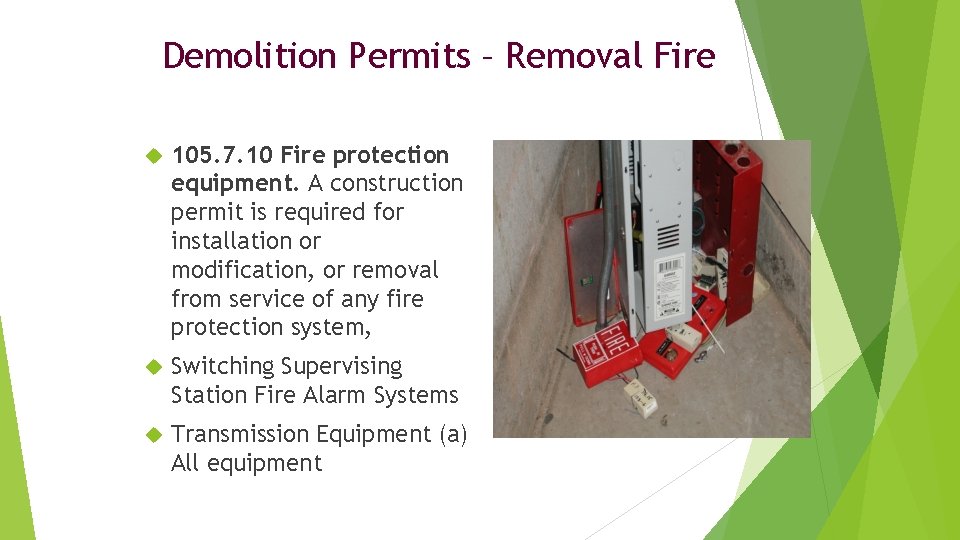
Demolition Permits – Removal Fire 105. 7. 10 Fire protection equipment. A construction permit is required for installation or modification, or removal from service of any fire protection system, Switching Supervising Station Fire Alarm Systems Transmission Equipment (a) All equipment
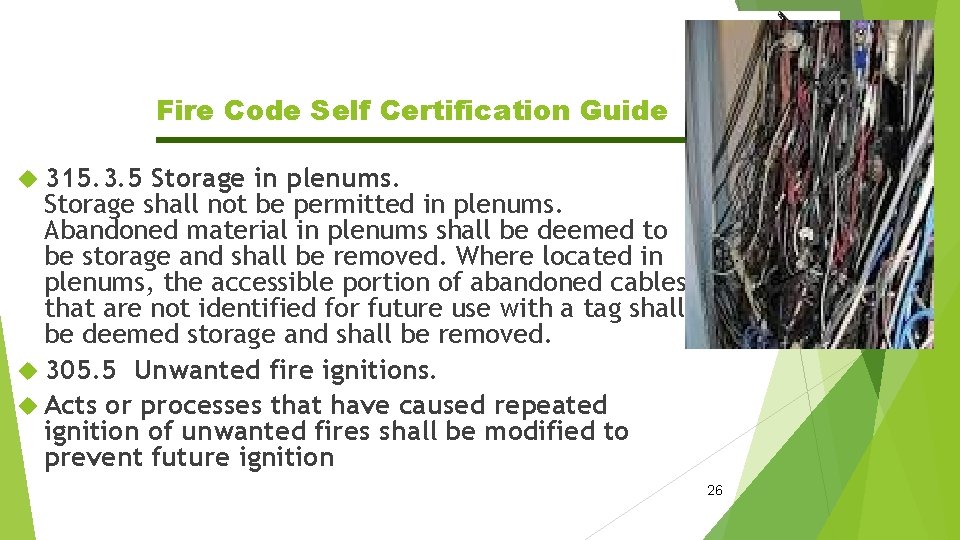
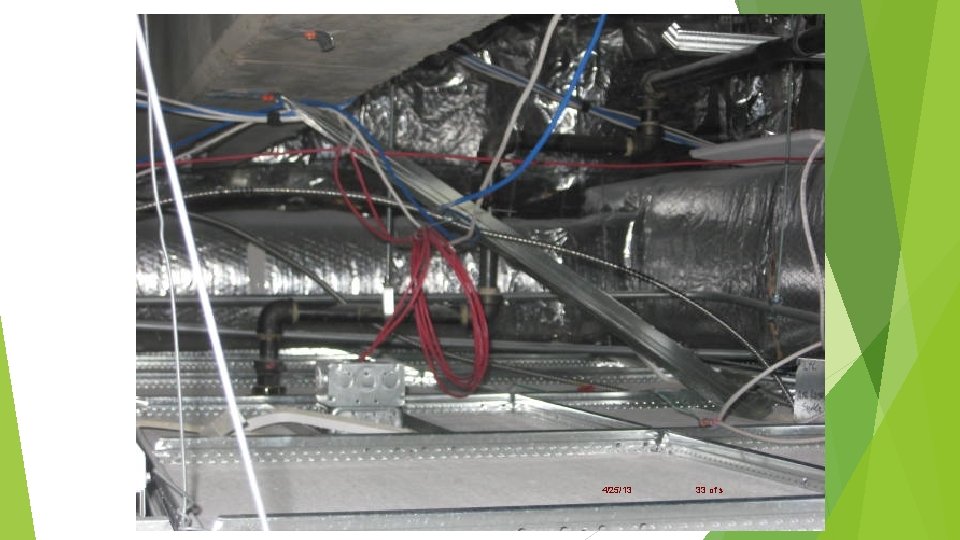
Fire Code Self Certification Guide 315. 3. 5 Storage in plenums. Storage shall not be permitted in plenums. Abandoned material in plenums shall be deemed to be storage and shall be removed. Where located in plenums, the accessible portion of abandoned cables that are not identified for future use with a tag shall be deemed storage and shall be removed. 305. 5 Unwanted fire ignitions. Acts or processes that have caused repeated ignition of unwanted fires shall be modified to prevent future ignition 26
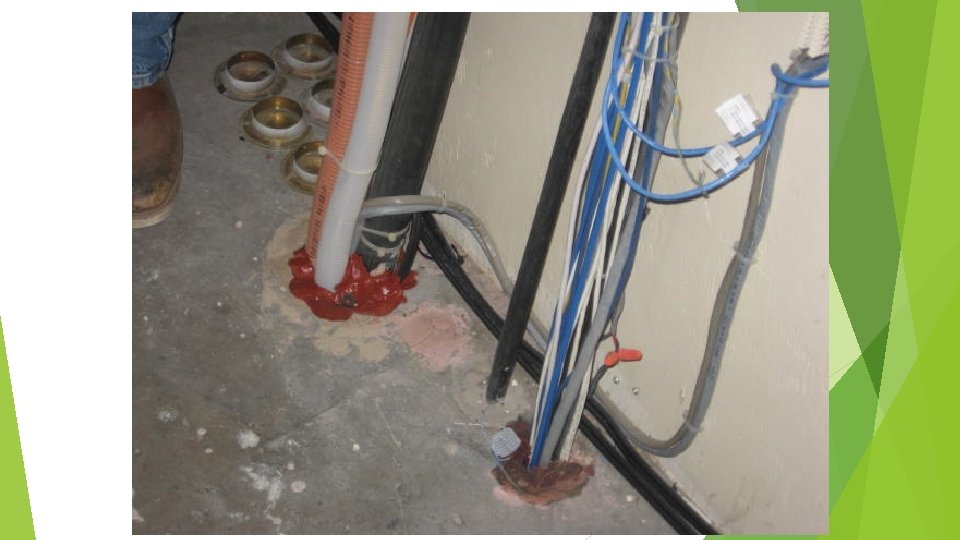
Barrier Protection 703. 1. 2 Smoke barriers and smoke partitions. Required smoke barriers and smoke partitions shall be maintained to prevent the passage of smoke. All openings protected with approved smoke barrier doors or smoke dampers shall be maintained in accordance with NFPA 105. 703. 1. 3 Fire walls, fire barriers and fire partitions. Required fire walls, fire barriers and fire partitions shall be maintained to prevent the passage of fire. All openings protected with approved doors or fire dampers shall be maintained in accordance with NFPA 80.
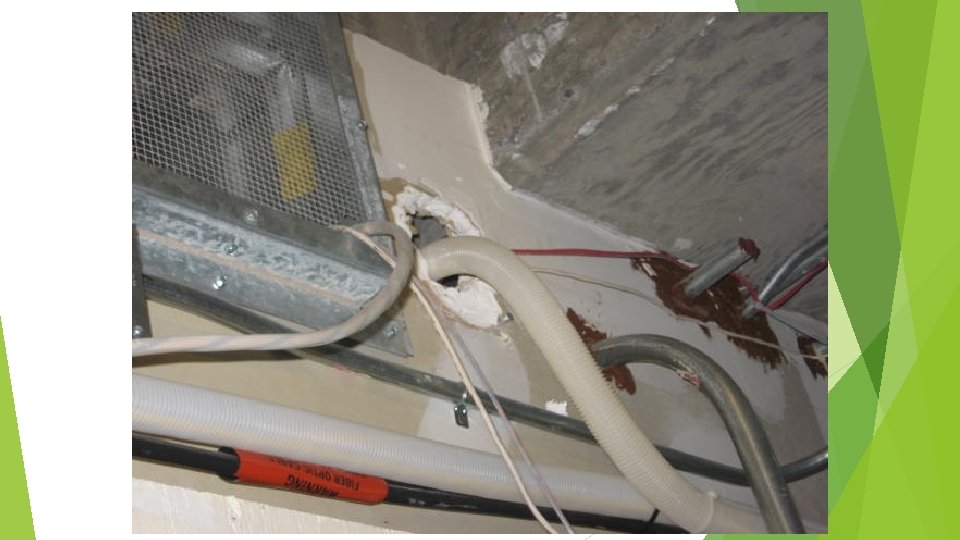
703. 2 Opening protectives shall be maintained in an operative condition in accordance with NFPA 80. Where allowed by the fire code official, the application of field-applied labels associated with the maintenance of opening protectives shall follow the requirements of the approved thirdparty certification organization accredited for listing the opening protective. Fire doors and smoke barrier doors shall not be blocked or obstructed, or otherwise made inoperable. Fusible links shall be replaced promptly whenever fused or damaged. Fire door assemblies shall not be modified.
110. 26 (E) Dedicated Equipment Space. All switchboards, panel boards, and motor control centers shall be located in dedicated spaces and protected from damage. Cables and conductors installed exposed on the surface of ceilings and sidewalls shall be supported by the building structure in such a manner that the cable will not be damaged by normal building use
![Fire Code Self Certification Guide [A] LISTED. Equipment, materials, products or services included in](http://slidetodoc.com/presentation_image_h/323b964a0f5a864a90db50f7d2753d98/image-32.jpg "Fire Code Self Certification Guide [A] LISTED. Equipment, materials, products or services included in")
Fire Code Self Certification Guide [A] LISTED. Equipment, materials, products or services included in a list published by an organization acceptable to the fire code official and concerned with evaluation of products or services that maintains periodic inspection of production of listed equipment or materials or periodic evaluation of services and whose listing states either that the equipment, material, product or service meets identified standards or has been tested and found suitable for a specified purpose. [A] LABELED 32
4/25/13 33 of s
2012 Phoenix Fire Code Fire Alarm & Detection Systems, Section 1103. 5. 7. 1 1107. 3 Where required-retroactive in existing buildings and structures. An approved manual, automatic or manual and automatic fire alarm system shall be installed in existing buildings and structures in accordance with Sections 907. 3. 1 through 907. 3. 1. 8. Where automatic sprinkler protection is provided in accordance with Section 903. 3. 1. 1 or 903. 3. 1. 2 and connected to the building fire alarm system, automatic heat detection required by this section shall not be required. 34
Chapter 11 Existing Buildings 1103. 7. 3 Fire alarm panel replacement. Visual alarm devices shall be installed in public and common areas, including elevator lobbies, restrooms, and corridors of building core areas when an existing fire alarm control panel is replaced. Audibility maintenance is essential, 15 DB over ambient, if not there upgrade (to minimum code and Standard Level of Care)
Inspections, Deficiencies and reports.
Changes in Occupancy, Use, Process, or Materials. NFAP 25 2014 4. 1. 6* Changes in Occupancy, Use, Process, or Materials. The property owner or designated representative shall not make changes in the occupancy, the use or process, or the materials used or stored in the building without evaluation of the fire protection systems for their capability to protect the new occupancy, use, or materials. 37
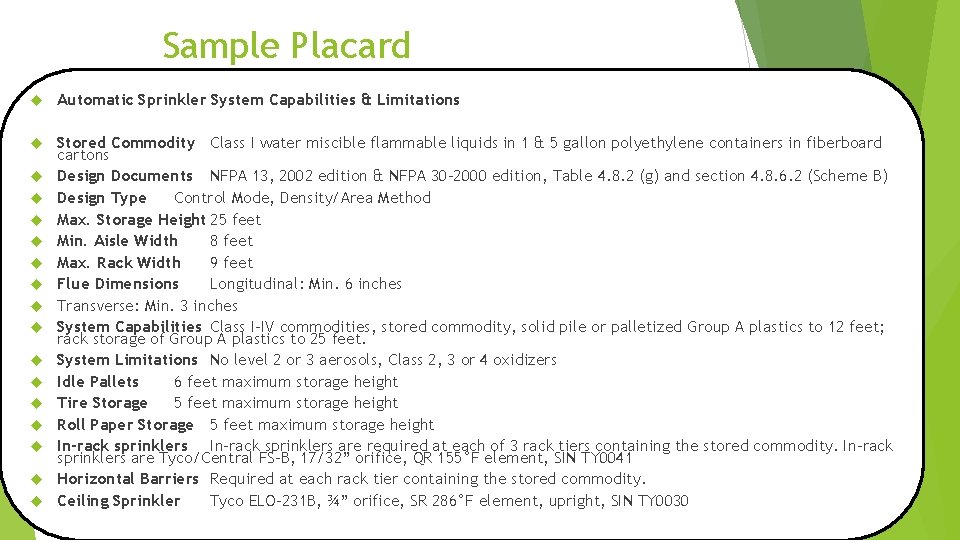
Sample Placard Automatic Sprinkler System Capabilities & Limitations Stored Commodity Class I water miscible flammable liquids in 1 & 5 gallon polyethylene containers in fiberboard cartons Design Documents NFPA 13, 2002 edition & NFPA 30 -2000 edition, Table 4. 8. 2 (g) and section 4. 8. 6. 2 (Scheme B) Design Type Control Mode, Density/Area Method Max. Storage Height 25 feet Min. Aisle Width 8 feet Max. Rack Width 9 feet Flue Dimensions Longitudinal: Min. 6 inches Transverse: Min. 3 inches System Capabilities Class I-IV commodities, stored commodity, solid pile or palletized Group A plastics to 12 feet; rack storage of Group A plastics to 25 feet. System Limitations No level 2 or 3 aerosols, Class 2, 3 or 4 oxidizers Idle Pallets 6 feet maximum storage height Tire Storage 5 feet maximum storage height Roll Paper Storage 5 feet maximum storage height In-rack sprinklers are required at each of 3 rack tiers containing the stored commodity. In-rack sprinklers are Tyco/Central FS-B, 17/32” orifice, QR 155°F element, SIN TY 0041 Horizontal Barriers Required at each rack tier containing the stored commodity. Ceiling Sprinkler Tyco ELO-231 B, ¾” orifice, SR 286°F element, upright, SIN TY 0030
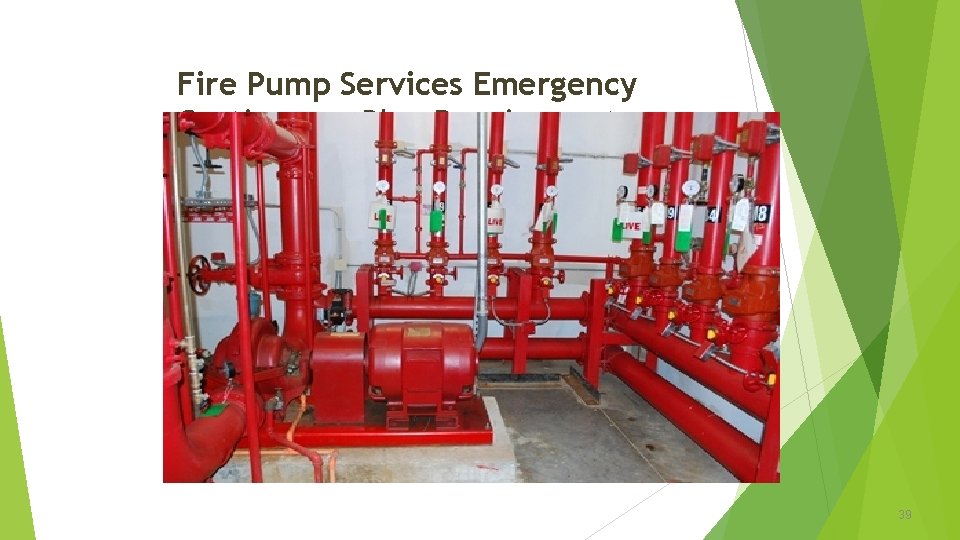
Fire Pump Services Emergency Contingency Plan Requirements 39
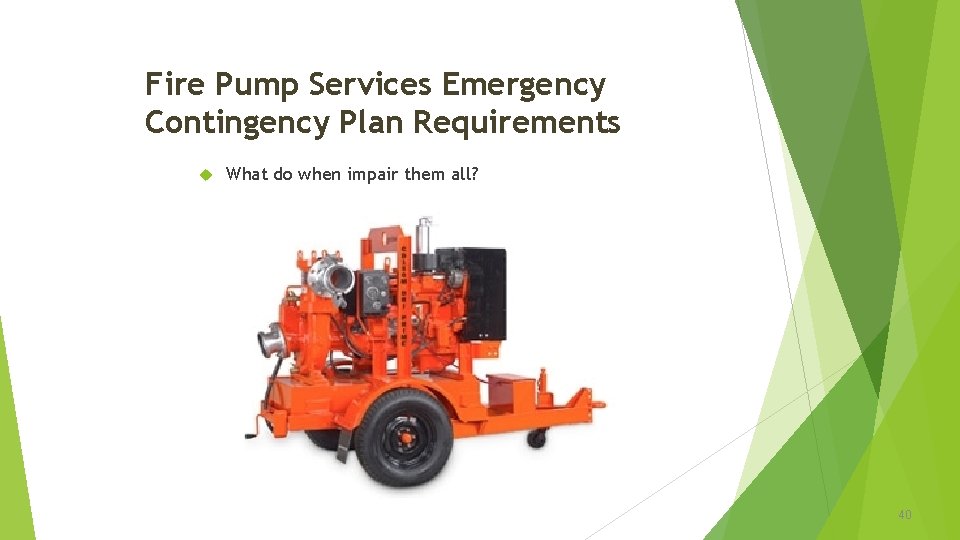
Fire Pump Services Emergency Contingency Plan Requirements What do when impair them all? 40
INSTALLATION OF STATIONARY PUMPS FOR FIRE PROTECTION – NFPA 20, 2013 10. 5. 4. 2 Automatic Shutdown After Automatic Start. Where provided, automatic shutdown after automatic start shall comply with the following: (1) Unless the requirements of 10. 5. 4. 2(3) are met, only where the controller is arranged for automatic shutdown after all starting and running causes have returned to normal. (2) A running period timer set for at least 10 minutes running time shall be permitted to commence at initial operation.
Fire Pump Services Emergency Contingency Plan Requirements 107. 5 Owner and occupant responsibilities. Correction and abatement of violations of this code shall be the responsibility of the owner and occupant. If an occupant creates, or allows to be created, hazardous conditions in violation of this code, the occupant and owner shall be held responsible for the abatement of such hazardous conditions. 42
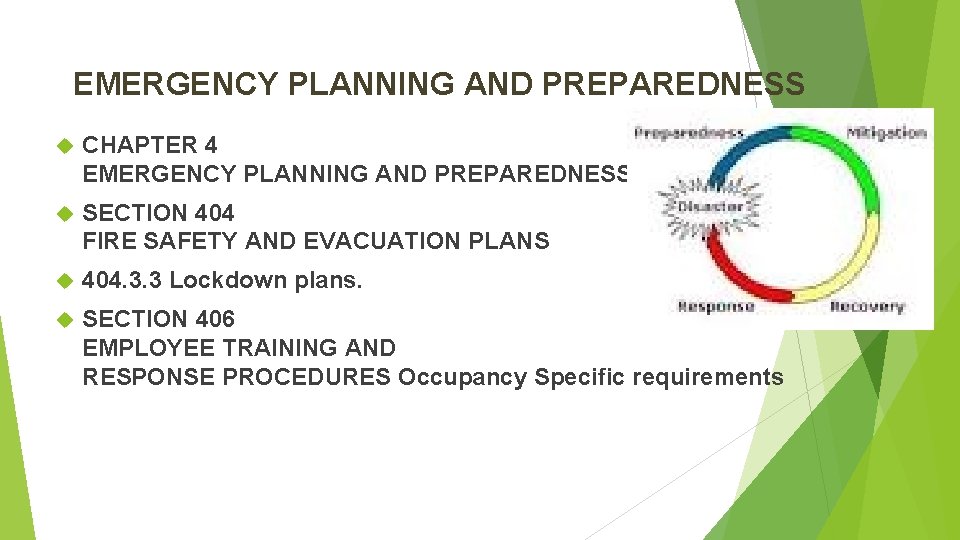
EMERGENCY PLANNING AND PREPAREDNESS CHAPTER 4 EMERGENCY PLANNING AND PREPAREDNESS SECTION 404 FIRE SAFETY AND EVACUATION PLANS 404. 3. 3 Lockdown plans. SECTION 406 EMPLOYEE TRAINING AND RESPONSE PROCEDURES Occupancy Specific requirements
Fire Code Self Certification Guide SECTION 510 EMERGENCY RESPONDER RADIO COVERAGE 510. 1 Emergency responder radio coverage in new buildings. All new buildings shall have approved radio coverage for emergency responders within the building based upon the existing coverage levels of the public safety communication systems of the jurisdiction at the exterior of the building. This section shall not require improvement of the existing public safety communication systems 510. 2 Emergency responder radio coverage in existing buildings. 44
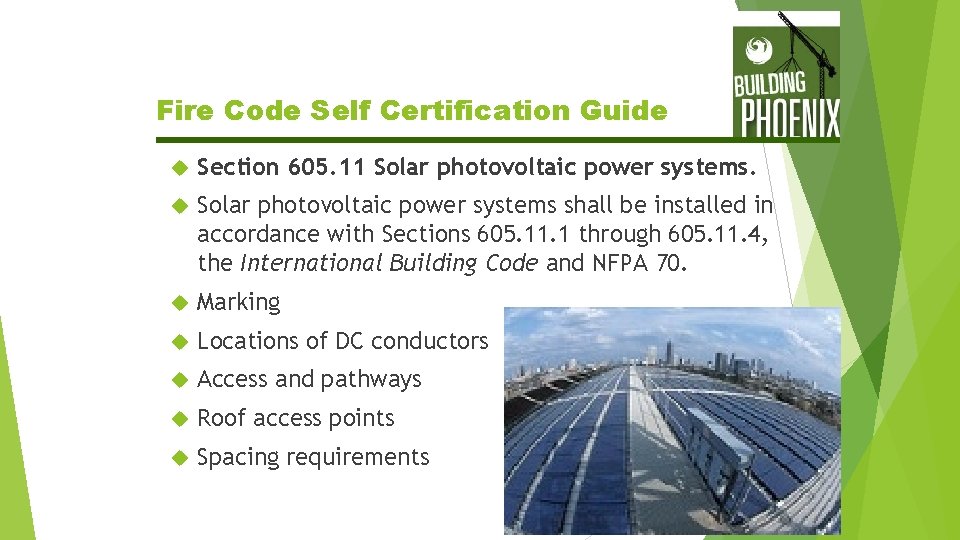
Fire Code Self Certification Guide Section 605. 11 Solar photovoltaic power systems shall be installed in accordance with Sections 605. 11. 1 through 605. 11. 4, the International Building Code and NFPA 70. Marking Locations of DC conductors Access and pathways Roof access points Spacing requirements 45
Fire Code Self Certification Guide 105. 2. 8. 2 Applicant responsibility. It shall be the responsibility of the applicant to ensure that the construction documents include all of the fire protection requirements and the shop drawings are complete and in compliance with the applicable codes and standards. 46
Fire Code Self Certification Guide 105. 2. 8. 2 Applicant responsibility. Review and approval by the Fire Code Official shall not relieve the applicant of the responsibility of compliance with this code. Approval as a result of an inspection shall not be construed to be an approval of a violation of the provisions of this code or of other ordinances of the jurisdiction. Inspections presuming to give authority to violate or cancel the provisions of this code or of other ordinances of the jurisdiction shall not be valid. Accurate representation of design intent is essential. If it is 47 wrong we cannot let it stay that way.
Chapter 5 Fire Service Features Fire Code Self Certification Guide Fire Apparatus Access Roads ( Fire Lanes) Access to Buildings Openings and Roofs Premises Identification (address numbers) Key (Knox) Boxes Fire Protection Water Supplies (hydrant distances and coverage). Fire Command Center (High-rise, Malls, large complexes) Fire Protection and utility Equipment Identification and Access (Signage) https: //www. phoenix. gov/fire/prevention/contractorscorner/fdaccess 48
Exit Rocket Science Occupants cannot be locked in, nor prevented from egress Fire Department Access must be provided The occupants go out, the Fire department goes in.
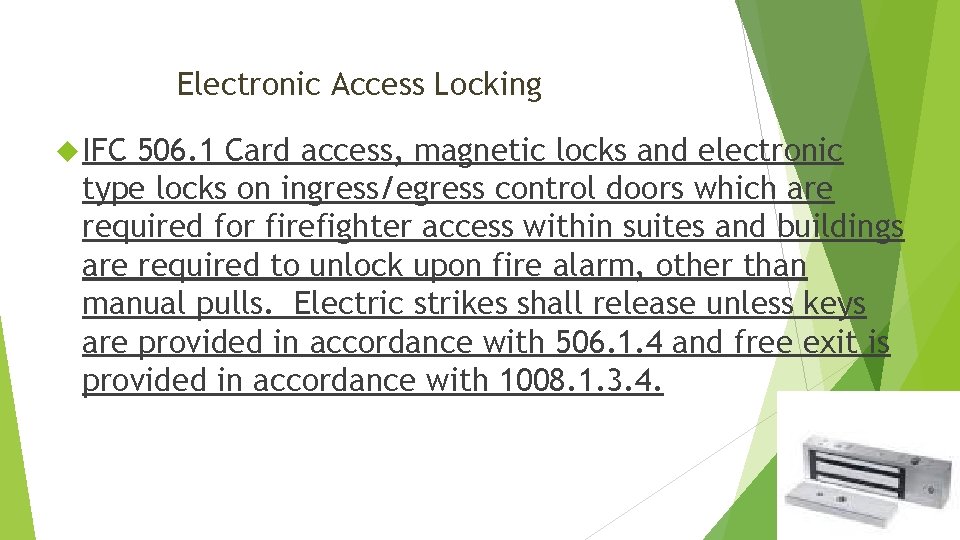
Electronic Access Locking IFC 506. 1 Card access, magnetic locks and electronic type locks on ingress/egress control doors which are required for firefighter access within suites and buildings are required to unlock upon fire alarm, other than manual pulls. Electric strikes shall release unless keys are provided in accordance with 506. 1. 4 and free exit is provided in accordance with 1008. 1. 3. 4.
Electronic Access Locking 506. 1. 4 Number of sets of keys. All keys shall be provided in full sets a minimum of 3 sets for access shall be provided. Buildings with stairways shall provide 3 sets per stairway. Buildings with elevators shall provide 3 sets per fire service designated elevator.
Fire Code Guide CHAPTER 11 CONSTRUCTION REQUIREMENTS FOR EXISTING BUILDINGS See the handout of Table 1103. 1 Occupancy and Use Requirements. 1101. 1 Scope. The provisions of this chapter shall apply to existing buildings constructed prior to the adoption of this code. 1101. 2 Intent. The intent of this chapter is to provide a minimum degree of fire and life safety to persons occupying existing buildings by providing minimum construction requirements where such existing buildings do not comply with the minimum requirements of the International Building Code. 52
Fire Code Guide 1103. 7. 3 Changes in occupancy. When a building undergoes a change in occupancy classification, the fire alarm system shall comply with the requirements of Section 907. 2 for that occupancy 1103. 7. 4 Building renovations. Buildings undergoing renovations, alterations, or modifications consisting of structural renovations including the addition, removal, or relocation of walls and partitions, shall have visual alarm devices installed in any new public or common area created by the renovations. 53
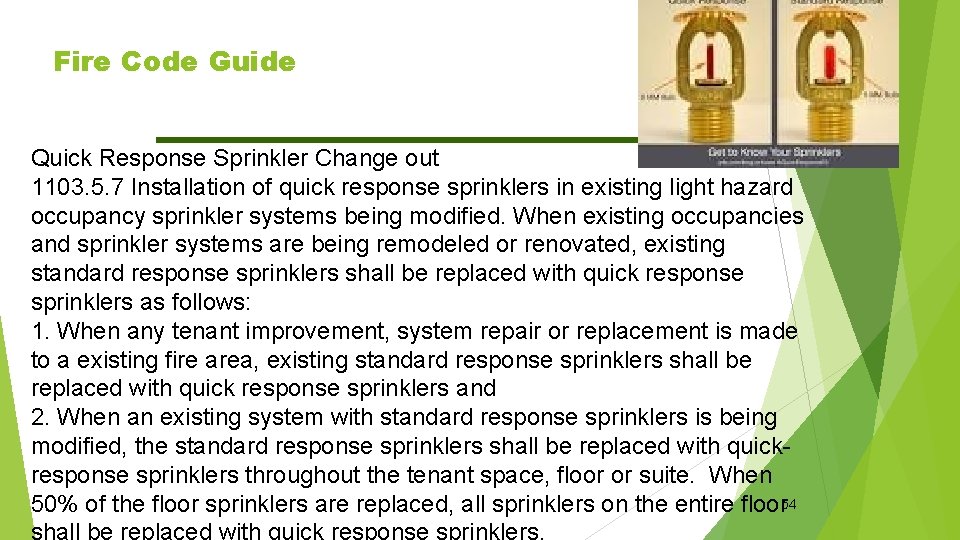
Fire Code Guide Quick Response Sprinkler Change out 1103. 5. 7 Installation of quick response sprinklers in existing light hazard occupancy sprinkler systems being modified. When existing occupancies and sprinkler systems are being remodeled or renovated, existing standard response sprinklers shall be replaced with quick response sprinklers as follows: 1. When any tenant improvement, system repair or replacement is made to a existing fire area, existing standard response sprinklers shall be replaced with quick response sprinklers and 2. When an existing system with standard response sprinklers is being modified, the standard response sprinklers shall be replaced with quickresponse sprinklers throughout the tenant space, floor or suite. When 50% of the floor sprinklers are replaced, all sprinklers on the entire floor 54
1104. 25 Egress path markings. Existing high-rise buildings of Group A, B, E, I, M and R-1 occupancies shall be provided with luminous egress path markings in accordance with Section 1025. 55
Fire Code Guide 1025. 4 Self-luminous and photoluminescent. . Materials shall comply with : either of the following standards: 1. UL 1994. 2. ASTM E 2072, except that the charging source shall be 1 footcandle (11 lux) of fluorescent illumination for 60 minutes, and the minimum luminance shall be 30 milicandelas per square meter at 10 minutes and 5 milicandelas per square meter after 90 minutes. 56
Fire Code Guide Chapt 11 Retroactive 1104. 24 Stairway floor number signs. Directional. • Existing stairways shall be marked in accordance with Section 1023. 9. • Stairways shall be color coded through signage or painted landing at the base of the stairway doorway, on each floor, to indicate the following use: • Blue – indicates the primary stairway with roof access and a standpipe. 57
Fire Code Guide 1104. 24 Stairway floor number signs. Directional. • Green – indicates a secondary stairway that serves all floors without roof access • Yellow – indicates stairways with service to all floors below grade • Red – indicates stairways servicing a limited number of floors below or above grade. 58
Fire Code Self Certification Guide • 1103. 9 Carbon monoxide alarms. Existing Group I or R occupancies located in a building containing a fuel-burning appliance or a building which has an attached garage shall be equipped with singlestation carbon monoxide alarms. The carbon monoxide alarms shall be listed as complying with UL 2034, and be installed and maintained in accordance with NFPA 720 59
2012 Phoenix Fire Code Commercial Hoods & Duct Systems, Section 904. 2. 1 Type I hood – shall be installed where cooking appliance produce grease or smoke such as occurs with griddles, fryers, broilers, ovens, ranges and wok ranges Fire-extinguishing equipment shall include both automatic fire-extinguishing systems as primary protection and portable fire extinguishers as secondary backup 60
2012 Phoenix Fire Code Commercial Hoods & Duct Systems, Section 904. 2. 1 New Restaurants or remodeled restaurants with different arrangement of cooking appliances require modification and re-permitting of the protection. Type II hood – shall be installed where cooking appliance produce heat, steam, or products of combustion and do not produce grease or smoke IMC, Section 507 61
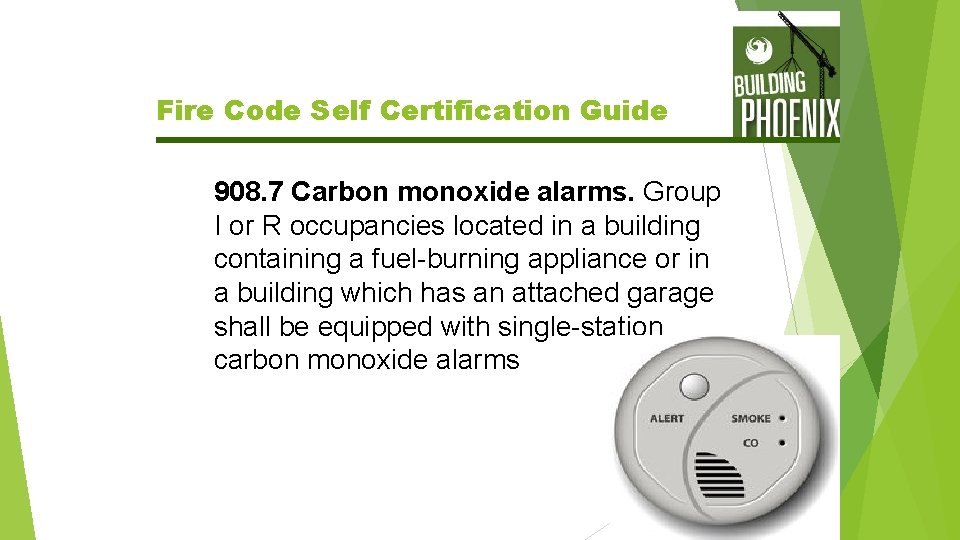
Fire Code Self Certification Guide 908. 7 Carbon monoxide alarms. Group I or R occupancies located in a building containing a fuel-burning appliance or in a building which has an attached garage shall be equipped with single-station carbon monoxide alarms 62
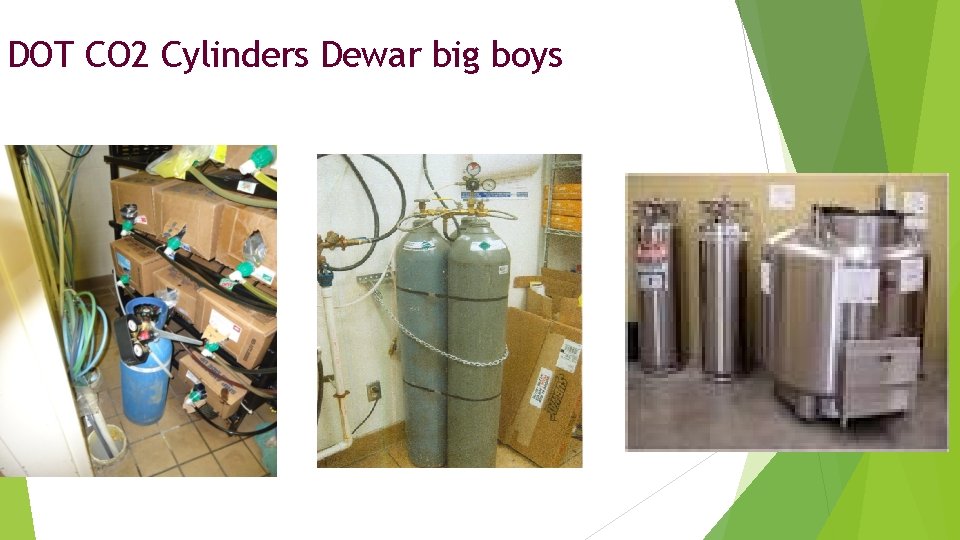
DOT CO 2 Cylinders Dewar big boys
Fire Code Self Certification Guide 5307. 1 General. Carbon dioxide and other simply Asphxyiant gas systems with more than 50 pound in use, per system shall comply with Sections 5307. Detection and alarm two levels. Exception: One (1) additional 50 lb DOT 3 AA cylinder of carbon dioxide with manifold flip 64
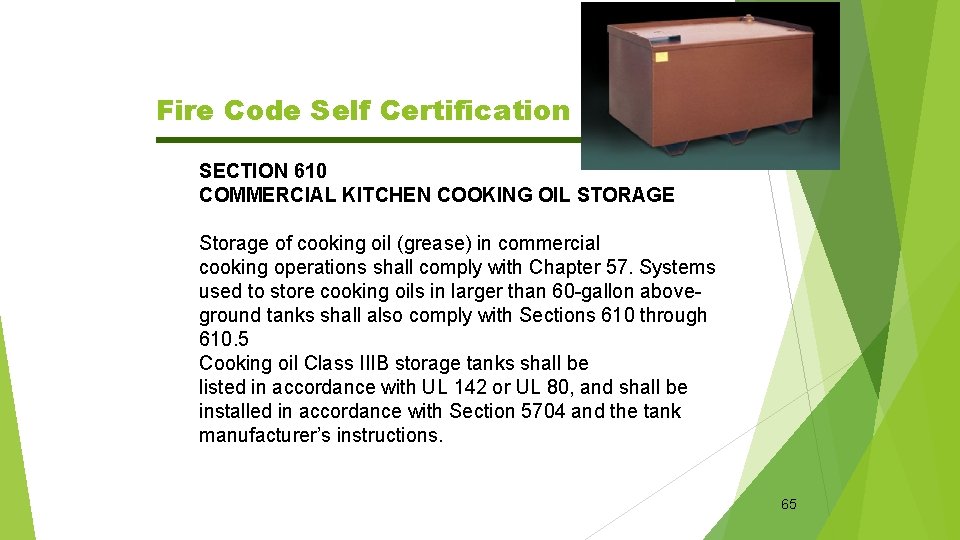
Fire Code Self Certification Guide SECTION 610 COMMERCIAL KITCHEN COOKING OIL STORAGE Storage of cooking oil (grease) in commercial cooking operations shall comply with Chapter 57. Systems used to store cooking oils in larger than 60 -gallon aboveground tanks shall also comply with Sections 610 through 610. 5 Cooking oil Class IIIB storage tanks shall be listed in accordance with UL 142 or UL 80, and shall be installed in accordance with Section 5704 and the tank manufacturer’s instructions. 65
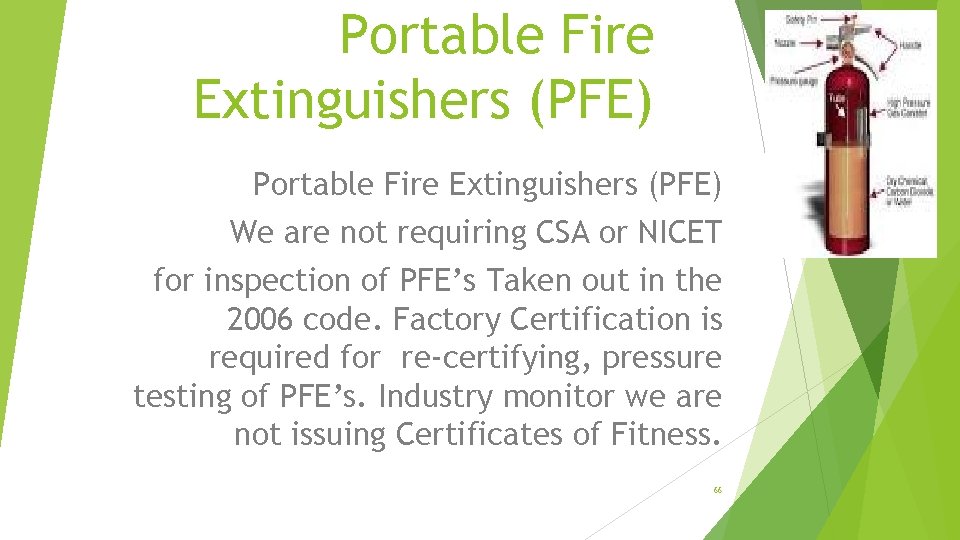
Portable Fire Extinguishers (PFE) We are not requiring CSA or NICET for inspection of PFE’s Taken out in the 2006 code. Factory Certification is required for re-certifying, pressure testing of PFE’s. Industry monitor we are not issuing Certificates of Fitness. 66
Questions? Ø John Mertens Fire Protection Engineer Desk: 602 495 -5305 Ø Cell: 602 -618 -8523 john. mertens@phoenix. gov Ø Joe Mc. Elvaney Fire Protection Engineer*Lead Desk: 602 262 -7755 Ø Cell: 602 -316 -3347 joe. mcelvaney@phoenix. gov Mc. Elvaney / Mertens April 2015 67
Any Questions? Phoenix Fire Prevention – 6/15/2016 68 of s
- Slides: 68