
International Business Introduction Modes of International Business International

International Business: Introduction Modes of International Business – International Trade • Merchandise or service – Investments • Direct or Indirect (portfolio investments) Why do Companies Go International?

International Trade – Why does trade occur and how can trade benefit both parties to an exchange?
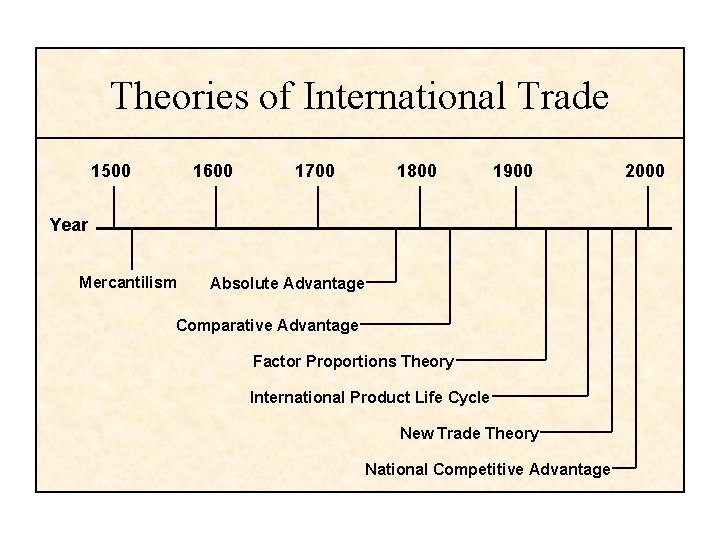
Theories of International Trade 1500 1600 1700 1800 1900 Year Mercantilism Absolute Advantage Comparative Advantage Factor Proportions Theory International Product Life Cycle New Trade Theory National Competitive Advantage 2000
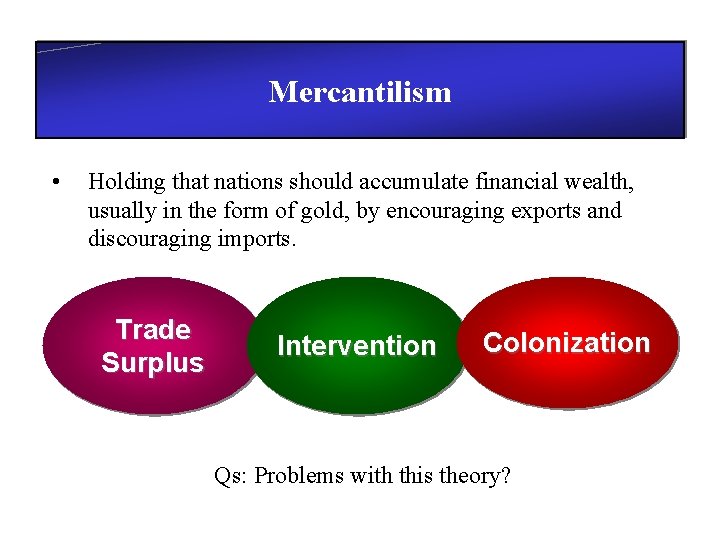
Mercantilism • Holding that nations should accumulate financial wealth, usually in the form of gold, by encouraging exports and discouraging imports. Trade Surplus Intervention Colonization Qs: Problems with this theory?
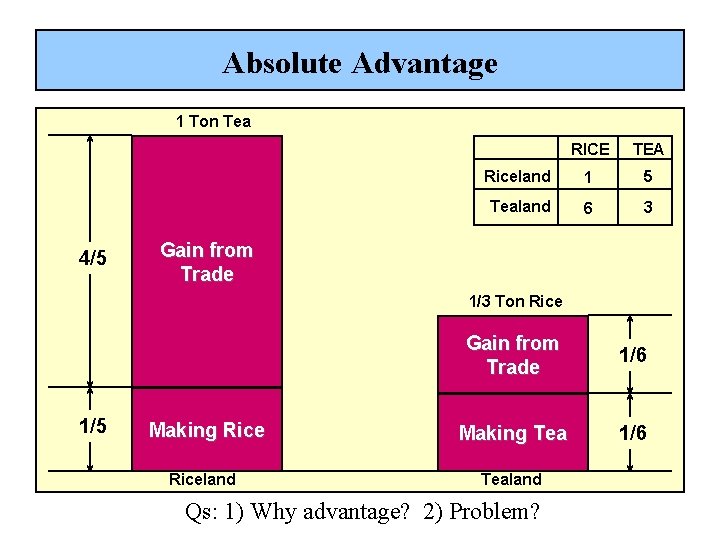
Absolute Advantage 1 Ton Tea 4/5 RICE TEA Riceland 1 5 Tealand 6 3 Gain from Trade 1/3 Ton Rice 1/5 Gain from Trade 1/6 Making Rice Making Tea 1/6 Riceland Tealand Qs: 1) Why advantage? 2) Problem?
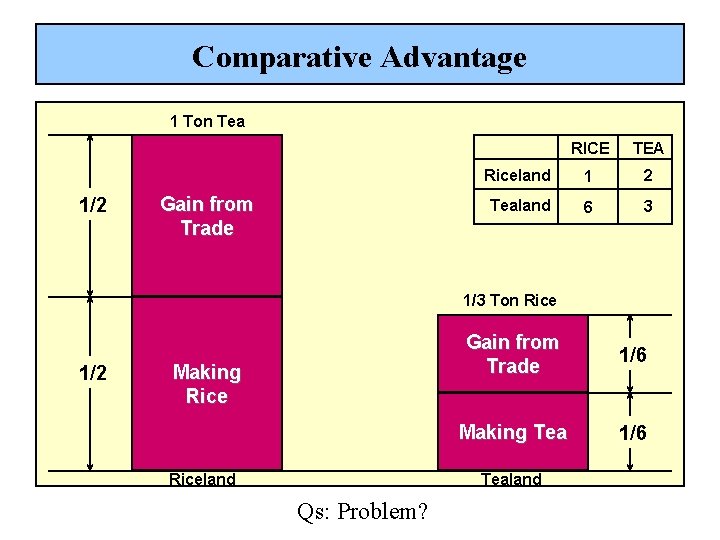
Comparative Advantage 1 Ton Tea 1/2 Gain from Trade RICE TEA Riceland 1 2 Tealand 6 3 1/3 Ton Rice 1/2 Making Riceland Gain from Trade 1/6 Making Tea 1/6 Tealand Qs: Problem?
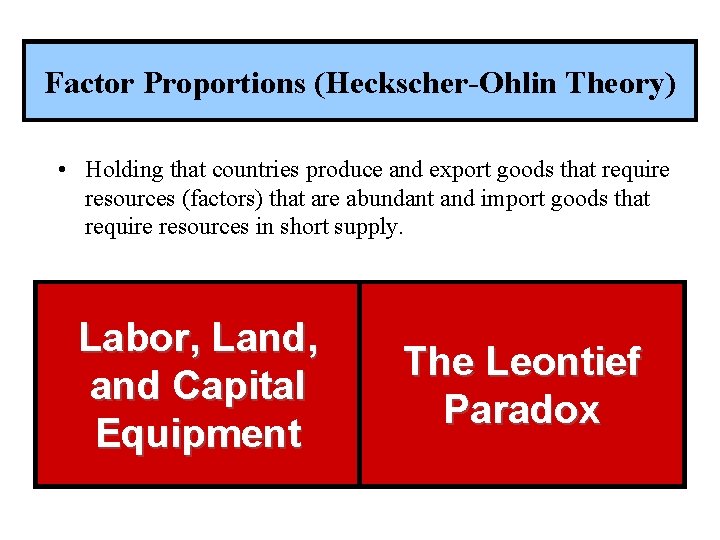
Factor Proportions (Heckscher-Ohlin Theory) • Holding that countries produce and export goods that require resources (factors) that are abundant and import goods that require resources in short supply. Labor, Land, and Capital Equipment The Leontief Paradox

International Product Life Cycle New Product Stage Maturing Product Stage Standardized Product Stage

International Trade and Production in the Product Cycle
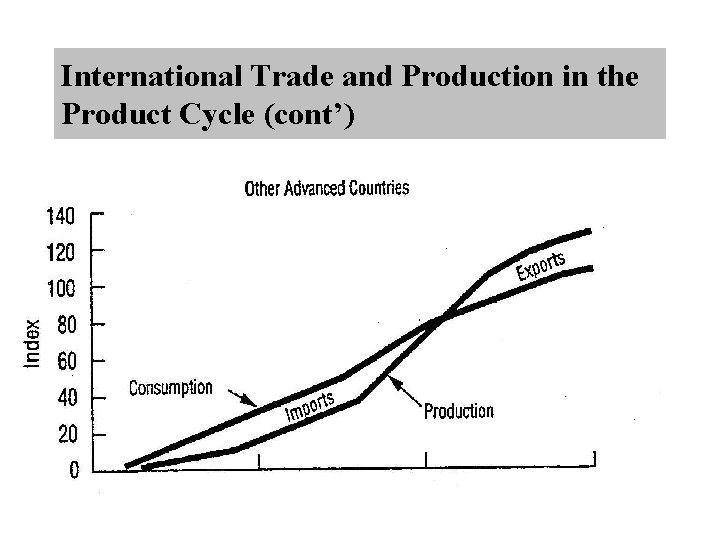
International Trade and Production in the Product Cycle (cont’)
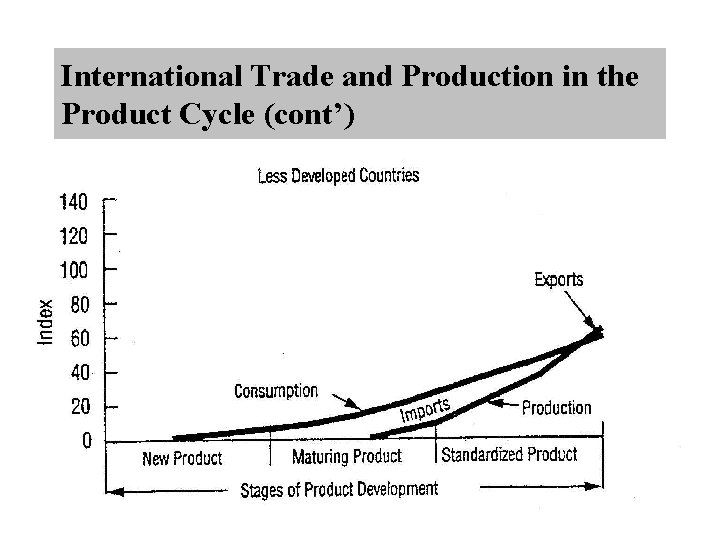
International Trade and Production in the Product Cycle (cont’)
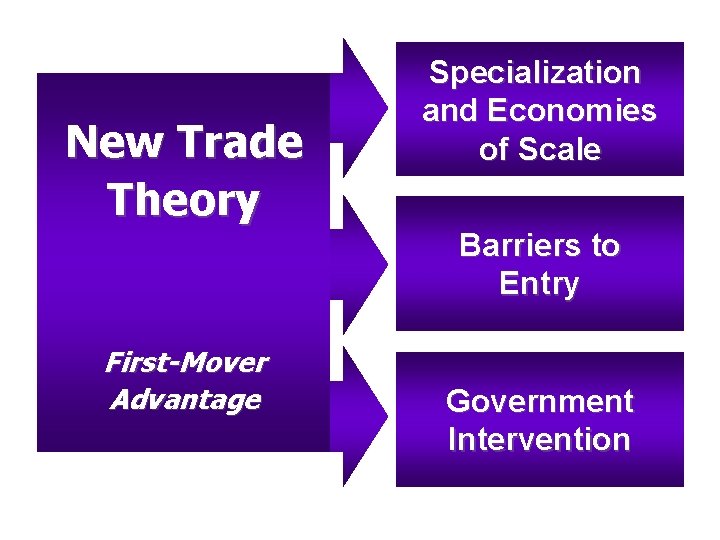
New Trade Theory Specialization and Economies of Scale Barriers to Entry First-Mover Advantage Government Intervention
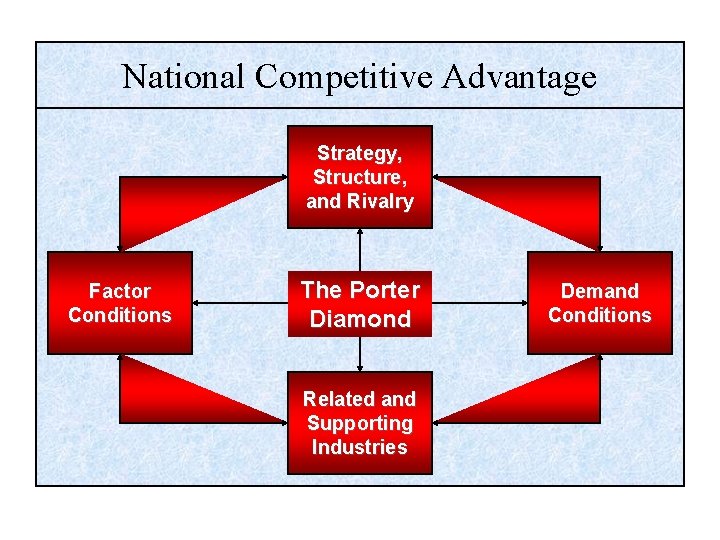
National Competitive Advantage Strategy, Structure, and Rivalry Factor Conditions The Porter Diamond Related and Supporting Industries Demand Conditions

Trade Dependence and Independence • Developing and Transition Nations • Dangers of Trade Dependency – Benjamin Franklin “No nation was ever ruined by trade”.
- Slides: 14