
International Atomic Energy Agency Reprocessing Waste Treatment and
- Slides: 29
International Atomic Energy Agency Reprocessing, Waste Treatment and Disposal Management of Spent Nuclear Fuel Seminar on Nuclear Science and Technology for Diplomats Vienna, 6 – 8 February 2007 Hans Forsström, Director Division of Nuclear Fuel Cycle and Waste Technology
International Atomic Energy Agency
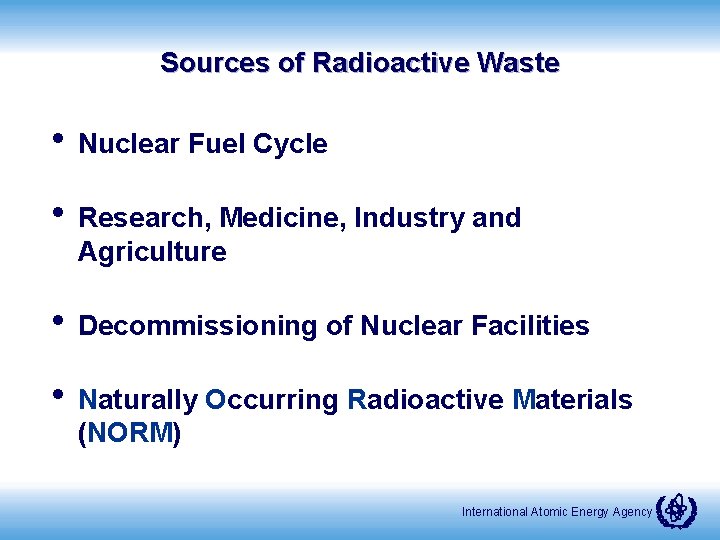
Sources of Radioactive Waste • Nuclear Fuel Cycle • Research, Medicine, Industry and Agriculture • Decommissioning of Nuclear Facilities • Naturally Occurring Radioactive Materials (NORM) International Atomic Energy Agency
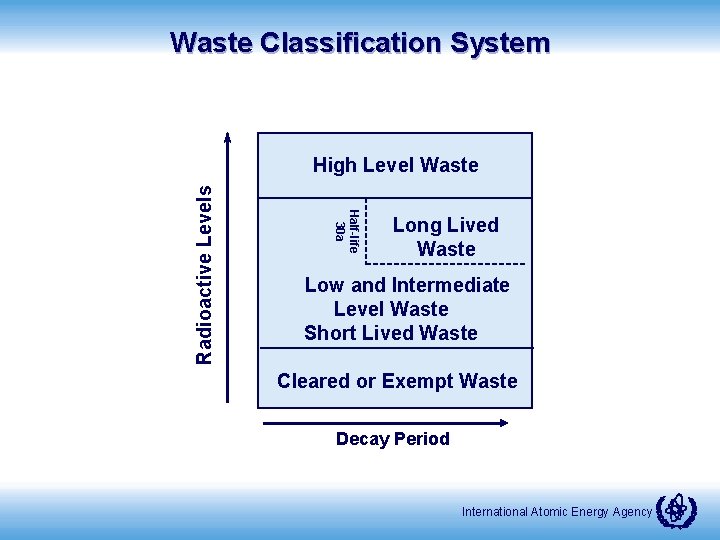
Waste Classification System Half-life 30 a Radioactive Levels High Level Waste Long Lived Waste Low and Intermediate Level Waste Short Lived Waste Cleared or Exempt Waste Decay Period International Atomic Energy Agency
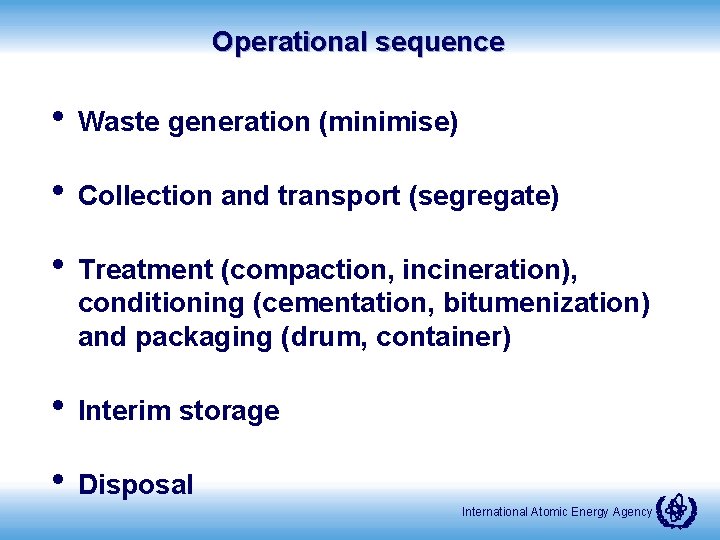
Operational sequence • Waste generation (minimise) • Collection and transport (segregate) • Treatment (compaction, incineration), conditioning (cementation, bitumenization) and packaging (drum, container) • Interim storage • Disposal International Atomic Energy Agency
Interim Storage of LLW International Atomic Energy Agency
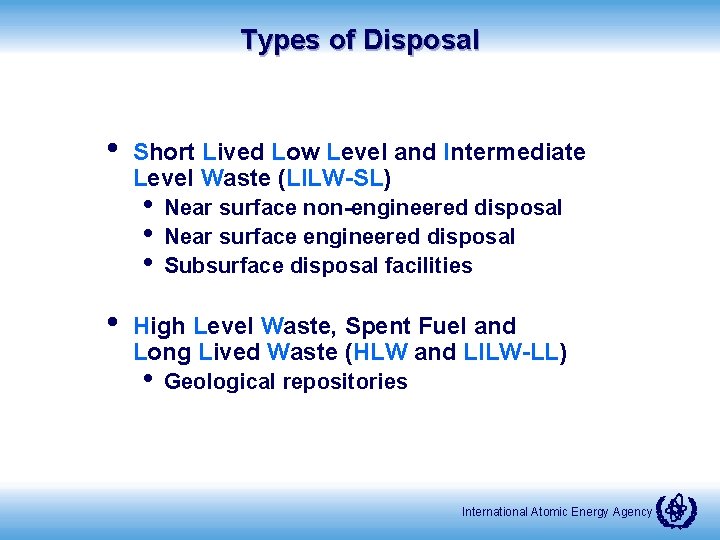
Types of Disposal • Short Lived Low Level and Intermediate Level Waste (LILW-SL) • • Near surface non-engineered disposal Near surface engineered disposal Subsurface disposal facilities High Level Waste, Spent Fuel and Long Lived Waste (HLW and LILW-LL) • Geological repositories International Atomic Energy Agency
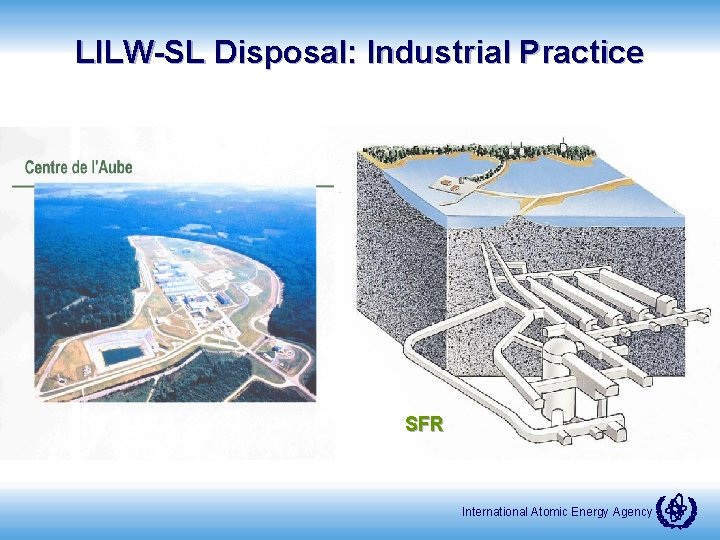
LILW-SL Disposal: Industrial Practice SFR International Atomic Energy Agency
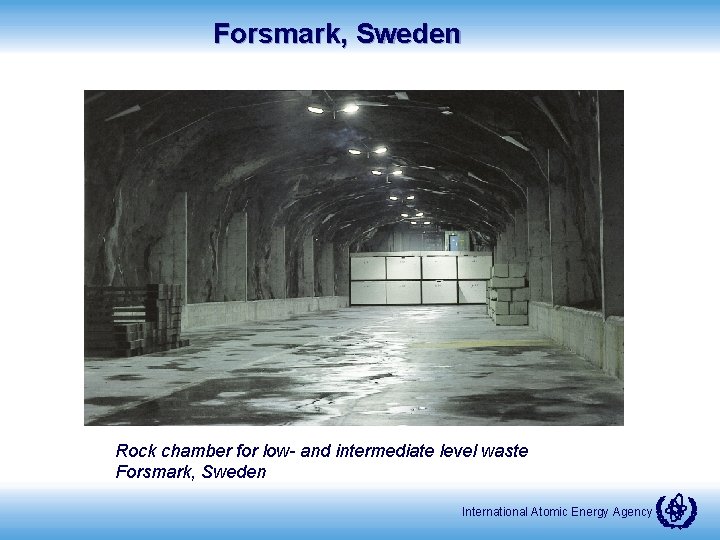
Forsmark, Sweden Rock chamber for low- and intermediate level waste Forsmark, Sweden International Atomic Energy Agency
Baseline for Sound Radioactive Waste Management • SAFETY is always, at all steps, in each activity, for all parties, the first concern (Even when I do not repeat it systematically) International Atomic Energy Agency
International Atomic Energy Agency
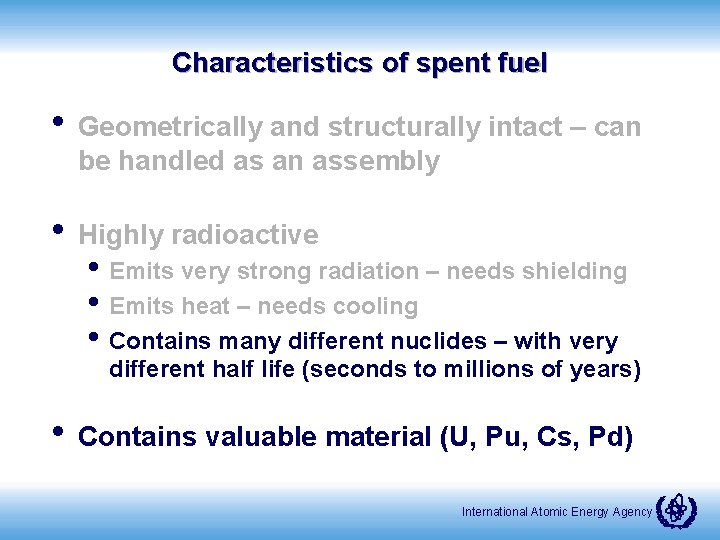
Characteristics of spent fuel • Geometrically and structurally intact – can be handled as an assembly • Highly radioactive • Emits very strong radiation – needs shielding • Emits heat – needs cooling • Contains many different nuclides – with very different half life (seconds to millions of years) • Contains valuable material (U, Pu, Cs, Pd) International Atomic Energy Agency
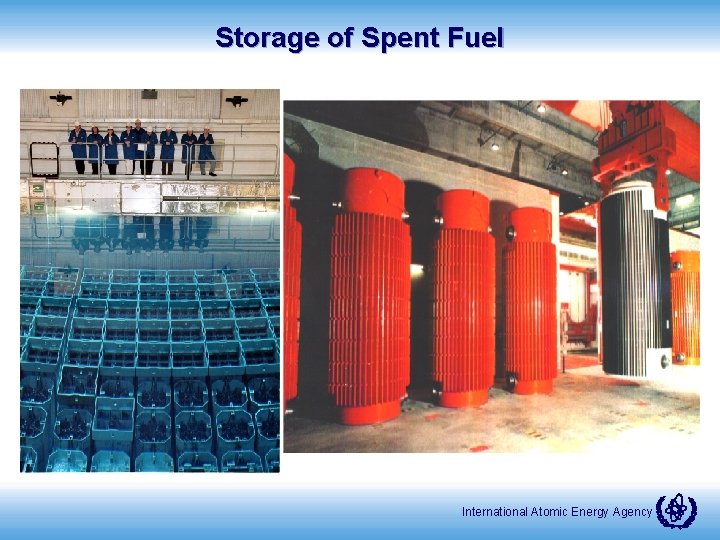
Storage of Spent Fuel International Atomic Energy Agency
Characteristics of spent fuel • Geometrically and structurally intact – can be handled as an assembly • Highly radioactive • Emits very strong radiation – needs shielding • Emits heat – needs cooling • Contains many different nuclides – with very different half life (seconds to millions of years) • Contains valuable material (U, Pu, Cs, Pd) International Atomic Energy Agency
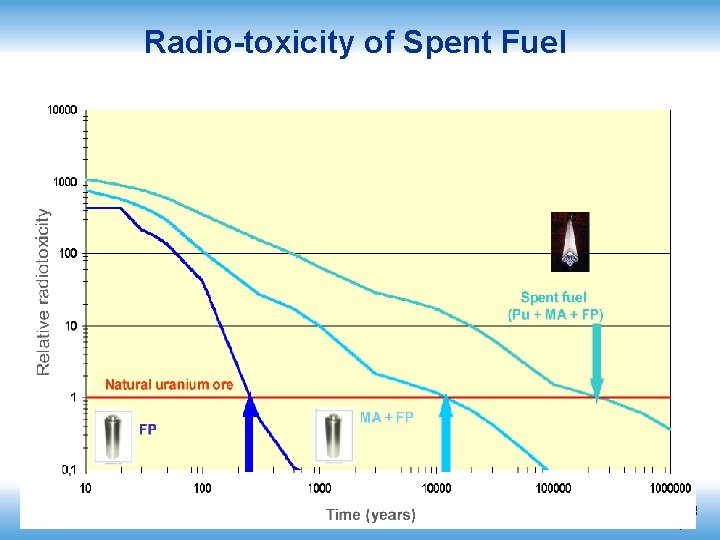
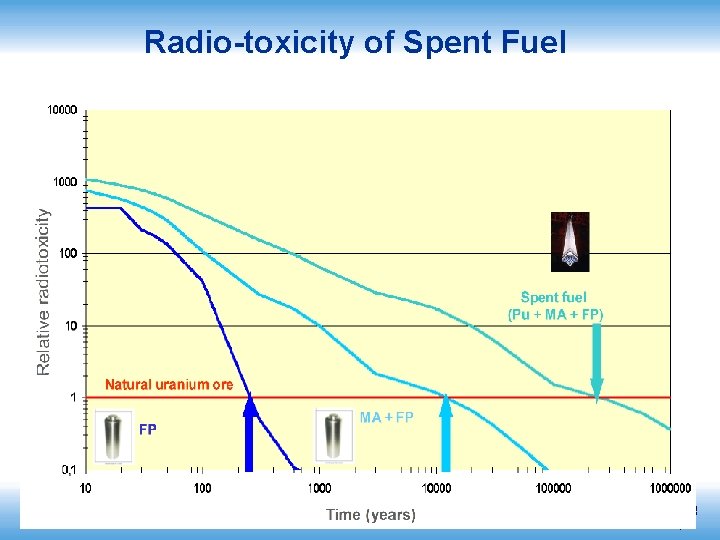
Radio-toxicity of Spent Fuel International Atomic Energy Agency
International Atomic Energy Agency
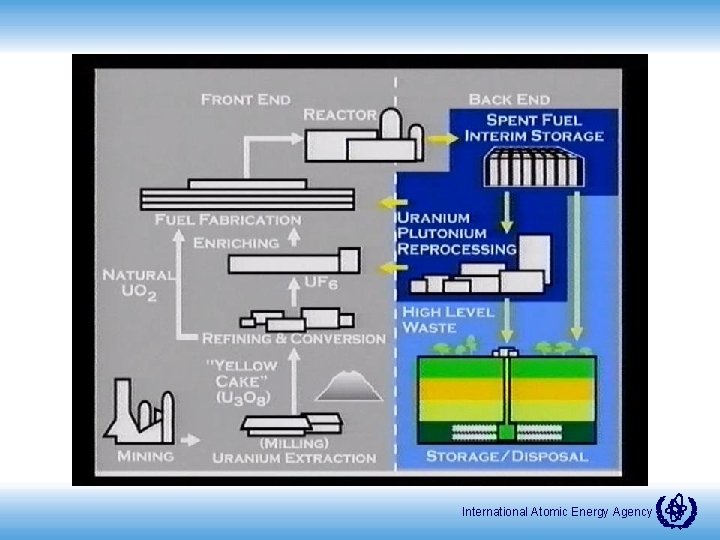
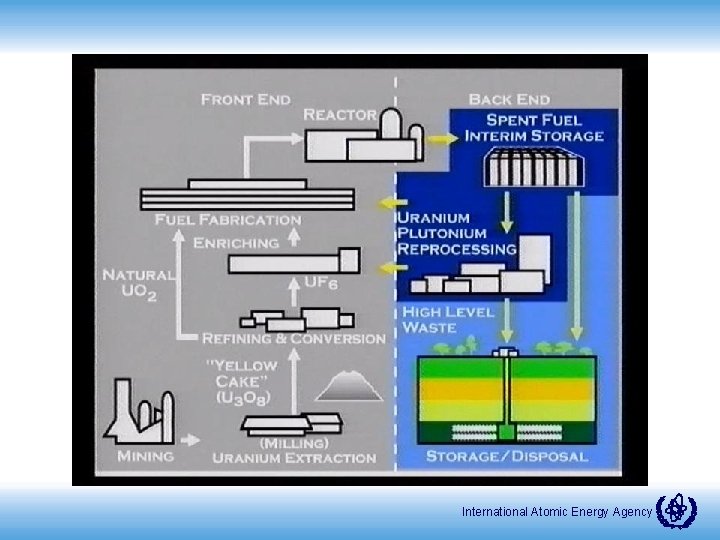
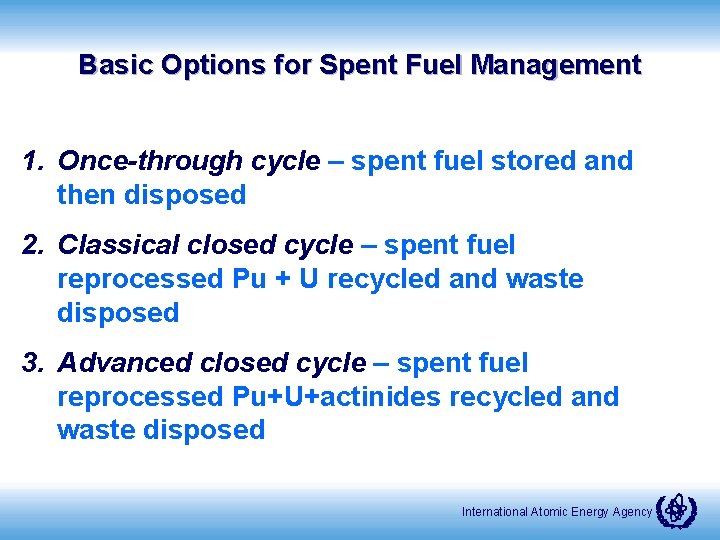
Basic Options for Spent Fuel Management 1. Once-through cycle – spent fuel stored and then disposed 2. Classical closed cycle – spent fuel reprocessed Pu + U recycled and waste disposed 3. Advanced closed cycle – spent fuel reprocessed Pu+U+actinides recycled and waste disposed International Atomic Energy Agency
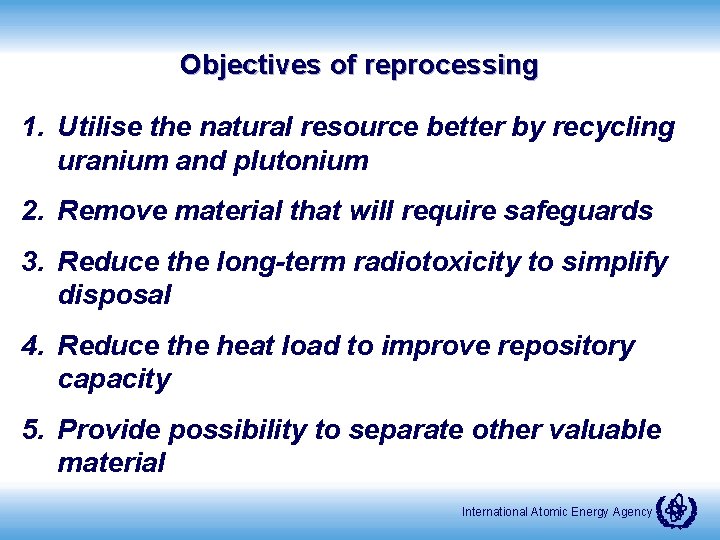
Objectives of reprocessing 1. Utilise the natural resource better by recycling uranium and plutonium 2. Remove material that will require safeguards 3. Reduce the long-term radiotoxicity to simplify disposal 4. Reduce the heat load to improve repository capacity 5. Provide possibility to separate other valuable material International Atomic Energy Agency
Radio-toxicity of Spent Fuel International Atomic Energy Agency
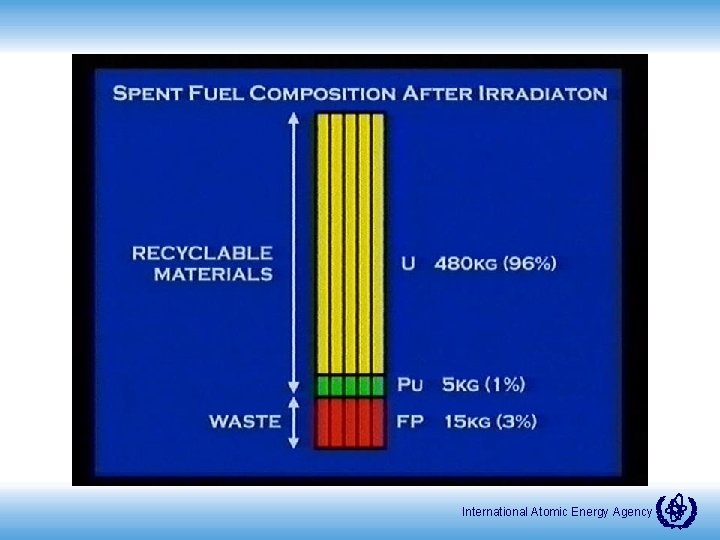
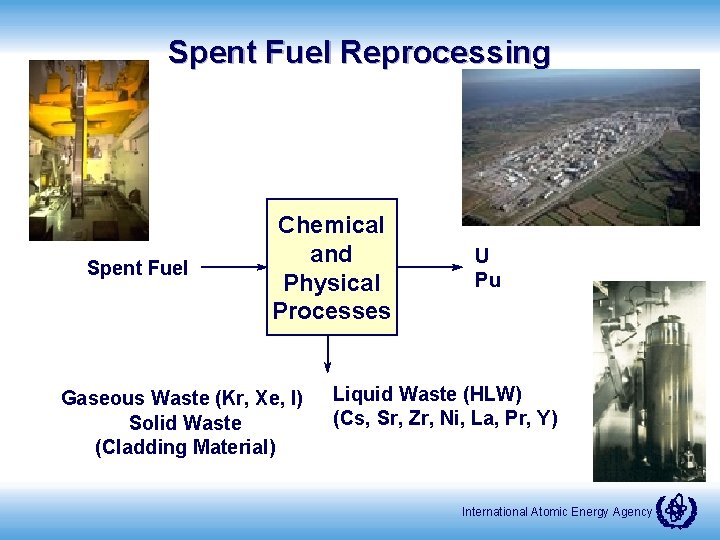
Spent Fuel Reprocessing Spent Fuel Chemical and Physical Processes Gaseous Waste (Kr, Xe, I) Solid Waste (Cladding Material) U Pu Liquid Waste (HLW) (Cs, Sr, Zr, Ni, La, Pr, Y) International Atomic Energy Agency
International Atomic Energy Agency
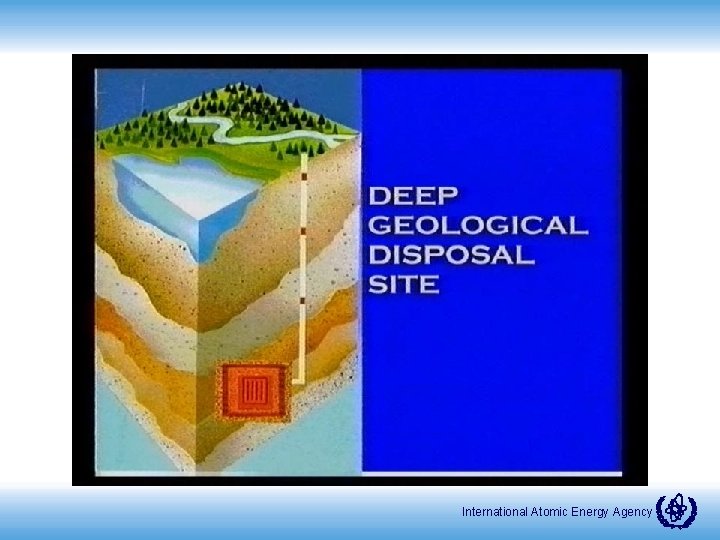
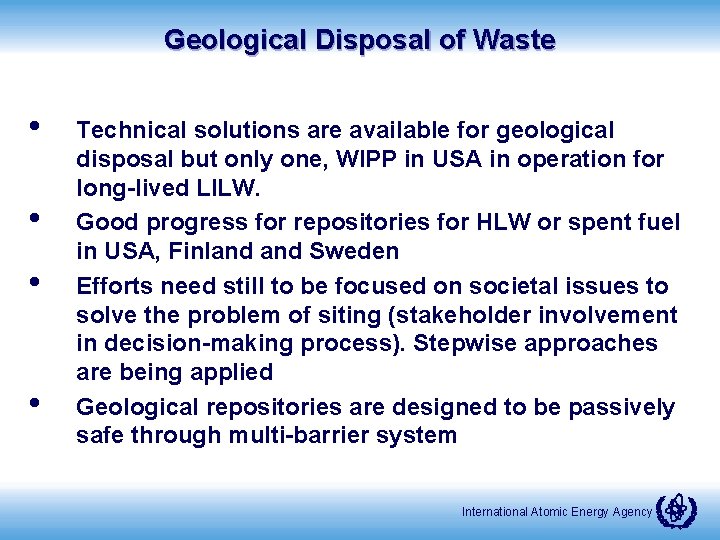
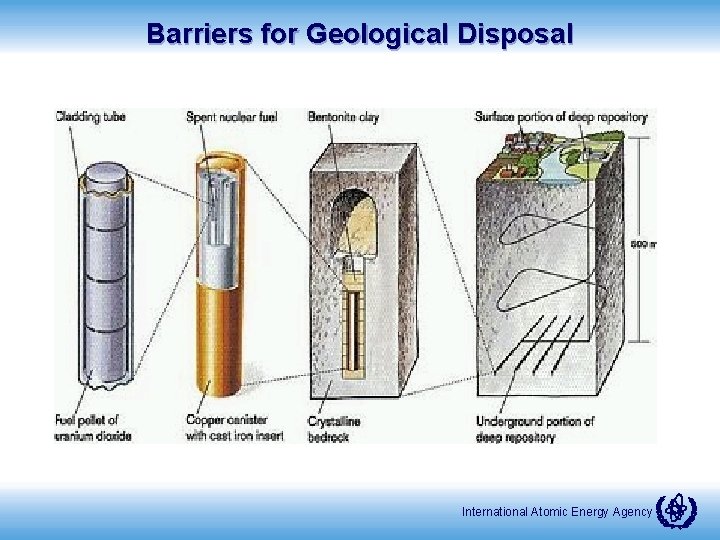
Geological Disposal of Waste • • Technical solutions are available for geological disposal but only one, WIPP in USA in operation for long-lived LILW. Good progress for repositories for HLW or spent fuel in USA, Finland Sweden Efforts need still to be focused on societal issues to solve the problem of siting (stakeholder involvement in decision-making process). Stepwise approaches are being applied Geological repositories are designed to be passively safe through multi-barrier system International Atomic Energy Agency
Barriers for Geological Disposal International Atomic Energy Agency
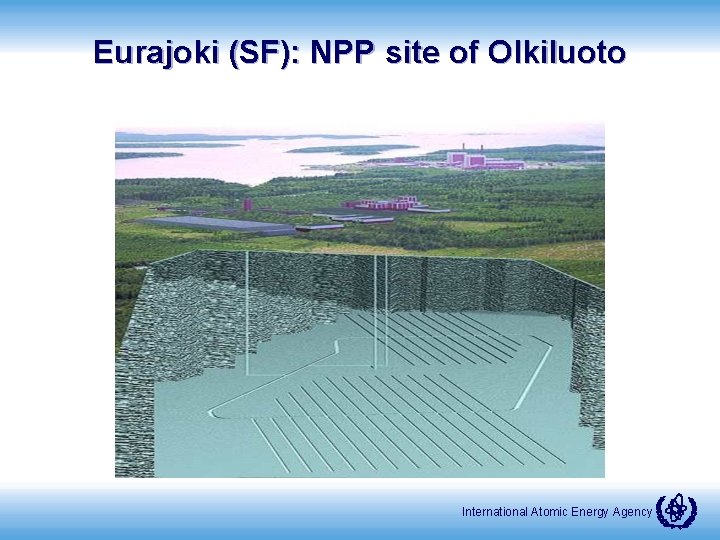
Eurajoki (SF): NPP site of Olkiluoto International Atomic Energy Agency
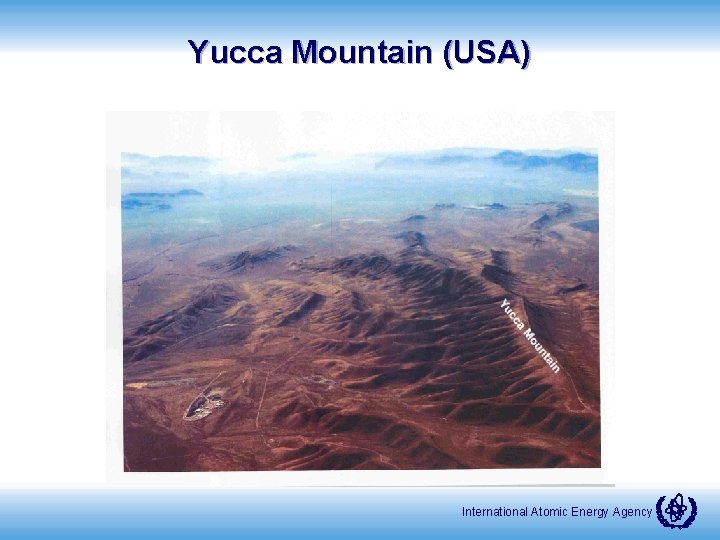
Yucca Mountain (USA) International Atomic Energy Agency
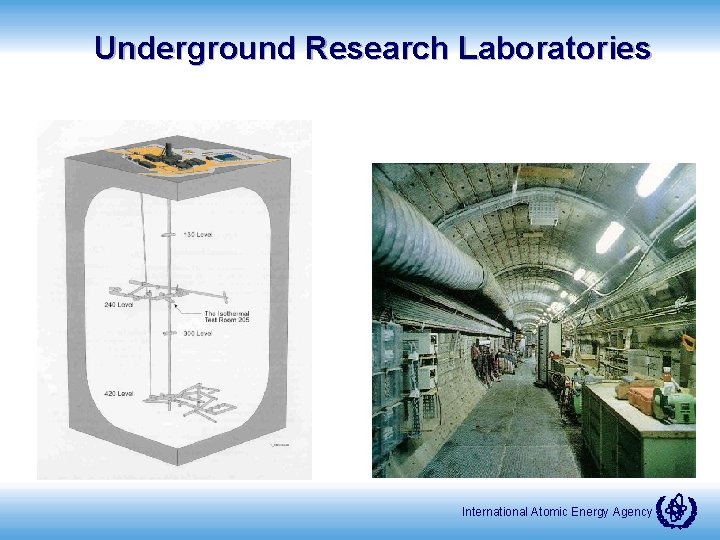
Underground Research Laboratories International Atomic Energy Agency
Spent Fuel Management • 10 000 t. HM/y spent fuel unloaded • About 20 – 25 % is reprocessed. Industrial reprocessing in France, UK and Russia (and Japan and India). Pu recycled in MOX fuel. • Increasing interest in recycling for the long term • Most spent fuel still stored Good experiences with storage • No geological disposal facility in operation. Delays in many programmes • Long term storage is becoming a reality International Atomic Energy Agency
Joint Convention on the Safety of Spent Fuel and the Safety of Radioactive Waste Management • Represents a commitment by participating States to achieve and maintain a consistently high level of safety in the management of spent fuel and of radioactive waste for ensuring the proper protection of people and the environment • 43 contracting parties (January 2007) 98 % of HLW/SNF, ~ 90 % LILW, 30 % of Member States • In force since 2001 • First review meeting - November 2003 • Second review meeting – 15– 24 May 2006 International Atomic Energy Agency
IAEA Thank you for your attention …atoms for peace. International Atomic Energy Agency