
International Atomic Energy Agency Occupational exposure and protective
- Slides: 59
International Atomic Energy Agency Occupational exposure and protective devices L 7 Lecture 7: Occupational exposure and protective devices
Educational objectives • How effective are individual protective items in cath. Labs? • How to monitor personnel dose? • How to estimate personnel effectiveness? Radiation Protection in Cardiology Lecture 7: Occupational exposure and protective devices 2
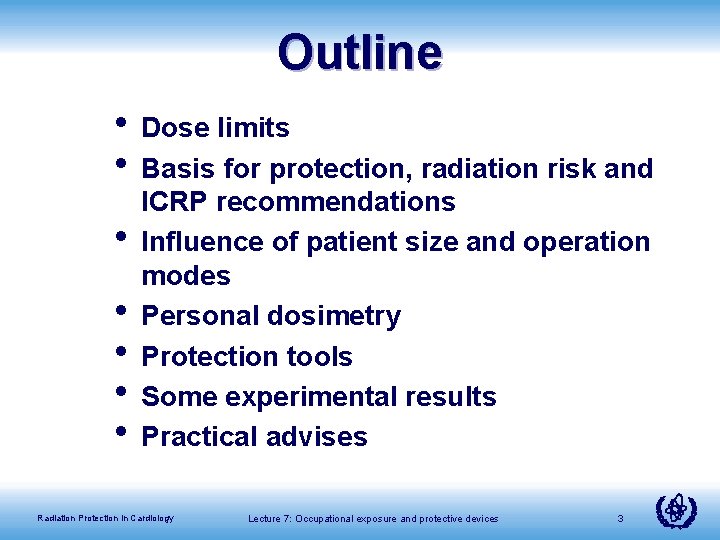
Outline • Dose limits • Basis for protection, radiation risk and • • • ICRP recommendations Influence of patient size and operation modes Personal dosimetry Protection tools Some experimental results Practical advises Radiation Protection in Cardiology Lecture 7: Occupational exposure and protective devices 3
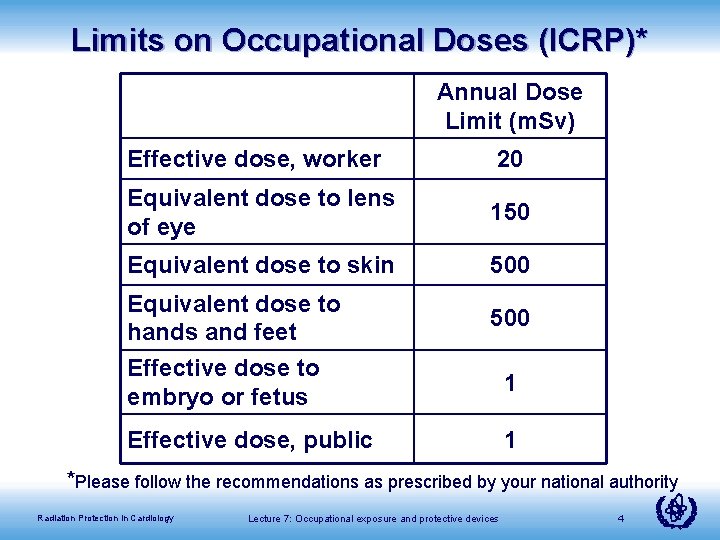
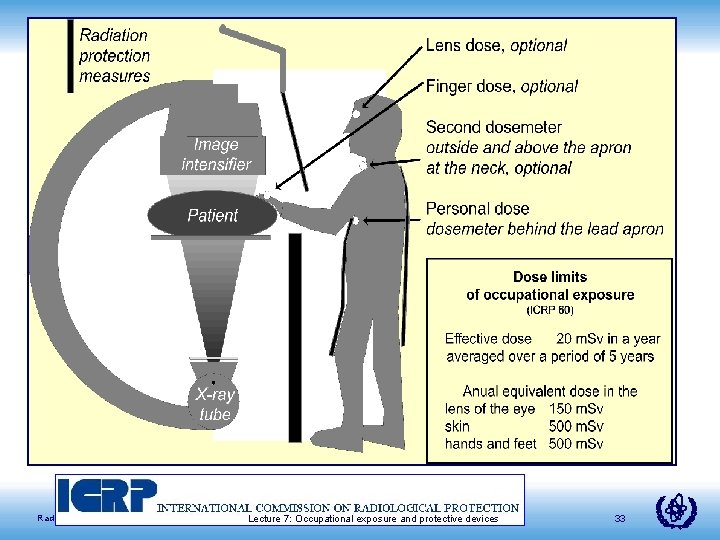
Limits on Occupational Doses (ICRP)* Annual Dose Limit (m. Sv) Effective dose, worker 20 Equivalent dose to lens of eye 150 Equivalent dose to skin 500 Equivalent dose to hands and feet Effective dose to embryo or fetus 500 Effective dose, public 1 1 *Please follow the recommendations as prescribed by your national authority Radiation Protection in Cardiology Lecture 7: Occupational exposure and protective devices 4
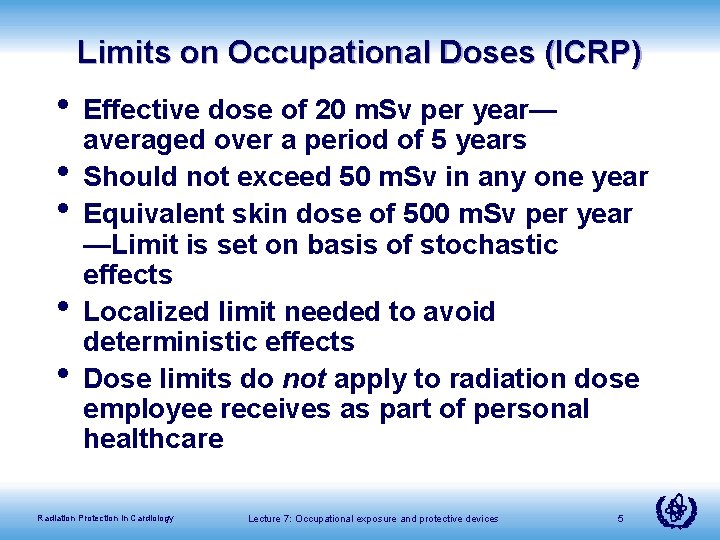
Limits on Occupational Doses (ICRP) • Effective dose of 20 m. Sv per year— • • averaged over a period of 5 years Should not exceed 50 m. Sv in any one year Equivalent skin dose of 500 m. Sv per year —Limit is set on basis of stochastic effects Localized limit needed to avoid deterministic effects Dose limits do not apply to radiation dose employee receives as part of personal healthcare Radiation Protection in Cardiology Lecture 7: Occupational exposure and protective devices 5
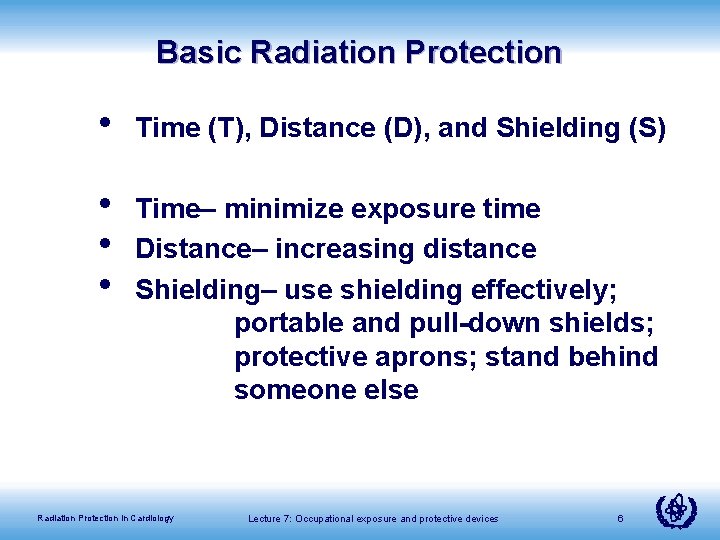
Basic Radiation Protection • Time (T), Distance (D), and Shielding (S) • • • Time– minimize exposure time Distance– increasing distance Shielding– use shielding effectively; portable and pull-down shields; protective aprons; stand behind someone else Radiation Protection in Cardiology Lecture 7: Occupational exposure and protective devices 6
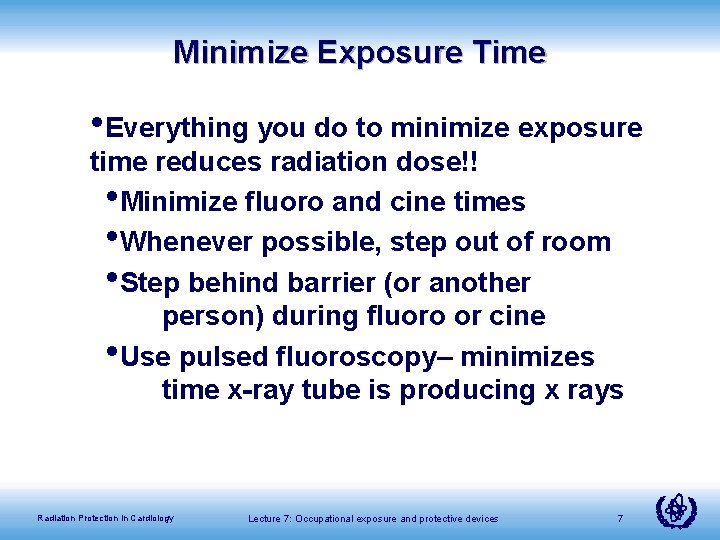
Minimize Exposure Time • Everything you do to minimize exposure time reduces radiation dose!! • Minimize fluoro and cine times • Whenever possible, step out of room • Step behind barrier (or another person) during fluoro or cine • Use pulsed fluoroscopy– minimizes time x-ray tube is producing x rays Radiation Protection in Cardiology Lecture 7: Occupational exposure and protective devices 7
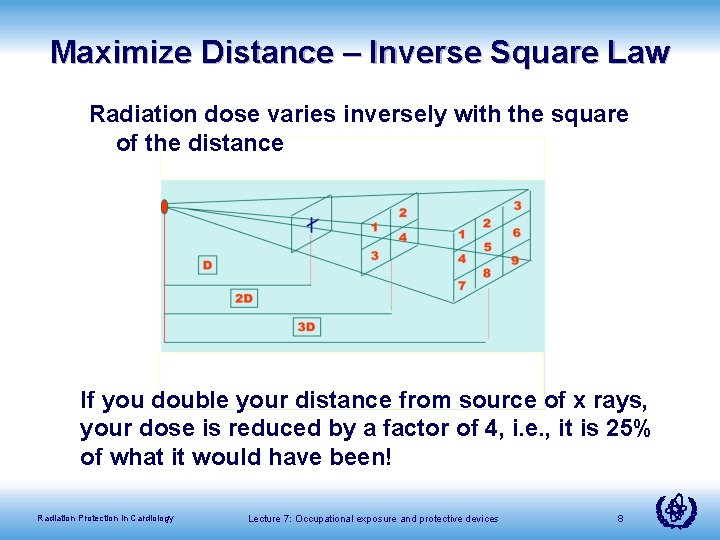
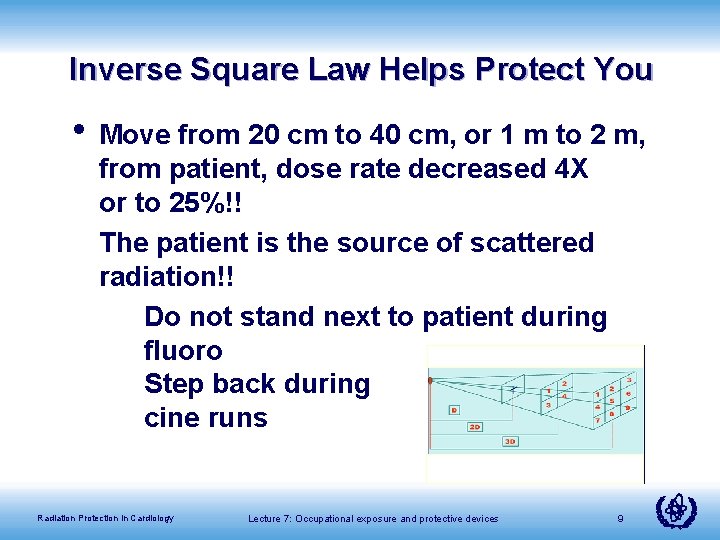
Maximize Distance – Inverse Square Law Radiation dose varies inversely with the square of the distance If you double your distance from source of x rays, your dose is reduced by a factor of 4, i. e. , it is 25% of what it would have been! Radiation Protection in Cardiology Lecture 7: Occupational exposure and protective devices 8
Inverse Square Law Helps Protect You • Move from 20 cm to 40 cm, or 1 m to 2 m, from patient, dose rate decreased 4 X or to 25%!! The patient is the source of scattered radiation!! Do not stand next to patient during fluoro Step back during cine runs Radiation Protection in Cardiology Lecture 7: Occupational exposure and protective devices 9
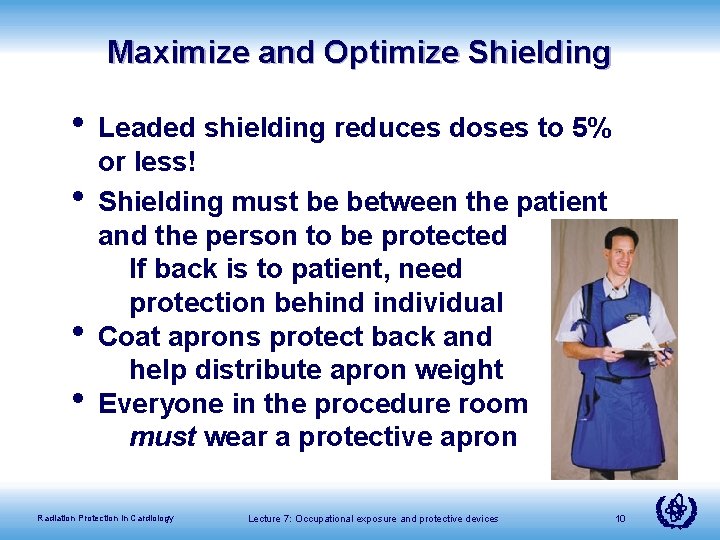
Maximize and Optimize Shielding • Leaded shielding reduces doses to 5% • • • or less! Shielding must be between the patient and the person to be protected If back is to patient, need protection behind individual Coat aprons protect back and help distribute apron weight Everyone in the procedure room must wear a protective apron Radiation Protection in Cardiology Lecture 7: Occupational exposure and protective devices 10
High radiation risk • Occupational doses in interventional • procedures guided by fluoroscopy are the highest doses registered among medical staff using X-rays. If protection tools and good operational measures are not used, and if several complex procedures are undertaken per day, radiation lesions may result after several years of work. Radiation Protection in Cardiology Lecture 7: Occupational exposure and protective devices 11
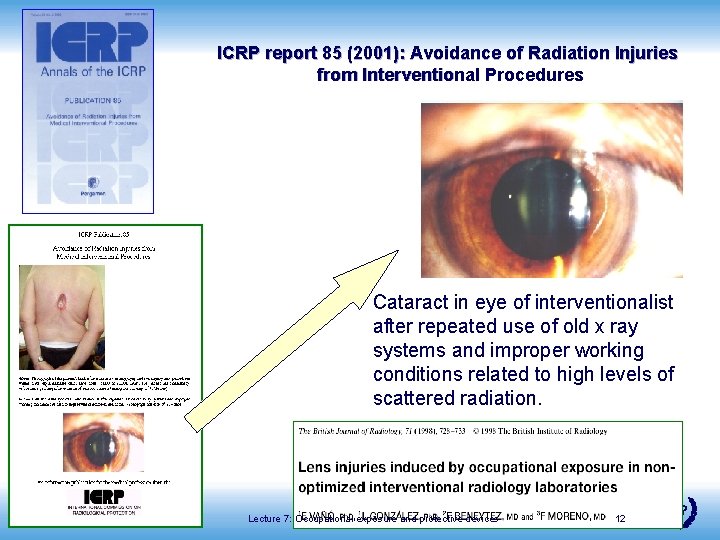
ICRP report 85 (2001): Avoidance of Radiation Injuries from Interventional Procedures Cataract in eye of interventionalist after repeated use of old x ray systems and improper working conditions related to high levels of scattered radiation. Radiation Protection in Cardiology Lecture 7: Occupational exposure and protective devices 12
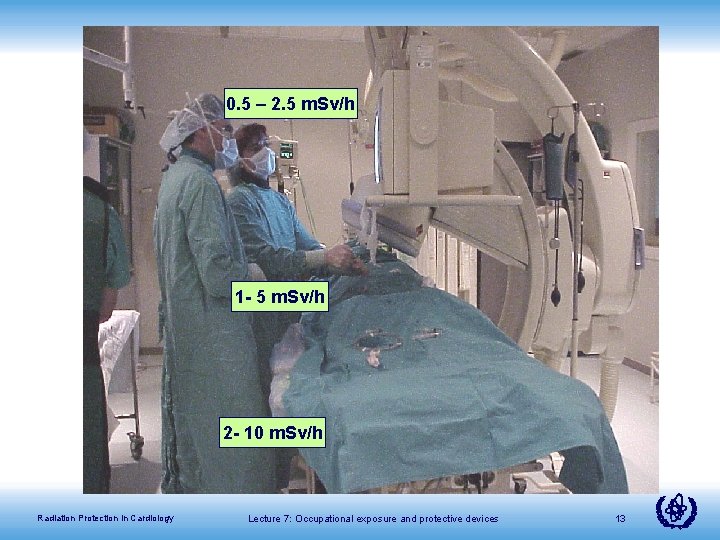
0. 5 – 2. 5 m. Sv/h 1 - 5 m. Sv/h 2 - 10 m. Sv/h Radiation Protection in Cardiology Lecture 7: Occupational exposure and protective devices 13
Radiation units used • Dose rates indicated in the slide are • • “personal dose equivalent” values. Personal dose equivalent, typically referred in personal dose records as Hp(10) is the dose equivalent in soft tissue, at 10 mm depth and it is measured in Sieverts (Sv). It is a common practice in RP to directly compare Hp(10) with the annual limit of effective dose (ICRU report 51. Quantities and Units in Radiation Protection Dosimetry. International Commission on Radiation Units and Measurements. Bethesda, MD, USA. 1993). Radiation Protection in Cardiology Lecture 7: Occupational exposure and protective devices 14
Influence of patient thickness and operation modes in scatter dose rate Radiation Protection in Cardiology Lecture 7: Occupational exposure and protective devices 15
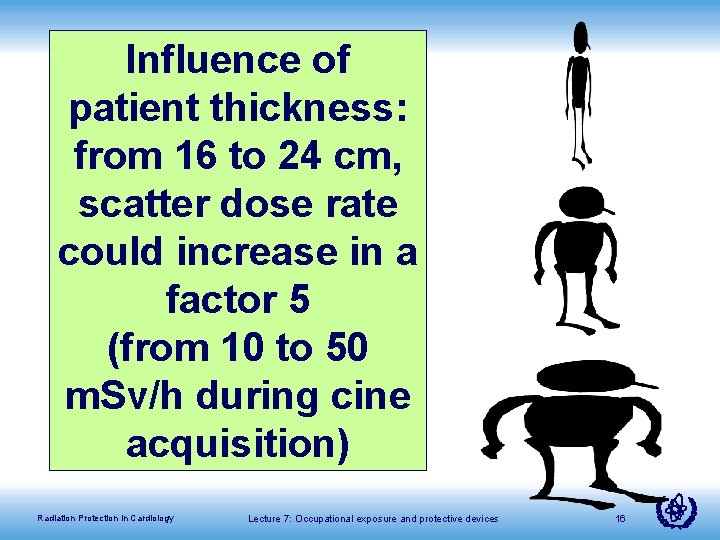
Influence of patient thickness: from 16 to 24 cm, scatter dose rate could increase in a factor 5 (from 10 to 50 m. Sv/h during cine acquisition) Radiation Protection in Cardiology Lecture 7: Occupational exposure and protective devices 16
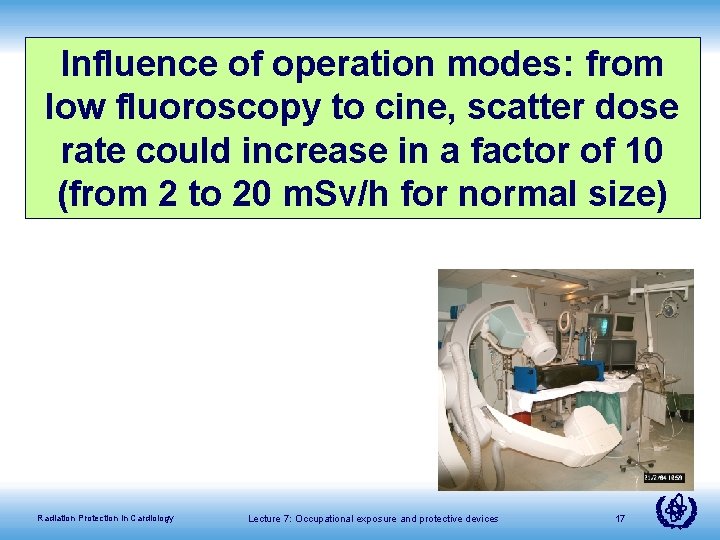
Influence of operation modes: from low fluoroscopy to cine, scatter dose rate could increase in a factor of 10 (from 2 to 20 m. Sv/h for normal size) Radiation Protection in Cardiology Lecture 7: Occupational exposure and protective devices 17
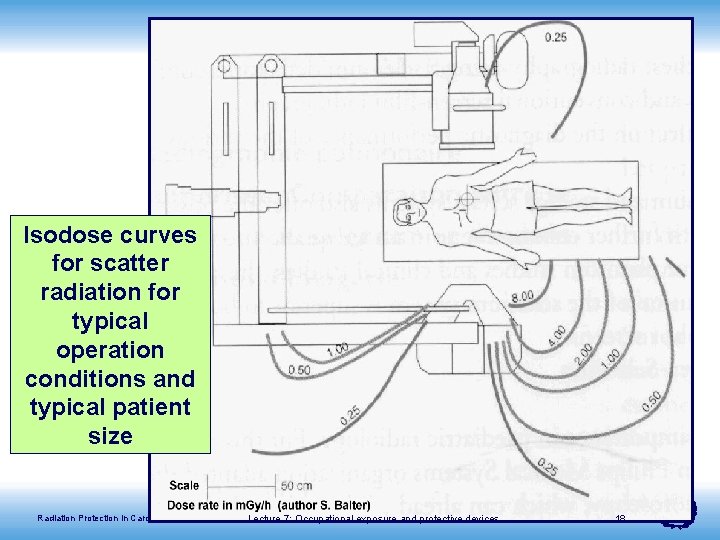
Isodose curves for scatter radiation for typical operation conditions and typical patient size Radiation Protection in Cardiology Lecture 7: Occupational exposure and protective devices 18
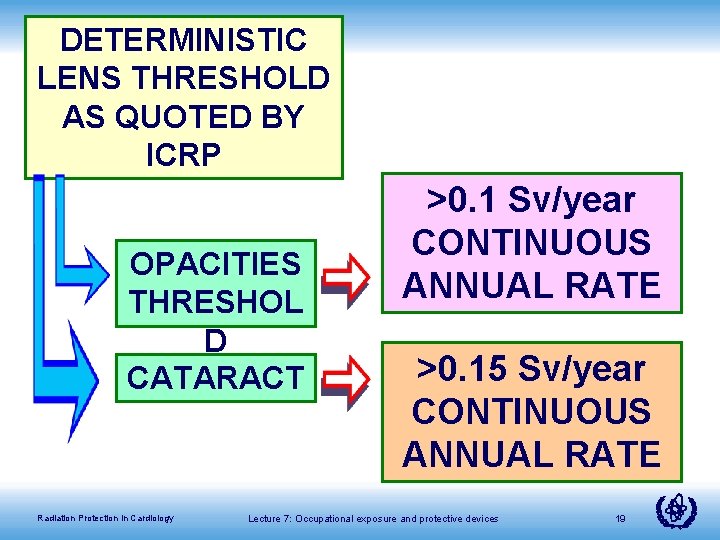
DETERMINISTIC LENS THRESHOLD AS QUOTED BY ICRP OPACITIES THRESHOL D CATARACT Radiation Protection in Cardiology >0. 1 Sv/year CONTINUOUS ANNUAL RATE >0. 15 Sv/year CONTINUOUS ANNUAL RATE Lecture 7: Occupational exposure and protective devices 19
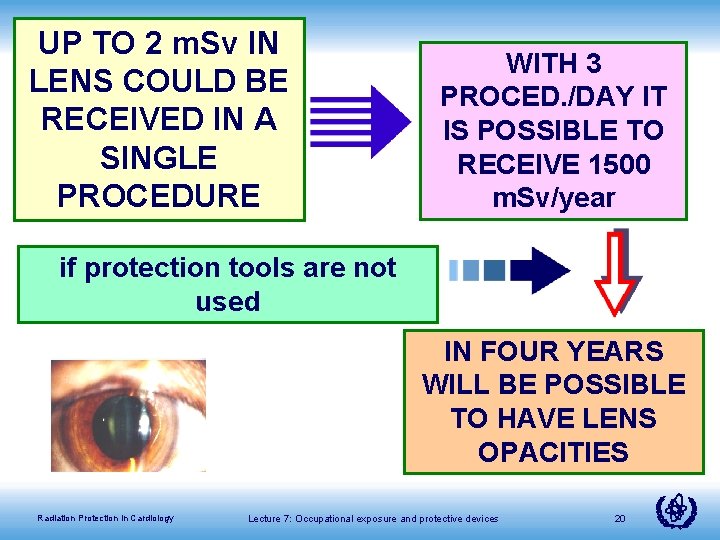
UP TO 2 m. Sv IN LENS COULD BE RECEIVED IN A SINGLE PROCEDURE WITH 3 PROCED. /DAY IT IS POSSIBLE TO RECEIVE 1500 m. Sv/year if protection tools are not used IN FOUR YEARS WILL BE POSSIBLE TO HAVE LENS OPACITIES Radiation Protection in Cardiology Lecture 7: Occupational exposure and protective devices 20
Patient and staff doses are not always correlated Radiation Protection in Cardiology Lecture 7: Occupational exposure and protective devices 21
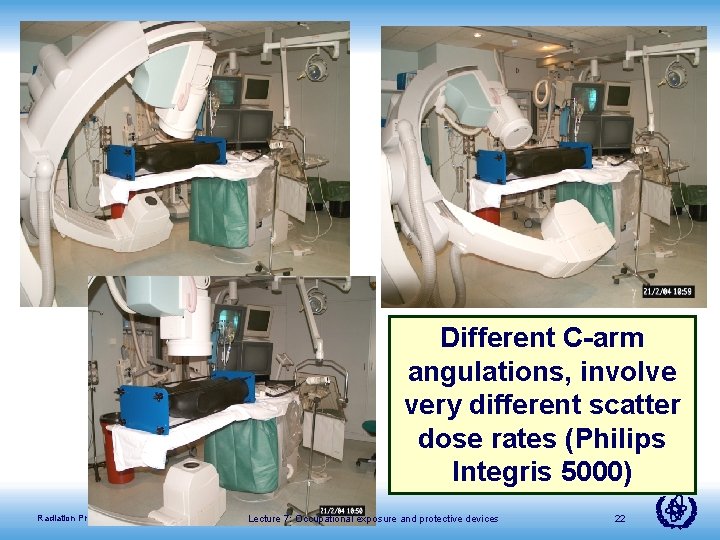
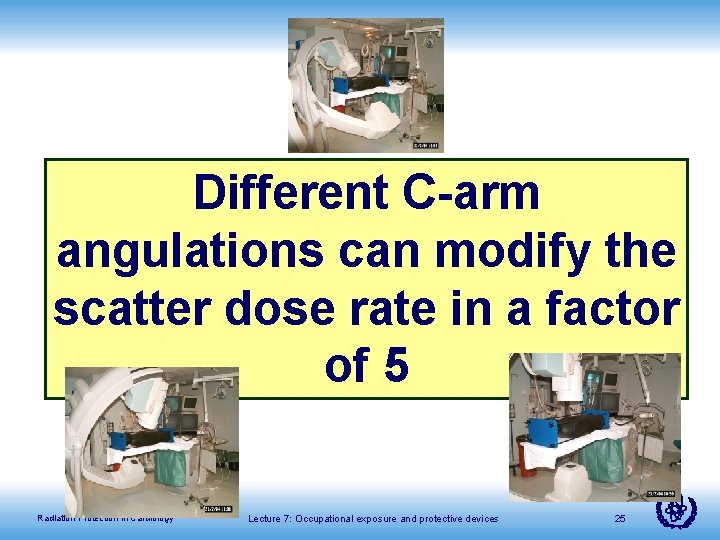
Different C-arm angulations, involve very different scatter dose rates (Philips Integris 5000) Radiation Protection in Cardiology Lecture 7: Occupational exposure and protective devices 22
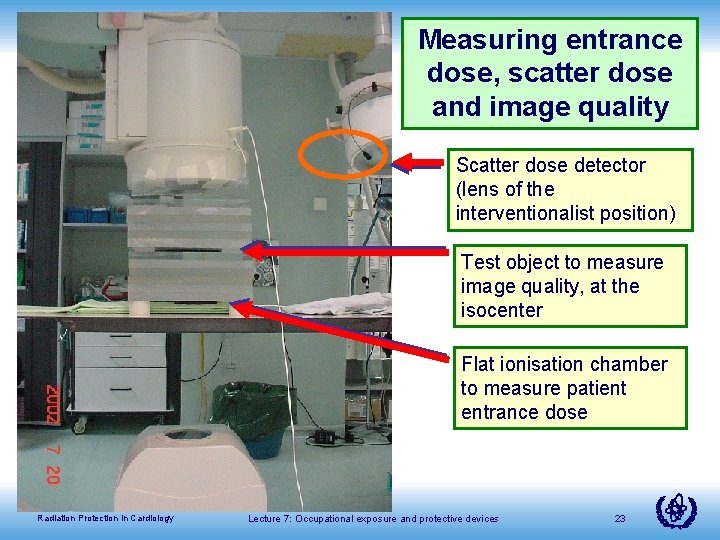
Measuring entrance dose, scatter dose and image quality Scatter dose detector (lens of the interventionalist position) Test object to measure image quality, at the isocenter Flat ionisation chamber to measure patient entrance dose Radiation Protection in Cardiology Lecture 7: Occupational exposure and protective devices 23
For scatter dose the orientation of the C-arm is dominant in comparison with the entrance patient dose rate. Radiation Protection in Cardiology Lecture 7: Occupational exposure and protective devices 24
Different C-arm angulations can modify the scatter dose rate in a factor of 5 Radiation Protection in Cardiology Lecture 7: Occupational exposure and protective devices 25
International Atomic Energy Agency Personal dosimetry Lecture 7: Occupational exposure and protective devices
Personal dosimetry ICRP report 85 (2001) states. . . • Paragraph 66: The high occupational • exposures in interventional radiology require the use of robust and adequate monitoring arrangements for staff. A single dosimeter worn under the lead apron will yield a reasonable estimate of effective dose for most instances. Wearing an additional dosimeter at collar level above the lead apron will provide an indication of head (eye) dose. Radiation Protection in Cardiology Lecture 7: Occupational exposure and protective devices 27
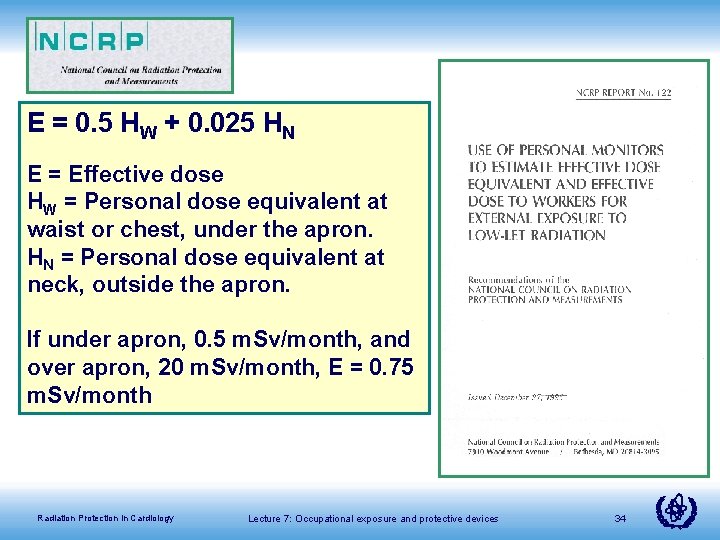
Personal dosimetry ICRP report 85 (2001) states. . . • In addition, it is possible to • combine the two dosimeter readings to provide an improved estimate of effective dose (NCRP 122; 1995). Consequently, it is recommended that interventional radiology departments develop a policy that staff should wear two dosimeters. Radiation Protection in Cardiology Lecture 7: Occupational exposure and protective devices 28
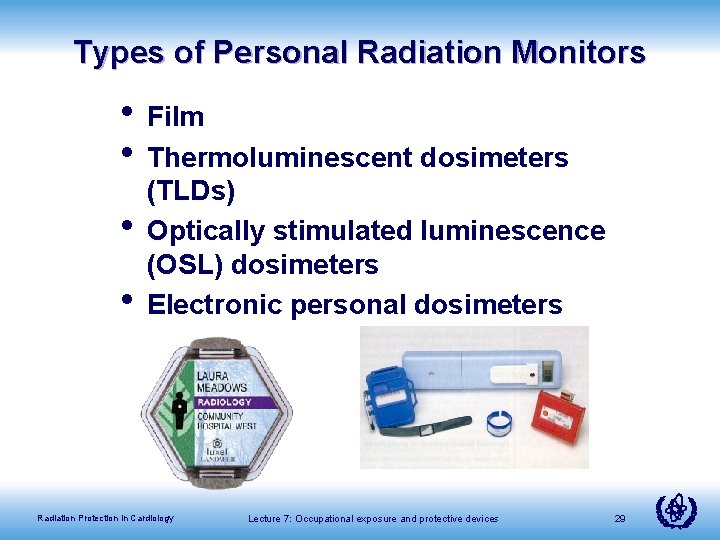
Types of Personal Radiation Monitors • Film • Thermoluminescent dosimeters • • (TLDs) Optically stimulated luminescence (OSL) dosimeters Electronic personal dosimeters Radiation Protection in Cardiology Lecture 7: Occupational exposure and protective devices 29
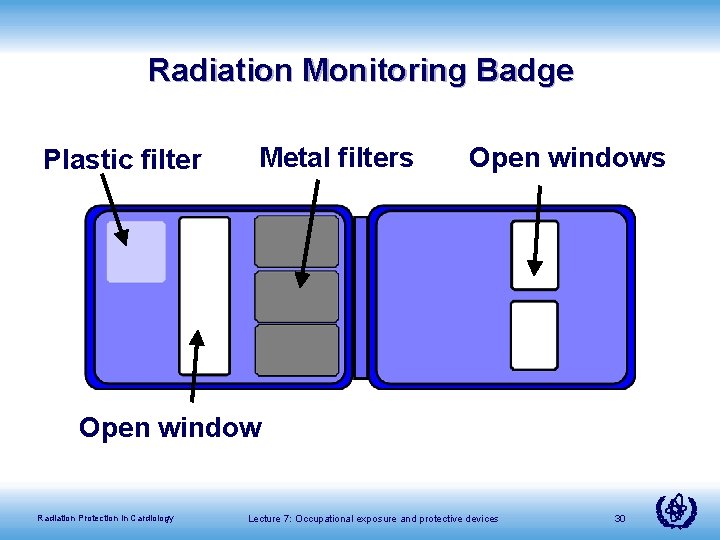
Radiation Monitoring Badge Plastic filter Metal filters Open window Radiation Protection in Cardiology Lecture 7: Occupational exposure and protective devices 30
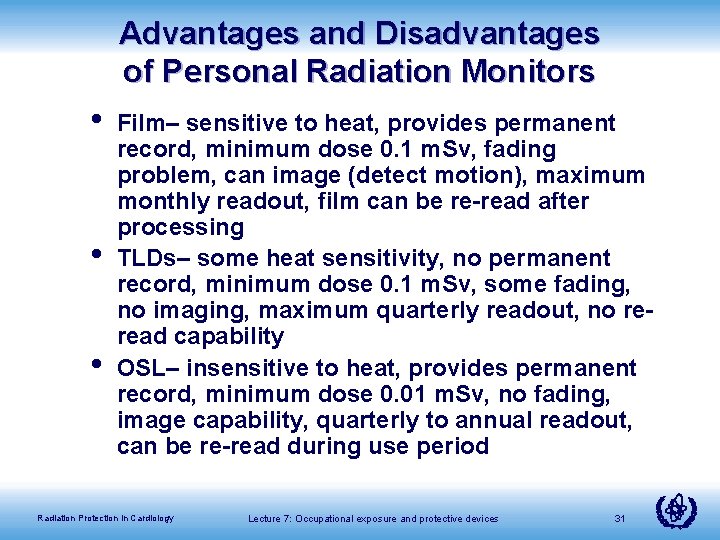
Advantages and Disadvantages of Personal Radiation Monitors • • • Film– sensitive to heat, provides permanent record, minimum dose 0. 1 m. Sv, fading problem, can image (detect motion), maximum monthly readout, film can be re-read after processing TLDs– some heat sensitivity, no permanent record, minimum dose 0. 1 m. Sv, some fading, no imaging, maximum quarterly readout, no reread capability OSL– insensitive to heat, provides permanent record, minimum dose 0. 01 m. Sv, no fading, image capability, quarterly to annual readout, can be re-read during use period Radiation Protection in Cardiology Lecture 7: Occupational exposure and protective devices 31
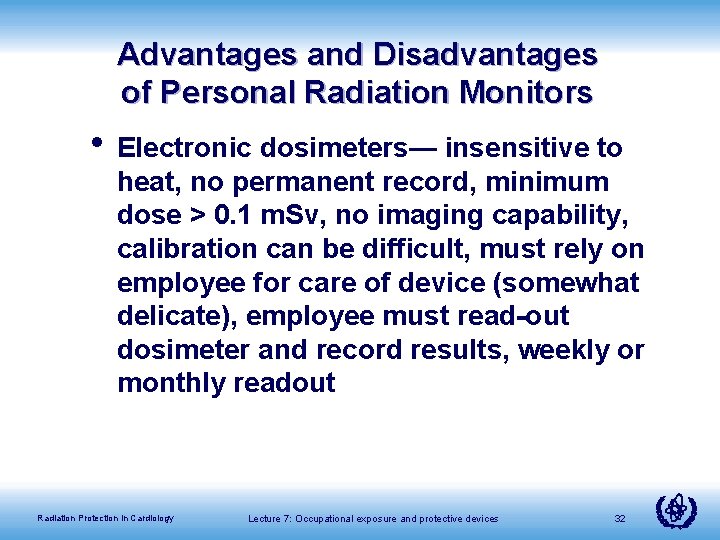
Advantages and Disadvantages of Personal Radiation Monitors • Electronic dosimeters— insensitive to heat, no permanent record, minimum dose > 0. 1 m. Sv, no imaging capability, calibration can be difficult, must rely on employee for care of device (somewhat delicate), employee must read-out dosimeter and record results, weekly or monthly readout Radiation Protection in Cardiology Lecture 7: Occupational exposure and protective devices 32
Radiation Protection in Cardiology Lecture 7: Occupational exposure and protective devices 33
E = 0. 5 HW + 0. 025 HN E = Effective dose HW = Personal dose equivalent at waist or chest, under the apron. HN = Personal dose equivalent at neck, outside the apron. If under apron, 0. 5 m. Sv/month, and over apron, 20 m. Sv/month, E = 0. 75 m. Sv/month Radiation Protection in Cardiology Lecture 7: Occupational exposure and protective devices 34
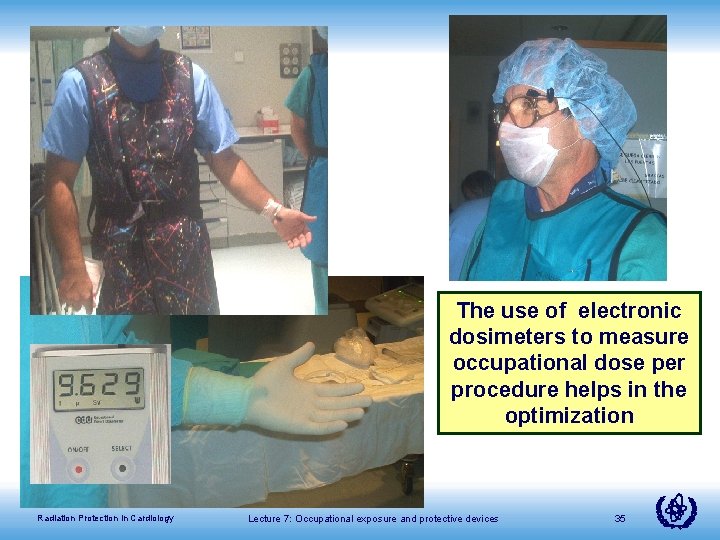
The use of electronic dosimeters to measure occupational dose per procedure helps in the optimization Radiation Protection in Cardiology Lecture 7: Occupational exposure and protective devices 35
Protection tools Radiation Protection in Cardiology Lecture 7: Occupational exposure and protective devices 36
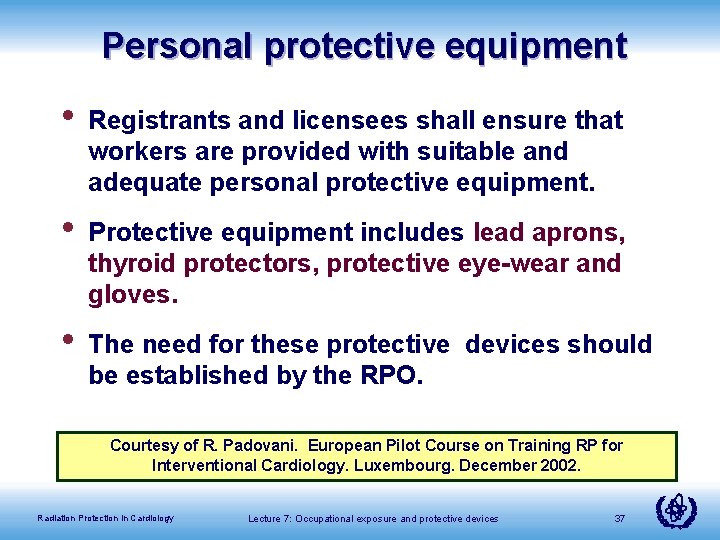
Personal protective equipment • Registrants and licensees shall ensure that workers are provided with suitable and adequate personal protective equipment. • Protective equipment includes lead aprons, thyroid protectors, protective eye-wear and gloves. • The need for these protective devices should be established by the RPO. Courtesy of R. Padovani. European Pilot Course on Training RP for Interventional Cardiology. Luxembourg. December 2002. Radiation Protection in Cardiology Lecture 7: Occupational exposure and protective devices 37
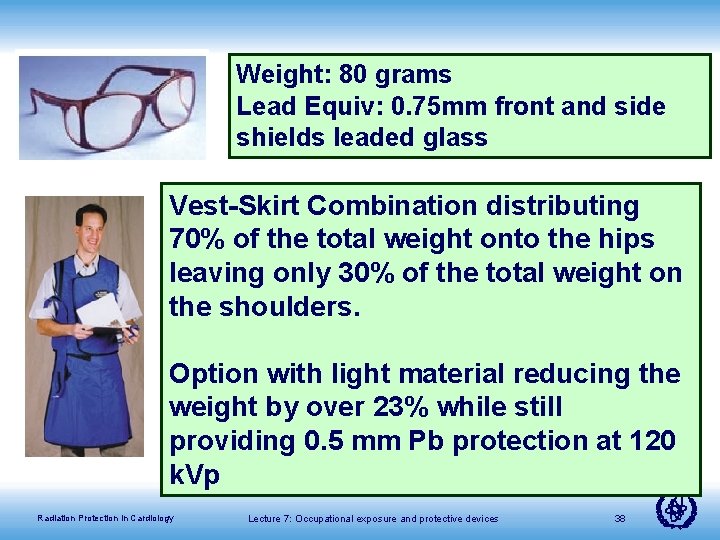
Weight: 80 grams Lead Equiv: 0. 75 mm front and side shields leaded glass Vest-Skirt Combination distributing 70% of the total weight onto the hips leaving only 30% of the total weight on the shoulders. Option with light material reducing the weight by over 23% while still providing 0. 5 mm Pb protection at 120 k. Vp Radiation Protection in Cardiology Lecture 7: Occupational exposure and protective devices 38
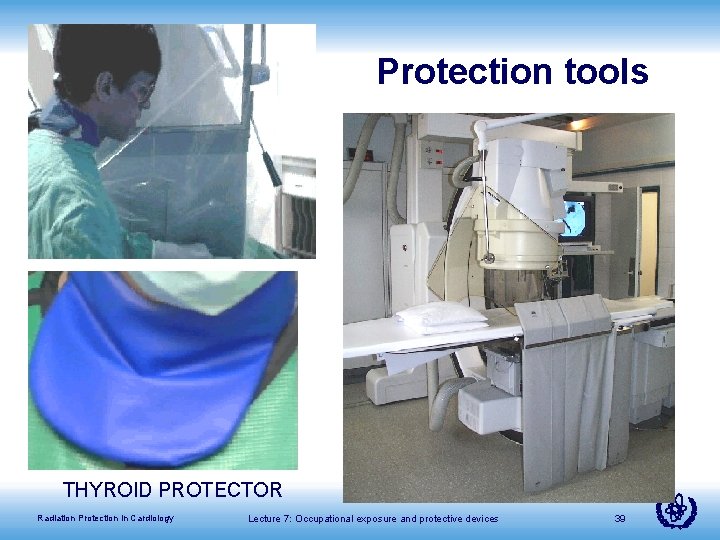
Protection tools THYROID PROTECTOR Radiation Protection in Cardiology Lecture 7: Occupational exposure and protective devices 39
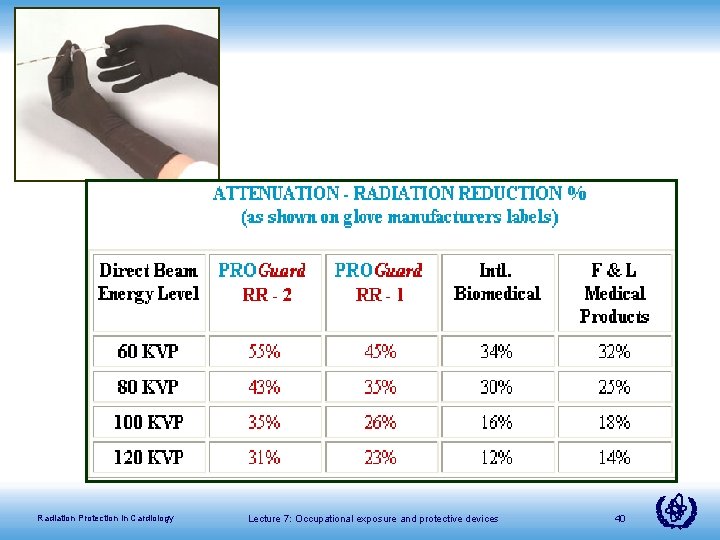
Radiation Protection in Cardiology Lecture 7: Occupational exposure and protective devices 40
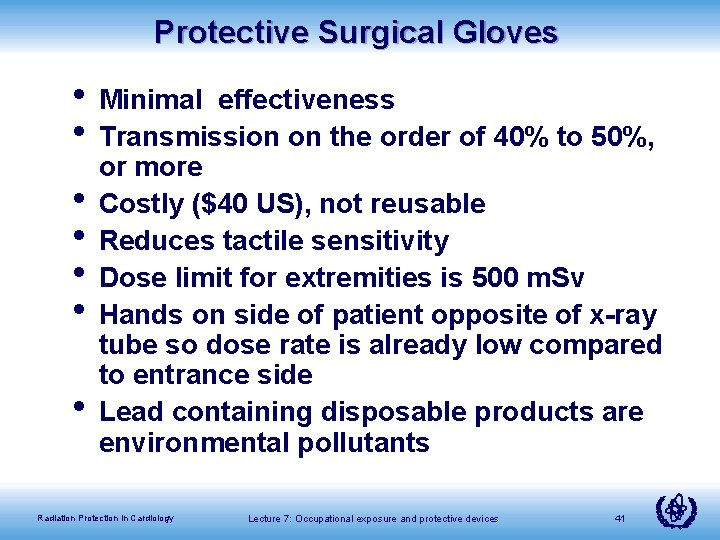
Protective Surgical Gloves • Minimal effectiveness • Transmission on the order of 40% to 50%, • • • or more Costly ($40 US), not reusable Reduces tactile sensitivity Dose limit for extremities is 500 m. Sv Hands on side of patient opposite of x-ray tube so dose rate is already low compared to entrance side Lead containing disposable products are environmental pollutants Radiation Protection in Cardiology Lecture 7: Occupational exposure and protective devices 41
Radiation Protection of Hands Best way to minimize dose to fingers and hand: Keep your fingers out of the beam!!! Dose rate outside of the beam and on side of patient opposite x-ray tube: Very low compared to in the beam!!! Radiation Protection in Cardiology Lecture 7: Occupational exposure and protective devices 42
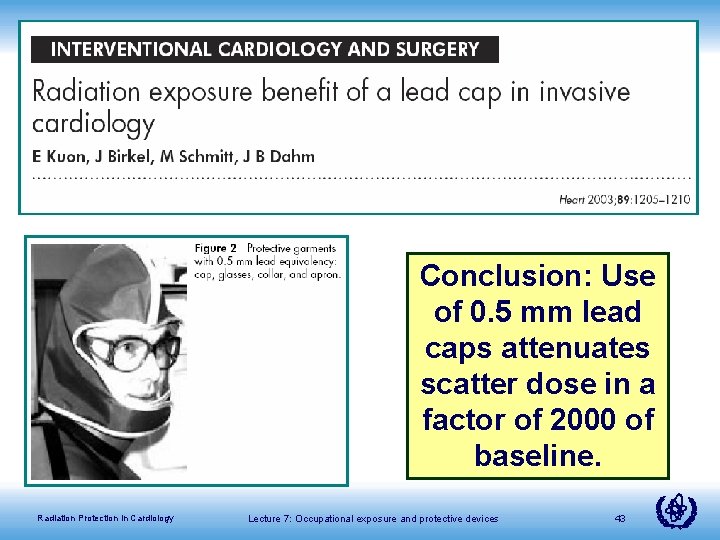
Conclusion: Use of 0. 5 mm lead caps attenuates scatter dose in a factor of 2000 of baseline. Radiation Protection in Cardiology Lecture 7: Occupational exposure and protective devices 43
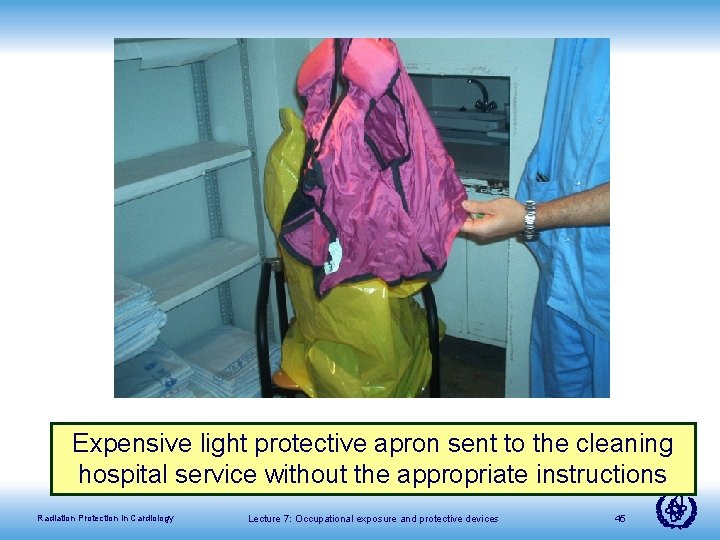
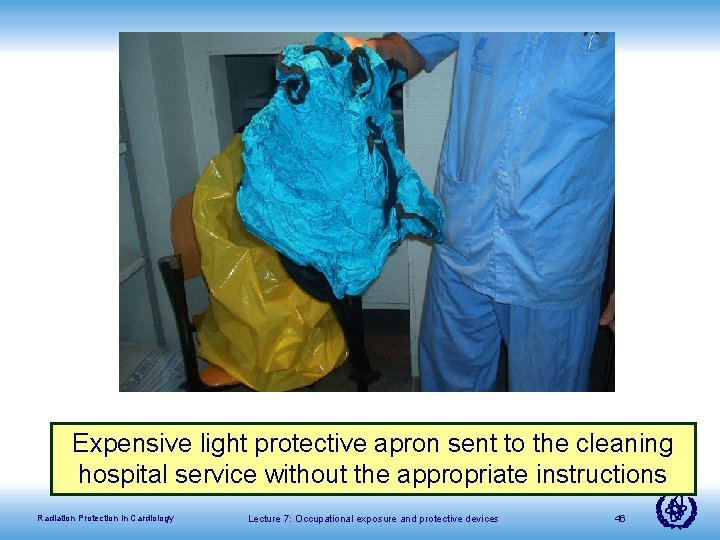
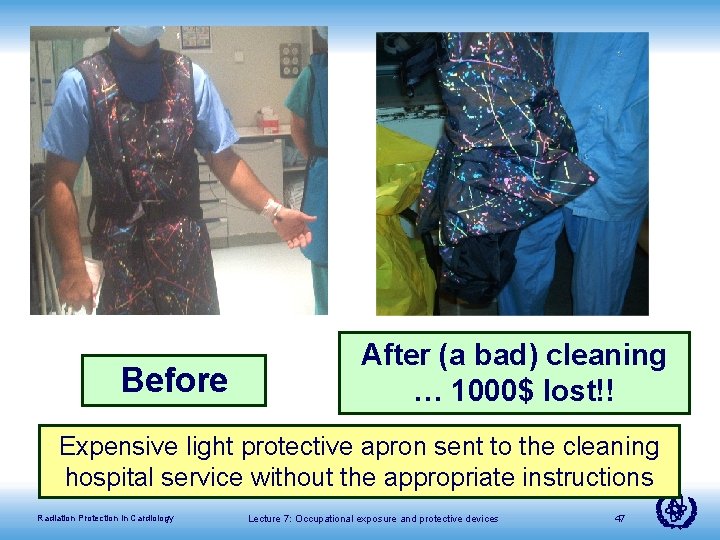
This RP material shall be submitted to a quality control and cleaned with appropriate instructions Radiation Protection in Cardiology Lecture 7: Occupational exposure and protective devices 44
Expensive light protective apron sent to the cleaning hospital service without the appropriate instructions Radiation Protection in Cardiology Lecture 7: Occupational exposure and protective devices 45
Expensive light protective apron sent to the cleaning hospital service without the appropriate instructions Radiation Protection in Cardiology Lecture 7: Occupational exposure and protective devices 46
Before After (a bad) cleaning … 1000$ lost!! Expensive light protective apron sent to the cleaning hospital service without the appropriate instructions Radiation Protection in Cardiology Lecture 7: Occupational exposure and protective devices 47
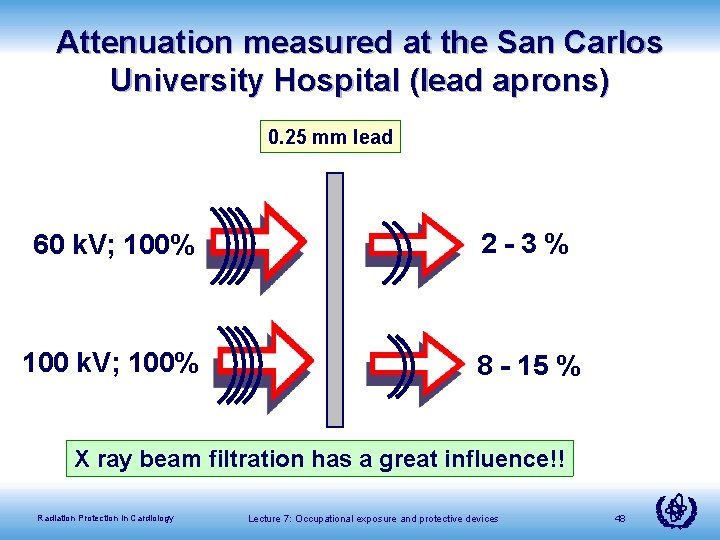
Attenuation measured at the San Carlos University Hospital (lead aprons) 0. 25 mm lead 60 k. V; 100% 2 -3% 100 k. V; 100% 8 - 15 % X ray beam filtration has a great influence!! Radiation Protection in Cardiology Lecture 7: Occupational exposure and protective devices 48
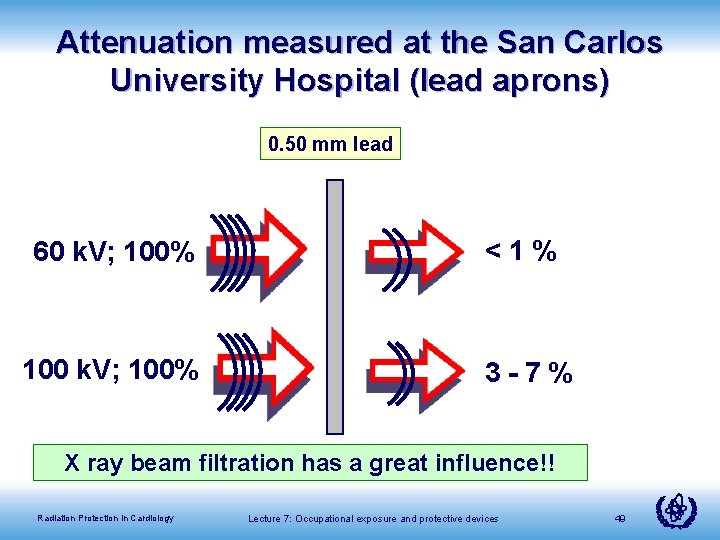
Attenuation measured at the San Carlos University Hospital (lead aprons) 0. 50 mm lead 60 k. V; 100% <1% 100 k. V; 100% 3 -7% X ray beam filtration has a great influence!! Radiation Protection in Cardiology Lecture 7: Occupational exposure and protective devices 49
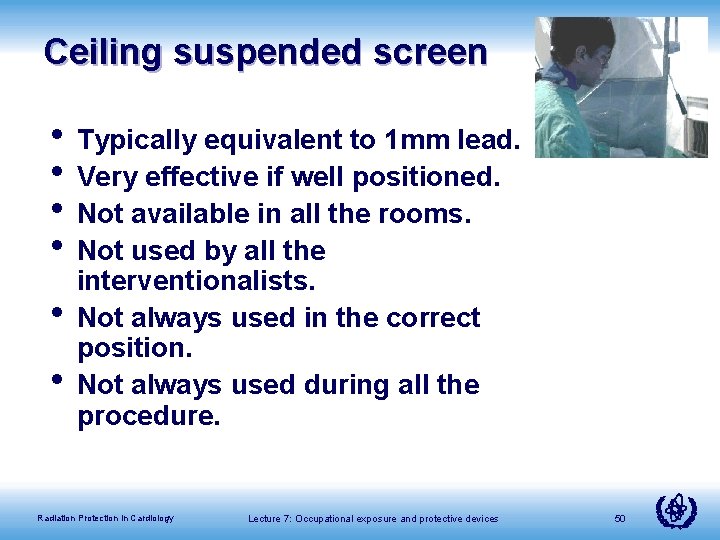
Ceiling suspended screen • Typically equivalent to 1 mm lead. • Very effective if well positioned. • Not available in all the rooms. • Not used by all the • • interventionalists. Not always used in the correct position. Not always used during all the procedure. Radiation Protection in Cardiology Lecture 7: Occupational exposure and protective devices 50
Some experimental results Radiation Protection in Cardiology Lecture 7: Occupational exposure and protective devices 51
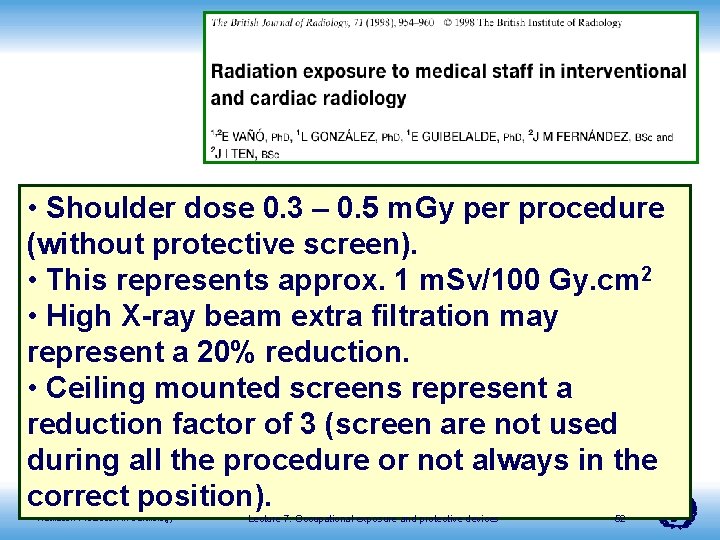
• Shoulder dose 0. 3 – 0. 5 m. Gy per procedure (without protective screen). • This represents approx. 1 m. Sv/100 Gy. cm 2 • High X-ray beam extra filtration may represent a 20% reduction. • Ceiling mounted screens represent a reduction factor of 3 (screen are not used during all the procedure or not always in the correct position). Radiation Protection in Cardiology Lecture 7: Occupational exposure and protective devices 52
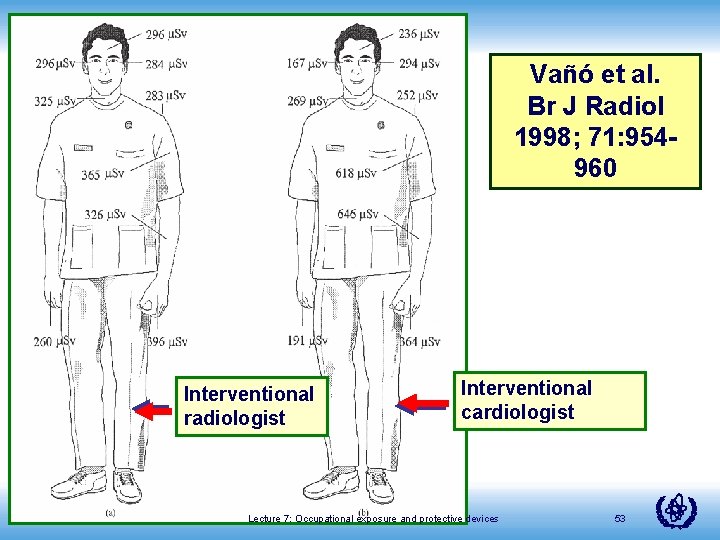
Vañó et al. Br J Radiol 1998; 71: 954960 Interventional radiologist Radiation Protection in Cardiology Interventional cardiologist Lecture 7: Occupational exposure and protective devices 53
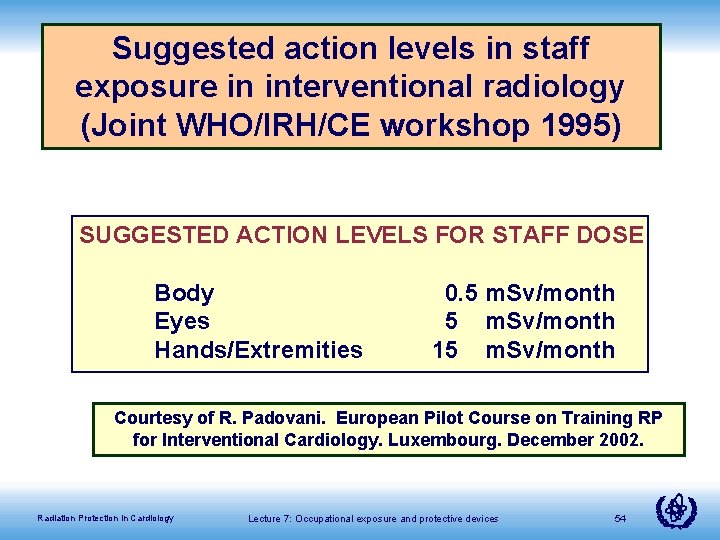
Suggested action levels in staff exposure in interventional radiology (Joint WHO/IRH/CE workshop 1995) SUGGESTED ACTION LEVELS FOR STAFF DOSE Body Eyes Hands/Extremities 0. 5 m. Sv/month 15 m. Sv/month Courtesy of R. Padovani. European Pilot Course on Training RP for Interventional Cardiology. Luxembourg. December 2002. Radiation Protection in Cardiology Lecture 7: Occupational exposure and protective devices 54
Measures to reduce occupational doses Radiation Protection in Cardiology Lecture 7: Occupational exposure and protective devices 55
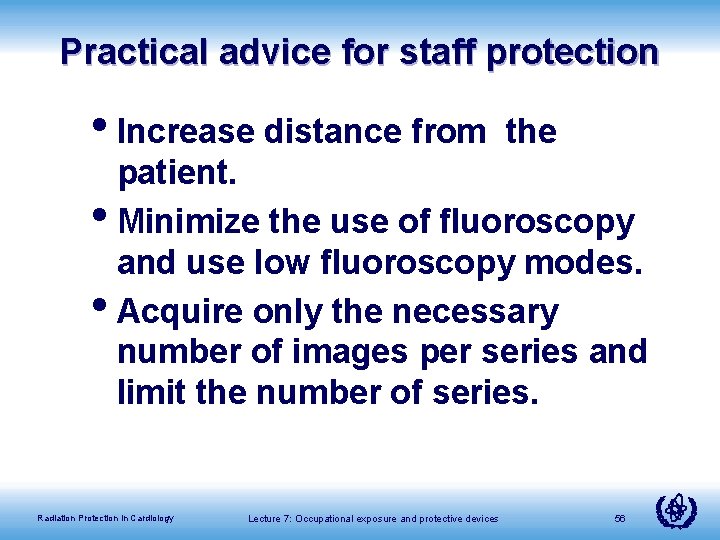
Practical advice for staff protection • Increase distance from the patient. • Minimize the use of fluoroscopy and use low fluoroscopy modes. • Acquire only the necessary number of images per series and limit the number of series. Radiation Protection in Cardiology Lecture 7: Occupational exposure and protective devices 56
Practical advice • Use suspended screen and other • • personal shielding tools available. Consider the size of the patient and the position of the X-ray tube (Carm angulation). Collimate the X-ray beam to the area of interest. Radiation Protection in Cardiology Lecture 7: Occupational exposure and protective devices 57
Optimization of Radiation Protection • Minimization of dose to patient and staff • • should not be the goal Must optimize dose to patient and minimize dose to staff First: optimize patient dose rate assuring that there is sufficient dose rate to provide adequate image quality If image quality is inadequate, then any radiation dose results in needless radiation dose! Radiation Protection in Cardiology Lecture 7: Occupational exposure and protective devices 58
General recommendation: Be aware of the radiological protection of your patient and you will also be improving your own occupational protection Radiation Protection in Cardiology Lecture 7: Occupational exposure and protective devices 59