
Internal structure of Neutron Stars Artistic view Astronomy

- Slides: 29
Internal structure of Neutron Stars
Artistic view
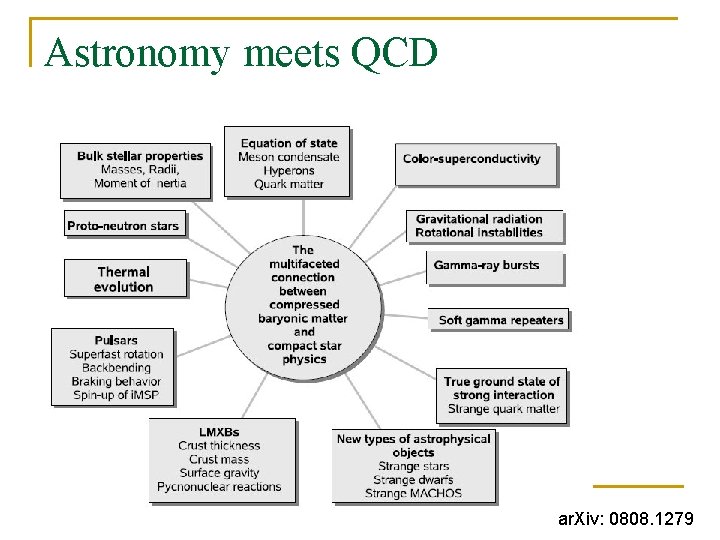
Astronomy meets QCD ar. Xiv: 0808. 1279
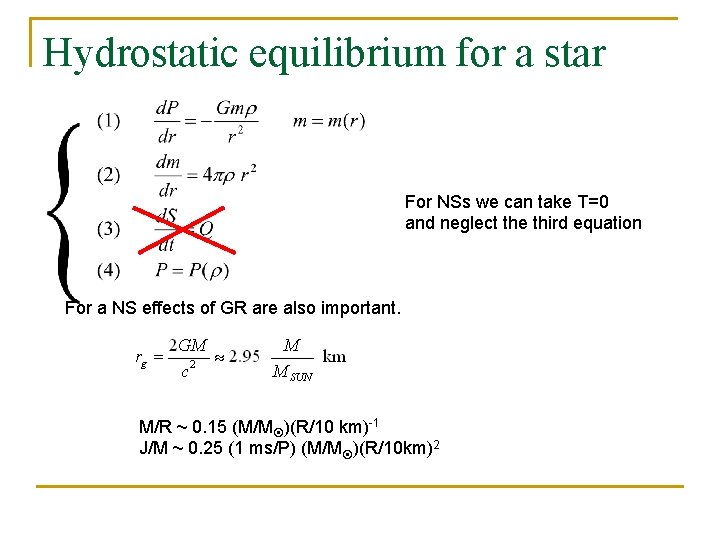
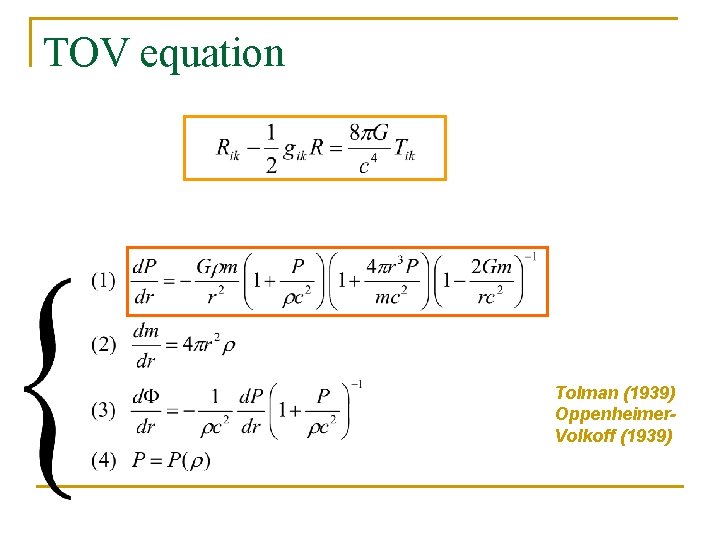
Hydrostatic equilibrium for a star For NSs we can take T=0 and neglect the third equation For a NS effects of GR are also important. M/R ~ 0. 15 (M/M )(R/10 km)-1 J/M ~ 0. 25 (1 ms/P) (M/M )(R/10 km)2
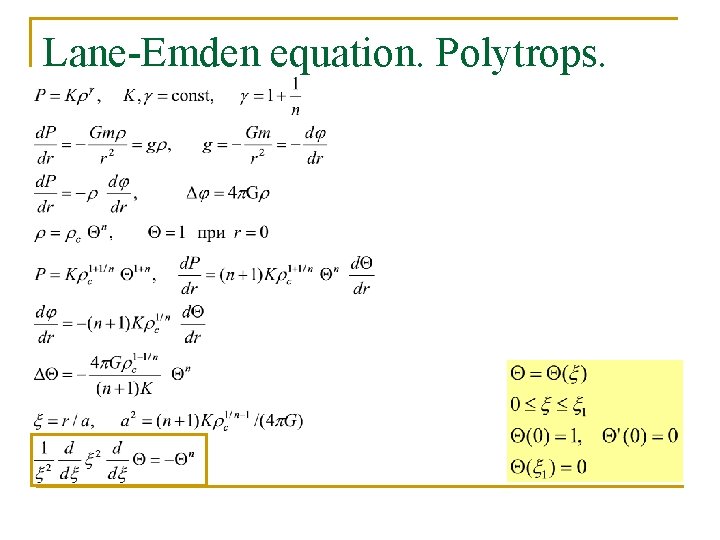
Lane-Emden equation. Polytrops.
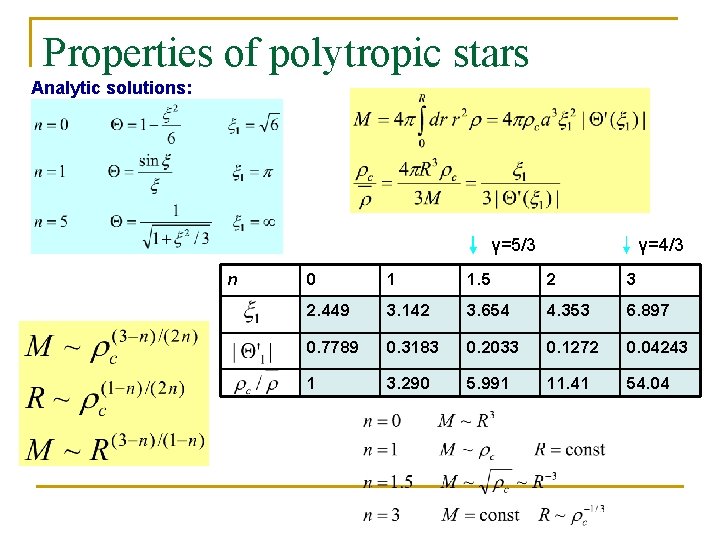
Properties of polytropic stars Analytic solutions: γ=5/3 n γ=4/3 0 1 1. 5 2 3 2. 449 3. 142 3. 654 4. 353 6. 897 0. 7789 0. 3183 0. 2033 0. 1272 0. 04243 1 3. 290 5. 991 11. 41 54. 04
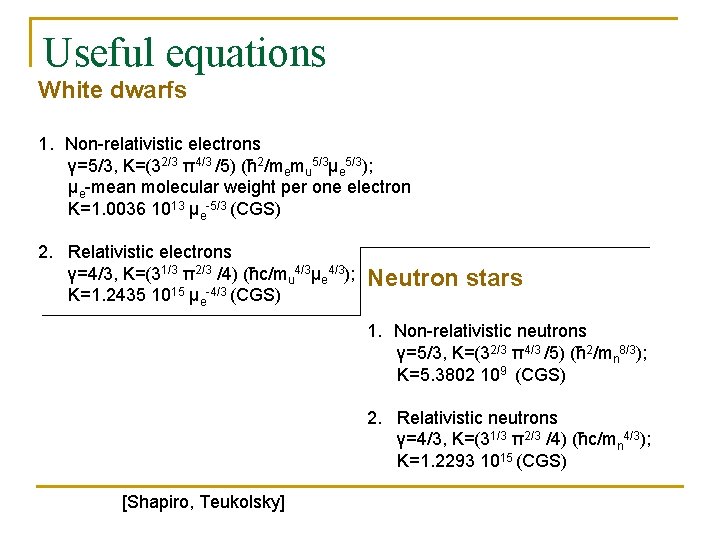
Useful equations White dwarfs 1. Non-relativistic electrons γ=5/3, K=(32/3 π4/3 /5) (ћ 2/memu 5/3μe 5/3); μe-mean molecular weight per one electron K=1. 0036 1013 μe-5/3 (CGS) 2. Relativistic electrons γ=4/3, K=(31/3 π2/3 /4) (ћc/mu 4/3μe 4/3); K=1. 2435 1015 μe-4/3 (CGS) Neutron stars 1. Non-relativistic neutrons γ=5/3, K=(32/3 π4/3 /5) (ћ 2/mn 8/3); K=5. 3802 109 (CGS) 2. Relativistic neutrons γ=4/3, K=(31/3 π2/3 /4) (ћc/mn 4/3); K=1. 2293 1015 (CGS) [Shapiro, Teukolsky]
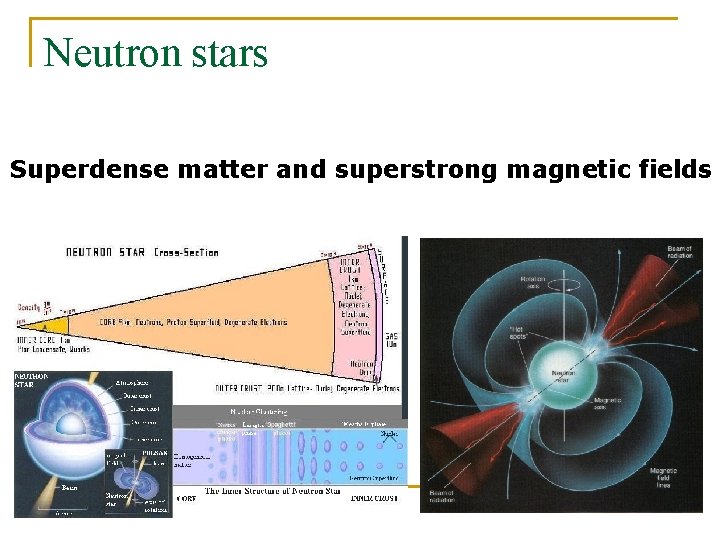
Neutron stars Superdense matter and superstrong magnetic fields
Astrophysical point of view Astrophysical appearence of NSs is mainly determined by: • Spin • Magnetic field • Temperature • Velocity • Environment The first four are related to the NS structure!
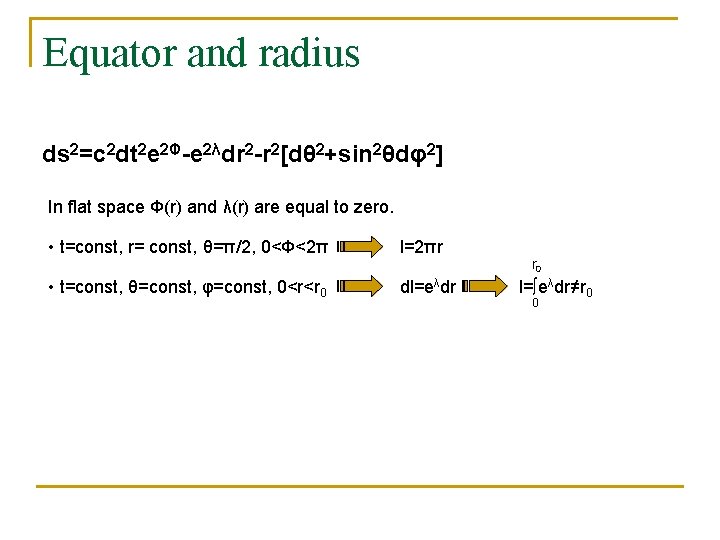
Equator and radius ds 2=c 2 dt 2 e 2Φ-e 2λdr 2 -r 2[dθ 2+sin 2θdφ2] In flat space Φ(r) and λ(r) are equal to zero. • t=const, r= const, θ=π/2, 0<Φ<2π l=2πr • t=const, θ=const, φ=const, 0<r<r 0 dl=eλdr r 0 l=∫eλdr≠r 0 0
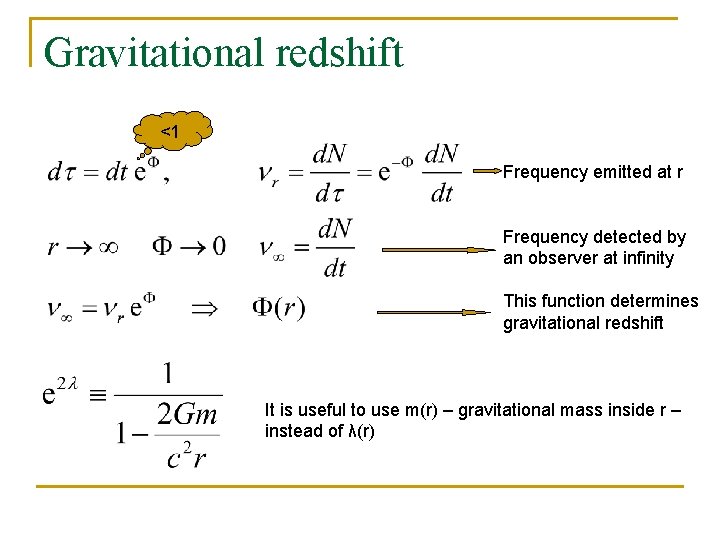
Gravitational redshift <1 Frequency emitted at r Frequency detected by an observer at infinity This function determines gravitational redshift It is useful to use m(r) – gravitational mass inside r – instead of λ(r)
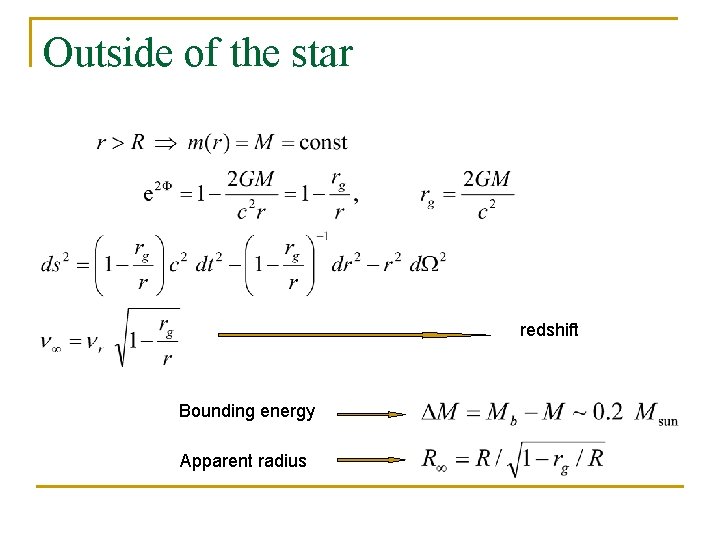
Outside of the star redshift Bounding energy Apparent radius
TOV equation Tolman (1939) Oppenheimer. Volkoff (1939)
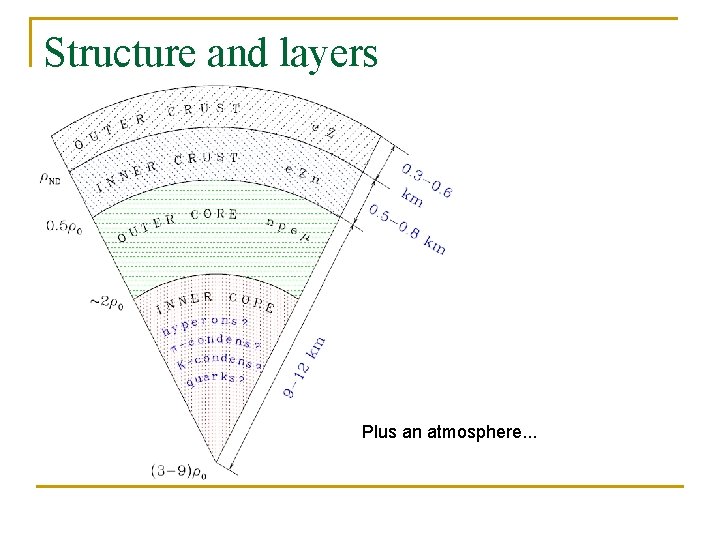
Structure and layers Plus an atmosphere. . .
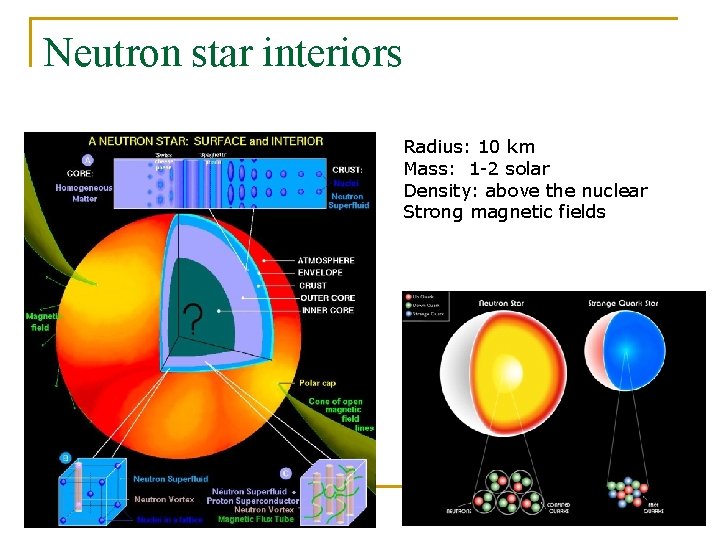
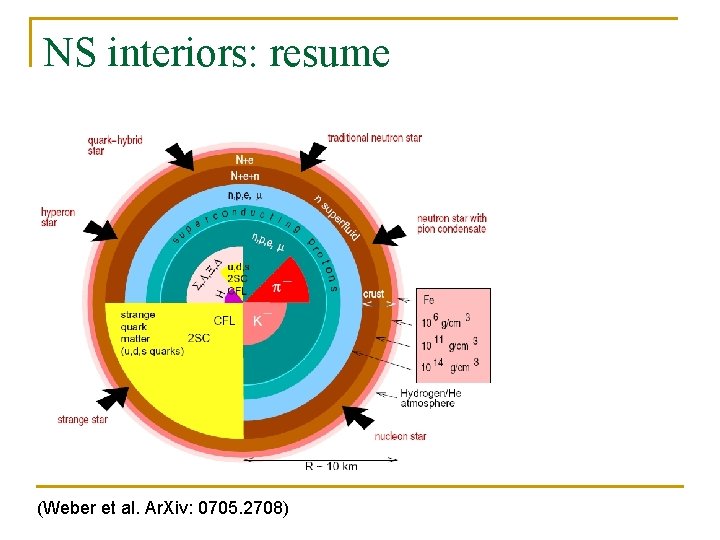
Neutron star interiors Radius: 10 km Mass: 1 -2 solar Density: above the nuclear Strong magnetic fields
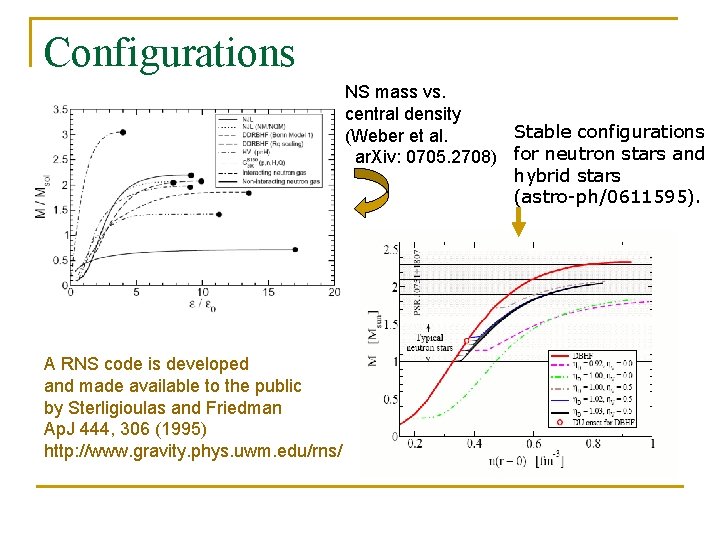
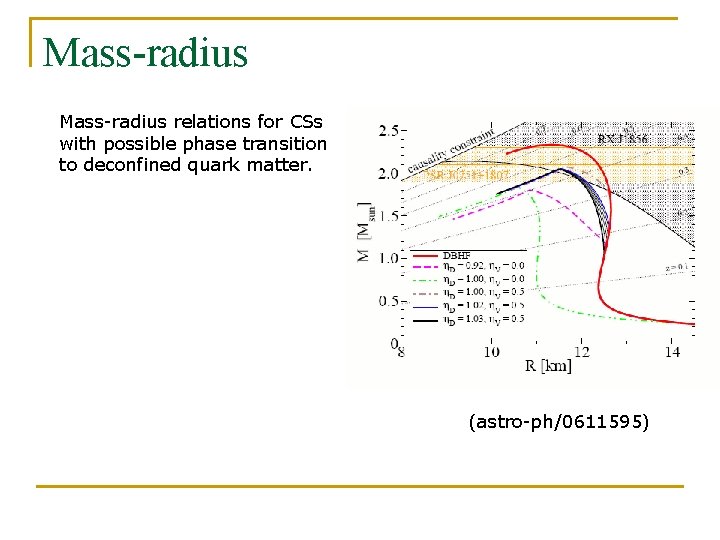
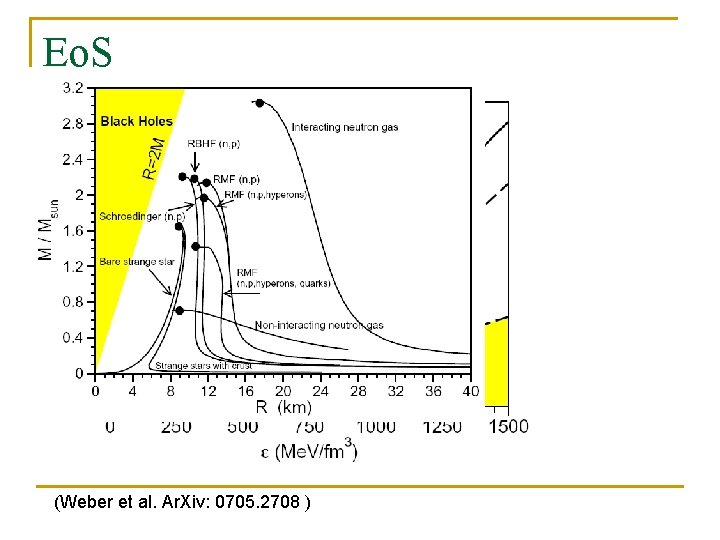
Configurations NS mass vs. central density Stable configurations (Weber et al. ar. Xiv: 0705. 2708) for neutron stars and hybrid stars (astro-ph/0611595). A RNS code is developed and made available to the public by Sterligioulas and Friedman Ap. J 444, 306 (1995) http: //www. gravity. phys. uwm. edu/rns/
Mass-radius relations for CSs with possible phase transition to deconfined quark matter. (astro-ph/0611595)
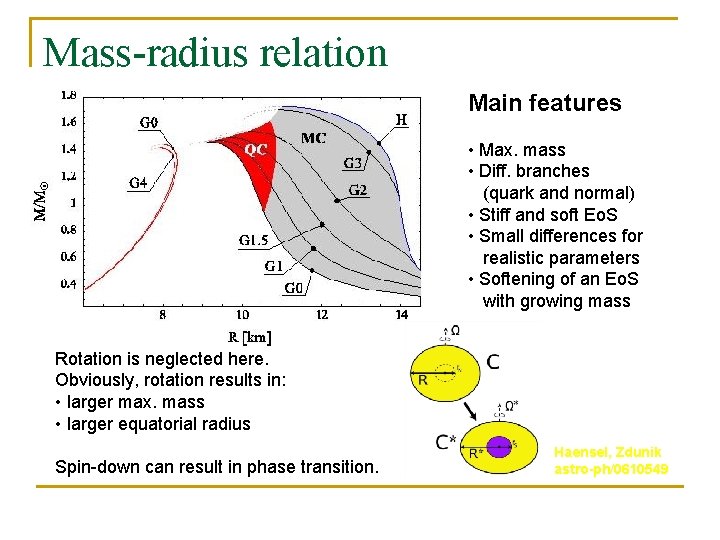
Mass-radius relation Main features • Max. mass • Diff. branches (quark and normal) • Stiff and soft Eo. S • Small differences for realistic parameters • Softening of an Eo. S with growing mass Rotation is neglected here. Obviously, rotation results in: • larger max. mass • larger equatorial radius Spin-down can result in phase transition. Haensel, Zdunik astro-ph/0610549
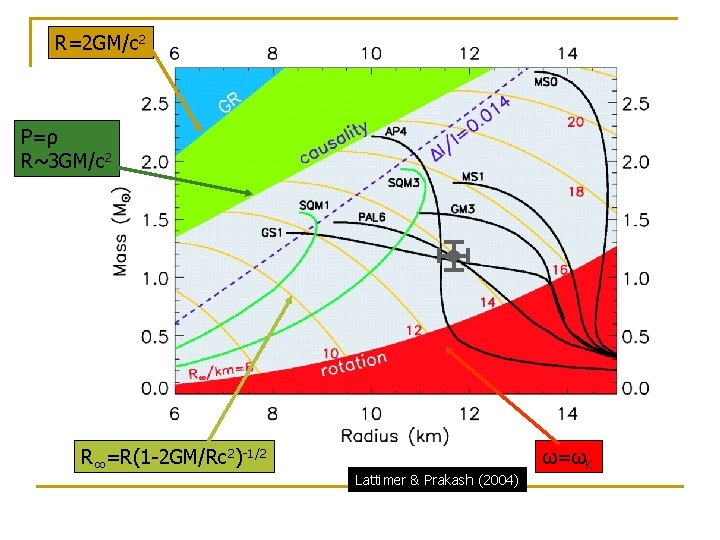
R=2 GM/c 2 P=ρ R~3 GM/c 2 R∞=R(1 -2 GM/Rc 2)-1/2 Lattimer & Prakash (2004) ω=ωK
Eo. S (Weber et al. Ar. Xiv: 0705. 2708 )
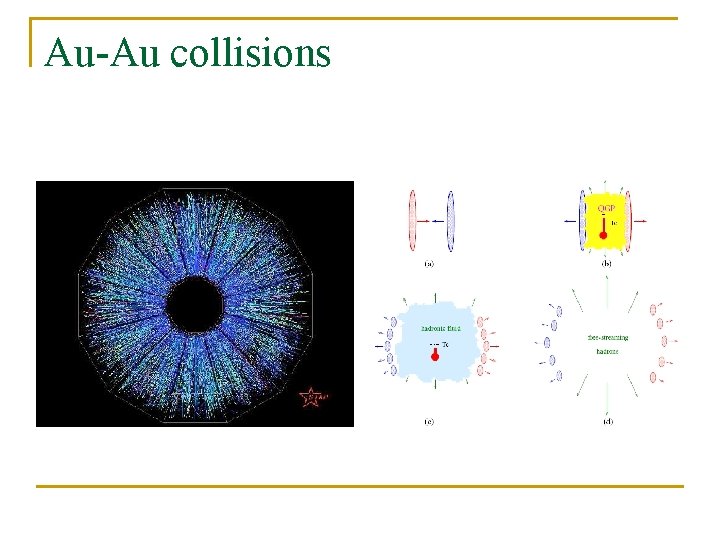
Au-Au collisions
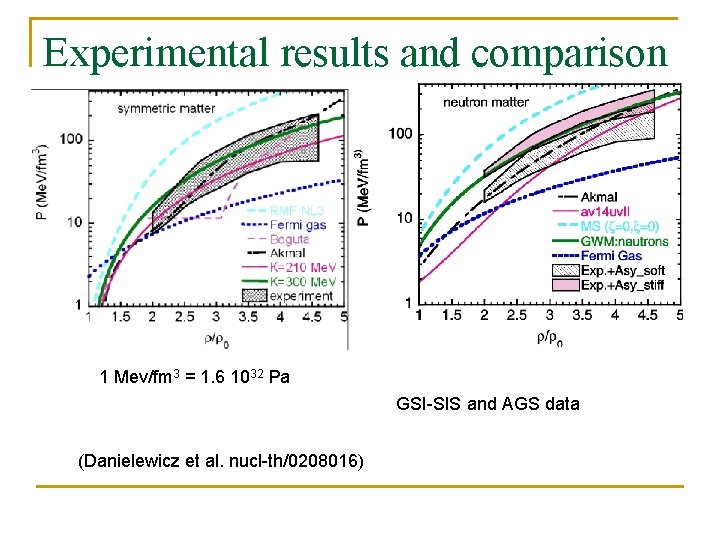
Experimental results and comparison 1 Mev/fm 3 = 1. 6 1032 Pa GSI-SIS and AGS data (Danielewicz et al. nucl-th/0208016)
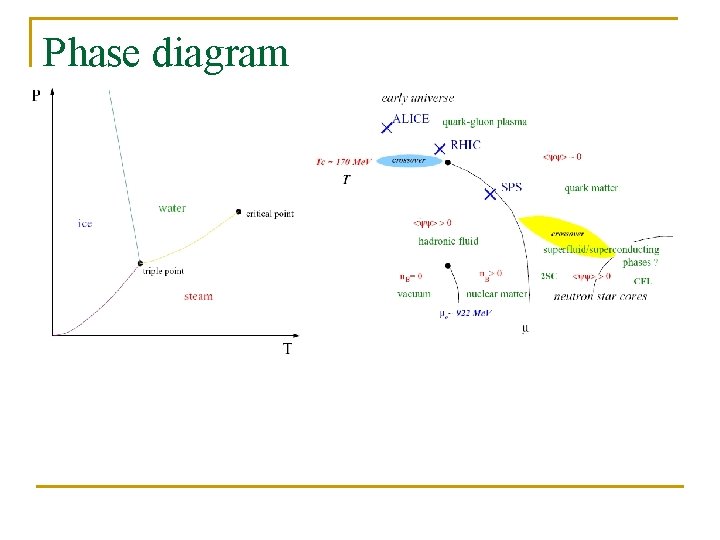
Phase diagram
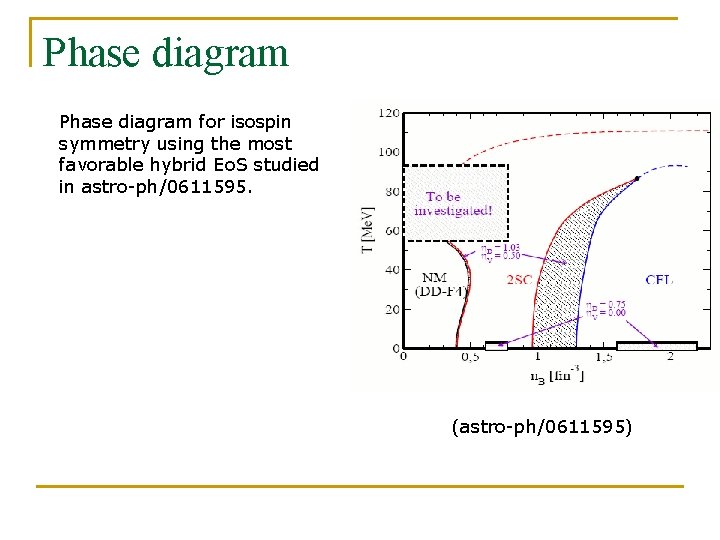
Phase diagram for isospin symmetry using the most favorable hybrid Eo. S studied in astro-ph/0611595. (astro-ph/0611595)
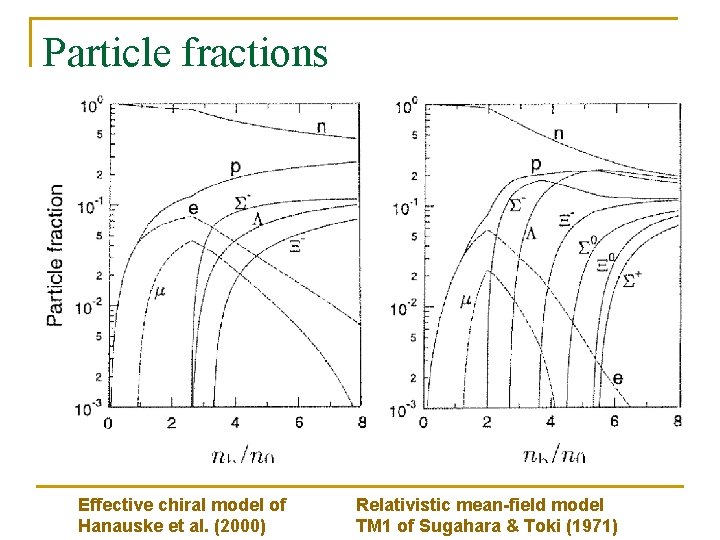
Particle fractions Effective chiral model of Hanauske et al. (2000) Relativistic mean-field model TM 1 of Sugahara & Toki (1971)
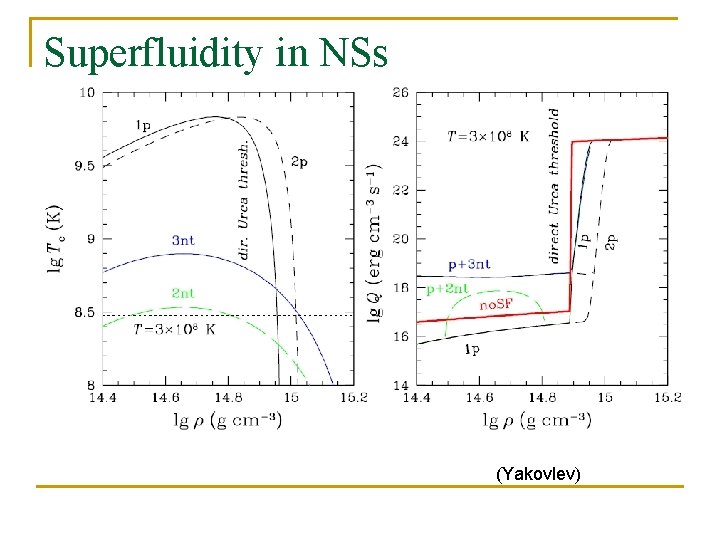
Superfluidity in NSs (Yakovlev)
NS interiors: resume (Weber et al. Ar. Xiv: 0705. 2708)
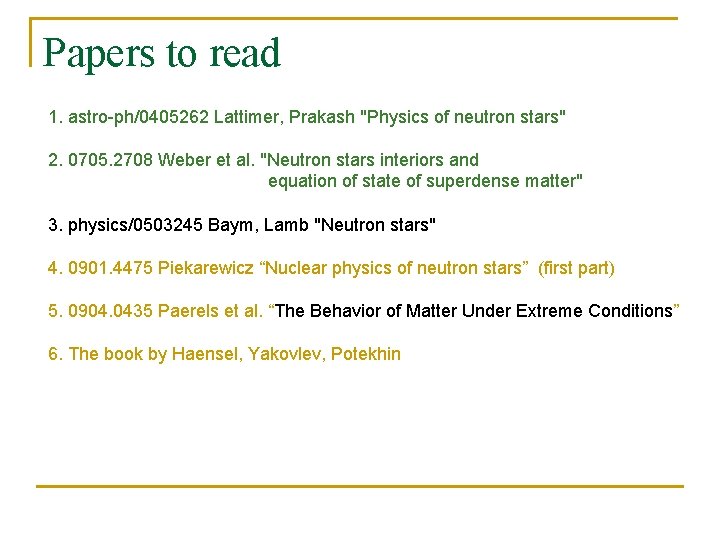
Papers to read 1. astro-ph/0405262 Lattimer, Prakash "Physics of neutron stars" 2. 0705. 2708 Weber et al. "Neutron stars interiors and equation of state of superdense matter" 3. physics/0503245 Baym, Lamb "Neutron stars" 4. 0901. 4475 Piekarewicz “Nuclear physics of neutron stars” (first part) 5. 0904. 0435 Paerels et al. “The Behavior of Matter Under Extreme Conditions” 6. The book by Haensel, Yakovlev, Potekhin
Lectures on the Web Lectures can be found at my homepage: http: //xray. sai. msu. ru/~polar/html/presentations. html