
Internal Quality Assurance in Higher Education Institutions Presentation

- Slides: 21
Internal Quality Assurance in Higher Education Institutions Presentation At Quality Reviewers: Backbone of a Quality Assurance System Workshop 23 June, 2014. By Karma El Hassan, Ph. D. American University of Beirut.
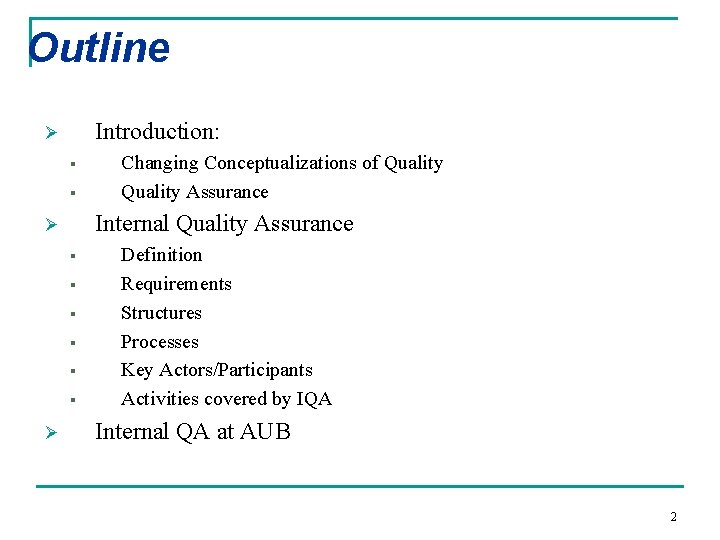
Outline Introduction: Ø § § Internal Quality Assurance Ø § § § Ø Changing Conceptualizations of Quality Assurance Definition Requirements Structures Processes Key Actors/Participants Activities covered by IQA Internal QA at AUB 2
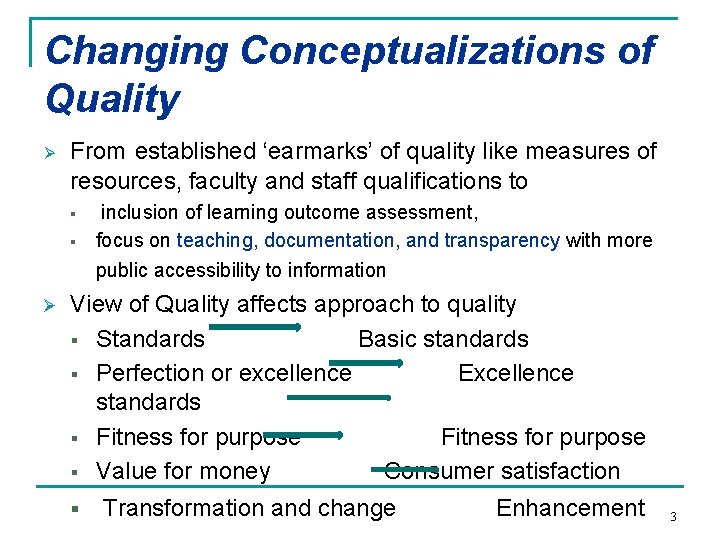
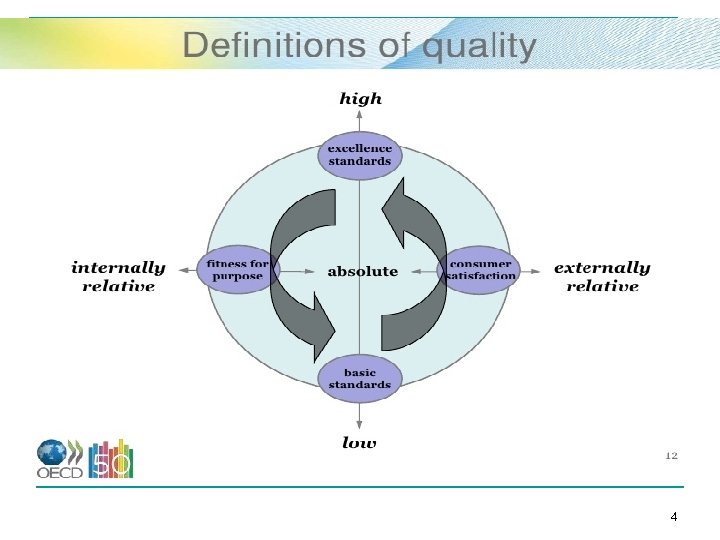
Changing Conceptualizations of Quality Ø From established ‘earmarks’ of quality like measures of resources, faculty and staff qualifications to § § Ø inclusion of learning outcome assessment, focus on teaching, documentation, and transparency with more public accessibility to information View of Quality affects approach to quality § Standards Basic standards § Perfection or excellence Excellence standards § Fitness for purpose § Value for money Consumer satisfaction § Transformation and change Enhancement 3
4
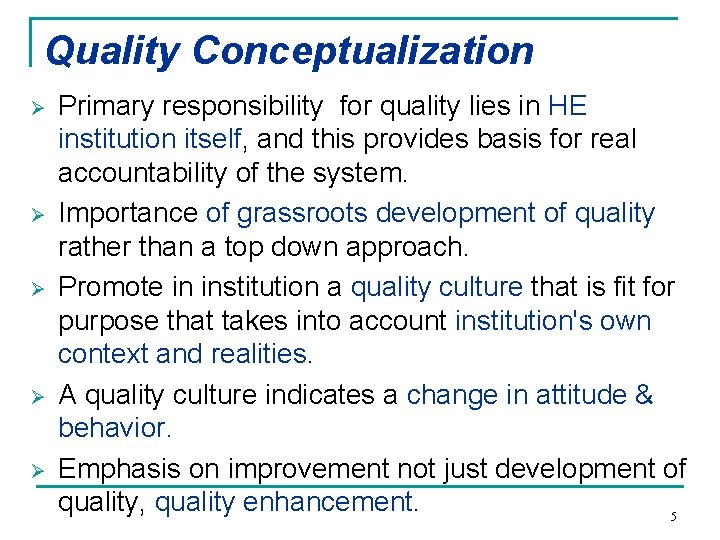
Quality Conceptualization Ø Ø Ø Primary responsibility for quality lies in HE institution itself, and this provides basis for real accountability of the system. Importance of grassroots development of quality rather than a top down approach. Promote in institution a quality culture that is fit for purpose that takes into account institution's own context and realities. A quality culture indicates a change in attitude & behavior. Emphasis on improvement not just development of quality, quality enhancement. 5
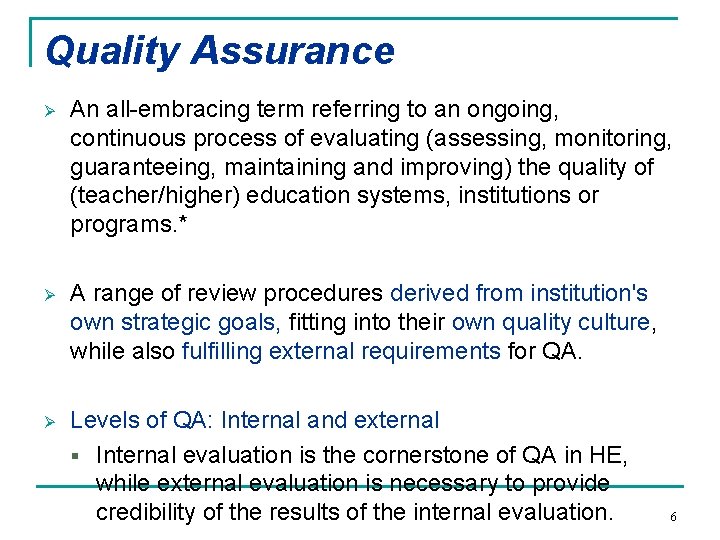
Quality Assurance Ø An all-embracing term referring to an ongoing, continuous process of evaluating (assessing, monitoring, guaranteeing, maintaining and improving) the quality of (teacher/higher) education systems, institutions or programs. * Ø A range of review procedures derived from institution's own strategic goals, fitting into their own quality culture, while also fulfilling external requirements for QA. Ø Levels of QA: Internal and external § Internal evaluation is the cornerstone of QA in HE, while external evaluation is necessary to provide credibility of the results of the internal evaluation. 6
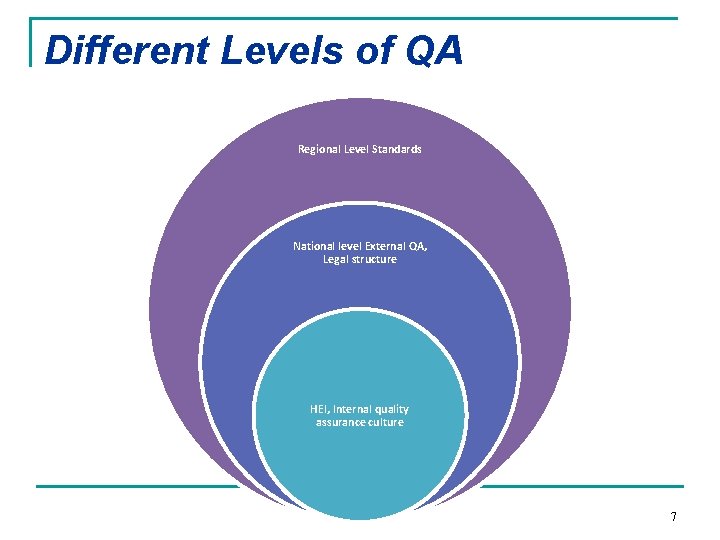
Different Levels of QA Regional Level Standards National level External QA, Legal structure HEI, Internal quality assurance culture 7
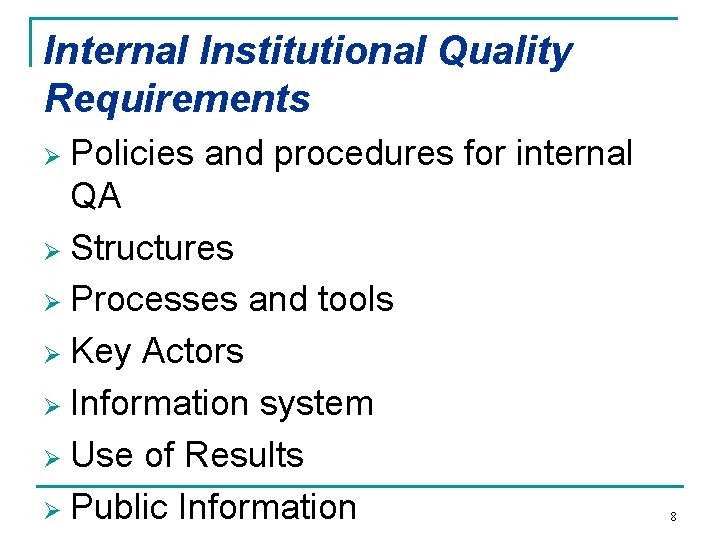
Internal Institutional Quality Requirements Policies and procedures for internal QA Ø Structures Ø Processes and tools Ø Key Actors Ø Information system Ø Use of Results Ø Public Information Ø 8
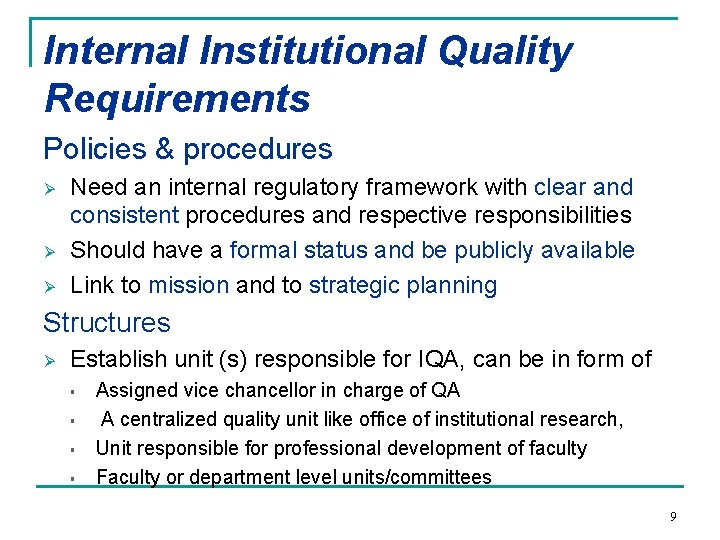
Internal Institutional Quality Requirements Policies & procedures Ø Ø Ø Need an internal regulatory framework with clear and consistent procedures and respective responsibilities Should have a formal status and be publicly available Link to mission and to strategic planning Structures Ø Establish unit (s) responsible for IQA, can be in form of § § Assigned vice chancellor in charge of QA A centralized quality unit like office of institutional research, Unit responsible for professional development of faculty Faculty or department level units/committees 9
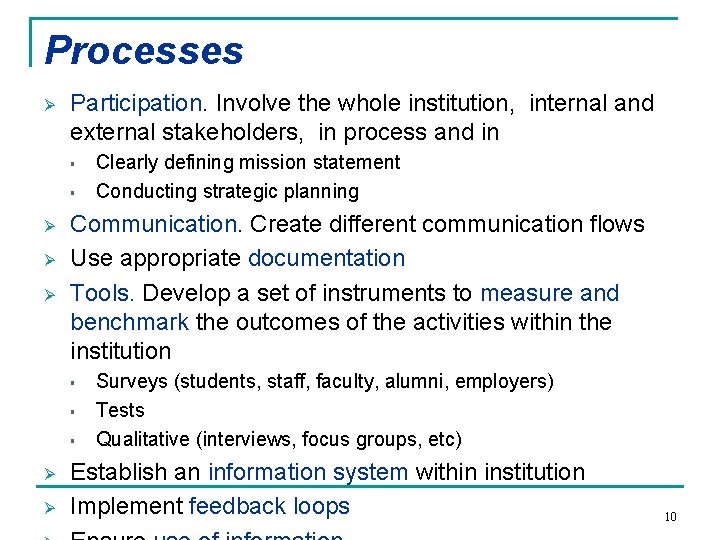
Processes Ø Participation. Involve the whole institution, internal and external stakeholders, in process and in § § Ø Ø Ø Communication. Create different communication flows Use appropriate documentation Tools. Develop a set of instruments to measure and benchmark the outcomes of the activities within the institution § § § Ø Ø Clearly defining mission statement Conducting strategic planning Surveys (students, staff, faculty, alumni, employers) Tests Qualitative (interviews, focus groups, etc) Establish an information system within institution Implement feedback loops 10
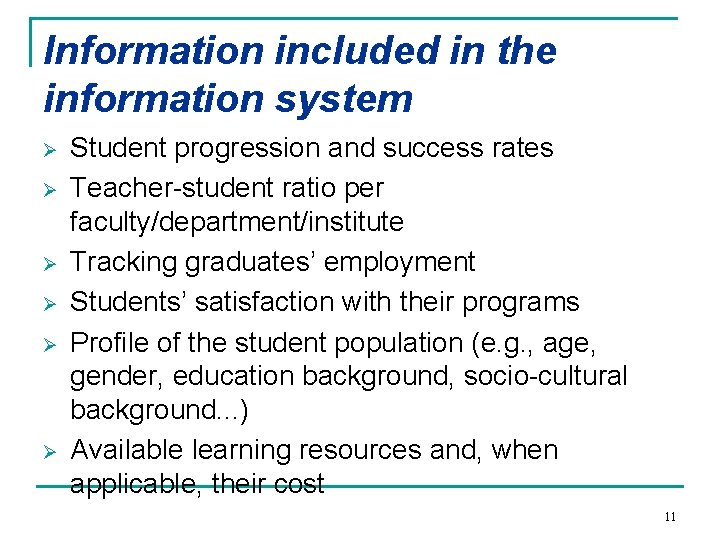
Information included in the information system Ø Ø Ø Student progression and success rates Teacher-student ratio per faculty/department/institute Tracking graduates’ employment Students’ satisfaction with their programs Profile of the student population (e. g. , age, gender, education background, socio-cultural background. . . ) Available learning resources and, when applicable, their cost 11
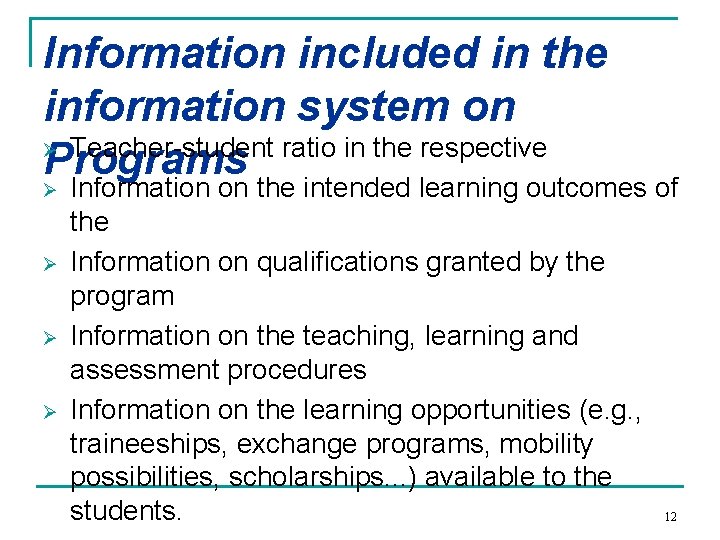
Information included in the information system on Ø Teacher-student ratio in the respective Programs Ø Ø Information on the intended learning outcomes of the Information on qualifications granted by the program Information on the teaching, learning and assessment procedures Information on the learning opportunities (e. g. , traineeships, exchange programs, mobility possibilities, scholarships. . . ) available to the students. 12
Key Actors Ø Ø Need both management and leadership in order to succeed at quality education and learning processes A responsive, competent and enlightened senior leadership team is an essential requirement § § Assures transparent active commitment to quality at all levels Explicitly and clearly assigns responsibilities Encourages prompt, appropriate managerial action to redress problems 13 Helps identify and disseminate good practice
Activities Covered by IQA processes Ø Research Ø Ø Ø Teaching and learning § Student learning outcomes § Review of programs § Quality of teaching staff Student support services § Processes (advising, registration, food services, etc. ) § Resources (labs, library, computing facilities, etc. ) Community service § Student engagement Ø Governance and administration Ø Communication flow 14
Internal Assessment Initiatives at To. AUB monitor quality and performance at AUB and its administrative & Ø Ø Ø Ø academic units from a variety of perspectives, a number of assessment initiatives were launched at institutional & unit levels. OIRA plays a leading (L) & supporting (S) roles in the monitoring performance. Strategic planning and assessment (L) Balanced Scorecards and Key Performance Indicators (KPIs) (L) Monitoring budgets & expenditures (S) Internal audit monitoring (S) Assessment of student learning outcomes (S) Assessment of General Education Program (S) Periodic Program Review (S) Office of Institutional Research & Assessment (OIRA) Activities 15 (L)
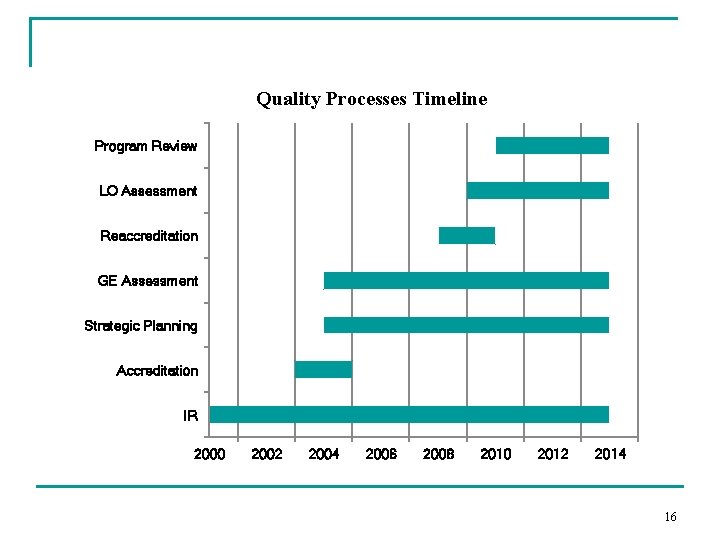
Quality Processes Timeline Program Review LO Assessment Reaccreditation GE Assessment Strategic Planning Accreditation IR 2000 2002 2004 2006 2008 2010 2012 2014 16
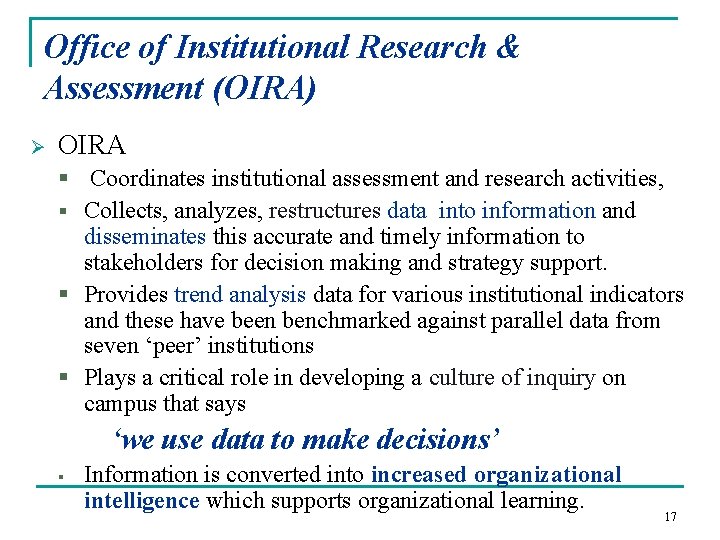
Office of Institutional Research & Assessment (OIRA) Ø OIRA § Coordinates institutional assessment and research activities, § Collects, analyzes, restructures data into information and disseminates this accurate and timely information to stakeholders for decision making and strategy support. § Provides trend analysis data for various institutional indicators and these have been benchmarked against parallel data from seven ‘peer’ institutions § Plays a critical role in developing a culture of inquiry on campus that says ‘we use data to make decisions’ § Information is converted into increased organizational intelligence which supports organizational learning. 17
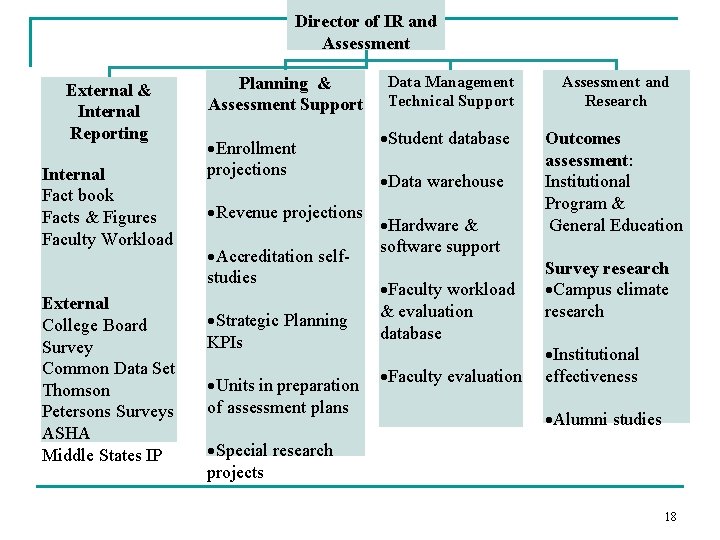
Director of IR and Assessment External & Internal Reporting Internal Fact book Facts & Figures Faculty Workload External College Board Survey Common Data Set Thomson Petersons Surveys ASHA Middle States IP Planning & Assessment Support ·Enrollment projections ·Revenue projections ·Accreditation selfstudies ·Strategic Planning KPIs ·Units in preparation of assessment plans Data Management Technical Support ·Student database ·Data warehouse ·Hardware & software support ·Faculty workload & evaluation database ·Faculty evaluation Assessment and Research Outcomes assessment: Institutional Program & General Education Survey research ·Campus climate research ·Institutional effectiveness ·Alumni studies ·Special research projects 18
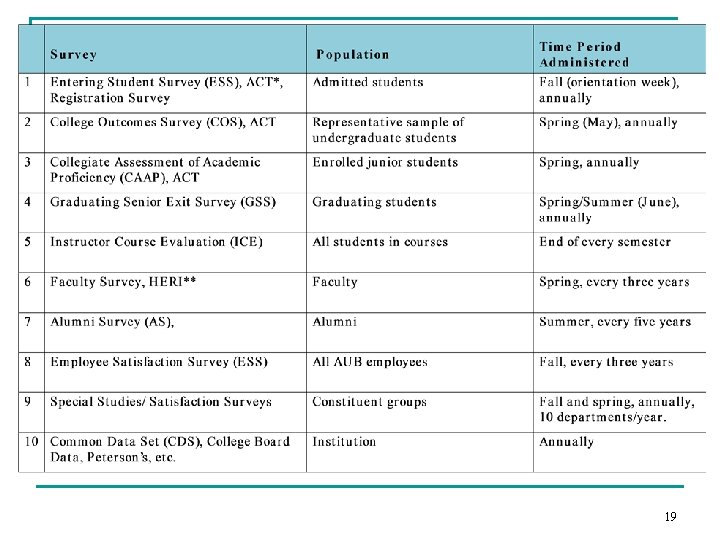
19
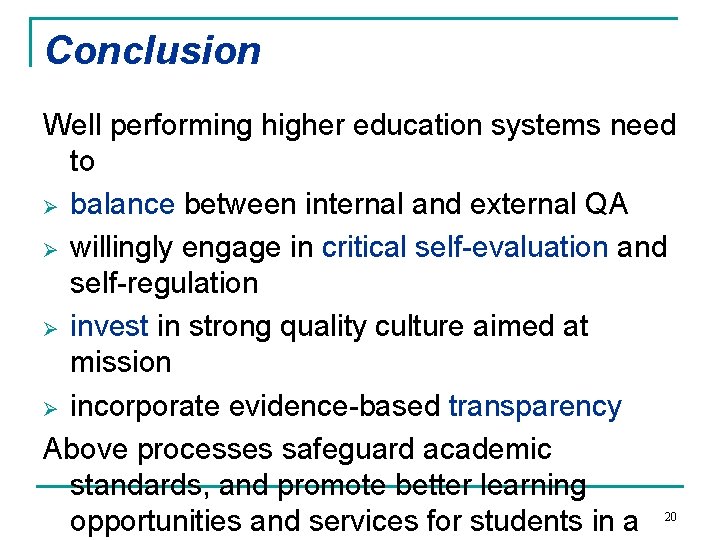
Conclusion Well performing higher education systems need to Ø balance between internal and external QA Ø willingly engage in critical self-evaluation and self-regulation Ø invest in strong quality culture aimed at mission Ø incorporate evidence-based transparency Above processes safeguard academic standards, and promote better learning opportunities and services for students in a 20
Thank YOU OIRA Website http: //www. aub. edu. lb/oira/Pages/index. aspx n Email kelhasan@aub. edu. lb n 21